
Avalanche rescue gear is not optional equipment for the backcountry; it is the only bridge between a burial and a recovery. A beacon that fails to transmit on 457 kHz or drops a search signal beyond ten meters renders the entire companion-rescue protocol meaningless. The difference between a confident multi-burial search and a frantic dig often comes down to whether your transceiver processes flux lines cleanly or forces you to bracket blind.
I’m Min — the co-founder and writer behind Gadgets Feed. I have spent hundreds of hours analyzing search-strip widths, battery endurance curves, and satellite acquisition times across PLBs, avalanche transceivers, and satellite messengers to build this guide with technical rigor.
This guide ranks the nine most reliable options currently on the shelf, from avalanche-specific transceivers to subscription-free personal locator beacons, so you can confidently choose a best backcountry beacon that matches your terrain risk profile and skill level.
How To Choose The Best Backcountry Beacon
Selecting a backcountry beacon is a decision driven by terrain, group size, and the type of emergency you are most likely to face — avalanche burial, medical emergency with no cell signal, or separation from a vessel. Each category of beacon (avalanche transceiver, personal locator beacon, satellite communicator) serves a different primary scenario, and choosing the wrong type for your activity can create a dangerous false sense of security.
Frequency Compatibility and Search-Strip Width
All modern avalanche beacons operate on the global 457 kHz standard. If a beacon does not transmit on 457 kHz, it cannot be used for companion rescue in a group. Search-strip width — typically 40 to 50 meters — determines how far apart searchers must walk to guarantee no gap in coverage. A narrower search strip means more passes and longer time to find a buried victim, so a beacon with a published 50-meter strip width like the BCA Tracker series is a baseline requirement, not a luxury.
Subscription Dependency vs. No-Fee Lifeline
Personal locator beacons (PLBs) transmit on 406 MHz directly to COSPAS-SARSAT satellites with no annual subscription. Satellite messengers like the Garmin inReach require an active subscription to send SOS alerts via the Iridium network. For a true survival tool that never expires, a PLB is the only choice — but a messenger allows two-way text communication that can prevent an SOS activation during a non-life-threatening situation. For avalanche-specific work, a 457 kHz transceiver must remain your primary, with a PLB or messenger as the secondary.
Battery Endurance and Replacement Cycle
An avalanche transceiver in transmit mode must last at least 200 hours before the batteries drop below search-viable voltage, per the EN 300718 standard. The BCA Tracker 3 delivers approximately 250 hours in transmit mode using three AAA alkaline cells — user-replaceable, so you never mail the unit away for a battery swap. Sealed lithium PLBs such as the ACR ResQLink carry a 5-year non-replaceable battery from the manufacture date; always check the date code on the side of the unit at purchase, as a unit sitting on a shelf for two years cuts your usable window in half.
Quick Comparison
On smaller screens, swipe sideways to see the full table.
| Model | Category | Best For | Key Spec | Amazon |
|---|---|---|---|---|
| BCA Tracker 3 | Avalanche Transceiver | Companion Rescue | 457 kHz, 50m range | Amazon |
| Garmin inReach Mini 3 Plus | Satellite Communicator | Two-way Messaging + SOS | 350 hr battery, Iridium | Amazon |
| ACR ResQLink 410 RLS | Personal Locator Beacon | No-Subscription SOS | Return Link Service | Amazon |
| ACR ResQLink View | Personal Locator Beacon | Marine + Hiking | 28 hr, OLED display | Amazon |
| BCA Tracker S | Avalanche Transceiver | Entry-Level Backcountry | 457 kHz, 55m range | Amazon |
| Garmin Descent T2 | Dive Transceiver | Underwater Buddy Monitor | Subwave, 30m range | Amazon |
| BCA T S Rescue Package | Avalanche Rescue Kit | Complete Pack + Probe | Beacon + probe + shovel | Amazon |
| McMurdo FastFind 220 | Personal Locator Beacon | Budget Emergency PLB | GPS, 406 MHz, 1-day bat | Amazon |
| BCA Tracker 3 + Probe | Avalanche Bundle | Bundle for New Riders | Tracker 3 + 10ft probe | Amazon |
In‑Depth Reviews
1. BCA Tracker 3

The BCA Tracker 3 operates on the mandatory 457 kHz frequency with a published 50-meter search-strip width, delivering reliable flux-line processing for single and multiple burials. Weighing 215 grams with batteries, the unit sits flat against the torso via the included harness, and the three-AAA alkaline power source provides approximately 250 hours of transmit time — well above the 200-hour EN 300718 minimum.
Motion-activated circuitry transitions the unit from transmit to search mode when it detects movement, reducing the risk of accidentally leaving the beacon in search mode during transport. The clear directional arrows and distance readout on the LCD panel allow searchers to bracket efficiently without complex menu diving, which is critical when every second matters during a companion rescue.
User reviews consistently praise the intuitive interface and the bright external LED that confirms transmit status even in full daylight. The harness is comfortable enough that riders report forgetting they are wearing it, and the unit packs small enough to leave minimal bulk under a shell or pack strap.
Why it’s great
- Simple, three-button interface reduces training time for new backcountry users
- 250-hour alkaline transmit life keeps the beacon usable for full seasons without battery swaps
- Lightweight 215g design with comfortable harness stays put during aggressive skiing or riding
Good to know
- Maximum range of 50 meters is standard but not exceptional — some premium units offer 60m+
- No Bluetooth or smartphone connectivity for firmware updates or group management
2. Garmin inReach Mini 3 Plus
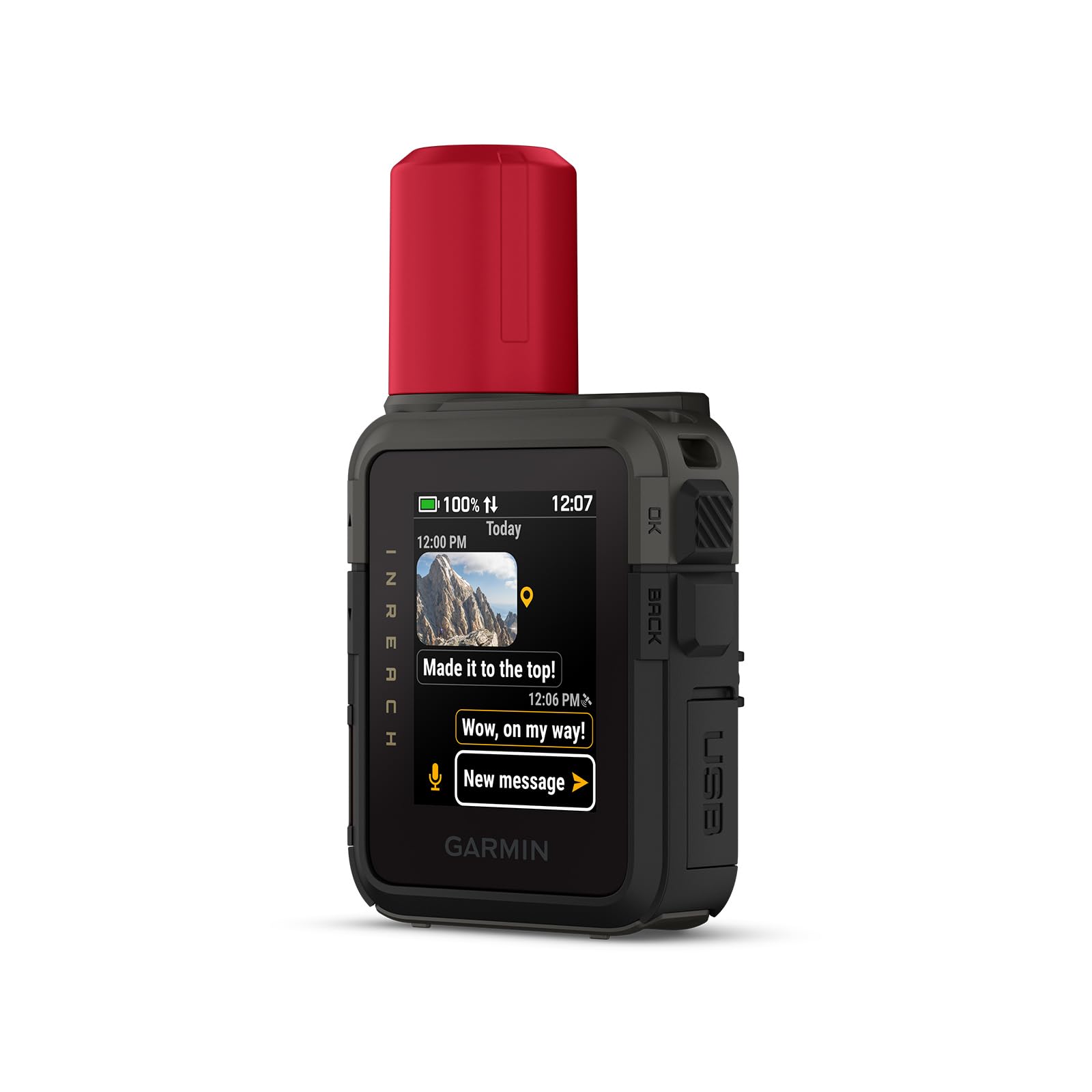
The inReach Mini 3 Plus leverages the global Iridium satellite network to provide two-way text messaging, photo sharing, and interactive SOS coordination through Garmin Response — a 24/7-staffed center. The internal rechargeable lithium battery achieves up to 350 hours with 10-minute tracking intervals, making it viable for multi-day traverses where you cannot afford a dead communicator by day three.
The rugged chassis carries an IP67 water-rating and a scratch-resistant color touchscreen that pairs via Bluetooth with the Garmin Messenger app for photo and voice messaging. LiveTrack location sharing allows friends or family to follow your route in near-real-time, and voice command support (available in English, German, Spanish, French, Italian, Dutch, Swedish, and Danish) keeps hands free during critical moments.
This device requires an active satellite subscription, which is a recurring cost that pure PLB users may resist. However, the ability to send a non-emergency check-in message to avoid an unnecessary SOS activation is a powerful advantage over a one-way PLB. The unit also receives weather forecasts on demand, a feature that can help backcountry travelers reroute before a storm hits.
Why it’s great
- Two-way SOS with professional coordination center provides context-aware rescue response
- 350-hour tracking battery covers extended solo missions without recharging
- Touchscreen UI and phone pairing simplify messaging and weather checks
Good to know
- Active subscription required — annual cost adds up if used only seasonally
- Not a replacement for an avalanche transceiver in slide terrain; it lacks 457 kHz transmit
3. ACR ResQLink 410 RLS
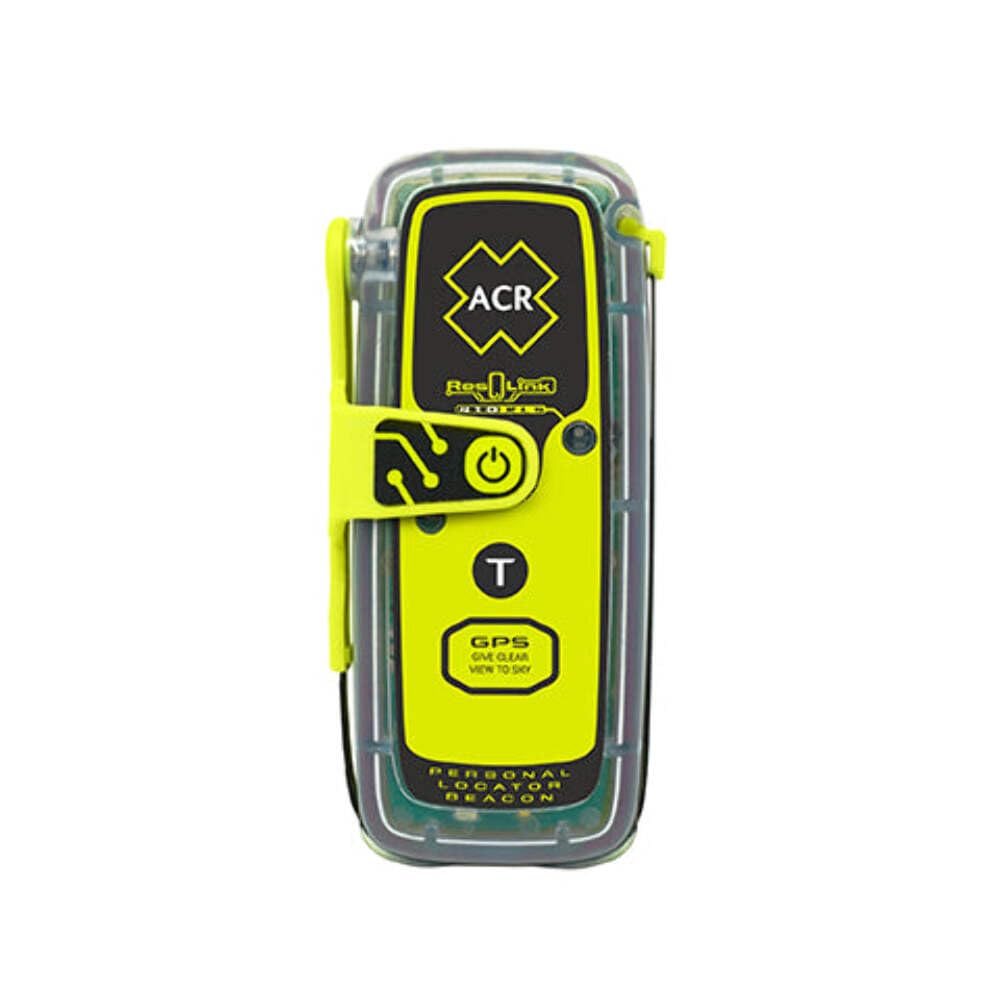
The ACR ResQLink 410 RLS is a 406 MHz personal locator beacon that includes Return Link Service (RLS), which flashes a confirmation LED letting the user know that search and rescue has received their distress signal. This psychological and practical feedback — unique to RLS-capable PLBs — eliminates the agonizing uncertainty of whether your signal was picked up by the COSPAS-SARSAT satellite constellation.
The device employs GPS, Galileo GNSS, and MEOSAR satellite compatibility to triangulate position rapidly, providing 24+ hours of continuous operational life on its 5-year non-replaceable lithium battery. The built-in buoyancy keeps it afloat in marine environments, and the multifunction clip system attaches to PFD oral inflation tubes, belt loops, or pack straps without requiring a separate pouch.
No subscription cost means this beacon is ready to activate the moment you buy it, assuming the battery date code shows adequate remaining life. Some users reported receiving units with batteries already two years into their five-year cycle, so check the manufacture date label on the side of the unit immediately upon arrival and exchange if the battery age is unacceptable.
Why it’s great
- Return Link Service confirms rescue signal reception via flashing LED
- Zero subscription fees — a true set-and-forget safety device
- Buoyant and multi-clip design works for both mountain and marine use
Good to know
- Sealed battery means the entire unit must be replaced after 5 years
- No two-way communication — you cannot update rescuers on changing conditions
4. ACR ResQLink View

The ACR ResQLink View adds a small OLED screen and an infrared strobe to the standard PLB formula, providing visual feedback on GPS acquisition, battery status, and self-test results without requiring a connected smartphone. The 406 MHz distress signal transmits directly to COSPAS-SARSAT satellites with no subscription, and the 121.5 MHz homing signal guides rescuers to the exact location once they enter the search area.
The buoyant chassis floats in fresh and salt water, and the included attachment system — belt clip, PFD oral inflation tube clip, straps, and lanyards — covers virtually every carry scenario from hiking backpack shoulder straps to life jacket pockets. The optional 406Link subscription enables non-emergency self-test and GPS test messaging via SMS and email, though this is not required for the core SOS function.
Users consistently report that the self-test feature passes reliably and that the battery date code on recent units has been fresh (manufactured within the current year). The OLED display is easy to read in dim light and provides a clear confirmation that the unit is armed and GPS has locked before you head into terrain where cell coverage disappears.
Why it’s great
- OLED screen shows GPS lock status and battery health at a glance
- Infrared strobe provides a visual signal that night-vision-equipped rescuers can spot
- 28-hour battery life with 5W transmit power (stronger than 0.5W satellite messengers)
Good to know
- Battery is non-replaceable — unit must be sent in for replacement after 5 years
- Higher weight and bulk compared to the smaller McMurdo FastFind 220
5. BCA Backcountry Access Tracker S Avalanche Beacon Transceiver

The BCA Tracker S is the streamlined sibling of the Tracker 3, offering a simpler user interface targeted at backcountry skiers and snowmobilers who want a reliable 457 kHz transceiver without advanced features like motion-activated switching or multiple-burial algorithms. Its published maximum range of 55 meters and search-strip width of 50 meters match the Tracker 3’s baseline performance, ensuring no compromise on the fundamental search geometry.
Weighing just 100 grams, the Tracker S is one of the lightest avalanche transceivers on the market, making it an easy addition to a pack or chest harness for riders who already carry a shovel and probe. The three-AAA battery system delivers a minimum of one hour of search time after 200 hours of transmit mode, which aligns with the EN standard and supports a full season of riding without battery concerns.
User reviews emphasize the simplicity of the interface — reviewers note that “amazing simple product very high quality” and “easy to use for a first time user” are recurring themes. For new backcountry travelers completing their first avalanche safety course, the Tracker S removes the cognitive load of menu navigation during a high-stress rescue scenario.
Why it’s great
- Ultra-light 100g design minimizes fatigue and pack bulk
- Straightforward three-button operation suitable for beginners
- 55-meter range is slightly higher than the Tracker 3’s 50m
Good to know
- No motion-activated auto-transmit — user must manually switch to search
- Lacks advanced features like flagging and multiple-burial processing
6. Garmin Descent T2 Transceiver with Subwave

The Garmin Descent T2 is a dive-specific transceiver that connects to high-pressure regulator ports and communicates wirelessly with compatible Descent dive computers using Subwave technology. It transmits tank pressure, air time remaining, and consumption rate in real time to paired computers, and it supports diver-to-diver preformatted messaging with other T2-networked buddies up to 30 meters away.
The unit is dive-rated to 20 ATM, meaning it can withstand depths beyond recreational limits without water ingress. A single user-replaceable CR123A lithium battery provides up to 100 hours of diving operation, and up to eight transceivers can be paired with one Descent computer, allowing a dive leader to monitor the air levels of up to seven buddies at once from depths of up to 10 meters.
While the Descent T2 is not an avalanche beacon, it fills a critical backcountry niche for divers operating in remote cold-water environments (ice diving, wreck diving in alpine lakes) where a lost buddy or an out-of-air situation can become a life-threatening emergency. The Subwave connection is reportedly reliable at the advertised 30-meter range, though some users note surface-level dropouts when the transceiver switches between Bluetooth and sonar modes in very shallow water.
Why it’s great
- Subwave technology enables buddy air monitoring at depths up to 10 meters
- 20 ATM rating handles extreme depth environments without failure
- 100-hour battery life on a single CR123A cell supports week-long dive trips
Good to know
- Requires a compatible Garmin Descent dive computer to function
- Surface-level Bluetooth-to-sonar transition can cause temporary disconnects in shallow water
7. Backcountry Access T S Rescue Package

The BCA T S Rescue Package bundles the Tracker S avalanche transceiver with a compatible probe and shovel in a single kit, providing everything a new backcountry traveler needs for companion rescue in one purchase. The package simplifies gear acquisition for students completing their AIARE Level 1 course, ensuring the beacon, probe, and shovel share consistent quality standards and are packed to work together without compatibility surprises.
The Tracker S included in this package retains the same 457 kHz frequency, 55-meter range, and 200-hour transmit battery life as the standalone unit. The accompanying probe and shovel are built to BCA’s specifications, with the probe featuring telescoping aluminum sections and the shovel offering a blade size adequate for moving compact avalanche debris efficiently.
User reviews are positive overall, with comments praising the value and build quality of the complete set. Some reviewers note that the included pack itself is comfortable and holds gear securely, though the kit is not as customizable as buying each component individually from different manufacturers. For a new rider who wants to arrive at the trailhead with a fully functional rescue kit, this package removes the guesswork.
Why it’s great
- Everything needed for companion rescue in a single package — no missing pieces
- Ideal for AIARE Level 1 students who need compliant gear on day one
- BCA probe and shovel are proven designs compatible with the Tracker S
Good to know
- Less control over individual component specifications compared to buying separately
- Bulkier to store than buying components individually if you already own a pack
8. McMurdo FastFind 220 Personal Locator Beacon – US Programming
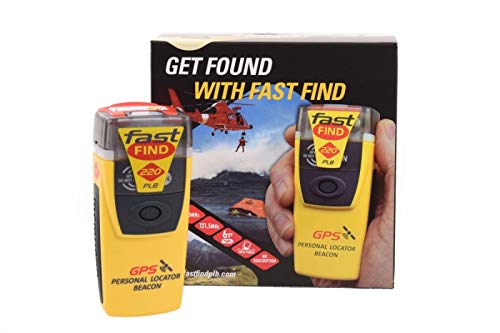
The McMurdo FastFind 220 is a no-subscription personal locator beacon pre-programmed for US registration, transmitting on 406 MHz to the COSPAS-SARSAT satellite network with an integrated GPS position. The unit deploys by extending the antenna, pulling the anti-tamper seal, and pressing the ON button — a three-step process that can be executed even with impaired coordination, as verified by real-world survival accounts.
The plastic enclosure measures 4.33 x 1.18 x 4.33 inches and packs into a small pouch that fits inside a hip belt pocket or chest strap. The battery is non-replaceable and rated for a one-day operational life after activation, which is sufficient for the typical 24-hour window in which most search and rescue operations locate a beacon.
User reviews are overwhelmingly positive — one verified reviewer reported that the device saved their life after a stroke while solo hiking in the Cascade mountains, explaining that they were able to activate the unit despite impaired vision and coordination. While the FastFind 220 lacks the return-link confirmation of the ACR ResQLink 410, its reliability and simplicity make it a compelling budget-oriented backup for any backcountry traveler who does not already own a PLB.
Why it’s great
- Simple three-step activation requires minimal dexterity in an emergency
- No subscription fees — always ready to transmit at full power
- Compact enough to fit in a hip belt pocket without adding noticeable bulk
Good to know
- No Return Link Service — no confirmation that the signal was received
- Battery is non-replaceable and rated for only one day of operation after activation
9. BCA Tracker 3 Avalanche Beacon + SBD 10 Foot American Probe
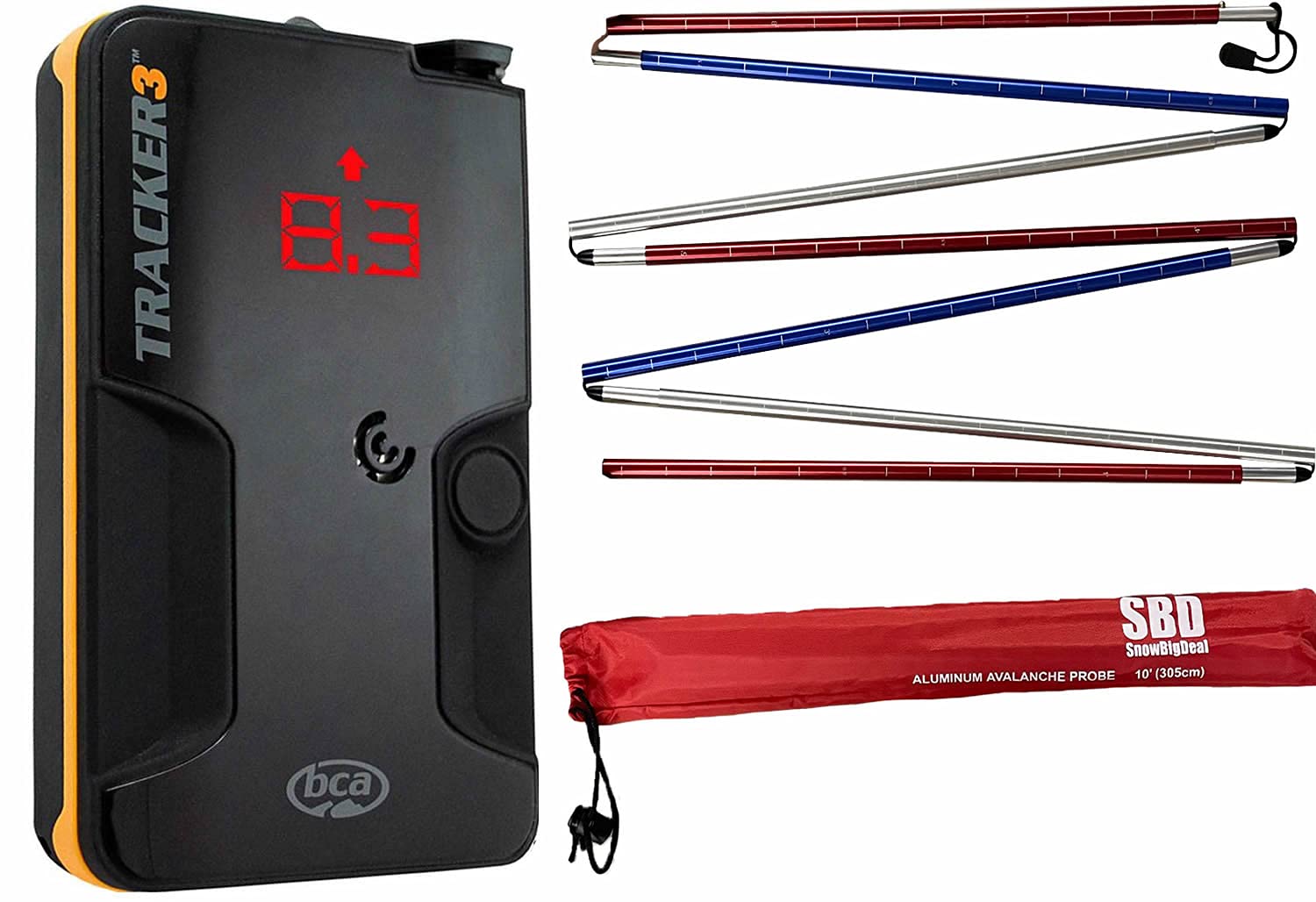
This bundle pairs the BCA Tracker 3 avalanche beacon with a SnowBigDeal 10-foot (305 cm) aluminum probe, offering a combined transceiver-and-probe solution at a lower total investment than buying each item separately. The Tracker 3’s performance — 457 kHz, 50-meter range, 250-hour alkaline transmit life — remains identical to the standalone unit, so there is no compromise on the beacon itself.
The SBD probe extends to 305 cm, which is sufficient for most North American avalanche debris depths where victims are typically found within the top two meters. The aluminum construction is lightweight and corrosion-resistant, though some user reviews note that the probe can be difficult to extend and collapse smoothly, which could slow down probing during a time-critical rescue.
While the probe quality has drawn mixed feedback — one reviewer reported that the probe was “hard to expand and break down” and another noted that the beacon’s search range appeared inaccurate compared to other units — the bundle remains a budget-conscious entry point for backcountry travelers who already plan to upgrade their probe later. For anyone on a tight budget, this package gets a quality beacon into your hands with a functional probe included.
Why it’s great
- Tracker 3 delivers proven 457 kHz performance at a bundle price
- 305 cm aluminum probe covers most avalanche debris depths
- Single purchase covers beacon and probe for new backcountry riders
Good to know
- Included probe may not extend or collapse as smoothly as premium options
- Some users reported calibration inconsistencies with the beacon’s range readout
FAQ
Can a satellite messenger replace an avalanche transceiver for backcountry skiing?
How often should I test my backcountry beacon before a trip?
What does search-strip width mean for an avalanche transceiver?
Is it worth paying for a PLB with Return Link Service?
How long does a typical PLB battery last after activation?
Final Thoughts: The Verdict
For most users, the best backcountry beacon winner is the BCA Tracker 3 because it delivers a proven 457 kHz transceiver with 50-meter range, 250-hour alkaline battery life, and a simple enough interface that you can teach your entire group in one chairlift ride. If you want two-way communication and professional SOS coordination on multi-day ski traverses, grab the Garmin inReach Mini 3 Plus. And for solo hikers or boaters who need a subscription-free lifeline with confirmation feedback, nothing beats the ACR ResQLink 410 RLS.