
Choosing an 8 Ohm speaker isn’t as simple as matching a number on a spec sheet. The real battle is finding a pair that delivers a balanced frequency response, handles adequate RMS power from your amplifier, and fits your listening space without causing receiver strain. Overlooking sensitivity and crossover design can leave you with a system that sounds thin or, worse, damages your gear.
I’m Min — the co-founder and writer behind Gadgets Feed. I spend hours analyzing crossover slopes, impedance curves, and driver material data to separate genuine engineering from marketing claims, ensuring you get a speaker that matches its price tag with real performance.
This guide breaks down the top contenders for the best 8 ohm speaker, focusing on measurable specs like RMS handling, driver composition, and cabinet construction to help you make an informed purchase.
How To Choose The Best 8 Ohm Speaker
Selecting the right 8 Ohm speaker requires looking past superficial marketing to understand three core pillars: impedance stability, driver design philosophy, and cabinet resonance control. These factors determine whether your audio system sounds flat, fatiguing, or fantastic for years.
Impedance and Sensitivity: The Amp Match
An 8 Ohm nominal rating is a starting point, but impedance dips at certain frequencies can stress a budget amplifier. Pair your speaker’s sensitivity rating (measured in dB) with an amp that delivers clean power at its 8 Ohm load. A speaker boasting 90 dB sensitivity will play louder with less wattage than one rated at 86 dB, giving you more headroom without pushing your receiver into distortion.
Driver Composition and Crossover Design
The materials used in woofers and tweeters dictate the speaker’s character. Kevlar and ceramic/metal composite cones offer stiffness that reduces breakup, producing cleaner midbass. Silk dome tweeters generally yield a warmer, less fatiguing top end, while titanium or aluminum domes sound more articulate but can be bright in reflective rooms. A well-designed 12 dB/octave crossover ensures smooth transitions between drivers without audible phase shifts.
Cabinet Construction and Port Tuning
A rigid enclosure made from thick MDF with internal bracing minimizes unwanted resonances that color the sound. Bass reflex ports must be tuned precisely to avoid chuffing at higher volumes. Floor-standing towers generally have greater internal volume for deeper bass extension, while compact bookshelf speakers sacrifice low-end reach for placement flexibility. Consider your room size — smaller rooms benefit from sealed or smaller ported bookshelf designs to avoid boomy, uncontrolled low frequencies.
Quick Comparison
On smaller screens, swipe sideways to see the full table.
| Model | Category | Best For | Key Spec | Amazon |
|---|---|---|---|---|
| Rockville RockShelf 68B V2 | Bookshelf | Budget Bookshelf with Kevlar Drivers | 100W RMS per pair / 6.5″ Kevlar woofer | Amazon |
| Edifier R1280T | Powered Bookshelf | Active Desktop Setup | 42W RMS / 4″ woofer with built-in amp | Amazon |
| Sony SS-CS5M2 | Bookshelf | Compact 3-Way Audio | 3-Way / 5.12″ woofer + super tweeter | Amazon |
| Dayton Audio Classic T65 | Floor-standing | Entry Tower with Dual Woofers | 150W RMS / Dual 6.5″ poly drivers | Amazon |
| Polk Monitor XT20 | Bookshelf | Versatile Home Theater | 6.5″ Dynamic Balance woofer / 1″ tweeter | Amazon |
| Klipsch Reference R-610F | Floor-standing | High Sensitivity Tower | 94dB sensitivity / 1″ Aluminum LTS tweeter | Amazon |
| Polk Monitor XT70 | Floor-standing | Deep Bass with Passive Radiators | Dual 6.5″ woofers / Dual 8″ passive radiators | Amazon |
| Klipsch RP-600M II | Bookshelf | High-End Detail | 1″ Titanium LTS tweeter / Cerametallic woofer | Amazon |
| Edifier S2000MKIII | Powered Bookshelf | High-Resolution Wireless Streaming | 130W RMS / Planar tweeter + aptX HD | Amazon |
In‑Depth Reviews
1. Polk Monitor XT20

The Polk Monitor XT20 delivers a remarkably balanced frequency response for a mid-range entry, with its 6.5-inch Dynamically Balanced woofer producing bass extension down to 38 Hz without sounding boomy. The 1-inch Terylene tweeter remains polite and non-fatiguing, making these speakers suitable for long movie marathons or critical listening sessions where ear fatigue is a concern. With a 200W peak power handling rating and compatibility with Dolby Atmos and DTS:X decoders, these bookshelf speakers integrate seamlessly into a modern home theater system.
EQ responsiveness is a standout trait here — the XT20 takes well to manual adjustment or DSP correction, allowing you to tune out any minor congestion in the upper midrange. On-axis placement on stands at ear level reveals an immersive soundstage with clear vocal imaging. Many users report skipping a subwoofer entirely for general music and TV use, as the 6.5-inch driver offers enough low-end presence for small to medium rooms without the added cost.
Design-wise, the MDF cabinet is solidly braced, and the black vinyl finish blends with most decor. The rear port requires some breathing room from the wall, but this is common for ported designs at this caliber. For users seeking a versatile, timbre-matched speaker that can serve as fronts, surrounds, or a stereo pair, the Polk XT20 is a benchmark choice in its class.
Why it’s great
- Bass extension down to 38Hz without subwoofer
- High 200W peak power handling for dynamic peaks
- Easy to EQ and responds well to DSP correction
Good to know
- May sound slightly congested without EQ out of the box
- Rear port needs at least 6 inches of clearance from wall
2. Klipsch RP-600M II

The Klipsch RP-600M II represents a significant step up in resolution, driven by its 1-inch Linear Travel Suspension (LTS) titanium diaphragm tweeter and a hybrid Tractrix horn that delivers high-frequency detail with surgical precision. The all-new 6.5-inch Cerametallic woofer provides a stiff, lightweight cone that minimizes breakup, offering bass that is punchy and controlled rather than bloated. This speaker rewards critical listening with an open, lively top end that reveals cymbal decays and vocal sibilance without harshness, as long as you feed it clean amplification.
The cabinet itself is a furniture-grade piece featuring a magnetic grille and premium wood veneer finishes that elevate the aesthetic beyond most competitors at this level. Bi-wiring and bi-amping capability via dual binding posts gives you flexible system building options for separating high and low-frequency currents. The rear-firing Tractrix port requires mindful placement — at least 10 inches from the back wall — but when positioned correctly, the imaging locks into place with impressive width and depth.
Where the RP-600M II truly shines is its ability to stay composed at high listening levels while maintaining clarity. Many users transitioning from entry-level Klipsch Reference speakers report hearing layers in familiar recordings they had never noticed before. Pairing these with a subwoofer for the deepest low end is recommended, but their midbass punch is so articulate that many find a sub optional for smaller rooms. This is a high-sensitivity speaker (reportedly around 94 dB) that makes even modest amplifiers sound effortlessly dynamic.
Why it’s great
- Exceptional high-frequency detail from titanium LTS tweeter
- Bi-wiring capable for advanced system tuning
- High sensitivity allows dynamic playback on low-power amps
Good to know
- Requires careful placement and clean amplification for best results
- Bright signature may not suit all room acoustics or preferences
3. Edifier S2000MKIII
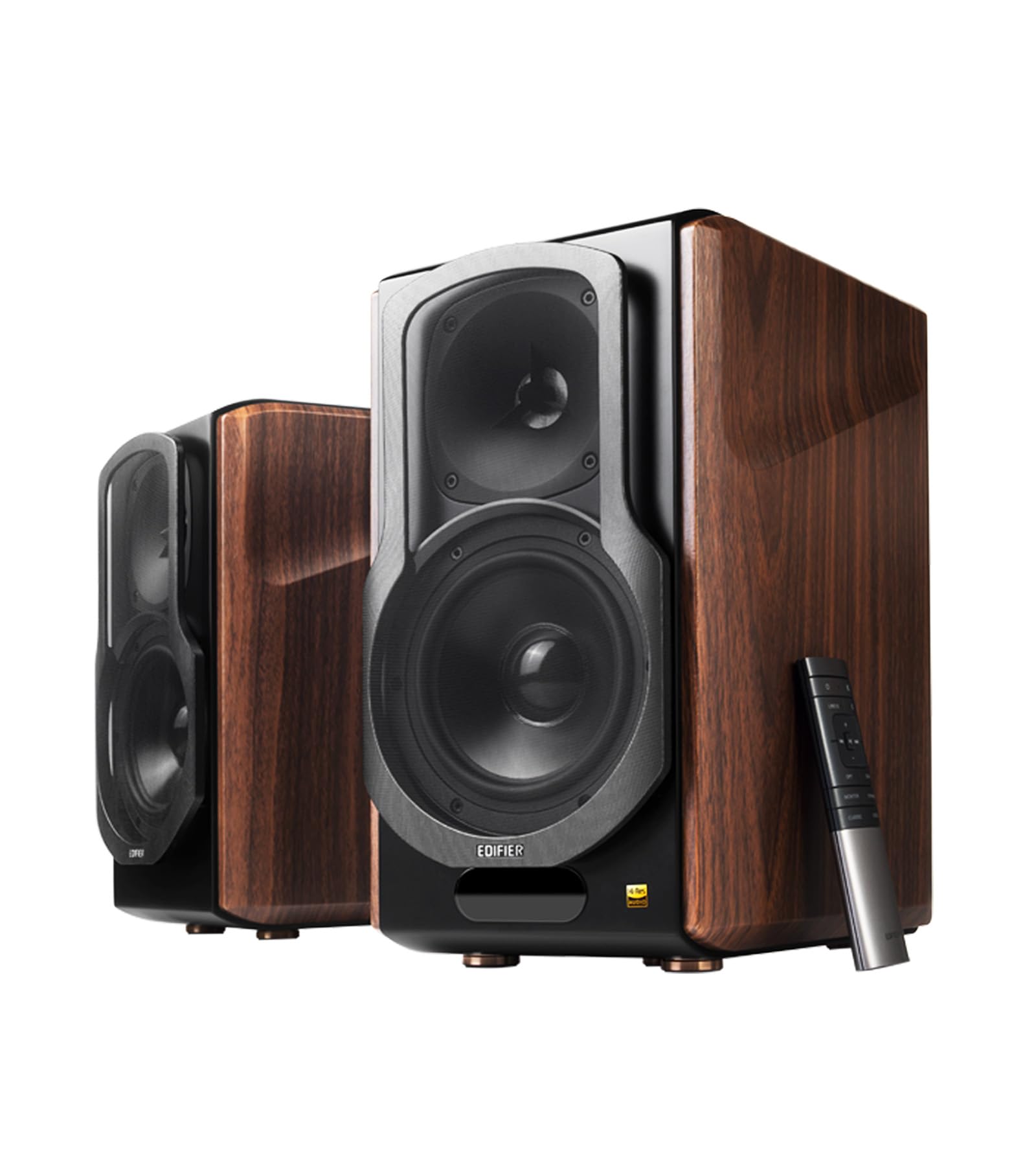
The Edifier S2000MKIII is a fully active bookshelf speaker that bypasses the need for an external amplifier, packing a tri-amped 130W RMS system into a dense, beautifully finished walnut cabinet. Its planar diaphragm tweeter and 5.5-inch aluminum diaphragm woofer work together to produce a sound that is both detailed and surprisingly deep in the low end, with many users noting chest-thumping bass that eliminates the need for a separate subwoofer in most rooms. Bluetooth 5.0 with aptX HD decoding ensures wireless playback retains near-lossless quality, a rarity among powered speakers in this segment.
Connectivity is a strong suit here — dual RCA inputs, optical, and coaxial inputs allow simultaneous connection to a TV, computer, and music streamer without swapping cables. The included wireless remote controls volume, input selection, and bass/treble adjustments, though the remote’s button labeling is difficult to read in low light. The speakers also feature a subwoofer output for those who want to extend the low end even further, though most users find the internal drivers more than sufficient for music and movies.
The S2000MKIII’s active design includes DSP-based digital signal processing with multiple preset sound modes (including Dynamic and Monitor modes) that tailor the frequency response to your content. The build quality is exceptional — each speaker weighs nearly 18 pounds, with thick MDF panels and a real wood veneer finish that exudes a premium feel. For an all-in-one solution that eliminates the complexity of a separate amplifier while delivering audiophile-grade resolution, the Edifier S2000MKIII is a standout choice among powered 8 Ohm speakers.
Why it’s great
- Tri-amped 130W active system eliminates need for external amp
- Planar tweeter offers low-distortion high-frequency reproduction
- Bluetooth aptX HD for high-quality wireless streaming
Good to know
- Remote control symbols are nearly invisible in low-light conditions
- Demands significant desktop or shelf space due to deep cabinet
4. Klipsch Reference R-610F

The Klipsch Reference R-610F floor-standing tower speaker offers a remarkably high 94 dB sensitivity rating, meaning it produces impressive volume levels even when paired with a modest AV receiver. Each tower houses a 6.5-inch copper-spun IMG woofer and a 1-inch Aluminum LTS tweeter mated to a 90×90 square Tractrix horn, delivering the signature Klipsch sound characterized by crisp, articulate highs and punchy midbass. With 85W continuous and 340W peak power handling, these towers can fill a medium to large room with authoritative sound without strain.
One of the most compelling features is the frequency response extending down to 45 Hz, which provides substantial low-end weight for music and movies without requiring a subwoofer for casual listening. The cabinet is constructed from MDF with a black wood grain vinyl wrap, and the magnetic grilles attach cleanly for a polished look. At roughly 36 pounds each, they are stable on carpeted floors but require careful assembly of the included feet, which some users recommend replacing with heavier-duty wood screws for added stability.
These speakers excel as front channels in a home theater setup, particularly when paired with a Klipsch center channel for timbre-matched dialogue. The horn-loaded tweeter improves dialog clarity and sound effects, making whispered lines audible during quiet scenes. While the vinyl wrap and basic building feet are concessions to the accessible price point, the acoustic performance — especially the sensitivity and dynamic headroom — makes the R-610F a serious contender for budget-conscious buyers who want the presence of a full tower speaker.
Why it’s great
- 94dB sensitivity drives to high volume on modest amplification
- 45Hz bass extension reduces subwoofer dependency
- Horn-loaded tweeter offers outstanding clarity for dialogue
Good to know
- Included plastic feet are weak; upgrade to wood screws recommended
- Vinyl wrap finish is less premium than real wood veneer
5. Polk Monitor XT70

The Polk Monitor XT70 is a large tower speaker engineered to deliver serious low-end performance without a separate subwoofer, thanks to its dual 8-inch passive radiators working in concert with two 6.5-inch Dynamically Balanced woofers. This four-driver configuration moves substantial air, producing deep, responsive bass that adds weight to movie explosions and musical kick drums while maintaining a warm, natural midrange and detailed highs from the 1-inch tweeter. The 90 dB sensitivity means it pairs well with mid-range to high-current amplifiers.
Cabinet design is robust, with a thick MDF enclosure that minimizes panel resonance even at high playback levels. The dual binding posts are gold-plated and accept banana plugs, spade terminals, or bare wire, making cable management flexible. Rubber feet are provided for both carpet and hardwood floor stability, though the speakers are genuinely large — you need floor space and a room at least 12 feet wide to allow them to breathe properly and avoid overwhelming the space.
Where the XT70 differentiates itself from other towers in its range is the seamless integration of the passive radiators. Instead of a port that can chuff at high volume, the passive radiators extend the bass response without audible artifacts, maintaining clean low-frequency reproduction. Users report that this design excels for home theater applications, delivering tactile bass impact and a wide, enveloping soundstage. For listeners who prioritize deep, controlled bass in a single tower speaker system, the Polk Monitor XT70 is a potent choice.
Why it’s great
- Dual 8-inch passive radiators provide deep bass without port noise
- Four-driver array creates an immersive, room-filling soundstage
- Robust MDF cabinet stays resonance-free at high volumes
Good to know
- Large footprint requires ample floor space and room size
- Grille frames are reported as flimsy and prone to breakage
6. Sony SS-CS5M2

The Sony SS-CS5M2 brings a rare 3-way, 3-driver configuration to the compact bookshelf form factor, featuring a 5.12-inch woofer, a high-precision tweeter, and a wide-dispersion super tweeter for extended high-frequency response up to 50 kHz. This design is optimized for Hi-Res Audio sources, making it a compelling choice for those who listen to high-resolution streaming or digital audio files. The bass reflex enclosure helps produce distortion-free low frequencies, though the 5-inch driver naturally limits deep bass extension below 60 Hz, meaning a subwoofer is recommended for full-range theater use.
The cabinets are constructed from MDF with a black finish and metal grilles, giving them a sturdy, understated look that works well in a living room or dedicated media space. The rear port requires at least 6 inches of clearance from the wall to avoid a muffled, boomy low end. Many Sony AVR owners find these speakers pair excellently with Sony receivers, as the system calibration (like DCAC) can integrate them seamlessly into a larger surround sound setup where the lack of deep bass is compensated by a subwoofer.
Listening impressions highlight the clarity and detail in the mids and highs, with the super tweeter adding airiness to cymbals, strings, and ambient textures. The soundstage is wide and open for such a compact form, making them suitable for near-field desktop listening or as rear surround speakers in a larger system. While the bass is limited, the midrange purity and treble finesse at this price point are genuinely competitive. If you prioritize imaging and detail over thumping low end, the Sony SS-CS5M2 is a refined choice.
Why it’s great
- 3-way design with dedicated super tweeter for airy highs
- Hi-Res Audio certified with 50kHz frequency response
- Excellent midrange clarity and wide soundstage for compact size
Good to know
- Limited bass extension below 60Hz; subwoofer needed for full range
- Rear ported design requires careful placement away from walls
7. Dayton Audio Classic T65

The Dayton Audio Classic T65 is an entry-level floor-standing tower speaker that offers a surprisingly capable performance given its accessible position. Each tower features dual 6.5-inch custom polypropylene woofers and a 1-inch silk dome tweeter, arranged in a bass reflex cabinet that stands over 39 inches tall — placing the tweeter at ear level when seated. The 150W RMS power handling (600W peak per pair) provides headroom for dynamic peaks without distortion, while the genuine crossover network ensures clean separation between the woofers and tweeter.
Build quality is solid for the tier, with an MDF cabinet wrapped in a black wood grain finish. The gold-plated binding posts accept banana plugs for convenient, high-quality connections. A break-in period of 30 to 50 hours is recommended for the drivers to loosen up, after which the bass becomes fuller and the midrange more open. Users report that the T65 pairs well with a variety of AV receivers, with the Denon AVR-1700H being a common partner for a balanced balance of clarity and warmth.
Sound signature leans toward a slightly warm presentation with elevated bass presence, which can be adjusted via tone controls or EQ. The silk dome tweeter prevents listener fatigue, making these speakers suitable for background music or extended listening sessions. While they may not match the refinement of more expensive towers, the T65 delivers a convincing full-range experience for the price, with enough output to fill a living room or dedicated media space. For buyers transitioning from bookshelf speakers, these towers offer a significant upgrade in presence and low-end weight.
Why it’s great
- Dual 6.5-inch woofers provide substantial bass output
- 150W RMS handling for dynamic playback without compression
- Gold-plated binding posts for clean cable management
Good to know
- Requires 30-50 hours of break-in for optimal driver performance
- Bass can be slightly heavy without EQ adjustment
8. Edifier R1280T
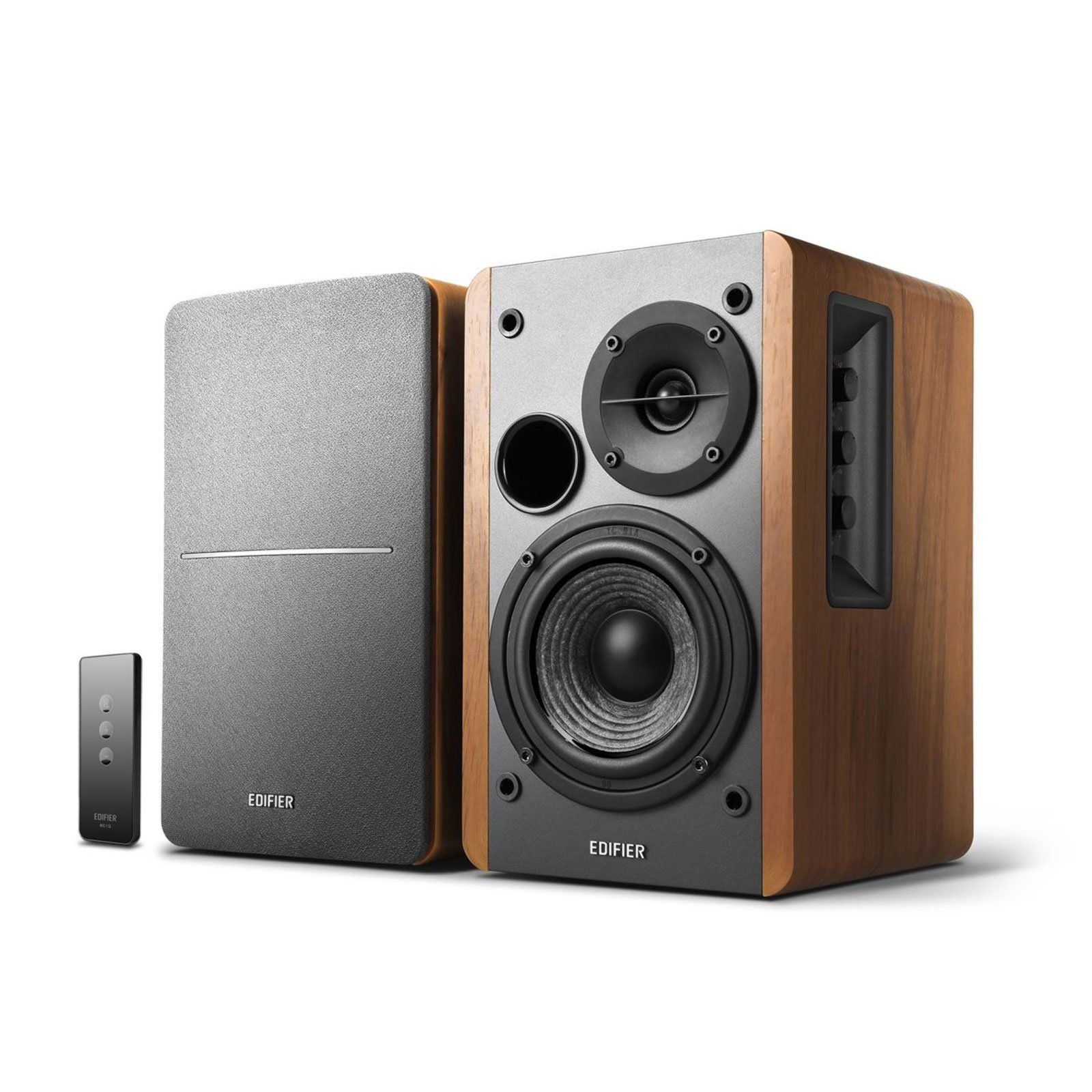
The Edifier R1280T has become a staple in the entry-level powered speaker market, offering a complete 2.0 stereo system with a built-in 42W RMS amplifier that eliminates the need for a separate receiver. Each speaker houses a 4-inch bass driver and a 0.5-inch silk dome tweeter, delivering a warm, balanced sound signature that is particularly suited for desktop near-field listening. The rear ported design extends the low end slightly, but a subwoofer is recommended for listeners seeking punchy bass for movies or bass-heavy music.
Connectivity is straightforward with dual RCA inputs on the active speaker, allowing you to connect two sources simultaneously, such as a computer and a turntable or TV. The included remote control adjusts volume, and the side-panel knobs provide bass and treble tone control for fine-tuning the response to your room or content. The MDF cabinet is finished in a classic wood-grain vinyl that looks more expensive than its price suggests, and the overall build quality is reassuringly solid with no rattles at moderate volumes.
Where the R1280T excels is in its simplicity and user-friendly features for a non-audiophile audience. Setup takes minutes, and the sound is immediately pleasing without requiring complex calibration. However, for critical listeners, the midrange can sound slightly recessed compared to more revealing passive speakers. The lack of a subwoofer output is a limitation for those wanting to expand to a 2.1 system later. For a hassle-free desktop audio upgrade with a classic design, this remains a top choice among affordable powered bookshelf speakers.
Why it’s great
- Complete active system with built-in 42W amplifier
- Dual RCA inputs allow simultaneous connection to two devices
- Remote control and tone controls for easy customization
Good to know
- No subwoofer output for expanding to a 2.1 system
- Bass is warm but lacks punch; subwoofer recommended for full range
9. Rockville RockShelf 68B V2

The Rockville RockShelf 68B V2 punches well above its price point by incorporating 6.5-inch Kevlar woofers with polypropylene dust caps — a driver material typically found in speakers costing significantly more. The 1-inch silk dome tweeters handle high frequencies smoothly, while the 12 dB/octave crossover at 10 kHz ensures seamless driver integration. Each pair is rated for 100W RMS (400W peak), meaning they can handle substantial power from a budget receiver without distorting, a rare feat at this tier.
The MDF cabinets are finished in a sleek black grain with rounded corners and magnetic grilles that snap off cleanly for a more modern look. Built-in wall-mount brackets make installation simple for surround sound or distributed audio setups. Compact dimensions (11.81 x 7.06 x 6.43 inches) and a 6-pound weight per speaker allow flexible placement on bookshelves, stands, or walls. Gold-plated 5-way binding posts support banana plugs, spades, or bare wire, offering reliable connectivity with most amplifiers.
Listening tests reveal surprising bass output for a sealed bookshelf design, with punchy lows that complement the clear midrange and crisp highs. These are best suited for small to medium rooms with a 50-100W amplifier driving them. Some users note that the speakers are smaller than expected in person, but the audio output remains impressive for the investment. For budget-minded buyers seeking a home theater entry point or a versatile stereo pair, the Rockville RockShelf 68B V2 offers remarkable value without sacrificing critical driver technology.
Why it’s great
- Kevlar woofer cones deliver clean, low-distortion bass
- Built-in wall-mount brackets simplify installation
- Gold-plated binding posts for all common connection types
Good to know
- Speakers are physically compact; confirm dimensions before purchase
- Best results require a 50-100W amplifier for proper dynamic control
FAQ
Can I use an 8 Ohm speaker with a 6 Ohm or 4 Ohm receiver?
What does a 12dB/octave crossover do in a speaker?
How much amplifier power do I need for an 8 Ohm bookshelf speaker?
Final Thoughts: The Verdict
For most users, the best 8 ohm speaker winner is the Polk Monitor XT20 because it delivers balanced frequency response from 38 Hz upwards with excellent EQ flexibility for the price. If you want maximum detail and a lively soundstage with premium build, grab the Klipsch RP-600M II. And for a fuss-free active system that handles hi-res streaming and deep bass without a subwoofer, nothing beats the Edifier S2000MKIII.