
A backpacking jacket has one job: deliver warmth per ounce with no compromises when the sun drops and the wind picks up. The difference between a solid night’s sleep and a shivering, miserable bivy often comes down to a single layer you can stuff into the top of your pack. Choosing the wrong one means either sweating through a climb or freezing at camp.
I’m Min — the co-founder and writer behind Gadgets Feed. My research process involves cross-referencing hydrostatic head ratings, fill-power density, fabric denier, and packed loft across dozens of models to separate genuine trail-ready gear from overpriced fashion pieces.
This guide cuts through the noise to identify the best backpacking jacket for your specific mileage, climate, and budget — whether you need a bombproof shell for alpine ridges or a compressible puffy for three-season trips.
How To Choose The Best Backpacking Jacket
The right backpacking jacket balances three competing demands: thermal efficiency, weather resistance, and packed volume. A puffy that excels around camp may suffocate you on a steep ascent, and a heavy-duty shell that shrugs off monsoons may weigh more than your entire cook kit. Understanding a few key specifications will help you match the jacket to your actual itinerary.
Insulation Type: Down vs. Synthetic Fill
Down, measured in fill power (e.g., 700-fill, 800-fill), offers the highest warmth-to-weight ratio and compresses smaller than any synthetic alternative. The trade-off is catastrophic performance loss when wet — wet down clumps and loses virtually all insulating loft. Synthetic insulation (like PrimaLoft or Rab’s Cirraloft) retains warmth when damp, dries faster, and costs less, but it is heavier and less compressible for the same warmth level. For dry alpine conditions, down wins. For coastal trails or humid three-season treks, synthetic is the safer bet.
Waterproofing and Breathability Ratings
For a hardshell worn over insulation, the hydrostatic head (HH) rating tells you how much water pressure the fabric can withstand before leaking. A rating of 10,000mm is sufficient for sustained rain; 20,000mm or higher is alpine-ready. Breathability, measured in g/m²/24hr (MVTR), matters just as much — a non-breathable shell turns your hike into a steam bath. Look for a minimum of 10,000 g/m²/24hr MVTR if you plan to wear the shell while generating body heat on the trail.
Weight and Packed Volume
Every gram counts when you’re carrying your jacket for days. A lightweight synthetic insulating jacket typically weighs 12–16 ounces, while an ultralight down hoody can drop below 10 ounces. The shell layer adds another 8–14 ounces. Before buying, check the jacket’s stuff sack size and whether it can compress to the volume of a Nalgene bottle or smaller. Gear that doesn’t pack small often gets left behind, defeating its purpose entirely.
Quick Comparison
On smaller screens, swipe sideways to see the full table.
| Model | Category | Best For | Key Spec | Amazon |
|---|---|---|---|---|
| Mountain Hardwear Ghost Whisperer/2 | Down Hoody | Ultralight alpine trips | 800-fill down / 8.9 oz | Amazon |
| Arc’teryx Beta AR | Hardshell | Full alpine weather protection | 3L Gore-Tex Pro / 16.9 oz | Amazon |
| Rab Neutrino Pro Hoody | Expedition Down | Static warmth in extreme cold | 800-fill down / 20.6 oz | Amazon |
| Rab Downpour Mountain Jacket | Rain Shell | Lightweight waterproof layer | 20K HH / 20K MVTR | Amazon |
| Rab Microlight Jacket | Mid-Weight Down | Versatile cold-weather insulation | 700-fill down / 14 oz | Amazon |
| Rab Cirrus Jacket | Synthetic Insulated | Wet-weather active insulation | PrimaLoft synthetic / 16.6 oz | Amazon |
| Marmot Minimalist Jacket (Women’s) | Rain Shell | Packable waterproof for travel | Waterproof membrane / 13 oz | Amazon |
| The North Face Apex Bionic 3 | Softshell | Windproof daily wear / mild cold | Wind-resistant fleece / 20 oz | Amazon |
| Pioneer Camp Waterproof Rain Jacket | Budget Rain Shell | Entry-level wet-weather defense | 15,000mm HH / 18 oz | Amazon |
In‑Depth Reviews
1. Mountain Hardwear Ghost Whisperer/2

The Mountain Hardwear Ghost Whisperer/2 is the benchmark for ultralight backpacking insulation, packing 800-fill down into a sub-9-ounce package that compresses to the size of a grapefruit. Its 10-denier ripstop shell is whisper-thin, which delivers exceptional packability but demands care around sharp rocks and campfire sparks. At 20°F with a long-sleeve base layer, this jacket maintains comfortable warmth without the bulk of a midweight puffy — exactly what thru-hikers and fast-and-light enthusiasts need.
The athletic cut sits close to the body, making it an ideal midlayer under a hardshell in truly cold conditions, while the full-length zipper and elastic cuffs seal in heat on exposed ridges. Reviewers consistently praise its warmth-to-weight ratio for alpine starts in the Sierra and wind-chilled mornings in Patagonia. The main compromise is durability — the thin face fabric snags easily, and the zipper pull feels delicate for a premium piece.
For gram-counters who prioritize packed volume over ruggedness, the Ghost Whisperer/2 remains the king of ultralight down. If your trips involve heavy bushwhacking or extended use as an outer layer, consider the more durable Rab Microlight instead.
Why it’s great
- Unmatched warmth at 8.9 ounces saves critical pack weight
- Packs down extremely small for its fill power
- Flattering athletic fit layers cleanly under a shell
Good to know
- 10-denier face fabric is prone to snagging on branches
- No internal pockets for storing gloves or a phone
- Not a standalone winter coat below freezing without midlayers
2. Arc’teryx Beta AR
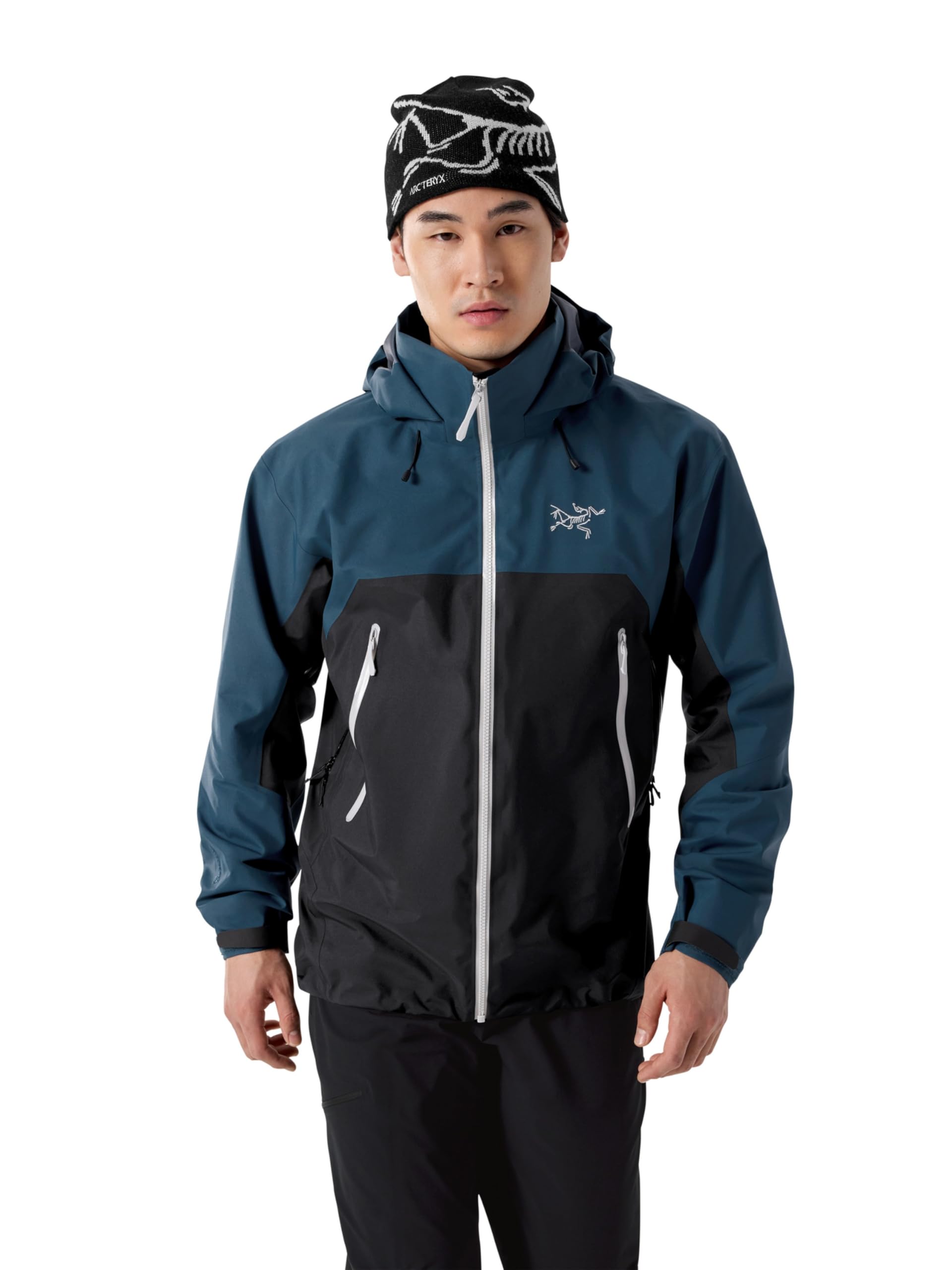
The Arc’teryx Beta AR is a no-compromise Gore-Tex Pro shell built for alpine missions where waterproof reliability and breathability are non-negotiable. Its three-layer construction uses an 80-denier recycled nylon face on the body and a burlier 100-denier fabric on the shoulders and arms, providing exceptional abrasion resistance for scrambling, rock contact, and heavy pack straps. The helmet-compatible DropHood and WaterTight zippers make this a serious piece of gear for ice climbing and alpine traverses — not a casual raincoat.
Unlike lighter shells that rely on ultralight face fabrics, the Beta AR feels substantial without being overly stiff, and the C0 DWR coating handles persistent precip well. The fit is trim enough for aerobic activity but still accommodates a midweight down layer beneath. A RECCO reflector is embedded in the hood, adding a passive safety element for backcountry travelers.
Reviewers note that the sleeves run exceptionally long — a design choice for climbing reach — so shorter torsos may find the fit awkward. The price point also positions this firmly in the premium investment category. If you need a do-everything shell that survives years of abuse in the alpine, the Beta AR justifies every dollar.
Why it’s great
- Bombproof 3L Gore-Tex Pro with 100d reinforcement zones
- Helmet-compatible DropHood moves with head rotation
- RECCO reflector adds backcountry safety
Good to know
- Very long sleeves may require sizing adjustments
- Premium price puts it out of budget for casual hikers
- Heavier than dedicated ultralight rain shells
3. Rab Neutrino Pro Hoody
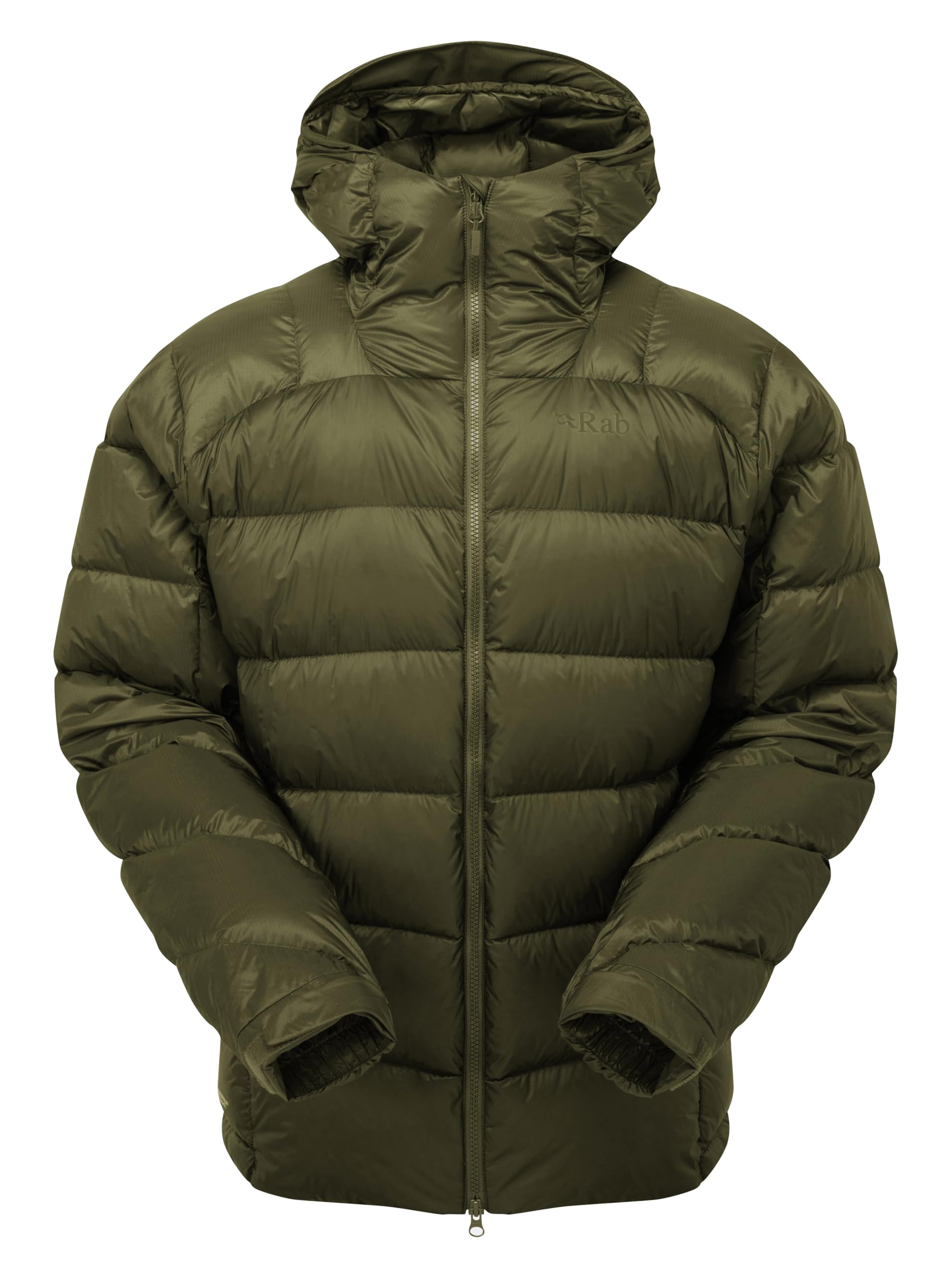
The Rab Neutrino Pro Hoody is the warmth-first solution for camp belays and high-elevation bivouacs where staying static in sub-zero temperatures is the primary challenge. Its 800-fill European goose down is housed in a 20-denier Pertex Quantum Pro outer with a DWR finish, creating a jacket that punches well above its weight class. The fitted cut traps heat effectively, but the generous 5.4-ounce down fill means it runs warm during any active hiking — this is a jacket for when you stop moving.
The hood is helmet-compatible and wired at the brim, holding shape in high winds, while the hem and cuffs cinch securely to block drafts. Reviewers consistently report being comfortable at 10°F with just a fleece base layer beneath. The main critique is the hood’s bulk when not in use — it rolls into a sizable collar that looks awkward under a backpack hipbelt.
If your trips involve long, cold evenings at camp or winter mountaineering objectives, the Neutrino Pro Hoody will keep you warm when cheaper puffies fail. For summer alpine starts, the Ghost Whisperer/2 offers comparable warmth at half the weight.
Why it’s great
- Heavy 5.4 oz of 800-fill down for serious static warmth
- Pertex Quantum Pro shell resists light precipitation
- Wired, helmet-compatible hood performs in high wind
Good to know
- Bulky hood not ideal for layering under a hardshell
- Too warm for aerobic use above freezing
- Fitted cut requires sizing up for thick midlayers
4. Rab Downpour Mountain Jacket
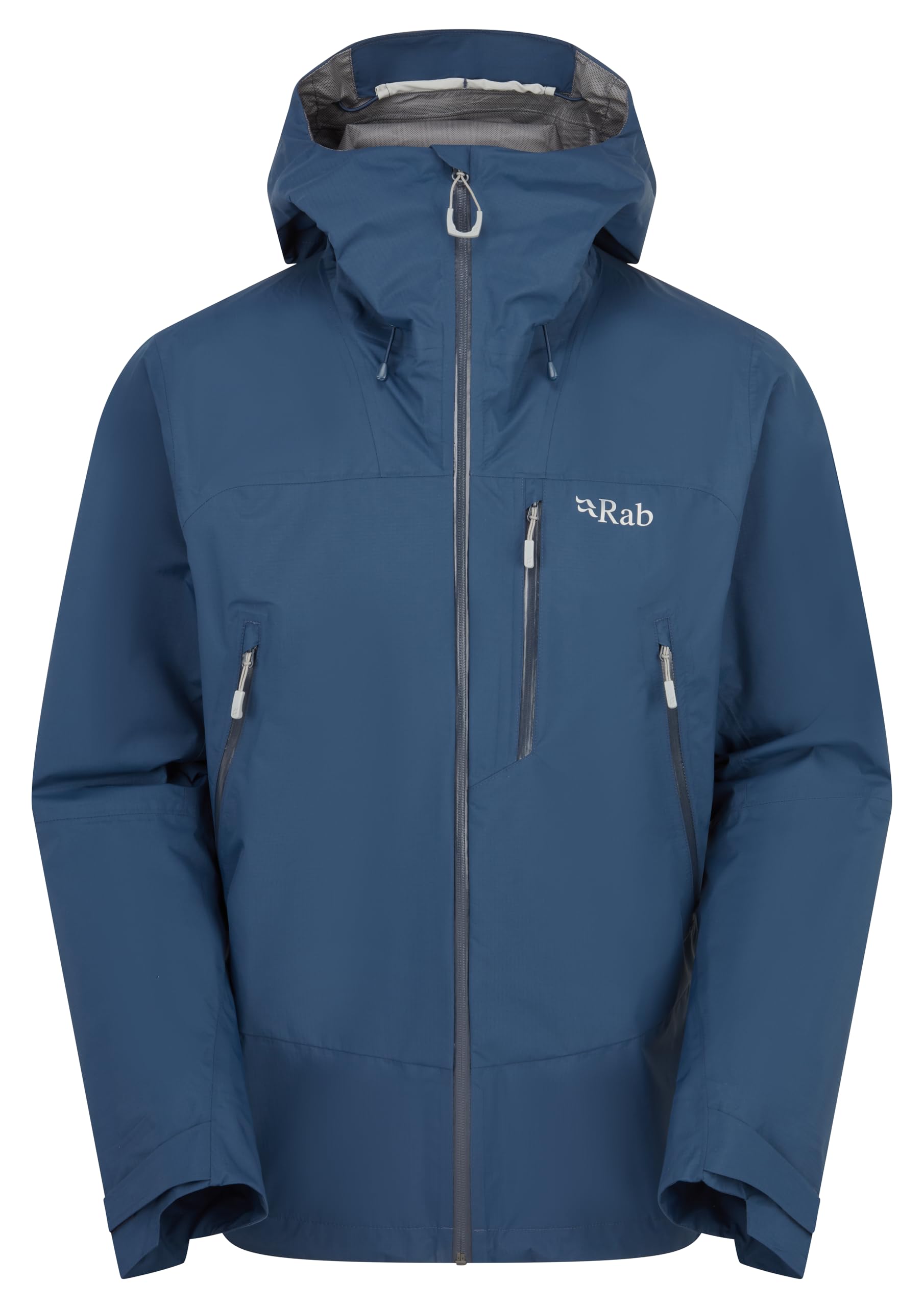
The Rab Downpour Mountain Jacket delivers a rare combination of high-end waterproofing and breathability at a mid-range price point, with a 20,000mm hydrostatic head and 20,000 g/m²/24hr MVTR that rivals jackets costing twice as much. The fabric is a lightweight 20-denier recycled polyester weave with a mechanical stretch, moving well during high-output climbing and scrambling. Its fully taped seams and water-resistant zippers ensure zero leaks in sustained downpours.
Weighing just over 10 ounces, the Downpour packs into its own pocket and disappears into a pack — ideal for three-season hikers who need an emergency shell for sudden weather shifts. The articulation in the arms provides good mobility for reaching upward on technical terrain, and the adjustable hood fits neatly over a climbing helmet. Reviewers praise its ability to keep the wearer dry during hours of outdoor work in Florida rain while avoiding the clammy feel of cheaper shells.
One consistent caveat: Rab’s sizing runs smaller than North American expectations, so consider going up one size, especially if you plan to layer over a puffy. For the weight-conscious backpacker who still wants a reliable waterproof membrane, this is the shell to beat.
Why it’s great
- Excellent 20K/20K waterproof-breathable balance
- Very packable at just over 10 ounces
- Good articulation for climbing and scrambling
Good to know
- Runs noticeably small, size up for layering
- 20-denier face fabric is not for heavy brush
- Limited color options compared to competitors
5. Rab Microlight Jacket
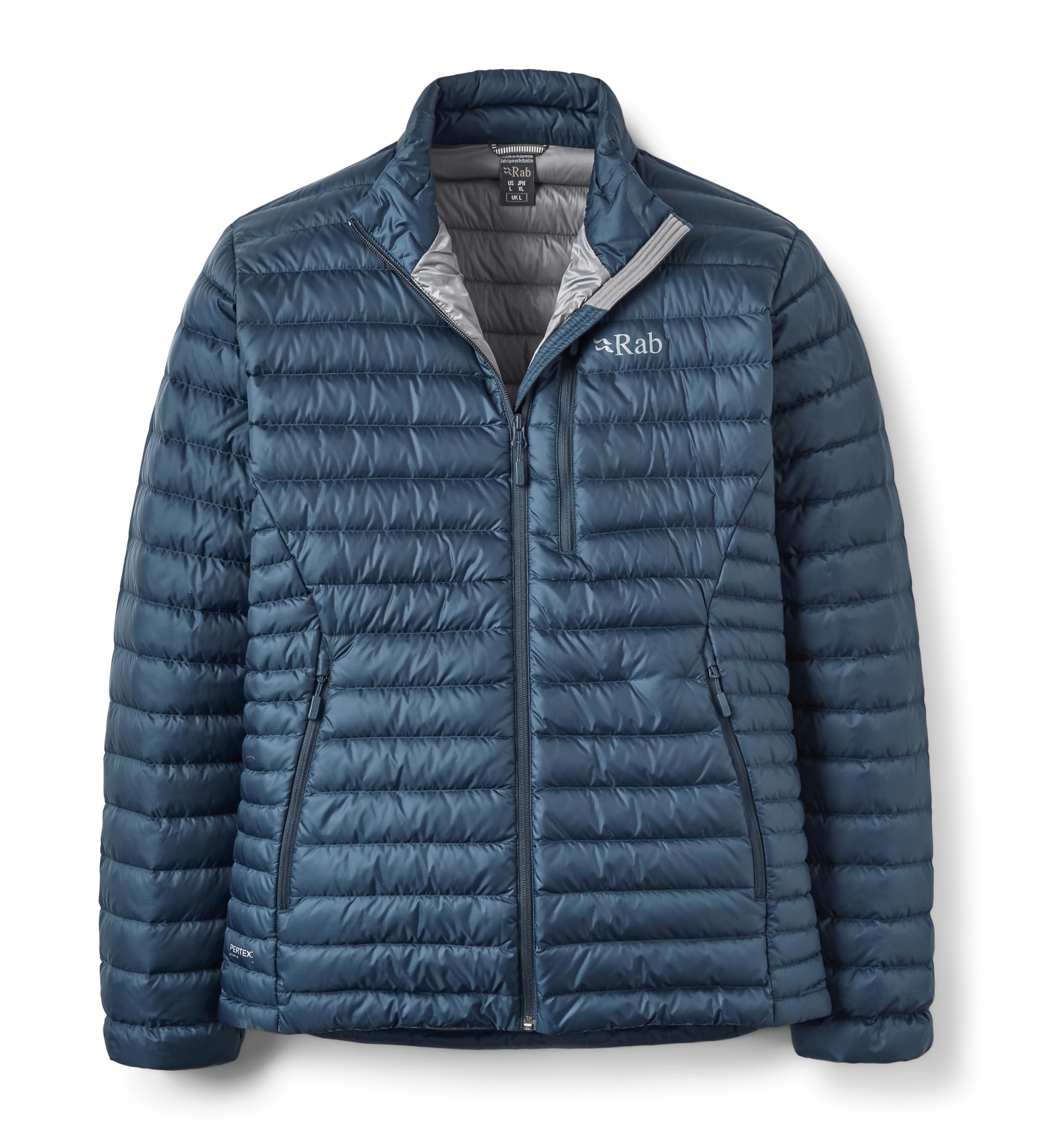
The Rab Microlight Jacket is the mid-weight down workhorse that covers a wider range of conditions than any single jacket should reasonably be expected to handle. Its 700-fill goose down is housed in a 20-denier Pertex Microlight shell with a DWR finish, making it durable enough for daily use as an outer layer but still light enough for three-season backpacking. The fit strikes a balance between slim and roomy, accommodating a baselayer and light fleece without binding through the shoulders.
Reviewers consistently compare it favorably to the Patagonia Down Sweater, noting similar warmth and build quality at a lower price point. The hood is insulated and helmet-compatible, and the jacket includes two zippered hand pockets plus a useful external chest pocket. At 14 ounces, it is not the ultralight option, but it transitions seamlessly from a chilly morning camp to a casual town stop on a resupply day.
One quirk: the zipper pull is on the left side (European standard), which takes adjustment for right-handed users. The jacket also lacks a stuff sack for compression. For backpackers who want one versatile insulated jacket that works from fall through early spring without breaking the bank, the Microlight is a compelling choice.
Why it’s great
- Versatile 700-fill down works for both trail and town
- 20-denier Pertex shell is more durable than ultralight options
- Comparable quality to Patagonia at a lower cost
Good to know
- Left-side zipper pull takes getting used to
- No integrated stuff sack for packed compression
- Not warm enough below 20°F without a shell over it
6. Rab Cirrus Jacket
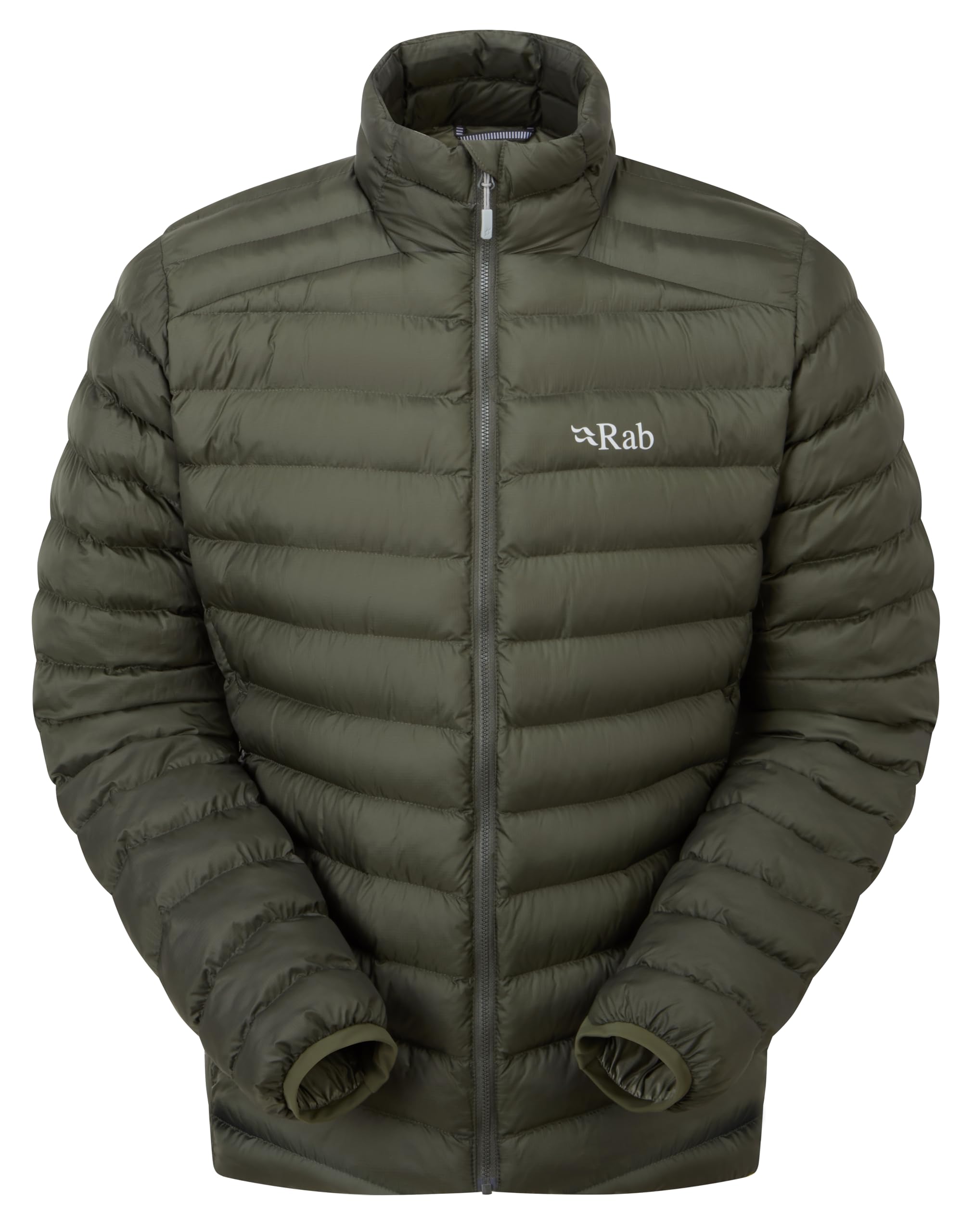
The Rab Cirrus Jacket uses PrimaLoft synthetic insulation, making it the smart choice for backpackers who regularly encounter drizzle, fog, or snowmelt. Unlike down, PrimaLoft retains its loft and warmth even when damp, and it dries much faster than natural fill. The jacket’s Pertex Microlight shell provides light weather resistance, and the seamless quilted construction minimizes cold spots at the stitch lines. At 16.6 ounces, it is heavier than equivalent down jackets, but the wet-weather reliability more than compensates for the weight penalty.
The fit is tailored through the torso, offering a clean look that works under a hardshell without bunching. The jacket packs into its own pocket, though the packed volume is noticeably larger than a down puffy of similar warmth. Reviewers note that it performs well at temperatures down to about 25°F with a fleece base layer, and the lack of down clumping means it keeps working after a wet day on the trail.
A common complaint involves the fit: some users report a loose stomach area paired with tight shoulders and chest, suggesting the sizing may favor thinner builds. If your trips cross damp climates or you sweat heavily while hiking, the Cirrus is a safer bet than any down jacket at this price point.
Why it’s great
- PrimaLoft insulation stays warm when wet
- Pertex shell adds light weather resistance
- Seamless quilting reduces cold spots
Good to know
- Heavier and bulkier than comparable down jackets
- Fit may feel odd for broader shoulders
- Neck collar sits low, allowing drafts in cold wind
7. Marmot Minimalist Jacket (Women’s)

The Marmot Minimalist Jacket delivers a lightweight, packable waterproof shell that excels for international travel and unpredictable weather. Its waterproof membrane is paired with fully taped seams and a DWR finish, stopping heavy rain effectively while maintaining a pack weight around 13 ounces. The jacket rolls into its own pocket, making it easy to stash in a daypack for city exploring or day hikes where full rain protection is needed without the bulk of a 3L shell.
The cut is slightly longer in the torso — a feature appreciated by tall frames and those who want extra coverage for layering over a puffy. Adjustable cuffs and a drawcord hood offer a customizable fit, and the snap-over-zip front closure adds a second layer of rain defense at the centerline. Reviewers in typhoon-prone regions of Asia report it stood up to monsoon-level downpours during daily motorcycle commutes and year-round use.
One downside: the fabric feels less substantial than dedicated alpine shells, and extended bushwhacking could abrade the face. Some long-time Marmot users also note that the latest version has fewer features than the previous generation. For the price-conscious traveler who needs a reliable rain barrier that packs small, this jacket offers strong value.
Why it’s great
- Lightweight and packable at 13 ounces
- Longer torso length works well for layering
- Proven performance in heavy tropical rain
Good to know
- Face fabric is not as durable as alpine 3L shells
- Fewer features compared to previous model versions
- Women’s specific cut may not suit all body types
8. The North Face Apex Bionic 3
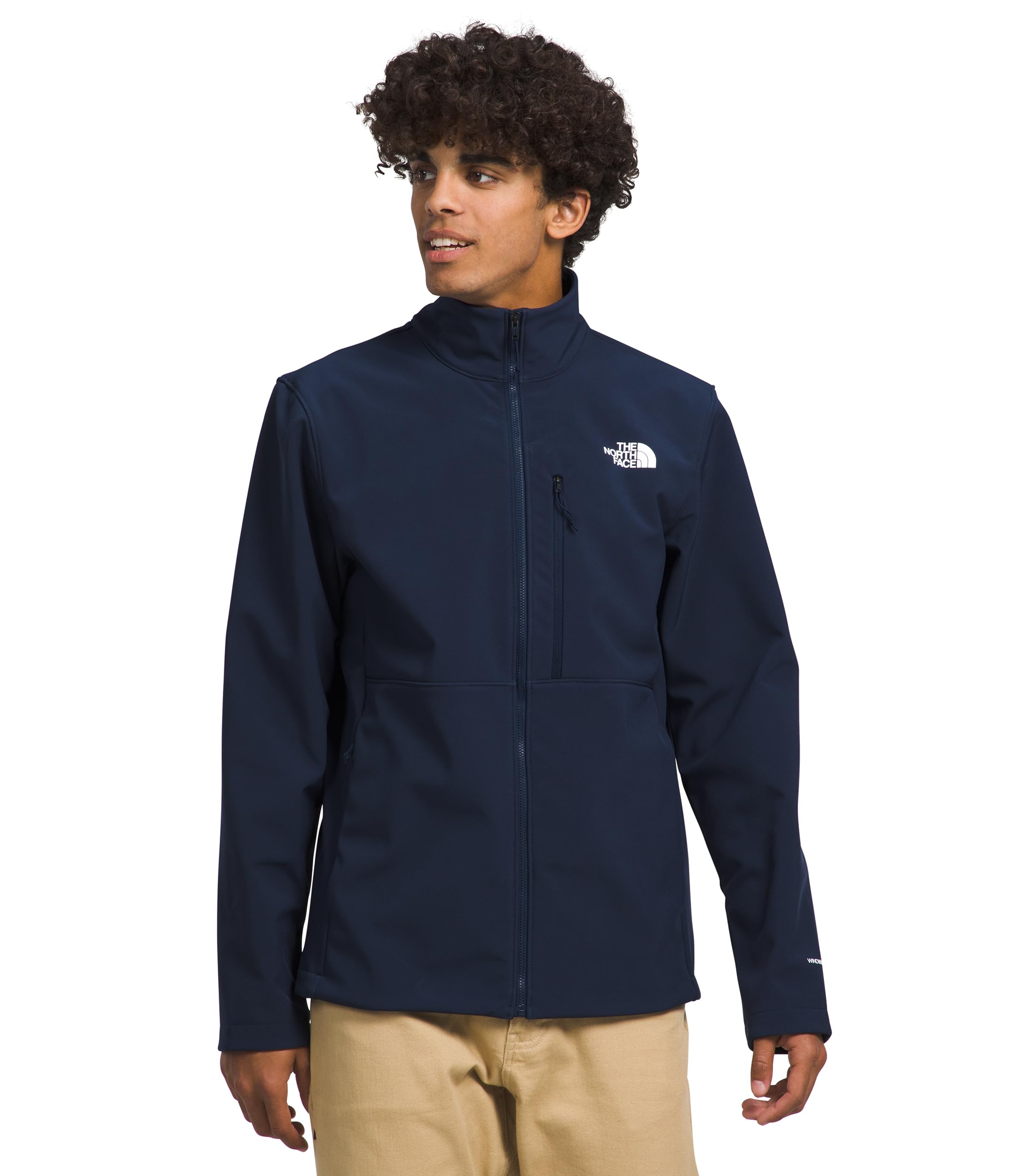
The North Face Apex Bionic 3 is a softshell jacket optimized for cold-wind management during active use, rather than full waterproof protection at camp. Its WindWall fabric blocks gusts effectively while the brushed fleece interior adds warmth without the weight of a puffy. At about 20 ounces, it is substantially heavier than a dedicated backpacking shell, but it eliminates the need for a separate wind layer and midweight fleece on mild days.
The regular fit allows easy layering over a baselayer, and the zippered hand and chest pockets provide secure storage for small essentials. Reviewers consistently note that it keeps them warm in 40°F weather with only a t-shirt underneath, making it a versatile option for cool-weather hiking, trail running, or daily wear. The Apex Bionic 3 is not designed for heavy rain — the DWR finish handles light mist but saturates quickly in a downpour.
For backpacking, this jacket works best as a high-output active layer for windy ridges or chilly morning starts, paired with a separate lightweight rain shell for wet conditions. If you need a single jacket that can do everything, the Apex Bionic 3 is better suited for car camping or resort skiing than multi-day backcountry trips.
Why it’s great
- WindWall fabric blocks cold gusts effectively
- Soft fleece lining adds warmth without bulk
- Good fit for layering over a baselayer
Good to know
- Heavy compared to dedicated backpacking shells
- Not waterproof in sustained rain
- Sizing runs slightly small for broad shoulders
9. Pioneer Camp Men’s Waterproof Rain Jacket
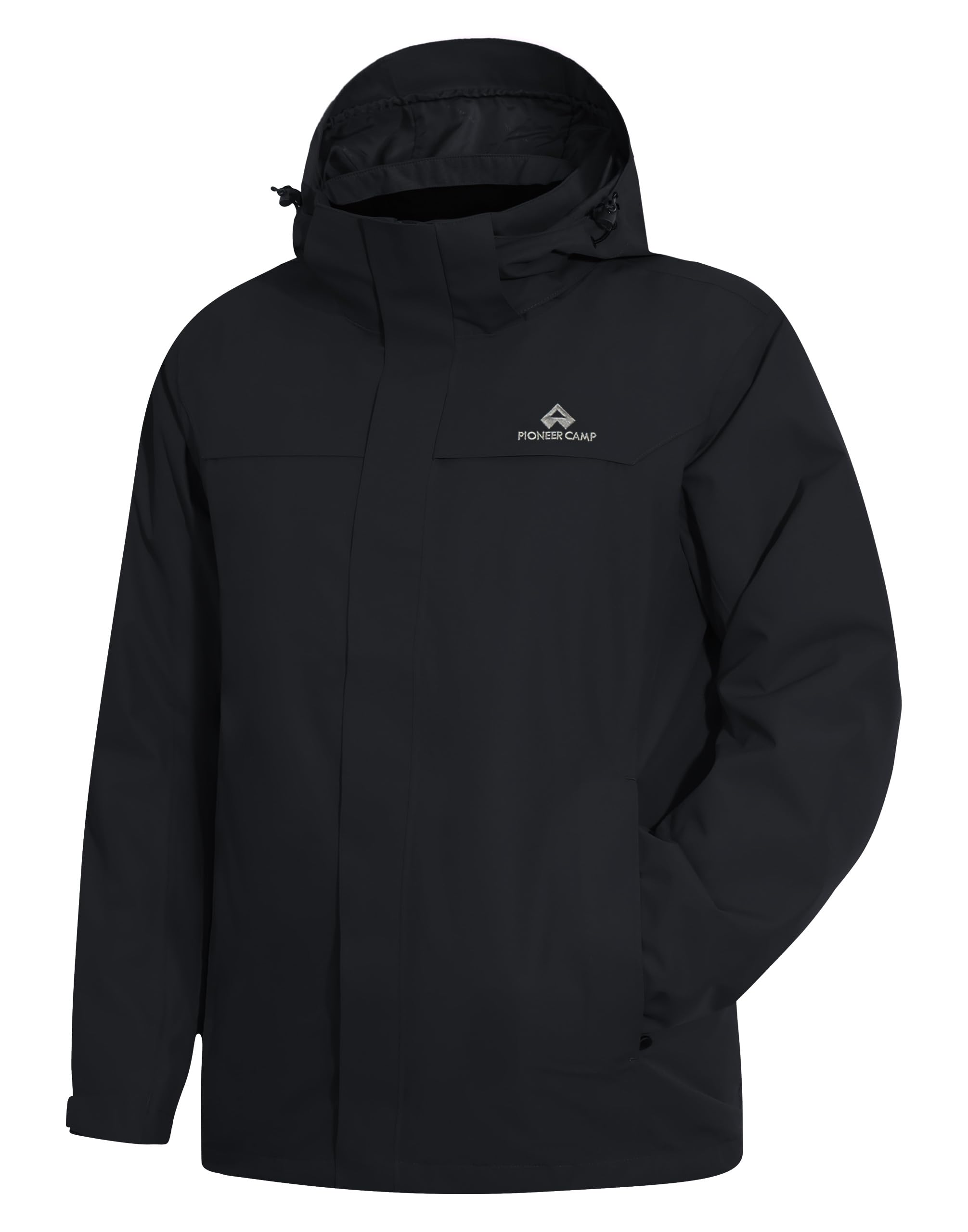
The Pioneer Camp Men’s Waterproof Rain Jacket proves that effective waterproof protection does not require a premium budget. Its 15,000mm hydrostatic head rating matches the performance of shells costing three times as much, with large velcro-sealed zipper flaps and a full hood that keep water out during sustained downpours. The polyester shell is thicker than ultralight options, adding durability at the expense of packability and weight — at 18 ounces, it is almost double the weight of the Rab Downpour.
The classic fit accommodates layering a lightweight puffy underneath, and the three exterior pockets — two hand and one chest — provide practical storage for trail essentials. Reviewers on Alaska cruises and yard work detail report staying bone-dry in hours of heavy rain, and the construction feels robust enough for regular outdoor use. The velcro wrist tabs and adjustable hem allow a custom seal against drafts and precipitation.
The trade-offs are the heavier fabric and stiffer feel compared to high-end shells, along with limited breathability during aerobic activity. For backpackers on a tight budget who need a reliable emergency shell for occasional rain, or for car campers who want a tough layer that can take abuse, this jacket delivers impressive performance per dollar.
Why it’s great
- Genuine 15,000mm waterproof rating at a budget price
- Robust construction with large velcro zipper flaps
- Roomier fit allows layering underneath
Good to know
- Heavy at 18 ounces for a dedicated rain shell
- Limited breathability for high-output hiking
- Stiffer fabric feels less refined than premium shells
FAQ
Should I buy a down or synthetic insulated backpacking jacket?
What is the ideal total weight for a backpacking jacket system?
Why do some backpacking jackets have longer sleeves?
Final Thoughts: The Verdict
For most users, the best backpacking jacket winner is the Mountain Hardwear Ghost Whisperer/2 because it delivers the highest warmth-to-weight ratio available at under 9 ounces, compressing small enough to disappear into any pack. If you need a bombproof waterproof shell that withstands years of alpine abuse, grab the Arc’teryx Beta AR. And for wet-weather reliability without the down-compromise, nothing beats the Rab Cirrus Jacket.