
Settling for blurry textures or sub-60 FPS at 1440p is a compromise no serious gamer should accept. The graphics card market is flooded with options, making the choice between raw rasterization, ray tracing, and VRAM capacity a genuine headache. Whether you’re chasing high-refresh-rate esports titles or immersive AAA narratives, the right GPU defines your entire experience.
I’m Min — the co-founder and writer behind Gadgets Feed. I’ve spent months dissecting benchmark data, analyzing thermal performance across dozens of models, and cross-referencing real-world frame rates to identify the cards that actually deliver at the 1440p resolution.
This guide covers every serious contender, from value-driven mid-range cards to premium powerhouses, to help you pinpoint the absolute best 1440p gaming graphics card for your specific build and budget.
How To Choose The Best 1440p Gaming Graphics Card
Selecting a GPU for 1440p is a balancing act between resolution demands, refresh rate targets, and future-proofing. You don’t need a flagship 4K card to enjoy high-fidelity 1440p gaming, but you do need enough memory and processing power to keep textures crisp and frame rates smooth for the next few years. Here are the key factors to consider.
VRAM Capacity and Memory Bandwidth
At 1440p, textures are significantly larger than at 1080p, and modern AAA titles can consume 10-12GB of VRAM at ultra settings. An 8GB card will already show stuttering and texture pop-in in games like Hogwarts Legacy or Cyberpunk 2077 with high-resolution texture packs. Aim for 12GB as a baseline; 16GB provides a comfortable buffer for ray-traced workloads and future titles. Memory bandwidth, measured in GB/s, is equally critical — a wider 256-bit bus on a card with GDDR7 or fast GDDR6 directly translates to smoother frame pacing.
Ray Tracing and Upscaling Technology
NVIDIA’s DLSS 4 and AMD’s FSR 4 are not equal. DLSS 4’s transformer-based AI model delivers superior image reconstruction and upscaling quality, especially at 1440p where upscaling is less aggressive than at 4K. For ray tracing, NVIDIA’s Blackwell architecture offers more robust RT core performance than AMD’s RDNA 4 at the same price tier, though AMD’s 3rd-gen RT accelerators have closed the gap considerably on higher-end models. If ray tracing is a priority, lean towards NVIDIA; if raw rasterization value is your goal, AMD’s mid-range offerings are compelling.
Cooling and Power Requirements
A 1440p card under load can draw between 200W and 350W. Adequate thermal solutions — measured by the number of fans, heatsink mass, and vapor chamber design — directly affect noise levels and sustained clock speeds. Triple-fan designs with zero-RPM modes are preferred for quiet operation during less demanding tasks. Always check your power supply’s output (750W or higher is a safe minimum for premium cards) and physical case clearance, as many high-end coolers are over 300mm in length.
Quick Comparison
On smaller screens, swipe sideways to see the full table.
| Model | Category | Best For | Key Spec | Amazon |
|---|---|---|---|---|
| XFX Swift RX 9060 XT | Mid-Range | Value 1440p Gaming | 16GB GDDR6, 3320 MHz Boost | Amazon |
| GIGABYTE RX 9060 XT Gaming OC | Mid-Range | Cooling & Value | 16GB GDDR6, WINDFORCE Cooling | Amazon |
| EVGA RTX 3070 XC3 Ultra | Mid-Range | Reliable 8GB Card | 8GB GDDR6, 1770 MHz Boost | Amazon |
| PNY RTX 5070 Epic-X OC | Premium | DLSS 4 & 1440p | 12GB GDDR7, 2685 MHz Boost | Amazon |
| GIGABYTE RTX 5070 WF3 OC | Premium | Quiet Compact Build | 12GB GDDR7, SFF-Ready | Amazon |
| MSI RTX 5070 Gaming Trio OC | Premium | Thermal Performance | 12GB GDDR7, TRI FROZR 4 | Amazon |
| ASUS Prime RTX 5070 | Premium | SFF Builds & 1440p | 12GB GDDR7, Axial-tech Fans | Amazon |
| ASRock RX 9070 XT Steel Legend | Premium | Raw 1440p Power | 16GB GDDR6, 2970 MHz Boost | Amazon |
| ASUS TUF RTX 5070 OC | Premium | Durability & Ray Tracing | 12GB GDDR7, Military-Grade | Amazon |
| MSI RTX 5070 Ti Ventus 3X OC | High-End | High FPS 1440p/Entry 4K | 16GB GDDR7, 2497 MHz Boost | Amazon |
| MSI RTX 5070 Ti Shadow 3X OC | High-End | Price-to-Performance | 16GB GDDR7, 2482 MHz Boost | Amazon |
In‑Depth Reviews
1. PNY NVIDIA GeForce RTX 5070 Epic-X ARGB OC Triple Fan
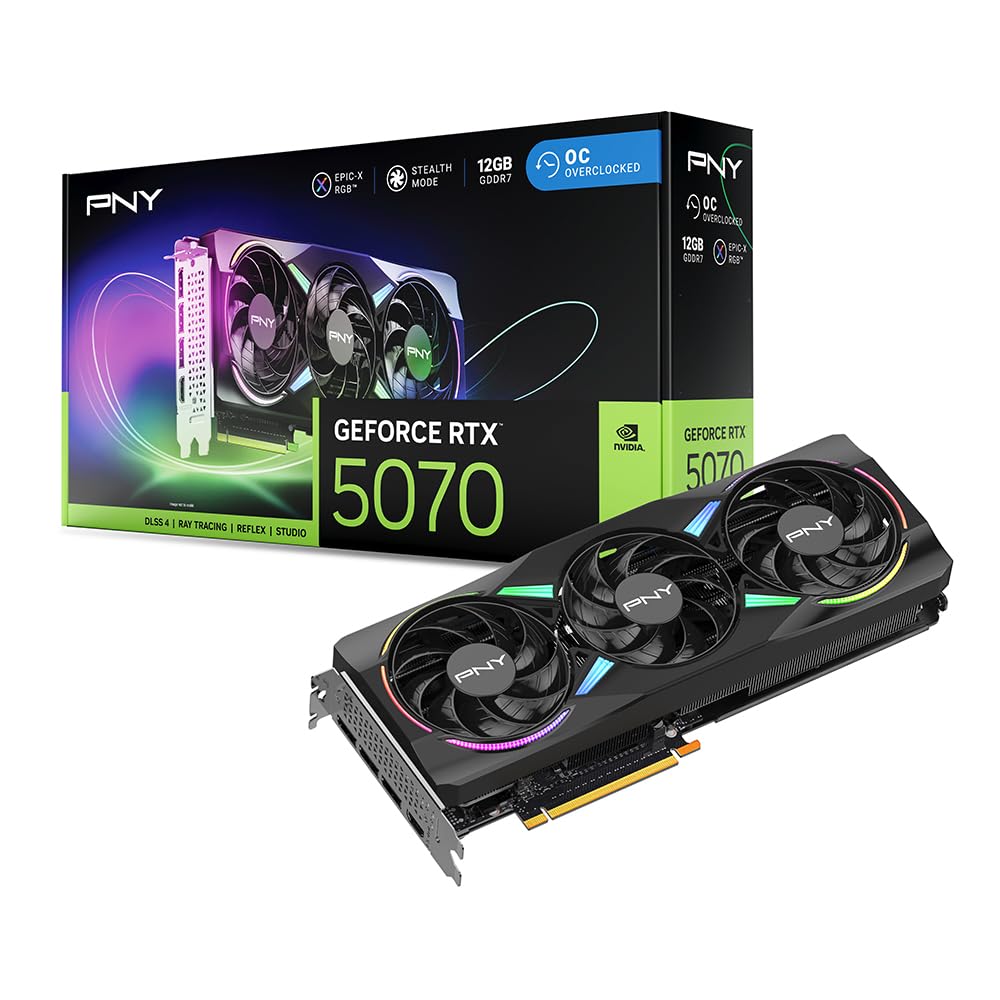
The PNY RTX 5070 Epic-X ARGB OC represents the sweet spot for 1440p gaming in the current generation. Built on NVIDIA’s Blackwell architecture, it uses DLSS 4 with third-gen RT cores to deliver transformative frame rate gains in ray-traced titles like Cyberpunk 2077 and Alan Wake 2. The 12GB of GDDR7 memory on a 192-bit bus provides sufficient bandwidth for high-resolution textures, while the triple-fan cooler keeps the card remarkably quiet under sustained load.
Customer reviews consistently praise its out-of-the-box performance, with one buyer noting it handles any game at 1440p with high FPS using DLSS and frame generation. The 8% factory overclock offers meaningful headroom over the reference specification, and power draw remains restrained enough that a quality 750W PSU is sufficient. The card’s compatibility with PCIe 5.0 ensures it won’t bottleneck future platform upgrades.
The only compromise is the 12GB VRAM — while adequate for current-gen 1440p gaming, future titles with heavy ray tracing may push against this ceiling. Still, for the blend of ray tracing performance, AI upscaling, and thermal efficiency, this card sets the benchmark for what a 1440p card should be in 2025.
Why it’s great
- DLSS 4 provides transformative frame rate boosts for ray-traced titles.
- Quiet triple-fan cooler with excellent thermal performance.
- 8% factory overclock offers meaningful extra performance out of the box.
Good to know
- 12GB VRAM may feel tight for future heavy-ray tracing titles.
- Requires checking case dimensions for fit.
2. ASRock Radeon RX 9070 XT Steel Legend 16GB

For gamers who prioritize raw rasterization power and VRAM headroom, the ASRock RX 9070 XT Steel Legend is a formidable contender. Powered by AMD’s RDNA 4 architecture, it delivers a monstrous 2970 MHz boost clock and 16GB of GDDR6 memory on a 256-bit bus, providing the bandwidth necessary for ultra texture packs and demanding 1440p scenarios. The triple-fan Steel Legend cooler with 0dB Silent Cooling mode keeps the card quiet at idle and effective under load.
Real-world feedback highlights that this card maxes out 1440p settings effortlessly, especially when paired with a modern CPU like the Ryzen 7600X3D. The 16GB VRAM buffer is the standout advantage here — it swallows texture-heavy titles without a hint of stutter. The Polychrome SYNC RGB adds a customizable aesthetic element, though the white LED on the logo is reportedly non-changeable, a minor annoyance for some builders.
The card’s 2.9-slot design and 298mm length demand careful case selection, and the recommended 800W PSU is not an exaggeration for the peak power draw. AMD’s FSR 4 has improved, but still trails DLSS 4 in image quality at challenging upscaling ratios. For anyone who wants to avoid VRAM anxiety and cares most about pure frame rate in rasterized games, this is an excellent choice.
Why it’s great
- 16GB VRAM on a 256-bit bus offers unmatched texture bandwidth at 1440p.
- Triple-fan cooler with 0dB mode runs quietly under light loads.
- Customizable RGB lighting via Polychrome SYNC.
Good to know
- Requires a spacious case and an 800W power supply.
- FSR 4 upscaling quality is not on par with DLSS 4.
- White LED on the logo is non-changeable.
3. XFX Swift AMD Radeon RX 9060 XT OC Gaming Edition
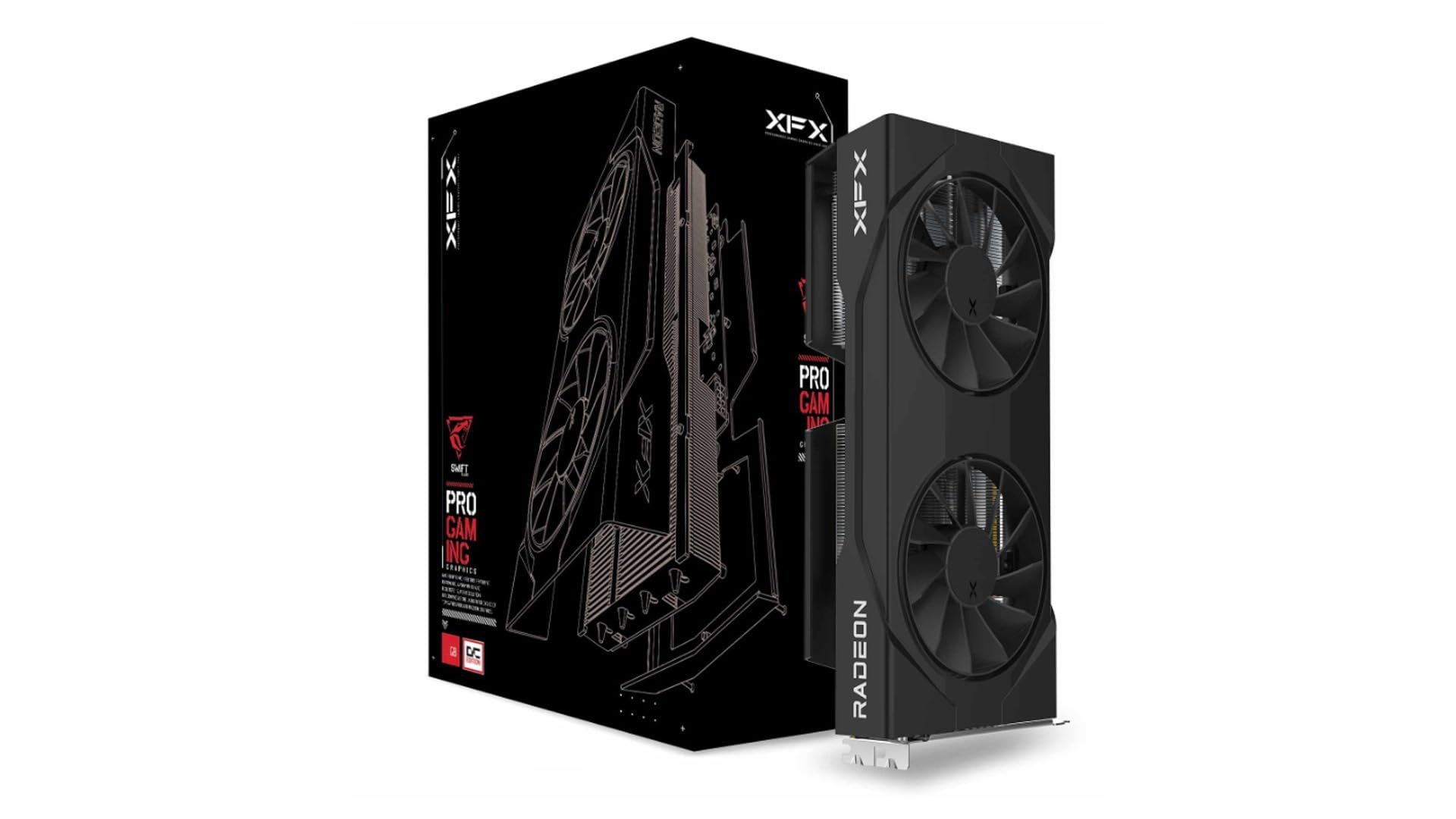
The XFX Swift RX 9060 XT is the embodiment of a budget beast, offering 16GB of GDDR6 memory and a 3320 MHz boost clock at an accessible price point. For 1440p gaming, this card is a revelation — it comfortably runs modern AAA titles like Crimson Desert at max settings with temperatures hovering around 60°C, as confirmed by multiple verified buyers. The dual-fan cooling solution from XFX is surprisingly effective for its compact profile, keeping the card quiet even during extended sessions.
Customer reviews point to a Time Spy score of approximately 17000, which positions this card as a serious performer for the money. The 16GB VRAM buffer is an unusual generosity at this tier, making it a compelling choice for modded games or texture-heavy open-world titles. Installation is straightforward, and the card’s power efficiency is notable — it draws less than many competitors while delivering comparable rasterization performance.
The primary trade-off is the lack of robust upscaling technology compared to NVIDIA’s DLSS 4; AMD’s FSR is functional but not equivalent. The card also limits connectivity to 2 DisplayPorts and 1 HDMI, which may be restrictive for multi-monitor setups. For the pure value-oriented gamer who wants 1440p performance without breaking the bank, this card is the clear winner.
Why it’s great
- 16GB VRAM at a budget-friendly price point is exceptional value.
- Excellent thermal performance, staying around 60°C under load.
- Power efficient and compact, fitting most cases easily.
Good to know
- Only three video outputs (2x DP, 1x HDMI).
- FSR upscaling is not on par with NVIDIA’s DLSS 4.
- Not suitable for high-end ray tracing workloads.
4. MSI GeForce RTX 5070 Ti 16G Ventus 3X OC

The MSI RTX 5070 Ti Ventus 3X OC sits at the premium edge of the 1440p spectrum, offering 16GB of GDDR7 memory on a 256-bit bus. This card blurs the line between high-refresh 1440p and entry-level 4K gaming. Real-world benchmarks from buyers show it delivering 120-140 FPS in demanding titles like Tarkov and DayZ at 1440p, and with DLSS 4 and Frame Generation, it can push well over 200 FPS in optimized titles. The TORX Fan 5.0 design and nickel-plated copper baseplate ensure it stays under 65°C even during extended sessions.
What sets this card apart is its price-to-performance ratio relative to the RTX 5080 — it’s approximately 15% slower but costs significantly less, making it the pragmatic choice for gamers who want near-flagship experience without the premium tax. The included support bracket adds peace of mind for the card’s substantial size, and the lack of RGB gives it a clean, professional aesthetic that appeals to minimalist builders.
The main consideration is its power appetite — a 750W PSU is the bare minimum, and the card’s dimensions may challenge smaller cases. Some reviewers noted that moving to an RTX 5080 is justifiable if found close to MSRP, but for most 1440p-focused gamers, this card offers the best blend of future-proofing and current-gen performance.
Why it’s great
- 16GB GDDR7 memory on a 256-bit bus for exceptional bandwidth.
- Excellent thermal performance, staying under 65°C under load.
- Best price-to-performance ratio near the high-end segment.
Good to know
- Large physical size requires careful case selection.
- Demands a 750W PSU as a minimum.
- No RGB lighting for those who want it.
5. ASUS SFF-Ready Prime NVIDIA GeForce RTX 5070

The ASUS Prime RTX 5070 is specifically designed for small-form-factor (SFF) enthusiasts who refuse to compromise on 1440p gaming performance. Its 2.5-slot footprint and axial-tech fan design with a phase-change GPU thermal pad make it one of the most thermally efficient compact cards on the market. At 2542 MHz boost clock, it easily handles competitive titles and AAA games like Cyberpunk 2077 and Elden Ring, with one buyer reporting a 10% overclocking headroom (+300 core, +1500 memory).
Customer feedback highlights its performance when paired with a Ryzen 7 7800X3D, achieving a Steel Nomad benchmark score of 5839. The card runs at a cool 60-65°C under full load on the Performance BIOS, and the dual BIOS feature gives users the flexibility to prioritize silence or performance. The clean black aesthetic is ideal for builds without RGB, and the SFF-ready certification ensures it fits in tight enclosures.
The 12GB VRAM is sufficient for current 1440p gaming, but the same future-proofing caveat applies as with other 12GB cards. Some users reported that the card runs hot without adequate case airflow, making it essential to have a well-ventilated SFF case. This card is the definitive pick for builders who want high-end 1440p performance in a compact footprint.
Why it’s great
- 2.5-slot design with SFF certification for compact builds.
- Excellent thermal performance with phase-change GPU thermal pad.
- Dual BIOS for customizable performance and noise profiles.
Good to know
- 12GB VRAM may limit future ray-traced titles.
- Requires good case airflow for optimal thermals.
- Thick card despite compact slot design.
6. MSI RTX 5070 12G Gaming Trio OC

The MSI RTX 5070 Gaming Trio OC is built for gamers who demand premium build quality and whisper-quiet operation. Its TRI FROZR 4 thermal design uses STORMFORCE fans with claw-textured blades and a nickel-plated copper baseplate to capture heat efficiently. The result is a card that stays remarkably quiet even under sustained gaming loads, making it ideal for noise-sensitive environments.
Buyers consistently praise its 1440p performance at high settings, with one reviewer noting it easily hits the 180Hz refresh limit of their monitor on demanding games. The 12GB GDDR7 memory provides smooth frame pacing, and the extra OC headroom allows for modest manual overclocking. The premium build quality is immediately apparent — the card feels solid in hand, and the installation is straightforward for a triple-fan design.
The card is large, however, and may not fit in all mid-tower cases. The lack of a support bracket in some retail packages has been noted as a minor oversight for such a hefty card. For anyone who prioritizes a silent gaming experience with top-tier 1440p performance, this is the card to beat.
Why it’s great
- Exceptional acoustic performance with TRI FROZR 4 cooling.
- Premium build quality that feels durable and well-constructed.
- Extra OC headroom allows for meaningful performance gains.
Good to know
- Large size may not fit all standard cases.
- Some retail packages lack a dedicated support bracket.
7. GIGABYTE Radeon RX 9060 XT Gaming OC 16G

The GIGABYTE RX 9060 XT Gaming OC takes the strong foundation of the RX 9060 XT chipset and enhances it with GIGABYTE’s proven WINDFORCE cooling system. With a 2700 MHz boost clock and 16GB of GDDR6 memory, this card is a capable 1440p performer that excels in rasterized titles. The server-grade thermal conductive gel and RGB lighting add polish to an already solid package.
Verified buyer feedback paints a consistent picture: this is a beastly card for high-resolution gaming that stays quiet thanks to the zero-RPM fan mode. The 16GB VRAM buffer provides headroom for high-resolution textures and future games, and the inclusion of AV1 encoding support is a bonus for streamers. The card is stable even during overclocking sessions, as noted by multiple users.
Where it falls short is in ray tracing performance — the RDNA 4 architecture is improved, but it still trails NVIDIA’s Blackwell offering in RT-heavy titles. The card’s large size also requires checking case clearance. For the budget-conscious gamer who wants 16GB VRAM and solid 1440p performance without needing top-tier ray tracing, this GIGABYTE card is an outstanding value.
Why it’s great
- 16GB VRAM provides excellent future-proofing for texture-heavy titles.
- WINDFORCE cooling with zero-RPM fans runs quietly.
- AV1 encoding support is a bonus for content creators.
Good to know
- Ray tracing performance trails NVIDIA equivalents.
- Large size requires case clearance verification.
8. ASUS TUF Gaming NVIDIA GeForce RTX 5070 OC Edition

The ASUS TUF Gaming RTX 5070 OC Edition is engineered for durability, featuring military-grade components, a protective PCB coating against moisture and dust, and a massive 3.125-slot fin array. At 2610 MHz boost clock, it delivers the full RTX 5070 experience with the added reliability that TUF branding implies. The phase-change GPU thermal pad outlasts traditional thermal paste, ensuring consistent performance over years of use.
User reviews highlight its impressive 1440p performance, with max settings and ray tracing easily handled in single-player RPGs. The included anti-sag bracket is a practical addition given the card’s substantial 12-inch length. The thermal performance is exceptional, with one buyer reporting temperatures around 65°C under load. The protective PCB coating is a unique feature that adds peace of mind in humid environments.
The 12GB VRAM is again the primary limitation for forward-looking buyers, and the card’s 3.125-slot size demands a spacious case. Some users noted the price premium over MSRP, but the build quality justifies it for those who value longevity. This is the card for gamers who want their GPU to survive the rigors of daily use and deliver consistent 1440p performance.
Why it’s great
- Military-grade components and protective PCB coating enhance longevity.
- Phase-change GPU thermal pad outlasts traditional paste.
- Includes anti-sag bracket for support.
Good to know
- 3.125-slot design is very large and may not fit smaller cases.
- 12GB VRAM is the ceiling for this generation.
9. GIGABYTE GeForce RTX 5070 WINDFORCE OC SFF 12G

The GIGABYTE RTX 5070 WINDFORCE OC SFF edition is a testament to the fact that powerful 1440p gaming doesn’t require a massive card. With its SFF-ready design and triple-fan WINDFORCE cooling, it operates significantly quieter than older generation cards like the RTX 2080, maintaining temperatures under 75°C even on max settings at 1440p. The 12GB of GDDR7 memory is ample for current-gen titles, and the PCIe 5.0 interface ensures forward compatibility.
Buyers upgrading from older cards are consistently impressed with the thermal improvements and the compact footprint. The card’s no-RGB, professional aesthetic is a welcome relief for those who prefer a clean build. Installation is simple, and the card includes all necessary adapters for standard PSUs. It handles any game at 1440p ultra settings, easily hitting 180Hz on compatible monitors.
The 12GB VRAM and lack of advanced RGB may be points of contention for some, but the core value proposition is strong. For gamers upgrading from a 30-series or earlier card, this is a straightforward, high-impact upgrade that doesn’t require a case rebuild or PSU replacement.
Why it’s great
- Compact SFF-ready design fits in smaller cases.
- Quieter than previous generation cards under load.
- Professional look with no RGB for clean builds.
Good to know
- 12GB VRAM is the limit for this generation.
- No RGB for those who want customizable lighting.
10. MSI GeForce RTX 5070 Ti 16G Shadow 3X OC
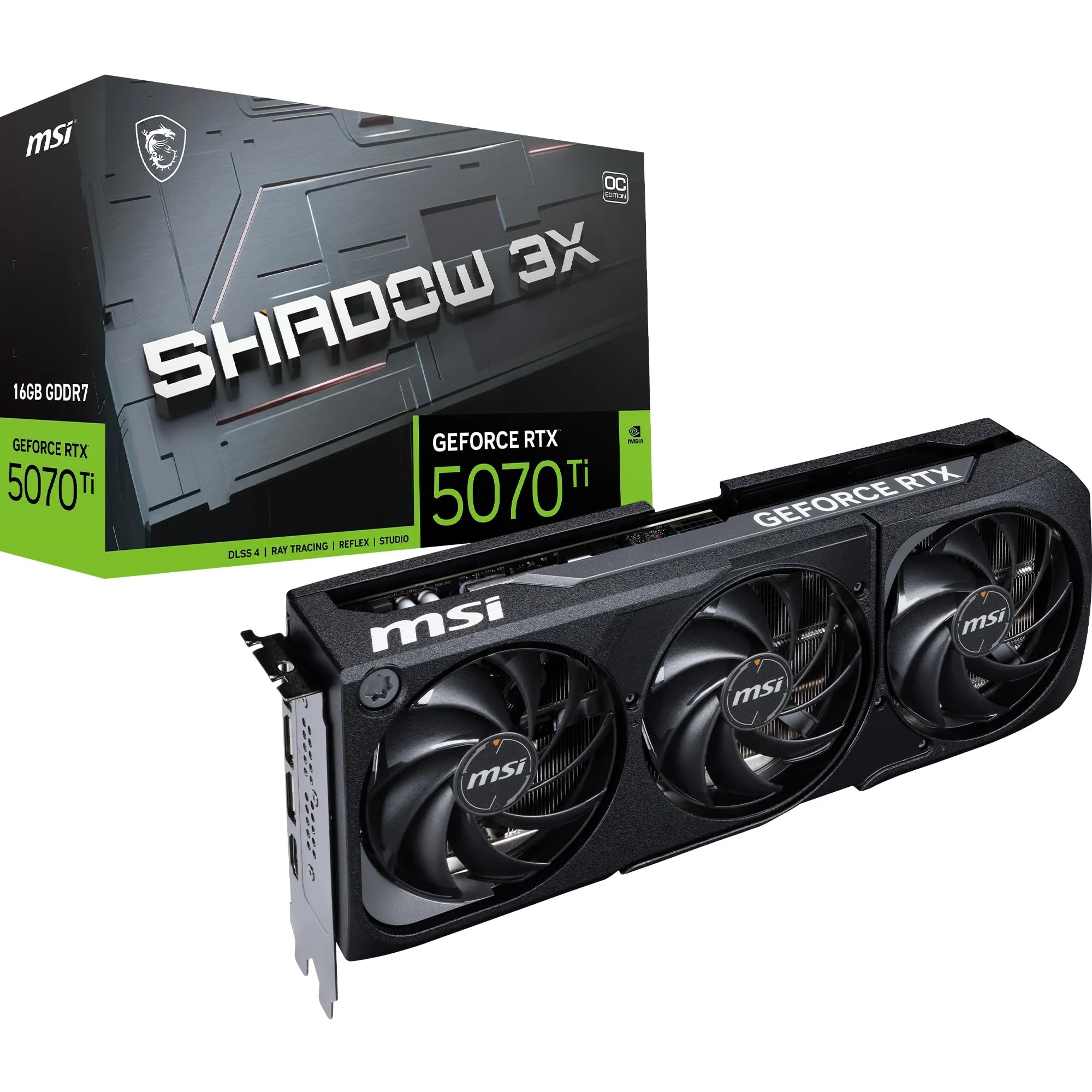
The MSI RTX 5070 Ti Shadow 3X OC brings the high-end 16GB GDDR7 experience to a slightly more accessible price point within the premium segment. Built on the same NVIDIA Blackwell architecture as its siblings, it features a 2482 MHz boost clock and a 256-bit memory bus, giving it substantial bandwidth for demanding 1440p scenarios. The Shadow series design focuses on performance, with the TORX Fan 5.0 and nickel-plated copper baseplate ensuring thermal stability.
Buyer feedback confirms this card matches or beats the previous generation RTX 4080 Super in benchmarks, making it a phenomenal value for gamers who can find it near its target price. The inclusion of a support bracket is noted positively, addressing sag concerns for the card’s length. Even without overclocking, it delivers eye-candy visuals at 1440p and can push 4K to a TV at perfectly playable frame rates.
The main hurdle is availability and pricing; some buyers reported paying above the ideal price point due to market fluctuations. The 750W PSU requirement is standard for this tier. For the gamer who wants the pinnacle of 1440p performance with a 16GB VRAM buffer and DLSS 4 capabilities, this is a formidable and well-engineered choice.
Why it’s great
- 16GB GDDR7 memory provides exceptional future-proofing for 1440p.
- Benchmarks show it beating previous gen RTX 4080 Super.
- Includes a support bracket for the large card.
Good to know
- Pricing can fluctuate above ideal levels.
- Requires a 750W minimum PSU.
11. EVGA 08G-P5-3755-KR GeForce RTX 3070 XC3 Ultra Gaming

The EVGA RTX 3070 XC3 Ultra Gaming remains a solid entry-level option for 1440p gaming, provided you are willing to manage expectations around VRAM and ray tracing. With 8GB of GDDR6 memory and a 1770 MHz boost clock, it can still handle many modern titles at high settings, though texture-heavy games may require turning down detail levels. The iCX3 cooling technology with triple HDB fans keeps temperatures low and noise minimal.
Customer reviews highlight its performance as a meaningful upgrade from older EVGA 20-series cards, with one buyer noting the extra 2GB of VRAM noticeably improved games like Control. Ray tracing is functional but not transformative at this tier, and DLSS helps maintain playable frame rates in demanding titles. The card’s build quality is excellent, featuring an all-metal backplate and adjustable ARGB lighting.
The 8GB VRAM is the definitive limitation for 1440p gaming in 2025 — it will struggle with ultra textures in modern titles and future releases. The triple-fan design is compact compared to modern cards, making it easier to fit in standard cases. For budget builders who can find this card at a good price, it offers a cost-effective path to 1440p gaming, but it lacks the longevity of newer 12GB+ options.
Why it’s great
- Proven iCX3 cooling with quiet triple-fan operation.
- Compact size fits easily in standard cases.
- Excellent build quality with metal backplate.
Good to know
- 8GB VRAM is insufficient for ultra textures in modern 1440p titles.
- Ray tracing performance is limited at 1440p resolution.
FAQ
Is 12GB of VRAM enough for 1440p gaming in 2025?
Should I choose an NVIDIA or AMD card for 1440p?
What power supply do I need for a 1440p gaming card?
Can a 1440p GPU also drive a 4K monitor?
Final Thoughts: The Verdict
For most users, the best 1440p gaming graphics card winner is the PNY RTX 5070 Epic-X OC because it nails the perfect balance of DLSS 4 performance, quiet cooling, and price-to-performance for the 1440p resolution. If you prioritize VRAM headroom and raw rasterization power, grab the ASRock RX 9070 XT Steel Legend. And for the budget-conscious gamer who wants exceptional value, nothing beats the XFX Swift RX 9060 XT.