
When your home triggers a headache, scratchy throat, or brain fog instead of offering sanctuary, standard air purifiers often fail you. Their thin carbon layers were never designed to tackle the volatile organic compounds (VOCs), formaldehyde off-gassing, and chemical odors that those with chemical sensitivity react to. You need a machine with a serious carbon mass, not just a HEPA sticker.
I’m Min — the co-founder and writer behind Gadgets Feed. I’ve spent hundreds of hours cross-referencing filter media density, carbon bed weight, and third-party lab reports to determine which units actually suppress the chemical load, not just the dust count.
This guide was built to help you find the right air purifier for chemical sensitivity, breaking down each model’s filtration depth, specialty filter options, and real-world gas removal data so you can make an informed, symptom-free choice.
How To Choose The Best Air Purifier For Chemical Sensitivity
Selecting a purifier for chemical sensitivity isn’t about picking the quietest fan or the highest CADR for dust. The core battle is against invisible gases. You must prioritize carbon mass, filter type, and specific gas-targeting capabilities over everything else. A weak carbon pad from a budget unit will get overwhelmed in days, leaving you breathing VOCs again.
Carbon Filter Mass and Type
The single most critical feature is the weight and composition of the carbon filter. Look for units with pounds of activated carbon, not a thin, mesh-like sheet. Some premium models use a carbon wrap or a carbon/zeolite blend, which dramatically increases the surface area for trapping VOCs, formaldehyde, and chemical odors. A higher carbon density means the filter remains effective for months longer.
Specialty vs. General Filtration
Some purifiers allow you to swap in specialty filters designed explicitly for gas and odor removal. For example, the “Toxin Absorber” or “Odor Remover” filters from certain brands are engineered to target the specific chemical compounds that trigger reactions. If you live in a new construction home or near a highway, a unit with a customizable filter kit will be far more effective than a one-size-fits-all approach.
Quick Comparison
On smaller screens, swipe sideways to see the full table.
| Model | Category | Best For | Key Spec | Amazon |
|---|---|---|---|---|
| Rabbit Air A3 | Premium | Customizable gas filtration | 12-month filter life; 4 specialty filters | Amazon |
| Nuwave OxyPure | Premium | Zero filter replacement cost for 5 years | 5-stage; 2,934 sq ft coverage | Amazon |
| AIRDOCTOR AD3500 | Premium | Hospital-grade gas reduction | UltraHEPA + Carbon/Permanganate | Amazon |
| Puraclenz Core C750 | Premium | Surface + air purification | PCO + UVC + H13 HEPA | Amazon |
| AirDoctor AD2000 | Mid-Range | Small/medium room VOC control | UltraHEPA + Carbon/Permanganate | Amazon |
| Austin Air C100CC1 | Mid-Range | Travel/desktop chemical defense | VOC Carbon Wrap; 0.1 micron capture | Amazon |
| PuroAir 240 | Mid-Range | Allergy + chemical sensitivity combo | 3-layer; HEPA + Activated Carbon | Amazon |
| Dhyala KJ02 | Budget | Large room; pet-friendly | 5-stage; 3620 sq ft; 22dB sleep | Amazon |
| Winix T830 | Budget | Budget-friendly smoke reduction | True HEPA; washable mesh pre-filter | Amazon |
In‑Depth Reviews
1. Rabbit Air A3 SPA-1000N

The Rabbit Air A3 is the single most versatile purifier for chemical sensitivity because it lets you swap between four specialty filters: Pet Allergy, Germ Defense, Toxin Absorber, and Odor Remover. This is critical for chemical sensitivity — the Toxin Absorber filter is specifically engineered to target VOCs, formaldehyde, and chemical off-gassing, while the Odor Remover handles cooking and smoke odors. Its 6-stage filtration system, which includes an activated carbon filter, is designed to cycle 8,560 cubic feet of air every 30 minutes, running at a whisper-quiet 20.3 dBA.
What really sets the A3 apart is its wall-mountable design and smart NFC filter tracking via the Rabbit Air app. You can monitor real-time air quality and adjust fan speed, scheduling, and mood lighting from anywhere. The 12-month filter life under 24/7 use means less maintenance hassle, and the ultra-quiet operation ensures it doesn’t disturb sleep — a major plus for those whose chemical sensitivity includes noise sensitivity.
Customer reviews consistently highlight how effectively it clears cigar smoke from a 10×20 room without separate ventilation, and long-term allergy sufferers report significant relief. The only downside is the upfront cost, but for customizable chemical filtration, it’s unmatched.
Why it’s great
- Interchangeable specialty filters target specific VOCs and odors
- Ultra-quiet 20.3 dBA operation
- Wall-mountable; saves floor space
- 12-month filter life reduces maintenance
Good to know
- Premium price point
- Replacement specialty filters are proprietary and can be costly
2. Nuwave OxyPure

The Nuwave OxyPure is a long-term investment for chemical sensitivity because it includes a stainless-steel pre-filter, ozone emission removal filter, Bio-Guard filter, and a HEPA/carbon combo filter — all washable or reusable. This means for the first 5 years, your filter replacement cost is zero. The 5-stage system is specifically designed to capture VOCs and chemical odors, and its Bio-Guard filter adds an extra layer of antibacterial protection.
Covering up to 2,934 sq ft in 60 minutes with a CADR of 664.6 m³/h, it’s ideal for large rooms or open-concept spaces. The smart WiFi app lets you monitor air quality remotely, and the Turbo mode delivers rapid purification when you need it most. Customer reviews note that it detects plant-based cleaner spray from 10 feet away and auto-switches to higher fan speed, proving its sensitivity to chemical loads.
The unit is heavy at 26 pounds, but the massive amount of filtration media packed inside justifies the weight. Users who previously suffered from lung inflammation and breathing issues reported a dramatic improvement within days of use.
Why it’s great
- Washable filters; zero replacement cost for 5 years
- Excellent VOC and chemical detection in auto mode
- Massive 2,934 sq ft coverage
- Smart WiFi with remote monitoring
Good to know
- Heavy (26 lbs); not very portable
- Larger footprint than most units
3. AIRDOCTOR AD3500
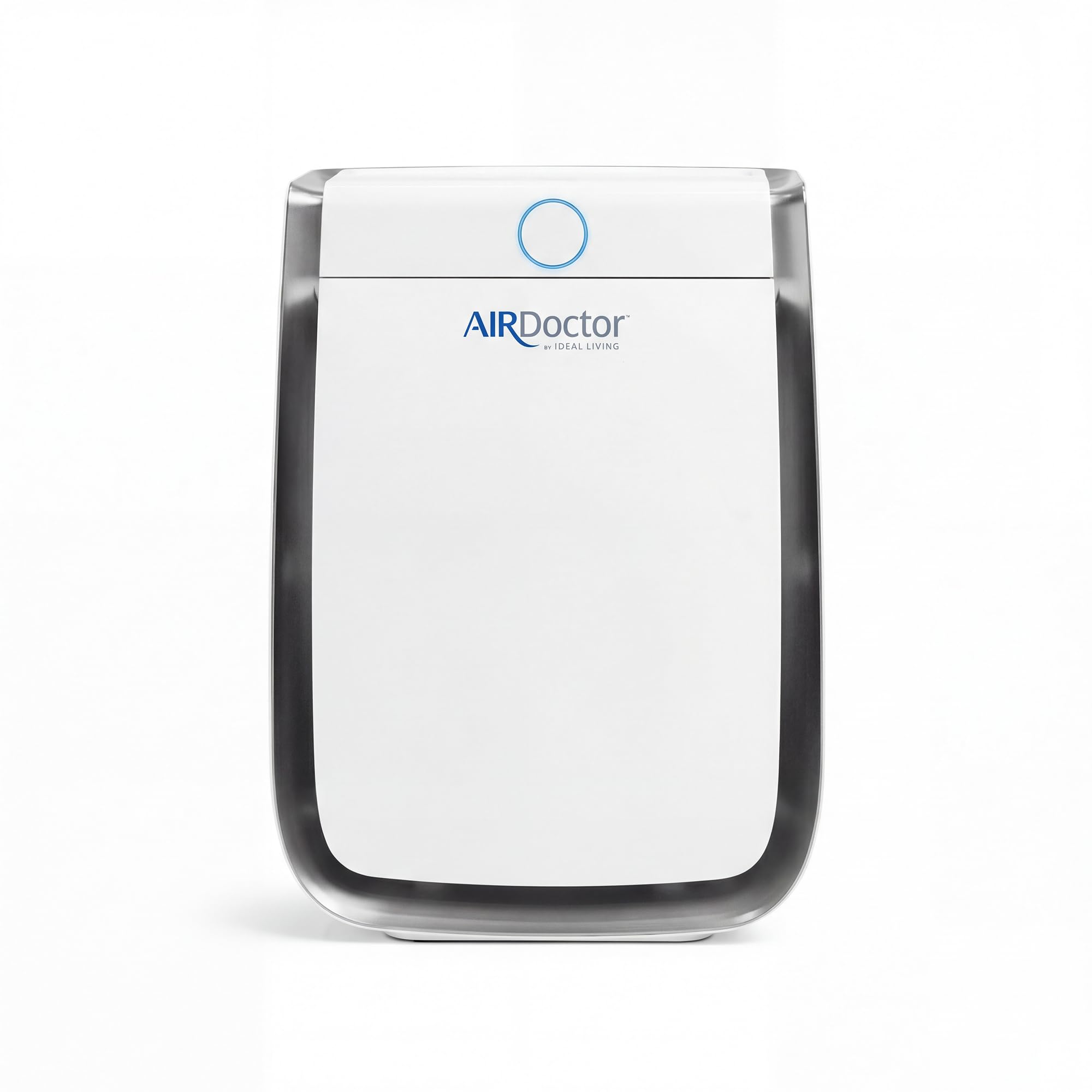
The AIRDOCTOR AD3500 brings the same premium UltraHEPA and activated carbon + potassium permanganate filtration as the AD2000 but scaled for larger rooms — cleaning up to 2,520 sq ft in one hour. For chemical sensitivity, the carbon/permanganate blend is the standout feature: it chemically breaks down VOCs, toxic gases, and odors rather than just trapping them, making it far more effective for persistent chemical loads like wildfire smoke or cooking fumes.
The auto mode with the Halo display provides real-time PM2.5 monitoring and color-coded air quality feedback. Users report that the unit ramps up fan speed automatically during nebulizer use, dishwasher operation, and cooking — clear evidence of its sensitivity to airborne chemicals. The whisper-quiet operation on low settings makes it suitable for bedrooms, though some users note that replacement filters are pricey.
Customer reviews consistently mention waking up with less dry throat and stuffy nose after using the AD3500, and the “clean” smell it leaves in the air. One user who compared it to cheaper alternatives called it the best on the market.
Why it’s great
- Potassium permanganate + carbon blend breaks down VOCs
- Large room coverage (2,520 sq ft)
- Auto mode with real-time PM2.5 sensor
- Whisper-quiet on low settings
Good to know
- Replacement filters are costly
- Bulky form factor
4. Puraclenz Core C750
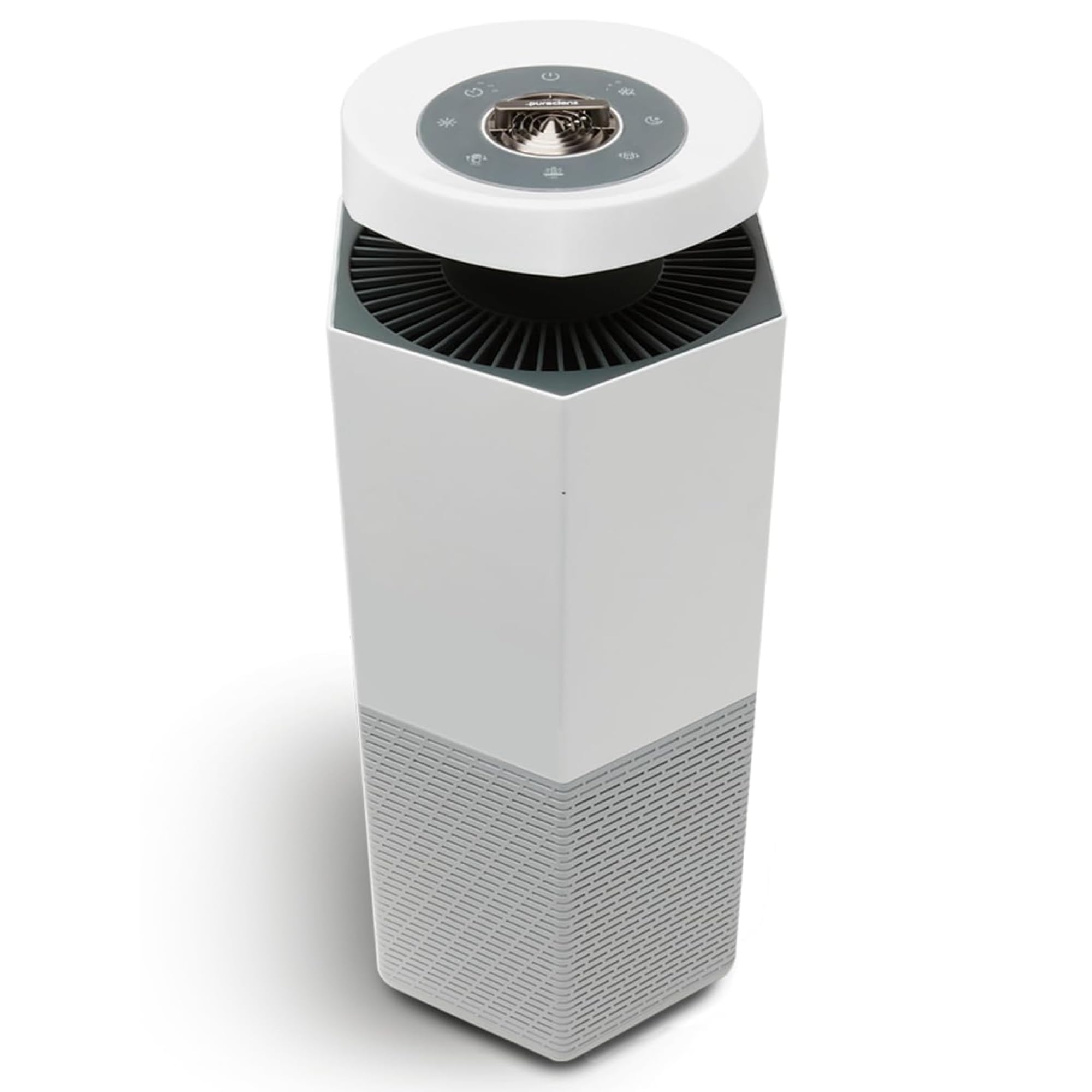
The Puraclenz Core C750 takes a different approach to chemical sensitivity by combining traditional HEPA filtration with Photocatalytic Oxidation (PCO) and UVC germicidal purification. The patented PCO technology generates ozone-free ions that neutralize VOCs, mold spores, and bacteria on surfaces and in the air — not just what passes through the filter. This is a game-changer for those sensitive to chemicals that linger on fabrics, walls, and furniture.
With an H13 True HEPA filter that captures 99.97% of particles down to 0.1 microns and a carbon filter for smoke and VOCs, the C750 covers up to 1,575 sq ft for HEPA filtration and up to 3,000 sq ft for PCO purification. The smart air quality sensor automatically adjusts fan speed, and sleep mode drops noise to a whisper of 23 dBA. Customer reviews report it eliminated a horrendous moldy smell from a 25-year-old closet in just 3 days.
The only caveat is that PCO technology can be less effective in extremely low-humidity environments, and some users have reported sensor sensitivity issues. However, for surface-level chemical contamination, it’s one of the few options.
Why it’s great
- PCO technology neutralizes VOCs on surfaces
- Ozone-free certification; safe for people/pets
- UVC adds germicidal protection
- H13 True HEPA + carbon filter
Good to know
- PCO effectiveness varies with humidity
- Some users reported sensor calibration issues
5. AirDoctor AD2000
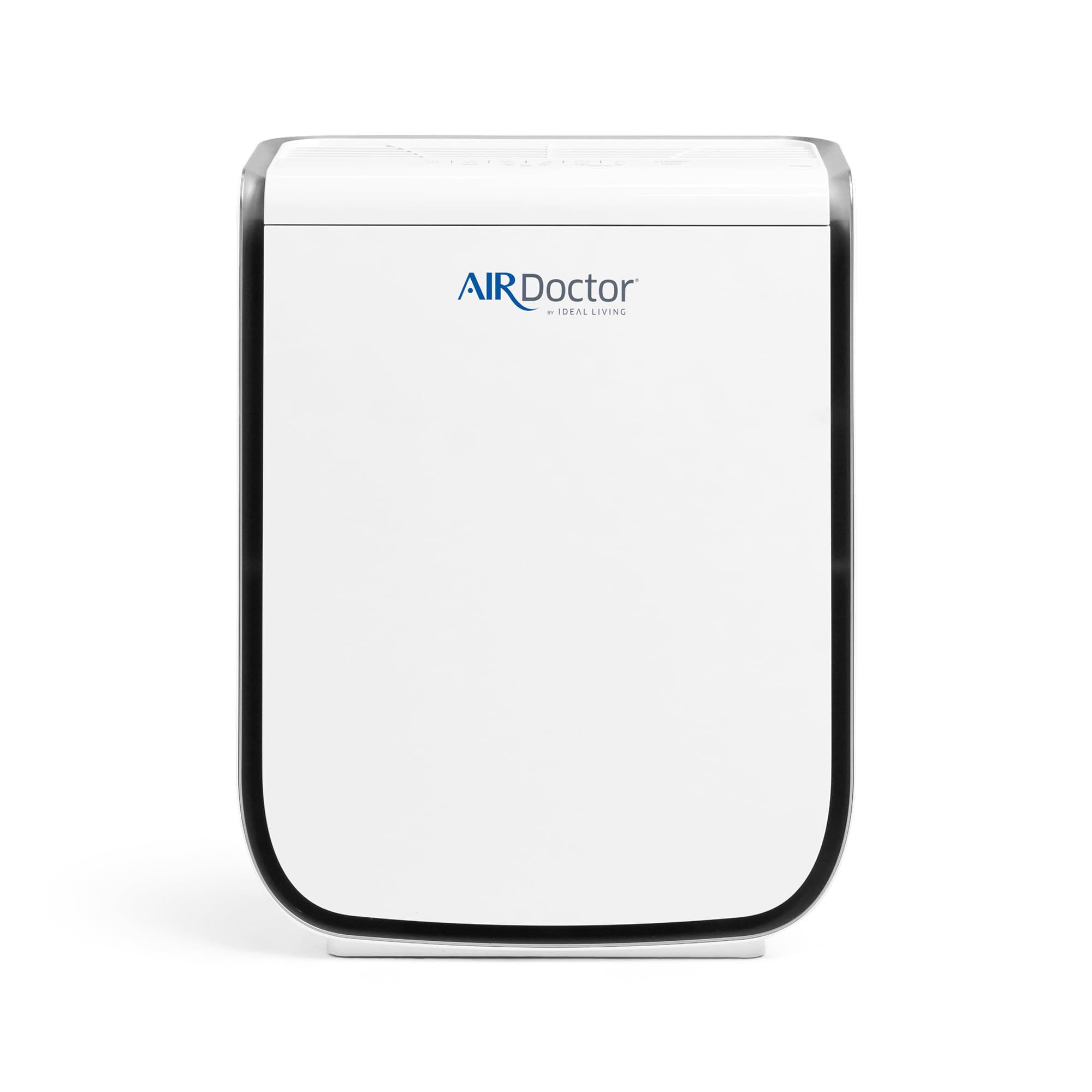
The AirDoctor AD2000 is the mid-range champion for chemical sensitivity, offering the same premium activated carbon + potassium permanganate filter technology as its bigger sibling, the AD3500, but sized for small to medium rooms up to 1,220 sq ft. This filter blend is specifically designed to absorb and break down toxic gases, VOCs, and odors, making it highly effective for off-gassing from new furniture, paint, or cleaning products.
Its UltraHEPA filtration captures 99.99% of particles at 0.003 microns, which is 100 times smaller than the HEPA standard. The auto mode with the Halo sensor monitors PM2.5 levels and adjusts fan speed accordingly. Customer reviews are overwhelmingly positive, with one user reporting that a new couch’s horrible VOC smell was “not very noticeable the very next day” after using the AD2000.
Some users have reported that the unit can be louder than expected on higher fan speeds, and the carbon filter needs replacement every 6 months. However, for the price, the chemical filtration power is hard to beat.
Why it’s great
- Carbon + potassium permanganate breaks down VOCs
- UltraHEPA captures 0.003 micron particles
- Fast VOC elimination (customer-verified)
- Auto mode with color-coded air quality display
Good to know
- Louder on higher fan speeds
- Carbon filter needs replacement every 6 months
6. Austin Air C100CC1

The Austin Air C100CC1 proves that size isn’t everything when it comes to chemical filtration. Despite its compact, tabletop design (11 x 11 x 8.38 inches), it features a specialized VOC Carbon Wrap that filters out chemicals, gases, and VOCs — a rarity in this form factor. It captures particles as small as 0.1 microns, making it effective for dust, pollen, and pet dander alongside the chemical load.
Its portability is its superpower. It’s ideal for travelers with chemical sensitivity who need clean air in hotel rooms, offices, or small apartments. The durable steel construction ensures longevity, and the filter lasts up to 5 years — an extraordinary lifespan for its size. Customer reviews praise its ability to make hotel stays manageable for those with asthma and severe allergies.
The main trade-off is noise. On higher settings, it can be loud — one reviewer specifically warned against staying in the same room while it runs. But if you need a portable chemical defense system, this is the best option.
Why it’s great
- Specialized VOC Carbon Wrap for gas removal
- Ultra-portable; perfect for travel
- Filter lasts up to 5 years
- Durable steel construction
Good to know
- Noisy on high fan speeds
- Small coverage area
7. PuroAir 240
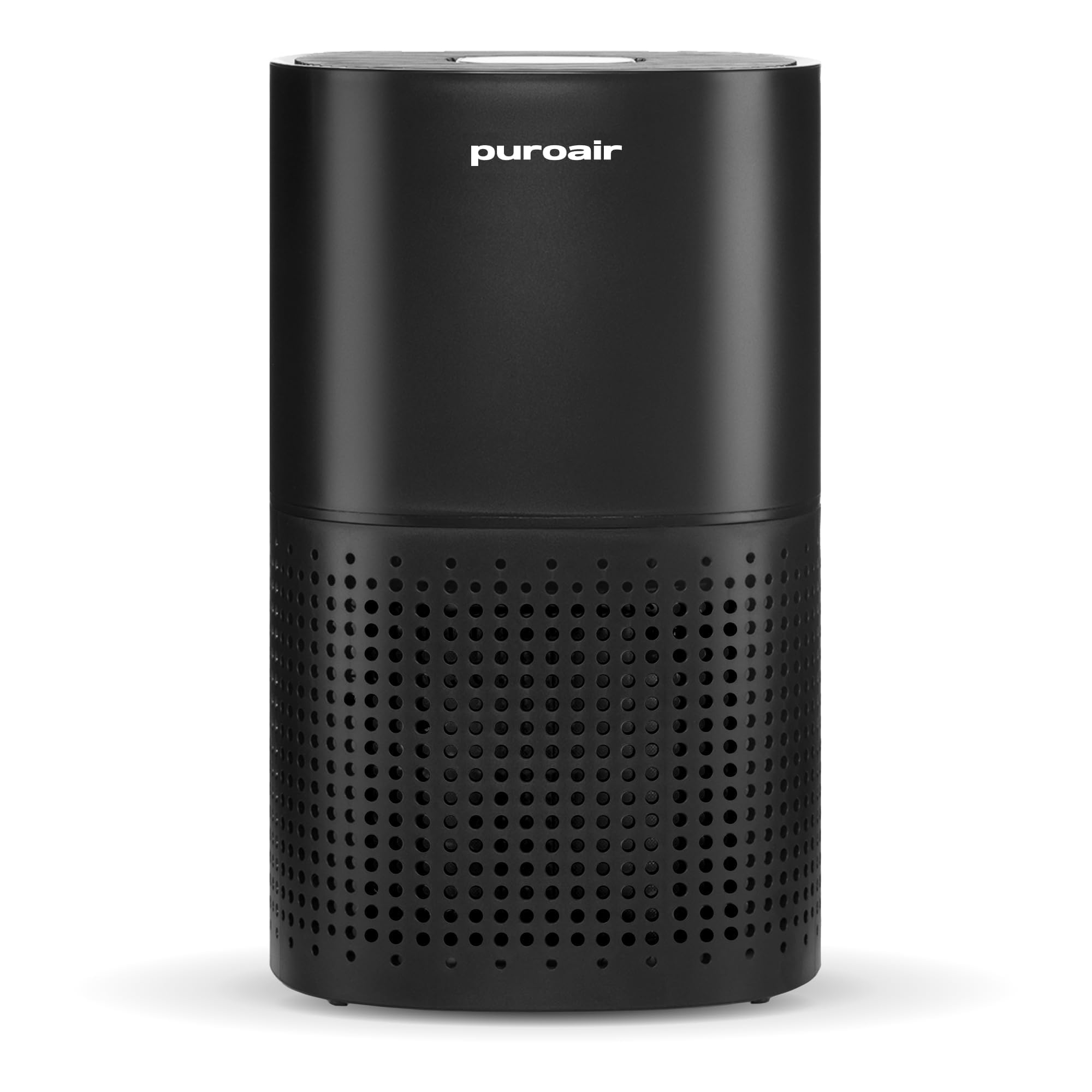
The PuroAir 240 is a strong mid-range contender that combines a 3-layer filtration system (pre-filter, HEPA filter, and activated carbon) with a smart particle sensor that monitors air quality and auto-adjusts fan speed. For chemical sensitivity, the activated carbon layer is the key — while not as thick as premium models, it still captures VOCs and household odors effectively. It covers rooms up to 1,000 sq ft in one hour.
Customer reviews highlight its effectiveness in reducing mold allergy symptoms (runny nose, itchy eyes, congestion) within weeks of continuous use. One user noted that it detected dust from bathroom remodeling and returned the air quality to green in 15 minutes. The sleep mode is quiet enough for bedroom use, though some users mention a slight hum at night.
It comes with a 2-year risk-free warranty, which adds peace of mind. While the carbon filter is not as heavy-duty as the Austin Air or AirDoctor models, it’s a well-balanced option for those with mild to moderate chemical sensitivity who also deal with standard allergens.
Why it’s great
- Smart sensor auto-adjusts to air quality
- Quiet sleep mode
- Carbon filter traps VOCs and odors
- 2-year risk-free warranty
Good to know
- Carbon layer thinner than premium competitors
- Not designed for large open spaces
8. Dhyala KJ02
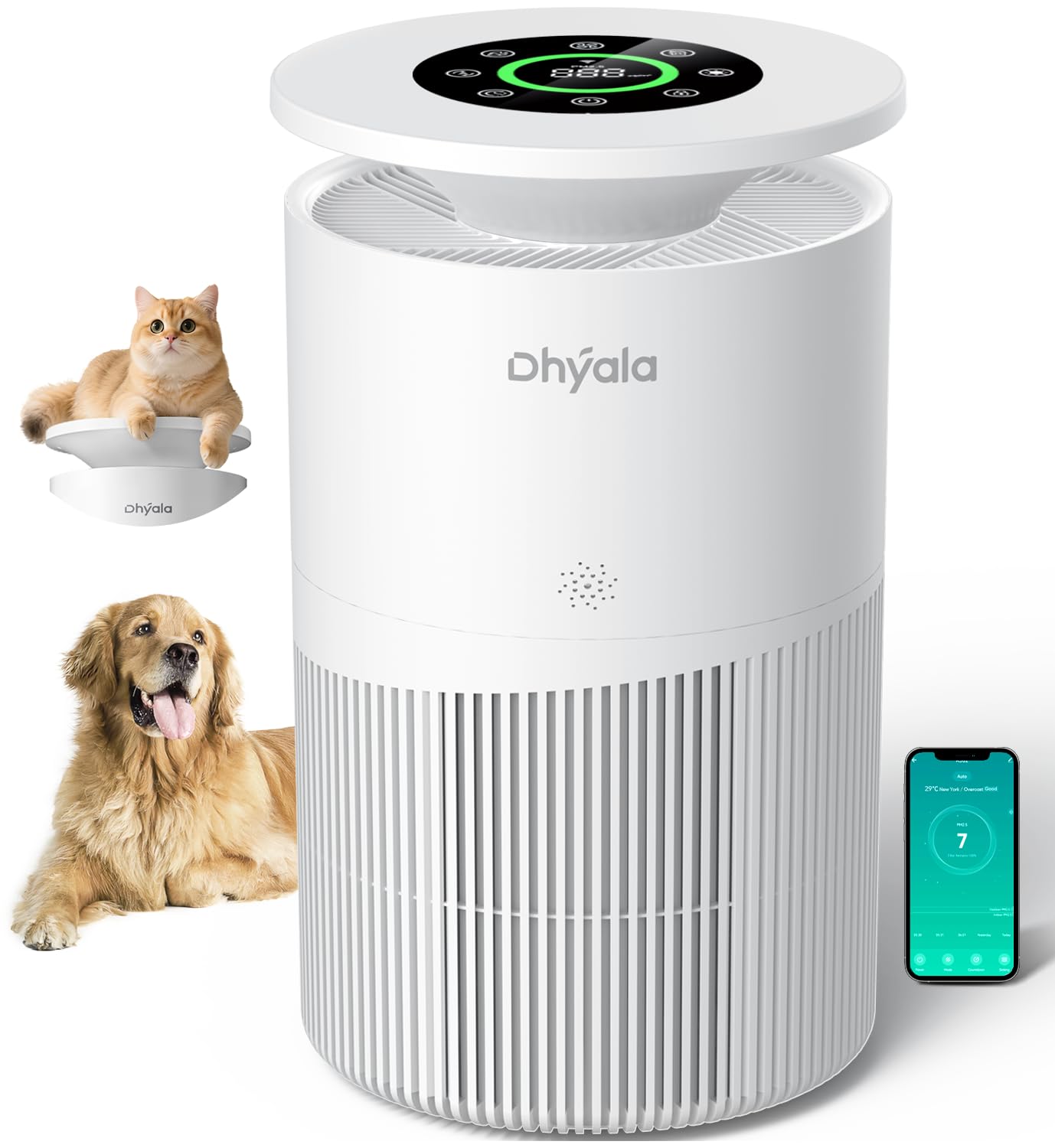
The Dhyala KJ02 is a budget-friendly option that offers surprisingly robust features for chemical sensitivity. Its 5-stage filtration system includes electrostatic adsorption for pet dander and a built-in high-efficiency activated carbon filter with 3x the adsorption capacity of conventional filters, according to the manufacturer. It covers up to 3,620 sq ft, making it one of the most spacious budget units available.
Smart WiFi and app control allow remote monitoring and adjustment, while the 22dB sleep mode makes it nearly silent for bedroom use. The pet-friendly design includes a lying platform for pets to sit on (improving hair absorption) and a bite-proof power cord. Customer reviews note that it effectively reduces dog smells and dust, and the real-time air quality display is a nice touch.
For the price, you get a lot of coverage and smart features, but the carbon filter is still lightweight compared to premium models. It’s best suited for those with mild chemical sensitivity who also have pets or live in dusty environments.
Why it’s great
- Very large coverage (3,620 sq ft)
- Smart WiFi and app control
- Ultra-quiet 22dB sleep mode
- Pet-friendly design
Good to know
- Carbon filter is lighter than premium models
- Some user reports of sensor inconsistency
9. Winix T830
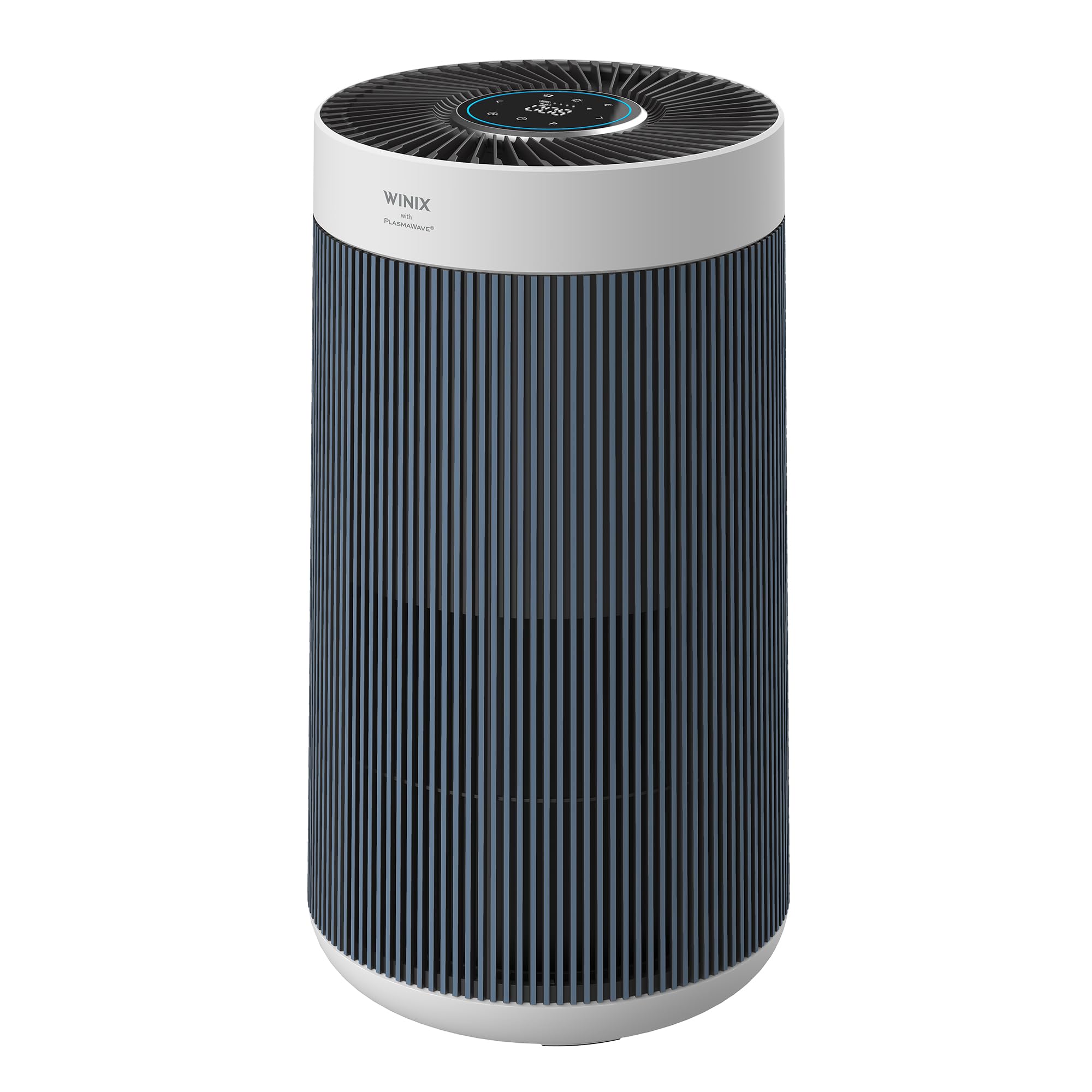
The Winix T830 is an entry-level option that still provides HEPA filtration and an activated carbon filter for basic VOCs and odor control. It’s AHAM Verifide for a 410 sq ft room, but can clean up to 1,968 sq ft in one hour with higher turnover. The fine mesh pre-filter captures large particles and is washable, which reduces replacement costs. PlasmaTech is included for additional particle reduction.
Customer reviews are mixed for chemical sensitivity — some users report it helps with smoke from cigarettes and cooking, while others note that the activated carbon filter is relatively thin and may get overwhelmed quickly in high-chemical environments. It’s best suited as a budget-friendly addition to a bedroom or small office rather than a primary chemical defense unit.
The biggest strength is its low running cost (washable pre-filter) and quiet operation on lower settings. However, some users reported error codes after a month of use, and the carbon filter’s capacity for VOCs is limited.
Why it’s great
- Washable pre-filter saves money
- Quiet operation
- Budget-friendly price
- AHAM Verifide certification
Good to know
- Thin carbon filter; limited VOC capacity
- Some reliability concerns reported
FAQ
Is a HEPA filter enough for chemical sensitivity?
How often should I replace the carbon filter for chemical sensitivity?
Can a portable air purifier help with chemical sensitivity while traveling?
What is the difference between activated carbon and potassium permanganate?
Final Thoughts: The Verdict
For most users, the best air purifier for chemical sensitivity winner is the Rabbit Air A3 because its customizable specialty filters let you target the specific VOCs and odors that trigger your symptoms. If you want zero filter replacement costs for half a decade, grab the Nuwave OxyPure. And for portable chemical defense on the go, nothing beats the Austin Air C100CC1.