
For competitive gamers, the display is the final frontier of performance. Even the fastest reflexes mean nothing if the panel introduces ghosting, tearing, or input lag that separates your button press from the on-screen reaction. The 55-inch size has emerged as the sweet spot for gaming — large enough to deliver immersive field-of-view for open-world titles, yet compact enough to keep fast-moving targets within your peripheral vision without requiring a dedicated theater space. But not every 4K panel is built for this task. True gaming-focused TVs prioritize high native refresh rates, low-latency modes, HDMI 2.1 bandwidth, and VRR support, features that transform screen response from a liability into an advantage.
I’m Min — the co-founder and writer behind Gadgets Feed. I’ve spent hundreds of hours analyzing the latest television panels, specifically comparing refresh-rate integrity, HDMI 2.1 port configurations, VRR ranges, and local-dimming performance across the current generation of 55-inch gaming displays.
Whether you’re chasing a 165Hz native panel for esports or a self-lit OLED for HDR-rich single-player campaigns, this guide breaks down the specific specs that separate a competent gaming TV from a liability. Here is everything you need to dominate on your 55 inch tv for gaming.
How To Choose The Best 55 Inch TV For Gaming
Finding the right 55-inch gaming TV requires navigating a minefield of marketing terms — “Game Accelerator,” “Motion Rate,” “effective refresh rate.” A spec sheet that reads well on paper can fail in practice if the VRR range is narrow, the input lag spikes outside Game Mode, or the HDMI 2.1 ports are capped at 24Gbps instead of the full 48Gbps. Focus on these four areas to cut through the noise.
Native Refresh Rate vs. Accelerated Frame Rates
A native 120Hz or 144Hz panel ensures every frame arrives at the correct interval. “Game Accelerator” or “Motion Rate” labels sometimes double or triple the perceived rate using Backlight Scanning or frame insertion, which introduces artifacts and does not reduce input lag. For PS5, Xbox Series X, and PC gaming, insist on a native 120Hz minimum. Competitive players should target 144Hz or 165Hz native panels for smoother motion at high frame rates.
HDMI 2.1 Bandwidth and Port Allocation
Full HDMI 2.1 at 48Gbps supports 4K at 120Hz with 12-bit color and VRR. Many budget TVs include only one or two full-bandwidth ports. If you own a PS5, Xbox Series X, and a gaming PC, you need at least two ports that can handle 4K@120Hz or 4K@144Hz simultaneously. Check the port specification — some “HDMI 2.1” sets actually run at 24Gbps, which limits color depth or forces chroma subsampling.
Variable Refresh Rate Range and Certification
VRR eliminates screen tearing by synchronizing the display’s refresh rate with the console or GPU’s frame output. A wider VRR range — ideally 48Hz to 120Hz or 144Hz — ensures coverage whether you’re running at 60fps or 100fps. AMD FreeSync Premium Pro and NVIDIA G-SYNC Compatible certifications provide an additional layer of validation. Avoid TVs with narrow VRR ranges that drop below 48Hz, as they cannot support LFC (Low Framerate Compensation).
Display Technology: Mini-LED vs. OLED for Gaming
OLED panels deliver perfect black levels and instant pixel response times, making them exceptional for HDR gaming in dark rooms. However, they carry burn-in risk from static HUDs and lower peak brightness for bright-room play. Mini-LED with high zone counts — 1000+ zones — provides deep blacks without burn-in concerns, plus higher sustained brightness for HDR highlights in well-lit spaces. The choice depends on your lighting environment and tolerance for panel maintenance.
Quick Comparison
On smaller screens, swipe sideways to see the full table.
| Model | Category | Best For | Key Spec | Amazon |
|---|---|---|---|---|
| Hisense 55U7SG | Premium | Competitive esports & bright-room HDR | Native 165Hz | Amazon |
| Samsung S90H OLED | Flagship | Cinematic single-player HDR | OLED HDR+ Glare Free | Amazon |
| Sony BRAVIA 8 OLED | Premium | PS5 ecosystem integration | XR OLED Motion | Amazon |
| Toshiba Z670R | Mid-Range | All-around gaming & streaming | Native 144Hz | Amazon |
| Roku Pro Series | Mid-Range | Roku OS with FreeSync Premium Pro | FreeSync Premium Pro | Amazon |
| iFFALCON 55U85 | Mid-Range | 4x HDMI 2.1 connectivity | 4x HDMI 2.1 | Amazon |
| TCL QM7K | Mid-Range | High-zone Mini-LED contrast | LD2500 Zones | Amazon |
| Roku Plus Series Mini-LED | Entry-Level | Budget-friendly 4K gaming | Mini-LED backlight | Amazon |
| Samsung M70H | Entry-Level | Samsung ecosystem with Gaming Hub | Motion Xcelerator 120Hz | Amazon |
| TCL Q7 QLED | Entry-Level | Entry-level 4K/120Hz gaming | Native 120Hz | Amazon |
| Sony BRAVIA 2 | Entry-Level | PS5 tone mapping & upscaling | PS5 Auto HDR Mapping | Amazon |
In‑Depth Reviews
1. Hisense 55U7SG
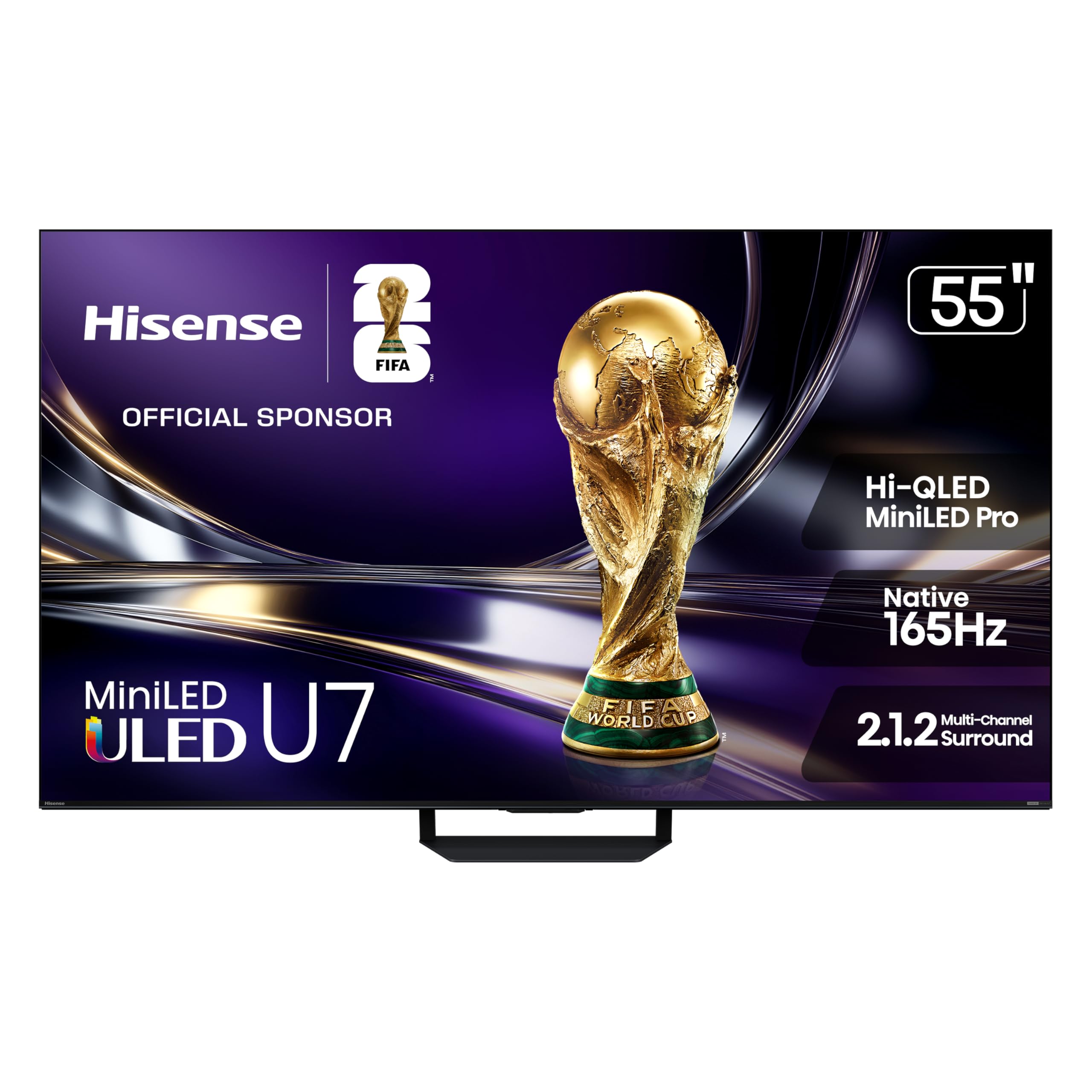
The Hisense 55U7SG redefines what a premium gaming TV delivers at this price tier. Its native 165Hz refresh rate surpasses the 120Hz standard set by PS5 and Xbox Series X, future-proofing against high-refresh PC gaming where frame rates routinely exceed 144fps. The Hi-QLED MiniLED Pro backlight, combined with up to 3000 local dimming zones, produces peak brightness that rivals OLED for specular highlights while maintaining deep black floors — critical for spotting enemies lurking in dark corners of Call of Duty or Hellblade.
The anti-reflection and glare-free screen treatment makes this set a standout for living rooms with windows or overhead lighting. Many premium sets wash out under ambient light, but the dual-layer treatment keeps contrast intact. The 2.1.2-channel speaker system provides better-than-average built-in audio, though serious gamers will still pair it with a dedicated soundbar for positional audio in competitive shooters.
Google TV handles streaming duties without the advertisement clutter found on some competitors, and the Hi-View AI Engine Pro automatically tunes color and contrast per scene. For gamers who split time between esports titles requiring high frame rates and single-player HDR epics, this is the most versatile 55-inch panel available today.
Why it’s great
- Native 165Hz panel with VRR up to 330Hz for ultra-smooth competitive play.
- Extensive local dimming zones (up to 3000) delivering OLED-like contrast without burn-in risk.
- Effective anti-glare coating maintains picture quality in bright rooms.
Good to know
- Built-in speakers are decent but lack the immersion of a discrete sound system.
- Some users may prefer an OLED for absolute black levels in a fully dark theater room.
2. Samsung 55-Inch Class OLED S90H
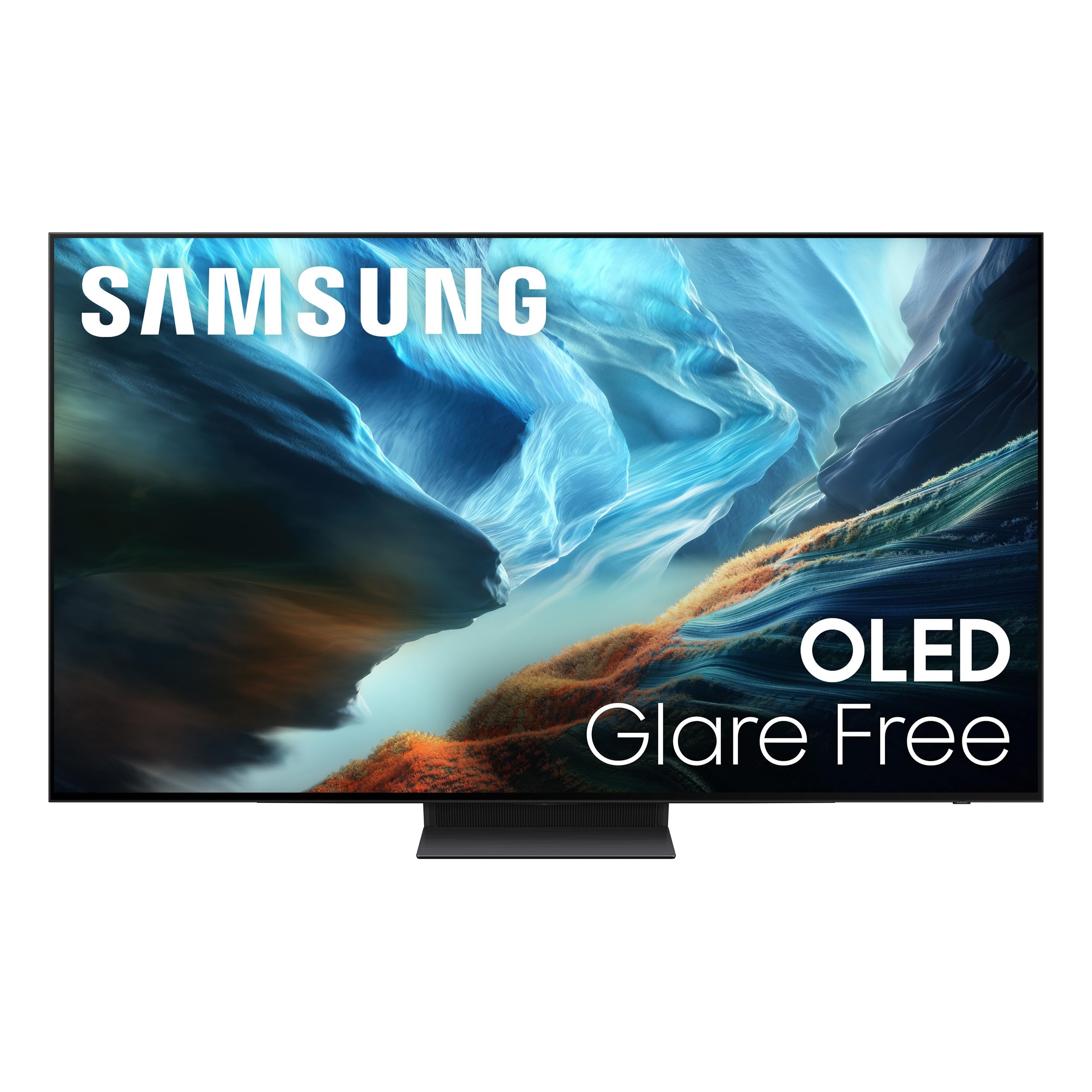
The Samsung S90H brings the OLED experience to the gaming arena with a crucial upgrade — Glare Free technology. OLED’s infinite contrast is legendary, but reflections on the glossy panel have always been a compromise for bright rooms. Samsung’s treatment diffuses ambient light without sacrificing the deep blacks, making this the first OLED that works in a sunlit den without turning into a mirror. The NQ4 AI Gen3 processor, with 128 neural networks, upscales 1080p and 1440p content to near-4K sharpness, a boon for older consoles and PC titles running at lower render resolutions.
Motion Xcelerator 165Hz with NVIDIA G-SYNC and AMD FreeSync Premium Pro ensures that frame-rate dips and spikes are invisible to the player. The self-luminous pixels deliver sub-millisecond response times, eliminating ghosting entirely. For single-player games like Cyberpunk 2077 or Alan Wake 2, the HDR performance is breathtaking — neon signs and flashlight beams punch with intensity that Mini-LED cannot replicate without some blooming.
The trade-off is burn-in risk. Static HUDs, health bars, and mini-maps can leave permanent marks over thousands of hours. Samsung’s panel care features help, but OLED ownership demands some awareness. The 55-inch size mitigates this slightly — smaller screens see less heat buildup. If you alternate between varied titles and use the screen for mixed content, the risk is manageable.
Why it’s great
- Perfect black levels and per-pixel lighting for unmatched HDR gaming visuals.
- Glare Free coating eliminates reflections without degrading contrast.
- Top-tier motion handling with G-SYNC and FreeSync Premium Pro compatibility.
Good to know
- OLED burn-in potential from prolonged static game HUD elements.
- Premium price positions it at the top of the market.
3. Sony 55 Inch OLED BRAVIA 8

Sony’s BRAVIA 8 OLED is engineered from the ground up for PlayStation 5 synergy. Auto HDR Tone Mapping and Auto Genre Picture Mode are exclusive features that communicate directly with the console, adjusting luminance and picture mode based on game content without manual menu diving. When you launch a PS5 title, the TV automatically switches to Game Mode with optimized HDR settings — a seamless experience competitive manufacturers cannot replicate.
The XR Processor drives 8 million self-lit pixels with XR Contrast Booster 15, pushing brightness higher than previous Sony OLED generations while retaining the inky blacks. XR OLED Motion blends frames at 120Hz without introducing soap-opera artifacts, keeping 30fps games feeling fluid and 60fps games razor-sharp. The Acoustic Surface Audio+ technology uses the screen itself as a speaker, placing sound precisely where the action occurs on screen — a unique advantage for immersion.
One limitation: the BRAVIA 8 uses a 120Hz native panel, which is sufficient for console gaming but tops out below the 144-165Hz panels favored by competitive PC gamers. The Sony Pictures CORE app includes credits for 4K UHD movie streaming, adding value for those who use the TV for mixed entertainment. This is the definitive choice for dedicated PS5 owners who want every console-specific feature working in concert.
Why it’s great
- Native PS5 features including Auto HDR Tone Mapping and Auto Genre Picture Mode.
- XR OLED Motion delivers blur-free action without soap-opera artifacts.
- Acoustic Surface Audio+ creates screen-based directional sound for immersion.
Good to know
- Limited to 120Hz refresh rate, not ideal for high-framerate PC competitive gaming.
- OLED panel requires awareness of burn-in from static HUDs.
4. Toshiba 55″ Z670R Series

Toshiba’s 2026 Z670R marks a serious return to form with a Mini-LED panel featuring Full Array Local Dimming and a native 144Hz refresh rate. The REGZA Engine ZRi Gen3, fine-tuned in Japan, applies AI-driven scene-by-scene optimization that balances contrast, clarity, and audio. In practice, this means HDR gaming content looks calibrated without requiring hours of tweaking — Shadow of the Tomb Raider’s jungle scenes retain shadow detail without crushing blacks, while gunfight muzzle flashes maintain their intensity without washing out.
Game Mode Pro includes AMD FreeSync Premium, VRR at 144Hz, and Auto Low Latency Mode. The 144Hz native panel hits the sweet spot for current-gen consoles, which max out at 120Hz, while providing headroom for PC gamers running mid-range GPUs. The REGZA Power Audio Pro with its dedicated bass woofer delivers surprisingly deep low-end for a flat-screen TV — footsteps and explosions carry weight without a soundbar, though the Atmos height virtualization is subtle.
Fire TV integration with Alexa built-in provides hands-free control and access to all major streaming services. The UI is responsive, though some users may find Amazon’s content promotion intrusive. The minimalist design, inspired by Japanese aesthetics, sits slim on a stand or flush against a wall. For gamers who want a jack-of-all-trades that handles competitive multiplayer and cinematic campaigns equally well, this is a compelling mid-range pick.
Why it’s great
- Native 144Hz panel with FreeSync Premium and VRR for tear-free gaming.
- REGZA Engine ZRi delivers intelligent scene-by-scene picture and audio optimization.
- Built-in subwoofer provides impactful bass without external speakers.
Good to know
- Fire TV interface includes promoted content that some users find distracting.
- Mini-LED zone count is competitive but not class-leading at this price point.
5. Roku Smart TV – 55-Inch Pro Series
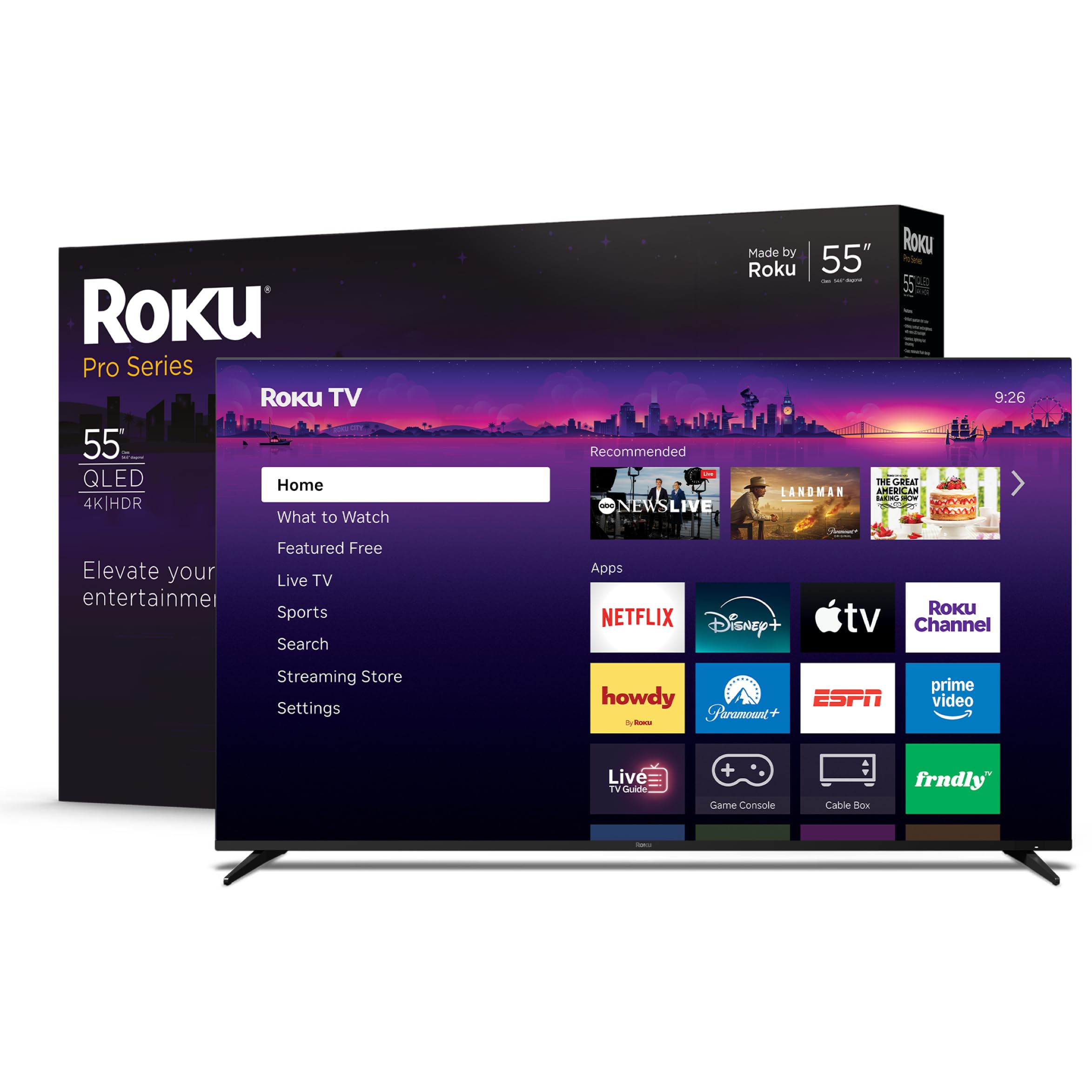
The Roku Pro Series TV proves that simplicity and gaming performance can coexist. Roku’s operating system remains the gold standard for ease of use — no bloatware, no banner ads pushing subscriptions, just a clean grid of your apps. Under the hood, Roku packs a Mini-LED backlight with QLED quantum dots and Dolby Vision IQ, which automatically adjusts HDR based on room lighting. The 120Hz native panel supports FreeSync Premium Pro, ALLM, and VRR, covering the essentials for console gaming without complications.
The rechargeable Roku Voice Remote Pro features backlit buttons and hands-free voice control — a genuine quality-of-life upgrade when gaming in a dark room. The side-firing speakers deliver Dolby Atmos with more spaciousness than down-firing designs, creating a convincing soundstage for games like Returnal where audio-directional cues matter. Roku’s Smart Picture Max AI processing cleans up lower-resolution signals and applies scene-by-scene optimization, though purists may prefer to disable it for pixel-accurate gaming.
Where the Pro Series trails is peak brightness. It’s sufficient for HDR gaming in moderate light, but it cannot match the luminance of the Hisense U7SG or the Samsung S90H OLED. The 120Hz refresh rate is standard for consoles but limits PC gamers chasing triple-digit frame rates. For the Roku faithful and casual-to-intermediate gamers who prioritize a hassle-free interface, this TV delivers excellent execution at a comfortable price point.
Why it’s great
- FreeSync Premium Pro ensures tear-free gaming on consoles and PCs.
- Roku OS is fast, clean, and free from bloatware and banner advertising.
- Rechargeable, backlit remote with hands-free voice control for dark-room gaming.
Good to know
- Peak HDR brightness is moderate; not ideal for very bright living rooms.
- 120Hz native panel is standard, not advanced for high-framerate PC competitive play.
6. iFFALCON 55U85
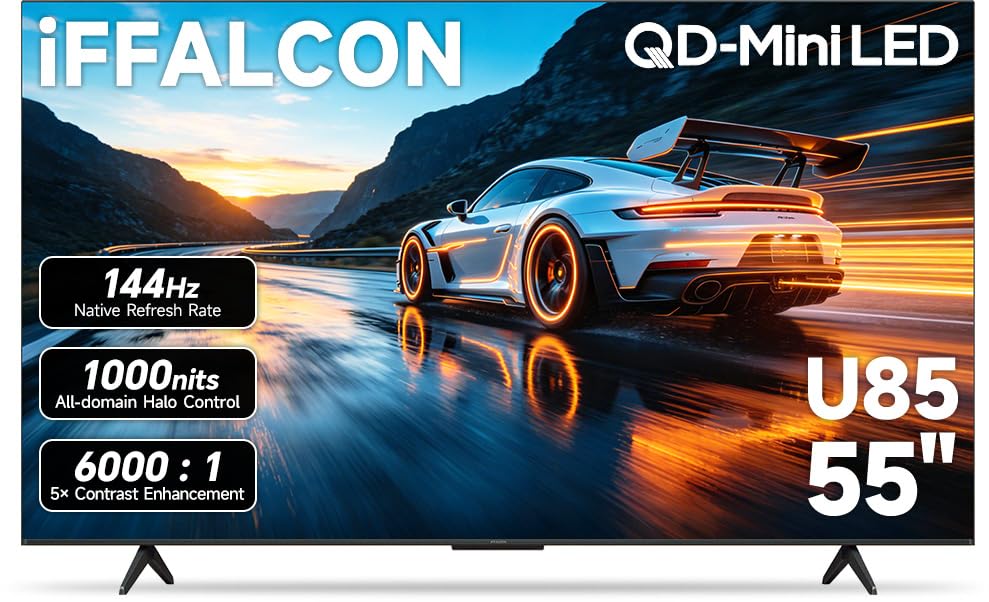
The iFFALCON 55U85 delivers a feature set that punches well above its tier, headlined by four HDMI 2.1 ports — two running at full 4K@144Hz and two at 4K@60Hz. This configuration allows simultaneous connection of a PS5, Xbox Series X, gaming PC, and soundbar without any port-sharing compromises. The native 144Hz Mini-LED panel with VRR up to 288Hz matches the most demanding PC hardware, while FreeSync Premium Pro keeps tearing and stutter invisible even during frame-rate fluctuations in demanding titles like Star Wars Jedi: Survivor.
Dolby Vision Gaming support ensures HDR is properly mapped for Xbox titles, while IMAX Enhanced certification provides director-approved modes for compatible content. The 50W 2.1-channel audio system — with two 15W tweeters and a 20W woofer — fills a medium room with room-shaking bass, reducing the urgency for a separate soundbar. Google TV with built-in Alexa handles streaming duties, and the inclusion of hotel mode and IP control makes this an option for commercial or Airbnb setups as well.
The trade-off for this spec density is build quality and brand recognition — iFFALCON is a sub-brand of TCL but lacks the same retail visibility. The interface, while functional, is not as polished as Roku or native Google TV on premium sets. Some users have reported flickering issues, though reviews suggest this is not widespread. For the gamer who needs maximum HDMI 2.1 bandwidth across multiple devices on a budget, this is an exceptional value proposition.
Why it’s great
- Four HDMI 2.1 ports with two supporting full 4K@144Hz for multi-device setups.
- Native 144Hz panel with VRR up to 288Hz and FreeSync Premium Pro.
- 50W 2.1-channel audio with dedicated woofer for immersive sound without a soundbar.
Good to know
- Less established brand may raise concerns about long-term firmware support.
- Some isolated reports of panel flickering; check return policy.
7. TCL 55 Inch Class QM7K Series
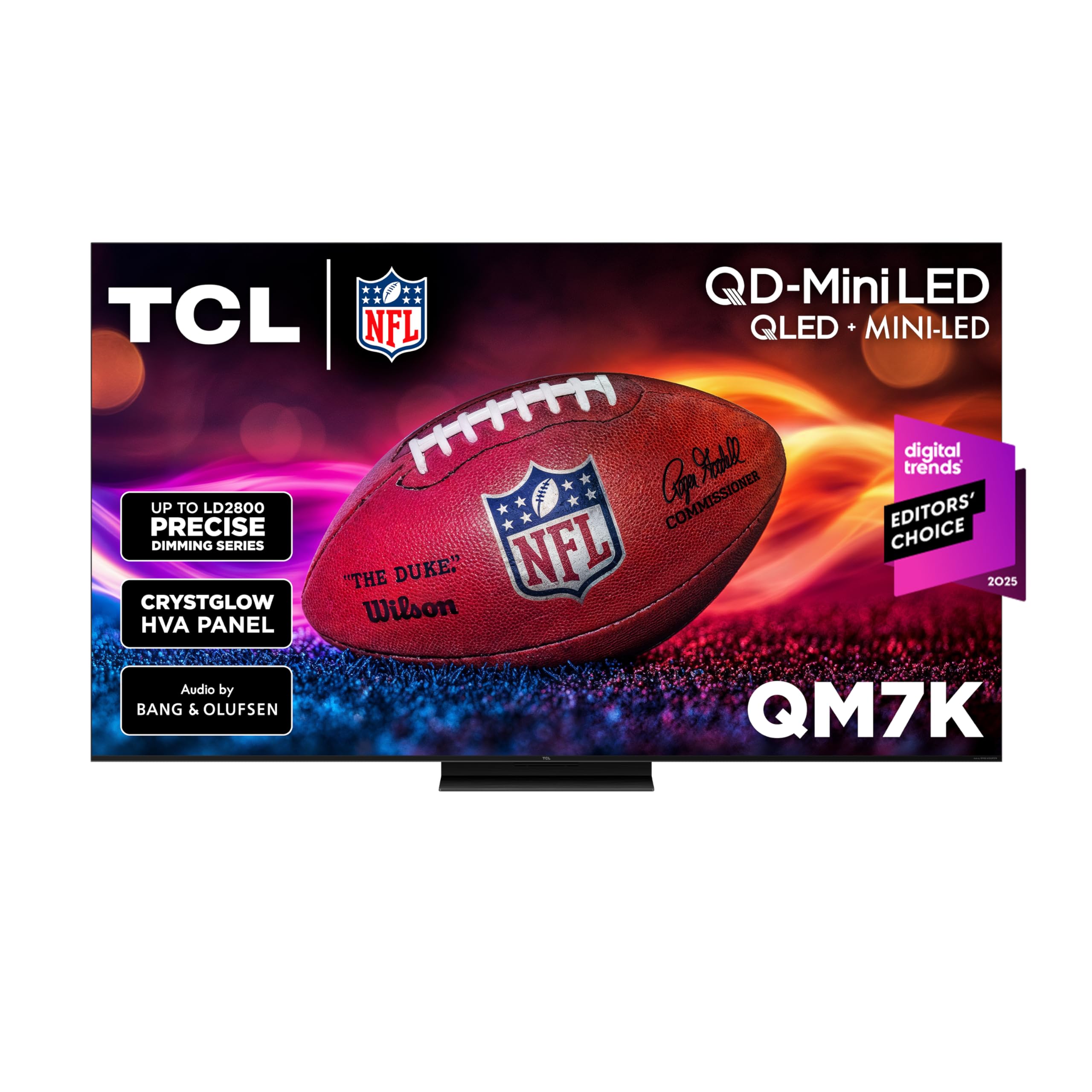
TCL’s 2025 QM7K elevates the Mini-LED game with up to LD2500 precise local dimming zones — a figure that puts it in the same conversation as TVs costing significantly more. The QD-Mini LED panel combines Quantum Dot color with fine-grained backlight control, producing deep blacks and bright highlights with minimal blooming around subtitles and HUD elements. The CrystGlow HVA panel adds anti-reflective properties that maintain contrast in rooms with ambient light, a feature often reserved for higher-tier sets.
The 120Hz-144Hz variable refresh rate, combined with TCL’s Halo Control System, delivers smooth motion with zero-delay transient response. The system includes a Super High Energy LED Microchip and a Super Condensed Micro Lens that concentrates light output for higher brightness efficiency. Onkyo audio tuning provides better-than-average sound, though the Bang & Olufsen branding on the audio is more partnership than premium engineering — a soundbar is still recommended for serious gaming sessions.
Google TV handles the smart platform, and the voice remote with Alexa provides hands-free control. The remote itself feels inexpensive compared to the rest of the build, but the overall package — especially for gamers who prioritize contrast ratio and zone count over brand cachet — makes the QM7K a strong mid-range contender. The high zone count particularly benefits games with mixed lighting, like the transition between dark caves and bright outdoors in Elden Ring.
Why it’s great
- Up to LD2500 local dimming zones for near-OLED contrast with minimal blooming.
- QD-Mini LED delivers vibrant colors with high brightness efficiency.
- Anti-reflective CrystGlow panel keeps image quality intact in bright rooms.
Good to know
- Included remote feels low-quality relative to the TV’s premium panel.
- Bang & Olufsen audio tuning is noticeable but does not replace a dedicated sound system.
8. Roku Smart TV – 55-Inch Plus Series Mini-LED
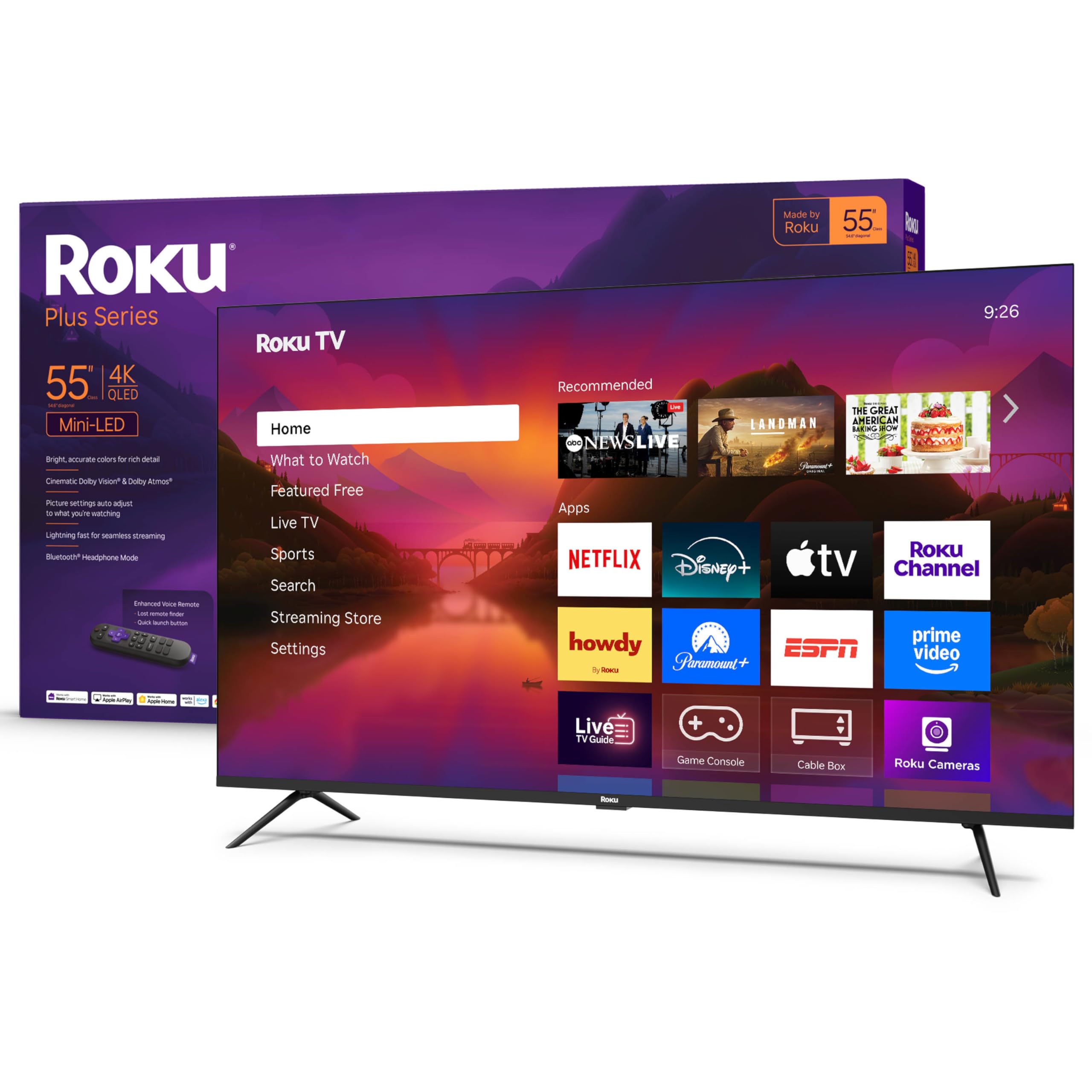
The Roku Plus Series Mini-LED brings premium backlight technology to the entry-level tier. At its core, the Mini-LED array provides superior contrast compared to standard edge-lit LED panels at similar prices, enabling deeper blacks and more controlled local dimming for HDR gaming. The 4K QLED panel with Dolby Vision ensures colors are vibrant and highlights are punchy — a meaningful upgrade from basic 4K panels that struggle with HDR tone mapping.
Roku’s Smart Picture Max AI processing cleans up incoming signals and applies real-time color and sharpness optimization. While purists may find the AI intervention unnecessary for pixel-accurate gaming, it’s genuinely helpful for upscaling 1080p titles and streaming content. The Enhanced Voice Remote includes a lost remote finder — a surprisingly useful feature when the remote slips between couch cushions mid-session. Bluetooth Headphone Mode lets you game privately without waking others.
The limitations: no native 120Hz or 144Hz panel, making this unsuitable for high-refresh-rate gaming. Console gamers are capped at 60fps, and PC gamers with capable GPUs will find the lack of VRR frustrating for tearing-prone titles. The sound system, while improved with a built-in subwoofer and Dolby Atmos support, cannot compete with dedicated audio solutions. This is an excellent choice for casual gamers and families who want solid 4K visuals at a no-fuss price.
Why it’s great
- Mini-LED backlight provides better contrast than typical entry-level edge-lit panels.
- Roku OS remains the cleanest, fastest smart TV platform available.
- Bluetooth Headphone Mode for private late-night gaming sessions.
Good to know
- Limited to 60Hz refresh rate — no 120Hz or VRR for high-framerate gaming.
- Built-in sound is decent but will not replace a dedicated sound system.
9. Samsung 55-Inch Class Mini LED M70H
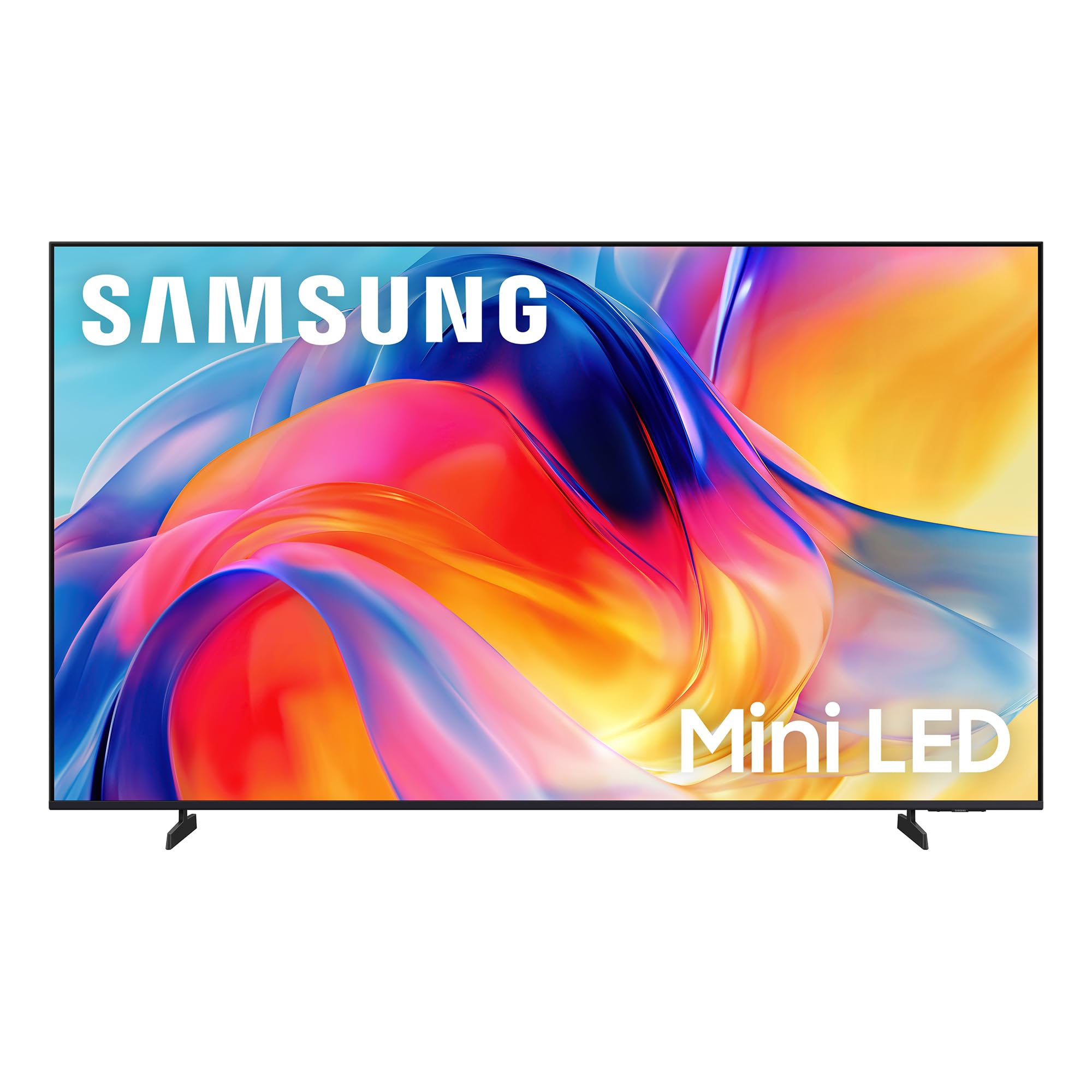
Samsung’s M70H entry-level Mini-LED set offers the brand’s 4K Processor and Pure Spectrum Color technology for accurate, vibrant imagery. The Motion Xcelerator with DLG 120Hz uses Digital Learning Graphics to double the perceived refresh rate, making 60fps content appear smoother — though it is not a true native 120Hz panel. For casual console gamers who want smooth motion without the full premium price, this offers a reasonable compromise.
The Samsung Gaming Hub aggregates cloud gaming services — Xbox Game Pass, NVIDIA GeForce NOW, Amazon Luna — directly on the home screen without needing a console. This is a standout feature for gamers who prioritizes streaming over local hardware. The Mini-LED HDR delivers brighter highlights and deeper blacks than standard LED panels, and Color Booster technology injects extra saturation into game visuals.
The remote control is a point of frustration for many users. The minimalist design lacks dedicated input-switching buttons, forcing reliance on the Samsung SmartThings app or voice commands to navigate between HDMI sources. The interface forgets last-selected inputs on boot, defaulting to Samsung TV Plus. For a single-console setup where these issues are minor, the M70H provides solid picture quality with Samsung’s ecosystem advantages at an accessible price point.
Why it’s great
- Mini-LED backlight provides improved contrast and brightness over standard LED.
- Samsung Gaming Hub aggregates cloud gaming services in one interface.
- Color Booster adds vibrancy to game visuals for a more engaging experience.
Good to know
- DLG 120Hz is not a native high-refresh panel; it uses software interpolation.
- Remote control lacks HDMI input-switching buttons, creating navigation friction.
10. TCL 55-Inch Q7 QLED

The TCL Q7 QLED is the budget champion for console gamers who refuse to compromise on refresh rate. It delivers a native 120Hz panel at a price point where most competitors offer only 60Hz, making it the entry-level gateway to smooth 4K/120fps gaming on PS5 and Xbox Series X. The Game Accelerator 240 feature pushes VRR up to 240Hz for compatible PC titles, though the native panel ceiling is 120Hz.
The Full Array PRO Local Dimming with over 200 zones provides impressive black levels for the category, with minimal blooming around bright objects. HDR highlights punch above expectations thanks to Dolby Vision IQ, which adjusts tone mapping based on room brightness. Motion Rate 480 with MEMC frame insertion smooths fast-paced sports and racing games, though it introduces some artifacts in 30fps cinematic titles — best disabled for single-player campaigns.
The Google TV interface is functional but includes advertising on the home screen, which some users find intrusive. The wide console feet require a furniture surface at least 48 inches wide, which may be a consideration for smaller entertainment centers. For the gamer on a strict budget who wants genuine 120Hz performance with solid HDR and local dimming, the Q7 remains a benchmark choice that newer models have not fully displaced.
Why it’s great
- Native 120Hz panel at a price point where 60Hz panels are the norm.
- Over 200 local dimming zones provide strong contrast for the budget tier.
- Dolby Vision IQ and HDR10+ support for well-mapped HDR gaming.
Good to know
- Google TV interface includes home screen advertising that some users dislike.
- Wide console feet require substantial furniture space for placement.
11. Sony BRAVIA 2 II

The Sony BRAVIA 2 II brings Sony’s renowned image processing and PlayStation 5 exclusives to a more accessible price bracket. The 4K Processor X1 delivers lifelike colors and sharp details with natural precision, while 4K XR-Reality PRO upscales HD and 1080p content to near-4K resolution — a critical feature for older consoles and lower-resolution streaming. The PS5 exclusive features — Auto HDR Tone Mapping and Auto Genre Picture Mode — ensure that HDR settings are optimized without manual configuration.
The 60Hz panel is the primary limitation for serious gamers. There is no 120Hz or VRR, meaning this TV cannot leverage the full performance of PS5 and Xbox Series X in titles that support 120fps modes. Motionflow XR provides some blur reduction, but it is frame interpolation rather than native high-refresh performance. Where the BRAVIA 2 II excels is in upscaling and color accuracy — for gamers who prioritize image fidelity over frame rate, the Sony processing pipeline is best-in-class at this level.
Google TV provides access to all major apps, and the Sony Pictures CORE app includes credits for 4K UHD movies. The Eco Dashboard helps manage power consumption, a thoughtful addition for daily drivers. Some users have reported stability issues with the Google OS, including freezes and Wi-Fi dropouts, though firmware updates may address these. This is a specialized pick for PS5 owners who value perfect image processing over high-refresh capabilities.
Why it’s great
- Exclusive PS5 HDR Tone Mapping and Auto Genre Picture Mode for plug-and-play optimization.
- 4K XR-Reality PRO upscaling brings HD content close to 4K sharpness.
- Natural, accurate color reproduction with the 4K Processor X1.
Good to know
- Limited to 60Hz — no 120Hz or VRR for next-gen console high-framerate gaming.
- Some reports of Google OS stability issues that may require troubleshooting.
FAQ
Is a 55-inch TV too big for competitive gaming?
Do I need HDMI 2.1 for gaming on a PS5 or Xbox Series X?
Can you use OLED TVs for gaming without burn-in?
What is the difference between FreeSync and G-SYNC for a gaming TV?
Why does my 120Hz TV still look blurry in fast-moving games?
Final Thoughts: The Verdict
For most gamers, the 55 inch tv for gaming winner is the Hisense 55U7SG because it delivers a native 165Hz panel, extensive Mini-LED dimming zones, and wide HDMI 2.1 support at a price that undercuts alternatives with similar specs. If you want the ultimate OLED contrast for single-player HDR titles in a controlled lighting environment, grab the Samsung S90H OLED. And for PS5 owners who want seamless console integration with Auto HDR Tone Mapping and genre-based optimization, nothing beats the Sony BRAVIA 8 OLED.