
A 120-inch projection screen is the centerpiece of any serious home theater, but choosing the wrong material or frame type can turn your investment into a washed-out, wrinkled mess. Whether you’re battling ambient light in a living room or building a dedicated dark room, the screen’s gain, tension system, and light rejection ratio determine whether you get a cinema-grade image or a frustrating compromise.
I’m Min — the co-founder and writer behind Gadgets Feed. I specialize in dissecting the technical specifications of home theater gear, analyzing everything from ALR micro-tooth structures to tab-tensioned motor drives, so you can match the right screen to your projector and room conditions.
After spending many hours comparing build quality, gain values, and user-reported wrinkle resistance across dozens of models, I’ve assembled the definitive guide to the 100-120 inch projection screen category that delivers clear, actionable advice for any setup.
How To Choose The Best 100-120 Inch Projection Screen
Selecting the right screen is about matching the material and frame to your projector’s throw ratio and your room’s light control. A fixed frame offers the flattest surface, while a motorized tab-tensioned model provides flexibility without sacrificing flatness. The key specs to balance are gain, viewing angle, and ambient light rejection.
Screen Material: ALR, Grey, or White?
Ambient Light Rejecting (ALR) screens use a micro-toothed or lenticular surface to deflect overhead and side light, preserving black levels in rooms with windows or lamps. Standard white screens with high gain (1.5 to 3.0) boost brightness but wash out quickly under light. Grey screens offer a middle ground, improving contrast without the directional sensitivity of ALR materials.
Frame Type: Fixed Frame vs. Motorized Tab-Tension
A fixed frame screen, like the Elite Screens Aeon CineGrey 3D, delivers a perfectly taut, wrinkle-free surface because the fabric is permanently stretched over an aluminum frame. Motorized screens with tab-tension systems pull the fabric taut from all four sides, but even the best models can develop slight ripples over time. If you need to conceal the screen to protect it or save space, a motorized unit is essential.
Quick Comparison
On smaller screens, swipe sideways to see the full table.
| Model | Category | Best For | Key Spec | Amazon |
|---|---|---|---|---|
| NothingProjector Floor Rising ALR | Motorized Floor | Zero-install UST setups | 95% ALR, 170° viewing angle | Amazon |
| Valerion Outdoor Motorized | Outdoor Motorized | Backyard & patio movie nights | IPX3 waterproof, rechargeable battery | Amazon |
| MIGO Motorized Tab-Tension Black | Motorized Drop-Down | Versatile day/night living room use | Tab-tensioned, 2.0 gain grey crystal | Amazon |
| NothingProjector Fixed Frame ALR | Fixed Frame | Dedicated UST theater rooms | 85% ALR, ultra-narrow 10mm bezel | Amazon |
| Generic ALR Fixed Frame | Budget Fixed Frame | Entry-level UST upgrade on a budget | 0.8 gain, Fresnel ALR structure | Amazon |
| MIGO Tab-Tensioned Motorized | Mid-Range Motorized | All-around home theater with 3.0 gain | 3.0 gain, 170° viewing angle | Amazon |
| Elite Screens Aeon CineGrey 3D | Premium Fixed Frame | Bright rooms requiring maximum black level | 65% CLR/ALR, 1.2 gain | Amazon |
In‑Depth Reviews
1. NothingProjector Motorized ALR Screen (Floor Rising)
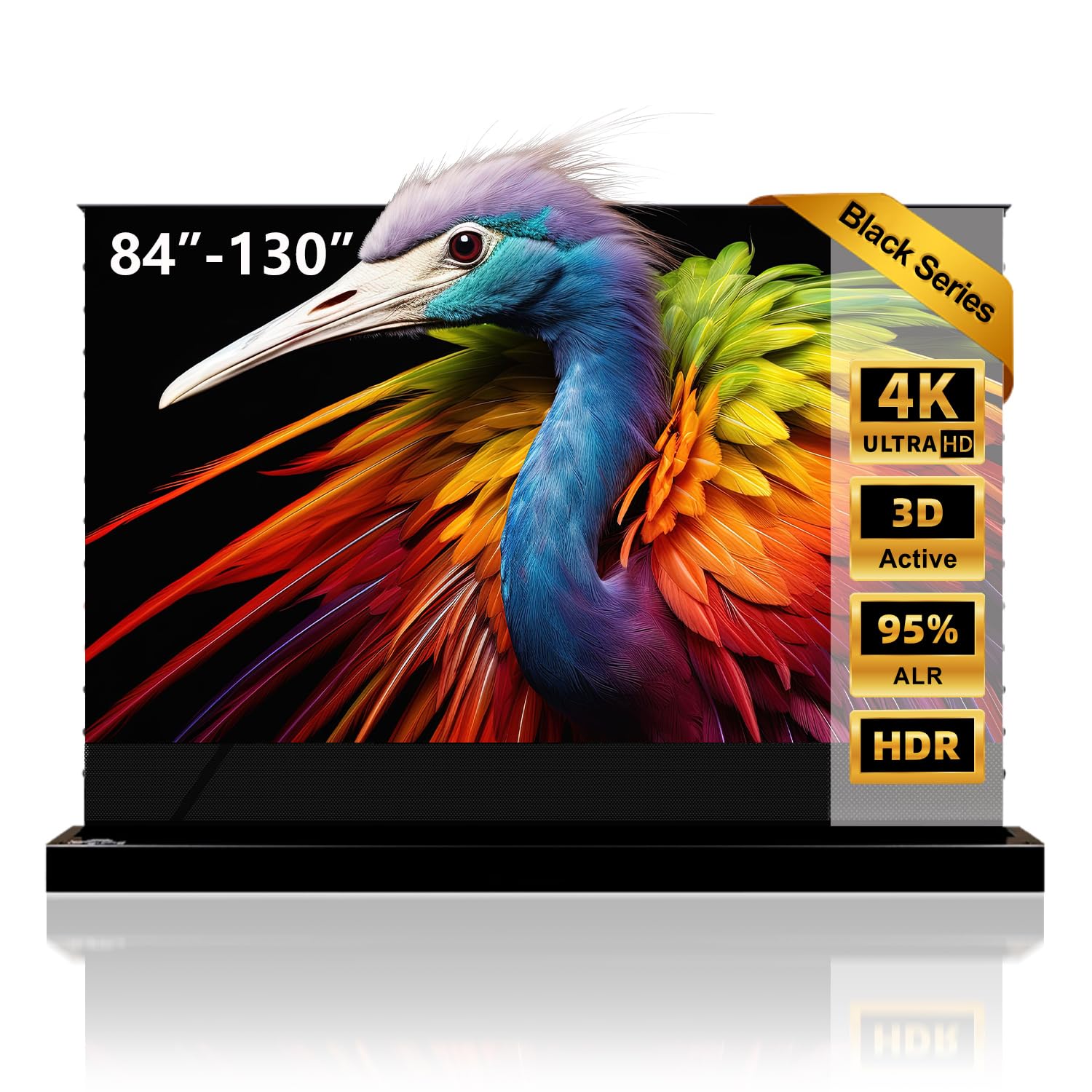
The NothingProjector Floor Rising ALR screen delivers the highest ambient light rejection in this roundup at 95%, using an ST Carbon Black surface and micro-perforated 0.4mm holes for acoustic transparency. At 100 inches (just under the 120-inch max, but fitting the category), it pairs perfectly with ultra-short throw projectors, offering a wide 170° viewing angle that preserves contrast even with lamps on.
Its zero-install floor-standing design sets it apart — no wall drilling, no permanent mount. The electric motor syncs wirelessly with your projector, so the screen rises and retracts automatically with a single remote press. The perforated surface also lets sound pass through cleanly, making it ideal for setups where the center channel sits behind the screen.
Build quality is solid, with a sturdy CBSP housing that feels substantial during operation. Some users report slight edge bending and a temporary “new screen” chemical smell, but the overall consensus is that this is a premium solution for those who prioritize convenience and absolute light control without permanent installation.
Why it’s great
- Highest ALR rating (95%) in this guide with excellent contrast maintenance
- Acoustically transparent micro-perforated surface for behind-screen audio
- Wireless auto-sync with projector for one-button operation
Good to know
- 100-inch size may feel small for massive dedicated theaters
- Laser speckle hotspotting reported with triple-laser UST projectors
- Limit-setting instructions are not intuitive and lack an English video
2. Valerion 120″ Motorized Outdoor Projector Screen
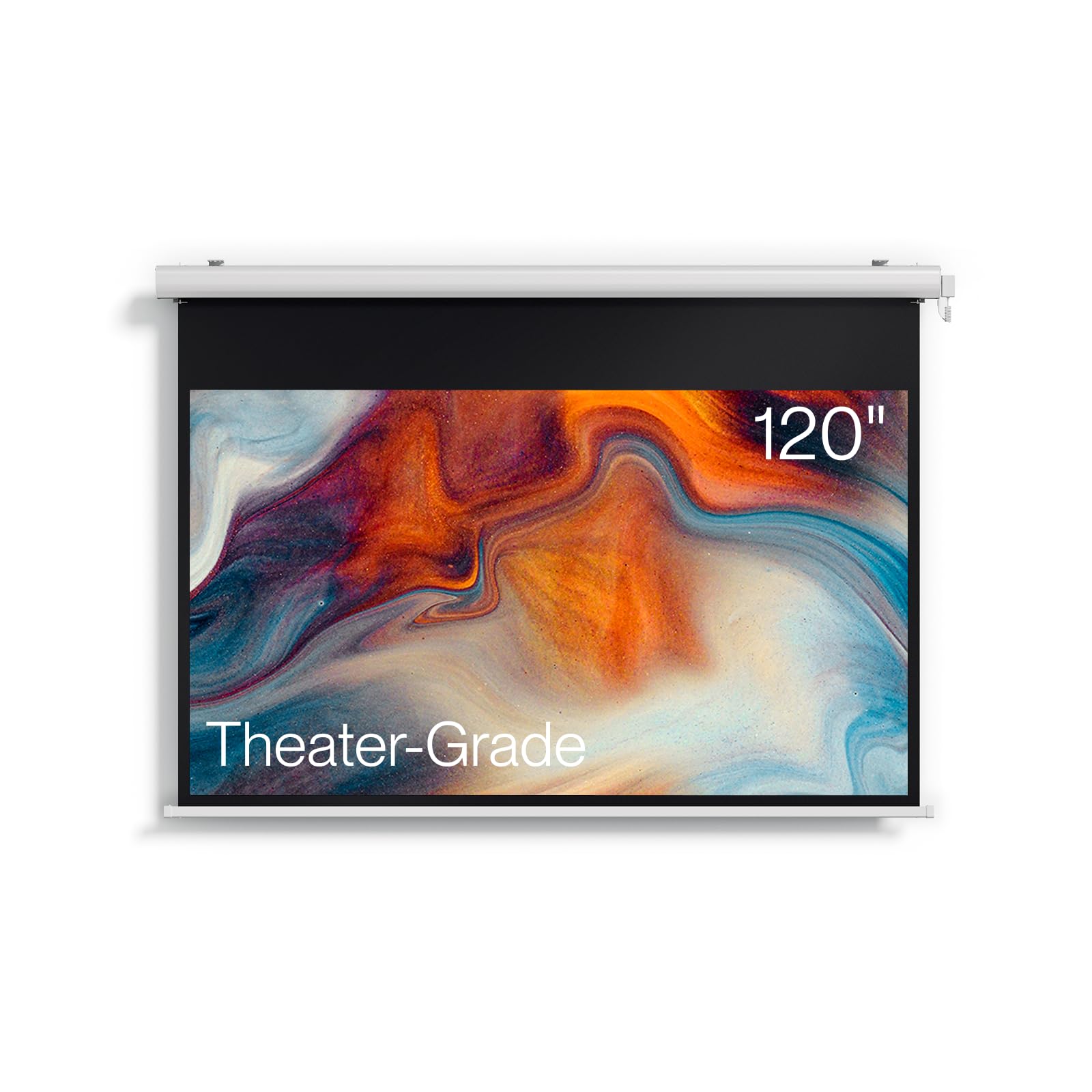
The Valerion outdoor motorized screen redefines what a drop-down screen can be by integrating a rechargeable 14.8V lithium battery that supports a full lift-lower cycle daily for up to six months between charges. This eliminates the need for an external power outlet, making it genuinely portable for backyard movie nights, camping, or patio setups.
Its IPX3-rated waterproof construction protects the aluminum frame and motor from rain and humidity, while the matte white PVC surface delivers a 1.1 gain and 170° viewing angle. The motor operates smoothly and quietly, with a quick raise-lower cycle that gets your 120-inch image ready in seconds. It’s compatible with long-throw, short-throw, and ultra-short-throw projectors, though UST users may need to mount it lower to avoid keystone issues.
Installation is straightforward — most users report completing it in under 30 minutes with provided wall anchors. The screen arrives perfectly flat out of the box, though a few units may have a slight initial ripple that relaxes over time. The battery-dependent design means you must remember to charge it; if the battery fails, it must remain plugged in to operate.
Why it’s great
- Rechargeable battery for cord-free outdoor operation up to 6 months per charge
- IPX3 waterproof rating resists rain and humidity
- Quick and easy wall-mount installation in under 30 minutes
Good to know
- Non-recessed housing is long; may overwhelm small rooms
- Battery failure reported by some users, requiring permanent power connection
- Not programmable for preset drop heights
3. MIGO 120″ Motorized Tab-Tension Screen (Black Housing)
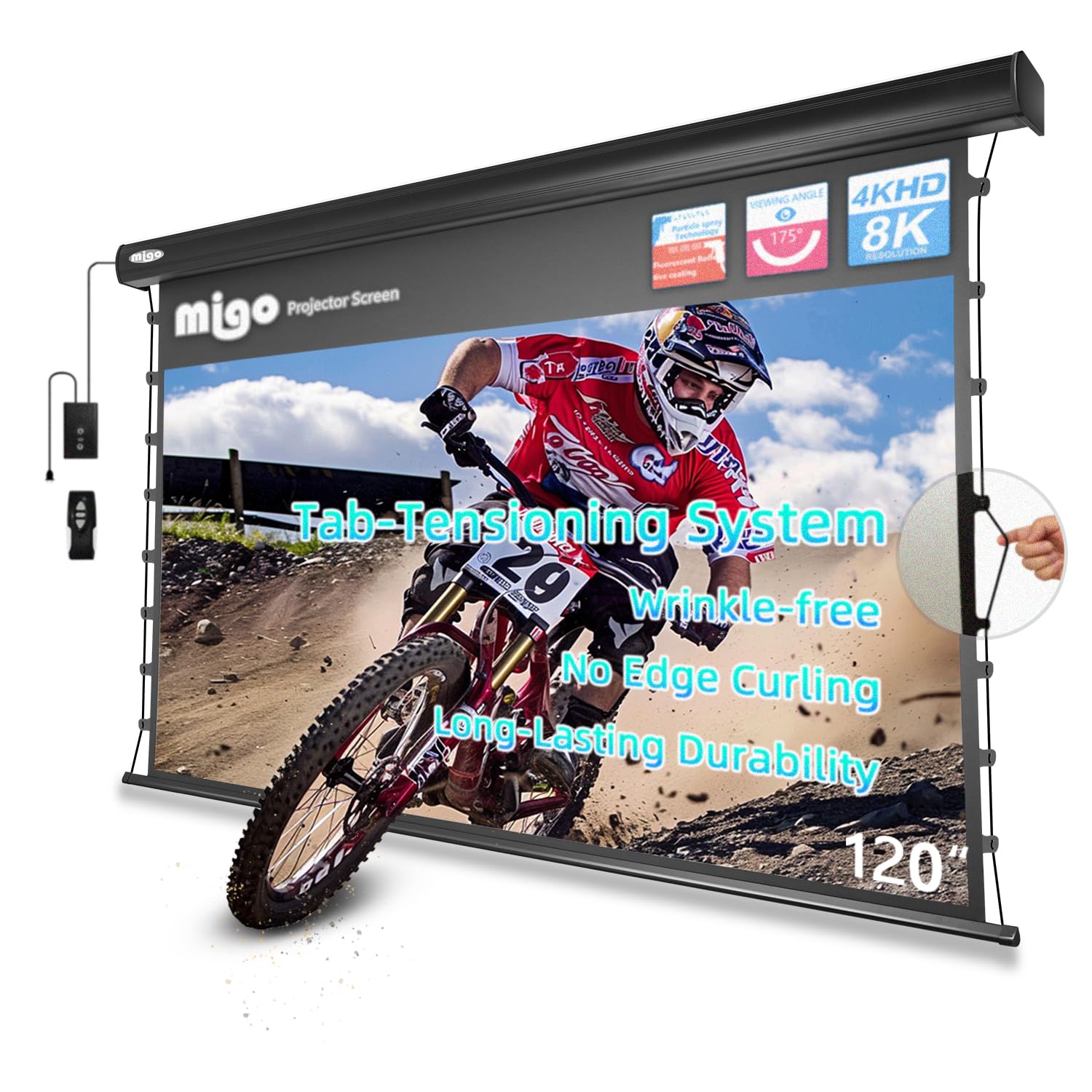
The MIGO Tab-Tension screen in black housing combines a quiet FCC-certified motor with a side-tensioning system and a 9-pound weighted bottom bar to pull the grey crystal surface perfectly flat. The 2.0 gain material offers strong partial ambient light rejection — not full ALR — making it a versatile choice for living rooms that see both daytime and nighttime use.
Its 175° viewing angle ensures consistent brightness across a wide seating arrangement, and the grey crystal finish deepens black levels compared to standard white screens. The motor operates at a noise level that most users describe as barely perceptible, and the RF remote allows drop-height adjustment from up to 16.4 feet away, accommodating different ceiling heights.
The aluminum housing is reinforced with structural ribs to prevent flex over long spans. MIGO recommends using a projector with at least 3000 lumens for optimal results, and the screen supports five installation methods including wooden and concrete ceiling mounts. Some buyers have noted marketing confusion around the term “ALR” — this is a partial ambient light rejecting screen, not a full ALR, so it works best with some light control.
Why it’s great
- Robust tab-tension system with weighted bottom bar for mirror-flat surface
- FCC-certified quiet motor with long operational lifespan
- Versatile 5-way mounting system for ceiling or wall installation
Good to know
- Not a full ALR screen; ambient light rejection is partial only
- Requires a bright projector (3000+ lumens) for best image quality
- Lower-side wrinkles reported by some users over time
4. NothingProjector Fixed Frame ALR Screen (Classic Series)

The NothingProjector Classic Series fixed frame screen brings 85% ambient light rejection to a permanently tensioned format, using a PET Crystal lenticular surface that deflects overhead and side light while maintaining a 160° viewing angle. The ultra-thin 10mm aluminum bezel gives it a near-frameless appearance that blends into any wall.
This screen is engineered specifically for ultra-short throw projectors. The multi-layer design includes a black light-absorbing core and a 3D imaging layer that preserves contrast even with windows or lamps in the room. The PET Crystal material is PVC-free and designed to be wrinkle-free from the moment of installation, with a smooth mounting system that uses spring-loaded wall brackets for secure attachment.
Assembly can be challenging due to sparse instructions, but the build quality is excellent — reviewers with 30 years of AV experience have praised the metal frame’s rigidity. The screen’s glare-reducing properties help reduce visual fatigue during extended viewing sessions, making it a solid choice for both home theaters and conference rooms.
Why it’s great
- High 85% ALR rating with excellent daylight contrast performance
- Ultra-slim 10mm frame for a clean, modern aesthetic
- PVC-free PET material is eco-friendly and eye-friendly
Good to know
- Assembly instructions are poorly assembled and hard to follow
- Bracket alignment can be finicky during wall mount
- Limited to fixed-frame installation; not retractable
5. Generic 120″ ALR Fixed Frame Projector Screen
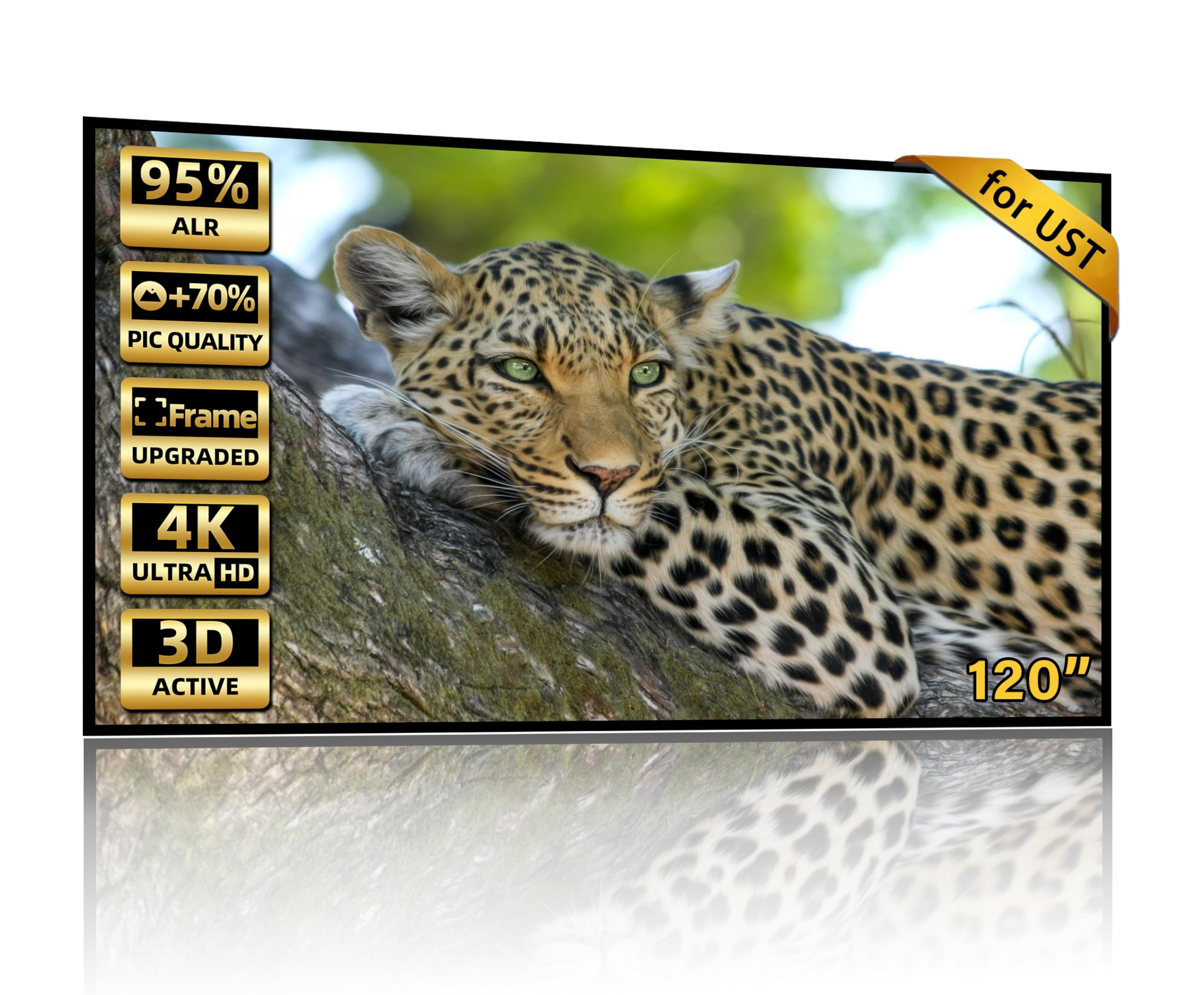
This generic ALR fixed frame screen uses a precision micro-toothed Fresnel structure with a 0.8 gain, specifically designed for ultra-short throw projectors. The triangular grating pattern — black on one side, white on the other — effectively absorbs ambient light from above while directing projected light toward the audience, delivering deep blacks and saturated colors even in daylight conditions.
The dual-frame aluminum construction includes an adaptive spring tension system that maintains consistent flatness across the 120-inch surface. The 10mm ultra-narrow bezel is wrapped in a velvety surface that absorbs stray light reflections, enhancing perceived contrast. The PVC material has self-healing properties to resist minor deformation, and a black backing prevents light leakage from behind the screen.
Assembly is straightforward, with most users completing it in under two hours with the help of online video guides. The frame comes well-packaged with corner protectors. While the ALR performance is impressive for the price point, it doesn’t match the absolute black level of premium screens costing significantly more. Some units may develop sagging after several months, so careful installation with even tension is critical.
Why it’s great
- Exceptional value for a dedicated UST ALR screen with Fresnel optics
- Self-healing PVC material resists deformation over time
- Dual-frame design with spring tension for wrinkle-free surface
Good to know
- 0.8 gain reduces peak brightness; needs a bright UST projector
- Some units reported sagging and loss of integrity after a few months
- Velvet frame can attract dust and requires careful cleaning
6. MIGO 120″ Tab-Tensioned Motorized Screen (White Housing)
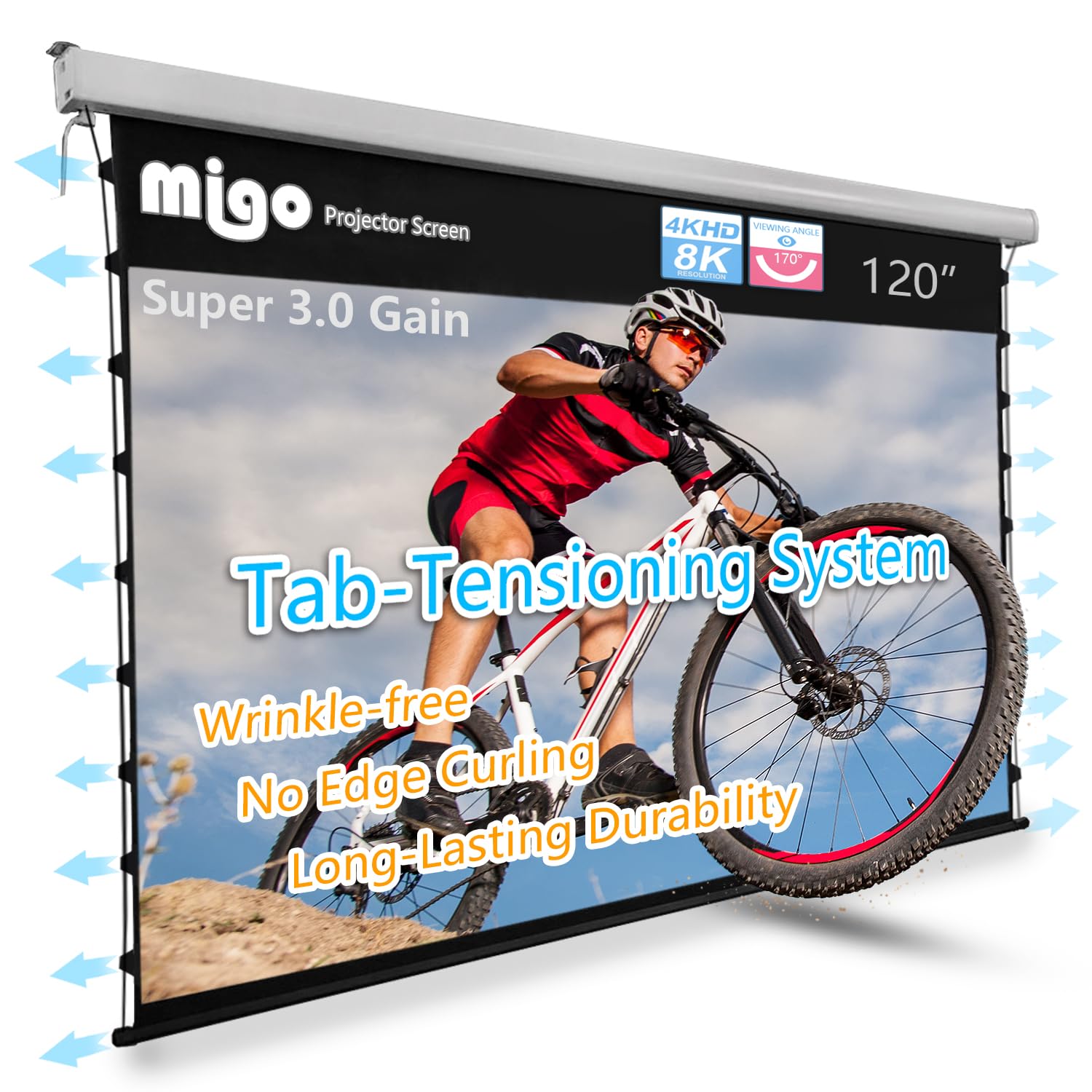
The MIGO Tab-Tensioned motorized screen in white housing delivers an exceptional 3.0 gain using a soft white particle-sprayed surface, making it one of the brightest options in this guide. The high gain is ideal for standard and long-throw projectors in rooms where ambient light is moderate, as it preserves image punch without requiring a completely dark environment.
Its tab-tension system, combined with a heavy bottom bar, pulls the screen taut in all four directions to create a mirror-flat surface. The motor is FCC-certified and operates quietly, with electromagnetic testing ensuring longevity. The RF remote lets you adjust the drop height up to 16.4 feet away, and the screen supports 4K, 8K, and 3D content with a 170° viewing angle.
The double-layer carton packaging with corner protectors ensures the screen arrives undamaged. With a 175° viewing angle, it’s well-suited for wide seating arrangements. However, this is a standard white screen, not an ALR model, so it performs best with curtains drawn. Some users have noted slight wrinkles on the lower sides, though the tension system handles most fabric slack effectively.
Why it’s great
- Highest gain value (3.0) in this guide for maximum brightness
- Tab-tension system with weighted bar ensures wrinkle-free flatness
- FCC-certified quiet motor with reliable long-term operation
Good to know
- Standard white screen — not suitable for high-ambient-light rooms
- Heavy unit requiring two-person installation
- Lower-side wrinkles may appear if tension isn’t perfectly even
7. Elite Screens Aeon CineGrey 3D Fixed Frame

The Elite Screens Aeon CineGrey 3D is a 120-inch fixed frame screen that uses a CLR/ALR CineGrey 3D material with 65% ambient light rejection and a 1.2 gain, striking a balance between brightness and contrast. It’s ISF certified for accurate color reproduction and GREENGUARD GOLD certified for low indoor emissions, making it a safe, long-term investment for family rooms and dedicated theaters.
The EDGE FREE frameless design creates the illusion of a giant flat-panel TV, with a lightweight 6-piece split aluminum frame that assembles without tools. The screen is compatible with 4K/8K UHD and active/passive 3D, and the tensioned surface stays perfectly flat and wrinkle-free for years. The 90° viewing angle is narrower than many competitors, but it’s deliberate — it directs more light toward the primary seating position, improving perceived contrast.
With a 2-year manufacturer warranty and lifetime tech support, Elite Screens backs its product with solid customer service. The screen ships with all necessary hardware, and setup videos are available online. While it’s a premium investment for a fixed frame, its build quality and material consistency make it a reference standard for those who prioritize color accuracy and longevity over maximum brightness.
Why it’s great
- ISF-certified color reproduction with accurate black levels
- EDGE FREE frameless design mimics a massive flat-panel TV
- GREENGUARD GOLD certified for safe indoor air quality
Good to know
- Narrow 90° viewing angle limits off-axis seating
- Assembly can be challenging — remove ripples carefully before fitting the border
- Higher cost compared to other fixed-frame options in this guide
FAQ
Can I use a standard white screen with an ultra-short throw projector?
What gain value should I choose for a bright living room?
How do I prevent wrinkles on a motorized pull-down screen?
Is a 120-inch projection screen too large for a standard living room?
Final Thoughts: The Verdict
For most users, the 100-120 inch projection screen winner is the NothingProjector Floor Rising ALR because it combines 95% ambient light rejection with zero-install convenience and acoustic transparency, delivering the best balance of image quality and flexibility for modern UST setups. If you want a motorized drop-down for indoor-outdoor versatility, grab the Valerion Outdoor Motorized. And for a permanent reference-grade fixed frame installation with ISF-certified color accuracy, nothing beats the Elite Screens Aeon CineGrey 3D.