
The 110 cartridge film format is the pocket-sized revivalist’s choice—an 8-perforation frame that packs nostalgia into a palm-filling plastic cassette. Unlike its 35mm cousin, this cartridge-loading system eliminates threading, reduces the camera body to almost keychain proportions, and demands a distinct kind of shooting patience because the negative surface area is roughly half that of a standard 135 frame. That smaller canvas means sharpness, grain structure, and exposure consistency matter more per square millimeter, so selecting the right roll is about understanding what a 13×17mm negative can realistically deliver.
I’m Min — the co-founder and writer behind Gadgets Feed. For this guide, I’ve categorized the available 110 stocks by ISO speed, color rendition, and real-world scan results, cross-referencing fresh production batches against reliable development workflows so you know exactly what your Minolta 110 Zoom SLR or Pentax Auto 110 will actually see.
Whether you are shooting a vintage Kodak Ektra or one of the newly reissued 110 cameras, the best approach demands a stock that handles the format’s limited latitude. This buying guide pinpoints the best 110 cartridge film by examining each emulsion’s real performance characteristics and availability right now.
How To Choose The Best 110 Cartridge Film
Selecting 110 film is not about chasing the lowest ISO for theoretical sharpness. The tiny negative loses detail fast when underexposed, and most vintage 110 cameras have fixed apertures around f/8 or f/11 with limited shutter speeds. You need a film that grants enough speed to keep your shutter usable indoors while maintaining acceptable grain for 4×6-inch prints.
ISO Speed and Exposure Latitude
ISO 200 is the baseline for sunny outdoor shooting, but an ISO 400 film like the Kodak 110 Gold GC gives you a two-stop cushion when clouds roll in or when you’re shooting under store awnings. The trade-off is visible grain, but on a 110 negative that grain often reads as part of the format’s aesthetic rather than a defect. Avoid stocks rated above ISO 800 unless your camera has a manual exposure override — the highlight clipping on a fixed-aperture 110 body can be brutal.
Color Rendition and Processing Consistency
Color negative films intended for 110 cartridges are almost exclusively daylight-balanced, meaning they expect a color temperature around 5500K. Tungsten-lit interiors will push the frame amber. The emulsion technology on Kodak Gold GC uses a robust C-41 process that is widely accepted by mini-labs and mail-order services, while some repackaged 110 stocks from smaller sellers have been known to produce inconsistent frame spacing or poor splicing — always stick to major manufacturers for your first rolls to baseline your camera’s performance.
Frame Count and Splicing Quality
A standard 110 cartridge yields 24 exposures. Cheaper reloadable carts sometimes offer 36, but they risk jamming due to tighter wind tension in aging cassette bodies. The factory-spliced leader on Kodak’s 110 cartridges is consistent from roll to roll, reducing the chance of a mid-roll tear that ruins the next four frames. If your camera has a motorized advance, pay extra attention to cartridge brand — smoother spooling means fewer skipped frames and less stress on the tiny plastic gears inside your camera.
Quick Comparison
On smaller screens, swipe sideways to see the full table.
| Model | Category | Best For | Key Spec | Amazon |
|---|---|---|---|---|
| Kodak 110 Gold GC 110-24 | Color Negative | All-purpose daylight shooting | ISO 400, 24 exposures | Amazon |
| Fujifilm Fujicolor 200 (3-Pack) | Color Negative | Multi-roll value pack | ISO 200, 36 exposures | Amazon |
| Kodak Colorplus 200 (3-Pack) | Color Negative | Budget-conscious multipack | ISO 200, 36 exposures | Amazon |
| RETO Maple 100 | Color Negative | Warm vintage tones | ISO 100, 27 exposures | Amazon |
| RETO Amber D100 | Motion Picture Emulsion | Cinematic halation effect | ISO 100, 27 exposures | Amazon |
| Kodak Colorplus 200 (5-Roll) | Color Negative | High-volume daily shooter | ISO 200, 36 exposures | Amazon |
| Ilford HP5 Plus 400 120 | Black & White | Medium format versatility | ISO 400, 120 format | Amazon |
In‑Depth Reviews
1. Kodak 110 Gold GC 110-24
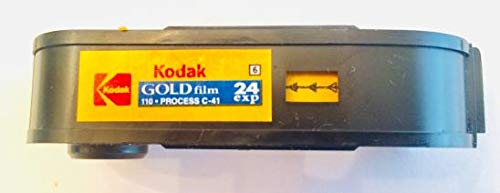
The Kodak 110 Gold GC is one of the few factory-fresh 110 stocks still produced by a major manufacturer, and its ISO 400 rating makes it uniquely suited for the narrow apertures common on vintage 110 cameras. You get 24 exposures per cartridge, which is standard for the format, and the C-41 process ensures that any lab that develops 35mm color can handle this without special equipment. The emulsion leans warm with moderate contrast, a trait that compensates for the lower dynamic range inherent to the small negative size.
Users consistently report that the spooling and leader splice are reliable across batches — important because a poorly spliced leader in a 110 cartridge can cost you the first two frames before the camera even recognizes the film is advancing. The Gold GC is daylight-balanced, so expect neutral skin tones under noon sun and a gentle amber shift indoors under tungsten. Scanned at 3200 DPI, the grain is visible but fine enough to produce clean 4×6 prints without excessive noise.
The main drawback is the price per exposure compared to 35mm — but that is a reality of the format’s lower production volume. If you want a single working standard to baseline your 110 camera without worrying about cold-storage or expiration dates, this is the stock to buy first. It is the safest bet for evaluating whether your camera’s light seals are intact and whether the shutter timing is still accurate.
Why it’s great
- ISO 400 gives an extra stop of flexibility over ISO 200 stocks in dim conditions
- Factory-spliced leader ensures consistent first-frame take-up
- Produced fresh by Kodak with reliable date codes
Good to know
- Cost per exposure is higher than bulk 35mm equivalents
- Limited availability through smaller camera stores
2. Fujifilm Fujicolor 200 (3-Pack)

The 3-pack of Fujicolor 200 gives you 108 total exposures at a price that undercuts single-roll alternatives, making it a strong choice if you are loading a 110 camera that takes standard 35mm cassettes rather than true 110 cartridges — but note that this is a 35mm film, not a 110 cartridge. For cameras that accept 135 film, this is the go-to for high-volume testing of a new body or for shooting events where you want to burn through multiple rolls without worrying about per-frame cost.
Fujicolor 200 is known for its slightly cooler white balance than Kodak stocks, with greens and blues that render more vividly under overcast skies. The grain structure at ISO 200 is tight enough that even scanning at 4000 DPI reveals only a fine, even pattern. The 36-exposure length is a genuine advantage for 35mm cameras, as you get 50 percent more frames per roll than the standard 24-exposure packs, reducing how often you have to reload in the field.
The film is DX-coded, which means auto-loading 35mm cameras from the 1990s will set the DX reader correctly. However, for push-processing beyond ISO 400, the C-41 chemistry will show increased base fog. If you know your camera has a sticky shutter that tends to run slow, the slower ISO 200 speed may push you into underexposure territory in anything but bright daylight.
Why it’s great
- Three rolls for a price lower than many single premium 35mm rolls
- DX-coded for automatic camera recognition
- Cooler color balance works well for coastal or forest landscapes
Good to know
- ISO 200 limits low-light performance in cameras without exposure compensation
- This is 35mm format — not compatible with true 110 cartridge cameras
3. Kodak Colorplus 200 (3-Pack)

Kodak Colorplus 200 is the classic budget-friendly emulsion that has been in continuous production for decades, and this 3-pack delivers three 36-exposure rolls. Like the Fujicolor 200, this is a 35mm product, so it works in standard 135-format cameras — not in the true 110 cartridge pocket cameras. The emulsion is tuned for daylight and electronic flash, with a contrast curve that lifts midtones slightly to give snapshots a punchy, saturated look straight off the mini-lab prints.
Colorplus has a distinctive orange-red bias in the shadows that gives skin tones a healthy, warm cast. Customers shooting with Pentax Zoom and Ektar H35 cameras consistently report that the colors pop more than Fujicolor 200 when the sun is out, making it a favorite for street photography and travel documentation. The grain at ISO 200 is smooth enough to blow up to 8×10 without looking mushy, though the shadow areas will show visible texture if you underexpose by more than one stop.
The main trade-off is that the emulsion is not designed for tungsten or mixed lighting — indoor shots under incandescent bulbs will shift aggressively warm. For users who value vibrant colors and a bit of grain over clinical accuracy, this is the roll to stock in bulk. The cost-per-roll on the 3-pack makes it cheap enough to use for camera testing before loading more expensive stocks.
Why it’s great
- Warm, saturated color profile ideal for sunny outdoor shooting
- Very forgiving exposure latitude — within two stops it remains printable
- Three-roll pack reduces per-frame cost significantly
Good to know
- Strong orange cast under tungsten lighting
- Not a true 110 format cartridge
4. RETO Maple 100
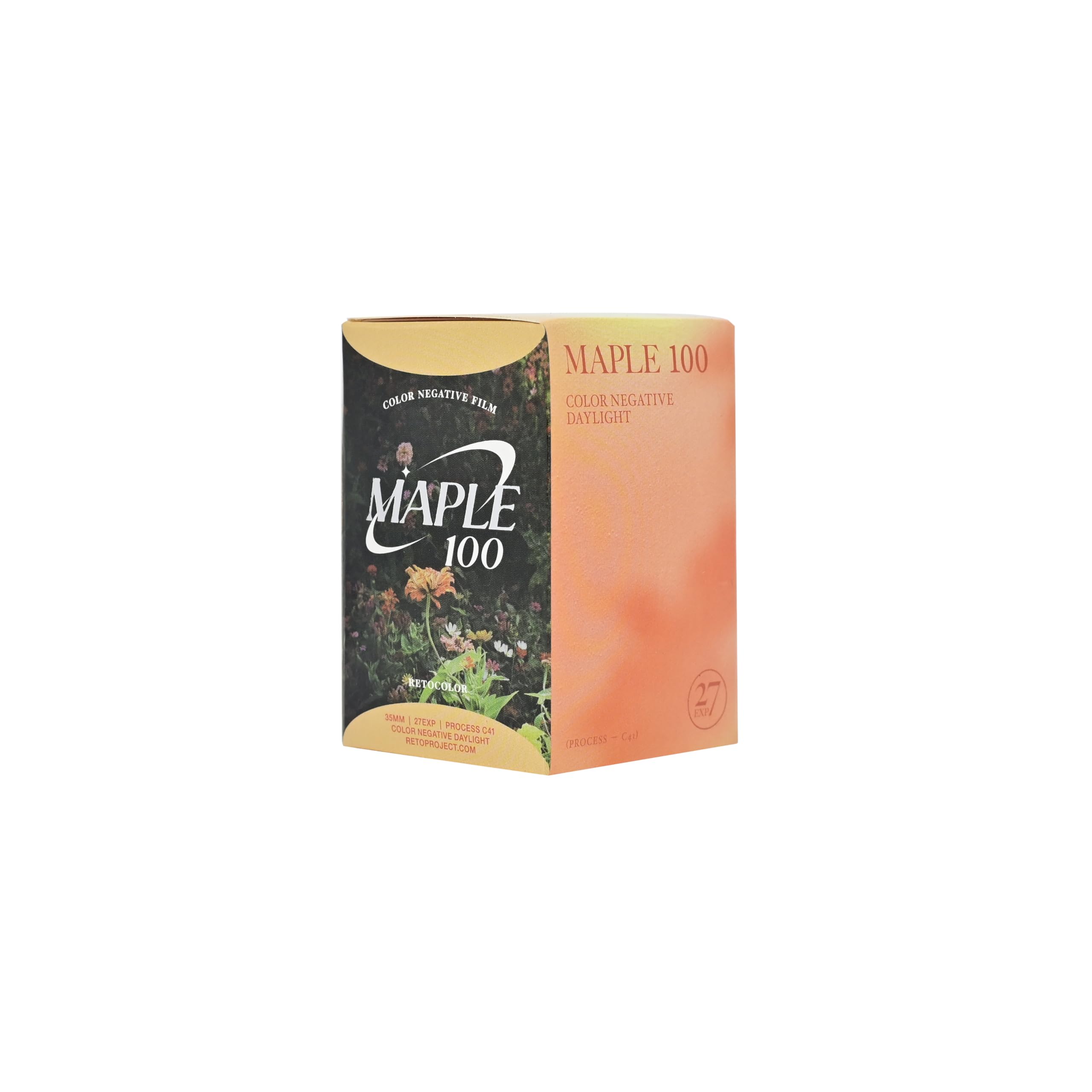
RETO’s Maple 100 is a 35mm color negative stock with a deliberately warm, sepia-toned palette that replicates the look of early consumer color film. At ISO 100 it requires good light, which makes it best suited for midday street photography or well-lit interiors where you can rely on a shutter speed of at least 1/125. The 27-exposure roll is slightly shorter than standard 24- or 36-exposure counts, but the extra three frames come from tighter wind at the factory — not from compromising the emulsion length.
The emulsion is C-41 processed and DX-coded, so automatic 35mm cameras will read the ISO correctly. Customer reviews consistently mention a vintage, warm look that leans into amber tones, especially when shot on point-and-shoot cameras with plastic lenses. One user shooting a Samsung Maxima reported images that were more sepia than expected, which suggests the stock is sensitive to overdevelopment — if your lab over-agitates, the warmth can become overwhelming. For photographers who want that nostalgic family-album color, this is exactly the right tool.
The low ISO means you cannot use this film in dim conditions without flash, and the narrow latitude punishes underexposure with blocked shadows. It is best thought of as a specialty stock for bright, lazy afternoons. If you are buying for a 110 camera rather than a 35mm, this product will not fit the cartridge slot — it is strictly 135 format.
Why it’s great
- Unique warm-toned palette stands out from neutral color films
- DX-coded for automatic camera ISO detection
- Fine grain at ISO 100 provides clean scans
Good to know
- Requires strong daylight due to ISO 100 speed
- Sepia cast can overpower neutral skin tones if overdeveloped
5. RETO Amber D100

RETO Amber D100 is a 35mm motion-picture color negative emulsion sourced from cine stock, factory-spooled into standard 135 cartridges. Unlike consumer color negative films, motion-picture emulsions feature a rem-jet backing layer that reduces halation — but RETO has engineered this version to retain a slight halation effect as a stylistic choice. The ISO 100 rating again demands excellent light, but the real draw is the color science: expect muted greens and elevated amber tones that mimic the look of late-20th-century cinema.
This stock is daylight-balanced, and users shooting with automatic point-and-shoot cameras have reported unpredictable color casts — one customer noted a green tint in their developed scans that they corrected in post. That inconsistency often comes from differences in how mini-labs handle cine-derived emulsions versus standard C-41, so it helps to use a lab experienced with motion-picture film. The 27-exposure roll is priced competitively with other specialty stocks, and the factory spooling has been reliable in mechanical cameras with manual film advance.
The trade-off is that the motion-picture origin means the dynamic range is optimized for controlled studio lighting, not for high-contrast outdoor scenes. Highlights can blow out quickly if you are shooting a scene with both deep shadows and bright sky. If you enjoy tweaking color curves in post, this film gives a unique starting point that standard consumer stocks cannot match.
Why it’s great
- Genuine motion-picture emulsion with distinct color science
- Controlled halation adds character to highlights
- Factory-spooled with reliable leader splice
Good to know
- ISO 100 limits usefulness in low-light settings
- Lab compatibility varies — find one experienced with cine film
6. Kodak Colorplus 200 (5-Roll)
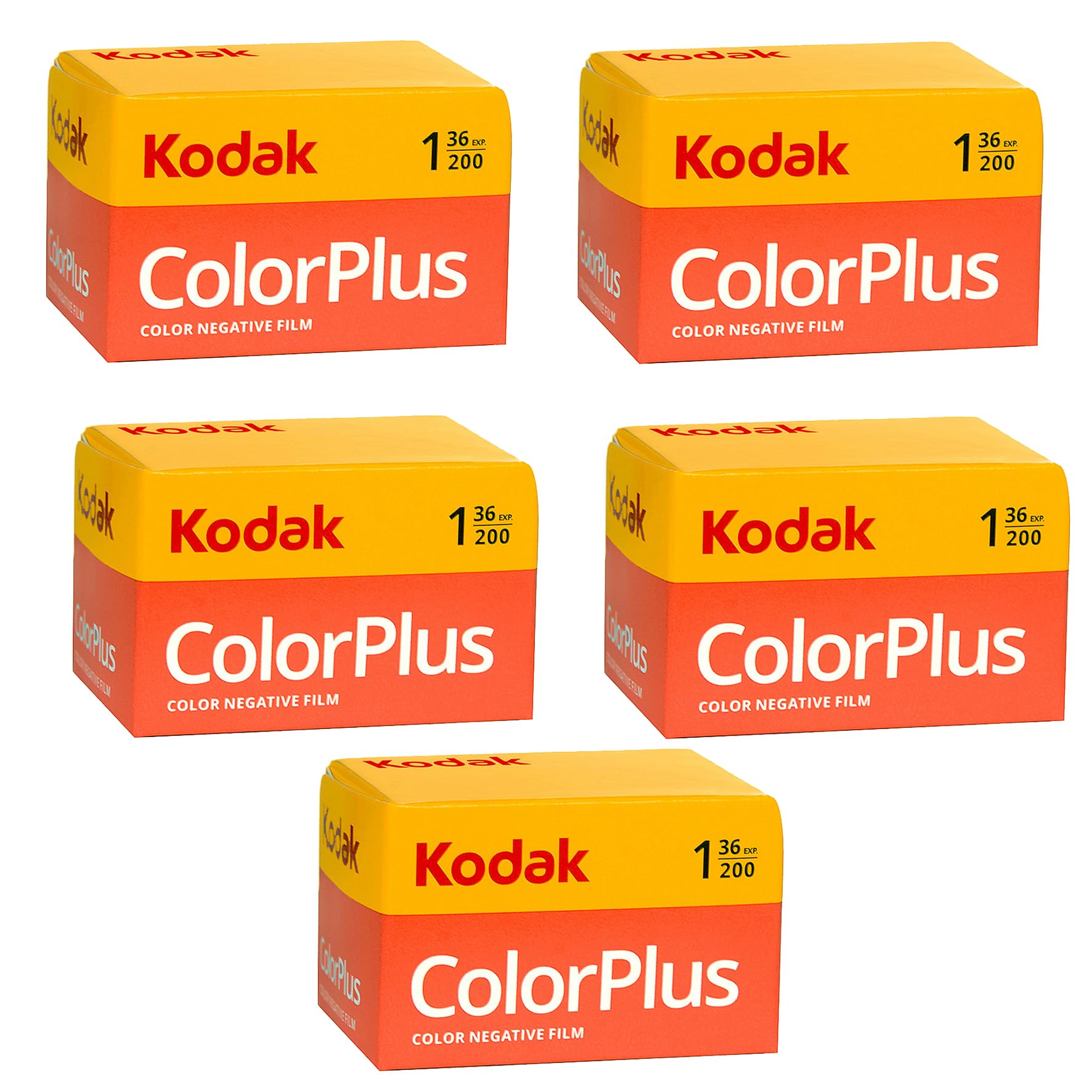
This 5-roll pack of Kodak Colorplus 200 is the high-volume option for shooters who have already committed to the Colorplus look and want the lowest per-roll cost available. With 36 exposures per roll and 180 total frames, this pack is aimed at street photographers, travel diarists, and anyone using a 35mm camera as their daily carry. The emulsion is the same as the 3-pack reviewed above, so the color signature remains unchanged: warm, saturated, with a vibrant midtone lift.
The packaging in a 5-roll bundle means you are buying fresh stock — important because Colorplus does not age as gracefully as higher-end Kodak emulsions; expired Colorplus tends to develop a pronounced magenta color shift. Customers report that the rolls consistently arrive with current expiration dates. One reviewer noted that the film is forgiving of minor exposure errors, making it a forgiving choice for beginners who are still learning to read their camera’s meter.
The downside is that if you are not already a fan of Colorplus’s warm rendition, buying five rolls is a sizable commitment. Additionally, because this is a 35mm film, it does not fit true 110 cartridge cameras — ensure you own a 135-format camera before buying. The bulk pricing, however, makes it the most economical entry point for sustained film shooting.
Why it’s great
- Lowest per-roll cost of any 35mm color negative option here
- Forgiving exposure latitude great for learning cameras
- 180 total frames for extended shooting without restocking
Good to know
- Not compatible with 110 cartridge cameras
- Warm color signature may not suit neutral-toned preferences
7. Ilford HP5 Plus 400 120 (5-Roll)

Ilford HP5 Plus is one of the most versatile black-and-white films ever manufactured, and this 5-roll bundle delivers the 120 medium format version — edge-numbered from 1 to 19. The ISO 400 rating gives you enough speed for handheld shooting in overcast conditions, and the wide exposure latitude allows push-processing up to ISO 1600 with only moderate contrast gain. The 120 format produces negatives roughly 2.25 inches wide, so the grain from HP5 reads as a fine texture rather than a distraction even at high magnification.
The emulsion is known for its medium contrast, which preserves shadow detail without blocking highlights — a characteristic that makes it ideal for portraits and street photography in mixed lighting. Self-developers appreciate that HP5 responds predictably to standard D-76 and HC-110 developers, and the 5-roll pack is a common choice for workshops because the consistency across batches eliminates the need to recalibrate development times. One reviewer noted that push-processing to ISO 800 at dusk produced results that looked more energetic than at box speed.
The catch is that this is medium format 120 film, which will not fit 35mm or 110 cameras. You need a Hasselblad, Mamiya, Pentax 6×7, or similar medium format body. If you are shooting medium format, this pack is arguably the best value in black-and-white film on the market today, combining Ilford’s quality control with a per-roll cost that undercuts boutique brands.
Why it’s great
- Excellent push-processing response up to ISO 1600
- Ideal tonal range for portrait and street photography
- Consistent batch quality from Ilford
Good to know
- 120 format — incompatible with 35mm and 110 cameras
- Requires a medium format camera system
FAQ
Can I use 35mm film in a 110 camera?
Why does 110 film cost more per frame than 35mm?
How should I store 110 cartridge film before use?
Final Thoughts: The Verdict
For most users, the best 110 cartridge film winner is the Kodak 110 Gold GC 110-24 because its ISO 400 speed compensates for the limited aperture range of vintage 110 cameras and its factory-spliced leader eliminates first-frame failures. If you want to stock up on 35mm color negative for your SLR, grab the Kodak Colorplus 200 3-Pack for its punchy, warm colors. And for wide-latitude black-and-white work on medium format, nothing beats the Ilford HP5 Plus 400 120.