
Choosing a 3D headset today means navigating a market split between console-locked VR, standalone mixed-reality systems, and lightweight AR glasses that project a massive virtual display. The decision isn’t just about resolution or refresh rate — it’s about whether you want room-scale immersion, a private cinema you can take on a plane, or a PC-tethered sim racing rig. Each path demands a completely different set of specs, and picking the wrong one leads to buyer’s remorse.
I’m Min — the co-founder and writer behind Gadgets Feed. I’ve spent hundreds of hours analyzing technical specifications, cross-referencing real-world performance benchmarks, and mapping out which hardware features actually deliver on their promises in this fast-moving category.
After months of deep-dive research into display panels, optics, tracking systems, and processor capabilities, this guide breaks down the most compelling options and delivers a clear verdict on the best 3d headset for every type of immersive experience.
How To Choose The Best 3D Headset
The 3D headset market is no longer a monolith. You must first decide between a fully immersive VR system with controllers and room tracking, or a wearable display that mirrors a screen for media consumption. Your choice of ecosystem — console, PC, or standalone — dictates the games and apps available to you. Prioritize the lens technology and resolution as they define visual clarity more than any other single spec.
Lens Technology: Pancake vs. Fresnel
Pancake lenses are the modern standard for consumer headsets. They fold the light path to reduce the headset’s physical depth, allowing for a slimmer form factor and a much larger sweet spot — the area where the image appears sharp. Fresnel lenses, used in older headsets like the PSVR2 and HTC Vive Pro Eye, are heavier and require precise alignment with your pupils, often leading to blurry edges and a smaller sweet spot. If you wear glasses, pancake lenses are a significant advantage.
Resolution and Pixels Per Degree (PPD)
Raw resolution figures like 1832×1920 or 2064×2208 are useful, but PPD is a better predictor of perceived sharpness. PPD tells you how many pixels fit into each degree of your field of view. Budget headsets often sit around 15-18 PPD, which can make small text in flight sims or racing games difficult to read. Premium PCVR headsets like the Pimax Crystal Light hit 35 PPD, making text razor-sharp. For most users, 20-25 PPD is a comfortable threshold for reading in-game menus.
Tracking System: Inside-Out vs. External Base Stations
Inside-out tracking uses cameras on the headset to track your movement and controllers, with no external sensors required. This is the standard for standalone headsets like the Meta Quest 3 and is plug-and-play convenient — just put on the headset and go. External base stations, used by the HTC Vive and Valve Index, offer superior tracking precision with zero occlusion, meaning even if you hide a controller behind your back, it still tracks perfectly. This setup is cumbersome to install but critical for competitive play and full-body tracking.
Quick Comparison
On smaller screens, swipe sideways to see the full table.
| Model | Category | Best For | Key Spec | Amazon |
|---|---|---|---|---|
| Meta Quest 3 512GB | Standalone/PCVR | Best Overall All-Around VR | Pancake Lenses / 4K+ Display | Amazon |
| Meta Quest 3S 128GB | Standalone/PCVR | Best Value Entry-Level VR | Snapdragon XR2 Gen 2 / 2064×2208 | Amazon |
| RayNeo Air 3s Pro | AR Glasses / Display | Best Personal Cinema / Travel | 1200 Nits / 120Hz Micro-OLED | Amazon |
| PSVR2 Horizon Bundle | Console VR | Best for PS5 Gamers | 4K OLED / 120Hz / Eye Tracking | Amazon |
| HTC Vive XR Elite | Standalone/PCVR | Best Compact PCVR / Glasses Wearers | Pancake Lenses / Adjustable Diopters | Amazon |
| PSVR + Camera Bundle | Console VR | Budget Console VR (PS4) | 1080p OLED / 110° FOV | Amazon |
| Pimax Crystal Light | PCVR Sim Racing/Flight | Best Visual Clarity for Sims | 2880×2880 Per Eye / 35 PPD QLED | Amazon |
| Valve Index Full Kit | PCVR Premium | Best FOV & Controller Tracking | 144Hz / 130° FOV / Base Station Tracking | Amazon |
| HTC Vive Pro Eye | PCVR Enterprise/Pro | Best Eye Tracking & Foveated Rendering | Precision Eye Tracking / OLED | Amazon |
In‑Depth Reviews
1. Meta Quest 3 512GB

The Meta Quest 3 represents the pinnacle of standalone VR today. Its pancake lenses deliver a much larger sweet spot than any Fresnel-based headset, making the image appear sharp and clear across almost the entire field of view. The 4K+ Infinite Display with a resolution of 2064×2208 per eye provides a crisp, vibrant image that makes reading text and spotting distant objects in games like Asgard’s Wrath 2 effortless. The Snapdragon XR2 Gen 2 processor delivers double the graphical performance of the Quest 2, enabling smoother frame rates and more detailed environments without needing a PC.
The transition from pure VR to mixed reality is seamless thanks to the dual RGB color cameras and depth sensor. You can walk around your living room with full-color passthrough, place virtual objects on your real furniture, or play games that blend digital elements into your physical space. The controllers have been redesigned with a slimmed-down tracking ring and improved ergonomics, making them feel more natural than the Quest 2’s bulky wands. At 512GB, the storage is generous enough to hold your entire library without worrying about deletions.
Battery life hovers around two hours, which is standard for this power class, but the USB-C port supports charging while in use, so a power bank in your pocket effectively extends sessions indefinitely. The audio, delivered through the headstrap’s built-in speakers, creates a surprisingly immersive soundscape without the need for headphones. For the best all-around experience covering gaming, fitness, social VR, and media consumption, the Quest 3 sets the benchmark.
Why it’s great
- Pancake lenses provide edge-to-edge clarity with no blurry edges
- Wireless standalone with optional flawless PCVR via Steam Link or Virtual Desktop
- Full-color passthrough mixed reality is genuinely useful and fun
Good to know
- Stock headstrap is adequate but not premium; aftermarket Elite Strap recommended for comfort
- Battery life is limited to about 2 hours of active gameplay
2. Meta Quest 3S 128GB
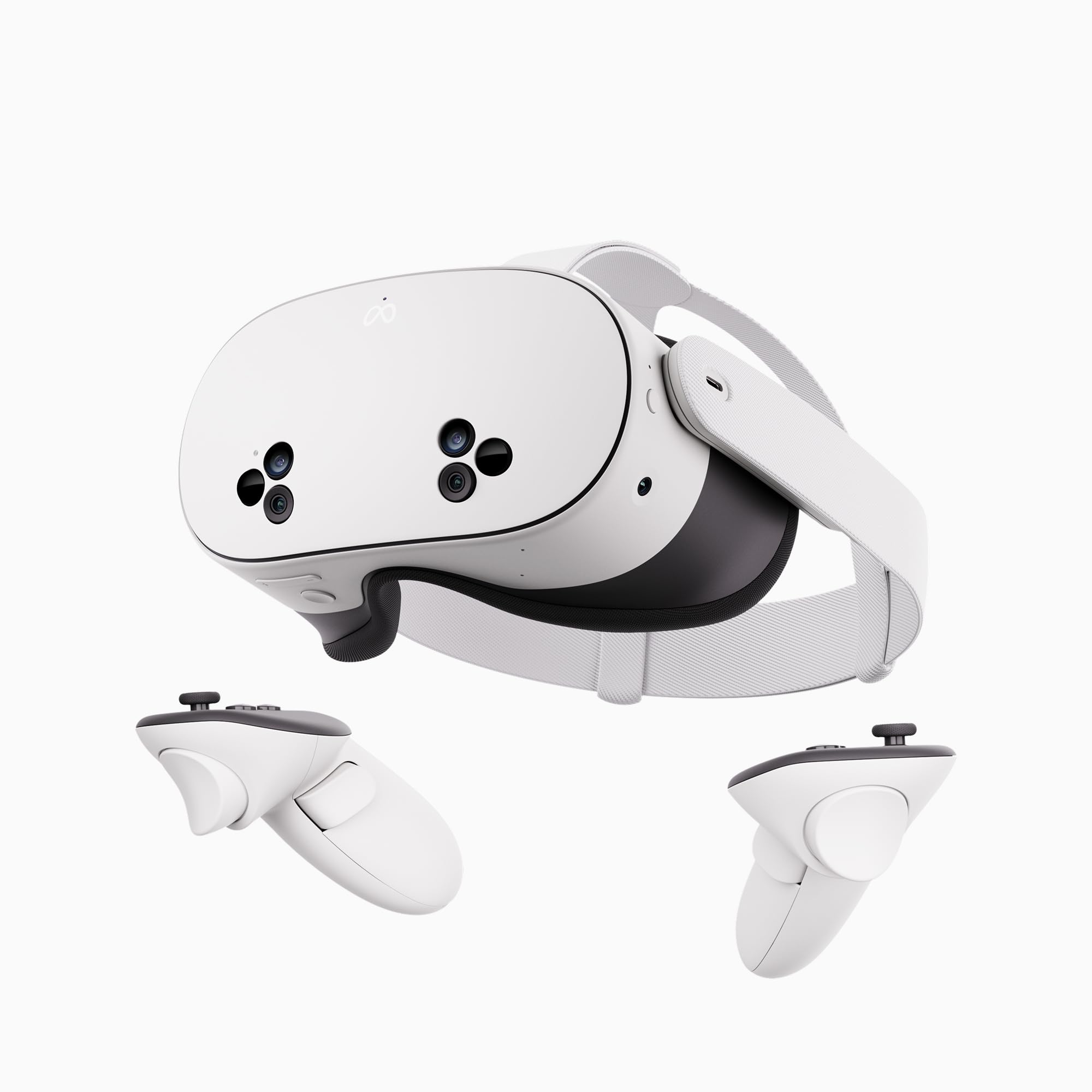
The Quest 3S is the budget-friendly entry point into Meta’s latest generation, but it makes no compromises on the core processor. Sharing the same Snapdragon XR2 Gen 2 chip as the standard Quest 3, it delivers identical graphical horsepower and performance — games look and run the same way. Where it saves cost is on the display and lenses. Instead of pancake optics, it uses the same Fresnel lenses found on the Quest 2, resulting in a smaller sweet spot and slightly more glare in high-contrast scenes. The resolution is 2064×2208, which is still very sharp for VR.
The headset is designed with three adjustable IPD positions. You physically move the lenses to match your eye spacing, which is a simple and effective solution for most users. The dual RGB cameras still provide full-color passthrough, enabling mixed reality experiences, even if the lens system isn’t as elegant as the Quest 3’s. The controllers are the same compact Touch Plus controllers, offering accurate haptic feedback and reliable full-range tracking. This headset is an outstanding option for those who want to experience modern VR and mixed reality without paying a premium.
Battery life is rated at up to three hours, slightly better than the Quest 3 in some conditions due to the less demanding lens and display system. The 128GB of storage is sufficient for a moderate library of games and apps, and the 3-month trial of Meta Horizon+ instantly gives you access to over 40 games. For families or new VR adopters who want the latest processor without the premium display cost, the 3S is a compelling entry point.
Why it’s great
- Same Snapdragon XR2 Gen 2 processor as the Quest 3 for identical game performance
- Full-color passthrough mixed reality at a lower entry-level price
- Includes 3-month trial of Meta Horizon+ with 40+ games
Good to know
- Fresnel lenses instead of pancake; smaller sweet spot and more glare
- Limited to 90Hz refresh rate, not 120Hz like the Quest 3
3. RayNeo Air 3s Pro
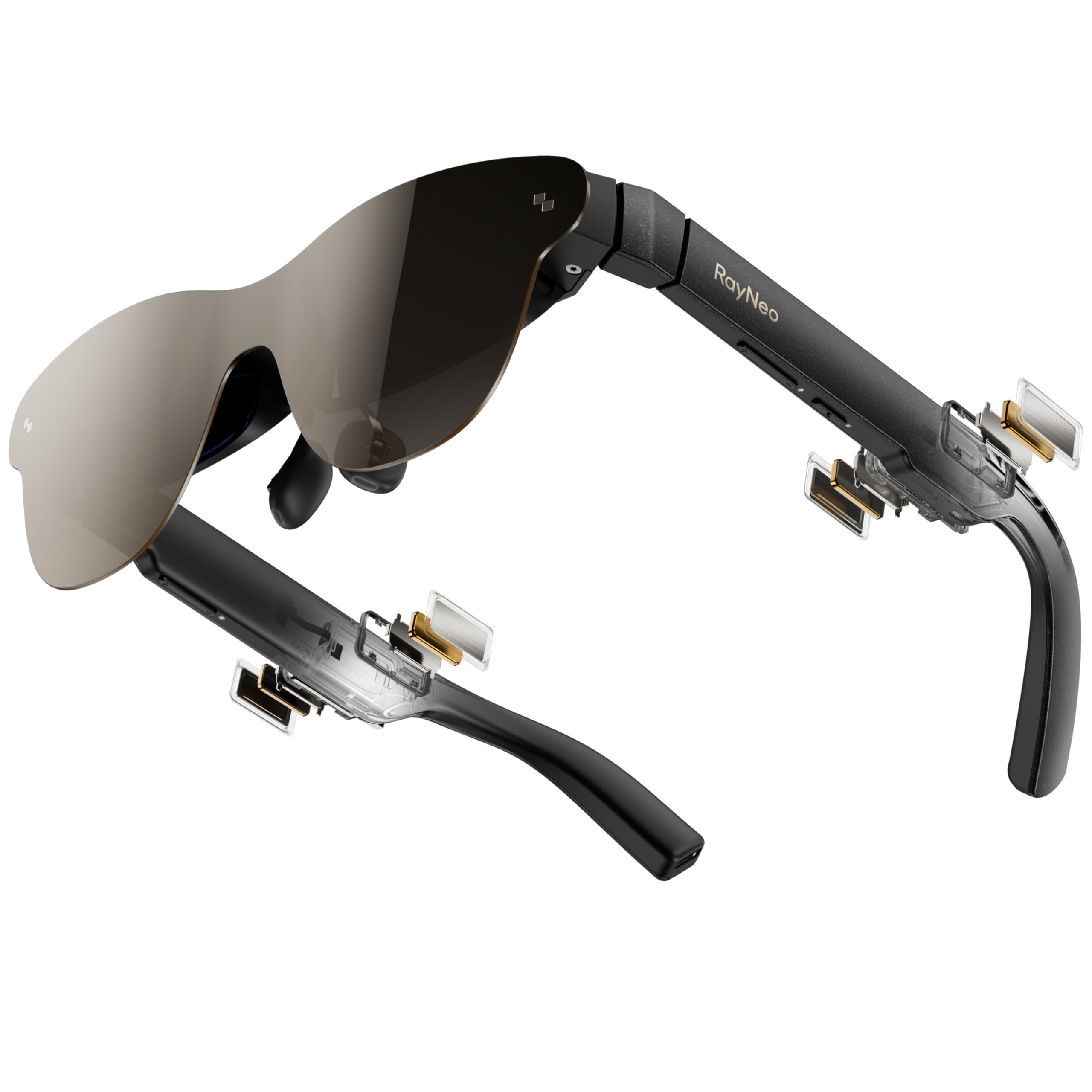
The RayNeo Air 3s Pro abandons room-scale VR entirely in favor of a personal theater you can wear. Using dual Micro-OLED displays, it projects a virtual 201-inch screen floating six meters away. The headline spec here is 1,200 nits of brightness — it’s bright enough to watch a movie with the curtains open, and the 200,000:1 contrast ratio means that dark scenes in shows like House of the Dragon show actual black instead of milky gray. The 120Hz refresh rate makes it smooth for gaming on a Steam Deck or Switch 2 via USB-C.
HueView 2.0 technology, combined with 98% DCI-P3 color coverage, produces vivid, lifelike colors that rival high-end OLED TVs. The glasses are lightweight at only 76 grams, and the silicone nose pads and adjustable temples help achieve a comfortable fit for extended watching sessions. The built-in speakers with spatial audio create an immersive soundstage that doesn’t leak excessively. They also integrate 3,840Hz high-frequency PWM dimming and TÜV SÜD low blue light certification for eye comfort during long flights.
The primary limitation is the 46-degree field of view — it feels like watching a large TV from a good distance, not like being inside the scene. The use case is specifically media consumption and light gaming, not interactive VR. You can connect them to any device with USB-C DisplayPort Alt Mode, including iPhones, Android phones, MacBooks, and the PS5 with a powered adapter. For travelers who want a private IMAX-grade screen on a plane without the bulk of a VR headset, the Air 3s Pro is a category standout.
Why it’s great
- Brightest AR display at 1,200 nits; usable in daylight and well-lit rooms
- Ultra-light at 76g, comfortable for hours of movie watching
- Excellent color accuracy with 98% DCI-P3 and high contrast
Good to know
- Narrow 46° FOV is not immersive VR; it’s a screen floating in space
- Requires prescription lens setup for nearsighted users
4. PSVR2 Horizon Bundle

The PSVR2 is designed exclusively for the PlayStation 5 and delivers a premium console VR experience that rivals much more expensive PC setups. The key differentiator is the combination of OLED panels with HDR support, delivering deep blacks and vibrant colors that LCD-based headsets cannot replicate. The 2000×2040 per-eye resolution ensures sharp imagery. The headset also features foveated rendering paired with eye tracking: the system dynamically renders high detail only where you are looking, reducing GPU load and enabling higher frame rates.
Setup is as simple as plugging a single USB-C cable into the front of the PS5 — no base stations, no PC configuration, no external sensors. The headset includes built-in haptic feedback, so you feel subtle rumble on your head when a bullet whizzes past. The Sense controllers feature adaptive triggers that change resistance depending on in-game actions, like pulling a bowstring. The included Horizon Call of the Mountain is an excellent showcase title that demonstrates the full potential of the hardware.
The main trade-off is that the PSVR2 uses Fresnel lenses, which produce a smaller sweet spot and noticeable glare in high-contrast scenes compared to pancake-lens headsets. Additionally, the library, though growing with games like Gran Turismo 7 and Resident Evil Village, is smaller than the PC or standalone Meta ecosystems. For PS5 owners looking for the highest-fidelity console VR, the PSVR2 is the only option that matters.
Why it’s great
- OLED HDR displays with exceptional contrast and color for console VR
- Eye tracking enables foveated rendering for smoother performance
- Plug-and-play simplicity with the PS5; single USB-C connection
Good to know
- Lens clarity is held back by Fresnel optics with visible glare
- Game library is limited compared to SteamVR or Meta Quest store
5. HTC Vive XR Elite

The HTC Vive XR Elite is a mixed-reality headset that emphasizes portability and visual flexibility. Its pancake lenses provide excellent edge-to-edge clarity with a forgiving sweet spot. The standout features are the physical diopter adjustment dials, which allow users with nearsightedness up to -5.0 to adjust the focus without wearing glasses inside the headset — a massive convenience. The headset itself is compact, folding down into a small carrying case, and the battery is hot-swappable.
For PCVR, the Vive XR Elite supports wired via USB-C and wireless via Wi-Fi 6 using Vive Streaming. When connected to a VR-ready PC, the 1920×1920 per-eye LCD display delivers sharp, smooth visuals with a 90Hz refresh rate. The full-color passthrough cameras are high-resolution and offer a convincing mixed reality portal. The controllers use inside-out tracking and work well in well-lit environments, though some users report low-light tracking issues.
Comfort is a contested point — the stock fit can cause pressure on the forehead for some users. Aftermarket facial interfaces are often needed to achieve the same comfort level as a Quest 3 or Index. The standalone app store is also comparatively sparse. For those who prioritize a compact PCVR headset that accommodates glasses natively and offers hot-swappable batteries for extended play, the XR Elite is a unique choice.
Why it’s great
- Built-in diopter adjustment up to -5.0, no glasses needed inside the headset
- Pancake lenses deliver a wide sweet spot with minimal glare
- Hot-swappable battery design for extended sessions
Good to know
- Stock facial interface is uncomfortable for many users; aftermarket mod advised
- Standalone app store has fewer titles than the Meta ecosystem
6. PSVR + Camera Bundle (Renewed)

The original PlayStation VR launched an era of accessible console VR. This renewed bundle includes the headset and the PlayStation Camera, everything needed to jump into VR on a PS4 or PS5 (with the required adapter). The display is a 1920×1080 OLED panel, which delivers solid contrast and blacks, though the resolution is low compared to modern headsets, leading to a visible screen-door effect. The 110-degree field of view is competitive even by today’s standards.
Setup is straightforward: plug the Camera into the console, connect the headset’s processor unit between the PS4 and TV, and you’re in. The library includes excellent titles like Astro Bot Rescue Mission, Blood & Truth, and Beat Saber. The headset design is one of the most comfortable of its generation, with a halo strap that distributes weight across your forehead rather than pressing on your face. The lack of controllers is a limitation — you’ll need PlayStation Move controllers for many games.
The renewed condition means you may receive a unit with minor cosmetic wear or a non-original box. Some units have been reported with scratched lenses or cable issues. At the budget-end of the spectrum, this is a great way to explore VR gaming on a PS4 or PS5 if you don’t want to commit to a full next-gen headset. The OLED panel still offers a visually pleasing experience for its price, making it a solid entry-level console VR option.
Why it’s great
- Affordable entry point into console VR gaming
- OLED display provides good contrast for dark games
- Comfortable halo headband design for extended play
Good to know
- Low 1080p resolution results in a visible screen-door effect
- Renewed units may show cosmetic wear or require replacement parts
7. Pimax Crystal Light

The Pimax Crystal Light is built for one thing: delivering the highest resolution and sharpest image available in a consumer PCVR headset. With 2880×2880 pixels per eye and a QLED panel with local dimming, it achieves 35 pixels per degree. This makes reading tiny text on instrument panels in Microsoft Flight Simulator or iRacing effortless. The local dimming array provides deep black levels that approach OLED quality without the burn-in risk, improving contrast in dark cockpits and night racing circuits.
The headset uses inside-out tracking that works well for seated sims, but it also supports Lighthouse base station tracking if you want to upgrade to room-scale. The optics are glass aspherical lenses, which offer excellent clarity and very little chromatic aberration, though they add some weight. The unit is 30% lighter than the original Crystal. It can run at 72Hz, 90Hz, or 120Hz refresh rates, so you can dial in the frame rate that matches your GPU.
A critical caveat: the product listing is a “Partial Payment Version.” After 14 days of use, you must pay a separate fee through Pimax Play to continue using the headset. This has been a source of confusion and frustration for buyers. Additionally, the built-in audio is detachable via a 3.5mm jack. For sim enthusiasts who value visual clarity above all else and are comfortable with the two-step payment model, this headset delivers unmatched detail.
Why it’s great
- Highest PPD of any mainstream headset at 35; text is razor-sharp
- QLED with local dimming provides deep blacks and high contrast
- Comfortable for long sim sessions with balanced weight distribution
Good to know
- Requires a mandatory fee after 14 days to unlock full use of the headset
- Stock face gasket is very thin; a thicker aftermarket pad is recommended
8. Valve Index Full Kit
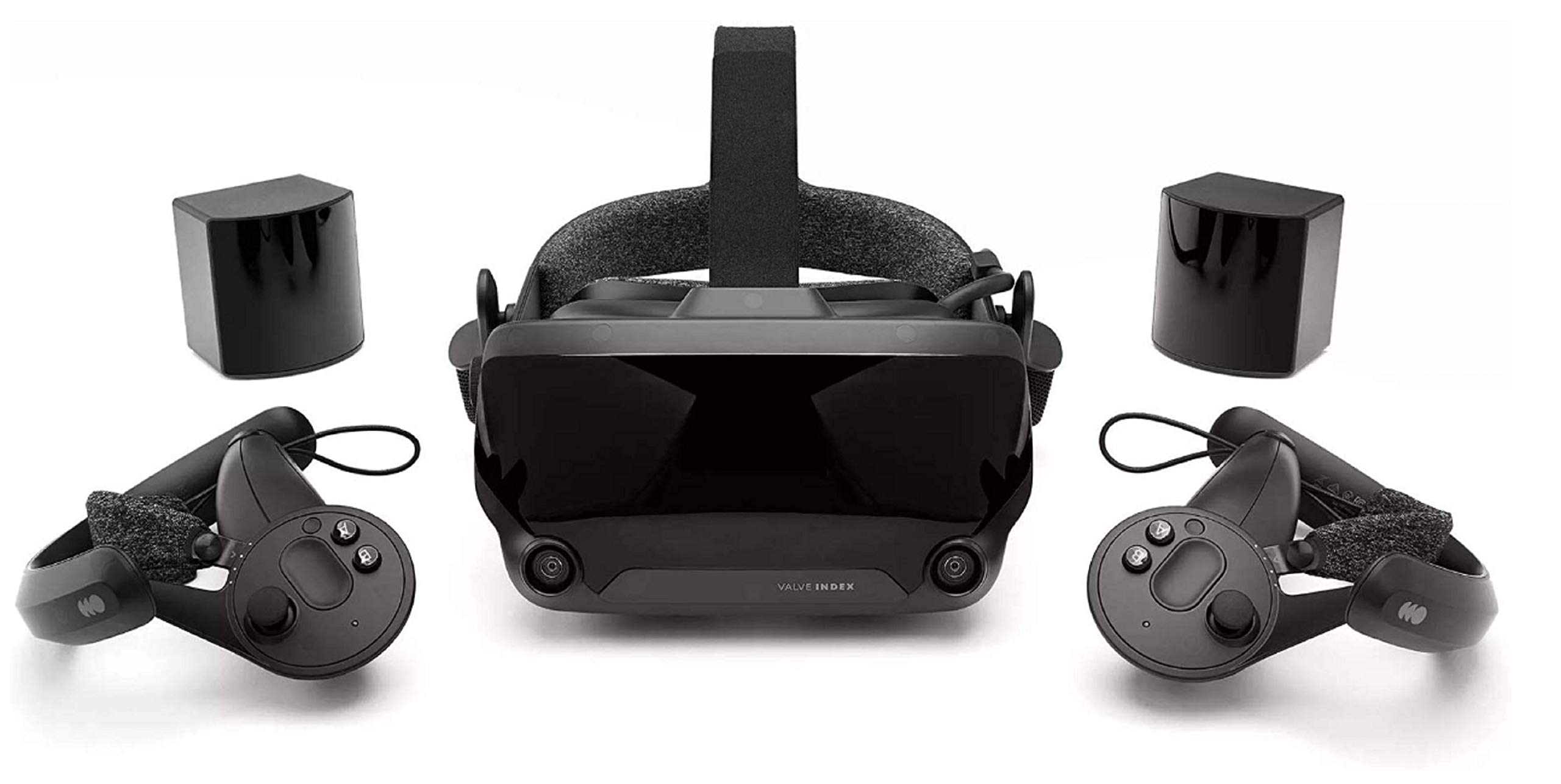
The Valve Index remains the gold standard for PC VR in terms of field of view, comfort, and precision tracking. Its dual 1440×1600 LCD panels run at a staggering 144Hz refresh rate, making motion incredibly smooth and reducing motion sickness for sensitive users. The 130-degree field of view is the widest of any mainstream headset, creating a sense of immersion that makes you forget you’re looking through a pair of binoculars. It achieves this with dual-element canted lenses that sacrifice some edge clarity for sheer width.
The Knuckles controllers are a highlight: they strap to your hands, allowing you to open your fingers and naturally grab, throw, and interact with objects. The external base stations (SteamVR 2.0) provide sub-millimeter tracking across an entire room with zero occlusion, making them the standard for competitive VRChat and full-body tracking setups. The built-in speakers sit off your ears, delivering high-fidelity spatial audio without touching your head — a remarkably comfortable design for long sessions.
Several sections of the Index’s design show their age: the resolution is lower than modern headsets, creating a visible screen-door effect, and the LCD panels lack the deep blacks of OLED. The setup requires mounting base stations on walls or tripods, and the headset is tethered via a heavy three-in-one cable. It is no longer the best resolution, but for smoothness, FOV, and the best controller tracking, it remains a top-tier premium option.
Why it’s great
- Exceptionally wide 130° FOV for unparalleled peripheral immersion
- 144Hz refresh rate provides the smoothest VR experience available
- Knuckles controllers with individual finger tracking are unmatched for interaction
Good to know
- Resolution is lower than Quest 3 or Pimax Crystal; screen-door effect visible
- Requires permanent mounting of external base stations for full tracking
9. HTC Vive Pro Eye

The HTC Vive Pro Eye is a professional-grade VR system built around precision eye tracking. The integrated eye-tracking sensors sample at 120Hz and provide gaze data accurate to 0.5 degrees, enabling two things: foveated rendering, which reduces GPU load by only rendering high detail where you’re looking, and user analytics in enterprise and training applications. This makes it a valuable tool for research, simulation training, and enterprise environments where analyzing user attention is critical.
The headset itself uses dual 1440×800 OLED displays (1600×1440 per eye combined), providing deep blacks and good contrast, though the effective resolution is low compared to modern headsets. The system requires SteamVR base stations and comes with the original wand controllers, which are less sophisticated than the Index Knuckles. The included Viveport Infinity subscription offers two months of unlimited access to over 700 apps. The modular design allows for accessories like the wireless adapter and gear VR lens mods.
The biggest risk is customer support. Multiple reports describe extended downtime when the link box fails, with slow RMA processes that can take over a month. The system is also outdated at this price point; the Quest 3 and Pimax Crystal Light both offer higher resolutions and more modern features for less. The Vive Pro Eye is best reserved for specific enterprise use cases where eye tracking is a requirement.
Why it’s great
- Precision eye tracking for foveated rendering and professional analytics
- OLED displays provide deep blacks and vibrant colors
- Modular ecosystem supports wireless adapter and various accessories
Good to know
- Customer support reliability is a significant concern per user reports
- Resolution and lens technology are outdated compared to newer headsets
FAQ
Can I use a VR headset with my prescription glasses?
Can I use a PSVR2 on a PC without an adapter?
Final Thoughts: The Verdict
For most users, the best 3d headset winner is the Meta Quest 3 512GB because it combines pancake lens clarity, wireless standalone freedom, and excellent PCVR compatibility into a single polished package. If you are primarily a PS5 gamer, the PSVR2 is your best console-native option. And for sim racing and flight sims where visual clarity is king, nothing beats the Pimax Crystal Light.