
A crooked snap line or a jagged edge on a fresh sheet of acrylic isn’t just a waste of material — it’s a frustrating setback that kills your project momentum. The right acrylic plexiglass cutter turns that anxiety into a clean, predictable break every time, whether you’re sizing a display case or trimming a windowpane.
I’m Min — the co-founder and writer behind Gadgets Feed. I’ve spent months analyzing the scoring mechanisms, blade geometries, and ergonomic designs that separate precision hand tools from frustrating scrap-makers in this narrow category.
After cross-referencing dozens of options, I’ve narrowed the field to the seven most reliable tools for the job. This guide to the best acrylic plexiglass cutter focuses on measurable differences in carbide quality, scoring depth, and handle control that directly affect your cut success rate.
How To Choose The Best Acrylic Plexiglass Cutter
Selecting an acrylic cutter comes down to understanding how the tool creates a fracture line. Cheap options rely on broad steel blades that require excessive force, while precision tools use a hardened carbide wheel that concentrates pressure into a thin, clean groove. Here are the three most important factors to evaluate.
Blade Material and Wheel Hardness
Carbide-tipped scoring wheels hold their edge far longer than standard stainless steel. A tungsten-carbide wheel (often around 140° angle) penetrates acrylic surface tension with fewer passes — typically three to five firm strokes for 1/8-inch sheet material. Steel blades dull quickly on acrylic and require more pressure, which increases the risk of a wandering score line.
Handle Ergonomics and Control
Pencil-style cutters offer superior visibility of the score line because the tool body doesn’t block your sight path. Pistol-grip or block-style handles provide more mechanical leverage but can obscure the cutting path. The ideal choice depends on whether you prioritize line-of-sight accuracy or raw downward force for thicker sheets above 1/4 inch.
Self-Lubrication and Maintenance
Some cutters incorporate an oil reservoir that automatically lubricates the wheel as you score. This reduces friction, extends blade life, and produces a smoother groove. Non-lubricating tools require you to manually oil the wheel, which is easy to forget but doesn’t affect initial performance. For high-volume work, automatic lubrication saves time and ensures consistent scoring depth.
Quick Comparison
On smaller screens, swipe sideways to see the full table.
| Model | Category | Best For | Key Spec | Amazon |
|---|---|---|---|---|
| All in Box One Resizer | Scoring Cutter | Box resizing & cardboard scoring | Retractable metal scoring wheel | Amazon |
| CRL Plastic-Plus | Scoring Cutter | Thin acrylic & vinyl tile | Aluminum handle, manual-retractable | Amazon |
| Toyo TC1P Pencil Style | Pencil Cutter | Precision scoring with visibility | Self-oiling carbide wheel | Amazon |
| Red Devil 1170 | Scoring Tool | Plexiglass scribe & snap | Stainless steel blade, non-retractable | Amazon |
| Toyo TC17B Supercutter | Pencil Cutter | Thick acrylic & glass scoring | Brass barrel, tungsten-carbide wheel | Amazon |
| Ronan Multi-Cut | Blade Shear | Thick plastics & rubber | Industrial blade-to-anvil action | Amazon |
| Klenk MA72500 Shear | Laminate Shear | Laminate & countertop trimming | Straight cut, 1/8in waste track | Amazon |
In‑Depth Reviews
1. Toyo TC17B Supercutter

The Toyo TC17B represents the gold standard for precision scoring of both acrylic and glass sheet materials. Its brass barrel houses a tungsten-carbide wheel ground to a 140-degree angle, which concentrates force into an exceptionally narrow groove. Users report clean snaps on 3/32-inch to 1/4-inch material with consistent results after just three to four passes.
The hexagonal end cap prevents the tool from rolling on your workbench, and the self-oiling design keeps the wheel lubricated with a small reservoir you fill using the included oil dropper. At 2.82 ounces, the brass construction provides enough heft to feel substantial without causing hand fatigue during extended scoring sessions. The pencil-style grip offers a natural, write-like motion that gives you direct visual feedback on the cut line.
For glaziers and hobbyists alike, the TC17B eliminates the guesswork of cheaper cutters. The spring-loaded head takes a few minutes to get used to — the wheel compresses slightly under pressure — but once you adapt, the control is remarkable. It is backed by Toyo’s Japanese manufacturing reputation, which has kept this design in continuous production for years.
Why it’s great
- Tungsten-carbide wheel stays sharp for miles of scoring
- Self-oiling reservoir maintains consistent lubrication
- Hexagonal barrel prevents rolling on angled surfaces
Good to know
- The spring-loaded wheel head may feel unusual for beginners
- Premium price reflects industrial-grade build quality
2. Toyo TC1P Pencil Style Cutter

The Toyo TC1P shares the same proven engineering philosophy as the TC17B but in a lighter, slightly more compact package. The auto-lubricating carbide wheel cuts harder acrylic and glass with noticeably less downward force than steel-blade alternatives. At just 1.06 ounces, it is the lightest pencil cutter in this lineup, which makes it ideal for detailed stained-glass work where fatigue resistance matters after dozens of scores.
Users transitioning from bulky pistol-grip tools consistently praise the TC1P for its unobstructed view of the score line. The pencil shape allows you to guide the wheel with the same muscle memory as writing, resulting in more accurate curves and straight lines. The oil reservoir, filled via the included dropper, automatically wicks lubricant to the wheel as you score, reducing friction and extending blade life through continuous use.
One subtle caution: the end cap threads are relatively fine, and some users worry about the acrylic handle cracking if you over-tighten during cleaning. That said, the overwhelming consensus from stained-glass instructors and serious hobbyists is that this cutter outperforms everything in its price bracket. It simply works, right out of the box.
Why it’s great
- Superior score-line visibility compared to block-style cutters
- Self-lubrication reduces effort and improves cut consistency
- Lightweight design minimizes hand fatigue on long projects
Good to know
- Acrylic handle requires careful handling to avoid cracking
- Not designed for heavy-duty industrial repetition
3. Red Devil 1170 PLEXIGLASS Scoring Tool
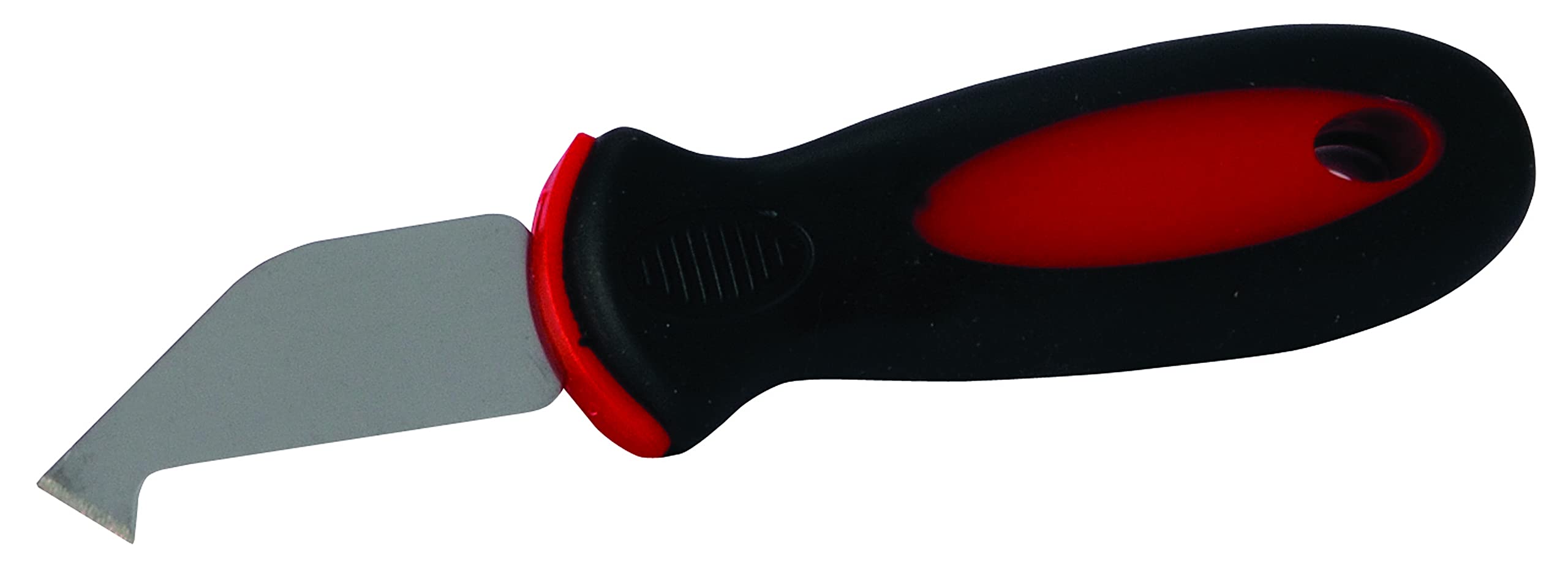
The Red Devil 1170 is a straightforward, no-nonsense scoring tool that relies on a super-sharp stainless steel blade rather than a carbide wheel. The design is simple: a fixed, non-retractable blade housed in a red plastic handle with a hanging hole for workshop storage. It achieves clean scribe lines on Plexiglas and standard acrylic after multiple passes, typically five to six strokes for 1/8-inch material before snapping.
This tool rewards correct technique — use light, even pressure and let the blade do the work. Experienced users report excellent results on PMMA filters and small display panels. The handle feels well-weighted at a few ounces, providing enough feedback to gauge groove depth without over-penetrating the surface. It is explicitly not intended for Lexan, which is too flexible for a clean snap.
The main drawback is quality control consistency. A small percentage of units arrive with blades too dull to bite into acrylic, requiring a quick pass with a metal file before first use. For the price, though, this remains a capable entry-level option if you are willing to verify sharpness on arrival. It works best for intermittent projects rather than production-line volume.
Why it’s great
- Very affordable entry point for occasional acrylic cutting
- Simple, reliable mechanism with no moving parts to fail
- Works well for thin Plexiglass and PMMA sheets
Good to know
- Some units may arrive dull and require sharpening
- Steel blade wears faster than carbide alternatives
4. Ronan Multi-Cut Industrial Cutter

The Ronan Multi-Cut operates on a completely different principle from scoring cutters — it uses a blade-to-anvil shear action instead of scribing a groove. An offset pivot point lets you cut through thick plastics, rubber, leather, and even wood dowels with a single squeeze. The industrial-grade steel blades are USA-made and reportedly last up to 18 months under regular use, with three replacements stored in the handle.
For acrylic specifically, this tool excels when you need to trim strips or make straight cuts on material up to about 1/8 inch thick. Users note that four passes can cut through tough acrylic sheets cleanly, with the ability to snap the piece apart without damaging a silicone mold underneath. The safety lock between the handles keeps the tool closed when stored, which is a real benefit if you carry it in a toolbox alongside other tools.
The main limitation is the 1/8-inch waste strip that the shear mechanism removes during cutting. This method is not suitable for tight-fitting panels where every millimeter counts; it is better suited for rough trimming and free-form shaping. The ergonomic rubber grip reduces fatigue, making this a strong choice for contractors who cut plastic tubing, hoses, and sheet material across multiple jobs.
Why it’s great
- Shear action cuts thick materials a scoring tool cannot handle
- Replaceable blades stored conveniently in the handle
- Ergonomic grip reduces hand strain during repetitive cuts
Good to know
- Removes a 1/8-inch waste strip during cutting
- Not designed for tight-tolerance panel trimming
5. All in Box One Resizer

The All in Box One Resizer combines a utility knife blade on one end and a retractable metal scoring wheel on the other, making it a two-in-one tool for box modification and light acrylic scribing. The scoring wheel is designed primarily for cardboard, but it can score thin acrylic sheets with the same principle — multiple passes create a break line that snaps cleanly. The SK5 standard utility blades are widely available and easy to replace.
Users consistently praise the scoring wheel’s ability to produce professional-looking folds on cardboard, which translates to competent performance on soft plastics and thin acrylic. The metal handle feels robust at 7 inches in length, providing enough reach to guide the wheel steadily. The wheel retracts when not in use, preventing accidental damage to your workpiece or pocket.
The one complaint that surfaces frequently involves the scoring wheel’s locking mechanism — it does not always hold the wheel securely in the extended position unless you push down firmly. This can be annoying during fast-paced work. However, for the price and versatility, this tool is a smart addition if you already handle a lot of shipping boxes and occasionally need to scribe acrylic sheets.
Why it’s great
- Dual-ended design cuts boxes and scores plastics in one tool
- Retractable wheel prevents damage when not in use
- Replaceable SK5 utility blades reduce long-term cost
Good to know
- Scoring wheel lock may disengage without firm pressure
- Best suited for thin acrylic and cardboard, not thick sheets
6. CRL Plastic-Plus Cutting Tool
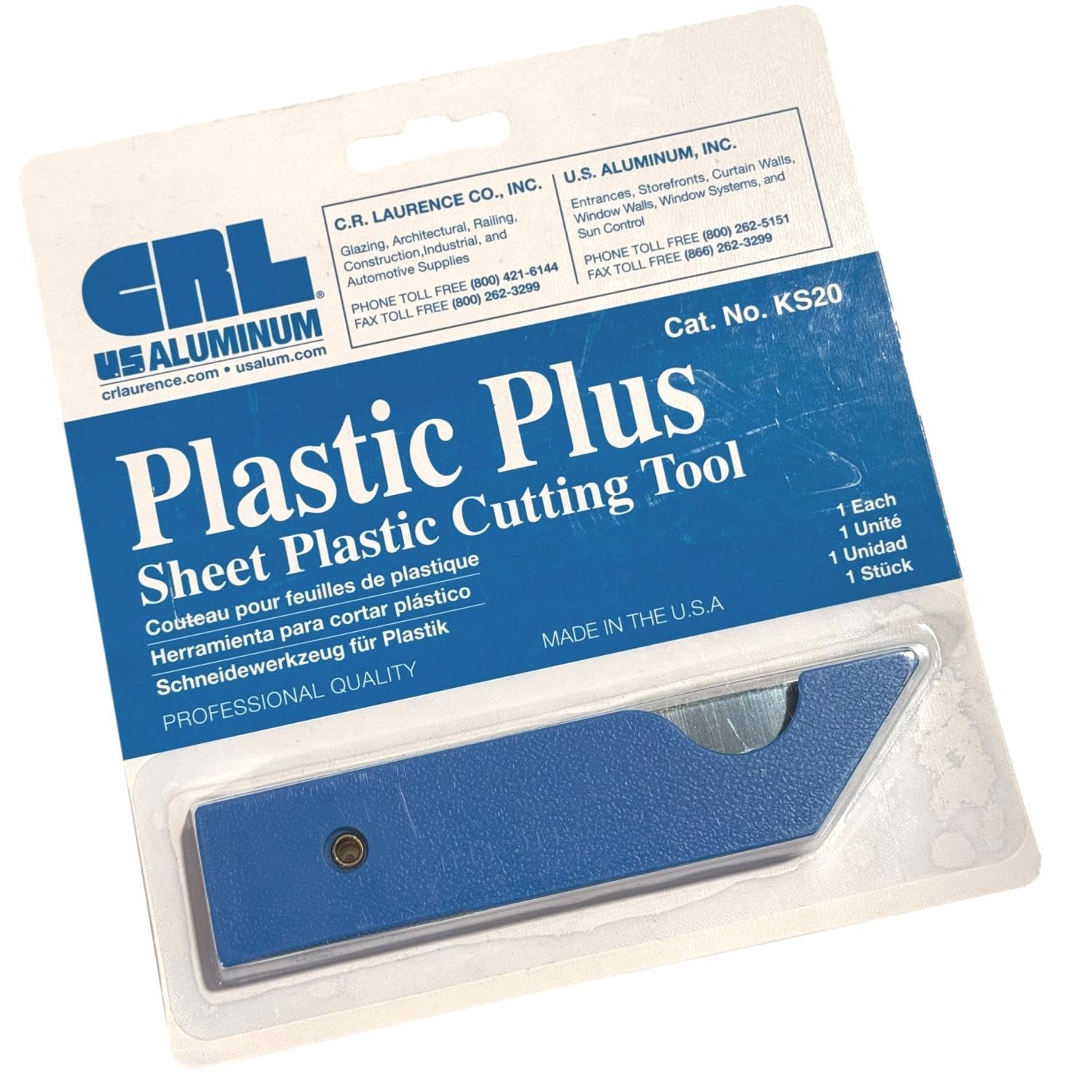
The CRL Plastic-Plus has been a glazier favorite for decades, thanks to its sharp, retractable blade that works on acrylic, vinyl floor tile, and even thin copper and aluminum. The aluminum handle keeps weight to 0.1 pounds, making it one of the lightest options here. Experienced users report that four to five passes over a standard acrylic sheet create a clean snap line, whereas cheaper tools fail to score deep enough to fracture cleanly.
This tool is particularly strong on thin-gauge materials — 1/16-inch to 1/8-inch acrylic is its sweet spot. Industrial users appreciate that the blade is wider than some older CRL models, which provides a broader scoring edge. The retractable mechanism prevents the blade from dulling against other tools when stored in a pouch or apron pocket.
The handle’s plastic grips can be stubborn — some users need a screwdriver to pry them apart when extending or retracting the blade for the first time. Once broken in, it operates smoothly. If you need a reliable, proven cutter that won’t break the bank and you work primarily with thin sheets, the CRL Plastic-Plus is a solid, no-frills choice backed by decades of field use.
Why it’s great
- Proven design used by glaziers for over twenty years
- Retractable blade prevents dulling in storage
- Sharp enough to score acrylic in 4-5 passes
Good to know
- Plastic grip may be difficult to open initially
- Blade width is larger than older versions, may require adjustment
7. Klenk Straight Cut Laminate Shear MA72500

The Klenk MA72500 is the original straight-cut laminate shear, designed for clean, chip-free cuts on laminate countertops and acrylic sheeting. It operates like a heavy-duty hole punch, removing a 1/8-inch-wide track of material as it advances. This mechanism produces a cleaner edge than a scoring-and-snap technique because it cuts through both the decorative surface and the backing layer simultaneously, without chipping the glossy top coat.
Users report that long 12-foot strips are manageable with the ambidextrous plastic handle, although the tool weighs 12 ounces, so you will feel the weight on extended runs. The shear is most effective for straight-line cuts, notching, and scribing against a guide — it is not suitable for tight curves or close-proximity cuts between patterns. The waste strip often needs manual removal after each foot or so, which slows down continuous cutting.
For countertop installers and anyone working with acrylic laminate sheets, this tool eliminates the need for a table saw setup on many jobs. The single steel blade stays sharp through hundreds of linear feet if you keep it clean of adhesive residue. If your primary need is straight, production-volume cuts on laminate rather than freeform scoring of raw acrylic sheets, the Klenk shear is the purpose-built answer.
Why it’s great
- Clean, chip-free cut on both sides of laminate material
- Eliminates table saw setup for many straight-cut jobs
- Ambidextrous handle suits both left and right-handed users
Good to know
- Waste strip removal interrupts continuous cutting flow
- Not suitable for curved cuts or tight panel tolerances
FAQ
Can a glass cutter work on acrylic and plexiglass?
What is the maximum thickness a scoring tool can handle?
How do I prevent the acrylic from cracking during the snap?
Final Thoughts: The Verdict
For most users, the best acrylic plexiglass cutter winner is the Toyo TC17B Supercutter because it combines a self-oiling tungsten-carbide wheel with a balanced brass barrel and a die-hard reputation for precision. If you want a lighter, more affordable pencil cutter with the same Japanese engineering core, grab the Toyo TC1P. And for straight-line volume cuts on laminate or thick plastic where a scoring tool falls short, nothing beats the Klenk MA72500 Shear.