
A room with hard surfaces turns every conversation, footstep, and appliance hum into an annoying echo that muddies the sound of your music or movie. The right panels absorb these reflections at their source, delivering a quieter, clearer space without a full renovation.
I’m Min — the co-founder and writer behind Gadgets Feed. By cross-referencing hundreds of verified reviews and manufacturer spec sheets on density, adhesive strength, and real-world NRC ratings, I’ve separated the panels that actually perform from those that just look good in a product photo.
After comparing over a dozen acoustic insulation kits on panel thickness, density, and ease of installation, I’ve narrowed down the field to the seven that deliver real, measurable results. This guide covers the best acoustic insulation options for home studios, offices, and noisy apartments.
How To Choose The Best Acoustic Insulation
Picking the right panel isn’t just about coverage area. The material type, density, mounting method, and the frequency range you’re targeting all determine whether a product delivers a meaningful reduction in reverb or just sits on your wall looking decorative.
Material and Density
The two main materials are open-cell polyester fiber and denser mineral wool. Polyester fiber panels (often recycled PET) are lightweight, odorless, and safer for general rooms. Mineral wool panels, like the ATS Acoustics unit, offer a higher NRC of 1.0 and better low-frequency absorption but weigh significantly more. Density is the key metric: look for at least 6 lbs/ft³ in polyester panels for professional-grade absorption; budget foam panels often fall below 2 lbs/ft³ and mainly kill upper treble.
NRC and Frequency Targeting
The Noise Reduction Coefficient (NRC) is a single average number between 0 and 1 that tells you how much sound a panel absorbs across four octave bands. An NRC of 0.75 means the panel absorbs 75% of the sound that hits it. For general speech and mid-range frequencies (human voice, TV dialogue), panels with an NRC above 0.80 are ideal. For bass frequencies under 250 Hz, you need thicker panels (2 inches or more) or a mineral wool core.
Quick Comparison
On smaller screens, swipe sideways to see the full table.
| Model | Category | Best For | Key Spec | Amazon |
|---|---|---|---|---|
| ATS Acoustics 24″x48″x2″ | Professional Panel | Studio-grade reverb control | NRC 1.0 / Mineral wool core | Amazon |
| NeatiEase Wood Slat 96″x12.6″ | Decorative Slat | Modern aesthetic + noise reduction | 96-inch length / MDF + PET | Amazon |
| Soon Global Fluid Art 72″x48″ | Art Panel | Decorative feature wall | 72″x48″ / Artist design | Amazon |
| TONOR Dual-Layer 47.2″x23.6″ | Dual-Layer Large | Large coverage per panel | 0.72-inch thick / 4-pack | Amazon |
| AudioSilk ROOM KIT 46″x23″ | Slim Recycled | Eco-friendly studio treatment | NRC 0.91 / 0.4-inch thin | Amazon |
| VAP 2nd Gen Large Hexagon | High-Density Hex | Dense foam alternative | 390 lbs/yd³ / 14″ panels | Amazon |
| Amantech 12-Pack Hexagon | Budget Hex | Entry-level echo dampening | Thin 0.4-inch / 12-pack | Amazon |
In‑Depth Reviews
1. ATS Acoustics Sound Absorbing Panel 24″ x 48″ x 2″
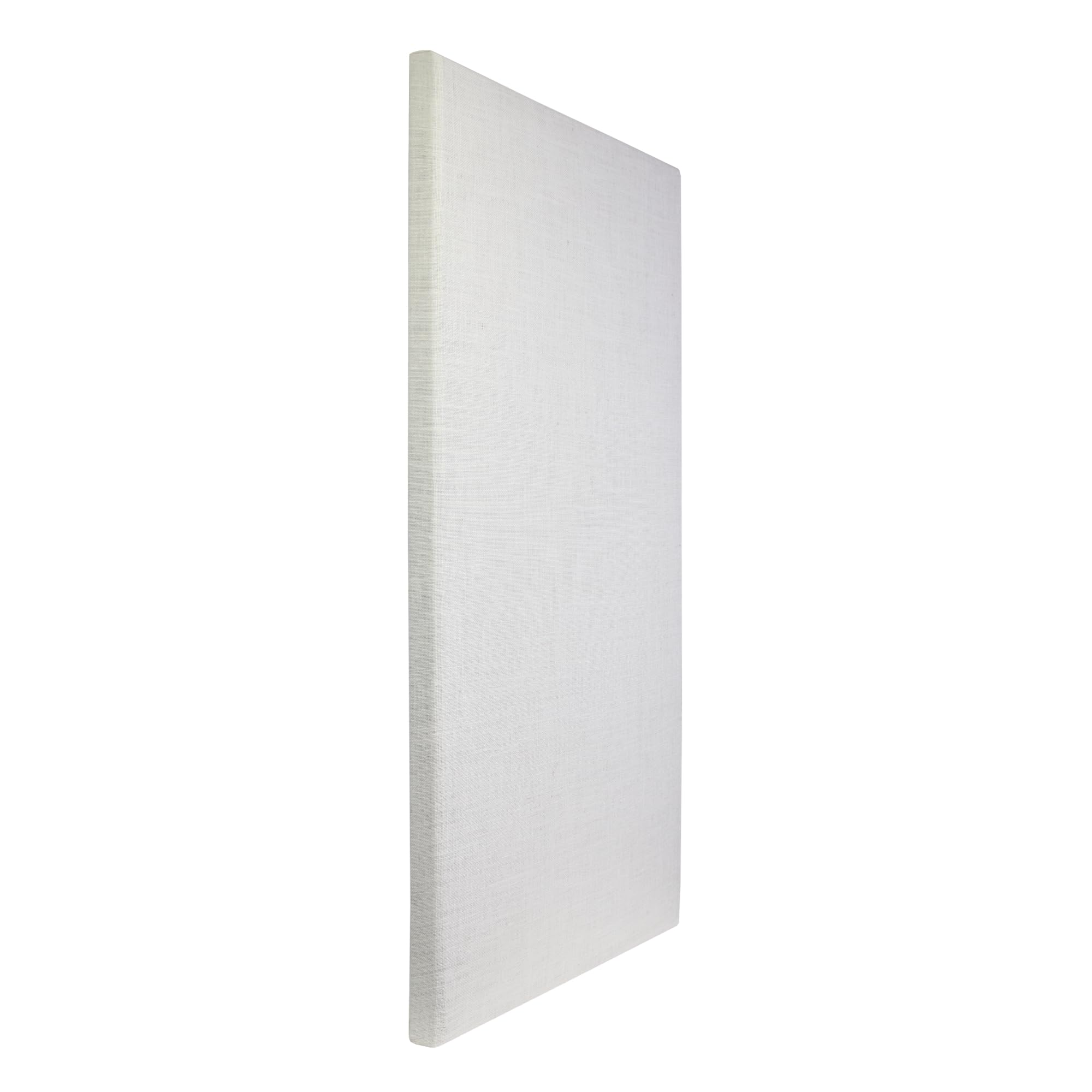
This 2-inch-thick mineral wool panel hits the maximum NRC rating of 1.0, meaning it absorbs nearly all sound energy across the speech and mid-frequency range. The solid wood internal frame and full wood back provide a rigid mounting surface, while the 100% jute burlap fabric wraps the core without the sagging or peeling common in foam panels.
Reviewers widely confirm that a pair of these panels cuts room echo by roughly 50%, making them a go-to for home studios and home theaters. The included mounting template and Z-clips make installation straightforward, though the 8.25-pound weight requires secure drywall anchors for ceiling mounting — several users devised their own D-hook method for overhead placement.
The beveled edge gives the panel a finished, furniture-like look that blends into a living room or professional control room far better than raw foam tiles. For anyone who needs genuine low-frequency absorption and a proved NRC spec, this is the benchmark against which thinner foam panels are measured.
Why it’s great
- Maximum NRC 1.0 absorption rating verified by real-world studio use
- Mineral wool core absorbs low frequencies that foam panels miss
- Solid wood frame and mounting template included for secure installation
Good to know
- 8.25-pound weight requires sturdy anchors for ceiling installation
- Burlap fabric texture appears fuzzy up close, though fine at a distance
2. NeatiEase Wood Slat Panel 4-Piece 96″x12.6″ (Teak)

This product bridges the gap between acoustic treatment and interior design. Each slat panel combines an MDF wood veneer surface with a high-density polyester fiber backing, so it absorbs reverberation while giving the room a warm, modern slat-wall look. Each 96-inch-long panel covers roughly 33 square feet total across the four-piece set.
Installers note that cutting the panels with a circular saw can chip the laminate surface, but using painter’s tape along the cut line prevents this. The panels are lightweight enough to mount with construction adhesive and a few drywall screws, and several users reported installing them without glue to avoid wall damage during removal.
In a home gym or living room, these slats noticeably reduce slap echo without the industrial appearance of foam. The teak color is a realistic veneer that looks significantly more expensive than the price tier suggests. If your priority is a finished, furniture-grade look alongside moderate sound absorption, this is the top contender.
Why it’s great
- Combines acoustic absorption with high-end decorative wood slat appearance
- Lightweight PET backing is non-toxic with low TVOC emissions
- Can be mounted vertically or horizontally for creative wall layouts
Good to know
- Cutting with a circular saw can chip the laminate without painter’s tape
- Primarily dampens mid-to-high frequencies, less effective on deep bass
3. Soon Global Acoustical Wall Panel 72″ x 48″ (Fluid Design)

These 72-by-48-inch panels double as statement wall art thanks to collaborations with real artists. The high-density polyester fiber construction handles the same basic echo-dampening job as a plain beige panel, but the printed design makes the treatment blend into a living room or office rather than looking like a recording booth afterthought.
Each pack includes six panels and 30 transparent double-sided stickers, so installation is tool-free if your wall is smooth and clean. Users report impressive results in remote-work environments, cutting down on the hollow reverb that makes conference calls sound distant. The material has no chemical off-gassing, a common complaint with budget foam.
The adhesive stickers are the weak point — a few ceiling installations saw panels fall down within days, so mechanical fasteners are recommended for overhead use. For a feature wall or behind a desk, however, these look fantastic and deliver functional absorption that outperforms plain foam of the same thickness.
Why it’s great
- Unique artist-curated designs turn acoustic treatment into wall art
- High-density polyester fiber has no chemical smell and is safe for occupied rooms
- Large panel size (72×48 inches) covers significant surface fast
Good to know
- Included adhesive stickers may fail on ceilings; screws or stronger tape advised
- Panels are 0.4-inch thick, so deep bass absorption is limited
4. TONOR Dual-Layer Acoustic Wall Panels 4-Pack (47.2″x23.6″)

TONOR builds these panels with a dual-layer reinforced structure that pushes thickness to 0.72 inches — nearly double the standard foam tile. Each panel measures 47.2 by 23.6 inches, so four panels cover roughly 31 square feet. The classic stripe pattern on the surface gives them a clean architectural look that fits modern living spaces.
The self-adhesive backing is strong enough for smooth drywall, and users in apartment settings report a meaningful reduction in noise transfer from neighbors after covering even 50% of a shared wall. The 100% high-density polyester fiber construction means no chemical odor and easy cutting with a utility knife for irregular corners.
A full-coverage installation (covering 95% of a wall and ceiling) can bring a room close to professional-grade sound deadening, though the panels remain too thin to fully address sub-bass frequencies. TONOR backs these with a two-year warranty, which is unusually generous for this category and signals confidence in long-term adhesion.
Why it’s great
- Dual-layer 0.72-inch construction absorbs more mid-range energy than 0.4-inch foam
- Easy peel-and-stick installation on smooth walls with strong adhesive backing
- Two-year manufacturer warranty is best-in-class for acoustic panels
Good to know
- Adhesive may not stick permanently to textured or painted concrete surfaces
- Full wall coverage is required for professional-level sound insulation
5. AudioSilk ROOM KIT 4-Pack (46″x23″) — Natural

Despite being only 0.4 inches thin, these PET-fiber panels achieve an NRC of 0.91 by using a higher-density fiber matrix than standard foam. The material is made from post-consumer recycled plastic, has zero chemical smell, and won’t shrink or peel over time — a common failure mode for foam panels in humid rooms.
The ROOM KIT includes four 46×23-inch panels specifically sized for a typical home studio or listening room. Users consistently report that the panels are lightweight and easy to mount using 3M Command strips, making them ideal for rented spaces where wall damage is not an option. The natural color is a light beige that reflects light instead of darkening a room.
In vocal recording tests, the panels visibly shorten reverb tails and reduce harshness in the 2 kHz to 8 kHz range. This performance at half the thickness of mineral wool makes them a smart choice for rooms where you can’t spare 2 inches of depth on every wall.
Why it’s great
- NRC 0.91 from a slim 0.4-inch profile outperforms thicker foam panels
- Eco-friendly recycled PET material with zero chemical off-gassing
- Removable 3M Command strip installation leaves no wall damage
Good to know
- No mounting hardware included; you must supply Command strips or adhesive
- 0.4-inch thickness limits low-frequency absorption below 250 Hz
6. VAP 2nd Generation Large Hexagon (Orange & Moon Grey)

This 2nd-generation hex panel uses a patented vacuum needle-punching process that achieves 390 pounds per cubic yard density — roughly 30% denser than typical acoustic foam. The result is a smoother surface texture and noticeably better absorption of mid-range frequencies like human speech and television audio.
Each hexagon measures 14 inches across, giving each tile a substantial footprint. The self-adhesive backing passed an 88.2-ounce tensile test, but real-world users on painted concrete found the adhesion borderline and recommended reinforcing with construction adhesive for long-term stability. On standard drywall, the adhesive holds securely even after a year.
The orange and moon grey color combination is a rare departure from all-black or all-white panels, making this set a viable option for a game room or creative studio where you want the acoustic treatment to be part of the decor. SGS certification confirms the material is free of formaldehyde and safe for occupied indoor spaces.
Why it’s great
- Ultra-high 390 lbs/yd³ density absorbs more mid-range energy than standard foam
- Exclusive VACUUM NEEDLE PUNCHING TECH creates a durable, smooth texture
- Unique two-tone orange-grey color scheme fits creative room designs
Good to know
- Self-adhesive backing struggles on painted concrete; needs glue reinforcement
- Hexagon panels require careful alignment to avoid uneven gaps
7. Amantech 12-Pack Hexagon (Moonlight Grey)
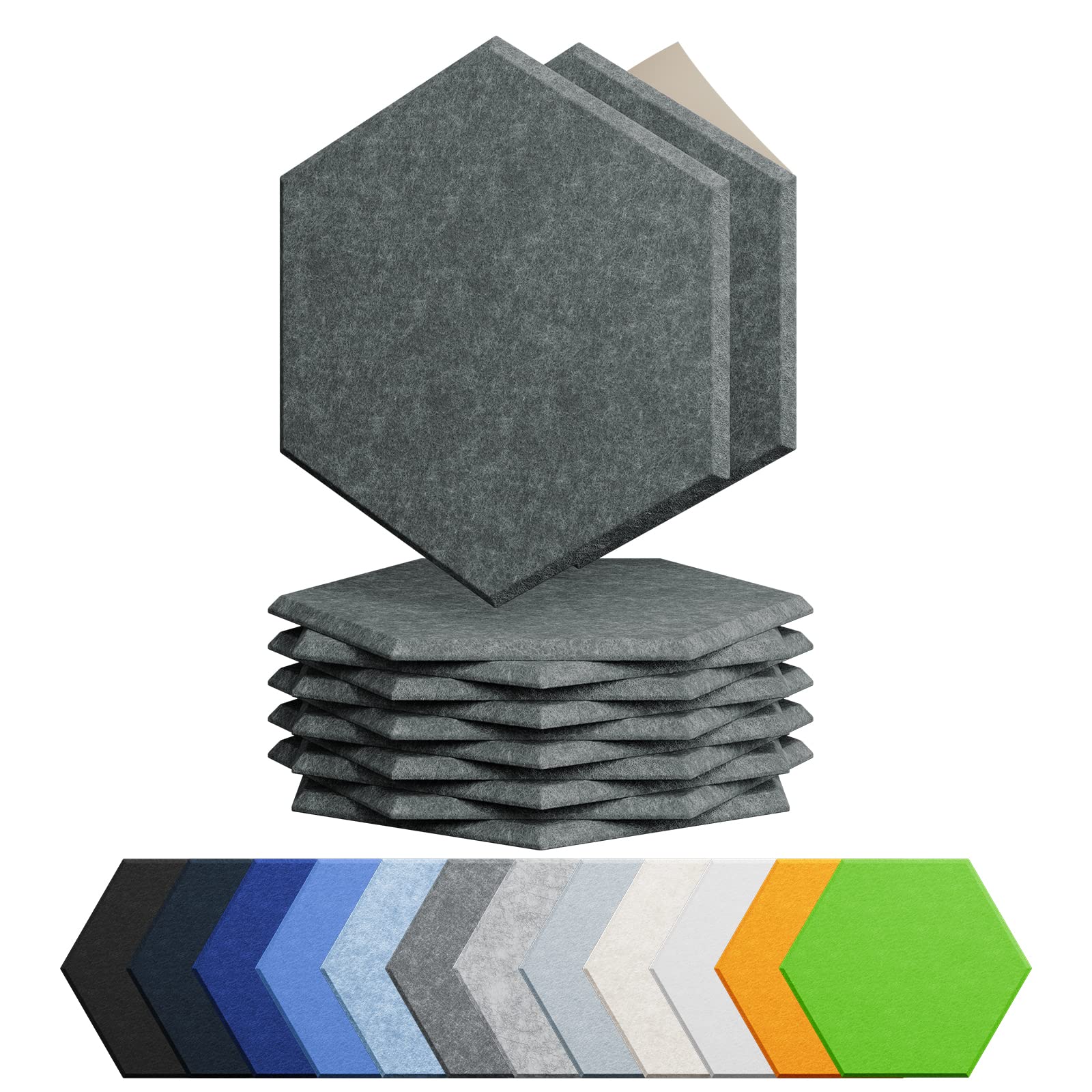
If you need to reduce echo in a small room on a strict budget, this 12-pack of thin hexagon panels offers the lowest entry point. Each panel measures 12 by 10.23 inches with a 0.4-inch thickness, and the kit covers roughly 8 square feet when arranged in a honeycomb pattern. The adhesive backing lets you install the entire set in under 15 minutes.
Customer feedback consistently notes that a single pack is not enough for significant soundproofing, but it is effective at dampening echo in a bedroom or small office when combined with soft furnishings. The moonlight grey color is neutral and won’t clash with existing wall colors, and the hexagon shape allows you to create custom patterns that look intentional rather than patched.
The thin 0.4-inch profile means these panels primarily absorb high-frequency reflections (sibilance, clapping, clicking) and have minimal effect on bass or loud TV audio. For the price, they provide a measurable reduction in room liveliness, making them a sensible starter set before moving to thicker panels.
Why it’s great
- Lowest-cost entry point for reducing echo in a bedroom or small office
- Hexagon shape enables creative wall patterns with no visible gaps
- No-tools peel-and-stick installation takes under 15 minutes
Good to know
- Single pack covers only ~8 sq ft; multiple packs needed for noticeable effect
- 0.4-inch thickness absorbs high frequencies only, not bass or loud TV audio
FAQ
What is the difference between soundproofing and sound absorption?
How many acoustic panels do I need for a typical 12×12 foot room?
Can acoustic panels reduce noise from neighbors through a shared wall?
Final Thoughts: The Verdict
For most users, the best acoustic insulation winner is the ATS Acoustics 24x48x2 Panel because its NRC 1.0 mineral wool core delivers genuine low-frequency absorption that foam panels can’t match. If you want a decorative option that doubles as wall art, grab the Soon Global Fluid Art Panel. And for a thin, eco-friendly solution that outperforms foam at half the thickness, nothing beats the AudioSilk ROOM KIT.