
Balanced sound headphones strip away the artificial colorings—no boosted bass, no hyped treble—leaving only what the recording engineer intended. Instead of flattering your ears with a sculpted V-shape, these headphones present music, dialogue, and game audio with honest, uncolored precision, revealing subtle details that colored cans gloss over entirely.
I’m Min — the co-founder and writer behind Gadgets Feed. My research process for this guide demanded hundreds of hours cross-referencing frequency response graphs, impedance curves, and driver technologies to separate genuine reference-grade neutrality from marketing masquerading as transparency.
After analyzing nine wired contenders across every tier, these professional-grade listening tools represent the current market’s most honest options for the best balanced sound headphones.
How To Choose The Best Balanced Sound Headphones
Selecting neutral headphones requires shifting your mindset away from “sounds good” and toward “sounds true.” The following criteria define what separates genuine reference tuning from consumer-friendly coloration.
Frequency Response Signature
True balanced headphones aim for a flat or near-flat frequency response from 20 Hz to 20 kHz, with deviations measured in decibels rather than dramatic valleys and peaks. Look for models that adhere loosely to the Harman target curve—slightly elevated bass and treble relative to a dead flat line—without exaggerated “smiley face” treble spikes or bloated sub-bass. The models in this guide avoid the punishing 8–10 kHz peak popularized by budget “studio” cans.
Open-Back Versus Closed-Back
Open-back designs produce wider soundstage and more natural tonality because air moves freely through the driver enclosure, reducing internal resonance that artificially colors midrange frequencies. The trade-off is zero sound isolation—your music leaks out, and room noise leaks in. Closed-back models forgo some spatial accuracy in exchange for isolation, making them better for tracking vocals or commuting.
Impedance and Sensitivity Matching
Impedance measured in ohms determines how much voltage your source device must deliver. Lower impedance (under 50 ohms) works directly from phones and laptops without extra amplification. Higher impedance models (80 ohms and above) present a resistive load that may require a dedicated headphone amplifier or DAC to reach adequate volume and prevent frequency response shifts caused by weak output stages.
Quick Comparison
On smaller screens, swipe sideways to see the full table.
| Model | Category | Best For | Key Spec | Amazon |
|---|---|---|---|---|
| Sennheiser HD 490 PRO | Premium Open-Back | Mixing and Critical Listening | 5 Hz–36 kHz response | Amazon |
| Sony MDR-MV1 | Premium Open-Back | Spatial Audio and Comfort | 24 ohm impedance | Amazon |
| Sony MDR-M1 | Premium Closed-Back | Recording and Isolation | 5 Hz–80 kHz playback | Amazon |
| Beyerdynamic DT 990 Pro X | Mid-Range Open-Back | Gaming and Imaging | STELLAR.45 48 ohm driver | Amazon |
| Sennheiser HD 560S | Mid-Range Open-Back | Neutral Reference on a Budget | 6 Hz–38 kHz response | Amazon |
| Audio-Technica ATH-R50X | Mid-Range Open-Back | Lightweight Studio Monitoring | 207 g weight | Amazon |
| Audio-Technica ATH-M50X | Mid-Range Closed-Back | Versatile Studio Use | 45 mm driver | Amazon |
| Sennheiser IE 200 | Budget IEM | Portable Neutral Listening | 7 mm TrueResponse driver | Amazon |
| Shure SRH440A | Budget Closed-Back | Entry-Level Studio Monitoring | Collapsible design | Amazon |
In‑Depth Reviews
1. Sennheiser HD 490 PRO

The HD 490 PRO delivers an exceptionally wide and dimensional soundstage paired with an uncolored frequency response spanning 5 Hz to 36 kHz. The innovative low-frequency cylinder system provides full, accurate bass extension without bloat, while the Open-frame Architecture reduces total harmonic distortion to negligible levels. This is Sennheiser’s most technically accomplished sub- reference headphone.
The included dual pad sets—one for producing, one for mixing—let you switch between a slightly warmer presentation and a more analytical treble response. The fiberglass-reinforced polymer chassis keeps weight manageable while the patented cable coil structure effectively blocks handling noise. The detachable 4-pin mini-XLR cable ensures reliable connectivity across studio configurations.
For critical mixing and mastering work, the HD 490 PRO reveals mix imperfections and spatial details that lesser headphones mask. The neutral, detailed sound avoids sibilance while maintaining excellent imaging precision, making it equally formidable for competitive gaming and high-resolution music listening.
Why it’s great
- Extremely wide, dimensional soundstage with ultra-precise localization
- Two unique ear pad sets adjust frequency presentation for producing vs. mixing
- Patented cable coil structure blocks cable-borne noise for clean signal
Good to know
- Proprietary pad design limits aftermarket replacement options
- Intimate soundstage compared to some open-back competitors like R70x
2. Sony MDR-MV1

Designed specifically for spatial and immersive audio mixing, the MDR-MV1 features newly developed HD driver units optimized for an open-back acoustic structure that reproduces a rich low-frequency range while maintaining a wide, speaker-like soundstage. The frequency response extends from 5 Hz to 80 kHz, delivering high-resolution accuracy that rivals far more expensive options.
The build emphasizes extreme comfort—223 grams total weight with soft suede ear pads and a secure fitting design that accommodates extended listening sessions without fatigue. The low 24-ohm impedance means the MV1 drives easily from phones, laptops, and portable DACs, requiring no dedicated headphone amplifier for adequate volume.
Reviewers consistently note the warm tilt in the lower mids coupled with fatigue-free treble that avoids the sibilance peaks common in reference monitors. The generous soundstage and sharp imaging make it standout for gaming positional audio while maintaining the flat, neutral mids and highs needed for critical mixing work.
Why it’s great
- Extremely lightweight at 223 g with ultra-breathable pads for all-day wear
- Low 24-ohm impedance works effortlessly with portable devices
- Warm, neutral signature with extended bass and non-fatiguing treble
Good to know
- Long cable can tangle and exhibits microphonics
- Some reports of left earcup detachment; build feels slightly fragile
3. Sony MDR-M1

The MDR-M1 represents Sony’s latest closed-back reference monitor, designed in collaboration with renowned industry engineers to achieve sound that accurately reproduces creative intent. The uniquely designed 40 mm driver unit balances low distortion with ultra-wideband playback from 5 Hz to 80 kHz, delivering detailed and precise monitoring for a broad spectrum of production workflows.
The closed acoustic structure provides high sound isolation, allowing precise audio production in noisy environments without bleed into microphones. At approximately 216 grams with soft, thick earpads, the MDR-M1 offers exceptional comfort for marathon sessions. The screw-in 6.3 mm plug adapter and detachable cables in two lengths provide professional-grade connectivity.
Reviewers praise the neutral, detailed sound with adequate bass, clear mids, and smooth treble that avoids fatigue. The wide soundstage and pinpoint imaging surpass expectations for a closed-back design, while the ultra-lightweight construction makes these easy to pack for mobile studio work.
Why it’s great
- Ultra-lightweight at 216 g with comfortable, soft earpads for long sessions
- Excellent sound isolation for recording environments
- Wide soundstage and pinpoint imaging for closed-back design
Good to know
- Earpads can get warm during extended wear
- No carrying case or storage bag included
4. Beyerdynamic DT 990 Pro X

The DT 990 Pro X updates the legendary DT 990 lineage with the new STELLAR.45 driver, delivering studio-accurate, low-distortion sound across a 5–40,000 Hz frequency range. The 48-ohm impedance strikes a practical balance—more sensitive than the classic 250-ohm version—allowing direct connection to laptops and portable DACs without sacrificing the wide, natural soundstage and brilliant high frequencies the series is known for.
Handcrafted in Germany with metal hinges and a rugged headband, the DT 990 Pro X prioritizes long-term durability with fully serviceable parts. The soft, circumaural velour ear pads provide luxurious comfort for extended monitoring sessions. The detachable 3-meter mini-XLR locking cable offers added security in professional environments.
Reviewers highlight the controlled highs, clean bass, and spacious soundstage that make these ideal for gaming and critical listening alike. The refined tuning tames the treble peak of earlier versions while maintaining the detail retrieval that makes subtle mix imperfections audible.
Why it’s great
- New STELLAR.45 driver offers superior efficiency and lower distortion
- Fully serviceable parts with metal construction designed in Germany
- Excellent soundstage and spatial imaging for gaming and mixing
Good to know
- Bass response may feel underwhelming without EQ for some listeners
- Can exhibit clipping at high volumes on powerful amplifiers
5. Sennheiser HD 560S
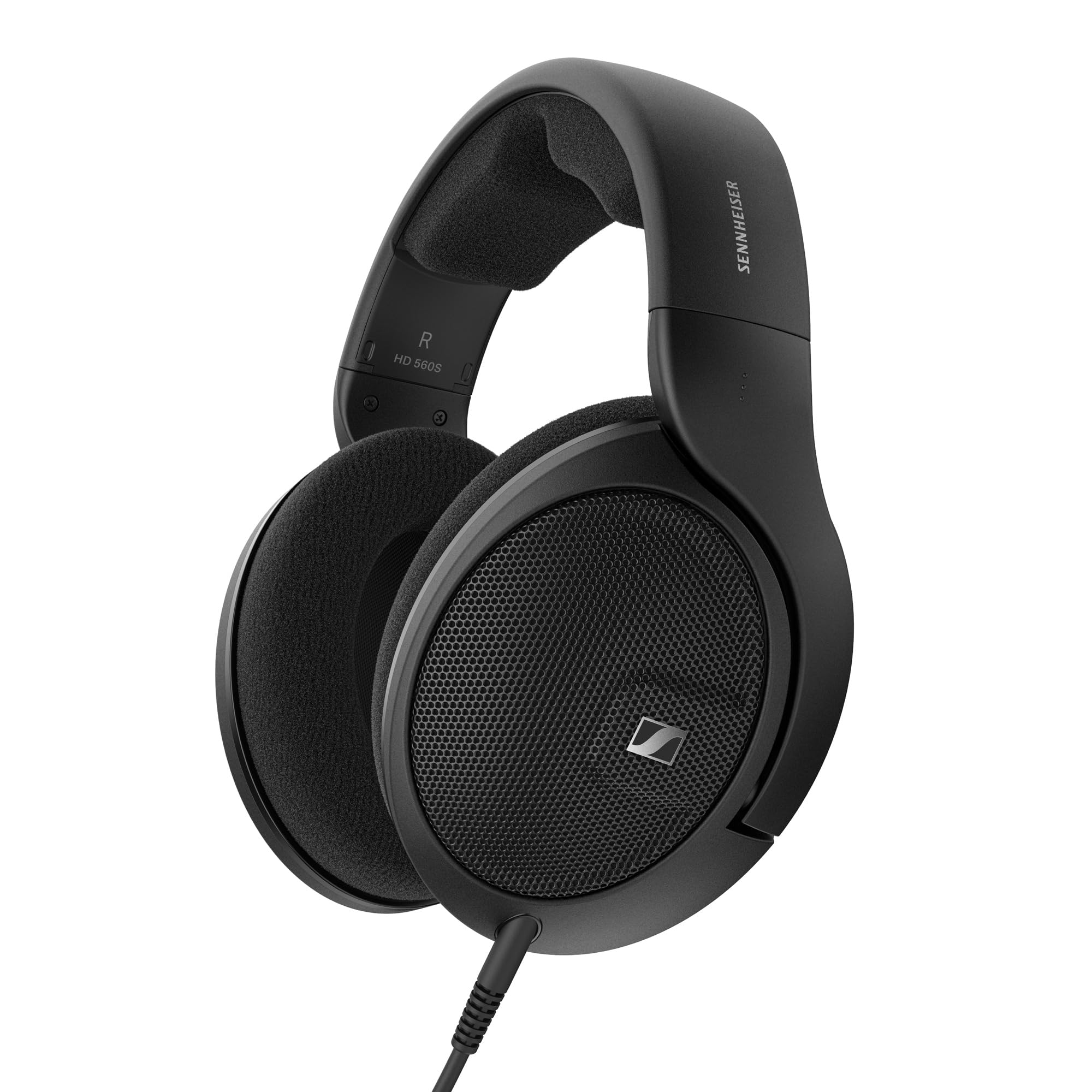
The HD 560S delivers Sennheiser’s reference-grade neutral sound at a price point that undercuts traditional studio monitors by a substantial margin. Precision-tuned transducers reveal subtle details across the entire frequency range, with a 6 Hz to 38 kHz response that captures both sub-bass extension and airy treble without exaggeration. The open-back design produces a wide, natural soundstage with excellent directional detail.
Comfort is a strong suit—the lightweight plastic construction keeps weight low at approximately 280 grams, while velour ear pads and ventilated earcups minimize heat buildup during prolonged sessions. The detachable cable terminates in a 6.35 mm plug with included 3.5 mm adapter, ensuring compatibility with desktop audio interfaces and portable devices alike.
Reviewers consistently describe the HD 560S as delivering roughly 75% of top-tier sound quality at less than half the cost. The neutral, well-balanced presentation works exceptionally well for gaming positional audio, critical music listening, and content creation where tonal accuracy matters more than excitement.
Why it’s great
- Outstanding price-to-performance ratio for reference-grade neutral sound
- Lightweight design with velour pads prevents fatigue during long sessions
- Excellent for gaming positional audio and critical music listening
Good to know
- Proprietary 2.5 mm locking connector limits aftermarket cable options
- Plastic build feels less premium than metal competitors
6. Audio-Technica ATH-R50X
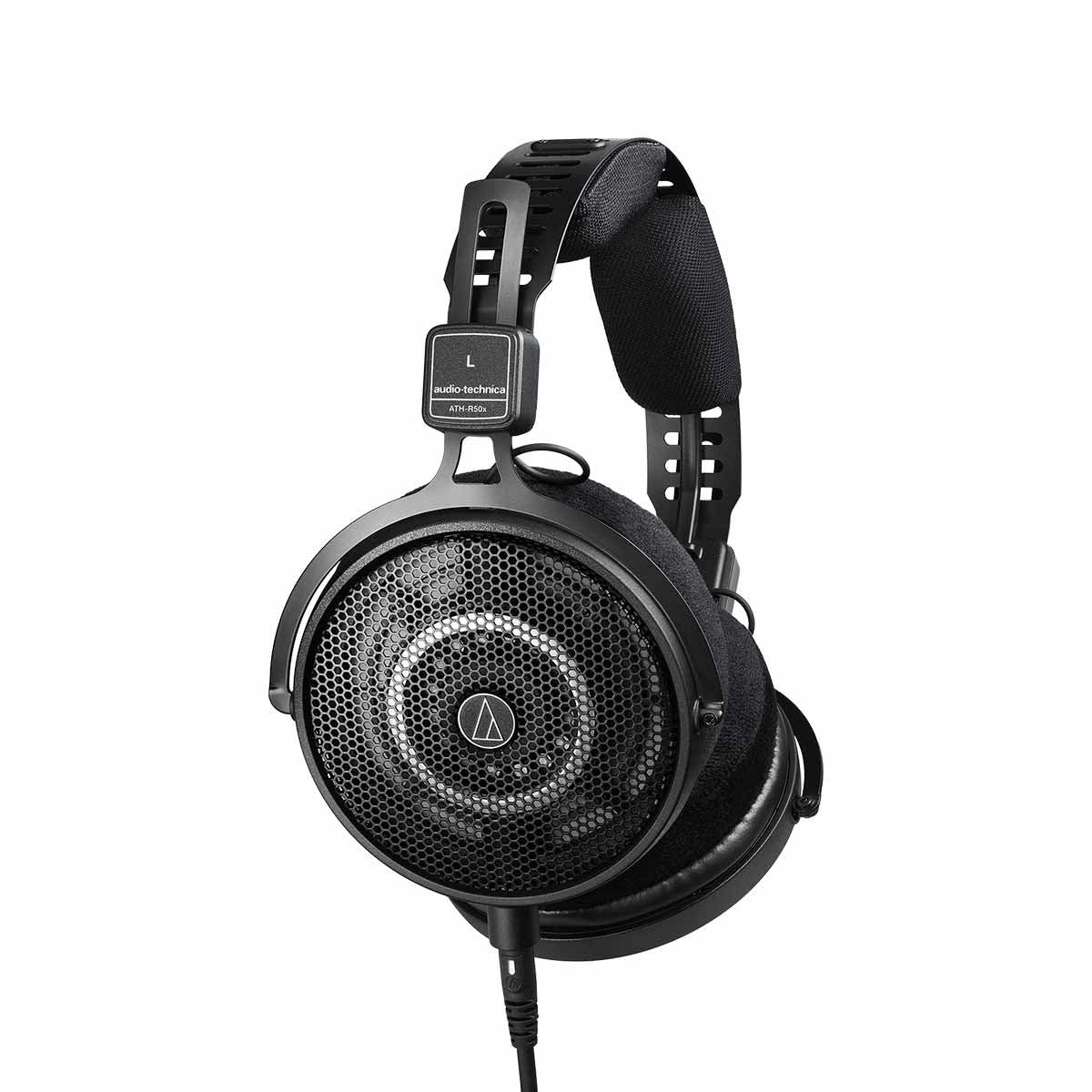
The ATH-R50X employs a fully open-back design that eliminates internal resonance, providing extremely quick transient response and a wide, realistic soundstage. The dynamic drivers deliver extended bass and accurate midrange for demanding audio production, with a frequency response spanning 20 Hz to 20 kHz that prioritizes naturalness over exaggerated extremes.
Weighing just 207 grams with a new headband design, the R50X is among the lightest reference headphones available—ideal for mix engineers who wear cans for hours without interruption. The package includes two detachable cables (3.0 m and 1.2 m) with 2.5 mm twist-lock connectors at the left earcup, plus a 6.3 mm adapter and carrying pouch.
Reviewers praise the tight, punchy bass, clear mids, and detailed but non-harsh highs. The low clamp force accommodates larger head sizes comfortably, and the folding design makes transport simple. With excellent performance that does not demand a dedicated amp, the R50X serves casual listeners and light studio work equally well.
Why it’s great
- Only 207 grams with low clamp force for virtually unnoticeable wear
- Detachable cables in two lengths with twist-lock connectors
- Fast transient response with open-back natural soundstage
Good to know
- Sub-bass rolls off noticeably without EQ
- Stock cable retains memory and tangles easily
7. Audio-Technica ATH-M50X

The ATH-M50X remains one of the most critically acclaimed studio monitors in its class, featuring proprietary 45 mm large aperture drivers with rare earth magnets and copper-clad aluminum wire voice coils. The circumaural closed-back design contours around the ears for excellent sound isolation in loud environments while delivering exceptional clarity across an extended frequency range with deep, accurate bass response.
Professional-grade earpad and headband material improves durability over earlier models, while 90-degree swiveling earcups enable one-ear monitoring. Three detachable cables (1.2 m coiled, 1.2 m straight, and 3.0 m straight) provide flexibility across studio and portable use cases. The collapsible folding design simplifies storage and transport.
Reviewers consistently describe the sound as revealing and accurate with punchy bass, clear mids, and crisp highs—though audiophiles note the signature is not truly flat but slightly forward and aggressive compared to open-back alternatives. Performance improves dramatically with a quality DAC or headphone amplifier.
Why it’s great
- Critically acclaimed studio reference with three interchangeable cables
- Excellent isolation with durable metal construction and collapsible design
- Revealing sound that exposes source quality and mix details
Good to know
- Sound signature has a slight treble peak causing sibilance on some recordings
- Headband padding could be thicker for extended wear comfort
8. Sennheiser IE 200

The IE 200 brings Sennheiser’s TrueResponse transducer technology to an accessible in-ear format, delivering neutral, balanced sound with expressive mids, smooth treble, and controlled bass. The 7 mm dynamic drivers are manufactured using an advanced process that minimizes unit-to-unit variation, ensuring consistent sound quality across pairs—a detail often overlooked at this price tier.
The dual bass-tuning design offers two ear-tip mounting positions: one for tighter, more controlled bass and another for fuller, warmer low-end presentation. The ergonomic in-ear shape with flexible earhooks and multiple silicone and memory foam tip sizes ensures a secure, comfortable fit for extended listening. The low-noise braided cable with gold-plated MMCX connectors reduces handling noise.
Reviewers describe the sound as revealing, authentic, and more compressed than wireless alternatives. The IE 200 benefits significantly from proper ear tip seating and a quality DAC or analog source like an iPod. The soundstage is wide for in-ear monitors, though limited by the form factor compared to over-ear designs.
Why it’s great
- TrueResponse transducer delivers neutral, detailed sound at an approachable price
- Dual bass-tuning design lets you adjust low-end presentation
- Extremely comfortable fit for extended listening with memory foam tips
Good to know
- Stock cable is prone to tangling and exhibits microphonics
- Requires a DAC or adapter for modern smartphones without headphone jacks
9. Shure SRH440A

The SRH440A updates the classic Shure reference monitor with an improved design, enhanced durability, and better comfort while preserving the accurate, transparent audio that made its predecessor a studio staple. The balanced, detailed sound signature with extended frequency range reproduces audio with clarity and precision ideal for monitoring, mixing, and critical listening across music and spoken content.
Optimized impedance and power handling ensure consistent performance across audio interfaces, mixers, laptops, and portable devices. The closed-back, over-ear design reduces ambient noise while keeping sound contained during recording sessions. The lightweight construction with cushioned earcups and an adjustable headband provides lasting comfort for long sessions, and the collapsible design simplifies transport.
Reviewers praise the accurate, balanced sound that outperforms pricier options in terms of tonal neutrality, though the raw resolution and noise isolation fall short of premium studio monitors. The detachable locking cable adds long-term reliability, and the overall build quality represents substantial value for entry-level studio work.
Why it’s great
- Accurate neutral sound signature ideal for entry-level studio monitoring
- Detachable locking cable with rugged build for daily reliability
- Collapsible design for easy storage and portability
Good to know
- No active noise cancellation; isolation relies solely on closed-back design
- Large earcups give a slightly bulky appearance on smaller heads
FAQ
What exactly makes a headphone “balanced” rather than just neutral?
Can I use these balanced headphones for gaming or only for music production?
Do I need a headphone amplifier for balanced headphones?
Final Thoughts: The Verdict
For most users, the best balanced sound headphones winner is the Sennheiser HD 490 PRO because it combines a genuinely uncolored frequency response with dual pad sets that adapt to production or mixing workflows, all within a comfortable and durable chassis. If you want a closed-back design with excellent isolation, grab the Sony MDR-M1. And for a budget-friendly entry into reference-grade neutrality, nothing beats the Sennheiser HD 560S.