
The difference between a blade that tears through schedule 40 pipe in seconds and one that wanders, dulls, or breaks comes down to three numbers: the bi-metal alloy at the cutting edge, the teeth-per-inch (TPI) pitch, and the weld quality at the seam. This guide cuts through the noise to identify the blades that deliver consistent, straight cuts across the most demanding ferrous and non-ferrous materials.
I’m Min — the co-founder and writer behind Gadgets Feed. My approach to these reviews is rooted in hours of cross-referencing real-world user accounts from electricians, welders, and fabricators against the technical specifications of each blade, focusing on measurable performance indicators like tooth retention, resistance to heat buildup, and cut accuracy in thin-walled materials.
Whether you’re resawing stainless tube in a production shop or cutting rebar on a job site, finding a reliable band saw blade for metal means prioritizing bi-metal construction and matching TPI to material thickness.
How To Choose The Best Band Saw Blade For Metal
Selecting the right blade for cutting metal is not a one-size-fits-all decision. The material you cut most often — thin-walled tubing versus thick solid bar — dictates the geometry and construction that will perform best. Three factors matter above all others: blade material, TPI, and tooth set.
Bi-Metal vs. Carbon Steel Construction
For metal cutting, bi-metal blades are the standard. They weld a high-speed steel (HSS) cutting edge onto a flexible alloy steel backer. This combination resists the heat and abrasion generated when cutting stainless steel, alloy steel, or cast iron, while the flexible back absorbs vibration without cracking. Carbon steel blades dull rapidly on hard metals and are best reserved for wood or non-ferrous work.
Teeth Per Inch (TPI) and Material Thickness
TPI determines cut speed and finish quality. A general rule: at least three teeth should be engaged with the workpiece at all times. For thin materials like sheet metal or tubing (under 1/8”), use 14–18 TPI. For thicker solids (over 1/2”), 10–14 TPI provides faster chip clearing. Variable-tooth blades (e.g., 10/14 TPI) bridge the gap, reducing vibration in structural shapes.
Tooth Set Patterns
Raker, wavy, and straight sets control how the blade clears swarf and stays on course. Wavy set teeth are ideal for thin workpieces because they prevent tooth stripping. Raker set handles thicker materials and provides a smoother finish. Regular tooth patterns with a positive rake angle cut aggressively through softer metals but may grab on thin sheet.
Quick Comparison
On smaller screens, swipe sideways to see the full table.
| Model | Category | Best For | Key Spec | Amazon |
|---|---|---|---|---|
| Lenox 29232CLB72360 | Premium | Heavy-duty production cutting | 93″ x 3/4″ x 0.035″, 18 TPI, M42 edge | Amazon |
| Starrett BM1014 | Premium | Precision cuts in stainless | 44-7/8″ x 1/2″ x 0.020″, 10-14 TPI | Amazon |
| Makita B-40559 | Premium | Portable saw compatibility | 32-7/8″, 18 TPI, 5-pack | Amazon |
| Lenox 8010738PW145 | Mid-Range | General-purpose metal cutting | 44-7/8″ x 1/2″ x 0.020″, 14 TPI, 5-pack | Amazon |
| Imachinist S93341014SS | Mid-Range | Stainless steel and heavy bar stock | 93″ x 3/4″ x 0.035″, 10/14 TPI | Amazon |
| Milwaukee 48-39-0631 | Mid-Range | Thin metals and rebar | 30-9/16″, 12/14 TPI, 3-pack | Amazon |
| Bosch CBS1418 | Budget-Friendly | Electrical conduit and pipe | 28-7/8″, 14-18 TPI, 3-pack | Amazon |
In‑Depth Reviews
1. Lenox 29232CLB72360 Classic Tuff Tooth
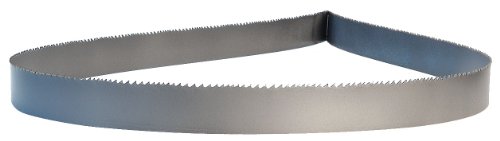
The Lenox 29232CLB72360 is built for the long haul in production environments. Its Tuff Tooth design reduces tooth strippage dramatically, and the M42 high-speed steel edge withstands heat buildup even when cutting through alloy steel, tool steel, and stainless. The 0.035-inch thickness adds rigidity for straight, vibration-free cuts in rectangular tubes and structural shapes.
In practice, users report this blade transforms cheaper saws after proper tension and guide adjustment. The wavy tooth set prevents grabbing on thin workpieces, while the regular tooth geometry with positive rake delivers aggressive cutting action without stalling. One fabricator noted cutting train track and high-carbon knife billets without visible dulling after months of use with coolant and slow auto-feed.
The 93-inch length fits vertical and horizontal stationary bandsaws, not portable units. If your setup accepts this size and you cut a mix of carbon, stainless, and non-ferrous metals daily, the investment in this Lenox blade replaces itself in avoided downtime alone.
Why it’s great
- M42 tooth edge resists heat and wear far longer than standard bi-metal
- Tuff Tooth reinforcement nearly eliminates stripped teeth on thin sections
- Cuts cylindrical solids, tubes, and structural shapes with consistent precision
Good to know
- Only fits saws accepting 93-inch blades (not portable saws)
- Cutting effectiveness drops if hydraulic feed is set too fast
2. Starrett BM1014 Univerz Bi-Metal Portaband

Starrett brings over a century of tool-making precision to the BM1014 portaband blade. The bi-metal construction uses their proprietary bonding process to join a flexible alloy steel back to a hardened cutting edge, allowing faster cutting rates without sacrificing blade life. The variable 10-14 TPI pitch reduces vibration across different material thicknesses, from thin-walled tubing to solid bar stock.
Users consistently highlight edge retention as the standout trait. One welder running a Harbor Freight portable bandsaw reported getting a full year of weekly use before the blade broke from inattention rather than wear. The 0.020-inch thickness makes it suitable for tighter curves in a portable saw while maintaining enough beam strength for straight cuts in 1/8-inch stainless.
The 44-7/8-inch length fits most name-brand portable bandsaws, including Milwaukee, Dewalt, and Harbor Freight models. If you need one blade that handles everything from electrical conduit to angle iron with smooth, accurate cuts, this Starrett is the definitive choice.
Why it’s great
- Variable 10-14 TPI adapts to mixed material thicknesses without chatter
- Bi-metal weld holds up on 1/8-inch stainless longer than comparable blades
- Fits nearly every standard portable bandsaw on the market
Good to know
- Single blade pack — stock up for frequent changes
- Not designed for ferrous cutting at very high feed rates
3. Makita B-40559 Compact Portable Band Saw Blade
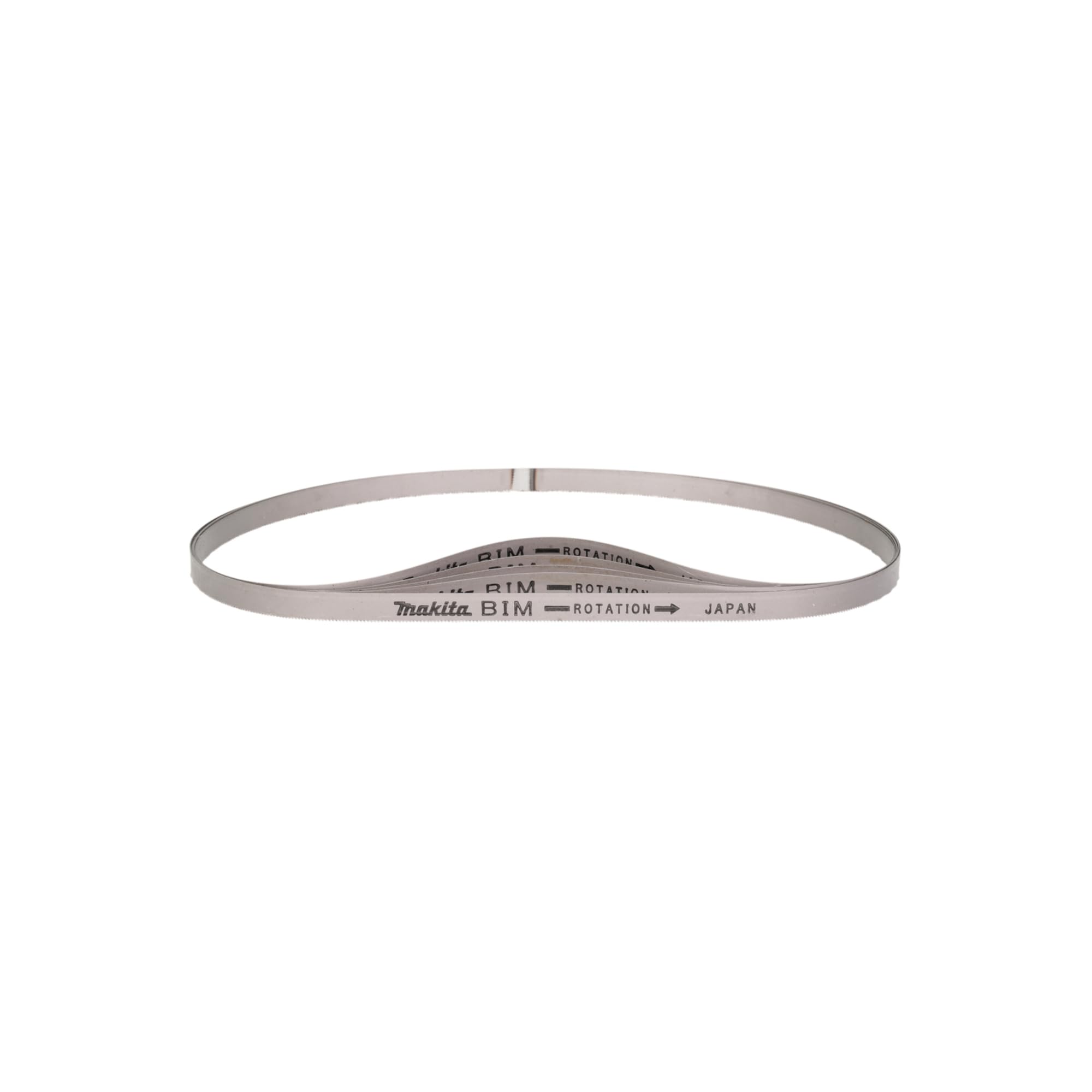
Makita’s B-40559 delivers five blades engineered specifically for compact portable bandsaws, making it a volume solution for tradespeople who cut through pipe, strut, and rebar daily. The 18 TPI with a wavy tooth set produces clean, burr-free cuts in sheets, tubes, and thin-walled sections without grabbing or snagging the workpiece.
The improved welding process at the seam reduces premature breakage, a common failure point in other compact blades. Users running these on Dewalt cordless saws report significantly longer life compared to OEM replacements. The 32-7/8-inch length fits most compact and mid-size portable bandsaws, though it will not work on full-size horizontal saws.
While the per-blade cost is higher than budget options, the 5-pack format lowers the effective price per cut, especially when working stainless and cast iron. If your daily workflow involves cutting non-ferrous metals, mild steel, or cast iron with a compact saw, this Makita 5-pack keeps you running without frequent stops to swap blades.
Why it’s great
- Five blades in one pack provide excellent value for high-volume cutting
- Improved weld seam reduces breakage at the joint
- Wavy tooth set delivers clean cuts on thin tubing and sheet metal
Good to know
- 18 TPI is less effective on thick solid bar over 1/2 inch
- Only compatible with compact/portable band saws (32-7/8 inch length)
4. Imachinist S93341014SS M42 Bi-Metal 93″ Blade
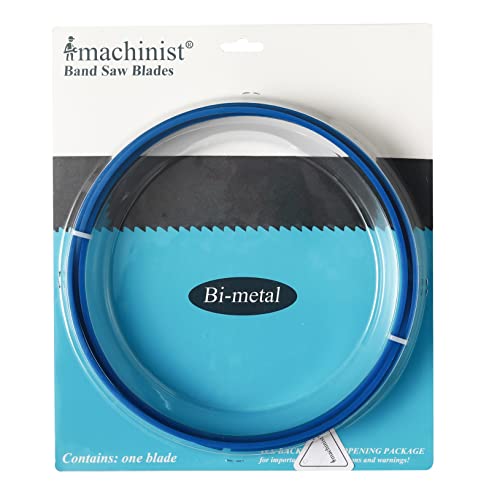
Despite its mid-range price point, the Imachinist S93341014SS punches above its weight with an M42 bi-metal construction designed specifically for stainless steel grades 304, 316L, 410, and 420. The variable 10/14 TPI provides the versatility to handle both thin-walled tubing and solid bar stock while keeping vibration low.
Durability reports are impressive for the price point. One custom welder reports these blades surviving over a year of heavy use in a fabrication shop, outperforming more expensive brands in cut consistency and edge retention. Another user logged over 400 cuts on 2-inch DOM tubing with no coolant and still maintained straight cutting accuracy.
Note that this TPI range is not suitable for aluminum or other non-ferrous soft metals — the variable pitch will grab and chip. For dedicated stainless steel and heavy ferrous work on a stationary 93-inch bandsaw, this Imachinist blade delivers premium-level performance at a fraction of the cost.
Why it’s great
- M42 edge withstands abrasive stainless grades like 316L
- Variable 10/14 TPI reduces chatter on structural shapes
- User-reported longevity exceeds 400 cuts on thick-wall DOM tubing
Good to know
- Not recommended for aluminum or non-ferrous materials
- Weld quality may vary; some users reported early breakage
5. Lenox 8010738PW145 Portable Band Saw Blade 5-Pack

The Lenox 8010738PW145 is a 5-pack of 14 TPI portable blades that covers everyday metal cutting without breaking the bank. The high-speed steel teeth provide a strong cutting edge that resists dulling through multiple cuts in mild steel, aluminum, and thin stainless. The shatter-resistant bi-metal backer bends rather than snaps when the saw twists through a cut.
Users running these in production environments appreciate the consistent cut straightness — one reviewer noted the blade cut cleanly through a 4-inch pressure-treated post without wandering, demonstrating its versatility on non-metal materials as well. The 44-7/8-inch length fits most standard portable bandsaws from Milwaukee and Dewalt.
While these blades won’t set endurance records against premium M42 models, the 5-pack format ensures you always have a sharp blade ready. For a general contractor or DIY shop cutting a mix of metal types weekly, this Lenox pack balances cost and performance effectively.
Why it’s great
- 5-blade pack provides low per-blade cost for frequent changes
- Shatter-resistant design withstands twisting in portable saws
- Cuts straight across both metal and wood materials
Good to know
- 14 TPI fixed pitch is less versatile than variable-tooth designs
- Edge retention is adequate but not exceptional on stainless steel
6. Milwaukee 48-39-0631 Extreme Thick Metal Band Saw Blade 3-Pack

Milwaukee’s 48-39-0631 is purpose-built for the compact M12 and M18 bandsaw platform, promising 3x the blade life in stainless steel and 2x faster cuts in thin metals compared to standard blades. The optimized tooth design features a 12/14 variable pitch that combines aggressive cutting with a clean finish, especially in EMT conduit and rebar.
User reports confirm the speed advantage. One electrician who swapped the stock blade on a Ridgid brushless saw noted this Milwaukee blade cut through conduit and unistrut “like butter,” with no noticeable slow-down over prolonged use. The 25% more cuts per charge claim holds up in practice due to reduced friction and heat generation.
The 30-9/16-inch length limits compatibility to compact saws. For professionals cutting thin metals, threaded rod, and rebar all day, this 3-pack delivers the fastest cycle times and longest interval between changes in its class.
Why it’s great
- 2x faster cutting in thin metals like EMT and sheet
- 3x longer life in stainless compared to standard blades
- Optimized tooth geometry reduces friction, boosting battery runtime
Good to know
- Only compatible with compact band saws (30-9/16 inch length)
- Less effective on thick solid bar over 3/8 inch
7. Bosch CBS1418 3-Pack Portable Band Saw Blades

Bosch’s CBS1418 3-pack punches well above its price tier with advanced bonding technology that welds a high-speed steel edge to a bi-metal backer. The optimized tooth geometry cuts cleanly through steel, iron, aluminum, and other non-ferrous metals while resisting the heat buildup that kills cheaper blades. The 14-18 variable TPI range provides flexibility for general-purpose metal cutting.
Electricians report these blades outperforming Hilti alternatives, with one user noting hundreds of conduit cuts over several months before the blade needed replacement. Another reviewer remarked that these blades “never get dull” — they break apart first due to mechanical stress, demonstrating that the heat treatment and edge hardness are properly balanced for the price point.
The 28-7/8-inch length fits compact portable bandsaws. Despite some reports of brittleness under extreme twisting, the CBS1418 offers the best value proposition for high-volume cutting of pipe, strut, and thin-wall conduit.
Why it’s great
- Outstanding edge retention for the price — many users report months of daily use
- Variable 14-18 TPI handles mixed metal thicknesses without chatter
- Cuts cleanly through steel, iron, aluminum, and non-ferrous alloys
Good to know
- Some users report brittleness under high twisting stress
- Only fits compact band saws with 28-7/8 inch blade length
FAQ
What is the best TPI for cutting stainless steel pipe?
Can I use a bi-metal blade in a wood bandsaw?
How do I know if a blade fits my portable band saw?
Final Thoughts: The Verdict
For most users, the best band saw blade for metal is the Starrett BM1014 because its variable 10-14 TPI and proven bi-metal edge retention handle everything from thin conduit to stainless bar with consistent accuracy. If you cut mostly thick stainless on a stationary saw, the Lenox 29232CLB72360 with M42 edge delivers production-grade durability. And for high-volume portable cutting on a budget, the Makita B-40559 5-pack provides the best per-blade value without compromising cut quality.