
A 4K Ultra HD Monitor isn’t just about more pixels—it’s about the tangible difference between squinting at aliased text and gliding through a spreadsheet where every cell is razor-sharp. Whether you’re grading video in Rec. 709, reviewing architectural CAD files, or simply wanting your desktop to feel as crisp as a printed page, the jump from 1440p or 1080p to 3840 x 2160 is a one-way upgrade that changes how you see your work.
I’m Min — the co-founder and writer behind Gadgets Feed. I’ve spent hundreds of hours analyzing panel technology roadmaps, factory calibration reports, and connectivity standards across more than 40 current-generation 4K monitors to filter out the noise and find the models that genuinely deliver on their spec sheets.
This guide cuts through the marketing haze to recommend monitors that earn their place on your desk. Read on for my curated list of the very best 4k ultra hd monitor options available right now.
How To Choose The Best 4K Ultra HD Monitor
Choosing a 4K monitor often comes down to three interconnected decisions: panel technology, refresh rate, and color performance. A monitor that excels for competitive gaming may frustrate a color-critical designer, and vice versa. Understanding the trade-offs upfront saves you the headache of a return.
Panel Technology: IPS vs. VA vs. OLED
IPS panels offer wide viewing angles and consistent color, making them the default for creative pros. VA panels deliver superior native contrast (3000:1 or higher), producing deeper blacks for media consumption and gaming in dim rooms. OLED takes contrast to the extreme with per-pixel lighting and true black levels, but introduces burn-in risk and lower brightness for static desktop use. IPS Black technology is a newer hybrid that narrows the contrast gap with IPS while maintaining color accuracy.
Refresh Rate and Adaptive Sync
60Hz is perfectly adequate for productivity and creative work, but 120Hz or 240Hz transforms cursor motion, scrolling, and gaming into a fluid experience. For gamers, FreeSync Premium and G-Sync Compatible certification eliminate screen tearing without noticeable input lag. Note that higher refresh rates require HDMI 2.1 or DisplayPort 1.4 with DSC to maintain full 4K resolution at higher frame rates.
Color Gamut and Factory Calibration
Look for 99% sRGB or better for general use; DCI-P3 coverage above 95% matters for HDR video editing and modern content creation. A Delta E value of less than 2 out of the box means you can skip the calibration step for most work. Pro-level monitors often ship with a factory calibration report, which saves time and ensures consistency across a multi-monitor setup.
Connectivity and USB-C Power Delivery
A single USB-C cable that carries video, data, and power delivery (65W or higher) is the single biggest quality-of-life upgrade for laptop users. It eliminates cable clutter and lets you dock your machine with one connection. For multi-monitor setups, Thunderbolt 4 daisy-chaining or a built-in USB hub simplifies peripheral management.
Quick Comparison
On smaller screens, swipe sideways to see the full table.
| Model | Category | Best For | Key Spec | Amazon |
|---|---|---|---|---|
| ASUS ROG Swift PG32UCDM | QD-OLED Gaming | High-end gaming & HDR | 240Hz / 0.03ms / 4K OLED | Amazon |
| MSI MPG 321URX QD-OLED | QD-OLED Versatile | Gaming & productivity | 240Hz / 0.03ms / 32″ 4K OLED | Amazon |
| Samsung Odyssey G8 G81SF | QD-OLED Gaming | Competitive gaming | 240Hz / 0.03ms / 27″ 4K OLED | Amazon |
| LG 32GX850A-B UltraGear | Glossy OLED Gaming | Competitive & HDR gaming | 165Hz / 0.03ms / 32″ OLED | Amazon |
| Dell UltraSharp U2725QE | IPS Black Pro | Professional creative work | 120Hz / IPS Black / 140W TB4 | Amazon |
| BenQ MA270U | Mac Ecosystem | MacBook single-cable setup | 60Hz / 4K IPS / 90W USB-C | Amazon |
| ASUS ProArt PA279CV | Creator IPS | Color-accurate editing | 60Hz / 4K IPS / ΔE <2 | Amazon |
| Samsung ViewFinity S8 S80D | Productivity IPS | Home office & multitasking | 60Hz / 4K IPS / Ergonomic stand | Amazon |
| LG 32UR550K-B UltraFine | Value VA | Budget-friendly 4K | 60Hz / 4K VA / HDR10 | Amazon |
| Dell 34 Plus S3425DW | Ultrawide VA | Multitasking & media | 120Hz / 3440×1440 / USB-C 65W | Amazon |
| CRUA 32″ Curved 4K 240Hz | Curved Budget Gaming | Entry-level 4K gaming | 240Hz / 4K VA / 1500R curve | Amazon |
In‑Depth Reviews
1. ASUS ROG Swift 32” 4K OLED Gaming Monitor (PG32UCDM)

The PG32UCDM is the current ceiling for 4K gaming monitors. Its 32-inch QD-OLED panel delivers a 240Hz refresh rate with a 0.03ms response time, and the custom heatsink combined with graphene film actively manages thermal load to reduce burn-in risk. The 99% DCI-P3 coverage and true 10-bit color depth produce HDR content that looks volumetric, with zero-nit blacks and specular highlights that hit 1000 nits.
For gaming, the FreeSync Premium Pro compatibility and HDMI 2.1 ports handle 4K at 120Hz on consoles without compromise. The DisplayWidget Center software gives you mouse-controlled access to OLED Care features, including pixel refresh and uniform brightness toggles. The matte coating keeps reflections manageable without dulling the vibrancy that QD-OLED is known for.
Text fringing is minimal for a QD-OLED, making this monitor usable for productivity tasks between gaming sessions. The three-year warranty with burn-in coverage adds peace of mind to the premium investment. This is the monitor to buy if you want the absolute best image quality and motion clarity available at 4K.
Why it’s great
- Industry-leading motion clarity with 240Hz and 0.03ms response
- Custom heatsink and graphene film for active burn-in mitigation
- Superb HDR performance with 1000-nit peak brightness and true blacks
Good to know
- Peak brightness can vary during color pre-calibration
- Requires pixel refresh routine for long-term OLED health
2. MSI MPG 321URX QD-OLED

The MPG 321URX brings QD-OLED brilliance at a slightly more accessible price point than the ASUS flagship. The 32-inch 4K panel runs at 240Hz with a 0.03ms GtG response time and VESA DisplayHDR True Black 400 certification. Colors are punchy straight out of the box with 99% DCI-P3 coverage and a Delta E of less than 2, making it viable for both gaming and light creative work.
Connectivity is robust with HDMI 2.1, DisplayPort 1.4a, and a USB-C port that delivers 90W of power delivery for a laptop. The built-in KVM switch with PiP/PbP mode lets you control two systems from a single keyboard and mouse setup—a genuine productivity win. OLED Care 2.0 includes multiple burn-in prevention features like pixel shift and taskbar detection.
The main trade-off is the stand: it lacks height and swivel adjustment, so you’ll likely want a VESA arm. The chunky base consumes significant desk depth. But for the core experience—those inky blacks and fluid motion at 4K—this monitor delivers 95% of the premium OLED experience at a price that undercuts the competition.
Why it’s great
- Excellent color accuracy with Delta E ≤2 and 99% DCI-P3
- 90W USB-C power delivery for single-cable laptop connection
- Built-in KVM switch and PiP/PbP for multi-system workflows
Good to know
- Stand lacks height adjustment; plan for a monitor arm
- Some Mac users need to disable DSC for stable dual-monitor operation
3. SAMSUNG 27-inch Odyssey QD-OLED G8 (G81SF)
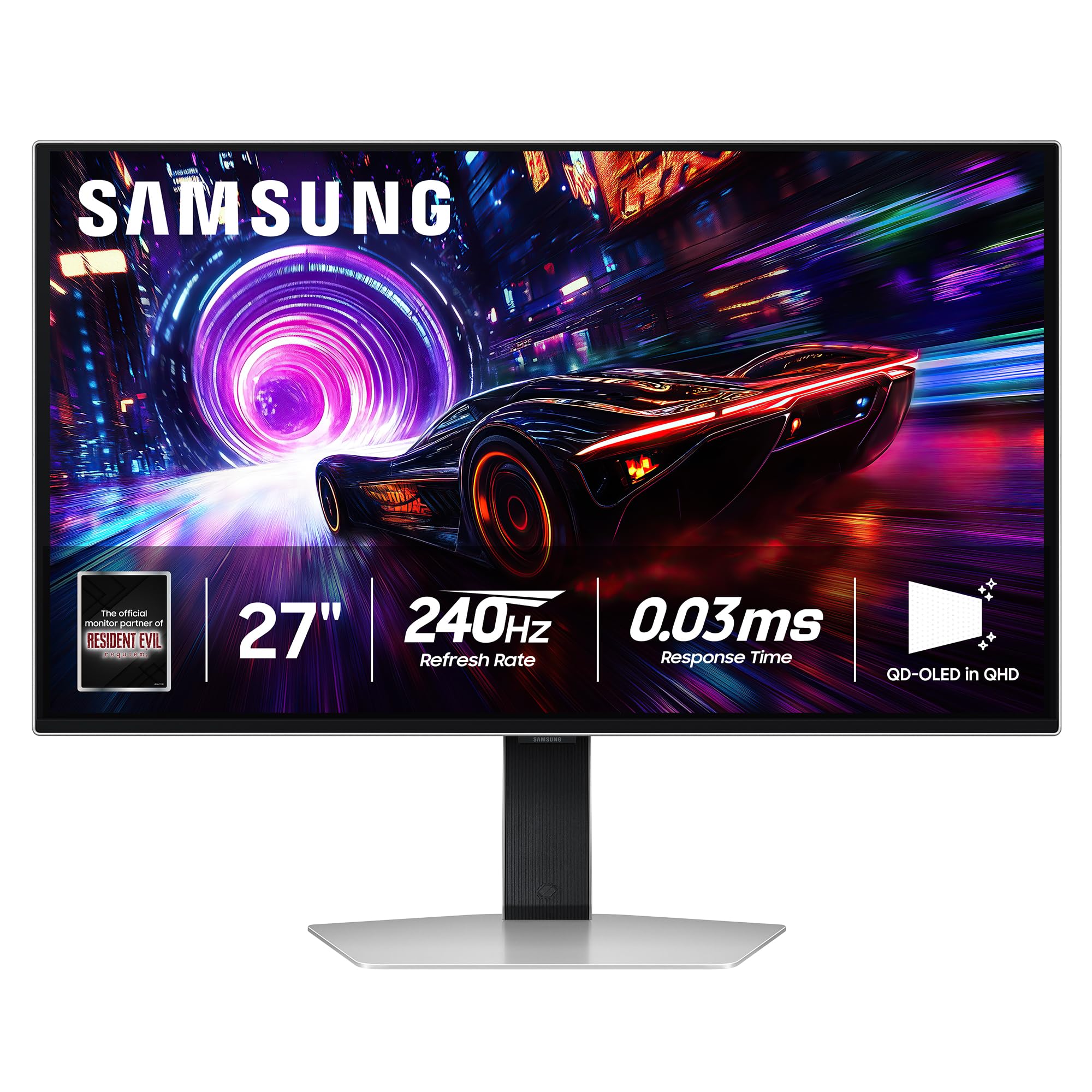
The G81SF is Samsung’s 27-inch 4K QD-OLED with a pixel density of 166 PPI—the highest on this list. That density makes text look exceptionally sharp and eliminates most of the subpixel fringing that can bother QD-OLED users working with spreadsheets or code. The 240Hz refresh rate and 0.03ms response time are standard for this tier, but the Glare Free technology sets it apart, reducing reflections by 54% compared to conventional anti-reflection coatings.
VESA DisplayHDR True Black 400 delivers deep blacks without light bleed, and the dynamic cooling system with pulsating heat pipe is a world-first for monitors, designed to dissipate heat five times faster than graphite sheets to prevent burn-in. The CoreSync lighting projects on-screen colors into your room for ambient immersion, and the ergonomic stand offers height, tilt, and pivot adjustments.
The on-screen menu is controlled by a finicky joystick, and some users have noted dead pixels after extended use, though Samsung’s three-year warranty covers panel defects. If you prioritize a smaller screen with the highest clarity and are willing to manage OLED care routines, the G81SF is a fantastic competitive gaming display.
Why it’s great
- Highest pixel density at 166 PPI for sharp text and detail
- Glare Free coating with 54% reduced reflections
- Pulsating heat pipe cooling system for burn-in prevention
Good to know
- Some reports of dead pixels after extended use
- Joystick menu navigation is not intuitive
4. LG 32GX850A-B 32″ UltraGear 4K OLED
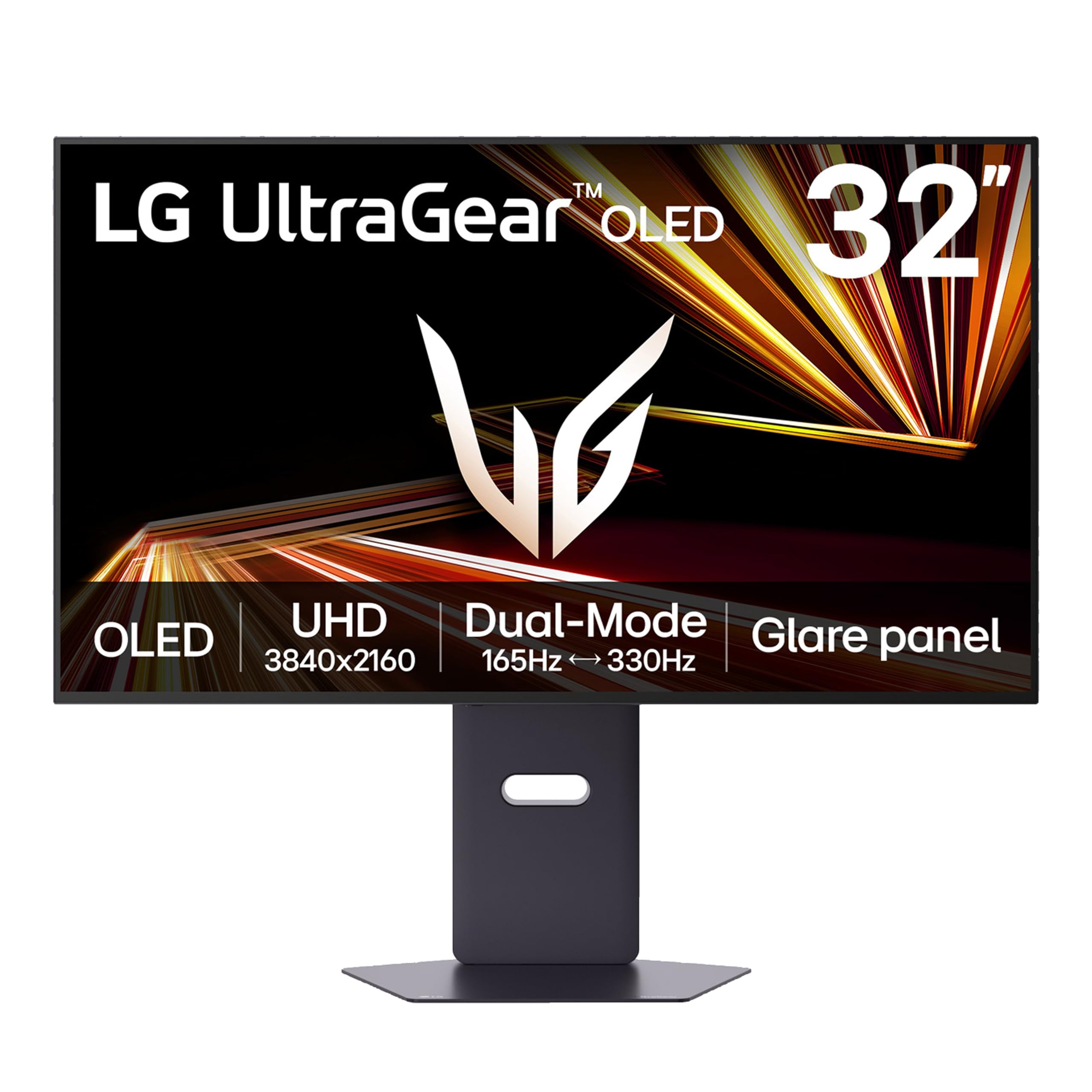
The LG 32GX850A-B uses a WOLED panel with Micro Lens Array+ technology, delivering a typical brightness of 275 nits with improved viewing angles over previous generations. The glossy display coating makes colors pop with depth and vibrancy, though you’ll want to control ambient light to avoid reflections. The dual-mode feature lets you toggle between 4K at 165Hz and Full HD at 330Hz via a hotkey—a genuine advantage for switching between story-rich single-player games and fast-paced competitive titles.
With VESA DisplayHDR True Black 400 and a 1.5M:1 contrast ratio, dark scenes are rendered with proper black levels and no blooming. The monitor is G-Sync Compatible and FreeSync Premium Pro certified, covering both GPU ecosystems. The virtually borderless design, full ergonomic stand with height, tilt, swivel, and pivot adjustments, and three UL certifications for eye comfort make this a well-rounded package.
Text clarity on the WOLED panel is decent, but some users notice subtle banding in gradients compared to QD-OLED alternatives. The 165Hz refresh rate is lower than the 240Hz on competing QD-OLEDs, but in practice, it’s still buttery smooth for the vast majority of games. If you prefer the deeper black levels of WOLED over the purple tint that some QD-OLED panels exhibit, this is your monitor.
Why it’s great
- Dual-mode hotkey: 4K 165Hz or FHD 330Hz for versatile gaming
- Glossy OLED with MLA+ for vibrant color and improved brightness
- Full ergonomic stand with pivot and eye comfort certifications
Good to know
- Glossy finish is reflective in bright rooms
- Gradient banding is more visible than on QD-OLED panels
5. Dell UltraSharp U2725QE 27 Inch 4K IPS Black Monitor
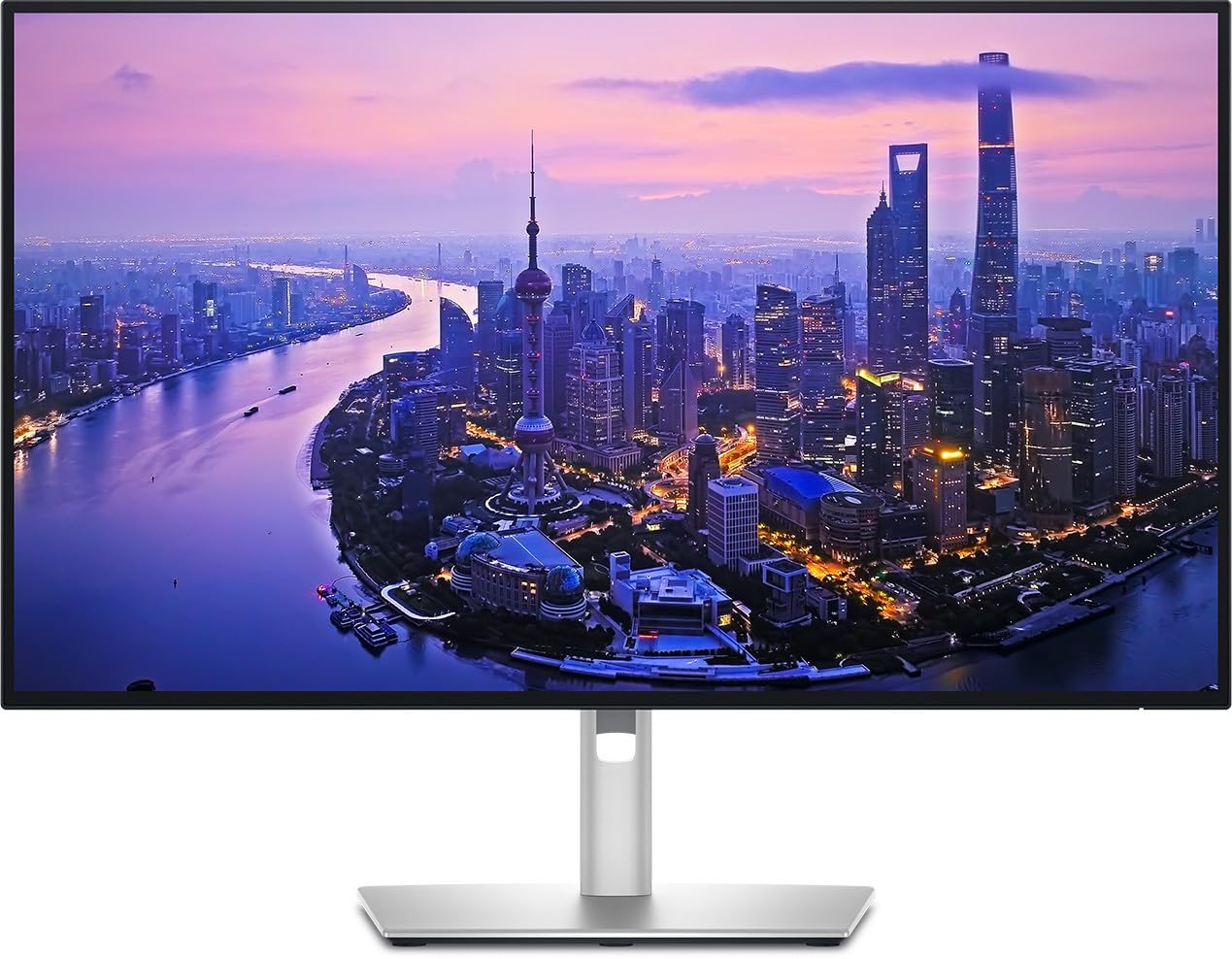
The U2725QE is Dell’s flagship creative monitor, utilizing IPS Black technology to achieve a 2000:1 contrast ratio—double that of conventional IPS panels. This means deeper blacks without the viewing angle compromises of VA. The 4K UHD panel is factory-calibrated to Delta E less than 1.5 with 99% DCI-P3 coverage, making it a serious tool for video editors and photographers who demand consistent color across their workflow.
The 120Hz refresh rate is a sweet spot for creative work: scrolling through timelines, dragging layers, and navigating 4K footage is noticeably smoother than 60Hz without the GPU demands of 240Hz. Thunderbolt 4 delivers up to 140W of power delivery, handles video and data, and supports daisy-chaining two additional 4K monitors. The built-in ambient light sensor and ComfortView Plus reduce blue light without washing out color.
The port selection is generous: HDMI 2.1, USB-C with DP Alt Mode, multiple USB-A ports, and a 2.5GbE Ethernet jack. The full ergonomic stand with height, tilt, swivel, and pivot adjustments means you can find the perfect viewing angle. The only catch is that Mac users have reported compatibility quirks with the Thunderbolt implementation on certain systems—check your specific workflow before committing.
Why it’s great
- IPS Black technology for 2000:1 contrast with wide viewing angles
- Factory-calibrated with Delta E < 1.5 and 99% DCI-P3
- Thunderbolt 4 with 140W PD and daisy-chain support
Good to know
- Some Mac users encounter Thunderbolt compatibility issues
- Premium pricing reflects the IPS Black and Thunderbolt features
6. BenQ MA270U 27” 4K Monitor for MacBook

The MA270U is purpose-built for the Apple ecosystem. It connects to your MacBook via a single USB-C cable that delivers 4K video, 90W of power delivery, and USB hub functionality for peripherals. The P3 wide color gamut is calibrated to match MacBook displays closely, and you can control brightness and volume directly from your Mac keyboard—a small detail that makes a big difference in daily use.
The 27-inch IPS panel delivers 400 nits of brightness with a 2000:1 contrast ratio, which is excellent for an IPS display. The dual USB-C ports mean you can charge your MacBook with 90W while also delivering 15W to an iPad or iPhone. The ergonomic stand offers height, tilt, swivel, and pivot adjustments, and the build quality feels premium with its silver aluminum finish that matches the Mac aesthetic.
The built-in speakers are, by all accounts, terrible—you’ll want external options. A small number of users have reported reliability issues, with one monitor failing after seven weeks. BenQ support was responsive in handling the warranty claim, but it’s worth noting. If you’re looking for a Studio Display alternative at roughly a third of the cost, and you’re fully in the Apple ecosystem, this is the most seamless option available.
Why it’s great
- Native Mac integration with keyboard brightness and volume control
- Single USB-C cable with 90W power delivery and data
- P3 color gamut calibrated to match MacBook displays
Good to know
- Built-in speakers are poor quality; plan for external speakers
- Some reports of early failure, though warranty support is responsive
7. ASUS ProArt Display PA279CV 27” 4K IPS Monitor

The PA279CV is the budget king of color-accurate 4K monitors. It covers 100% sRGB and 100% Rec. 709 with Delta E less than 2 out of the box, and it ships with a factory calibration report so you can verify the numbers. The 27-inch IPS panel delivers consistent viewing angles, and the USB-C port provides 65W power delivery alongside DisplayPort over USB-C, HDMI, and a USB 3.1 hub.
For photographers and video editors working in sRGB or Rec. 709, this monitor eliminates the guesswork of color matching. The Calman Verification adds another layer of confidence for color-critical work. The ergonomic stand supports height, tilt, swivel, and pivot adjustments, and the 3-month Adobe Creative Cloud subscription is a nice bonus for new creators.
Some users report a slight green tint out of the box that requires a quick tint adjustment to neutralize. The 60Hz refresh rate is fine for static creative work, and the matte screen helps control reflections in bright studios. If your work stays within the sRGB/Rec. 709 color spaces and you don’t need DCI-P3 coverage, this is the most cost-effective color-accurate 4K monitor on the market.
Why it’s great
- Factory-calibrated with Delta E < 2 and Calman Verified
- 100% sRGB and 100% Rec. 709 coverage for creative workflows
- 65W USB-C power delivery and full ergonomic stand
Good to know
- Slight green tint out of box; needs tint adjustment
- Limited to 60Hz; not suitable for high-refresh-rate gaming
8. SAMSUNG 27″ ViewFinity S8 (S80D) 4K Monitor
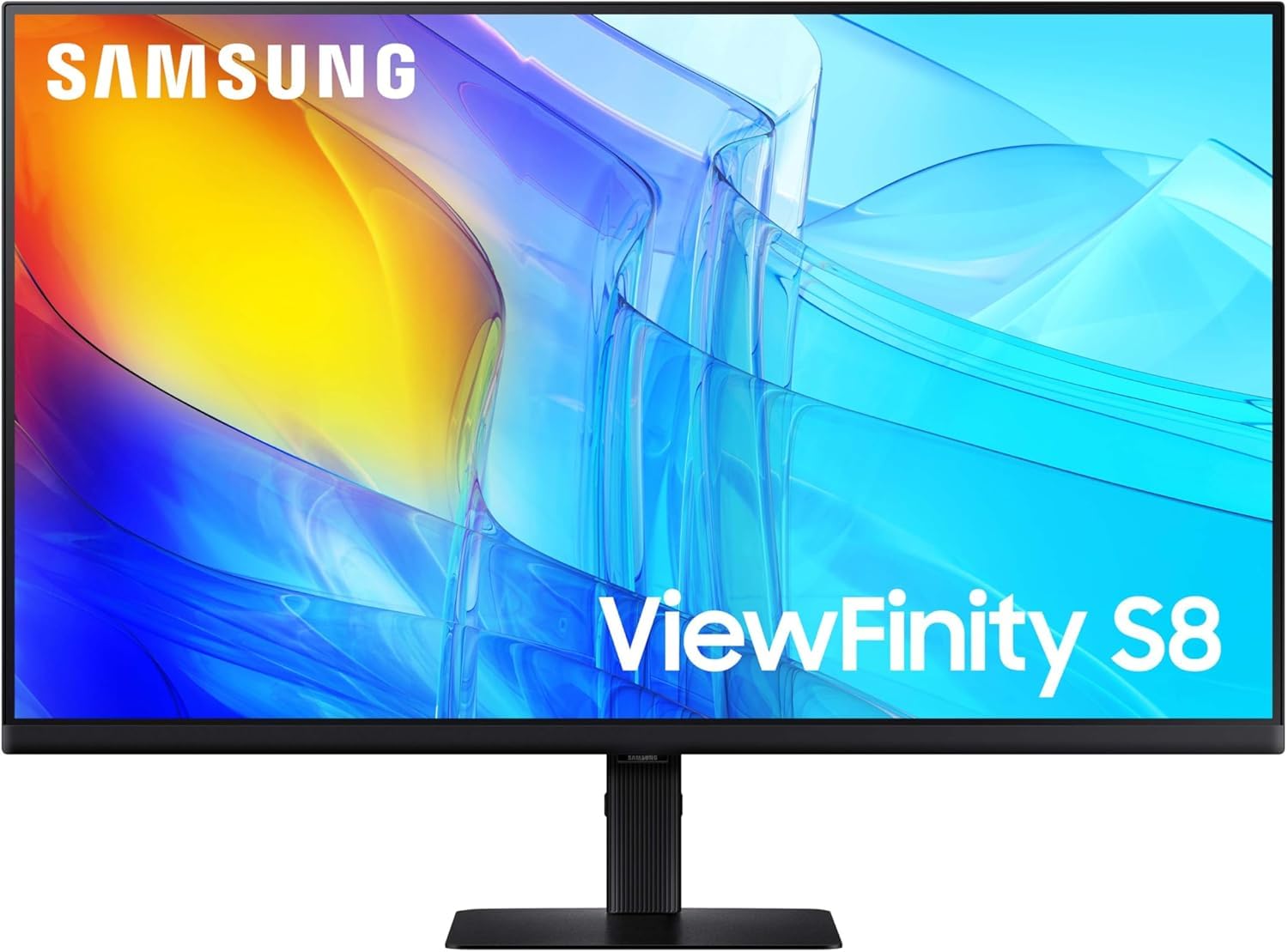
The ViewFinity S8 is a no-nonsense productivity monitor that nails the basics. The 27-inch 4K IPS panel delivers sharp text and good color with HDR10 support. The matte anti-glare screen is excellent for bright offices, and the ergonomic stand offers height, tilt, swivel, and pivot adjustments for finding a comfortable viewing position.
Connectivity includes HDMI, DisplayPort, and USB-A ports along with a USB-B upstream port for connecting peripherals. The Eye Saver Mode and flicker-free technology are TÜV-certified and genuinely reduce eye strain during long work sessions. The tool-free stand assembly means you can be up and running in minutes.
The on-screen menu controls use a single button with backwards scrolling logic, which is frustrating until you memorize the sequence. Some users note that the stand sits higher than expected, which may be an issue if you prefer your monitor lower. If you need a reliable 4K panel for spreadsheets, coding, and document work, and value a flexible stand over gaming features, this is a solid choice.
Why it’s great
- Full ergonomic stand with height, tilt, swivel, and pivot
- Excellent anti-glare matte screen for bright environments
- TÜV-certified eye care with Eye Saver Mode and flicker-free
Good to know
- Single-button menu navigation is cumbersome
- No built-in speakers; headphone jack only
9. LG 32UR550K-B 32-inch UltraFine 4K Monitor
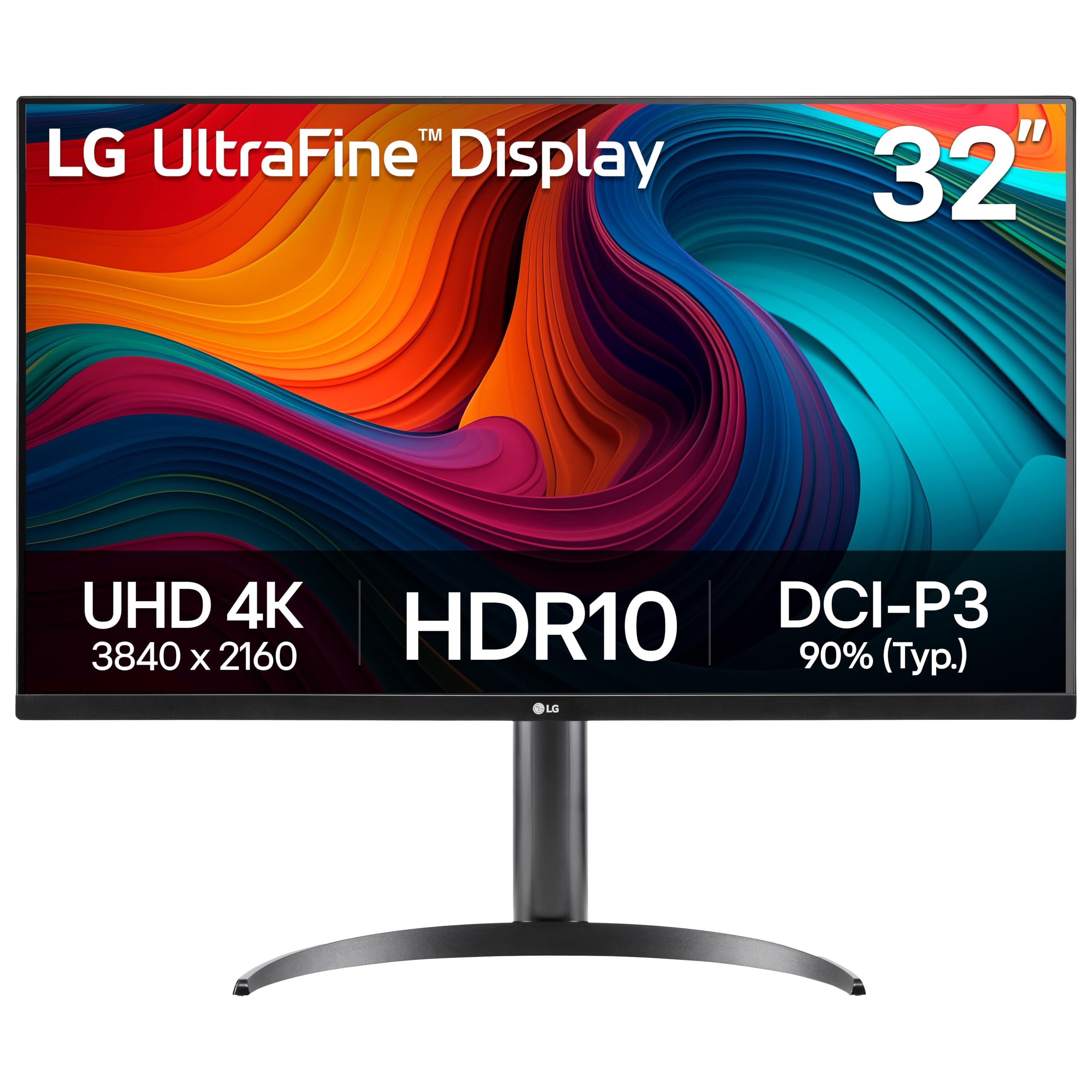
The 32UR550K-B is one of the most affordable ways to get a 32-inch 4K display on your desk. The VA panel delivers a 3000:1 native contrast ratio, which means significantly deeper blacks than IPS monitors at this price point. HDR10 support and 90% DCI-P3 coverage ensure colors are vibrant for media consumption and general productivity.
The stand is a highlight at this price level: it offers height, tilt, and pivot adjustments, which is rare in budget-tier 4K monitors. Connectivity includes HDMI and DisplayPort, and the built-in Dynamic Action Sync and Black Stabilizer features are useful for occasional gaming despite the 60Hz refresh rate. The Switch app lets you split the screen into up to six sections for multitasking.
The 250-nit brightness is adequate for indoor use but falls short in very bright rooms. The 60Hz refresh rate means you’ll want to look elsewhere if smooth scrolling or fast-paced gaming is a priority. However, for budget-conscious users who want a large, sharp 4K screen with a usable stand, this is the best entry point.
Why it’s great
- 3000:1 VA contrast for deep blacks at an entry-level price
- Full ergonomic stand with height, tilt, and pivot
- 90% DCI-P3 color gamut for vibrant media consumption
Good to know
- 250-nit brightness is dim in bright rooms
- Limited to 60Hz; not suitable for high-refresh gaming
10. Dell 34 Plus USB-C Curved Monitor S3425DW

The S3425DW offers a different proposition: a 34-inch ultrawide 21:9 display with 3440×1440 resolution. While not true 4K, the 120Hz refresh rate and VA panel with 3000:1 contrast ratio make it a compelling option for multitaskers who want more horizontal screen real estate. The 1500R curve wraps around your field of view, reducing eye movement when working across multiple windows.
The 99% sRGB and 95% DCI-P3 coverage is solid for a productivity display, and the improved built-in speakers are genuinely usable for meetings and media. A single USB-C cable delivers 65W power delivery alongside video and data, keeping your desk clean. The ComfortView Plus reduces blue light to 35% without color shift, making it comfortable for all-day use.
The port selection is limited: you get HDMI, USB-C, and USB-A, but no DisplayPort. Some users note that the VESA mount has a recessed design requiring a specific bracket. The resolution is lower than 4K, so text isn’t as sharp as a 27-inch 4K display. If ultrawide productivity is your priority and you can trade pixel density for screen width, this is a strong mid-range option.
Why it’s great
- 34-inch ultrawide 21:9 VA panel for expansive multitasking
- 120Hz refresh rate and 0.03ms response for smooth motion
- Single USB-C cable with 65W power delivery and data
Good to know
- 3440×1440 resolution is not true 4K; less pixel density than 27-inch 4K
- Limited port selection with no DisplayPort input
11. CRUA 32″ Curved 4K 240Hz Gaming Monitor
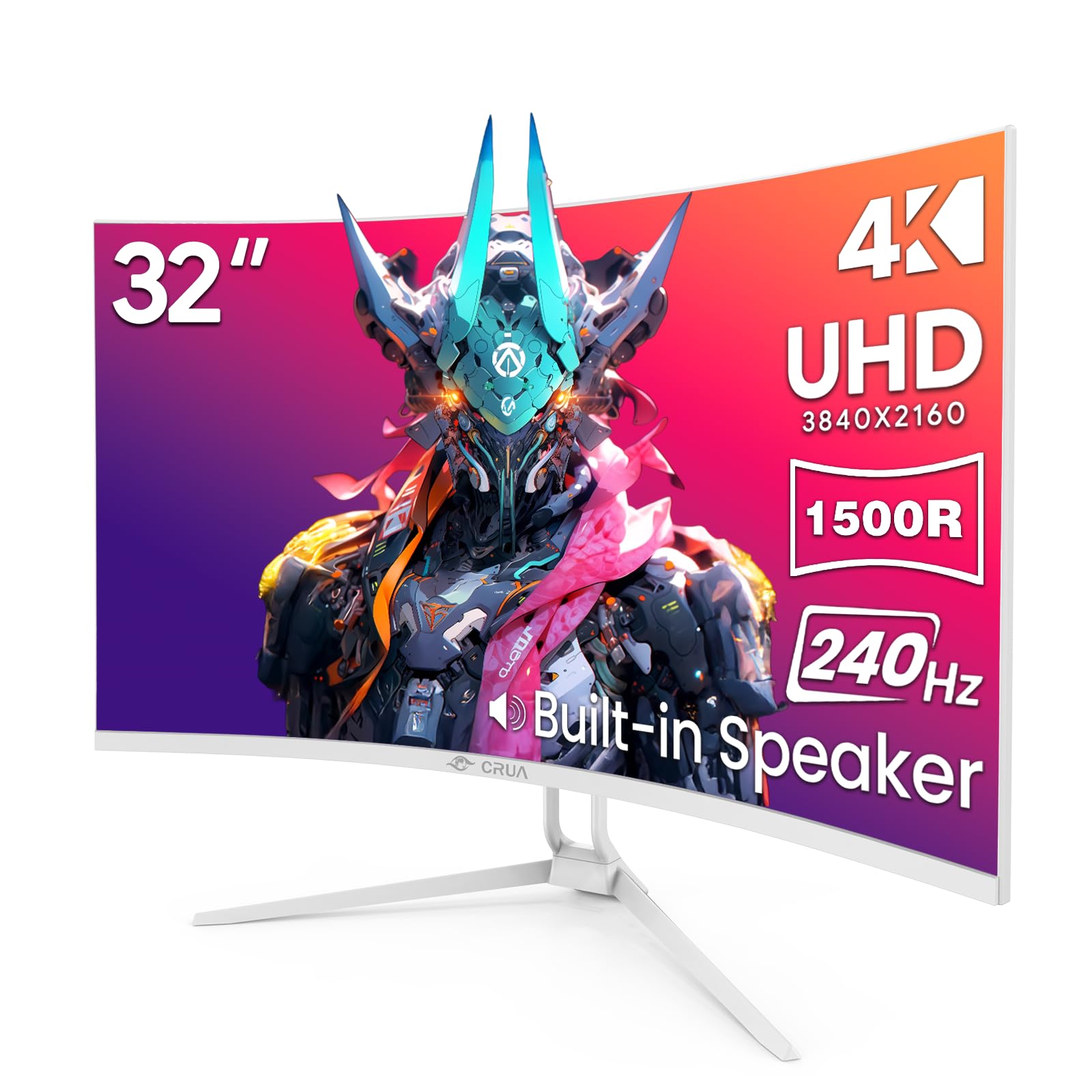
The CRUA 32-inch curved monitor delivers a 4K VA panel with a 240Hz refresh rate at a price that undercuts the competition by a wide margin. The 1500R curve wraps the 32-inch display around your peripheral vision, and the 120% sRGB gamut with 1.07 billion colors (8-bit + FRC) delivers vibrant imagery for gaming and streaming. HDMI 2.1 and DisplayPort 1.4 inputs support the full 4K 240Hz signal.
AMD FreeSync support reduces tearing in fast-paced games, and the built-in speakers are functional for casual use. The white color scheme and RGB back lighting add aesthetic value for themed setups. PIP/PBP mode lets you connect two sources simultaneously, and the VESA mount compatibility gives you flexible placement options.
Build quality reflects the budget price: the stand offers only tilt adjustment, and the on-screen menu is confusing without a remote control. Some users report that the built-in speakers are non-functional or very weak. The VA panel can exhibit black smearing in dark scenes, which is noticeable at 240Hz. If you’re on a tight budget and want 4K at 240Hz without OLED prices, this is your monitor—but manage your expectations on build quality and image fidelity.
Why it’s great
- 4K 240Hz at the lowest price point available
- 1500R curved VA panel for immersive gaming field of view
- HDMI 2.1 and DP 1.4 support for full 4K 240Hz signal
Good to know
- Stand only offers tilt adjustment; no height or swivel
- Built-in speakers are unreliable; plan for external speakers
- VA panel exhibits black smearing in dark scenes
FAQ
Can my GPU run a 4K monitor at 60Hz or 120Hz?
Is a 27-inch or 32-inch 4K monitor better for productivity?
What is the difference between HDR10, HDR400, and DisplayHDR True Black 400?
Do I need HDMI 2.1 for a 4K monitor?
How does USB-C power delivery work with laptop monitors?
Final Thoughts: The Verdict
For most users, the best 4k ultra hd monitor winner is the Dell UltraSharp U2725QE because it combines the contrast benefits of IPS Black with a 120Hz refresh rate, Thunderbolt 4 connectivity, and professional-grade color accuracy in a package that works for both creative professionals and productivity users. If you want the ultimate gaming and HDR experience, grab the ASUS ROG Swift PG32UCDM for its stunning QD-OLED picture quality and blistering 240Hz performance. And for budget-conscious buyers, the LG 32UR550K-B delivers a large 4K VA panel with an adjustable stand at an entry-level price that’s hard to beat.