
A five-gas analyzer is a precision instrument that samples combustion exhaust and ambient air to measure oxygen, carbon monoxide, hydrogen sulfide, combustibles, and carbon dioxide — the five gases that tell you whether a furnace, engine, or confined space is safe or efficient. Choosing the wrong model means either missing a critical gas channel or paying for features you’ll never use.
I’m Min — the co-founder and writer behind Gadgets Feed. I’ve spent hundreds of hours cross-referencing sensor types, pump configurations, compliance certifications, and real-world field reviews across every price tier in this category to separate instruments that truly deliver traceable data from those that just flash numbers.
Whether you need a portable 4-gas monitor for confined space entry or a full combustion analyzer with app connectivity for HVAC tuning, this guide walks you through the specs that matter for selecting the best 5 gas analyzer for your specific application.
How To Choose The Best 5 Gas Analyzer
Five-gas analyzers fall into two broad worlds: multi-gas safety monitors that detect O₂, CO, H₂S, and LEL for confined space entry, and combustion analyzers that add CO₂ and efficiency calculations for HVAC tuning. The first decision is which world you operate in, because no single unit does both perfectly.
Sensor Count and Gas Coverage
A true 5-gas analyzer typically covers O₂, CO, H₂S, combustibles (LEL), and CO₂. Many four-gas safety monitors lack CO₂, and many HVAC combustion analyzers lack H₂S. Count the channels you actually need before you buy — if you work with natural gas furnaces, you need O₂ and CO₂, not H₂S. If you enter sewers or tanks, you need H₂S and LEL, not CO₂.
Built-in Pump vs. Diffusion Sampling
For flue gas analysis or pre-entry confined space testing, a built-in pump with a probe is mandatory — it draws gas from the source to the sensor. Diffusion models rely on gas drifting into the sensor, which is useless for stack sampling. Pump-driven units also let you use extended probes of 2–4 feet for reaching into exhaust ports or through manhole covers.
Calibration and Compliance Credentials
OSHA, EPA, and insurance auditors expect analyzers to carry current calibration certificates — ideally NIST traceable. Some units arrive pre-calibrated with a certificate; others ship out-of-spec and require immediate calibration. Check whether the manufacturer includes a certificate and whether the sensors are user-replaceable, because sensor drift after 6–12 months is normal for electrochemical cells.
Quick Comparison
On smaller screens, swipe sideways to see the full table.
| Model | Category | Best For | Key Spec | Amazon |
|---|---|---|---|---|
| Testo 310 II | Combustion Analyzer | HVAC flue gas & efficiency tuning | O₂, CO, CO₂, draft, pressure, temp | Amazon |
| MSA ALTAIR 4XR | Multi-Gas Detector | Confined space & industrial safety | LEL, O₂, H₂S, CO — IP68 rated | Amazon |
| Testo 310 I | Residential Combustion | Furnace & boiler efficiency checks | O₂, CO₂, ambient CO, draft, pressure | Amazon |
| Innovate LM-2 | Air/Fuel Ratio Meter | Automotive engine tuning | Dual wideband O₂, AFR/Lambda, OBD-II | Amazon |
| Forensics FD-600-4GAS | Pump-Driven Multi-Gas | Spot-checking with data logging | O₂, CO, H₂S, LEL — color graphing | Amazon |
| BW MicroClip XL | Personal 4-Gas Monitor | Lightweight personal safety | H₂S, CO, LEL, O₂ — 6 oz | Amazon |
| RKI GX-3R | Compact 4-Gas Monitor | Oil & gas safety compliance | LEL, O₂, H₂S, CO — 2.55″ tall | Amazon |
| Fieldpiece SOX3 | Oxygen Combustion Check | Quick O₂ & efficiency measurement | O₂, CO₂ calc, flue temp — auto pump | Amazon |
| Forensics FD-4S-PUMP | Confined Space Pump Unit | Pre-entry confined space testing | CO, H₂S, O₂, EX LEL — NIST cal | Amazon |
| Multi Gas Clip Simple | Disposable 2-Year Monitor | Low-maintenance personal alarm | LEL, O₂, H₂S, CO — no cal required | Amazon |
| INFICON D-TEK Stratus | Refrigerant Leak Detector | HVAC-R refrigerant leak pinpointing | 0.03 oz/yr sensitivity, infrared sensor | Amazon |
In‑Depth Reviews
1. Testo 310 II Combustion Analyzer HVAC
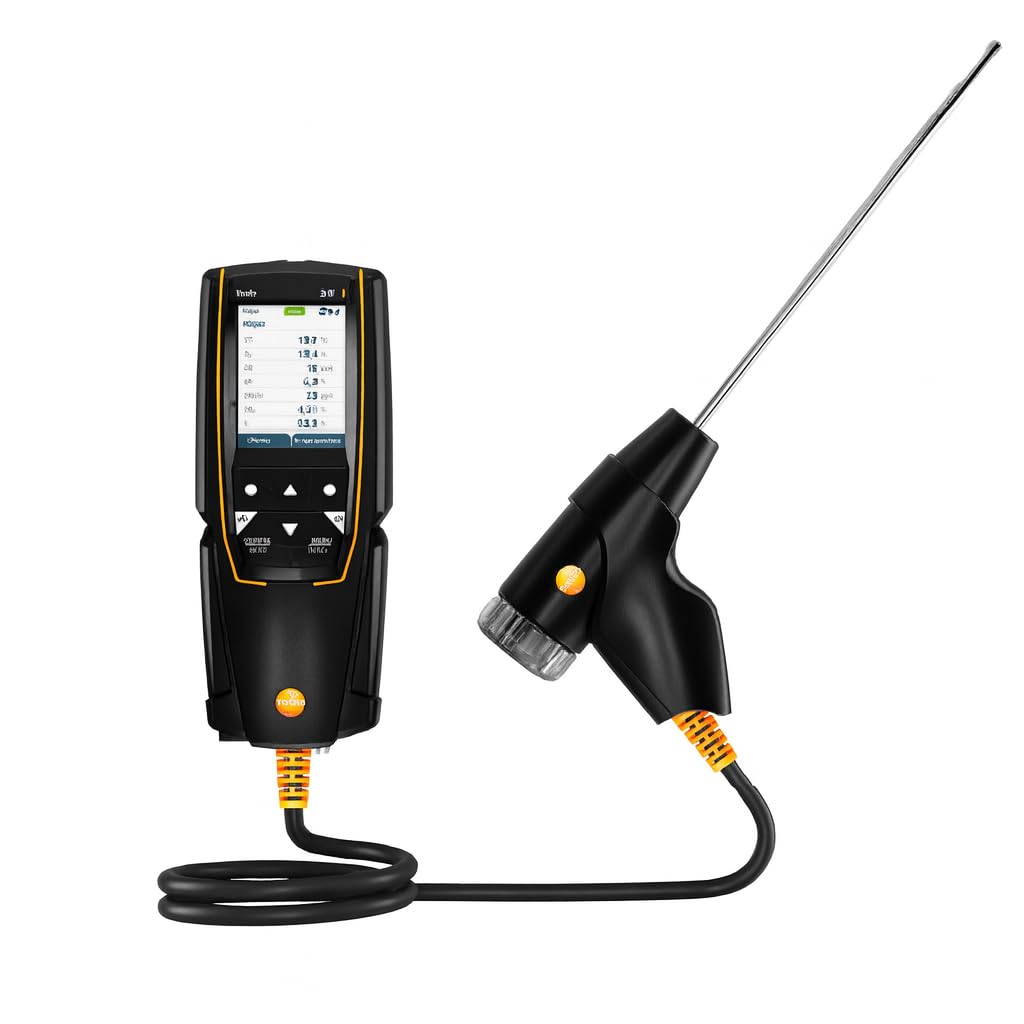
The Testo 310 II is the most complete combustion analysis package in this lineup, measuring O₂, CO, CO₂, ambient CO, draft, pressure, and flue gas temperature with a single probe. Its smart app connectivity lets you log readings and generate reports directly from your phone — a feature no other unit in this tier offers without extra software.
The 180 mm probe with cone reaches deep into furnace flues, and the automatic pump draws a steady sample without manual pumping. The rechargeable Li-ion battery lasts through a full day of service calls, and the five particle filters protect the sensors from soot buildup that kills electrochemical cells in other analyzers.
Field technicians who use it on both 80% and 90+% furnaces report that the efficiency calculation stabilizes within 60 seconds, making it fast enough for production work. The CO range without H₂ compensation is rated for standard residential systems, but if you work with heavy oil or biomass, you may need the H₂-compensated variant.
Why it’s great
- Smart app integration for real-time logging
- Measures six flue parameters simultaneously
- Comes with case, filters, calibration protocol
Good to know
- No H₂ compensation for heavy oil/biomass
- Printer is a separate purchase
- CO sensor is not user-replaceable in field
2. MSA ALTAIR 4XR Multigas Detector

The MSA ALTAIR 4XR is the gold standard for confined space safety, packing LEL, O₂, H₂S, and CO sensors into a rugged housing that survives 25-foot drops onto concrete. Its IP68 rating means it can be submerged in water without failure — essential for wastewater and utility environments where other detectors fail.
The MotionAlert man-down alarm and InstantAlert manual alarm add a layer of worker safety beyond standard gas warnings. The rechargeable Li-polymer battery delivers a full 24-hour shift, and the unit records over 500 alarm events plus 50 hours of data for compliance audits. The MSA XCell sensors are designed for negligible cross-channel interference, so a high H₂S reading won’t falsely trigger the CO channel.
Note that the base model does not include Bluetooth — if you need wireless data transfer, confirm you are buying the Bluetooth-enabled SKU. The four-year warranty on the instrument body is among the best in the industry, but the sensor warranty is shorter and varies by gas type.
Why it’s great
- IP68 dust/waterproof and 25-ft drop rated
- MotionAlert man-down alarm for lone workers
- 24-hour runtime with rechargeable battery
Good to know
- Bluetooth not included in base model
- Sensor replacement requires calibration gas
- Heavier than diffusion-only competitors
3. Testo 310 I Residential Combustion Analyzer Kit

The Testo 310 I is the dedicated residential variant of the 310 series, optimized for tuning furnaces and boilers. It measures O₂, CO₂, ambient CO, draft, and pressure while calculating combustion efficiency — everything a residential HVAC tech needs without the app connectivity of the II model.
The integrated condensation tap and kink-resistant hose keep the sensors dry and the instrument safe during long sampling sessions. The backlit display is easy to read in dark basements, and the magnet on the back attaches to metal furnace panels for hands-free operation. The quick-start menu gets you measuring within seconds of turning it on.
Field reports confirm it brings 80% AFUE furnaces up to 83–86% efficiency after tuning, and the propane/natural gas switch is simple enough for on-the-fly adjustments. The probe with cone reaches standard residential flues, but if you work on commercial boilers, the 310 II’s longer probe is a better fit.
Why it’s great
- Quick-start menu for fast flue gas analysis
- Hands-free magnet mount for duct panels
- Complete hard-case kit with spare filters
Good to know
- No smart app or data logging
- Probe length is short for commercial boilers
- Printer not included in base kit
4. Innovate Motorsports 3894 LM-2 Dual Air/Fuel Ratio Meter

The Innovate LM-2 is a specialized dual wideband O₂ meter designed for automotive engine tuning, not HVAC or confined space. It measures air/fuel ratio on two exhaust banks simultaneously — essential for V8 engines where left and right mixtures differ — and displays readings in AFR or Lambda.
Its OBD-II scan tool capability lets it read and clear diagnostic trouble codes while logging up to 16 channels of CAN data. The four fully-differential analog inputs allow connection to external sensors like thermocouples or pressure transducers, and the two linear analog outputs feed data to aftermarket engine management systems or data loggers.
Be aware that the basic kit does not include analog in/out cables — those are sold separately. The wideband O₂ sensors support leaded fuel, diesel, and E85, making it fuel-flexible for performance and marine applications. Sensor life averages 6–12 months under continuous use, and Innovate offers no warranty on the O₂ sensors themselves.
Why it’s great
- Dual wideband O₂ for left/right bank tuning
- OBD-II scan with 16-channel CAN logging
- Supports leaded, diesel, E85 fuel types
Good to know
- Analog cables sold separately
- No warranty on O₂ sensors
- Not for flue gas or safety monitoring
5. Forensics 4 Gas Monitor FD-600-4GAS with Pump

The Forensics FD-600-4GAS combines a color display with graphing capability — a rarity at its price point — and a built-in pump with a four-foot probe for pre-entry confined space testing. The sensors are UK-made electrochemical cells covering O₂, CO, H₂S, and LEL, and the unit arrives with a USA NIST traceable calibration certificate.
The data logging feature stores up to 1,200 alarm records, which can be downloaded to a computer for compliance reporting. The ABS housing with anti-slip rubber grip is waterproof, dust-proof, and explosion-proof, meeting the physical demands of construction, wastewater, and industrial environments.
The color graph function allows you to see gas concentration trends over time on the device screen, which is helpful for identifying intermittent leaks. The vendor support is frequently praised in customer reviews for quick, knowledgeable replies — a differentiator in a market where post-purchase support can be hard to reach.
Why it’s great
- Color graphing display for trend analysis
- Built-in pump with 4-foot probe
- NIST calibrated and vendor support praised
Good to know
- H₂S reads in integers only, not tenths
- UK sensors may have longer lead times
- Rated 85% humidity, not IP68
6. BW Technologies GasAlertMicroClip XL

The BW MicroClip XL weighs only 6 ounces, making it the lightest 4-gas detector in this roundup. It measures H₂S, CO, O₂, and LEL with one-button simplicity and an IntelliFlash green LED that visually confirms the unit is operational without needing to look at the screen.
The LCD displays all four gas concentrations simultaneously, plus battery level, alarm condition, and calibration status. The rugged composite case is impact-resistant and non-corrosive, designed for daily belt-wear in industrial environments. It runs on standard AA batteries, so there is no proprietary charger to lose.
Several customer reviews report a high failure rate during 6-month calibration cycles — around 40–50% — and the O₂ sensor may degrade within 6–12 months rather than the expected 2–5 years. If you buy this unit, budget for a calibration gas setup or plan to purchase directly from the manufacturer for pre-calibrated replacements.
Why it’s great
- Ultra-light at 6 oz for belt-wear comfort
- One-button operation with IntelliFlash status
- Standard AA batteries, no proprietary charger
Good to know
- High calibration failure rate reported
- O₂ sensor may need replacement <1 year
- No pump for pre-entry confined space testing
7. RKI GX-3R LEL / O2 / H2S / CO

The RKI GX-3R is one of the smallest 4-gas monitors on the market at just 2.55 inches tall and weighing about one pound. It is approved by most major oil and gas companies for confined space entry, which makes it a safe choice for workers who need to pass site-specific PPE audits.
The unit ships with a Li-ion battery pack and 100–240 VAC charger, and it comes pre-calibrated — but the calibration clock starts ticking from the moment you power it on for the first time, so you have about 90 days to bump test and calibrate it before the reminder triggers. The sensor array covers LEL, O₂, H₂S, and CO with electrochemical cells.
Customer feedback highlights its durability in daily oilfield use, with one user reporting six months of trouble-free operation. The compact form factor means it fits easily on a belt without interfering with other gear, and the visual alarm is bright enough for outdoor daylight conditions.
Why it’s great
- Smallest footprint for belt-wear in tight spaces
- Approved by major oil & gas companies
- Li-ion battery with universal charger
Good to know
- 90-day calibration timer starts at first power-on
- No pump for remote sampling
- Limited to 4 gas channels
8. Fieldpiece SOX3 Combustion Check

The Fieldpiece SOX3 is a focused combustion check tool that measures flue temperature and oxygen percentage, then calculates CO₂ percentage and combustion efficiency. It is not a full 5-gas analyzer — it skips H₂S and LEL entirely — but for HVAC technicians who only need O₂ and efficiency data, it is a streamlined alternative to bulkier analyzers.
The automatic electric pump draws flue gas without hand pumping, and the pause button conserves battery life during setup. The field-replaceable O₂ sensor stores calibration data on the sensor itself, so swapping sensors takes seconds without sending the instrument in for recalibration. The hard case protects it during transport.
One critical caveat: the instructions are sparse, and the unit does not include a combustion efficiency chart, which means you need to either memorize the target efficiency for different fuel types or carry a reference. Some customers report the unit failing shortly after the return window closes, so verify the warranty terms before purchasing.
Why it’s great
- Auto pump with pause to save battery life
- Field-replaceable O₂ sensor with stored cal data
- Compact hard case included
Good to know
- No H₂S or LEL measurement
- Sparse instructions, no efficiency chart
- Reliability concerns after warranty expires
9. Forensics Detectors FD-4S-PUMP Multi-Gas Monitor

The Forensics FD-4S-PUMP is the most affordable entry in this guide that still includes a built-in pump and probe for pre-entry confined space testing. It detects CO, H₂S, O₂, and EX LEL with electrochemical sensors, and it arrives with a USA NIST traceable calibration certificate and QA verification.
The housing is made of high-strength ABS with anti-slip rubber grip, and it is waterproof, dust-proof, and explosion-proof. It runs on rechargeable batteries and features audible and visual alarms. The pump automatically draws air through the probe, which is essential for sampling before entering tanks, sewers, or vaults.
Customer reviews confirm it works as a gas leak detector out of the box — one user even tested it with a carbonated beverage and detected hydrogen sulfide from organic decomposition. The O₂ sensor only measures up to 30%, so it cannot be used for enriched oxygen environments. The one-year limited warranty is shorter than premium competitors.
Why it’s great
- Built-in pump with probe at lowest price
- NIST calibration certificate included
- Rugged ABS housing with anti-slip grip
Good to know
- O₂ sensor capped at 30% reading
- One-year warranty only
- No color display or data logging
10. Multi Gas Clip Simple 2-Year Monitor

The Multi Gas Clip Simple is a disposable 4-gas monitor designed for users who want zero maintenance — no charging, no calibration, no sensor replacement. It runs continuously for two years from first activation, after which the entire unit is replaced. The LEL sensor is immune to H₂S and silicone poisoning, a common failure point in other detectors.
It covers H₂S, CO, O₂, and LEL with a single-button operation and a clear, easy-to-read display. The unit is assembled in the USA and is compatible with the MGC Simple Dock for automated bump testing. The enriched and deficient oxygen mode allows it to operate safely in both normal and oxygen-enriched atmospheres.
Several customer reports indicate quality control issues — the O₂ sensor may arrive defective, and the LEL alarm can false-trigger after minimal use in outdoor air. Since it is disposable, there is no repair option; the manufacturer requires you to return the unit for evaluation if it fails, which leaves you without a detector during the process.
Why it’s great
- Zero maintenance for two full years
- LEL sensor immune to H₂S/silicone poisoning
- Constant data logging enabled by default
Good to know
- O₂ sensor quality control is inconsistent
- No repair option — replace entire unit
- False alarms reported after outdoor use
11. INFICON D-TEK Stratus Refrigerant Leak Detector

The INFICON D-TEK Stratus is a specialized refrigerant leak detector that uses an infrared sensor — not an electrochemical cell — to detect all CFCs, HCFCs, HFCs, HFOs, and optionally CO₂ with a separate sensor. Its Cloud Hunter and Pinpoint modes effectively give you two detectors in one: one mode for finding the general area of a leak and another for zeroing in on the exact point.
Its sensitivity rating of 0.03 oz/year (1 g/year) does not degrade over time, unlike heated diode sensors that lose sensitivity with use. The Li-ion battery lasts 9 hours per charge, and the sensor, battery, filter, and probe are all field-replaceable. The extra-long probe reaches into tight evaporator cores and condenser coils without removing panels.
Customer feedback is split: technicians who rely on it for MVAC and commercial refrigeration call it a money-maker, but some units ship with low beep volume and stiff buttons. INFICON acknowledged a batch of defective audio jacks, so inspect the audio function immediately upon delivery. The sensitivity is genuinely top-tier — it can find leaks in chilled rooms that other detectors miss entirely.
Why it’s great
- Non-degrading infrared sensor at 0.03 oz/yr
- Cloud Hunter + Pinpoint dual-search modes
- All field components are user-replaceable
Good to know
- Audio jack defect reported in some batches
- Button stiffness noted in early production
- Not a general 5-gas analyzer
FAQ
Can a 4-gas monitor measure CO2 or do I need a dedicated 5-gas analyzer?
How often should I bump test my gas analyzer?
Why does my O2 sensor need replacement after only 6 months?
What probe length do I need for flue gas analysis?
Can I use an automotive wideband O2 meter for HVAC flue gas analysis?
Final Thoughts: The Verdict
For most users, the best 5 gas analyzer winner is the Testo 310 II Combustion Analyzer because it combines O₂, CO, CO₂, draft, pressure, and temperature measurement with smart app connectivity and a comprehensive accessory kit — all in a rugged, field-ready package. If you need a confined space safety monitor with the highest durability and drop rating, grab the MSA ALTAIR 4XR. And for automotive engine tuning where dual wideband O₂ and OBD-II logging are required, nothing beats the Innovate LM-2.