
The leap from smartphone video to a dedicated camera feels intimidating until you realize the hardest part isn’t the gear — it’s finding one that doesn’t force you to learn cinematography before you’ve made your first upload. Beginner video cameras today pack sensor technology, autofocus logic, and stabilization systems that were pro-only a few years ago, but the real challenge is cutting through the spec noise to find the body that actually matches how you’ll shoot: handheld, on the move, and with zero tolerance for menu-diving when inspiration strikes.
I’m Min — the co-founder and writer behind Gadgets Feed. I’m deep inside the camera market every day, comparing sensor sizes, frame rates, autofocus algorithms, and lens ecosystems across dozens of models to identify which specs translate into real beginner-friendly results and which are just marketing wattage.
After analyzing eleven distinct models ranging from pocket gimbal cameras to interchangeable-lens mirrorless systems, this guide delivers the definitive verdict on the best camera for video beginners by matching each pick to a specific shooting style and skill trajectory.
How To Choose The Best Camera For Video Beginners
Your first video camera should remove technical friction, not create it. The ideal beginner camera prioritizes reliable autofocus, usable stabilization, and a straightforward interface over raw resolution numbers. You don’t need 6K or 8K right now — you need a camera that stays in focus while you talk to the lens and produces smooth footage without a tripod.
Sensor Size and Low-Light Performance
The sensor is the heart of your image. A 1-inch sensor (found in compact vlog cameras) gives you a significant upgrade over a smartphone, with better dynamic range and decent background separation. APS-C sensors, used in the Sony ZV-E10 and Nikon Z 30, offer a larger light-gathering area for noticeably cleaner footage in dim interiors and evening shoots. Micro Four Thirds sensors, like those in the Panasonic G85 and OM System E-M10 Mark IV, strike a balance between portability and image quality, but their smaller surface area means you’ll need faster lenses to match APS-C low-light performance.
Autofocus Reliability
For a beginner, autofocus is the single most important spec. Phase-detection autofocus (PDAF) with eye-tracking — found on the Sony ZV-E10 and Nikon Z 30 — locks onto faces and eyes instantly and holds them even as you move around the frame. Contrast-detection systems, common on older or budget Panasonic models, hunt more in low light and can produce pulsing focus during video. Hybrid systems combine both methods. If you plan to film yourself talking to the camera, prioritize a model with reliable face and eye tracking.
Stabilization: IBIS vs Electronic vs Gimbal
Shaky video is the fastest way to make your content look amateur. In-body image stabilization (IBIS), found in the Panasonic G85 and OM System E-M10 Mark IV, physically moves the sensor to counteract hand shake and works with any lens. Electronic stabilization crops into the frame and can cause a jelly-like wobble during fast pans. Dedicated gimbal cameras like the Xtra Muse use a physical 3-axis gimbal to produce silky-smooth walking shots without any cropping or processing artifacts. For handheld vlogging, IBIS or a gimbal camera is non-negotiable.
Quick Comparison
On smaller screens, swipe sideways to see the full table.
| Model | Category | Best For | Key Spec | Amazon |
|---|---|---|---|---|
| Sony Alpha ZV-E10 | Mirrorless | All-around vlogging | APS-C 24.2MP sensor | Amazon |
| Nikon Z 30 | Mirrorless | Unlimited 4K recording | 209 phase-detection AF points | Amazon |
| Panasonic LUMIX G85 | Mirrorless | Weather-sealed IBIS | 5-axis in-body stabilization | Amazon |
| OM SYSTEM E-M10 Mark IV | Mirrorless | Compact retro design | 4.5-stop IBIS compensation | Amazon |
| Sony ZV-1F | Compact | Ultra-wide selfie vlogs | 20mm f/2.0 wide lens | Amazon |
| Xtra Muse | Gimbal Camera | Silky walking shots | 3-axis gimbal + 1-inch CMOS | Amazon |
| Insta360 GO Ultra | Action Camera | Hands-free POV clips | 53g weight, magnetic mount | Amazon |
| Canon EOS R100 | Mirrorless | Entry-level RF system | 24.1MP APS-C + DIGIC 8 | Amazon |
| OBSBOT Tail Air | PTZ Camera | AI tracking streaming | 320° rotation, 4x digital zoom | Amazon |
| Canon EOS M50 (Renewed) | Mirrorless | Budget Canon ecosystem | Dual Pixel CMOS AF + 4K | Amazon |
| Panasonic LUMIX G100 | Mirrorless | Built-in tracking mic | 360-degree audio tracking | Amazon |
In‑Depth Reviews
1. Sony Alpha ZV-E10
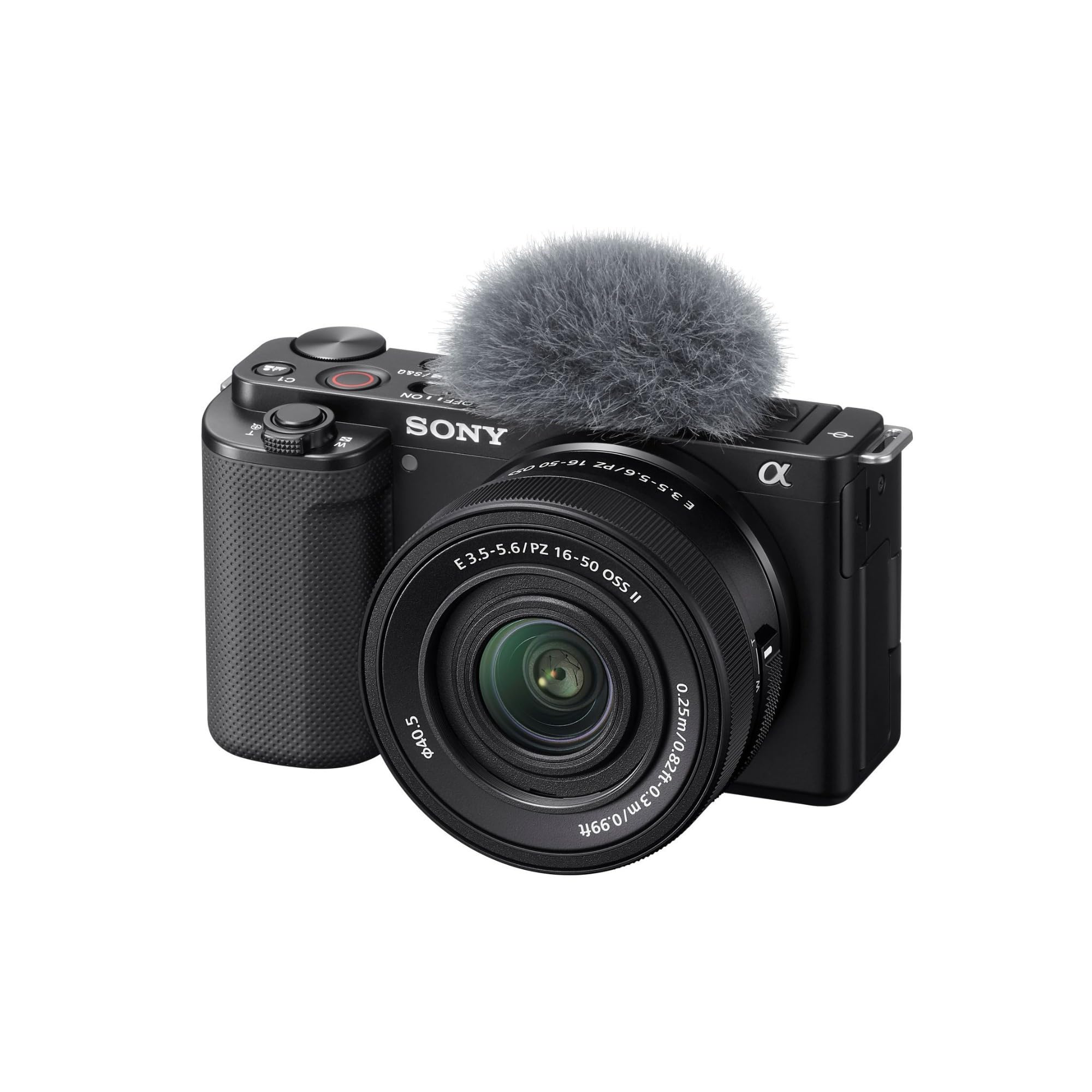
The Sony ZV-E10 is the de facto standard for beginner video because it solves the three problems that kill new creators: unreliable focus, bad audio, and complex menus. Its 24.2MP APS-C sensor oversamples 4K from a 6K readout, delivering crisp, detailed footage with natural skin tones. The BIONZ X processor enables real-time Eye AF for humans and animals, and the Product Showcase setting seamlessly transitions focus from your face to an object you hold up — a killer feature for unboxing and tutorial content.
The built-in directional 3-capsule mic with a windscreen captures clear audio out of the box, and the Background Defocus button lets you toggle shallow depth of field instantly without diving into aperture settings. The side-articulating touchscreen flips forward for self-recording, and the hot shoe allows for external shotgun or wireless lav mics as you progress. USB streaming at 4K 15p or 1080p 60p means it doubles as a pro-grade webcam for live calls and streams with zero extra software.
The kit Sony E PZ 16-50mm f/3.5-5.6 OSS II lens is compact and power-zoom capable, though the variable aperture limits low-light performance compared to a prime. Battery life runs around 80 minutes of continuous recording, so a spare NP-FW50 is a smart early addition. The lack of in-body stabilization means you’ll want a gimbal or a lens with Optical SteadyShot for smooth walking footage, but for static vlogging and desk content, the digital stabilization is sufficient.
Why it’s great
- Industry-leading Real-Time Eye AF stays locked on faces during movement and object transitions
- 4K oversampled from 6K produces noticeably sharper video than standard 4K cameras
- Background Defocus and Product Showcase buttons eliminate manual aperture fiddling for beginners
Good to know
- No in-body stabilization — digital-only stabilization crops the frame and can produce wobble during walking shots
- Kit lens is variable aperture f/3.5-5.6, limiting low-light performance without upgrading optics
2. Nikon Z 30

The Nikon Z 30 was designed from the ground up for creators who shoot themselves, not landscapes. Its 20.9MP DX-format APS-C sensor pairs with Nikon’s EXPEED 6 processor to deliver crisp 4K UHD at 30p with no recording time limit — you can film an entire class or live stream without the camera overheating and shutting down. The hybrid autofocus system with 209 phase-detection points and eye-tracking for people and pets locks on quickly and rarely loses the subject, even in moderate backlighting.
The flip-down touchscreen is the standout hardware decision here — it faces forward when flipped down, so you never bump the screen with your nose while recording. The built-in stereo mic has adjustable sensitivity, and the red tally light on the front gives clear recording status at a glance. Live streaming works plug-and-play over USB-C at Full HD 60p, and constant power over USB-C means you can shoot for hours tethered to a battery pack. The camera weighs just 405g with the kit 16-50mm f/3.5-6.3 VR lens attached.
The main compromise is the lack of a viewfinder — you compose entirely through the screen, which can be difficult in bright sunlight. The kit lens has optical VR stabilization, but the camera body lacks IBIS, so walking shots benefit from a gimbal. The Z mount ecosystem is growing but currently has fewer affordable third-party lens options than Sony E-mount. For a dedicated vlogging and streaming camera that handles unlimited recording without fuss, the Z 30 delivers peak beginner utility.
Why it’s great
- Unlimited 4K 30p recording with no overheating — ideal for long talks, lessons, and live events
- Flip-down selfie screen avoids nose bump interference during front-facing recording
- USB-C constant power and plug-and-play 1080p 60p streaming out of the box
Good to know
- No electronic viewfinder — composing in bright outdoor light requires shade or a hood
- Digital stabilization only in body; optical VR relies on lens and a gimbal is recommended for walking footage
3. Panasonic LUMIX G85

The Panasonic LUMIX G85 proves that stabilization is the secret weapon for beginner video. Its 5-axis in-body image stabilization works with any Micro Four Thirds lens, giving you usable handheld footage even at telephoto focal lengths — no gimbal required for walking shots and casual pans. The 16MP sensor omits a low-pass filter for extra sharpness, and the 4K 30p video is clean and detailed, with the 4K Photo mode letting you extract 8MP stills from video at 30fps.
The G85 is also the most rugged camera in this roundup, with a magnesium-alloy front frame and full weather-sealing against dust and splashes. The 12-60mm f/3.5-5.6 Power O.I.S. kit lens covers a useful 24-120mm equivalent range, and the Dual I.S. 2 combines lens OIS with body IBIS for up to 5 stops of shake correction. The eye-level OLED viewfinder has 2.36 million dots for clear composition, and the 3-inch touchscreen articulates for waist-level or overhead shots.
The Micro Four Thirds sensor is physically smaller than APS-C, which means less background blur at the same aperture and slightly more noise in very low light. Autofocus uses contrast detection with DFD (Depth from Defocus) — it’s fast in good light but hunts noticeably in dim conditions during video. Battery life is modest at roughly 320 shots or 80-100 minutes of video. For beginners who shoot outdoors, travel in variable weather, or want to skip the gimbal entirely, the G85 is an undervalued workhorse.
Why it’s great
- 5-axis IBIS eliminates the need for a gimbal for most handheld walking and panning shots
- Weather-sealed magnesium alloy build handles rain, dust, and rugged outdoor conditions
- 12-60mm kit lens with OIS provides versatile zoom range and dual stabilization synergy
Good to know
- Contrast-detect AF with DFD hunts in low light and can pulse during video focus transitions
- 16MP Micro Four Thirds sensor has less dynamic range and background separation than APS-C
4. OM SYSTEM E-M10 Mark IV

The OM SYSTEM (formerly Olympus) E-M10 Mark IV delivers the best image quality-to-portability ratio in the beginner mirrorless segment. Its 20MP Live MOS Micro Four Thirds sensor captures sharp 4K 30p video, and the 5-axis in-body stabilization compensates for up to 4.5 stops of shake — enough for clean handheld clips at wide angles without a gimbal. The flip-down monitor activates a dedicated selfie mode that optimizes exposure and face priority automatically, making front-facing recording genuinely one-tap.
The 14-42mm F3.5-5.6 EZ pancake kit lens is the smallest standard zoom in the Micro Four Thirds system, collapsing to just 26mm when powered off, which lets the entire kit slip into a jacket pocket. The 16 Art Filters, including the new Instant Film effect, add creative variety without requiring post-processing. The touchscreen is responsive for touch-to-focus and menu navigation, and the retro silver body design turns heads without screaming “pro gear.”
Battery life is good for Micro Four Thirds at roughly 360 shots per charge, but the included charger uses a proprietary plug — not USB-C, which adds cable clutter. The contrast-detect autofocus with 121 areas is reliable in good light but can hunt in darker scenes, and the 4K video is limited to 30p with no 60p option. The app-based Wi-Fi transfer is slow compared to modern Sony and Nikon implementations. For a pocketable, image-stabilized camera that prioritizes fun and portability over raw video specs, the E-M10 Mark IV is a classy entry point.
Why it’s great
- 4.5-stop 5-axis IBIS delivers smooth handheld footage without an external gimbal
- Pancake kit lens collapses to 26mm, making the whole setup genuinely pocketable
- Flip-down selfie mode with face priority one-tap optimization for front-facing video
Good to know
- Contrast-detect AF struggles with focus hunting in dimmer indoor lighting conditions
- No USB-C charging — proprietary charger and slow Wi-Fi transfer via the OI Share app
5. Sony ZV-1F

The Sony ZV-1F strips away the complexity of interchangeable lenses and delivers a dedicated vlogging tool that fits in a palm. Its 20mm f/2.0 ultra-wide lens ensures that even at arm’s length, your entire face and a generous slice of background fit in the frame — no more cut-off foreheads. The 1-inch Exmor RS CMOS sensor provides a significant dynamic range and low-light advantage over any smartphone, and the f/2.0 aperture produces natural background blur without needing a portrait mode algorithm.
The one-press Background Defocus button instantly transitions from sharp to blurred backgrounds, and the Product Showcase mode shifts focus from your face to an object held near the lens — ideal for reviews and unboxings. The 3-capsule directional mic with an included windscreen captures crisp audio with minimal handling noise, and the side-articulating touchscreen makes self-composition effortless. USB-C charging means you can power it from a portable battery, and the Bluetooth connectivity to Sony’s Imaging Edge app enables wireless media transfer.
The fixed 20mm lens means no optical zoom — you can’t zoom in without using digital zoom, which reduces quality. Stabilization is digital-only, so walking shots show noticeable crop-and-wobble artifacts; this camera is best for static or tripod-based recording. Battery life is around 45 minutes of continuous recording, so multiple spares are essential for a day of shooting. For under- vlogging with zero lens decisions, the ZV-1F is the smartest fixed-lens choice a beginner can make.
Why it’s great
- 20mm ultra-wide f/2.0 lens captures full face and background at arm’s length without cropping
- One-press Background Defocus and Product Showcase modes eliminate manual exposure fiddling
- Built-in 3-capsule directional mic with windscreen produces clear audio without external gear
Good to know
- Fixed lens with no optical zoom — digital zoom degrades image quality significantly
- Digital-only stabilization creates wobble artifacts during walking or panning shots
6. Xtra Muse

The Xtra Muse solves the single biggest beginner video problem — shaky footage — with an integrated 3-axis gimbal that physically stabilizes the camera in your hand. Unlike cameras that rely on electronic cropping, the gimbal keeps the full 1-inch CMOS sensor readout uncompromised, delivering smooth 4K 120fps footage that looks like it was shot on a tripod. The 10-bit X-Log color profile captures over a billion colors for professional-grade grading in post-production, which is rare at this price point.
The 2-inch touchscreen is bright and responsive, and the Master Follow feature keeps the camera locked on you while mounted on a tripod — you can jump, dance, or spin, and the camera stays centered. Face and object tracking via the touchscreen is snappy, and the built-in handle with a 1/4-inch thread lets you mount it to monopods or tripods instantly. The 161-minute battery life is excellent for a gimbal camera, and USB-C PD charging tops up quickly from a power bank.
The Xtra Muse is a relatively new entrant, so the accessory ecosystem is smaller than DJI Pocket 3’s, though some Pocket 3 accessories reportedly fit. The 1-inch sensor, while excellent for its size, cannot match the depth of field and low-light performance of APS-C interchangeable-lens cameras. The touchscreen is sometimes slow to register swipes in cold weather. For beginners who prioritize buttery-smooth walking footage above all else and want a complete out-of-box bundle, the Xtra Muse delivers gimbal quality without the extra phone setup.
Why it’s great
- Integrated 3-axis gimbal produces silky-smooth handheld footage without electronic cropping
- 4K 120fps with 10-bit X-Log color offers professional-grade grading flexibility in post-production
- 161-minute battery life and USB-C PD fast charging for all-day shooting with a power bank
Good to know
- Newer brand with a smaller accessory ecosystem compared to established pocket camera lines
- 1-inch sensor can’t match APS-C or full-frame depth of field and low-light performance
7. Insta360 GO Ultra
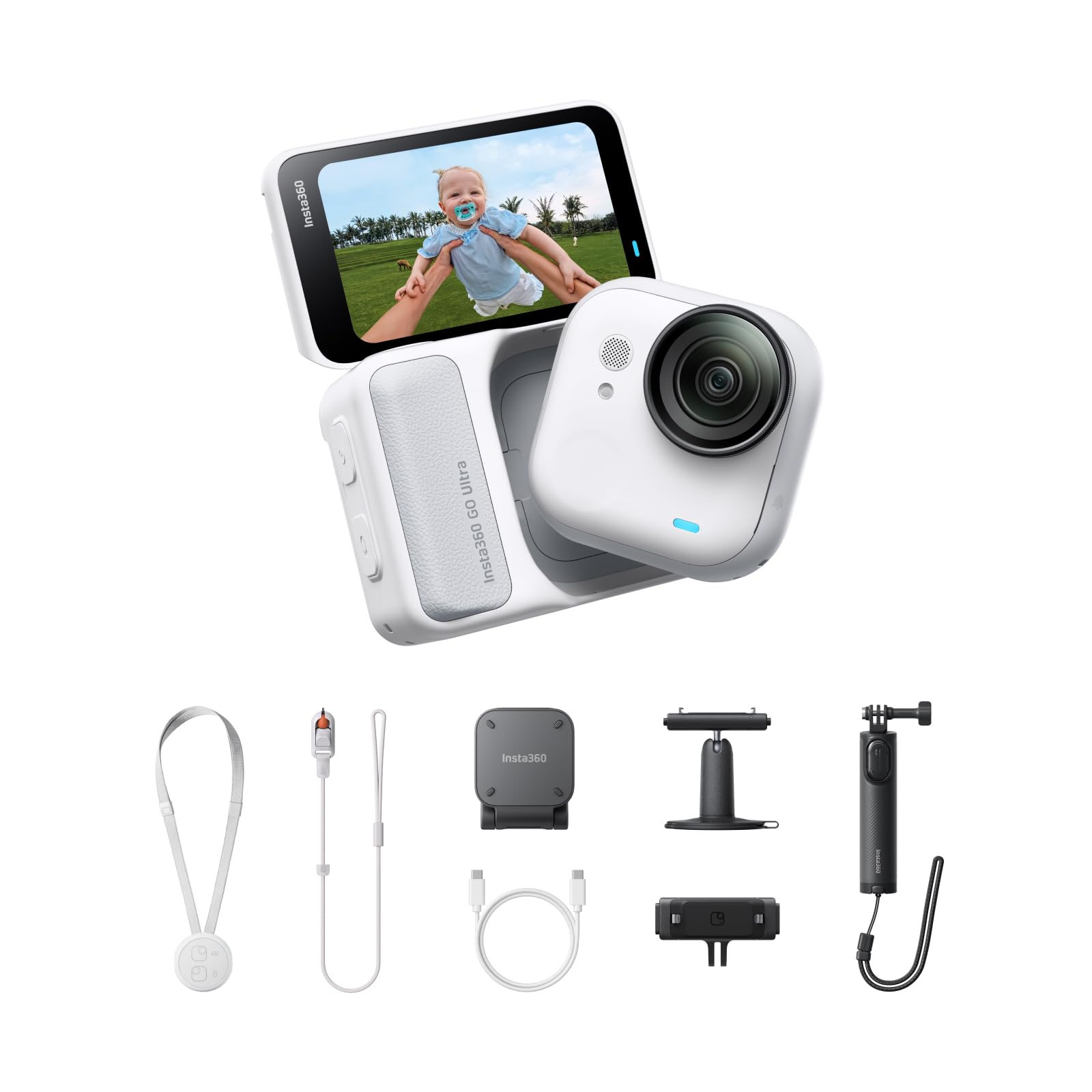
The Insta360 GO Ultra redefines wearable video for beginners by shrinking a 4K camera into a 53g module that clips magnetically onto your cap, chest, or handlebars. The 1/1.28-inch sensor and 5nm AI chip deliver 4K 60fps Active HDR footage that rivals full-size action cameras, and the PureVideo mode specifically optimizes low-light performance. The magnetic mounting system attaches to included accessories without any straps or frames — you clip it and go.
FlowState Stabilization with 360 Horizon Lock keeps footage level even during spins and fast movements, and the IPX8 waterproof rating on the standalone camera allows 10m submersion without a housing. The Action Pod provides a 3-hour combined battery life and includes a flip-out touchscreen for framing. The 12-minute 0-80% fast charge is a game-changer for quick refueling between activities. The Auto Editing AI automatically selects highlights and transitions, creating shareable clips without manual editing.
The Action Pod is only IPX4 splashproof, so you can’t take the full rig deep underwater — only the standalone module is fully waterproof. The fixed super-wide 156° FOV, while immersive, introduces noticeable fisheye distortion that some users dislike for walking vlogs. The non-replaceable battery means the camera has a finite lifespan before battery degradation. For cyclists, runners, and travelers who want a forget-it’s-there camera that captures first-person perspective hands-free, the GO Ultra is uniquely liberating.
Why it’s great
- 53g magnetic module clips to caps and clothes for hands-free first-person perspective shooting
- FlowState Stabilization with 360 Horizon Lock keeps footage perfectly level even during spins
- 0-80% charge in 12 minutes and up to 3 hours combined battery with the Action Pod
Good to know
- Action Pod is only splashproof — true underwater use requires the standalone module only (10m depth)
- Fixed 156° FOV with fisheye distortion is less natural for standard walking vlogs
8. Canon EOS R100

The Canon EOS R100 is the lightest and most affordable entry point into the Canon RF mirrorless system. Its 24.1MP APS-C sensor paired with the DIGIC 8 image processor delivers sharp 4K 24p video and crisp photos with Canon’s famously pleasant color science. The Dual Pixel CMOS AF covers up to 143 zones with human face and eye detection, providing reliable autofocus for both stills and video that punches above its price class.
The RF-S 18-45mm f/4.5-6.3 IS STM kit lens offers optical stabilization and a stepping motor for quiet, smooth focusing during video. The camera body weighs just 356g with the battery and memory card, making it the most portable interchangeable-lens body in this lineup. The 120fps HD video mode allows for smooth slow-motion playback, and the 6.5fps continuous burst with One-Shot AF is useful for capturing action moments.
4K video is limited to 24p with a significant crop factor that effectively narrows the field of view — the 18mm wide end becomes a much tighter 29mm equivalent. The rear screen is a fixed 3-inch LCD with 1.04 million dots, which means no tilting for selfie recording or high-angle shots. Battery life is modest at roughly 320 shots per charge. For absolute beginners on a tight budget who want access to Canon’s RF lens lineup and reliable Dual Pixel AF, the R100 is a capable, affordable foundation.
Why it’s great
- Dual Pixel CMOS AF provides reliable face and eye detection autofocus for smooth video
- Lightest APS-C interchangeable-lens body at 356g with the RF-S kit lens
- Canon color science delivers pleasing skin tones and vibrant video straight out of camera
Good to know
- 4K 24p video has a significant 1.5x crop factor, narrowing wide-angle coverage
- Fixed rear screen with no tilt or articulation limits selfie and high-angle composition
9. OBSBOT Tail Air

The OBSBOT Tail Air is a dedicated PTZ (pan-tilt-zoom) streaming camera that automates camera movement with AI tracking, making it uniquely valuable for streamers, educators, and church services where no operator is available. The 4K camera with a 23mm f/1.8 lens provides crisp video, and the AI tracking can follow humans, animals, or specific objects with gesture control — hold up a palm to start tracking, and make a frame gesture to zoom in.
Connectivity is the most versatile here: Micro HDMI, USB-C, Ethernet, and Wi-Fi allow integration into any streaming workflow. The camera supports RTMP, RTSP, and VISCA protocols for direct streaming to YouTube, Facebook, or Twitch, and the NDI license (sold separately) enables network-based video routing. The companion Obsbot Start app provides full control over AI Director, preset positions, and manual settings, and the 320° horizontal and 180° vertical rotation covers a room without blind spots.
The built-in battery has a known limitation — if it dies after the warranty period, the camera cannot function even when plugged in, and replacing the battery is not user-serviceable. The digital zoom tops out at 4x, so this isn’t a close-up camera for detailed product shots. The tracking works well in even lighting but can lose the subject in backlit or low-contrast scenes. For beginners running solo live streams or recording lectures who need a camera that follows them automatically, the Tail Air is a specialized but powerful tool.
Why it’s great
- AI tracking with gesture control automatically follows humans, animals, or objects without an operator
- Versatile connectivity — USB-C, HDMI, Ethernet, Wi-Fi, and NDI-compatible for any streaming setup
- 320° horizontal and 180° vertical rotation covers full rooms without gaps or tripod repositioning
Good to know
- Battery failure renders the camera inoperable even when plugged in, with no user-replaceable battery
- 4x digital zoom is insufficient for close-up or detailed product demonstration shots
10. Canon EOS M50 (Renewed)

The Canon EOS M50, now available as a renewed unit, remains a capable beginner mirrorless camera despite its age. Its 24.1MP APS-C CMOS sensor with Canon’s Dual Pixel CMOS AF delivers responsive autofocus for both stills and video, with Eye Detection AF that tracks moving subjects reliably. The DIGIC 8 processor enables 4K UHD 24p recording, though with the notable crop factor, and HD 120p for smooth slow-motion playback.
The 15-45mm kit lens is compact and covers standard wide to portrait-equivalent focal lengths, and the EF-M mount gives access to a range of native lenses plus full EF-lens compatibility via an adapter. The OLED electronic viewfinder with Touch and Drag AF lets you compose in bright daylight, and the articulated touchscreen swings out for selfie and high-angle work. Wi-Fi and Bluetooth connect to the Canon Camera Connect app for remote control and wireless transfers.
4K video is heavily cropped (approximately 1.6x), making the already modest wide end even tighter, and it uses contrast-detect AF in 4K mode, which is slower and more prone to hunting than the phase-detect AF used in full HD. The EF-M mount is considered a discontinued system — Canon has shifted focus to RF, so the native lens ecosystem won’t grow. The renewed label means the unit is used or refurbished, so battery health and shutter count should be verified. For budget-conscious beginners willing to work around the 4K crop, the M50 offers robust Dual Pixel AF and a feature-rich body at a compelling price.
Why it’s great
- Dual Pixel CMOS AF provides excellent face and eye tracking for Full HD video and stills
- Built-in OLED electronic viewfinder and articulated touchscreen enable flexible day and selfie shooting
- Wi-Fi and Bluetooth with the Canon Camera Connect app for remote control and wireless media transfer
Good to know
- 4K video has a 1.6x crop and switches to slower contrast-detect autofocus, reducing usability
- EF-M mount is a discontinued system with no new lens development path
11. Panasonic LUMIX G100

The Panasonic LUMIX G100 is purpose-built for beginner content creators who care deeply about audio quality. Its built-in microphone with 360-degree tracking automatically adjusts directionality based on where you are in the frame, recording clear audio whether you’re shooting a one-on-one interview or a solo monologue. The 20.3MP Micro Four Thirds sensor captures 4K 24p and 30p video with Panasonic’s excellent color rendering, and the 5-axis Hybrid I.S. provides digital stabilization that smooths out minor handheld shake.
The 12-32mm f/3.5-5.6 pancake kit lens is compact and sharp, and the Micro Four Thirds mount gives access to a massive library of lenses from Panasonic, Olympus, and third-party makers. The iA (Intelligent Auto) mode handles exposure and focus decisions automatically, making it a true grab-and-shoot experience for absolute beginners. The frame marker feature overlays common social media aspect ratios (1:1, 4:5, 9:16) on the screen so you can compose specifically for Instagram or TikTok without guessing.
4K video recording is severely limited by the camera’s heat management — it stops after approximately 10 minutes in 4K mode, making it impractical for long-form content. The contrast-detect autofocus with DFD system is Panasonic’s standard and hunts in low light. The G100 has no headphone jack for audio monitoring, which is a significant omission for anyone serious about sound. For beginners producing short-form social media clips who want excellent built-in audio and don’t need extended 4K recording, the G100 is a focused, affordable tool.
Why it’s great
- Built-in 360-degree tracking microphone dynamically adjusts directionality based on subject position in frame
- iA Intelligent Auto mode handles all exposure and focus decisions for true point-and-shoot simplicity
- Frame marker overlays social media aspect ratios (9:16, 4:5) for direct TikTok and Instagram composition
Good to know
- 4K recording is limited to roughly 10 minutes due to heat management, unusable for long-form video
- Contrast-detect DFD autofocus hunts and pulses in low-light scenes during video recording
FAQ
Do I need a gimbal for my first video camera?
Is 4K 24fps good enough for YouTube and social media?
Should I buy a camera with interchangeable lenses or a fixed-lens vlog camera?
Final Thoughts: The Verdict
For most users, the best camera for video beginners winner is the Sony Alpha ZV-E10 because its APS-C sensor, Real-Time Eye AF, and beginner-focused features like Background Defocus and Product Showcase mode deliver the best balance of image quality, ease of use, and room to grow with interchangeable lenses. If you want unlimited 4K recording and plug-and-play USB streaming without overheating, grab the Nikon Z 30. And for silky-smooth walking footage without any gimbal setup, nothing beats the Xtra Muse with its integrated 3-axis gimbal and 4K 120fps recording.