
A 50-inch gaming TV needs to deliver more than just a 4K resolution—it requires low input lag, a high refresh rate panel, and support for variable refresh rate (VRR) to eliminate screen tearing during fast-paced action. The wrong choice leaves you with blurry motion and delayed response, turning competitive play into a frustrating experience.
I’m Min — the co-founder and writer behind Gadgets Feed. My buying guides are built on countless hours of cross-referencing technical datasheets and real-user performance feedback to pinpoint the features that actually matter for console and PC gaming.
This guide breaks down the essential specs—refresh rate, HDMI 2.1 support, panel type, and motion handling—to help you navigate the market and find the 50 inch tv for gaming that matches your play style and budget.
How To Choose The Best 50 Inch TV For Gaming
Selecting a gaming TV involves balancing refresh rate, input lag, HDR performance, and connectivity. A model that excels in one area but lacks native VRR support can still result in a subpar experience. Focus on the specs that directly impact gameplay responsiveness.
Refresh Rate and VRR
A native 120Hz or 144Hz panel ensures that fast-moving objects remain sharp and motion blur is minimized. Pair this with Variable Refresh Rate (VRR) technology—such as AMD FreeSync or HDMI Forum VRR—to eliminate screen tearing when frame rates fluctuate. Avoid 60Hz panels that rely on motion interpolation to simulate higher refresh rates, as this introduces input lag.
HDMI 2.1 Bandwidth
Full HDMI 2.1 ports (48Gbps) are required to pass 4K at 120Hz or 144Hz with HDR and VRR enabled simultaneously. Check that the TV offers at least two HDMI 2.1 inputs if you plan to connect both a PS5 and an Xbox Series X. Models with only HDMI 2.0 ports limit you to 4K at 60Hz.
Panel Technology and HDR
Mini-LED backlighting provides superior contrast and higher peak brightness compared to standard LED panels, making HDR content pop. QLED or QD-Mini LED panels offer wider color volumes. For gaming, a high native contrast ratio reduces blooming in dark scenes, which is crucial for horror games or night-time racing.
Input Lag and Auto Low Latency Mode
Look for input lag figures below 10ms in Game Mode. Auto Low Latency Mode (ALLM) automatically switches the TV to its lowest latency preset when a console or PC signals game content, removing the need to manually change picture settings. This feature is essential for a seamless experience across streaming and gaming.
Quick Comparison
On smaller screens, swipe sideways to see the full table.
| Model | Category | Best For | Key Spec | Amazon |
|---|---|---|---|---|
| Hisense 50″ E7 Cinema Series | Mid-Range | Competitive 144Hz Gaming | Native 144Hz, FALD, Dolby Vision | Amazon |
| Samsung 50″ QNED M70H | Mid-Range | Mini-LED HDR & Motion | Mini-LED, 120Hz DLG | Amazon |
| TCL 50″ QM6K Series | Premium Mid | QD-Mini LED Brightness | Native 144Hz, QD-Mini LED | Amazon |
| Samsung 50″ QLED Q8F | Premium | QLED Color & 144Hz | 4K 144Hz VRR, Quantum Dot | Amazon |
| Sony BRAVIA 3 II 50″ | Premium | PS5 Integration & XR Processing | Native 120Hz, XR Processor | Amazon |
| iFFALCON 55″ (55U85) | Mid-Range | 4x HDMI 2.1 & High Brightness | Native 144Hz, 1000 nits | Amazon |
| LG 50″ QNED80 Series | Mid-Range | 120Hz Native & FreeSync | Native 120Hz, 2x HDMI 2.1 | Amazon |
| LG 50″ QNED82A | Premium Mid | AI Picture & QNED Color | 4K Upscaling, Alpha 7 Gen8 | Amazon |
| Sony BRAVIA 2 II 50″ | Mid-Range | PS5 Features & Google TV | 4K X1 Processor, Motionflow | Amazon |
| Amazon Ember 50″ QLED | Budget-Mid | Fire TV Integration & Value | QLED, Dolby Vision, Wi-Fi 6 | Amazon |
| Panasonic 50″ W70 Series | Budget | Entry-Level 4K Fire TV | HDMI 2.1, HDR10+ | Amazon |
In‑Depth Reviews
1. Hisense 50″ E7 Cinema Series
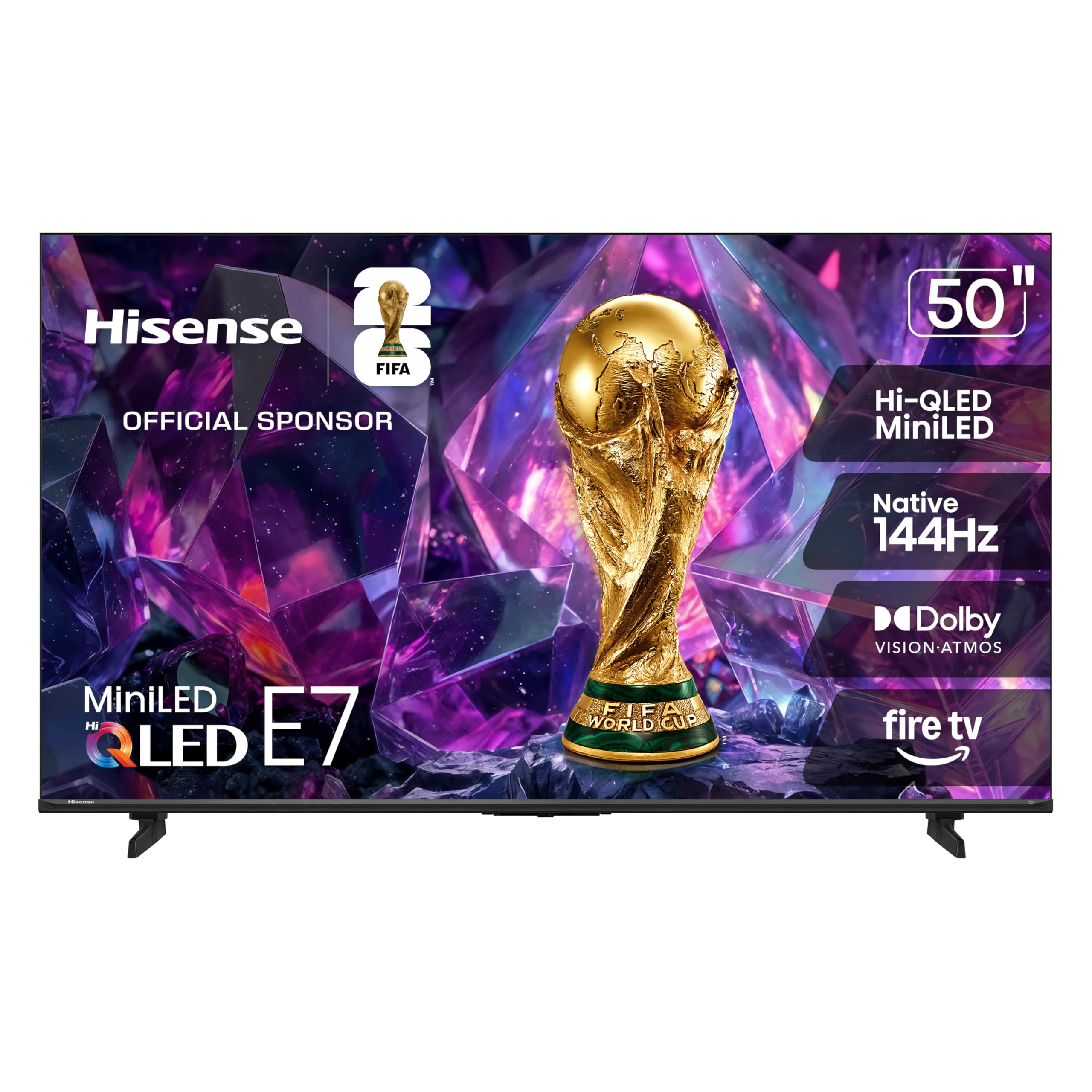
The Hisense E7 Cinema Series delivers a native 144Hz refresh rate combined with Full Array Local Dimming (FALD) Mini-LED backlighting, providing deep blacks and bright highlights that standard 60Hz panels cannot match. Dolby Vision IQ and HDR10+ Adaptive support ensure HDR content looks correct regardless of room lighting, while the AI Picture engine dynamically adjusts contrast and color per scene.
With a 50-inch footprint, the E7 is a strong fit for console gaming where high frame rates from PS5 and Xbox Series X can be fully utilized. The inclusion of MEMC (Motion Estimation, Motion Compensation) keeps fast sports and racing titles blur-free, and the AI Sports Mode sharpens motion for live broadcasts.
Fire TV built-in provides access to all major streaming apps, and the Alexa voice remote adds hands-free convenience for launching games or switching inputs. The bundled plastic stand feels less premium, but the panel performance more than compensates at this price tier. Real-world user reports consistently highlight the smooth 144Hz experience and vibrant QLED colors.
Why it’s great
- Native 144Hz panel ensures ultra-smooth motion without interpolation artifacts
- FALD Mini-LED provides excellent contrast for HDR gaming
- Dolby Vision IQ and HDR10+ Adaptive cover all major HDR formats
Good to know
- Plastic stand feels less sturdy compared to metal alternatives
- Wi-Fi 5 only, no Wi-Fi 6 support for streaming
2. Samsung 50″ QNED M70H
The Samsung QNED M70H brings Mini-LED backlighting to a lower price point, offering superior brightness and contrast over standard edge-lit LED TVs. The 4K Processor with Pure Spectrum Color reproduces over one billion shades, making game worlds look vibrant. While the native panel is 60Hz, the Motion Xcelerator feature with DLG (Dual Line Gate) technology can simulate up to 120Hz by doubling the refresh rate, reducing motion blur in supported content.
The Gaming Hub centralizes cloud gaming services like Xbox Game Pass and NVIDIA GeForce NOW, allowing you to stream games without a console. Bluetooth 5.3 support ensures low-latency audio to wireless gaming headsets. The Samsung TV Plus platform offers over 2,700 free channels for casual viewing.
User reviews praise the vivid colors and deep blacks delivered by the Mini-LED array, though some note that the DLG 120Hz mode is not true native 120Hz and may not satisfy competitive players. The remote control has drawn criticism for its non-intuitive navigation, but the core display performance offers strong value for HDR gaming on a budget.
Why it’s great
- Mini-LED backlight delivers excellent HDR brightness and black depth
- DLG 120Hz mode reduces motion blur in sports and action games
- Samsung Gaming Hub provides easy access to cloud gaming services
Good to know
- Native refresh rate is 60Hz, not true 120Hz
- Remote control navigation can be unintuitive per multiple user reports
3. TCL 50″ QM6K Series
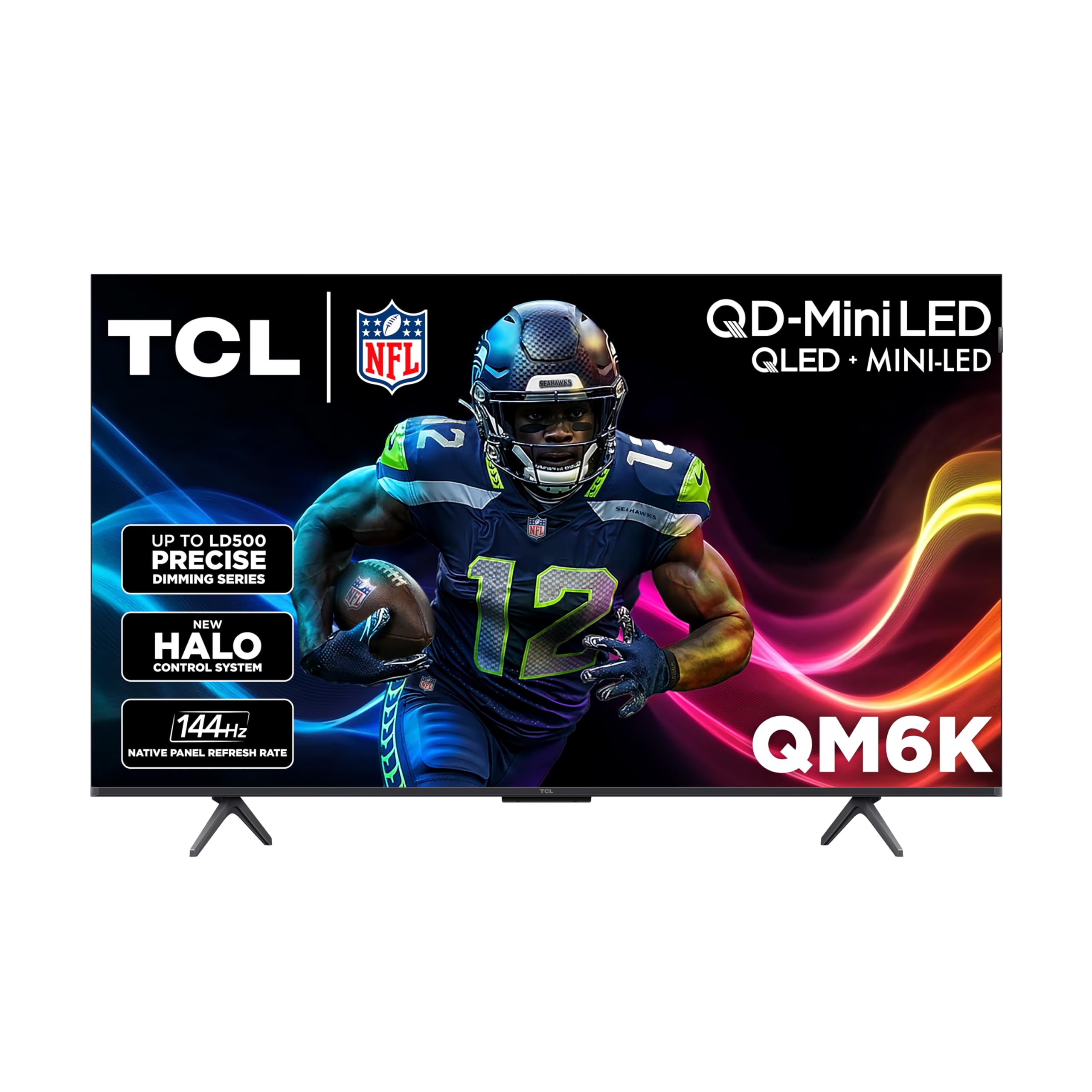
The TCL QM6K Series combines QD-Mini LED technology with a native 144Hz panel, placing it among the fastest 50-inch gaming TVs available. The Halo Control System manages the LD500 precise dimming zones to minimize blooming and enhance contrast in dark game environments. The High Contrast HVA panel boosts native contrast ratio, delivering deeper blacks than typical IPS-type panels.
Google TV with built-in Chromecast and voice control makes app navigation fast, and the backlit remote is a practical touch for gaming in low-light rooms. The two HDMI 2.1 ports support 4K at 144Hz with VRR, covering both current-gen consoles and high-end PCs. Dolby Vision gaming mode automatically switches to low-latency HDR when a compatible signal is detected.
Users frequently highlight the staggering picture quality upgrade over older 4K TVs, with vibrant colors and excellent brightness. The built-in speakers are adequate for casual play, but a dedicated soundbar is recommended for immersive Atmos audio. The QM6K delivers top-tier gaming performance without the OLED price premium.
Why it’s great
- QD-Mini LED provides exceptional color volume and brightness
- Native 144Hz panel with VRR ensures tear-free high frame rate gaming
- Backlit remote is practical for dark room use
Good to know
- Built-in speakers lack depth for immersive audio without a soundbar
- Yellow LED indicator on the bottom may be distracting in dark rooms
4. Samsung 50″ QLED Q8F

Samsung’s Q8F series brings 100% Color Volume via Quantum Dot technology, maintaining color accuracy even at peak brightness. The Q4 AI Processor upscales lower-resolution content to near-4K clarity while optimizing sound based on content type. With support for VRR up to 4K 144Hz, the Q8F is built for high-refresh-rate PC gaming and future-proofed for upcoming console updates.
The AirSlim design allows the TV to sit flush against the wall, minimizing visual clutter. Samsung Vision AI enhances the viewing experience by automatically adjusting picture and audio settings based on real-time scene analysis. The included Samsung TV Plus service provides free content without additional subscription fees.
User feedback praises the fast, responsive app performance and the self-charging remote that eliminates battery replacements. Some users find the remote overly sensitive, leading to accidental channel changes. For gamers prioritizing wide color gamut and high peak brightness for HDR titles, the Q8F is a strong premium contender.
Why it’s great
- 100% Color Volume with Quantum Dots ensures vibrant HDR gaming
- 4K 144Hz VRR support for smooth, tear-free high frame rate gaming
- Self-charging remote adds convenience and reduces waste
Good to know
- Remote touchpad can be overly sensitive, causing accidental commands
- Premium price point may exceed budget for some buyers
5. Sony BRAVIA 3 II 50″
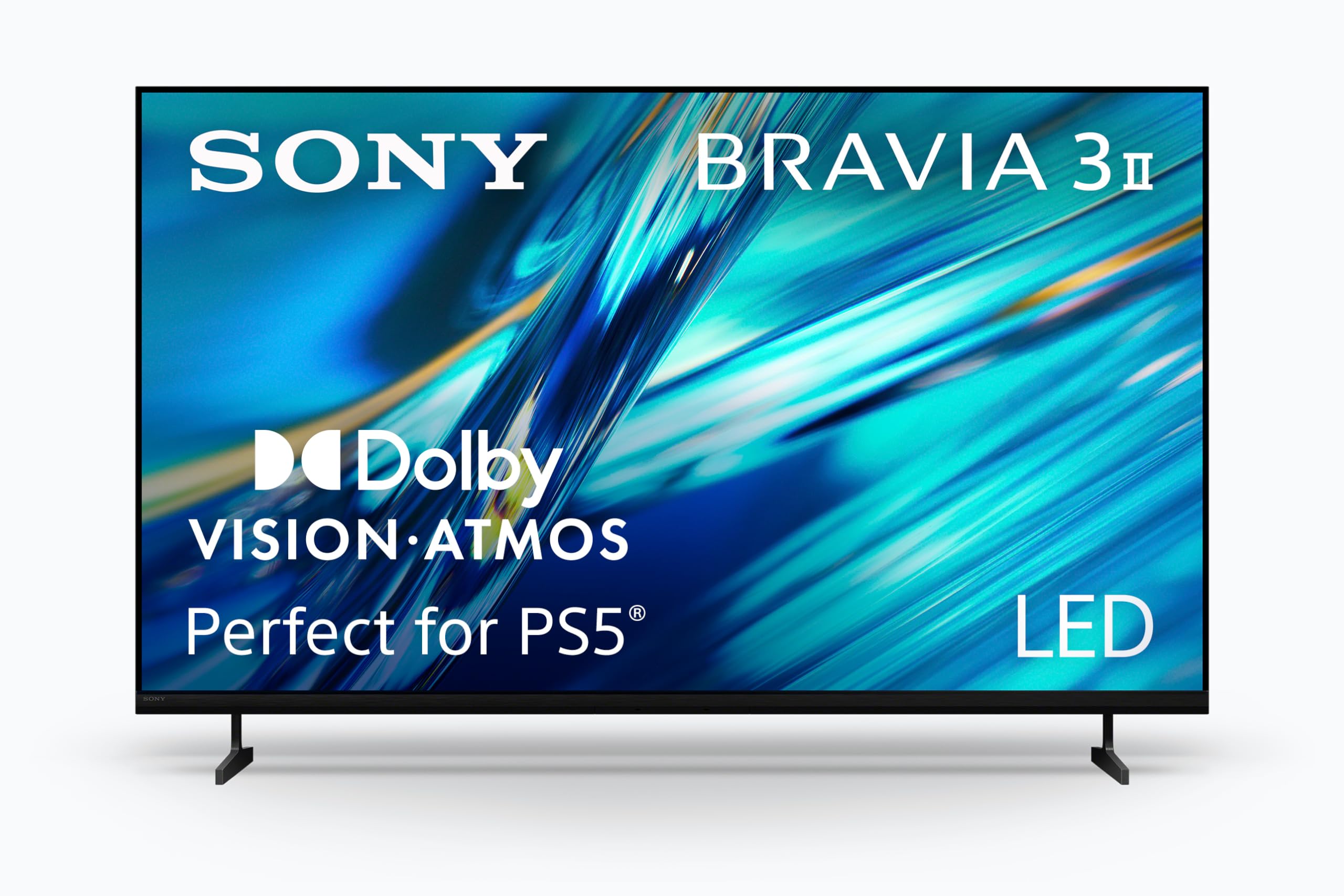
The Sony BRAVIA 3 II is engineered around the XR Processor with AI scene recognition, optimizing color, contrast, and clarity in real time. The native 120Hz panel with Motionflow XR ensures smooth, blur-free motion in fast-paced games. Exclusive PS5 features—Auto HDR Tone Mapping and Auto Genre Picture Mode—allow the TV to automatically switch to the optimal picture settings when a PS5 is connected, removing manual calibration steps.
Dolby Vision and Dolby Atmos support create a cinematic gaming environment, while the X-Balanced Speakers deliver deeper bass than standard TV audio systems. The Flush Surface design with an almost invisible bezel keeps the focus on the screen. Sony Pictures CORE includes 5 movie credits and 12 months of streaming access to a library of classics.
Users consistently report excellent picture quality and seamless PS5 pairing, though isolated software issue complaints exist. The Google TV interface with Gemini voice assistant provides intuitive content discovery. For PlayStation 5 owners who want plug-and-play HDR gaming, the BRAVIA 3 II delivers the most integrated experience available.
Why it’s great
- XR Processor with AI optimizes picture and sound per scene in real time
- Exclusive PS5 features for automatic HDR and picture mode switching
- Native 120Hz panel with Motionflow XR keeps fast action clear
Good to know
- Price is the highest in this guide, targeting premium buyers
- Some users reported software instability in early firmware versions
6. iFFALCON 55″ (55U85)
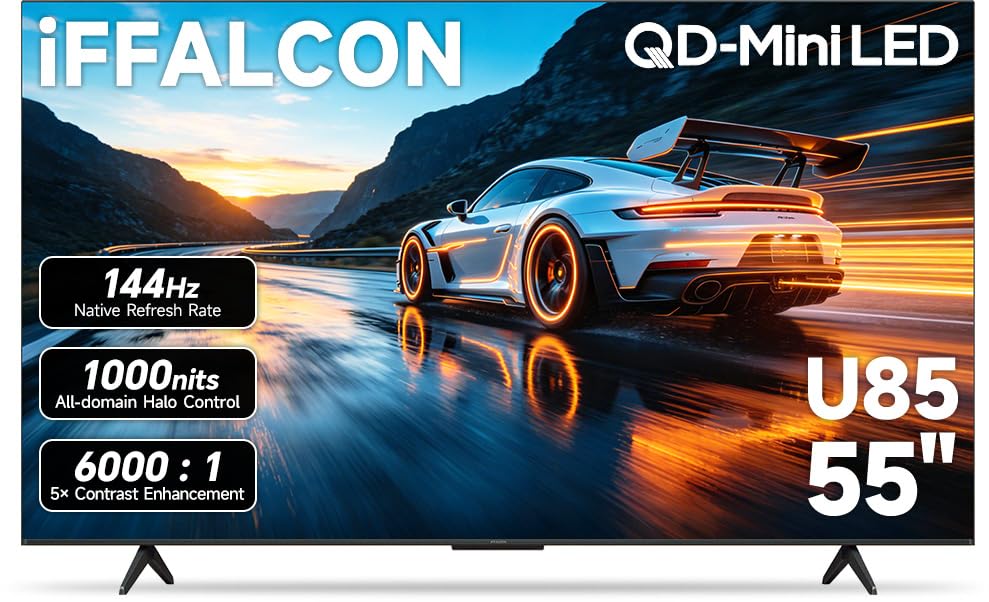
The iFFALCON 55U85 is a 55-inch model that offers an exceptional feature set for the price, including four HDMI 2.1 ports—two supporting 4K at 144Hz and two at 4K 60Hz. This allows simultaneous connection of a PS5, Xbox Series X, gaming PC, and soundbar without needing to swap cables. The Mini-LED panel delivers up to 1000 nits of peak brightness with a 6000:1 native contrast ratio, making HDR content pop.
FreeSync Premium Pro certification reduces screen tearing and lowers input lag during competitive gaming. Dolby Vision Gaming mode provides zero-setup HDR for compatible titles. The 50W 2.1-channel audio system (with a dedicated woofer) delivers room-filling sound that reduces the immediate need for an external soundbar. Google TV with built-in Alexa and Google Assistant provides flexible voice control.
User reviews highlight the ultra-responsive UI and excellent gaming performance, with many reporting a clear improvement over previous Samsung and Vizio TVs. The built-in hotel mode and IR control make it suitable for commercial or hospitality setups. At this price point, the connectivity and brightness levels are unmatched.
Why it’s great
- Four HDMI 2.1 ports provide unrivaled multi-device connectivity
- 1000 nits peak brightness with Mini-LED for impactful HDR gaming
- FreeSync Premium Pro certification for tear-free, low-lag gameplay
Good to know
- 55-inch size is larger than the 50-inch target for some buyers
- Some units reported flickering issues requiring return
7. LG 50″ QNED80 Series

The LG QNED80 combines Quantum Dot and NanoCell technologies for vibrant, wide-viewing-angle colors. The native 120Hz panel with FreeSync and VRR support ensures smooth gameplay with minimal tearing. Two HDMI 2.1 ports handle 4K at 120Hz with ALLM, making it a solid choice for both PS5 and Xbox Series X gamers who want consistent performance.
The a7 AI Processor Gen6 automatically adjusts picture and sound based on content type, upscaling lower-resolution streams to near-4K quality. webOS 23 with Quick Cards organizes streaming apps into categories for fast access. LG Channels provides over 300 free channels for background viewing.
Users praise the deep blacks and minimal blooming achieved by the Dimming Pro backlight system. However, some PS5 gamers have reported blurring and ghosting in motion-heavy titles like Final Fantasy 16. The Magic Remote has a learning curve but offers intuitive cursor control for web browsing.
Why it’s great
- Native 120Hz panel with FreeSync and VRR for tear-free gaming
- Two HDMI 2.1 ports support 4K 120Hz with ALLM
- Quantum Dot NanoCell technology provides wide color gamut
Good to know
- Some users report motion blur in high-speed console gaming
- Magic Remote can be difficult to use in dark rooms
8. LG 50″ QNED82A
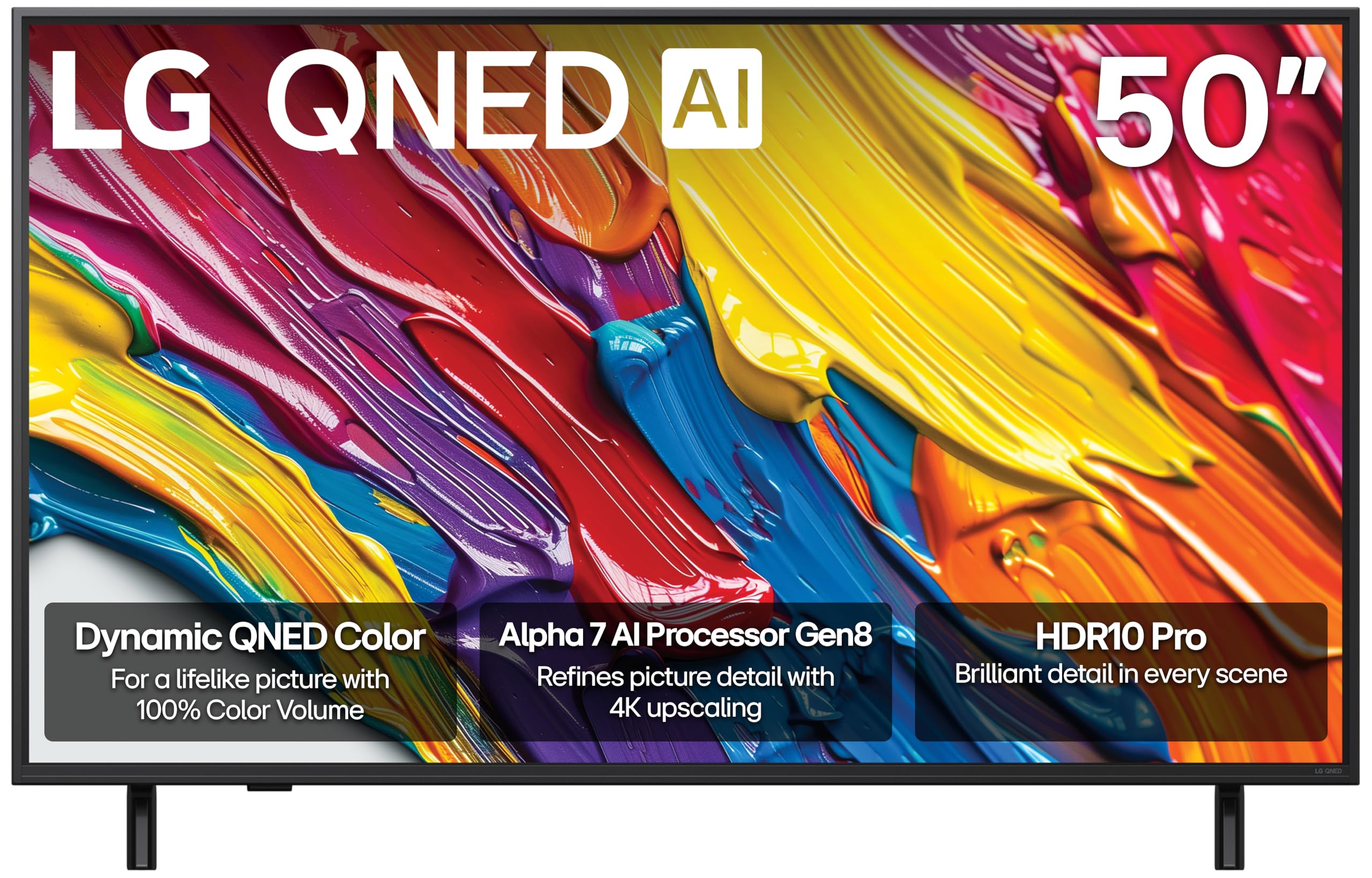
The LG QNED82A features Dynamic QNED Color with 100% Color Volume, delivering vivid, accurate colors across all brightness levels. The Alpha 7 AI Processor Gen8 handles 4K upscaling and Dynamic Tone Mapping, enhancing detail in lower-resolution game textures. Filmmaker Mode preserves the original aspect ratio and frame rate for a cinematic gaming experience.
Game Optimizer and Game Dashboard provide a centralized hub for adjusting refresh rate, VRR, and picture settings during gameplay. Support for FreeSync and GeForce NOW cloud gaming adds flexibility for PC and streaming gamers. The webOS platform includes a Re:New program for future software updates, extending the TV’s usable life.
User reviews highlight the brilliant picture quality and extensive adjustment options. The Magic Remote with scroll wheel receives mixed feedback—some find it intuitive, while others prefer traditional button layouts. For gamers who prioritize AI-enhanced picture processing, the QNED82A offers strong value at its price tier.
Why it’s great
- 100% Color Volume with Dynamic QNED Color for accurate HDR
- Alpha 7 AI Processor Gen8 upscales lower-resolution game content effectively
- Game Optimizer provides centralized gaming setting controls
Good to know
- Four HDMI 2.0 ports, no full-bandwidth HDMI 2.1 for 4K 120Hz
- Magic Remote scroll wheel can be polarizing among users
9. Sony BRAVIA 2 II 50″
The Sony BRAVIA 2 II is powered by the 4K Processor X1, delivering lifelike color and sharp detail from native and upscaled content. Motionflow XR ensures blur-free motion in fast-paced games. Exclusive PS5 features—Auto HDR Tone Mapping and Auto Genre Picture Mode—make this a compelling entry-level choice for PlayStation gamers who want Sony’s processing without the flagship price.
Google TV with Apple AirPlay 2 and Google Cast provides flexible streaming options. The Eco Dashboard centralizes all energy efficiency settings in one menu. Sony Pictures CORE offers included movies for additional entertainment value.
Users consistently praise the beautiful picture quality and responsive remote. Some have reported WiFi connectivity drops, though this appears to be unit-specific. For buyers seeking a reliable, well-built 4K TV with solid PS5 integration at a mid-range price, the BRAVIA 2 II delivers dependable performance.
Why it’s great
- 4K Processor X1 provides accurate color and detail reproduction
- Exclusive PS5 features for automatic HDR and picture mode switching
- Google TV with AirPlay 2 and Chromecast built-in
Good to know
- Panel is limited to 60Hz, no high refresh rate support
- Some users reported intermittent WiFi connectivity issues
10. Amazon Ember 50″ QLED
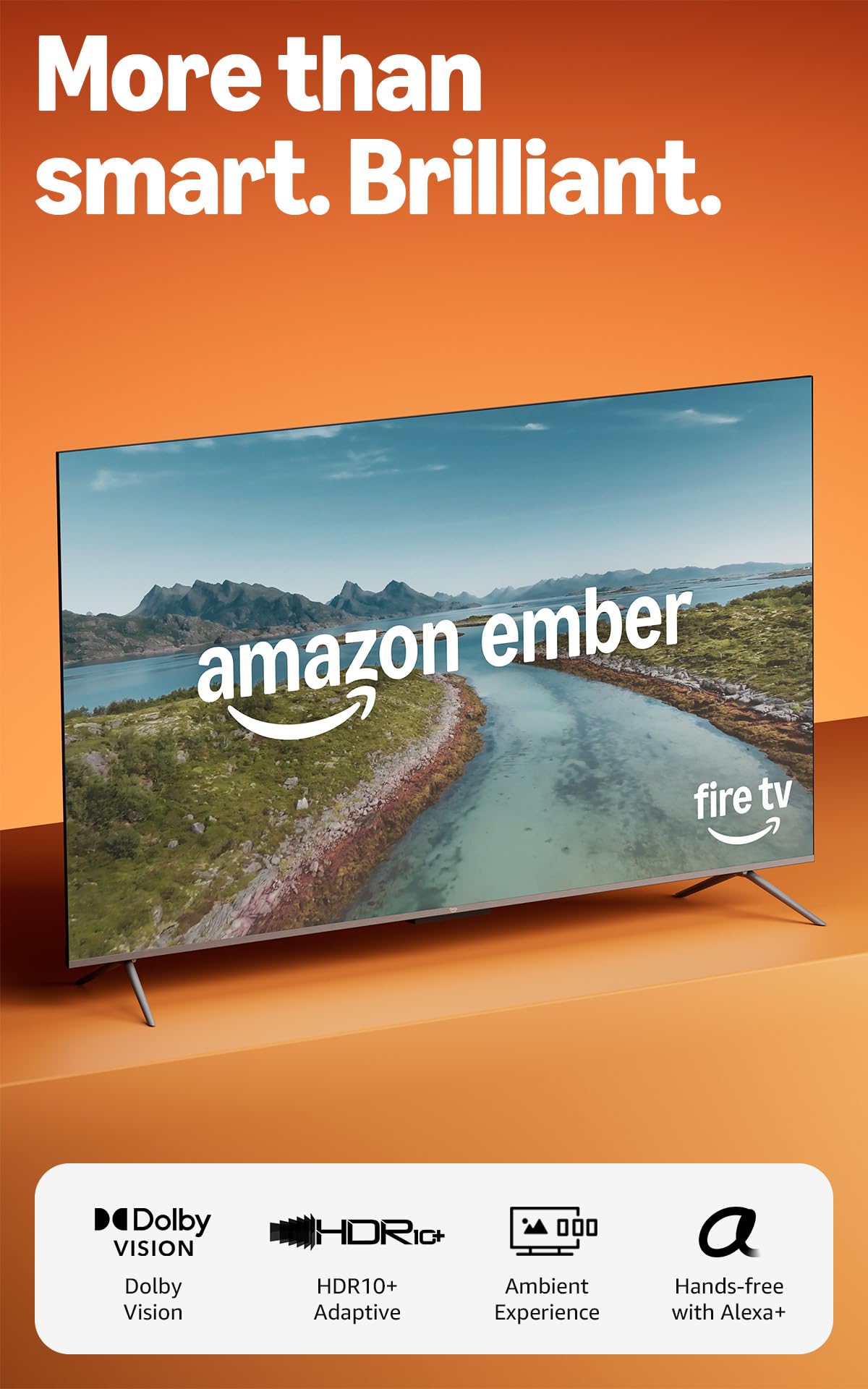
The Amazon Ember QLED Series brings a 4K QLED display with Dolby Vision and HDR10+ Adaptive to the entry-level segment, providing vibrant colors and solid HDR performance. The quad-core processor with Wi-Fi 6 support enables fast app loading and smooth streaming. The Omnisense technology wakes the screen automatically when you enter the room.
Fire TV built-in with Alexa+ offers hands-free voice control for launching games and managing smart home devices. Amazon Luna and Xbox Game Pass streaming are directly integrated, allowing cloud gaming without a console. The switch to electronically disconnect the microphones addresses privacy concerns.
User reviews highlight the impressive QLED picture quality for the price, with deep blacks and bright highlights. Some users note that the native 60Hz panel limits high-frame-rate gaming potential, and the built-in audio benefits from a soundbar upgrade. For budget-conscious gamers who prioritize Fire TV ecosystem integration, the Ember QLED is a strong value.
Why it’s great
- QLED panel with Dolby Vision provides vibrant HDR gaming visuals
- Wi-Fi 6 support ensures fast streaming and low latency
- Fire TV with Alexa+ offers hands-free voice control
Good to know
- Native 60Hz panel limits high-refresh-rate gaming performance
- Built-in audio is adequate but benefits from an external soundbar
11. Panasonic 50″ W70 Series

The Panasonic W70 Series is an entry-level 4K Fire TV that includes an HDMI 2.1 port, enabling basic support for next-gen console features like ALLM. The HDR Bright Panel with the 4K Studio Color Engine delivers solid 4K resolution with HDR10+ support, providing acceptable HDR performance for the price. MEMC technology helps smooth motion in standard content.
Fire TV built-in with Alexa voice control provides access to all major streaming services. Bluetooth 5.0 support allows pairing with wireless headphones for private gaming sessions. The four HDMI ports offer flexibility for connecting multiple devices, though only one is HDMI 2.1.
User reviews are mixed: while many praise the great value picture quality and easy setup, a significant number report software sluggishness and reliability issues, including the Fire TV interface freezing and requiring factory resets. The 60Hz panel is adequate for casual gaming but will not satisfy competitive players. This model is best suited for budget buyers who prioritize the Fire TV ecosystem and do not require high-refresh-rate gaming.
Why it’s great
- HDMI 2.1 port supports ALLM for reduced input lag
- HDR10+ support provides good HDR performance at this price tier
- Fire TV with Alexa offers full streaming app access
Good to know
- 60Hz panel is not suitable for high-refresh-rate gaming
- Several user reports of software freezing and reliability issues
FAQ
Is a 60Hz TV enough for PS5 or Xbox Series X gaming?
What is the difference between Mini-LED and standard LED for gaming?
Do I need HDMI 2.1 for 4K gaming at 120Hz?
Why does input lag matter and what is a good number?
Is QLED better than OLED for a gaming TV?
Final Thoughts: The Verdict
For most users, the 50 inch tv for gaming winner is the Hisense 50″ E7 Cinema Series because it combines a native 144Hz panel with FALD Mini-LED and Dolby Vision IQ at a competitive price point. If you want premium QD-Mini LED brightness and 144Hz performance, grab the TCL 50″ QM6K. And for deep PS5 integration with Sony’s XR processing, nothing beats the Sony BRAVIA 3 II.