
That sound of someone rattling your doorknob at 2 AM is a fear no renter should have to live with. Apartment doors are notoriously weak — hollow core wood, flimsy jamb strikes held in by half-inch screws, and cheap deadbolts that a solid shoulder kick defeats in one try. The right physical barrier or smart lock changes that equation entirely, turning your door into a fortress that buys you precious time to react.
I’m Min — the co-founder and writer behind Gadgets Feed. I’ve spent hundreds of hours cross-referencing technical specs, customer stress tests, and real-world break-in reports to find the solutions that actually hold up when someone tries to force their way in.
Whether you live alone in a ground-floor unit or share a hallway with questionable neighbors, you need physical barriers that don’t just feel tough but best apartment door security must combine real stopping power with renter-friendly installation.
How To Choose The Best Apartment Door Security
Apartment security is a different beast from owning a house. You can’t permanently modify the door, frame, or floor. Your landlord likely restricts drilling into the door slab. And the door itself is often hollow-core — meaning a standard deadbolt’s strike plate is only as strong as the soft wood it screws into. That’s why the best solutions are either physical bars that transfer force to the floor or smart locks that add keyless complexity without requiring structural changes.
Assess Your Door Swing and Floor Material
Every security bar and brace works only on inward-swinging doors — if your apartment door opens outward, mechanical jammers are useless. For inward doors, the floor surface dictates which bar will grip properly. Carpet and rubber mats can cause sliding. Tile and concrete require masonry anchors for permanent braces. Before buying anything, confirm your door opens inward and check whether your floor is wood, tile, carpet, or concrete.
Choose Between Passive and Active Barriers
Passive barriers — like adjustable door bars and floor-mounted braces — physically block the door from opening more than an inch. They don’t rely on batteries or electronics. Active solutions like smart locks or bars with integrated alarms add a deterrence layer with 115dB sirens but introduce failure points (dead batteries, WiFi drops). For a bedroom at night, passive is usually more reliable. For the main entrance during the day, a smart lock with auto-lock is hard to beat.
Match the Force Rating to Your Risk Level
Cheaper bars typically withstand 200–400 pounds of force, enough to slow a casual intruder. Premium polymer braces like the OnGUARD are lab-certified to hold up to 3,100 pounds — enough to stop a determined kick from a heavy adult. If your apartment is on the ground floor or in a high-crime area, spend the extra for a brace that’s over-engineered. If you just want privacy from a curious roommate, a simple bar is sufficient.
Quick Comparison
On smaller screens, swipe sideways to see the full table.
| Model | Category | Best For | Key Spec | Amazon |
|---|---|---|---|---|
| OnGUARD Security Door Brace | Brace | Maximum kick-in resistance | 3100 lbs force rating | Amazon |
| Philips Wi-Fi Smart Lock DDL242X | Smart Lock | Keyless entry + remote monitoring | Fingerprint in 0.3 sec | Amazon |
| SABRE Door Security Bar with Alarm | Bar + Alarm | Dual physical + audible protection | 115dB siren | Amazon |
| AceMining Upgraded Security Bar (2-Pack) | Bar | Cost-effective two-door coverage | 1.57 inch steel pipe | Amazon |
| HANGMAICOME Door Security Bar (2-Pack) | Bar | Entry-level budget-friendly bar | 360° pivoting anti-slip base | Amazon |
| BaoWei Privacy Door Lock (2-Pack) | Latch | Child safety and travel latch | Zinc alloy frame-mounted | Amazon |
| Philips Smart Lock 240X with Wi-Fi Bridge | Smart Lock | Full-featured app-controlled deadbolt | 99.99% fingerprint accuracy | Amazon |
In‑Depth Reviews
1. OnGUARD Security Door Brace

The OnGUARD is not a simple bar you wedge under a doorknob — it’s a two-piece polymer brace that bolts into your floor and transfers the full force of a kick-in down into the subfloor. Its space-age polymer material is lab-certified to withstand 3,100 pounds of violent force, which means a 250-pound adult can slam their shoulder into the door repeatedly and the brace won’t budge. Locksmiths and law enforcement professionals regularly recommend this over every other residential option.
Installation takes about 15 minutes on wood or plywood floors using the included drill bit. For tile or concrete, you’ll need a hammer drill and masonry anchors. The design is low-profile when not in use — the floor bracket sits nearly flush, and the brace arm detaches for storage. Users report that even French doors with weak center frames become nearly impenetrable with two units placed strategically.
The only real drawback is visual: the brand name and web address are permanently embossed on the front face in white lettering against the black polymer, which some users find obnoxious. But if your priority is stopping a determined intruder dead in their tracks, this is the single most effective physical barrier you can install in an apartment without replacing the door itself.
Why it’s great
- Lab-rated to withstand 3,100 lbs of force — well beyond any other residential bar
- Low-profile floor bracket sits flush when not deployed
- Space-age polymer won’t rust, corrode, or slide on the floor under pressure
Good to know
- Requires permanent drilling into the floor (no rental-friendly adhesive option)
- Concrete and tile installation needs a hammer drill and masonry anchors
- Permanent white brand lettering on the front face may be visually distracting
2. Philips Wi-Fi Door Lock DDL242X-1HW
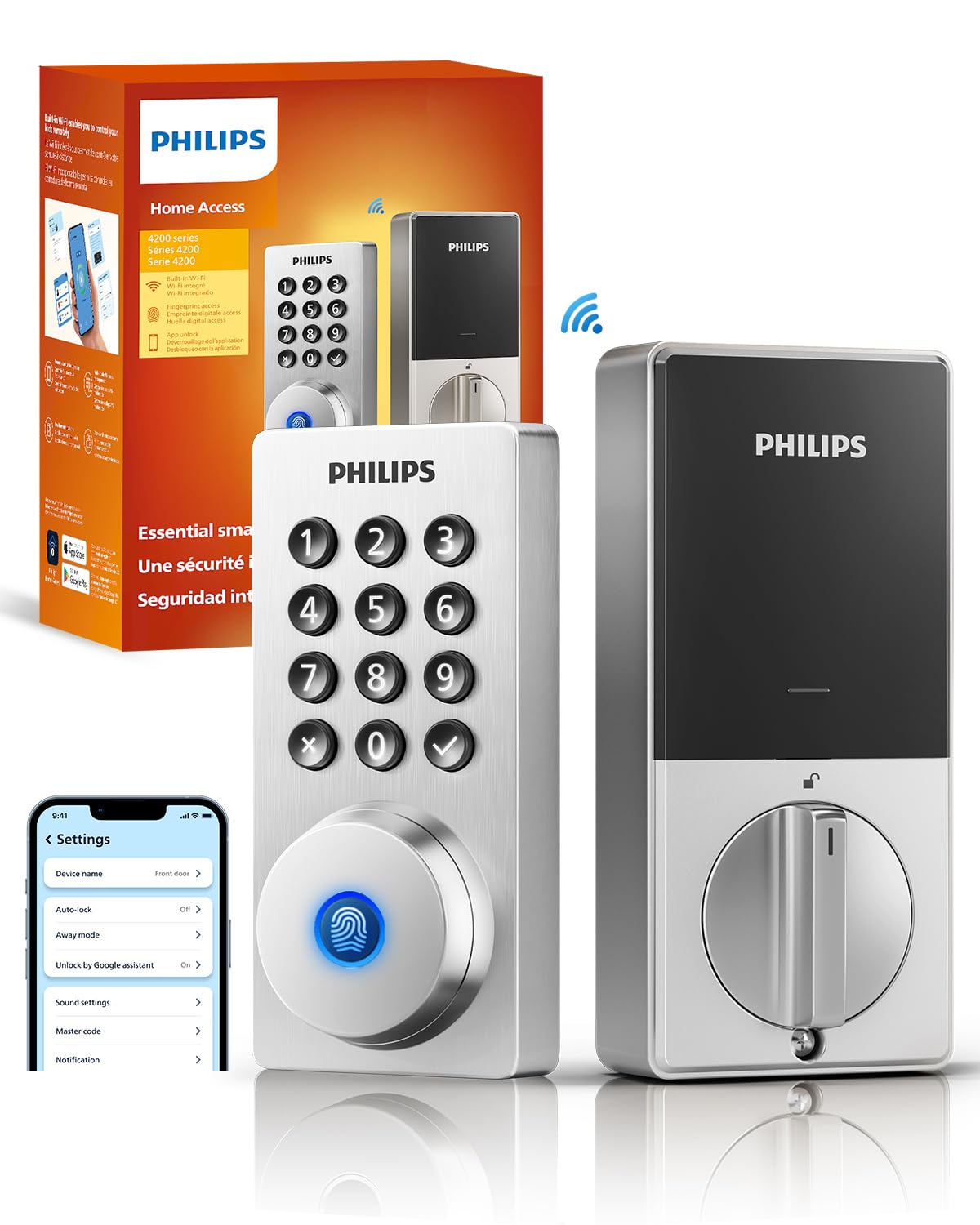
Philips brings serious biometric engineering to the apartment smart lock space. The DDL242X uses a semiconductor fingerprint sensor that reads your print in 0.3 seconds — even with slightly wet or dry fingers — and boasts accuracy rates that users consistently describe as best-in-class. Unlike many smart locks that require a separate hub for remote access, this model has built-in WiFi, so you can lock, unlock, and check door status from anywhere without an extra bridge device.
The auto-lock timer is fully customizable from 15 seconds to 2 minutes, and the door position sensor ensures the deadbolt only engages when the door is fully closed — it won’t try to extend the bolt into thin air. The app lets you assign time-limited codes for guests or service technicians, and you can share fingerprint access with family members remotely. Aluminum construction with a satin nickel finish gives it a premium feel that matches most modern apartment door hardware.
Installation is genuinely DIY-friendly with just a Phillips screwdriver, and it fits standard door prep without modifications. Eight AA batteries (not included) power the lock, and users report roughly 8 months of battery life with normal use. The only gap is voice assistant support — the promotional material mentions Alexa and Google compatibility, but a few users report inconsistent integration, so don’t buy this purely for voice control.
Why it’s great
- Built-in WiFi eliminates the need for a separate bridge or hub
- Fast, reliable fingerprint sensor that works with slightly wet or dry fingers
- Auto-lock with door position sensor prevents bolt damage
Good to know
- Voice assistant integration is inconsistent in real-world use
- Requires 8 AA batteries that are not included in the box
- No automatic unlock when phone is nearby — you still need fingerprint or code
3. SABRE Adjustable Door Security Bar with Alarm
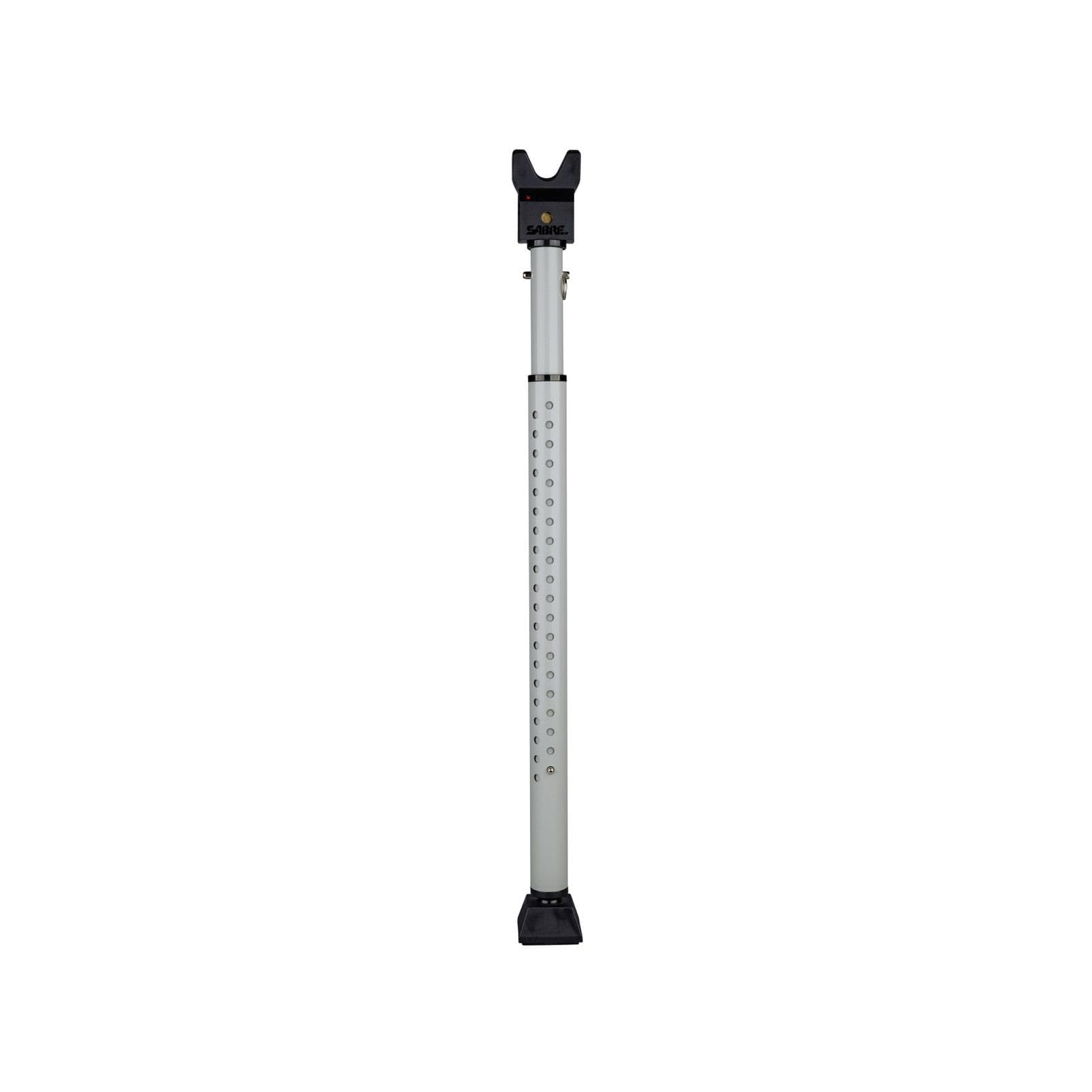
SABRE is known for personal safety products, and this door security bar brings their expertise into a single device that combines a physical barrier with a 115dB vibration-sensing alarm. When installed on a hinged door, the alarm triggers if someone attempts to open the door handle from the outside, with a 5-second delay before the siren blasts — enough to deter the intruder but also give you a moment to realize what’s happening. The alarm is audible up to 1,100 feet, which is loud enough to wake neighbors and likely scare off anyone without a serious plan.
The bar itself is made from 20-gauge steel with a padded foot that grips the floor without scratching. The pivoting ball joint ensures full floor contact even on slightly uneven surfaces. It adjusts to 40 different height positions, fitting hinged doors from 29.5 to 44 inches and sliding doors from 27 to 41.5 inches. Users report that the bar alone (even without the alarm) is sturdy enough to make opening a door extremely difficult, and several real-world accounts describe the bar holding firm against active attempts to kick the door in.
A practical note: the alarm switch on the side of the unit slides easily, and users have reported accidentally triggering the alarm when the bar is leaning against a wall. Also, the alarm function only works with hinged door installation — not sliding doors. But for the price, you’re getting both a brute-force barrier and a 115dB audible deterrent that most competing bars don’t offer at this price tier.
Why it’s great
- Combines physical door bar with a loud 115dB vibration alarm in one unit
- 40 height positions fit a wide range of standard hinged and sliding doors
- Pivoting ball joint ensures secure floor contact on uneven surfaces
Good to know
- Alarm switch slides easily — can trigger accidentally when stored
- Alarm function is not compatible with sliding door installation
- Not recommended for use on rugs or thick door mats
4. AceMining Upgraded Door Security Bar (2-Pack)

The AceMining two-pack gives you a matched pair of adjustable door bars that cover front door, back door, and even sliding patio doors for roughly the same price as a single premium unit. Each bar features a thickened 1.57-inch diameter steel pipe with high-strength alloy connectors — a noticeable step up in thickness compared to budget bars that use skinny 1-inch tubes. The manufacturer rates them to withstand 400 pounds of force, which is enough to deter most casual break-in attempts.
Users consistently praise the slip-resistant rubber feet for staying put on hardwood, tile, and low-pile carpet. The three-stage telescoping design deploys quickly once you get the hang of it. At just 2.2 pounds per bar, they’re light enough to toss in a suitcase for hotel or Airbnb use. The white finish blends into most door frames and apartment decor without looking like a security device.
The honest caveat from the manufacturer is that no bar is 100% effective at preventing entry in every situation — a truly determined attacker might still force the door open. But the AceMining bars buy you critical extra seconds to call for help or brace yourself. Some users note that the rubber base can slide on very smooth tile under extreme pressure, and the bar can make a loud smack if bumped by a pet or child, but for the price of a two-pack, the value proposition is strong for renters on a budget.
Why it’s great
- Two bars in one package cover multiple doors without buying separate units
- Thickened 1.57-inch steel pipe is noticeably sturdier than budget models
- Lightweight and portable at 2.2 lbs per bar for travel security
Good to know
- Rubber feet can slide on very smooth tile under extreme force
- Not 100% guaranteed against a determined, heavy attacker
- Can make a loud noise if accidentally bumped by a pet or child
5. HANGMAICOME Door Security Bar (2-Pack)

The HANGMAICOME two-pack is the most affordable entry point for adding physical door security to an apartment. Each bar is built from stainless steel with a 1.2-inch thick pole and 0.8mm wall thickness, which is respectable at this price tier. The standout design feature is the 360-degree pivoting base with deep herringbone grooves — this allows the bar to maintain full floor contact even on uneven or slightly angled surfaces, where fixed-base bars would wobble and slip.
Users report that the bar grips well on wood, carpet, tile, and even some textured floors without leaving marks or damage. The white finish keeps it looking clean, and the detachable design makes it easy to store when not in use or pack for travel. The adjustable height range covers most standard apartment doors and sliding windows, and setup takes literally seconds — no tools, no drilling.
The honest limitation is that the piece that contacts the door is plastic rather than steel, which a minority of users flag as a potential weak point under extreme, sustained force. For blocking a curious roommate, child, or casual opportunist, it’s more than adequate. But if you’re in a high-risk area or ground-floor unit, you may want to step up to a metal-to-metal contact design like the SABRE or a full brace like the OnGUARD.
Why it’s great
- Affordable two-pack covers multiple doors at the lowest entry price
- 360-degree pivoting base with deep grooves grips uneven floors securely
- Tool-free setup and detachable design ideal for travel and storage
Good to know
- Door contact piece is plastic rather than steel — potential weak point under extreme force
- Not rated for the high pound-force that premium braces withstand
- Best suited as a supplemental barrier, not a primary defense in high-risk areas
6. BaoWei Privacy Door Lock (2-Pack)

The key advantage is that it doesn’t touch the door slab at all, which means zero damage to the door itself. This makes it the most landlord-friendly option on the list, as long as you’re allowed to screw into the door frame.
The latch is particularly effective as a child-proofing device — toddlers and pets can’t reach the latch to slide it open, so it prevents little ones from walking out the front door. Travelers also love it for hotel rooms: it replaces weak swing-style chains with a rigid metal latch that can’t be slipped with a credit card or tool from the outside. The included 2-inch and 3-inch stainless steel screws allow you to anchor into the wall stud behind the frame for extra strength.
The critical requirement is that your door frame must be at least 1.5 inches wide, and the frame surface must be perfectly flush. If the frame has a curved or beveled surface, the latch won’t seat properly. Also, since it screws into the frame, it’s not truly portable in the way a bar is — once installed, it stays until you remove and patch the screw holes. But for a permanent, invisible upgrade to an inward-swinging apartment door, it pairs extremely well with a deadbolt.
Why it’s great
- Installs on the door frame only — no damage to the door slab itself
- Solid zinc alloy latch is much stronger than a typical swing chain
- Excellent child-proofing feature for families with toddlers
Good to know
- Requires a door frame at least 1.5 inches wide with a flush surface
- Installation requires drilling into the frame — not truly portable
- Only works with inward-swinging doors (same as all bars)
7. Philips Smart Lock 240X with Wi-Fi Bridge
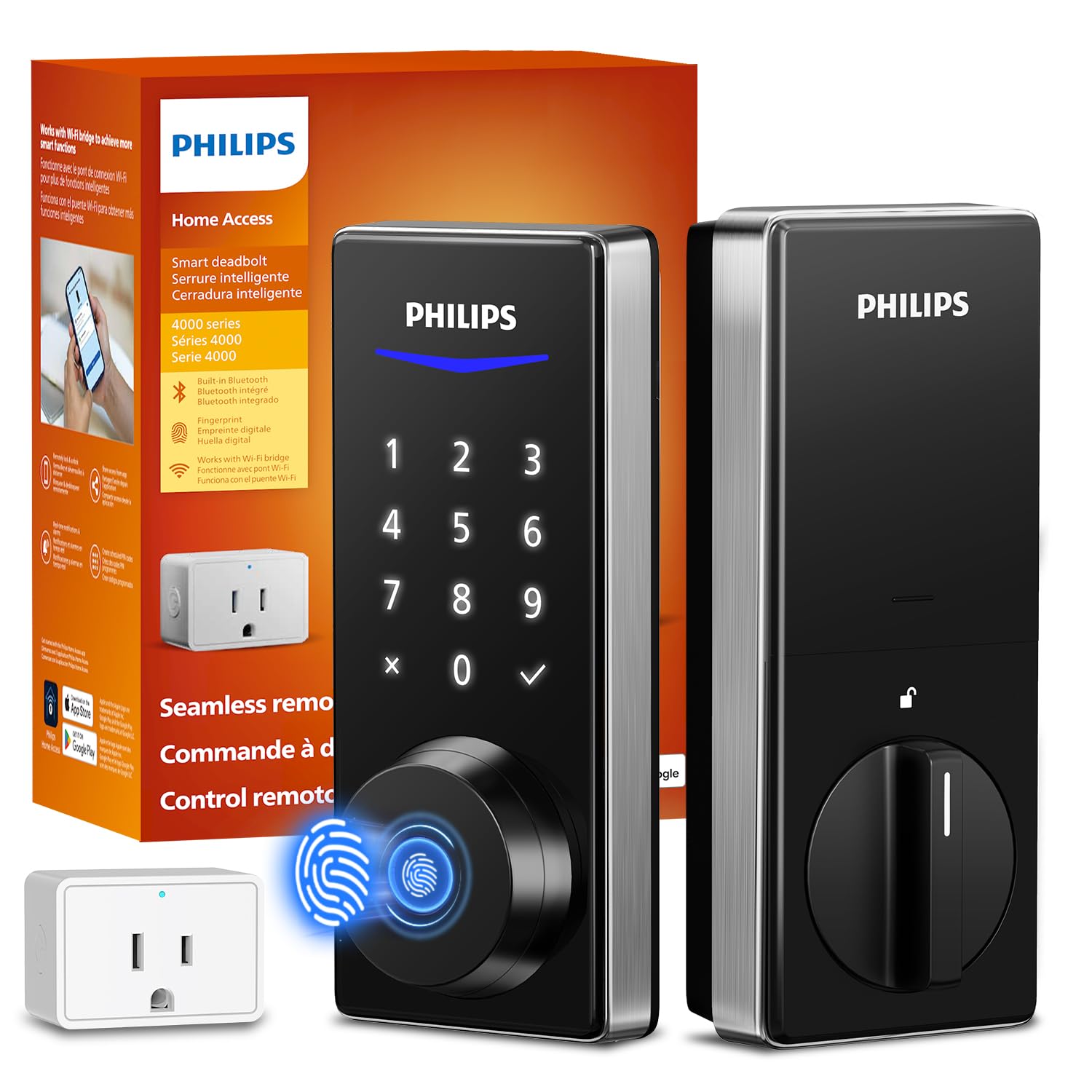
The Philips 240X is the more feature-packed sibling of the DDL242X, adding a Wi-Fi bridge for remote access and a door position sensor that enables truly intelligent auto-lock timing. The biometric fingerprint reader boasts a 99.99% accuracy rate and unlocks in under 0.3 seconds. Users consistently confirm that the scanner only fails when their finger is genuinely obscured — sweaty or slightly dusty prints still register reliably, which is a major advantage over older optical sensors.
Where this lock really shines is the app experience. The Philips Home Access app allows you to generate unlimited one-time PIN codes that self-delete after first use, plus up to 100 recurring user PINs with time-based schedules. This is ideal for Airbnb hosts, property managers, or anyone who needs to grant temporary access to dog walkers, cleaners, or contractors. The door position sensor ensures the auto-lock timer only starts counting when the door is fully closed, ranging from 30 to 180 seconds.
Installation is straightforward with only a screwdriver required, fitting doors between 1-3/8 and 2 inches thick. The brushed nickel aluminum build looks premium on any door. The honest note is that this lock does not natively support Google Assistant or Alexa voice commands — the app is your primary interface. If voice control is essential, the DDL242X model claims compatibility, but real-world results vary. For sheer remote management and code flexibility, the 240X with its Wi-Fi bridge is the most capable smart lock for apartment dwellers who want to control access without changing the door.
Why it’s great
- 99.99% fingerprint accuracy with sub-0.3 second recognition speed
- Door position sensor prevents auto-lock from engaging when door is ajar
- Unlimited one-time and 100 recurring PIN codes with time-based schedules
Good to know
- No native Google Assistant or Alexa voice support
- Exterior screw is optional but may require drilling a 19/32-inch hole for extra security
- Bluetooth lock requires the included Wi-Fi bridge for remote app access
FAQ
Can I use a door security bar if my apartment door opens outward?
Will a door security bar damage my floor or door frame?
Are smart locks with fingerprint sensors secure enough for an apartment?
Final Thoughts: The Verdict
For most users, the best apartment door security winner is the OnGUARD Security Door Brace because its 3,100-pound force rating and permanent floor mount provide a level of kick-in resistance that no portable bar can match. If you want keyless convenience with remote monitoring and auto-lock features, grab the Philips Wi-Fi Door Lock DDL242X. And for budget-conscious renters covering multiple doors, nothing beats the AceMining Upgraded Security Bar 2-Pack for its sturdy steel construction and portability at a fraction of the price.