
Bending 1/2-inch EMT conduit by hand without kinking the pipe or losing your angle is the difference between a clean professional install and a frustrating scrap pile. The right bender transfers your body weight into a smooth, consistent radius, eliminating the guesswork from offsets, saddles, and 90-degree bends that line up perfectly with the box knockout.
I’m Min — the co-founder and writer behind Gadgets Feed. I’ve spent hundreds of hours digging through technical drawings, tensile strength specs, and user field reports to separate the lightweight aluminum heads from the cast-iron workhorses in this guide.
After comparing seventeen models across five price tiers, I’ve assembled the definitive list of the best 1/2 inch emt bender options to get your next conduit run done right.
How To Choose The Best 1/2 Inch EMT Bender
Choosing the right conduit bender for 1/2-inch EMT is about matching the tool’s build quality to how often you need to produce precise, repeatable bends. Professionals on a daily job site have different needs than a homeowner running a single garage circuit. The key is understanding which specs actually affect your bending experience.
Head Material: Aluminum vs. Ductile Iron vs. Steel
Aluminum benders (like the Klein 51606) are lightweight — around 4.4 pounds — and resist corrosion, making them ideal for all-day carrying and general electrical work. Ductile iron benders (such as the Ideal 74-026) are significantly heavier at 6 pounds but offer extreme rigidity for heavy-duty, repetitive use without flexing. Carbon steel benders (like the RIDGID 608) are built for tubing and pipe, providing the highest tensile strength but at a higher weight and cost.
Angle Setter Technology vs. Standard Markings
Standard benders rely on cast-in markings (star, arrow, rim notch) and your own reading of the degree scale. Premium benders like the Klein 51606 include a patent-pending Angle Setter — a physical hard stop that locks at 10, 22.5, 30, and 45 degrees, automatically compensating for spring-back. This eliminates measurement errors on repeated bends, crucial for production work where every 90 or offset must be identical.
Dual-Size Versatility vs. Single-Size Precision
A single-size bender head is dedicated to 1/2-inch EMT, offering the most consistent bend radius with zero slop. Dual-size heads (like the TEMCo TH1909) can handle both 1/2-inch and 3/4-inch EMT with one tool, saving money and storage space but adding a bit more weight to the head. For a home shop or van storage, the dual-size trade-off is usually worth it.
Quick Comparison
On smaller screens, swipe sideways to see the full table.
| Model | Category | Best For | Key Spec | Amazon |
|---|---|---|---|---|
| Klein Tools 51606 | Aluminum Head | Best Overall / Angle Setter | 4.4 lb weight, 39.88″ length | Amazon |
| Ideal 74-026 | Ductile Iron | Top Performer / Durability | 6 lb weight, baked enamel handle | Amazon |
| TEMCo TH1909 | Dual Size | Best Value / Versatility | 7 lb weight, 1/2″ & 3/4″ EMT | Amazon |
| Greenlee 1810 | Offset Only | Best for Box Offsets | 8.8 lb weight, 9/16″ max offset | Amazon |
| TEMCo TH3030 | Offset Combo | Fast Production Offsets | 12.07 lb, dual-size offset dies | Amazon |
| RIDGID 608 | Carbon Steel | Heavy-Duty Tubing | 6.6 lb, extra-long handles | Amazon |
| NSI CB100 | Die Cast | Budget-Friendly | 3.69 lb, 8° inside radius | Amazon |
In‑Depth Reviews
1. Klein Tools 51606 Aluminum Conduit Bender

The Klein 51606 is the goldilocks bender for most electricians: it weighs only 4.4 pounds but delivers the precision of a much heavier tool thanks to a patent-pending Angle Setter. That orange plastic hard stop locks at 10, 22.5, 30, and 45 degrees and automatically adjusts for conduit spring-back, so every repeated bend on a production run comes out identical without checking the degree scale.
The 39.88-inch aluminum handle transfers leverage smoothly, and the wide foot pedal provides a stable platform for applying body weight. Bold cast markings for all six common angles (10 through 60 degrees) and their offset multipliers are easy to read even with gloves on. The interior hook surface prevents the EMT from rolling or twisting during the bend, maintaining a consistent radius.
Beyond bending, the interior clamp securely holds conduit while cutting with a hacksaw, and the removable angle finder (Cat. No. 51611) snaps off after each bend so you don’t accidentally leave it in place. It’s a complete assembly: bender head, handle, and Angle Setter are included and ready to work out of the box.
Why it’s great
- Angle Setter hard stop guarantees consistent repeated bends without measuring
- Lightweight aluminum construction at 4.4 lb for all-day portability
- Bold cast markings with offset multipliers for saddle and back-to-back bends
Good to know
- Angle Setter must be removed after every bend to avoid damage
- Aluminum head is not as durable as ductile iron for extreme heavy daily use
2. IDEAL Electrical 74-026 Ductile Iron Bender

The Ideal 74-026 swaps aluminum for ductile iron, a material choice that makes this bender an absolute tank at 6 pounds. The rugged head resists flex and deformation even under extreme force, making it the go-to choice for heavy-duty daily use on commercial job sites. The baked-on blue enamel handle resists corrosion from wet concrete and mud.
Precision is delivered through raised cast markings on both sides of the head — star, arrow, degree scale, and rim notch — so you can read your angle from any position. The grooved internal hook surface prevents pipe slippage when you are cranking on the handle to form a tight offset. This bender uses the industrial standard Benfield bending system for its geometry.
The included handle attaches securely and provides enough leverage to bend 1/2-inch EMT with one hand. Several users report this is the best hand bender available, with the only caveat being that the handle bolts need to be tightened more than expected to eliminate any play. It’s a tool that rewards expertise and delivers professional-grade results.
Why it’s great
- Ductile iron head offers unmatched rigidity for heavy daily use
- Raised cast markings on both sides improve visibility from any angle
- Benfield bending system ensures accurate, standard-compliant geometry
Good to know
- Heavier than aluminum alternatives (6 lb vs. ~4.4 lb)
- Handle bolts require careful tightening to eliminate play
3. TEMCo 2 in 1 Dual Shoe Conduit Bender TH1909

The TEMCo TH1909 solves the storage and budget problem of owning two separate benders by integrating both 1/2-inch and 3/4-inch EMT shoes into a single head. At 7 pounds, the head is heavier than the single-size Klein, but that weight is the cost of versatility — you can bend two common conduit sizes with one tool, saving space in a service van or home workshop.
The aluminum construction keeps the overall weight manageable, and the two-piece handle is thick, quality metal that feels sturdier than many plastic-handle benders found at home stores. A handy offset multiplier chart is printed directly on the handle, so you don’t need to reference a separate table when calculating shrink and setback for a saddle bend. The TH1909 also bends 1/2-inch rigid and IMC conduit.
Assembly is a simple three-piece thread-and-head connection — TEMCo recommends using thread compound or Teflon tape to ensure a tight fit. The 5-year limited warranty and 1-year no-questions-asked return policy provide extra peace of mind for a mid-range investment. For a home garage or light commercial work, this is the most versatile dollar-to-function ratio available.
Why it’s great
- Dual shoe bends both 1/2″ and 3/4″ EMT with one tool
- Sturdy metal handle and aluminum head at a competitive weight
- Offset multiplier chart printed on handle for quick reference
Good to know
- Heavier head than single-size benders due to dual shoe design
- Thread compound recommended for secure handle attachment
4. Greenlee 1810 Little Kicker Offset Bender

The Greenlee 1810 Little Kicker is a niche tool that excels at one thing: producing perfect, repeatable box offsets in a single motion. Instead of measuring, marking, and double-bending with a hand bender, you simply insert the 1/2-inch EMT, depress the handle, and release. The mechanical compression creates an offset of up to 9/16 inch that matches the knockout in a standard wall box.
High-tensile steel construction at 8.8 pounds makes this bender exceptionally durable. Users report hanging 450 feet of conduit with 40-50 boxes in four days with only one error, a pace that would be impossible with manual hand bending. The offset is consistent every time, so all your junction boxes have the same reveal for a clean, professional appearance.
The main limitation is that it only does one specific offset depth, so it won’t replace a full hand bender for 90s or saddle bends. Some users note that a full handle throw creates an offset slightly larger than standard boxes, so marking the handle to stop at a partial throw is recommended. For anyone wiring multiple boxes in a visible conduit run, this tool pays for itself in time saved.
Why it’s great
- One-motion operation creates perfect box offsets in seconds
- Consistent, repeatable bends for professional-looking conduit runs
- High-tensile steel build for long tool life on the job site
Good to know
- Dedicated to offsets only — doesn’t replace a standard hand bender
- Full handle throw may produce offset deeper than standard box knockout
5. TEMCo TH3030 Dual Size Offset Bender

The TEMCo TH3030 is a different beast from a standard hand bender: it is a dedicated offset bender with dual interchangeable dies for 1/2-inch and 3/4-inch EMT. Changing between sizes takes less than one minute with no tools required, and the dies are keyed so you cannot install them backward. The lightweight aluminum construction keeps the 12.07-pound tool manageable for moving around the job site.
Rather than marking, measuring, and double-bending an offset with a hand bender, the TH3030 creates a single, smooth motion offset that matches the electrical box knockout. This eliminates the double bend entirely, reducing time and improving connection quality. Users who do semi-regular EMT work report that this tool saves significant time and produces zero waste compared to manual bending.
For daily production use by a professional, the Greenlee may be worth the premium, but for most electricians and serious DIYers, the TH3030 delivers excellent value at a fraction of the cost. Some users clamp the bender to a 2×6 workbench for one-hand operation.
Why it’s great
- Tool-free die change between 1/2″ and 3/4″ EMT in under a minute
- Single-motion offset eliminates double bending for faster work
- Aluminum construction keeps weight manageable for a dual-die tool
Good to know
- Aluminum die may flex slightly more than Greenlee steel equivalent
- Best suited for occasional to regular use rather than daily heavy production
6. RIDGID 38048 Model 608 Pipe Bender
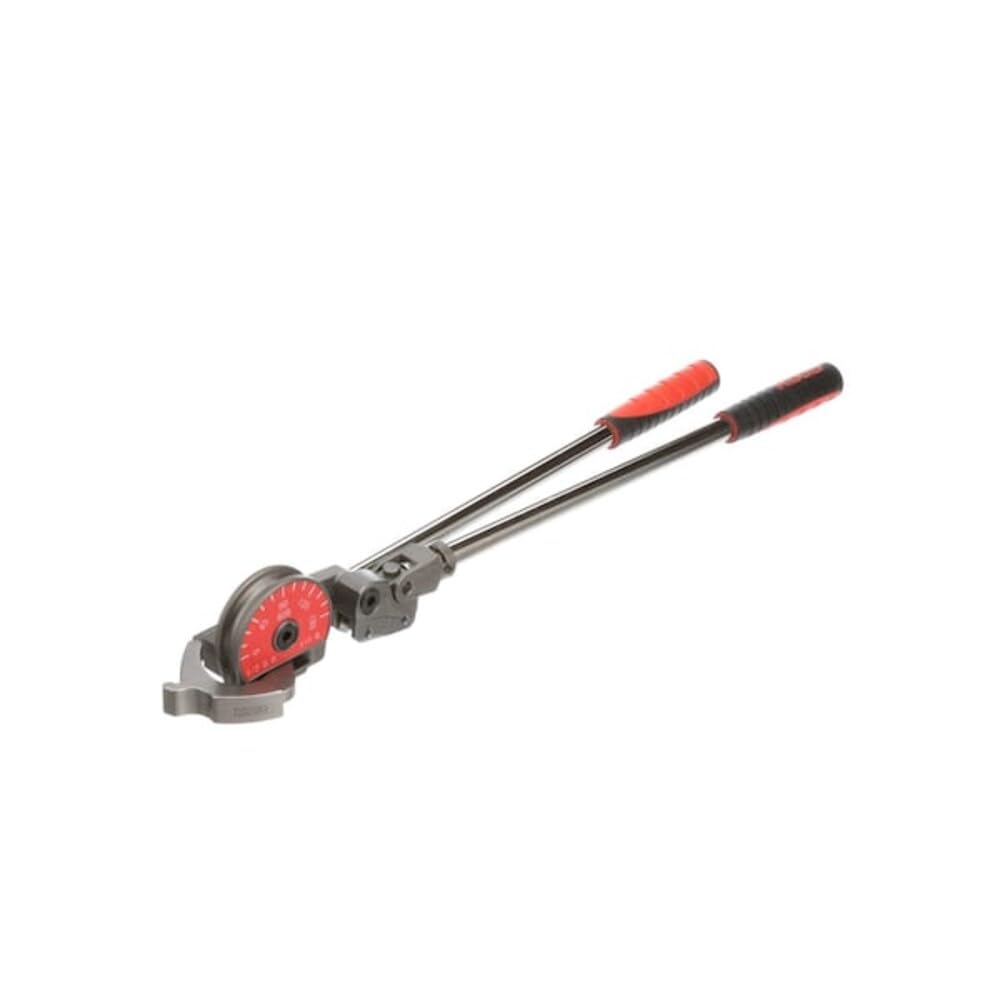
The RIDGID 608 is engineered for bending stainless steel tubing and heavy-gauge pipe, not just thin-wall EMT. The carbon steel frame and extra-long handles (two included) provide superior leverage to bend 1/2-inch pipe with 0.065-inch or even 0.090-inch mild steel walls without deforming the material. The integral rollers reduce friction during the bend for a smooth, flattened-kink-free radius.
An accurate angle gauge on the binder includes spring-back compensation, so you can over-bend to the correct final angle in a single pull. This is critical for instrumentation work where a perfectly round tubing bend is required for proper flow or fit. The 6.6-pound weight is manageable for a steel bender, and the robust construction ensures a long service life in industrial and plumbing environments.
It is worth noting that the RIDGID 608 is specifically for pipe and tubing — it does not have the traditional EMT bender shoe profile with star and arrow markings for box offsets. It is the right tool if you work with stainless or steel pipe, but for standard EMT conduit runs, a dedicated EMT bender like the Klein or Ideal is more appropriate.
Why it’s great
- Bends heavy-gauge steel and stainless tubing without deformation
- Extra-long handles provide superior leverage for strong pipe walls
- Angle gauge with spring-back compensation for precise single-pull bends
Good to know
- Not designed for standard EMT conduit bender markings
- Best for instrumentation, plumbing, and heavy industrial pipe work
7. NSI CB100 Aluminum Die Cast Bender
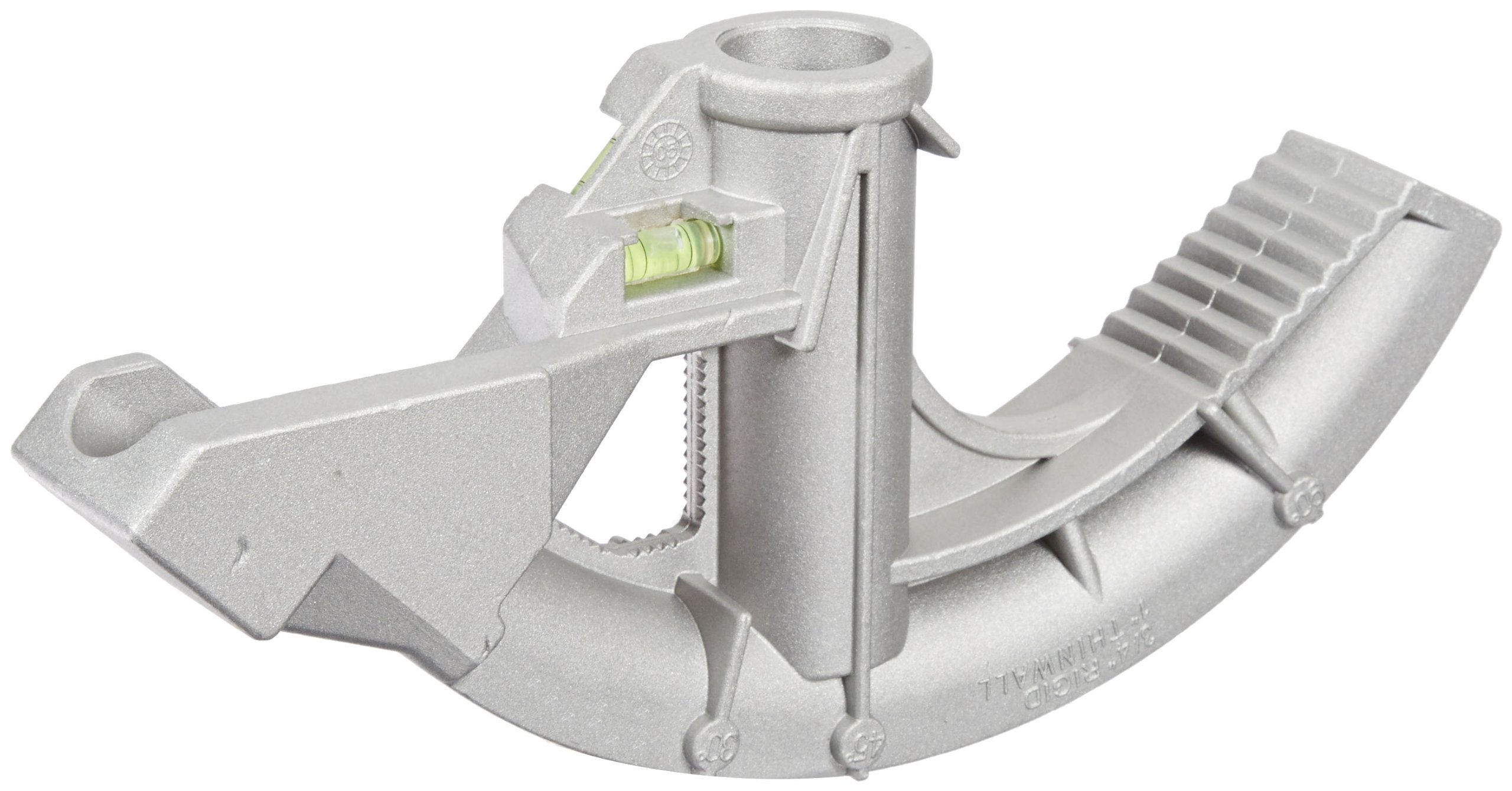
The NSI CB100 is the entry-level option for anyone who needs a functional conduit bender for 1-inch EMT or 3/4-inch rigid without spending on a name-brand tool. At just 3.69 pounds, the die-cast aluminum body is very light, though it is worth noting that this bender is spec’ed for 1-inch EMT — not 1/2-inch — making it a slightly different tool than the others in this list, but still a relevant budget alternative.
The cast-in angle indicators with raised bending reference points are clear and easy to read, and the 8-degree inside radius is standard for its size class. Users report that the bender works well when mounted to a shovel handle or similar leverage extension, and they describe the markings as clear and the material as thick enough for occasional bending of EMT and even old galvanized water pipe.
For the cost, this is a great pick for a homeowner or light commercial user who needs to bend a few pieces of conduit and doesn’t want to invest in a premium tool. Durability for daily professional use is questionable based on user feedback — the die-cast aluminum may not hold up to constant heavy bending — but for occasional projects, it gets the job done without complaint.
Why it’s great
- Very lightweight at 3.69 lb for easy transport and storage
- Clear cast-in angle indicators with raised reference points
- Bends both EMT and rigid for versatility in occasional use
Good to know
- Speced for 1″ EMT, not 1/2″ — verify size compatibility
- Die-cast aluminum may not survive daily professional heavy use
FAQ
What is the difference between a hand bender and an offset bender?
Can I use a 1/2-inch EMT bender for rigid conduit?
What does the Benfield bending system mean?
Final Thoughts: The Verdict
For most users, the best 1/2 inch emt bender winner is the Klein Tools 51606 because it combines a lightweight aluminum head with the Angle Setter technology for fast, repeatable bends without constant measurement. If you want maximum durability for daily commercial use, grab the Ideal 74-026 ductile iron bender. And for the best value and versatility in a home shop, nothing beats the TEMCo TH1909 dual-size bender.