
Crawling through a low-clearance attic on roof trusses and loose insulation is a specific kind of misery. The wrong padding turns every knee-step into a sharp jab, and the constant pressure against hard wood or joists leaves you sore for days. You need gear that spreads that load wide and stays locked in place while you shift your weight from truss to truss.
I’m Min — the co-founder and writer behind Gadgets Feed. My research for this guide involved pouring over hundreds of verified buyer reports, comparing foam densities, gel layer thicknesses, and strap retention systems to find the pads that actually survive attic abuse without migrating down your shins.
This guide breaks down seven serious contenders with measurable differences in cushioning, strap security, and shell durability, so you can pick the right pair for your next crawl-space mission. I will help you find the best attic knee pads for your specific work.
How To Choose The Best Attic Knee Pads
Attic work is uniquely punishing on your knees. It combines hard wood surfaces, sharp fasteners, unstable insulation, and constant lateral movement. Selecting the right padding comes down to three factors that directly affect your comfort and safety in that environment.
Strap Security and Anti-Migration Design
In an attic, you are not kneeling in one spot. You are crawling, pivoting, and shifting your entire body weight. The single most common complaint in buyer reports is pads sliding down to the shin after a few minutes of movement. Look for pads with dual straps — one above and one below the knee — and a silicone grip strip on the interior of the upper strap. This combination locks the pad onto your leg, preventing migration even during aggressive crawling.
Shell Material and Durability
A soft foam pad will disintegrate the first time you kneel on a stray nail or a splintered joist. You need a rigid thermoplastic or TPU outer shell that can handle sliding across rough wood and sharp debris. The shell should also be contoured to prevent “rolling” when you shift your weight sideways, which can catch on insulation or wiring and throw you off balance.
Cushioning Density and Type
Standard foam compresses to near-zero thickness under a 200-pound load after an hour of use. For attic work, you need either high-density EVA foam (at least 70 kg/m³ density) or a dual-layer gel and foam system. The gel layer absorbs the initial impact, while the dense foam block prevents bottoming out against the truss. Pads that measure at least 1 inch of uncompressed thickness are the minimum for adequate protection in this environment.
Quick Comparison
On smaller screens, swipe sideways to see the full table.
| Model | Category | Best For | Key Spec | Amazon |
|---|---|---|---|---|
| NoCry GelGuard+ | Premium | All-day stability & comfort | Dual-layer gel & EVA foam | Amazon |
| NoCry Pro Construction | Mid-Range | Ankle support & joint stability | Gel & high-density foam dual-layer | Amazon |
| ToughBuilt GelFit G205 | Premium | Wide stabilizing footprint | Interchangeable SnapShell caps | Amazon |
| DEWALT DWST590014 | Mid-Range | Long-term durability & value | 1680 denier fabric shell | Amazon |
| TOMMARS Foldable Mat | Premium | Full-body support & tool storage | 44.88-inch 5-fold foam mat | Amazon |
| WORKPRO Kneeling Pad | Mid-Range | Large-area cushion for stationary work | 1.2-inch thick NBR foam block | Amazon |
| M-AUTO Rolling Creeper | Mid-Range | Mobility & tool tray on hard floors | 5 swivel casters, 200 lb capacity | Amazon |
In‑Depth Reviews
1. NoCry Professional Gel Knee Pads (GelGuard+)

NoCry’s GelGuard+ is the gold standard for attic work because it solves the two biggest problems in one package: impact absorption and strap retention. The dual-layer system combines a soft gel layer that conforms to your kneecap with a dense EVA foam base that prevents bottoming out on a 2×4 truss. The hard TPR cap is contoured with a grippy texture, so it does not slide on plywood or roof decking while you shift your weight.
The strap system is where this pair truly separates itself. It uses a wide neoprene upper band paired with a silicone grip strip on the interior, plus a lower shin strap — both fully adjustable with reinforced pull loops. Buyer reports consistently describe these pads staying locked in place during hours of crawling, with no migration or need for re-tightening. The built-in hang loops also let you clip them to a tool belt or attic access ladder between uses.
At 1.4 pounds per pair, they are light enough to wear for extended periods without feeling burdened. The only notable trade-off is that the upper strap range (15.7 to 18.9 inches at the thigh) may run slightly large for smaller-framed individuals, as noted by some buyers around 5’6″. For most adult users with average to above-average leg circumference, the fit is secure and the cushioning is transformative for long attic sessions.
Why it’s great
- Dual-layer gel-and-EVA cushioning eliminates bottoming-out on wood
- Silicone grip strip inside upper strap prevents shin migration
- Hard contoured TPR cap offers excellent slide protection over debris
Good to know
- Upper strap can feel large for users with slender thighs
- Slightly bulkier profile than basic strap-on pads
2. NoCry Professional Construction Knee Pads
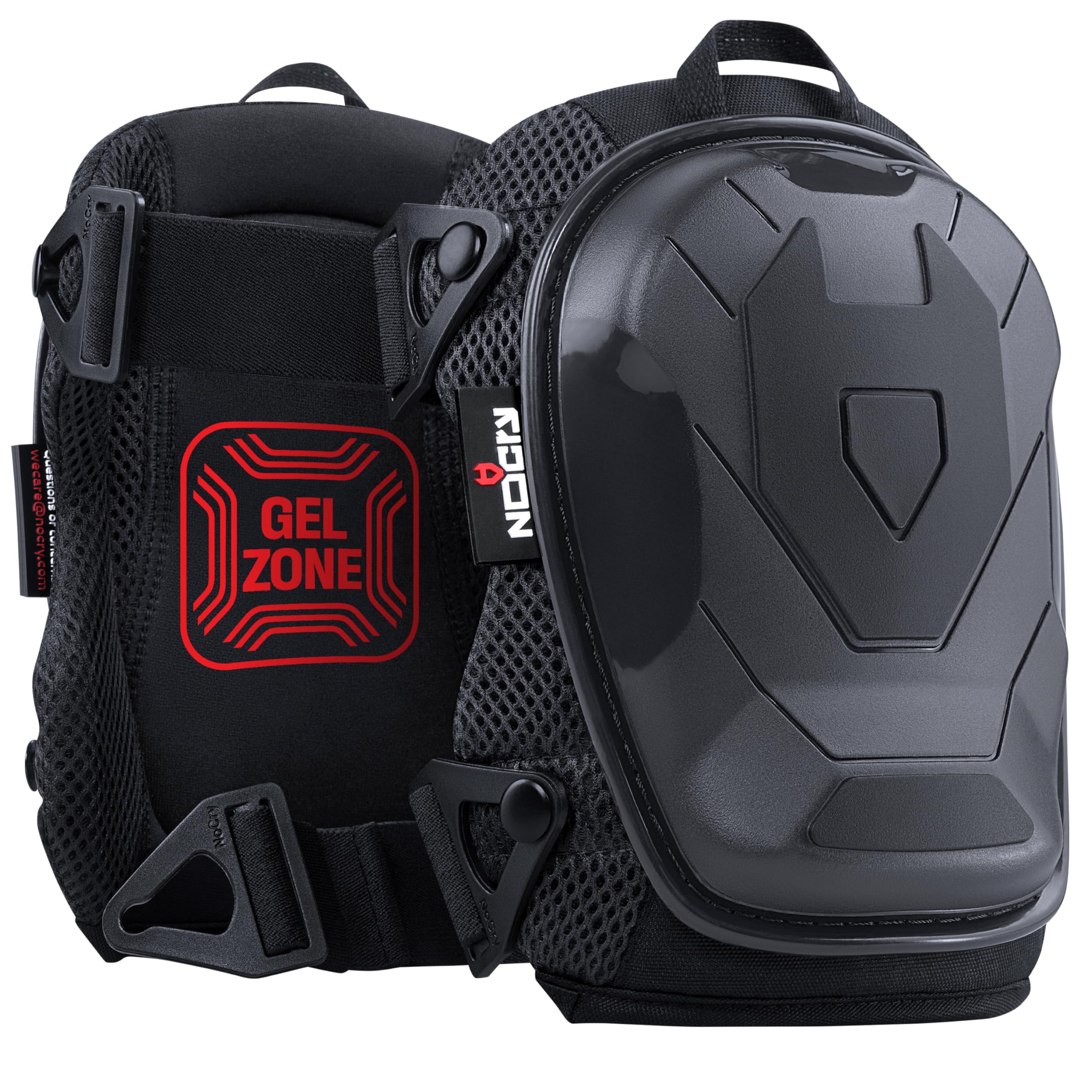
The NoCry Pro Construction pads deliver a feature set normally found in premium models at a mid-range price point, making them an excellent pick for attic work. Their standout design element is a raised lower lip that supports the ankle, creating a natural lever that reduces joint stress and adds stability when you are leaning forward to grab a tool or wire. This is a genuine ergonomic advantage for the constant crouched posture attic work demands.
Dual-layer padding combines a squishy gel layer near the knee with a high-density foam foundation. The shell uses a TPR cap reinforced with nylon threads and breathable polyester mesh, which holds up well against abrasive surfaces like asphalt shingles or un-sanded joists. The strap system uses military-grade rivets at stress points, and buyers report these hold tension consistently even after months of heavy use on concrete and wood subfloors.
The main drawback reported by some users is that the pads feel warm during extended wear because the breathable mesh is not fully ventilated. They are also slightly bulky, which can be an issue in extremely tight attic spaces where you need to squeeze between rafters. For standard attic crawl spaces with clear roof access, the ankle support feature alone justifies the purchase, as it directly reduces the shin and knee strain from months of repetitive work.
Why it’s great
- Raised lower lip supports ankle and reduces joint strain during leans
- Dual-layer gel and foam prevents bottoming out on hard surfaces
- Military-grade rivets and reinforced straps maintain tension over months
Good to know
- Can feel warm during extended wear due to limited mesh ventilation
- Bulky profile may limit fit in extremely tight crawl spaces
3. ToughBuilt GelFit Stabilizer Knee Pads (TB-KP-G205)

ToughBuilt takes the unusual approach of making the GelFit pads deliberately stable, even if that means a less dramatic curve. The wide, flat footprint of the shell prevents tipping when you shift your weight sideways, which is a genuine safety advantage on uneven attic joists or when you have to pivot over a truss. The cap is made from a durable plastic with a rubberized edge that grips surfaces, reducing the chance of a sudden slide.
The cushioning system uses a combination of ergonomic gel and foam inside a 1680 denier fabric wrap. The gel pad sits directly under the kneecap and moves slightly to conform to your knee shape, while the surrounding foam provides a consistent support ring. The SnapShell design allows you to swap the cap for a round version (sold separately) if you find the square profile catches on obstacles, though most attic users prefer the stability of the wide base.
Buyers consistently praise the lack of rolling or slipping during extended crawling sessions, which is a common failure point for cheaper pads. The trade-off is weight and adjustability. The straps are durable but the closure uses a snap system that some users find less secure than hook-and-loop, requiring periodic re-tightening.
Why it’s great
- Extra-wide flat base prevents tipping during lateral attic movement
- Gel cushioning conforms to knee shape for pressure-point relief
- Durable 1680D fabric wrap resists snags on nails and splinters
Good to know
- Snap closure system may need occasional re-tightening during use
- Heavier than comparable gel-lined pads at this price point
4. DEWALT Flooring Knee Pads with Gel (DWST590014)
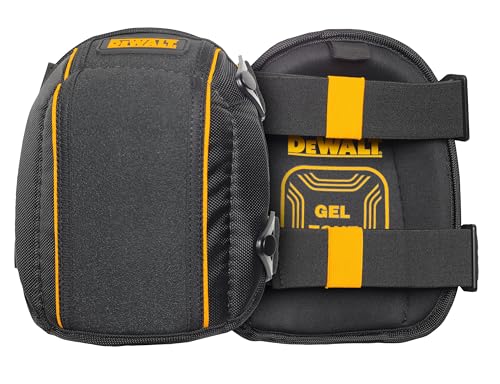
DEWALT’s entry into the knee pad space focuses on brute-force durability over ergonomic innovation, and for attic work that is often exactly what you need. The outer shell is made from 1680 denier fabric — a material typically used for heavy-duty tool bags — which makes it highly resistant to tears from nails, screws, or rough lumber. The gel zone is positioned at the center of the pad, surrounded by high-density foam that supports your entire kneecap without creating a pressure ridge.
The strap system uses two bands: a wide single strap with a swiveling buckle and a quick-release elastic strap. The swiveling buckle is a smart detail because it allows the strap to follow your leg’s natural rotation when you crawl, reducing pinching. The quick-release elastic strap makes it easy to take the pads on and off when you need to stand up to move a ladder or reposition an access panel.
Buyer feedback highlights exceptional longevity, with users reporting months of daily use on hard surfaces without significant wear to the fabric or compression of the gel insert. The trade-off is that the straps can drift toward the inner knee for some users, requiring an occasional adjustment. This is a common issue with single-strap designs and is worth noting if you do a lot of crab-walking across joists. For stationary kneeling with periodic repositioning, the durability is unmatched at this tier.
Why it’s great
- 1680 denier fabric shell survives contact with nails and splinters
- Swiveling buckle reduces strap pinch during crawling movement
- Gel-and-foam core maintains support after months of daily use
Good to know
- Single-strap design can drift toward inner knee during lateral moves
- Elastic quick-release strap may lose tension over long-term use
5. TOMMARS Heavy Duty Foldable Kneeling Pad
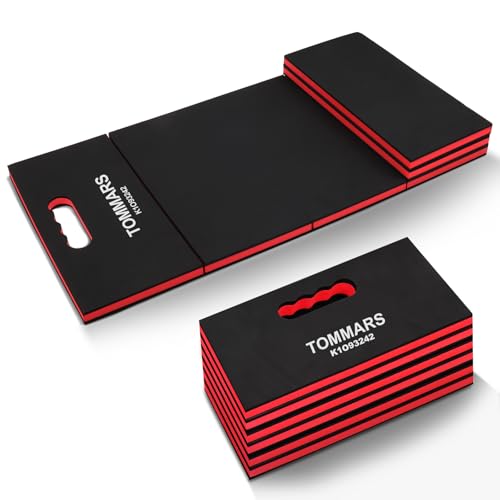
If you spend long stretches lying on your stomach to reach wiring or ductwork, the TOMMARS foldable mat is a completely different approach to attic knee protection. It unfolds to 44.88 inches — long enough to support your full torso — and folds into a compact 7.87 x 15.75 inch block with an integrated handle for easy transport up an access ladder. The high-density PE foam provides consistent thickness across the entire surface, distributing your weight across a wide area.
The mat features tool pockets stitched into the side, allowing you to stash screwdrivers, wire strippers, or a flashlight while you work. The outer surface is waterproof and oil-resistant, which protects the foam from attic dust, insulation fibers, and accidental fluid spills. The non-slip bottom keeps the mat in place on plywood and concrete, though it can shift on loose insulation if you are crawling aggressively rather than sliding.
Buyers love the modular folding design, which lets you use just two or three sections as a small kneeling pad or unfold entirely for lying down. The main durability concern is that the thin seam between fold sections can tear if you drag the pad across rough surfaces under full body weight. For stationary or semi-stationary work where you are not sliding constantly, this is a highly effective accessory that reduces overall knee and back fatigue.
Why it’s great
- Full 44.88-inch length supports torso for under-vehicle or attic access
- Tool pockets keep essentials within reach during work sessions
- Folds compactly with handle for easy transport up access ladders
Good to know
- Fold seams can tear if dragged aggressively across abrasive surfaces
- Not a replacement for knee pads when constant crawling is needed
6. WORKPRO Extra Thick Kneeling Pad

The WORKPRO kneeling pad takes the simplest possible approach — a massive 28 x 16 inch slab of 1.2-inch thick NBR foam — and executes it well. For attic work where you have a designated kneeling area near an access panel or junction box, this provides a spacious, forgiving surface that protects both knees and your shins if you kneel with legs together. The NBR material is naturally waterproof and dirt-resistant, making it easy to wipe down after picking up insulation dust.
The chamfered safety edges with white stripes are a thoughtful touch, reducing tripping hazards and making the edges visible in low-light attic conditions. The foam has a smooth, soft finish that does not leave marks on your knees after extended contact, reducing skin irritation. The built-in handle makes it easy to carry the pad to different zones of the attic without rolling it up.
The downside for active attic work is that the pad is stationary — it does not stay on your knees. If you need to crawl from truss to truss, you have to pick it up and reposition it, which breaks your rhythm. The NBR foam also compresses noticeably under sustained load, losing about 30 percent of its thickness after an hour of continuous kneeling. For stationary tasks like wiring a single junction box, it is excellent. For mobile crawling, you are better off with a strapped pad.
Why it’s great
- Large 28×16 inch surface protects both knees and shins simultaneously
- NBR foam is naturally waterproof, washable, and resistant to dirt
- Chamfered edges with white stripes improve safety in low-light conditions
Good to know
- Stationary design requires lifting and repositioning for mobile work
- Foam compresses gradually under sustained load after an hour
7. M-AUTO Rolling Knee Creeper
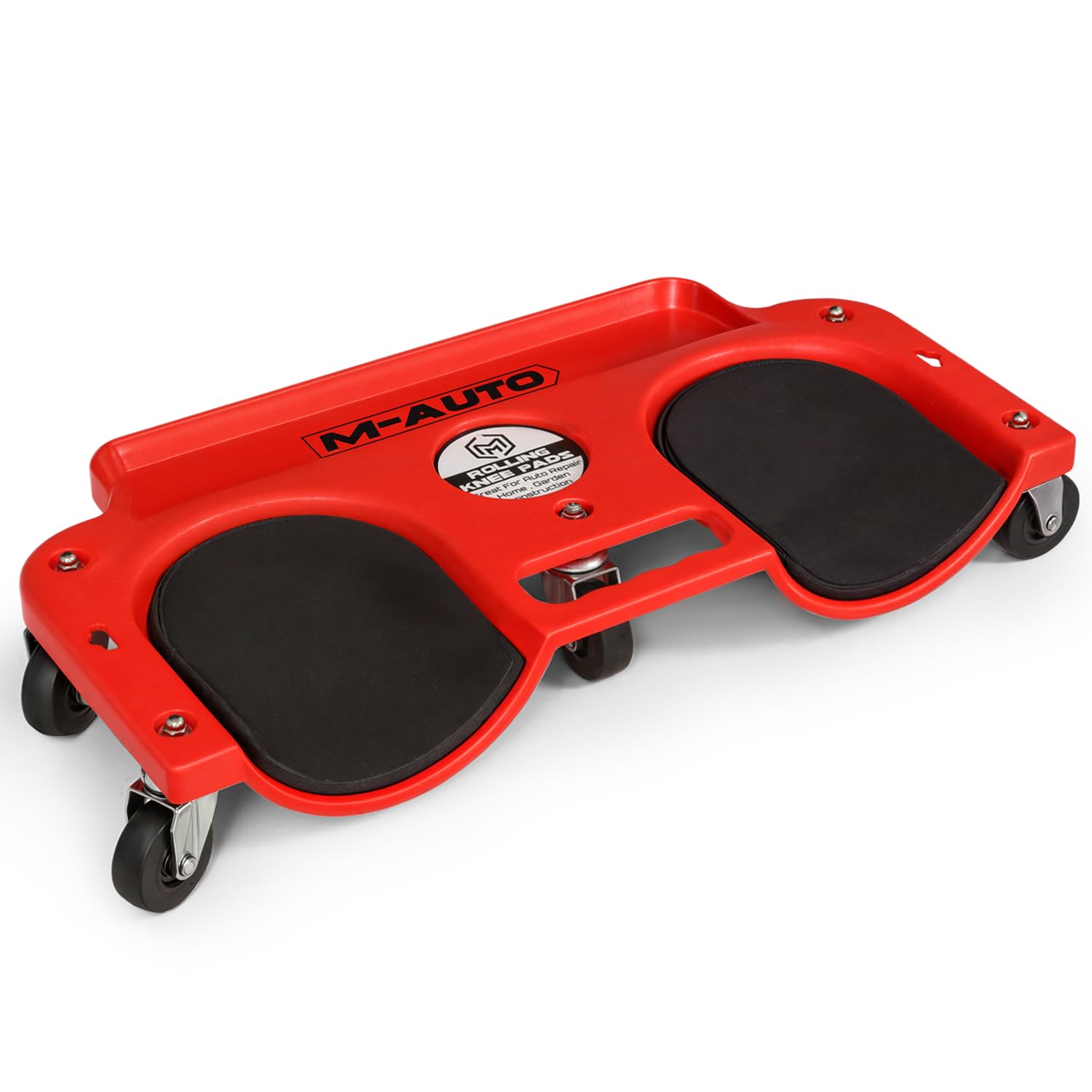
The M-AUTO Rolling Knee Creeper is not a traditional knee pad and it does not pretend to be one. It is a small wheeled platform with a padded kneeling surface, five 360-degree swivel casters, and a built-in tool tray, designed specifically for smooth garage or basement floors. In an attic with plywood decking, it can glide across the surface, allowing you to roll from one work zone to another without crawling. The PP board frame is rated to support up to 200 pounds.
The built-in tool tray is a genuine productivity booster for attic work, letting you carry screws, connectors, and a multimeter without making multiple trips back to the access panel. The 360-degree casters allow tight pivots, so you can maneuver around roof trusses and ductwork without getting stuck. The red color makes it easy to spot in dim lighting against insulation.
The critical limitation is that you need a flat, smooth surface for the casters to work. In loose fiberglass or cellulose insulation, the wheels will sink and dig instead of rolling. Heavier users above 200 pounds have also reported that the PP board flexes noticeably under load, which makes the casters wobble and reduces stability. For attics with decent plywood decking and limited insulation depth, this is a creative alternative to knee pads. For traditional blown-in insulation attics, stick with a strapped-on pad.
Why it’s great
- Five swivel casters provide gliding mobility across smooth plywood
- Built-in tool tray reduces trips back to the access panel
- Compact and lightweight design stores easily between uses
Good to know
- Castres sink and stop rolling in loose or deep insulation
- PP frame flexes under heavier loads above 200 pounds
FAQ
Can I use basic gardening knee pads in an attic?
How do I stop my knee pads from sliding down while crawling?
Is a rolling knee creeper better than strap-on pads for attics?
Final Thoughts: The Verdict
For most users, the best attic knee pads winner is the NoCry Professional Gel Knee Pads because they combine dual-layer gel-and-EVA cushioning with a silicone grip strap system that stays locked during hours of attic crawling. If you want maximum ankle support and a lower lip for joint stability, grab the NoCry Pro Construction Knee Pads. And for stationary work or situations where you need full torso support, nothing beats the TOMMARS Foldable Kneeling Pad for versatility and storage convenience.