
Hunting for gold in mineralized ground demands a detector built for the job — one that ignores hot rocks and zeroes in on tiny flakes that other machines walk right over. The wrong choice means digging endless iron trash while the real targets stay buried.
I’m Min — the co-founder and writer behind Gadgets Feed. I’ve spent hundreds of hours analyzing specifications like operating frequency, ground balance type, and coil design across dozens of gold-oriented VLF and multi-frequency detectors to separate the real performers from the marketing noise.
This guide ranks the top contenders based on real-world prospecting capability, build quality, and ease of use to help you pick the best best gold detector for your next trip to the goldfields.
How To Choose The Best Gold Detector
Selecting a gold detector is different from buying a general-purpose coin hunter. The ground you’ll be scanning is often loaded with iron minerals that create false signals, and the gold you’re after is frequently tiny — sometimes smaller than a grain of rice. Here are the three specs that matter most.
Operating Frequency (kHz)
Higher frequencies, typically 18 kHz and above, are far more sensitive to small, low-conductivity targets like gold nuggets. A detector running at 71 kHz, like the Fisher Gold Bug 2, can detect flakes that a 7 kHz machine would completely miss. The trade-off is reduced depth on larger targets, but for dedicated nugget shooting, high frequency is non-negotiable.
Ground Balance Type
Mineralized soil causes a detector to “ground out” — losing depth and generating false tones. Manual ground balance gives you precise control to tune out specific mineralization levels, while automatic ground balance offers convenience at the cost of fine-tuning. The best gold detectors offer both, allowing you to lock in a stable threshold in nasty dirt.
Coil Design and Size
A Double-D (DD) coil is essential in mineralized ground because it cancels out interference from the soil better than a concentric coil. Larger coils (11 inches and up) provide deeper coverage for open fields, while smaller coils (5-6 inches) excel in tight spaces and around trashy areas where you need to isolate a target.
Quick Comparison
On smaller screens, swipe sideways to see the full table.
| Model | Category | Best For | Key Spec | Amazon |
|---|---|---|---|---|
| Minelab Gold Monster 1000 | VLF | Beginner-friendly nugget shooting | 45 kHz VLF | Amazon |
| Garrett AT Gold | VLF | Waterproof all-terrum hunting | 18 kHz VLF | Amazon |
| Nokta Legend Pro Pack | Multi-Freq | Versatile land and water prospecting | Multi-frequency | Amazon |
| Fisher Gold Bug 2 | VLF | Detecting micro-nuggets in hot ground | 71 kHz VLF | Amazon |
| Fisher Gold Bug Pro | VLF | Lightweight gold prospecting | 19 kHz VLF | Amazon |
| XP Deus II | Multi-Freq | Fully wireless high-end relic & gold | FMF Multi-frequency | Amazon |
| Garrett ACE 300 | VLF | Entry-level coin & jewelry hunting | 8 kHz VLF | Amazon |
| Hazlewolke TX-850 PRO | VLF | Budget-friendly prospecting | 19.23 kHz VLF | Amazon |
| Minelab Gold Monster 1000 (Single Coil) | VLF | Automatic operation gold hunting | 45 kHz VLF | Amazon |
In‑Depth Reviews
1. Minelab Gold Monster 1000 (Kit)

The Minelab Gold Monster 1000 pairs a 45 kHz operating frequency with a 24-bit signal processor to deliver exceptional sensitivity to gold nuggets across a wide size range. The kit includes both a 10×6-inch DD waterproof coil for general coverage and a 5-inch DD coil for picking through trashy, tight spots — a setup that would cost you extra with most competitors.
Minelab engineered this detector to run fully automatic, handling noise canceling, ground balance, and sensitivity adjustments on its own. That makes it a brilliant option for beginners who want professional-grade performance without a steep learning curve. The ferrous/non-ferrous discrimination copes admirably with conductive salt soils, a common headache in dry gold country.
The controls are a simple touchpad interface with a gold chance indicator that tells you how likely the target is to be the real deal. At 2.94 pounds, it’s light enough for full-day sessions, and the lithium-ion battery delivers reliable runtime. The only real compromise is that the waterproof rating is only IP54, so the control box stays dry while the coil handles submersion up to a few feet.
Why it’s great
- 45 kHz frequency finds sub-gram nuggets other detectors miss
- Fully automatic operation removes guesswork for beginners
- Two waterproof DD coils included for versatility
Good to know
- Control box is not fully submersible (IP54 only)
- Can be chatty at maximum sensitivity in hot rocks
2. Garrett AT Gold

The Garrett AT Gold is a purpose-built gold prospecting machine that also excels as an all-terrain detector. Its 18 kHz operating frequency strikes a strong balance between sensitivity to small gold and the ability to hit mid-sized targets at respectable depth. The proprietary Ground Balance Window lets you fine-tune performance in varying soil conditions, and the Iron Audio feature audibly indicates when you’re over ferrous junk so you can skip the dig.
This detector ships with Garrett’s Pro-Pointer AT, a waterproof pinpointer that reaches 20 feet of depth, making recovery fast and efficient. The entire kit is built around durability — the coil is waterproof, and the control box carries an IP54 rating for rain and splash resistance. Users consistently report finding coins, rings, and small nuggets within the first few hours of use.
The True All Metal Mode delivers maximum depth and sensitivity for prospecting, and the frequency can be adjusted in a small window to dodge electrical interference. It’s a little heavier than some dedicated gold detectors at over five pounds with batteries, but the included instructional DVD and detailed manual flatten the learning curve considerably.
Why it’s great
- Iron Audio feature saves time by identifying junk targets audibly
- Includes a waterproof pinpointer for fast recovery
- Manual and auto ground balance with Ground Balance Window
Good to know
- Heavier than dedicated gold-only detectors
- Headphones not always included in package
3. Nokta Legend Pro Pack

The Nokta Legend is the brand’s first simultaneous multi-frequency detector, and the Pro Pack bundles it with everything you need to hunt on day one: two DD coils (12×9-inch and 6-inch), a waterproof pinpointer, Bluetooth aptX low-latency headphones, a digger, carry bag, and a finds pouch. The multi-frequency engine lets it adapt seamlessly to gold prospecting, coin shooting, relic hunting, and beach work without swapping settings.
With an IP68 rating, the Legend’s control box and coils are fully submersible up to 10 feet, making it one of the most waterproof options in this list. The replaceable spare battery charges via USB and provides up to 20 hours of run time — enough for multiple weekend outings. The carbon fiber shaft keeps weight manageable, and the vivid color LCD screen puts all critical data in front of your eyes without squinting.
In gold fields, the Legend’s multi-frequency processing helps stabilize the signal in variable ground conditions where single-frequency VLF detectors would chatter. It handles small gold surprisingly well for a multi-purpose machine, though dedicated ultra-high-frequency VLF units like the Gold Bug 2 still hold an edge on the tiniest flakes. For the prospector who also hunts relics and coins, this is the most capable all-in-one package available.
Why it’s great
- IP68 fully submersible to 10 feet — rare in this category
- Complete ready-to-hunt bundle with pinpointer and headphones
- Multi-frequency engine adapts to gold, relics, and beach
Good to know
- Not as sensitive to sub-gram gold as 71 kHz dedicated units
- Multi-frequency can be overkill if you only prospect for gold
4. Fisher Gold Bug 2
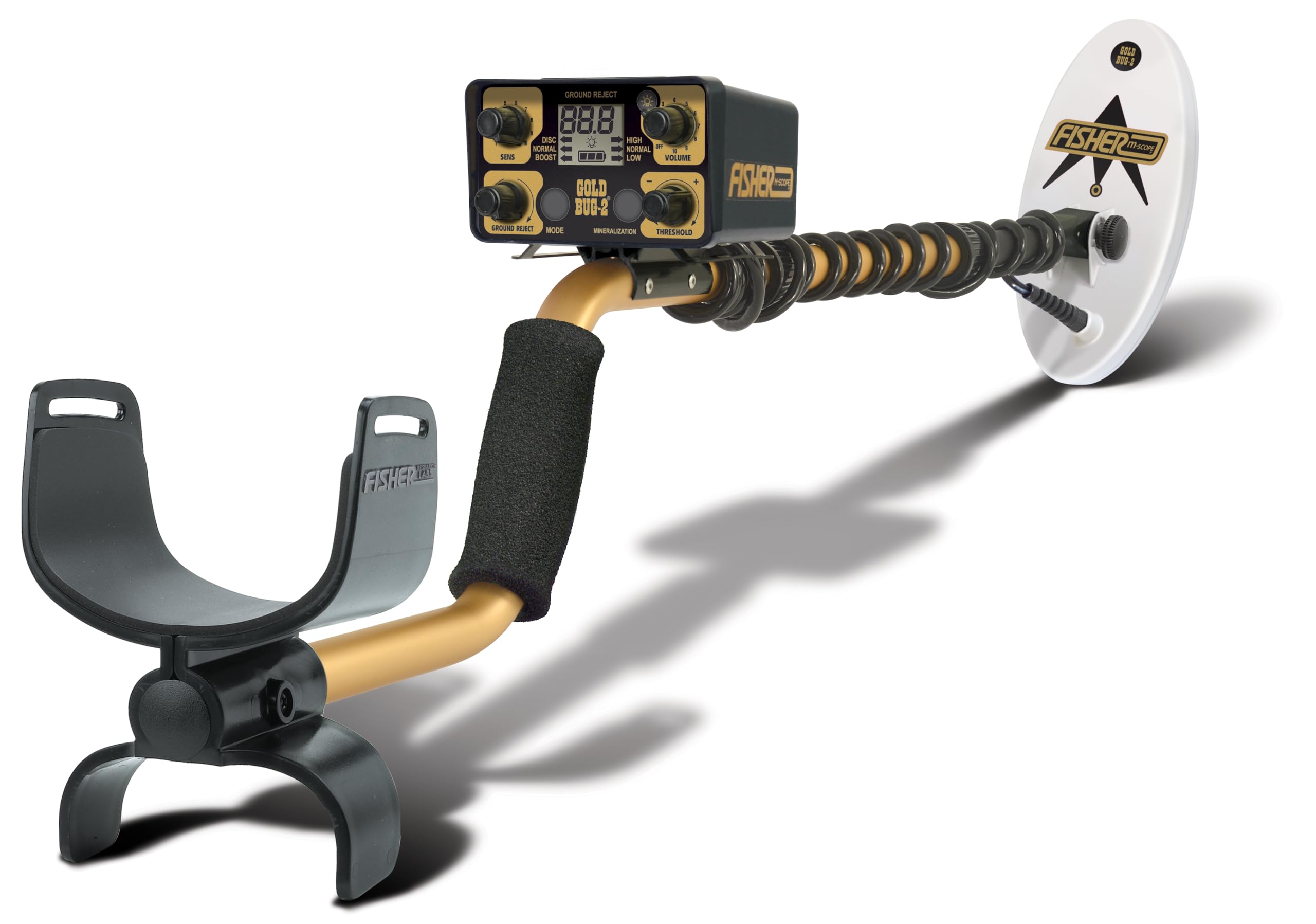
The Fisher Gold Bug 2 operates at a blistering 71 kHz, making it the highest-frequency dedicated gold detector in this roundup. That extreme frequency translates into unmatched sensitivity to the smallest gold flakes — targets that barely register on a 19 kHz machine produce a clear, repeatable signal on the Gold Bug 2. The 10-inch elliptical waterproof coil provides excellent ground coverage, and the 100% ESI shielding keeps interference at bay in mineralized soil.
This detector is not a casual purchase; it is a specialized tool for serious prospectors working known gold-bearing ground. The manual 16-turn ground balance control gives you surgical precision to dial out hot rocks and black sand, and the three-position mineralization switch lets you toggle between low, normal, and high mineralization settings. The audio boost mode amplifies whispers from deep or tiny targets without blowing out your ears on shallow trash.
Weighing 2.9 pounds with a hip-mountable control box, the Gold Bug 2 is comfortable for long days in the field. The iron discrimination mode filters out ferrous junk, but keep your expectations realistic — this detector is built to find gold, and it excels at that singular mission. If you need something that also works well at the beach or for general coin hunting, the Gold Bug 2’s narrow focus might feel limiting.
Why it’s great
- 71 kHz operating frequency finds flakes invisible to lower kHz machines
- Manual 16-turn ground balance for extreme mineralization control
- Hip-mountable design reduces arm fatigue during long hunts
Good to know
- Narrow specialization — not ideal for coin or relic hunting
- Manual ground balance requires practice to use effectively
5. Fisher Gold Bug Pro

The Fisher Gold Bug Pro operates at 19 kHz, a frequency that hits a sweet spot for detecting small gold while still delivering solid performance on coins and relics. Its standout feature is the V-Break tone discrimination system, which lets you set a variable breakpoint so that ferrous targets produce one tone and non-ferrous targets produce another — no more guessing from the audio alone.
Weighing just 2.5 pounds, it’s one of the lightest gold detectors on the market, and the ultra-simple interface makes it accessible to beginners without overwhelming them. The real-time ground balance and ground condition readout display mineralization levels continuously so you can adjust on the fly. The adjustable threshold and gain controls give experienced users fine-grained control over performance in tough soil.
The battery life is exceptional at up to 100 hours on a set of batteries, so you won’t be caught dead in the field. The Pro model adds manual fine-tuning over the base Gold Bug, but many users find the automatic ground balance sufficient for most conditions. The main drawback is the lack of a waterproof rating on the control box — keep it dry when working near water.
Why it’s great
- V-Break tone discrimination clearly separates ferrous from non-ferrous targets
- 100-hour battery life outlasts every other detector in this list
- 2.5 lb design is ideal for all-day swinging
Good to know
- Control box is not waterproof (IP54 at best)
- Stock coil is smaller than some competitors’ offerings
6. XP Deus II
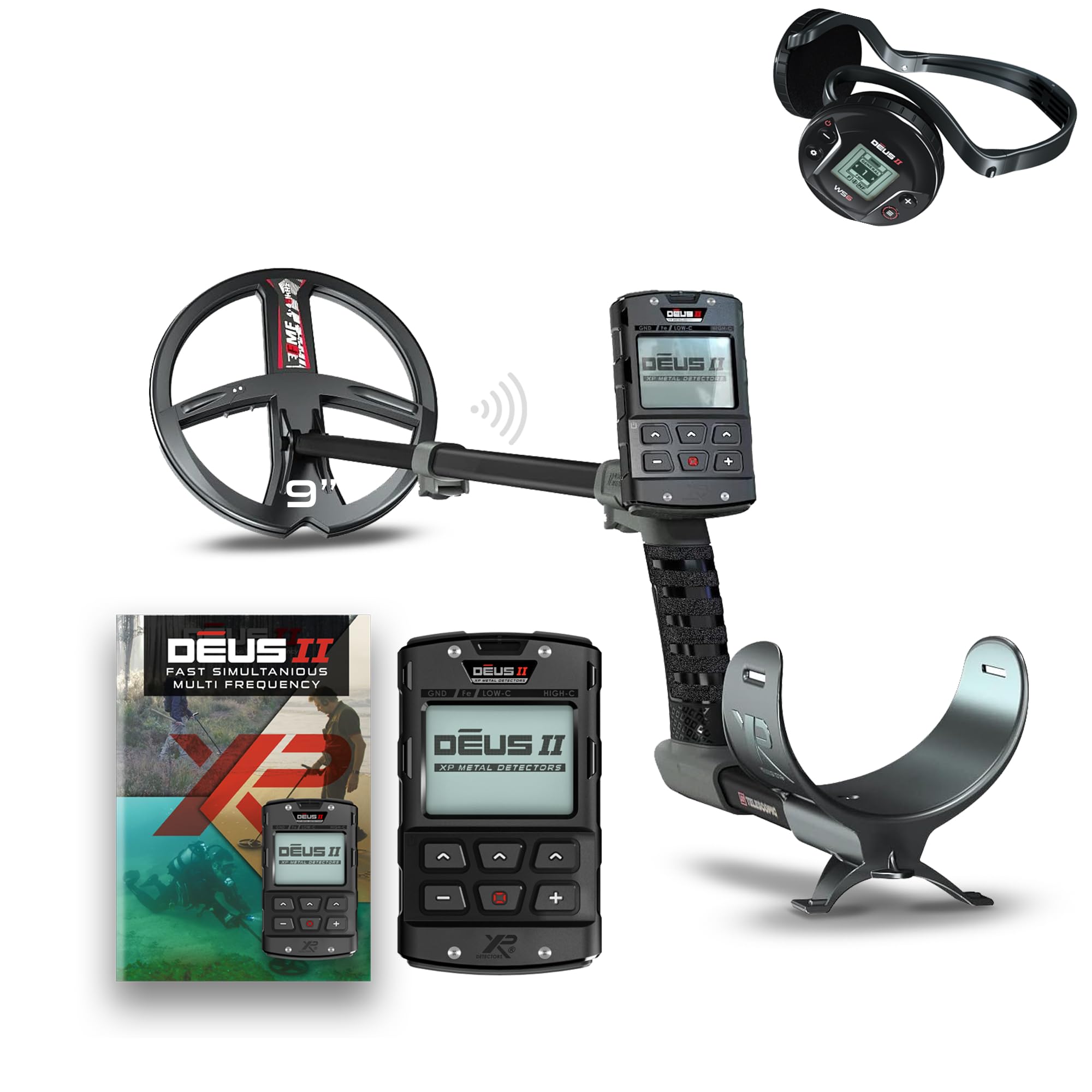
The XP Deus II is the world’s first fully wireless Fast Multi-Frequency (FMF) metal detector, a technological leap that eliminates the cable tangle between coil, remote, and headphones. It runs on XP’s patented radio protocol, which is ten times faster than standard Bluetooth low latency, ensuring zero lag between swing and audio. The remote control is IP68 certified to 66 feet, making this the most waterproof full-featured detector here.
You get 12 factory programs that use simultaneous multi-frequency transmission, plus the ability to select from 49 single frequencies between 4 kHz and 45 kHz for mono-frequency detection. That flexibility lets you tune the Deus II for gold prospecting on the high end and switch to relic or coin hunting on the low end without changing hardware. The 9-inch FMF coil ships standard, and the S-telescopic stem collapses for transport.
The audio options are extensive — a 4-band equalizer and a deep sound library let you customize tones to match your ear. The bone conduction headphones (optional BH-01) allow you to hear ambient sounds while detecting, a safety feature for remote areas. At 2.18 pounds, it’s the lightest detector in the premium tier, but that featherweight design comes with a premium investment that will feel steep if gold prospecting is your only pursuit.
Why it’s great
- Fully wireless FMF technology with zero cable latency
- IP68 submersible to 66 feet — best waterproof rating in class
- 12 multi-frequency programs plus 49 single-frequency options
Good to know
- High price point aimed at serious enthusiasts only
- Bone conduction headphones (BH-01) sold separately
7. Garrett ACE 300
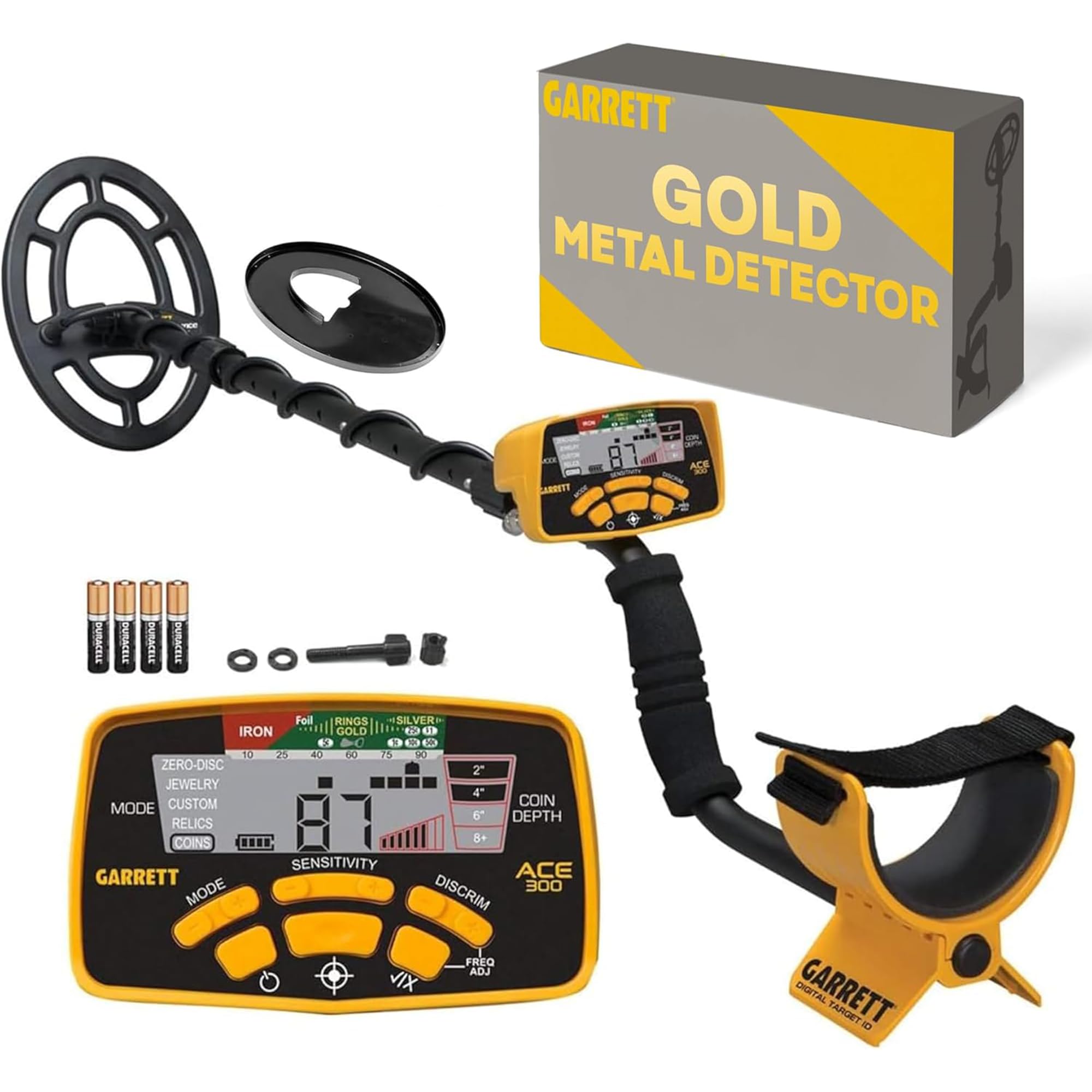
The Garrett ACE 300 is an entry-level VLF detector tuned for general metal detecting rather than dedicated gold prospecting. Its 8 kHz operating frequency is well-suited for coins, relics, and larger jewelry, but it will struggle to pick up the tiny gold flakes that a 45 kHz or 71 kHz machine would hammer on. That said, it is an excellent starting point for beginners who want to learn the basics on a high-quality, American-made platform.
The digital target ID scale (0-99) helps you estimate a target’s conductivity before you dig, and the electronic pinpointing mode locks onto the exact location of a target for precise recovery. The searchcoil cover protects the coil from scratches and rocks, extending its life significantly. The adjustable frequency can be nudged to avoid interference from power lines or other detectors in crowded areas.
Weighing 2.2 kilograms with batteries, it’s not the lightest option, but the build quality from Garrett is reassuring. The ACE 300 uses 4 AA batteries that deliver about 25 hours of use. For the budget-conscious buyer who wants a reliable detector for parks and fields rather than gold-rich creek beds, this is a solid choice — just don’t expect it to compete with purpose-built gold detectors in mineralized soil.
Why it’s great
- Made in the USA with Garrett’s proven build quality
- Digital target ID and electronic pinpointing simplify learning
- Adjustable frequency helps avoid interference
Good to know
- 8 kHz frequency is not optimized for small gold detection
- Heavier than dedicated gold detectors in its price bracket
8. Hazlewolke TX-850 PRO

The Hazlewolke TX-850 PRO punches surprisingly high for its budget-friendly position, packing a 19.23 kHz high-frequency VLF engine and a massive 13-inch waterproof Double-D coil that delivers wide coverage and enhanced depth. That frequency is competitive with mid-range gold detectors, offering genuine sensitivity to small, low-conductivity targets like gold nuggets and coins.
Manual and automatic ground balance options let you tune out mineralization in black sand, clay, or rocky terrain — a feature you rarely see at this tier. The LCD display is clear, and the three detection modes (All-Metal, Discrimination, Pinpoint) give you flexibility across different environments. The shaft collapses to 18.5 inches for easy transport, and the 3.5-pound weight keeps fatigue manageable.
User feedback is generally very positive, with experienced hunters reporting finds that rival detectors costing significantly more. That said, quality control can be inconsistent — a small number of units arrive with defects or require cleaning. The battery-powered design (requires batteries) is a minor inconvenience compared to rechargeable options, but the overall value proposition is hard to beat for a beginner or casual prospector on a tight budget.
Why it’s great
- 19.23 kHz frequency competes with mid-range gold detectors
- 13-inch waterproof DD coil for wide coverage and depth
- Manual and auto ground balance in a budget-friendly package
Good to know
- Quality control can be inconsistent between units
- Runs on disposable batteries rather than a rechargeable pack
9. Minelab Gold Monster 1000 (Single Coil)

This version of the Minelab Gold Monster 1000 ships with a single waterproof coil (typically the 10×6-inch DD) at a more accessible entry point than the dual-coil kit. The core technology is identical — 45 kHz VLF with a 24-bit signal processor that delivers exquisite sensitivity to fine gold. The fully automatic operation handles noise canceling, ground balance, and sensitivity, so you can start prospecting immediately after assembly.
Improved ferrous/non-ferrous discrimination helps cut through conductive salt soils, a feature that gives it an edge over even higher-frequency detectors in coastal or alkali ground. The touchpad interface includes a gold chance indicator that provides real-time feedback on target likelihood, and the deep all-metal mode maximizes depth when you’re in a promising area. The telescoping shaft adjusts to fit users of different heights, and the 2.9-pound weight keeps it comfortable on long hikes.
The single-coil configuration is a smart pick for prospectors who plan to hunt open ground and don’t need the smaller 5-inch coil for trashy areas. Battery life is rated at 30 hours, and the AA backup system ensures you never get stranded mid-hunt. The only real miss is the lack of included headphones — you’ll want a decent pair for hearing faint signals over wind noise.
Why it’s great
- Same exceptional 45 kHz gold sensitivity as the dual-coil kit
- Fully automatic operation ideal for beginners
- Improved discrimination in salty soils
Good to know
- Only one coil included — smaller coil sold separately
- Headphones not included in the package
FAQ
What kHz frequency is best for finding small gold nuggets?
Do I need manual ground balance for gold prospecting?
Is a multi-frequency detector better than a single-frequency VLF for gold?
Final Thoughts: The Verdict
For most users, the best gold detector winner is the Minelab Gold Monster 1000 Kit because its 45 kHz VLF engine and fully automatic operation deliver professional-grade gold sensitivity with zero learning curve. If you want maximum sensitivity to micro-nuggets in extreme mineralization, grab the Fisher Gold Bug 2. And for the versatile prospector who hunts gold, relics, and beaches with a single detector, nothing beats the Nokta Legend Pro Pack.