
A 3/8 marine fuel line is the single most overlooked component in a reliable boat fuel system. The wrong hose ethanol-soaks from the inside out, delivers fuel that smells like a refinery spill, or kinks so badly at the filter that the engine starves at cruising RPM. Choosing a fuel line that meets SAE J1527 or Type A1-15 standards isn’t optional — it determines whether your outboard starts on the first crank or leaves you drifting.
I’m Min — the co-founder and writer behind Gadgets Feed. After diving deep into permeation ratings, burst pressure curves, and compatibility testing across 7 marine-specific fuel line models, I know exactly which hoses hold up to ethanol-laced gasoline and which delaminate after one season.
This guide compares the best 3/8-inch marine-rated fuel lines available today, covering everything from budget-friendly bulk rolls to premium pre-assembled kits with sprayless connectors. You’ll learn which specs matter, why SAE J1527 certification is non-negotiable, and which hose delivers the best value for your boat. The goal is simple — help you find the best 3/8 marine fuel line that won’t leave you stranded.
How To Choose The Best 3/8 Marine Fuel Line
A 3/8-inch marine fuel line isn’t just a rubber tube — it’s a safety-critical component that must withstand constant fuel exposure, UV rays, engine vibration, and temperature extremes inside a bilge. Three factors separate a hose that lasts from one that fails mid-season.
SAE J1527 Type A1-15 Certification
This standard directly measures fuel permeation — how much gasoline vapor escapes through the hose wall. A certified Type A1-15 hose limits permeation to 15 grams per square meter per day at 104°F. Without this certification, your bilge fills with explosive fuel vapor and the hose degrades from the inside out. Always look for J1527 printed on the hose itself.
Working Pressure & Burst Pressure
Most marine fuel systems operate at 3-8 PSI from the lift pump, but the hose needs a generous safety margin. Look for a minimum working pressure of 300 PSI and a burst pressure above 900 PSI. This ensures the hose handles fuel pulsation, engine vibration, and accidental pinching without rupturing.
Inner Layer Material & Ethanol Compatibility
Modern gasoline contains up to 15% ethanol, which attacks standard rubber compounds. A NBR (nitrile butadiene rubber) inner layer resists ethanol swelling and prevents inner-layer delamination — the leading cause of fuel line failure. Avoid plain rubber or PVC-only hoses that soften and shed particles into your carburetor.
Quick Comparison
On smaller screens, swipe sideways to see the full table.
| Model | Category | Best For | Key Spec | Amazon |
|---|---|---|---|---|
| Attwood Yamaha Marine Fuel Line Kit | Complete Kit | Yamaha outboard owners | 600 PSI max pressure, EPA/CARB compliant | Amazon |
| EVIL ENERGY 3/8 SAE 30R7 25FT | Bulk Roll | High-pressure custom builds | 1200 PSI burst pressure, SAE 30R7 | Amazon |
| EVIL ENERGY 3/8 Marine Type A1-15 10FT | Marine Certified | Boat fuel system replacement | SAE J1527 Type A1-15, 300 PSI working | Amazon |
| Jeemiter 3/8″ ID Fuel Hose Kit 25FT | Value Bundle | Multi-engine DIY projects | 300 PSI working, -40°F to 257°F range | Amazon |
| CULMKARI 3/8 Marine Fuel Hose 10FT | Marine Certified | Odor-free bilge installs | SAE J1527, NBR inner + PVC outer | Amazon |
| Quicksilver 8M0061890 Fuel Line Assembly | OEM Kit | Mercury/Mariner outboard owners | Low permeation, 9 ft with primer bulb | Amazon |
| Pangda Fuel Line Hose NBR 20FT | Budget Roll | Trailer & small engine fuel runs | 300 PSI working, 1160 PSI burst | Amazon |
In‑Depth Reviews
1. Attwood Yamaha Marine Fuel Line Kit
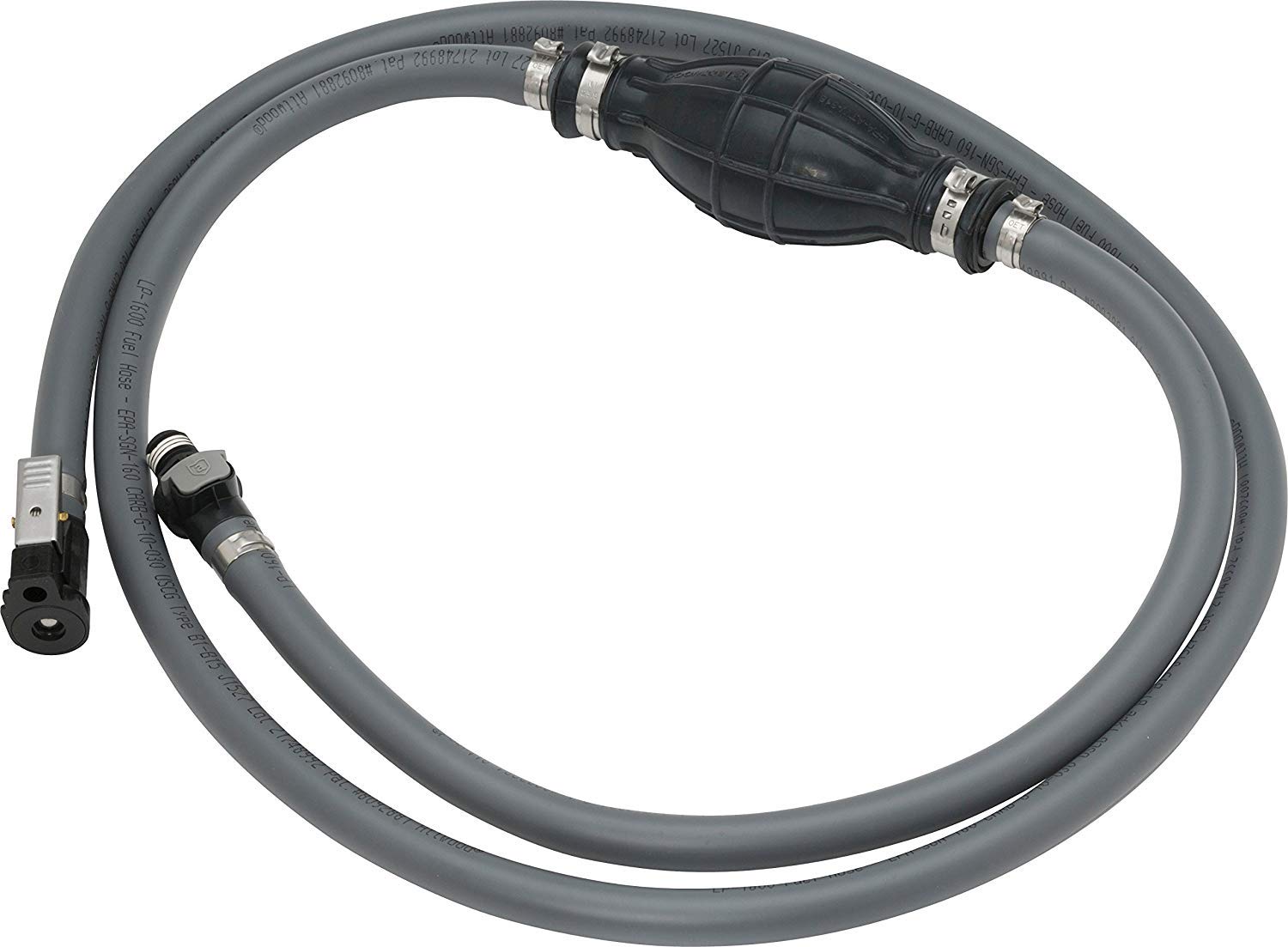
The Attwood 93806YUS7 is not just a hose — it’s a complete fuel delivery kit engineered specifically for Yamaha outboards. It includes 6 feet of 3/8-inch low-permeation hose, a high-quality primer bulb, and sprayless connectors on both tank and engine sides. The sprayless connector eliminates the fuel spill that drips from standard quick-disconnects every time you detach the line, which is a huge deal when you’re fueling at a crowded dock.
The hose material is ethanol-resistant and assembled in the USA to meet both EPA and CARB low-permeation standards. With a maximum pressure rating of 600 PSI, this hose far exceeds the demands of any production Yamaha outboard fuel system. The primer bulb design is notably easy to squeeze, and the internal check valves hold prime reliably between trips — no endless pumping to restart a cold engine.
This is the definitive choice for any Yamaha-powered boat owner who wants a turnkey fuel line upgrade without cutting, fitting, or sourcing separate connectors. The 6-foot length is exactly right for most center consoles and smaller cabin boats, and the pre-assembled fittings save at least an hour of frustration compared to building a line from scratch.
Why it’s great
- True plug-and-play with Yamaha outboard fittings
- Sprayless connectors prevent fuel spills at the dock
- 600 PSI max rating is overkill — in a good way
Good to know
- Only 6 feet long — measure your setup first
- Primer bulb flow direction may need fitting reversal on some installations
2. EVIL ENERGY 3/8 Fuel Hose Line Push Lock SAE 30R7 25FT

The EVIL ENERGY SAE 30R7 hose delivers a 1200 PSI burst pressure and an operating range of -40°F to 257°F, making it one of the toughest 3/8-inch fuel hoses available. This is not a marine-certified J1527 hose — it’s an automotive-grade SAE 30R7 line — but for high-pressure custom marine fuel systems, fuel-injected outboards, or boats using a lift pump that runs at higher pressure, this hose is the clear winner.
Constructed with an NBR inner layer and braided polyester fiber reinforcement, the hose resists oil, diesel, biodiesel, and gasoline without swelling or hardening. The minimum bend radius of 100mm (3.9 inches) allows tight routing around engine compartments without kinking, and the 25-foot length gives you plenty of slack for complex fuel system layouts or running two separate lines from a single spool.
Installers report that this hose slides onto barbed fittings more easily than some stiffer J1527 hoses, thanks to its flexible NBR compound. The wall thickness is 3mm, providing excellent puncture resistance in tight engine bays where hoses rub against sharp metal edges. If your marine application demands a hose that can handle serious pressure without bulging, this is the one to reach for.
Why it’s great
- 1200 PSI burst pressure — true high-pressure capability
- 25-foot length covers large projects with leftover material
- Flexible enough for tight routing without kinking
Good to know
- Not SAE J1527 marine certified — check local regulations
- No included clamps or fittings — buy separately
3. EVIL ENERGY 3/8 Marine Fuel Line Hose Type A1-15 10FT
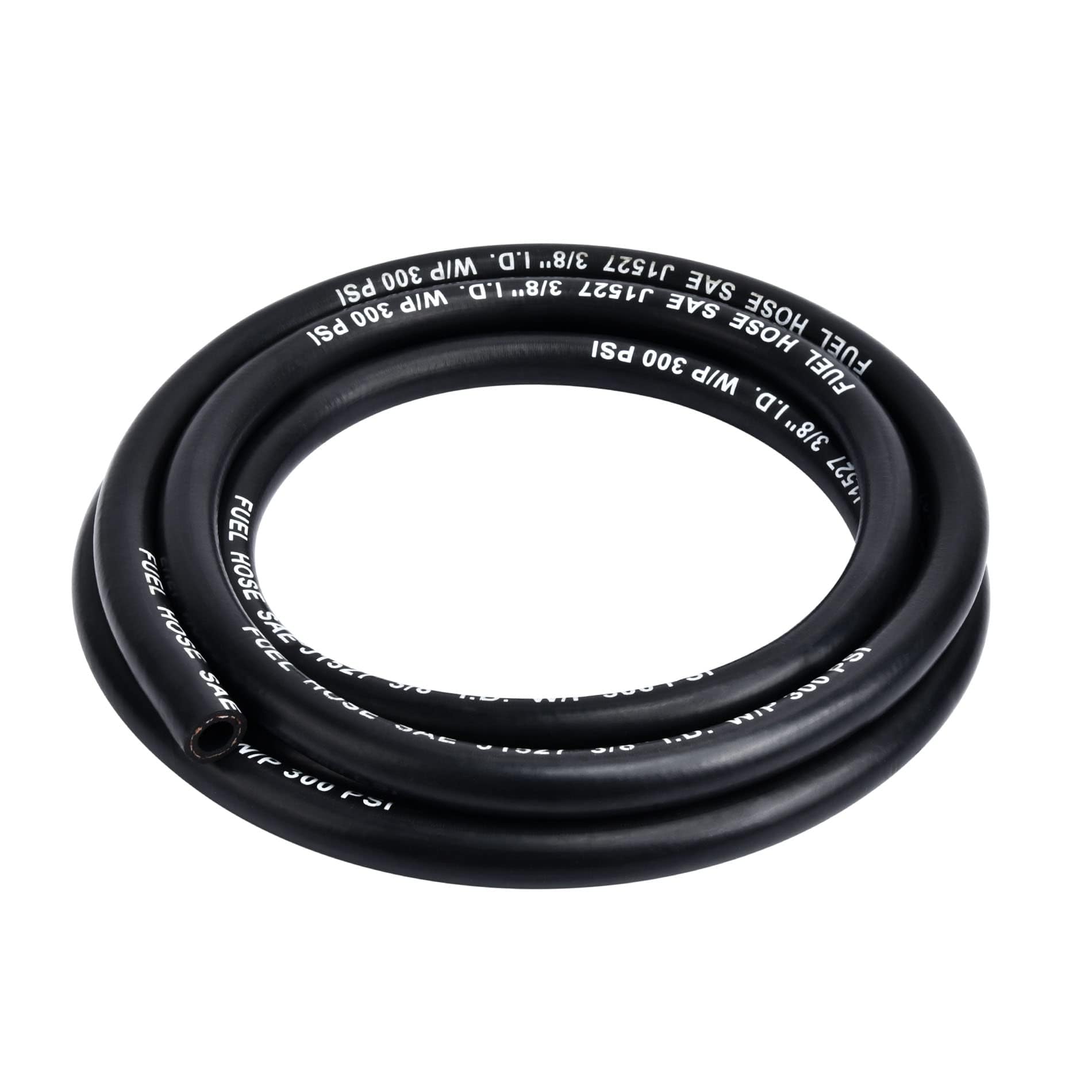
The EVIL ENERGY Type A1-15 marine fuel hose is the J1527-certified option in their lineup, meeting both EPA and CARB low-permeation requirements for recreational boats. It uses an NBR inner layer with an NBR+PVC outer shell, reinforced by a polyester fiber braid that prevents the hose from ballooning under pressure. The working pressure is 300 PSI with a 900 PSI burst rating — more than adequate for the 3-8 PSI typical of marine fuel lift pumps.
This hose is explicitly designed for marine environments, meaning it resists weather, UV exposure, and the constant fuel contact that destroys standard rubber hoses. It’s compatible with gasoline, diesel, and E85, and meets ISO 7840 Type A1 standards alongside the NMMA/CE acceptance. Real-world users have replaced OEM fuel lines on boats worth well over and reported equal or better quality than factory-installed hoses.
The 10-foot length is perfect for a single engine run from tank to fuel filter, and the 17mm outer diameter fits standard 3/8-inch barbed fittings and hose clamps without excessive force. If you’re replacing an aging, smelly fuel line on a boat and want genuine marine certification without paying OEM prices, this is the hose that delivers certified peace of mind.
Why it’s great
- Full SAE J1527 Type A1-15 marine certification
- EPA/CARB very low permeation — no fuel smell in the bilge
- UV and weather-resistant outer layer
Good to know
- Not for continuous submersion in fuel tanks
- 10-foot length may be short for twin-engine setups
4. Jeemiter 3/8″ ID Fuel Hose 25FT Complete Kit
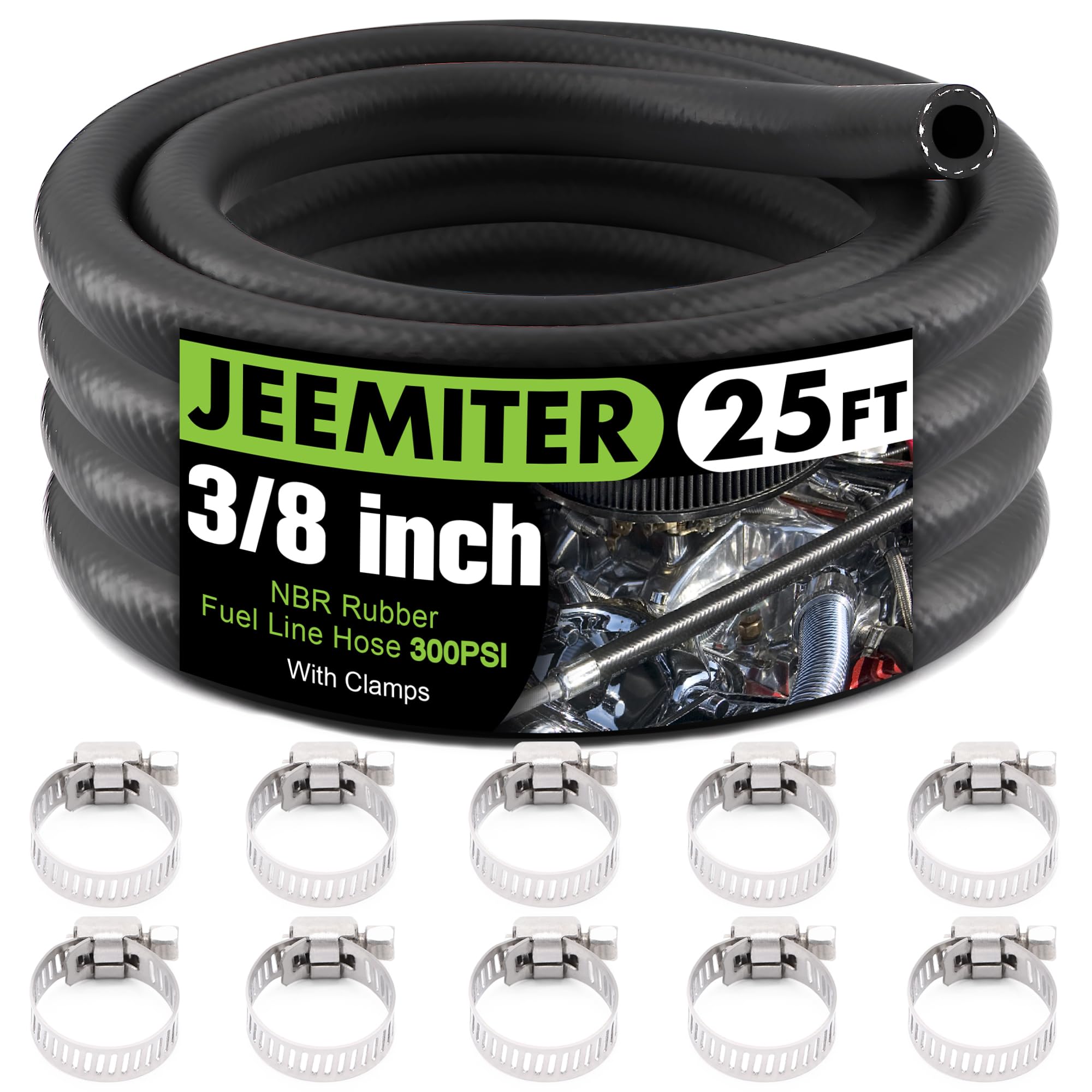
The Jeemiter kit bundles 25 feet of SAE 30R7-rated 3/8-inch fuel hose with 10 stainless steel hose clamps, giving you everything needed for a multi-engine fuel system upgrade or several DIY projects from one box. The hose itself is NBR-based with a 300 PSI working pressure and 1160 PSI burst rating, supporting a temperature range from -40°F to 257°F that covers arctic winter storage and tropical summer engine bays.
This is a multi-purpose hose marketed for automotive, marine, and small engine use, and while it lacks the specific J1527 marine certification, the NBR construction provides the same ethanol resistance and oil compatibility as dedicated marine hoses. Users have successfully deployed this hose on everything from lawnmowers and generators to boat fuel systems, citing its heavy-duty feel and resistance to kinking during tight-radius installations.
The included clamps are functional but on the lighter side — several reviewers noted replacing them with traditional screw-type clamps for marine applications where vibration loosens thin-band clamps. The 25-foot length is generous enough to run a complete fuel supply and return line on a small boat, with enough left over for spares. For a one-stop shop that includes both hose and clamps, Jeemiter delivers serious value.
Why it’s great
- 25 feet of hose plus 10 stainless clamps — all in one box
- Wide temperature range for extreme conditions
- Heavy-duty NBR construction resists oil and fuel
Good to know
- Not SAE J1527 certified for marine use
- Included clamps are thin — upgrade for permanent marine installs
5. CULMKARI 3/8” Marine Fuel Hose Feed Line 10FT

The CULMKARI marine fuel hose is built with a well-selected NBR inner layer and an NBR+PVC outer material, delivering A+ performance in both function and longevity. It meets SAE J1527 standards — a critical checkbox for anyone who wants to eliminate the strong fuel odor that permeates through cheap non-certified hoses. Multiple verified buyers explicitly noted the complete absence of fuel smell shortly after installation.
With a 10-foot length, 17mm outer diameter, and a minimum bending radius of 80mm, this hose is engineered for tight marine compartments where flexibility matters as much as durability. The manufacturer backs it with a 1-year warranty, which signals confidence in the material compound — uncommon for bulk fuel hose at this price tier. The hose slides onto barbed fittings smoothly and holds clamp tension without squeezing out.
Users running ethanol-blended fuel reported no swelling or inner-layer separation after extended use, confirming the NBR inner layer’s resistance to ethanol attack. If your priority is a marine-certified fuel line that keeps your bilge smelling clean and installs without fighting stiff rubber, the CULMKARI delivers that experience at a very reasonable cost per foot.
Why it’s great
- No fuel odor — permeation control is excellent
- 1-year manufacturer warranty on a hose is rare
- Flexes easily in tight engine bays without kinking
Good to know
- 10-foot length only — not for long runs
- No clamps included — buy separately
6. Quicksilver 8M0061890 Fuel Line Assembly 9 Ft
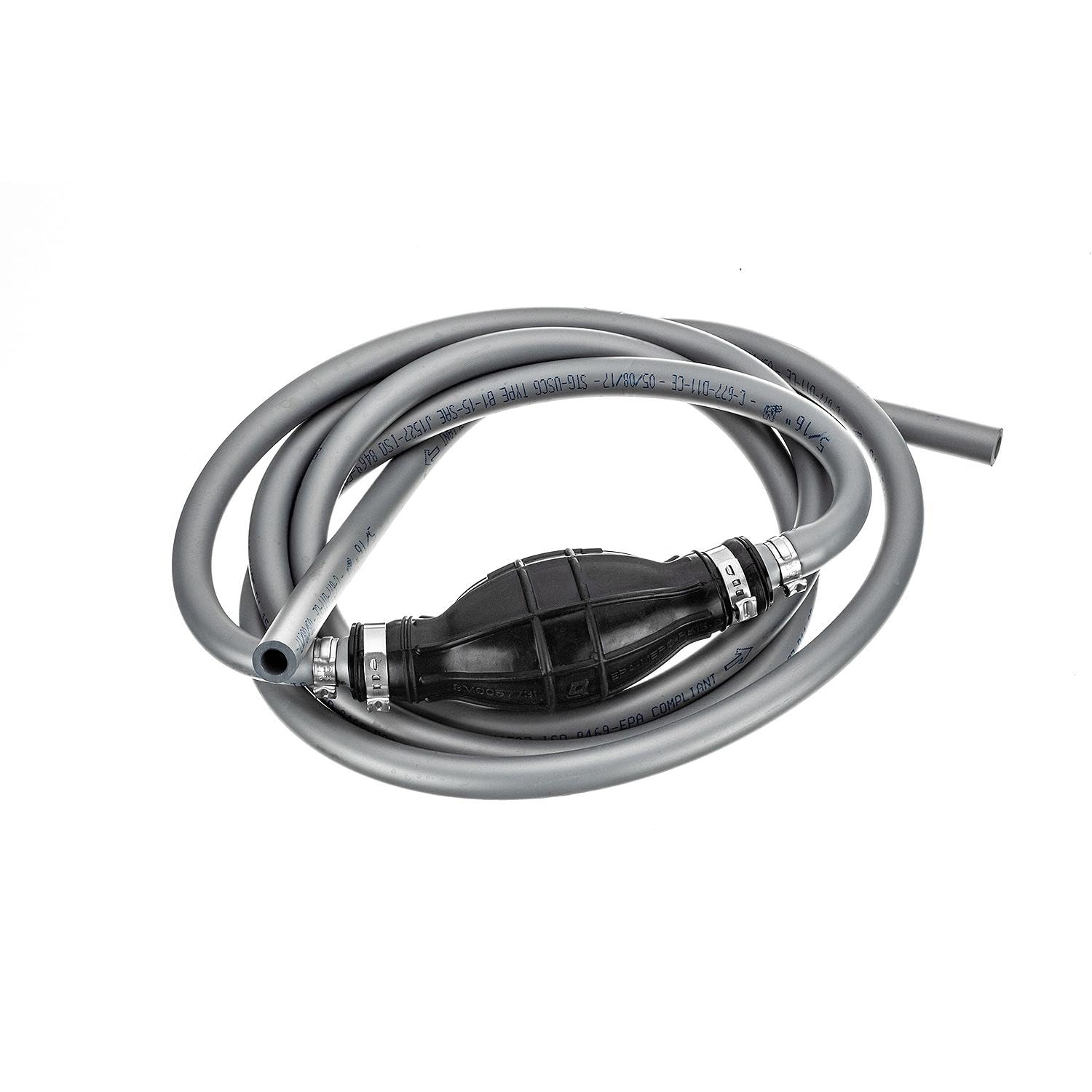
The Quicksilver 8M0061890 is the genuine Mercury/Mariner OEM fuel line assembly, manufactured by the same company that builds the outboards themselves. It includes 9 feet of low-permeation gray fuel hose and an EPA-compliant primer bulb (MERC-PB15), but does not include connectors — this is the hose assembly that connects between your tank-side quick-disconnect and the engine’s fuel inlet fitting. The gray color is a deliberate design choice that reduces vapor lock risk on warm days by reflecting sunlight instead of absorbing heat like a black hose.
This is a 5/16-inch (8mm) inner diameter hose, not the 3/8-inch that most bulk reels offer, so it’s dimensionally specific to Mercury and Mariner engines that use the smaller fuel inlet fitting. The low-permeation construction meets EPA standards for evaporative emissions, and the primer bulb is specifically calibrated to Mercury’s fuel system flow rates. Users report that the hose feels supple even in cold weather and holds its prime reliably between weekends on the water.
For Mercury or Mariner outboard owners who want a factory-correct fuel line assembly without cutting or custom plumbing, this Quicksilver kit is the straightforward answer. The 9-foot length provides extra reach for larger fuel tanks or non-standard mounting positions, and OEM fitment means zero guesswork on barb sizes or hose IDs.
Why it’s great
- Genuine Mercury/Mariner OEM assembly — guaranteed fitment
- Gray hose reduces vapor lock in direct sunlight
- 9-foot length offers generous reach for most setups
Good to know
- 5/16-inch ID — not compatible with standard 3/8-inch fittings
- No connectors included — this is a hose/bulb assembly only
7. Pangda Fuel Line Hose NBR Rubber 3/8″ 20FT

The Pangda NBR fuel hose is the no-frills workhorse of this list — 20 feet of 3/8-inch rubber hose with a 300 PSI working pressure and a 1160 PSI burst rating, sold as a single continuous roll. It’s built from NBR material that resists fuel degradation and operates across a -40°C to 120°C range, making it suitable for everything from boat fuel systems to small engine repair and automotive transfer applications.
This hose lacks specific marine certification like SAE J1527, so it’s best understood as a general-purpose fuel line that works for many marine uses where full certification isn’t legally required. The 20-foot length is generous for the price, giving you enough material to run a complete fuel system on a small boat, a trailer, or several seasonal repairs. Users praise it as significantly better quality than chain-store fuel hose and appreciate having a bulk spool on hand for emergency repairs.
The trade-off is clarity: this is not marketed as a dedicated marine fuel line, and it doesn’t carry the permeation ratings or UV-resistance claims that marine-certified hoses do. For small outboards, fuel tanks on trailers, or backup hose that lives in a dry storage compartment, the Pangda delivers functional performance at the lowest cost per foot in this comparison.
Why it’s great
- 20 feet of NBR fuel hose at an exceptional per-foot value
- 1160 PSI burst pressure — stronger than many generic hoses
- Wide temperature range suits outdoor storage
Good to know
- No SAE J1527 marine certification
- Requires a primer bulb — not included in the roll
FAQ
What does SAE J1527 Type A1-15 mean for my boat’s fuel line?
Can I use an SAE 30R7 automotive fuel hose on my boat?
How does ethanol in gasoline affect 3/8 marine fuel line performance?
What’s the difference between 5/16-inch and 3/8-inch marine fuel hose?
Final Thoughts: The Verdict
For most boat owners, the best 3/8 marine fuel line winner is the Attwood Yamaha Marine Fuel Line Kit because it delivers a complete, EPA-compliant solution with pre-installed sprayless connectors that eliminate fuel spills at the dock. If you need a certified bulk hose for a custom marine installation, grab the EVIL ENERGY 3/8 Marine Type A1-15. And if you’re building a high-pressure fuel system on a performance boat, nothing beats the burst rating and flexibility of the EVIL ENERGY SAE 30R7 25FT.