
A 10-inch circular saw brings a level of cutting depth standard 7-1/4-inch saws simply cannot match. Whether you are ripping thick timber, slicing through concrete block, or cutting a clean line in steel, the added blade diameter translates to fewer passes and faster work. Choosing the wrong one means fighting with underpowered motors, inaccurate guards, or premature blade wear on the very first job.
I’m Min — the co-founder and writer behind Gadgets Feed. I’ve spent countless hours analyzing motor specs, blade compatibility, cut depth ratings, and real-world user reports across dozens of models to separate the tools that truly deliver from those that just look good on a shelf.
This guide focuses exclusively on the best 10-inch and 10-1/4-inch circular saws available for concrete, framing, miter, and table saw applications, helping you match the right machine to your specific material and budget.
How To Choose The Best 10 Circular Saw
Selecting a 10-inch saw is about matching the tool’s motor architecture, blade compatibility, and safety systems to the specific materials you cut most often. The wrong choice leads to bogging, inaccurate cuts, or excessive dust and debris.
Motor Type and Gearing
The motor determines torque and sustained speed under load. Standard direct-drive saws spin faster (around 5,200–5,800 RPM) and are fine for general framing and dry cutting. Worm-drive saws trade some top-end RPM for significantly higher torque, making them ideal for deep cuts in hardwood, engineered lumber, and dense masonry. Always check the peak horsepower and current draw — a 15-amp motor is the baseline for serious work.
Cut Depth and Bevel Capacity
The whole point of a 10-inch saw is depth. Look for a cut depth at 90 degrees of at least 3-1/2 inches (to cut a 4×4 in one pass) and up to 4-1/16 inches for concrete saws that need to go through a full brick. Bevel capacity matters too — 45 degrees is standard, but 60 degrees gives you steeper compound angles for timber framing.
Blade Type and Material Compatibility
A 10-inch blade can handle wood, metal, concrete, or masonry, but never with the same blade. Multi-material cutting requires carbide-tipped or diamond blades with specific tooth counts. Concrete and masonry saws need a wet-cutting attachment or a diamond blade with enough segment height to clear dust. Check if the manufacturer includes a premium blade — some budget models ship with disposable steel blades that dull quickly.
Quick Comparison
On smaller screens, swipe sideways to see the full table.
| Model | Category | Best For | Key Spec | Amazon |
|---|---|---|---|---|
| Milwaukee 6470-21 | Premium Framing Saw | Heavy timber and deep bevel cuts | 3-13/16″ cut depth at 90° | Amazon |
| Big Foot Tools BF-UG | Premium Worm Drive | Single-pass beam cutting | Thin kerf, zero blade flex | Amazon |
| SKIL SPT99-11 | Premium Table Saw | Job site ripping and crosscutting | 30-1/2″ rip capacity | Amazon |
| Evolution R255SMS+ | Multi-Material Miter Saw | Metal, wood, and plastic cutting | 50° left / 50° right miter | Amazon |
| Evolution R255DCT | Concrete Disc Cutter | Indoor masonry cutting, no fumes | 4-1/16″ cut depth | Amazon |
| DOVAMAN DMS01A | Entry-Level Miter Saw | DIY and light multi-material work | Dual-speed 5000/3200 RPM | Amazon |
| VEVOR DC235 | Budget Concrete Saw | Homeowner concrete and brick cuts | 1800W motor, water line included | Amazon |
In‑Depth Reviews
1. Milwaukee 6470-21
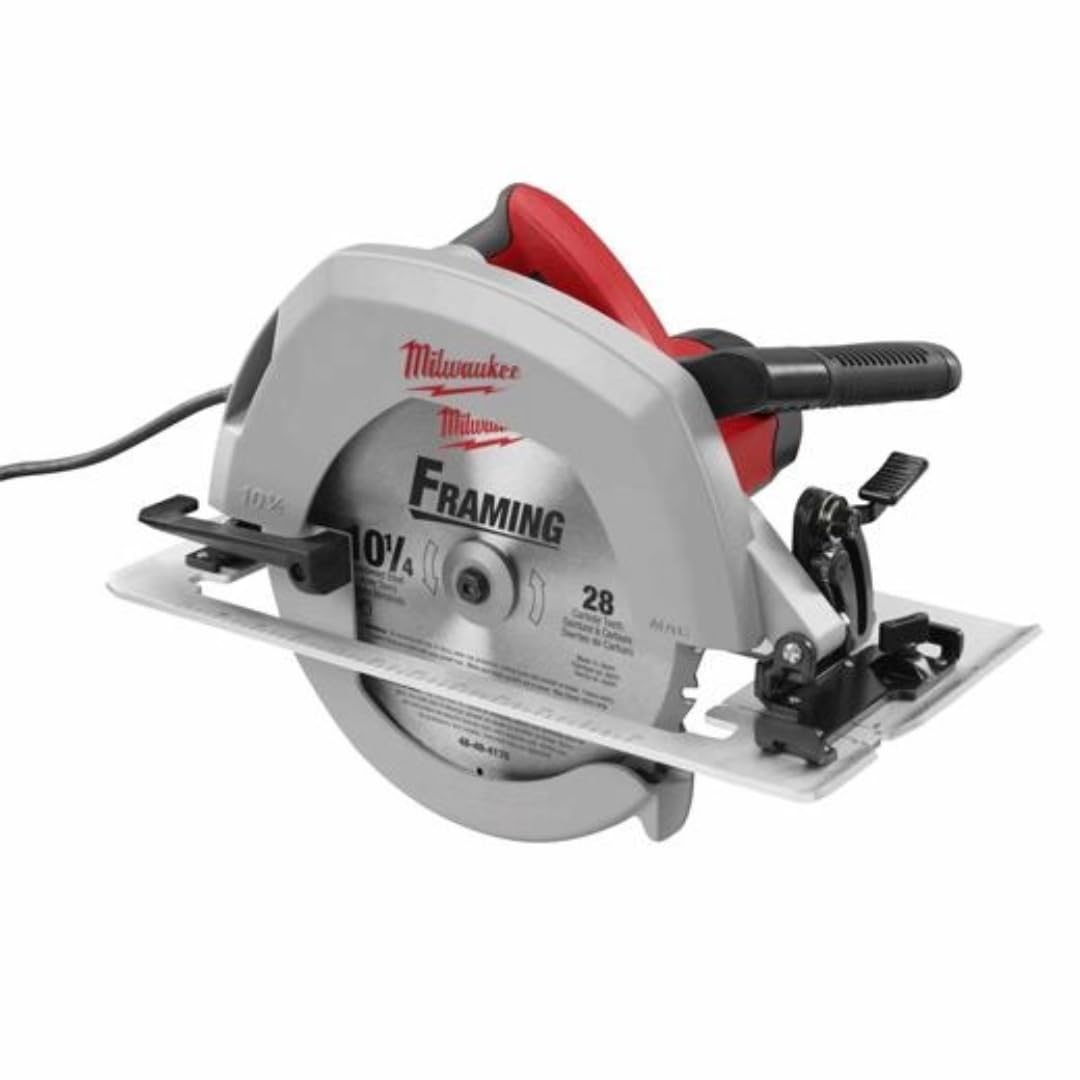
The Milwaukee 6470-21 delivers a monster 3.1 peak horsepower from its 15-amp motor, spinning a 10-1/4-inch blade at 5,200 RPM. That translates to a 3-13/16-inch depth of cut at 90 degrees, which is enough to cut through a 4×4 or even four stacked sheets of 3/4-inch plywood in a single pass. The electric brake stops the blade within seconds of releasing the trigger, a critical safety feature when handling heavy material.
Users consistently report that this saw rips through 4×6 and 6×6 timbers without bogging, and the bevel capacity goes up to 60 degrees, giving you plenty of range for compound cuts on framing jobs. The 12-foot cord offers good reach, though some users recommend upgrading to a 14-gauge extension cord to maintain full power on longer runs. At 17.8 pounds, it is a two-hand saw, but that weight contributes to stable, vibration-free cuts.
The included steel carrying case and rip fence add immediate value, and the build quality is typical Milwaukee — rugged, double-insulated, and ready for daily jobsite abuse. The only real consideration is that the 10-1/4-inch blade diameter limits blade variety compared to standard 10-inch saws, but for heavy framing and timber work, this saw is hard to beat.
Why it’s great
- Cuts 4×6 and 6×6 timbers in a single pass without bogging
- Electric brake and 60-degree bevel capacity for advanced framing
- Rugged steel case and long 12-foot cord included
Good to know
- Requires two hands due to 17.8-pound weight
- 10-1/4-inch blade size limits aftermarket blade options
- Needs a 14-gauge extension cord for full power at distance
2. Big Foot Tools SC-1025SU

The Big Foot Tools SC-1025SU uses a Skil worm-drive motor that prioritizes torque over raw RPM, making it exceptional for cutting thick engineered lumber, I-joists, and 6×6 posts. The 10-1/4-inch blade with a thin kerf design and zero blade flex ensures perfectly straight cuts every time — a feature framers rely on when cutting multiple 2x headers or a single 4x header in one pass.
At 16 pounds, it is lighter than the Milwaukee and feels more balanced in hand, though users note the magnesium construction keeps weight down without sacrificing durability. The worm-drive gearing also provides smoother acceleration, reducing the kickback risk that can occur with high-torque direct-drive saws. The main trade-off is that the base shoe is narrow and the shoe bottom is not machined flat, which some users found required adjustment to achieve perfect square cuts.
Customer feedback consistently describes this saw as a “beast” that handles hemlock 3x6s and pressure-treated timber with little effort. The lower blade guard requires manual lifting for full-depth cuts, a minor ergonomic quirk, but the power and precision make it a go-to for serious framing contractors.
Why it’s great
- Worm-drive gearbox delivers exceptional torque for thick timber
- Thin-kerf blade design cuts straight with zero flex
- Lightweight magnesium frame reduces user fatigue
Good to know
- Narrow base shoe and unflat shoe bottom can affect square cuts
- Lower blade guard requires manual lifting for full-depth passes
- 90-degree set screw may need adjustment and thread lock
3. SKIL SPT99-11

The SKIL SPT99-11 is a worm-drive table saw that brings the torque of a worm gear to a stationary platform, offering a 3-5/8-inch depth of cut and a 30-1/2-inch rip capacity. The rack-and-pinion fence system adjusts smoothly and locks squarely, making repeatable rip cuts accurate to 1/8 inch over 8 feet. The included rolling stand with 16-inch wheels folds and deploys easily, making this a true jobsite-ready saw.
Users consistently praise the dust collection performance — when hooked to a shop vac, the saw produces near-dustless operation, a significant advantage for indoor or finished-space work. The worm-drive gearing runs quieter than a belt-drive saw and delivers enough torque to rip a 4×4 in a single pass without blade walk. The included 24-tooth carbide blade is adequate for initial use, but most users upgrade to a higher-tooth-count blade for finer finish cuts.
At 94 pounds, the saw is heavy but the integrated wheels and handle system make transport manageable. Some users noted that the fence ruler can be off by about 3/16 inch at the 12-inch mark, requiring a manual tape measure check for precision work. The throat plate can warp over time, and a dedicated dado insert plate is not widely available on Amazon. Despite these quirks, the power, accuracy, and mobility make this the best job site table saw in its class.
Why it’s great
- Worm-drive motor rips 4x4s cleanly without blade walk
- Excellent dust collection when paired with a shop vac
- Rack-and-pinion fence stays square and adjusts smoothly
Good to know
- Fence ruler can be inaccurate; a manual tape measure is recommended
- Throat plate may warp and requires replacement for dado work
- Heavy at 94 pounds, though wheels help with mobility
4. Evolution R255SMS+ PLUS

The Evolution R255SMS+ is a 15-amp sliding miter saw designed to cut wood, wood with embedded nails, mild steel, aluminum, composite decking, and plastic — all with the same included carbide-tipped blade. The 0-to-45-degree bevel and 50-degree left/50-degree right miter range provide flexibility for complex trim and framing angles. The Plus version adds dual quick-release clamps, a dust bag, taller fences, a slide rail protector, and a 3-meter cable.
Users report that the saw cuts 1/8-inch steel “like butter” and handles 4×4 lumber without strain, though the blade can drag fibers on wood and leaving a slightly rough finish. The soft-start motor prevents breaker trips on weaker circuits, a common issue with high-draw saws. The hold-down clamp is functional but not pro-grade, and some users had to adjust the fence and miter stops to achieve perfect square cuts.
The multi-material capability is the R255SMS+’s standout feature — you can switch from cutting steel angle to framing lumber without changing blades. The trade-off is that the included blade is a generalist and won’t deliver the cleanest finish on hardwoods or thin-gauge metal. For a homeowner or light contractor who works with mixed materials, this saw offers exceptional versatility at a mid-range price point.
Why it’s great
- Cuts wood, metal, and plastic with the same included blade
- Soft-start motor prevents breaker trips on standard circuits
- Wide 50-degree miter range for complex angles
Good to know
- Included blade can drag fibers on wood; upgrade for cleaner cuts
- Hold-down clamp is average quality
- Requires setup to achieve perfect square cuts
5. Evolution R255DCT

The Evolution R255DCT is a 15-amp electric disc cutter purpose-built for concrete, reinforced concrete, natural stone, brick, and roof tile. Its 10-inch premium diamond blade contains 35 percent more diamond than a standard blade, with multi-compound segments that cut faster and last longer. The 4-1/16-inch depth of cut means you can cut through a full brick wall in a single pass without repositioning.
Users consistently report that this saw cuts through 4-inch field stone and 9-inch concrete with rebar, though deep cuts can cause the motor to stall if fed too aggressively. The overload protection prevents breaker trips, a critical feature for jobsite work on standard 20-amp circuits. The electric brake stops the blade within seconds of releasing the trigger, and the soft-start reduces kick-on surge. The full wrap-around handle supports both horizontal and vertical cutting orientations, reducing fatigue during long cuts.
The 16-pound weight makes it one of the lighter concrete saws in its class, and the absence of gas means zero fumes — safe for indoor use. The included diamond blade can be nearly depleted after a single heavy job, so budget for a replacement blade on big projects. The dust generation is significant, and a serious respirator and eye protection are essential. For contractors who need a fume-free, powerful concrete saw, the R255DCT is a top-tier choice.
Why it’s great
- Cuts 4-inch field stone and full brick walls in one pass
- Overload protection prevents breaker trips on standard circuits
- Electric brake and soft-start enhance safety
Good to know
- Included diamond blade may deplete during one heavy job
- Motor can stall on very deep, aggressive cuts
- Generates significant dust; proper PPE is mandatory
6. DOVAMAN DMS01A

The DOVAMAN DMS01A is a 10-inch sliding miter saw that offers a dual-speed motor — 5,000 RPM for wood and PVC, 3,200 RPM for soft metals — along with three included TCT blades (two 40-tooth and one 48-tooth). The sliding rail provides a cutting range up to 4×13 inches, and the extendable side tables help support longer workpieces. The built-in laser guide is a welcome addition for precise alignment.
Users describe this as a “great deal” and “perfect for the DIYer,” noting that the saw operates smoothly and is easy to set up. The ambidextrous dual-lock switch design is a thoughtful touch for left-handed users. The included blades, however, are a weak point — several users report that the factory blades do not cut cleanly and recommend swapping to a Diablo blade for noticeably better performance. The laser guide holds its alignment well for the first few inches of cut but can drift on longer crosscuts.
For the price point, the DMS01A delivers solid functionality for a homeowner tackling trim, baseboards, and light framing. The build quality is good for the price, but it is not built for daily professional use. If you are a DIYer who needs a 10-inch sliding miter saw with laser guidance and multi-material capability without spending premium dollars, this is a smart entry-level pick.
Why it’s great
- Dual-speed motor handles wood, PVC, and soft metals
- Laser guide improves alignment accuracy
- Ambidextrous design works for left- and right-handed users
Good to know
- Included blades are mediocre; upgrade to Diablo for clean cuts
- Laser can drift on cuts longer than a few inches
- Not built for daily professional use
7. VEVOR Electric Concrete Cutter

The VEVOR Electric Concrete Cutter is a 9-inch wet/dry disc saw powered by an 1800W motor that spins at 5,800 RPM. While it uses a 9-inch blade rather than a full 10-inch, its 3.5-inch cutting depth still handles concrete blocks, stone, brick, and reinforced concrete. The included wet-cutting attachment — comprising a water pump and a 5-meter hose — directs water to the blade, suppressing dust and cooling the cut. The wheeled base and D-shaped handle provide stable guidance for straight groove cuts.
Users report that this saw cuts through 4 to 6 inches of concrete with rebar without overheating, and the double-switch safety feature prevents accidental startup. The slow start and overload protection add to the safety profile. A common note is that the saw requires a 30-amp circuit to run at full capacity — a standard 15-amp household outlet may cause the motor to struggle on deep cuts. The wet-cutting system works well, but the included water hoses are basic and may need replacement after a few jobs.
At the price point, the VEVOR offers impressive value for a homeowner or medium-duty user who needs to cut concrete, brick, or stone occasionally. It is not a contractor-grade tool — the build quality is functional rather than refined — but for the cost, it delivers reliable performance. If you are on a tight budget and need a wet-cutting masonry saw, this is a solid entry-level option.
Why it’s great
- Included wet-cutting system suppresses dust and cools the blade
- Double-switch and overload protection enhance safety
- Wheeled base provides stable, straight groove cuts
Good to know
- Requires a 30-amp circuit; may struggle on standard 15-amp outlets
- 9-inch blade instead of a full 10-inch limits cut depth
- Included water hoses are basic and may need replacement
FAQ
Can I use a standard 10-inch wood blade in a concrete cutting saw?
Is a worm-drive saw better than a direct-drive saw for framing?
How do I know if my electrical circuit can handle a 10-inch saw?
Final Thoughts: The Verdict
For most users, the best 10 circular saw is the Milwaukee 6470-21 because it combines a powerful 3.1 HP motor with a 3-13/16-inch cut depth and 60-degree bevel capacity, making it the most versatile and rugged option for heavy framing and timber work. If you need a specific material focus, the Evolution R255DCT is the top pick for concrete and masonry with its fume-free electric operation and 4-1/16-inch cut depth. For the best multi-material value, the Evolution R255SMS+ cuts wood, metal, and plastic with a single blade.