
Hard aluminum or wooden bleachers turn a three-hour game into a battle against numb hips and an aching lower back within the first inning. A purpose-built seat with integrated back support and thick padding changes everything, letting you focus on the score rather than the stiffness creeping up your spine.
I’m Min — the co-founder and writer behind Gadgets Feed. This guide is the result of dozens of hours comparing foam density ratings, frame gauge, seat width measurements, carrying mechanisms, and real-world feedback on how each model handles the unique challenge of gripping a sloped bleacher plank without sliding forward.
Whether you attend weekly little league games or season tickets at a major stadium, the right choice depends on foam thickness, lumbar shape, and how securely the unit latches onto the bench. This analysis breaks down the seven strongest contenders to help you find the best bleacher seat cushion for your specific needs.
How To Choose The Best Bleacher Seat Cushion
Not every stadium seat delivers the same sitting experience. The difference between a pleasurable afternoon and a miserable one comes down to four specific factors that define how the cushion performs on real bleacher surfaces.
The Critical Role of Seat Width
Most standard bleacher slabs measure roughly 9.5 to 11 inches deep. A seat cushion with a 16-inch width covers the typical sit bones area, but broader models around 18 inches distribute weight over a larger surface, reducing hot spots on the sides of the thighs. Wider seats also offer a more stable base, especially for larger users who need the extra platform to avoid feeling the edges of the cushion dig into their legs.
Foam Density and Thickness — The Real Comfort Metric
Thickness alone does not guarantee relief. A 2-inch low-density pad compresses to almost nothing under 180 pounds, leaving the user feeling the bleacher edge through the fabric. High-rebound foam with a density rating of 25D to 30D and a thickness of at least 2.8 inches maintains its shape for multiple seasons. The rebound rate matters because it determines how quickly the foam regains its original form after each use, preventing permanent sagging in the center sitting zone.
Back Support Architecture — Fixed vs. Reclining
Fixed backrests provide consistent lumbar pressure but limit the user to a single sitting posture. Reclining mechanisms, typically offering two or three positions, allow the user to shift their torso angle throughout a long event, reducing fatigue on the lower erector spinae muscles. The reinforcement bar that connects the seat pan to the backrest must be robust enough to handle rearward leaning without flexing, especially for adults weighing over 200 pounds who tend to lean back naturally when cheering.
Quick Comparison
On smaller screens, swipe sideways to see the full table.
| Model | Category | Best For | Key Spec | Amazon |
|---|---|---|---|---|
| Maeytau Stadium Seat | Mid-Range | Best Overall | 3.2-inch padded foam | Amazon |
| Halituny Stadium Seat | Mid-Range | Premium Pick | 400 lb capacity | Amazon |
| Kaganoon Bleacher Chair | Mid-Range | Best Value | 3.2-inch thick cushion | Amazon |
| Sekey Stadium Seat | Mid-Range | Wide Comfort | 18.4-inch seat width | Amazon |
| VIVOHOME Stadium Seat | Premium | Best with Armrests | 2.8-inch foam + armrests | Amazon |
| TOPSKY Stadium Chair | Premium | Adjustable Recline | 3-inch high-rebound foam | Amazon |
| Lifted Lumbar Cushion | Budget | Versatile Use | Memory foam + lumbar strap | Amazon |
In‑Depth Reviews
1. Maeytau Stadium Seat with Back Support

The Maeytau strikes an exceptional balance between foam thickness and overall weight at just under 5 pounds. With a 3.2-inch padded cotton-and-polyester fill, it provides enough loft to clear the bleacher edge entirely, even for users in the 200-pound range. The ergonomic contoured backrest follows the natural curve of the lumbar spine without forcing the user into an upright military posture, which reduces fatigue during doubleheaders.
The bottom features non-slip rubber strips paired with a metal hook that grips the front edge of the plank securely. Multiple customer reports confirm the unit stays locked in place when standing up or leaning back, unlike cheaper models that rely solely on friction. The folding mechanism collapses the seat to a compact shape, and the integrated carry strap makes transport through parking lots genuinely one-handed.
The front pocket uses a Velcro closure that faces downward when carried, which some may find inconvenient for quick access. The seat itself is described as firm — users seeking a plush, sink-in feel may prefer a thicker foam alternative. However, for the price point, the build quality and supportive architecture of the Maeytau make it the most well-rounded option for frequent bleacher users.
Why it’s great
- Supportive ergonomic backrest
- Non-slip rubber and steel hook keep it planted
- Lightweight folding design with shoulder strap
Good to know
- Seat cushion feels firm rather than plush
- Pocket closure faces down during carry
2. Halituny Stadium Seat (400 lb Capacity)
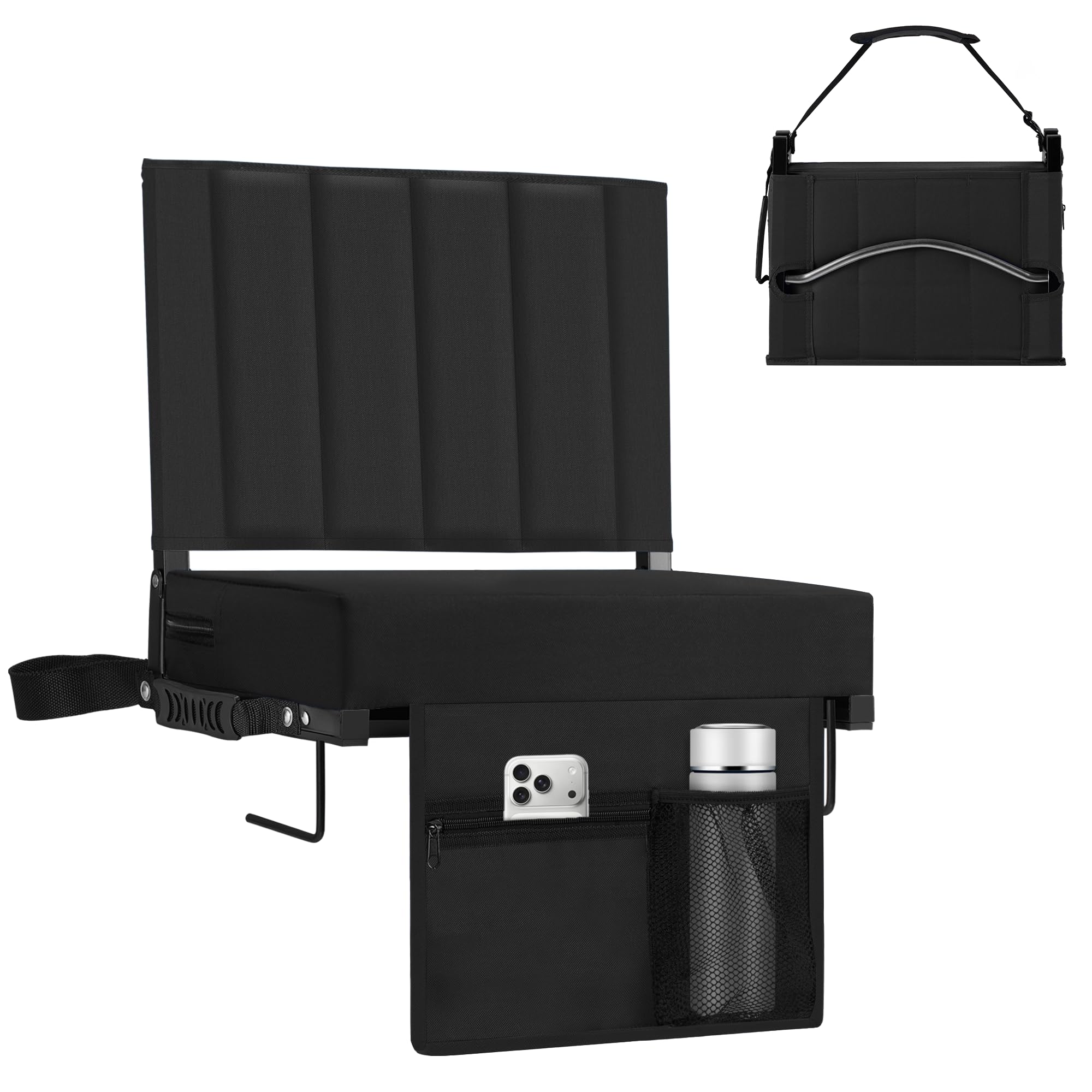
The Halituny distinguishes itself with a 400-pound weight rating, the highest among the mid-range options tested. This rating comes from a rust-resistant alloy steel frame and 600D Oxford fabric that uses double-stitched seams at every stress point. The seat measures 17 inches wide by 13 inches deep, providing a generous platform that accommodates larger body types without the feeling of spilling over the edges.
The solid backrest differs from open-back designs by providing continuous contact across the entire upper back. The metal rod contouring mimics the natural thoracic curve, distributing pressure evenly rather than concentrating it at a single lumbar point. Two steel hooks at the bottom, augmented by thickened anti-slip rubber strips, create redundant anchoring that prevents forward sliding even on angled high-school bleachers.
The cup holder and dual storage pockets (one zippered, one elastic) add genuine utility for game-day essentials. The unit arrives fully assembled and weighs 5.3 pounds, making it slightly heavier than the Maeytau but still easy to shoulder-carry across a concourse. The trade-off for the higher weight capacity is a firmer foam that does not conform as deeply, which some users with existing tailbone sensitivity may need to test before committing.
Why it’s great
- Highest weight capacity in its class
- Solid backrest with full thoracic contact
- Dual storage pockets with zippered security
Good to know
- Firmer foam may not suit tailbone pain
- Slightly heavier than average at 5.3 lbs
3. Kaganoon Bleacher Chair with Back Support
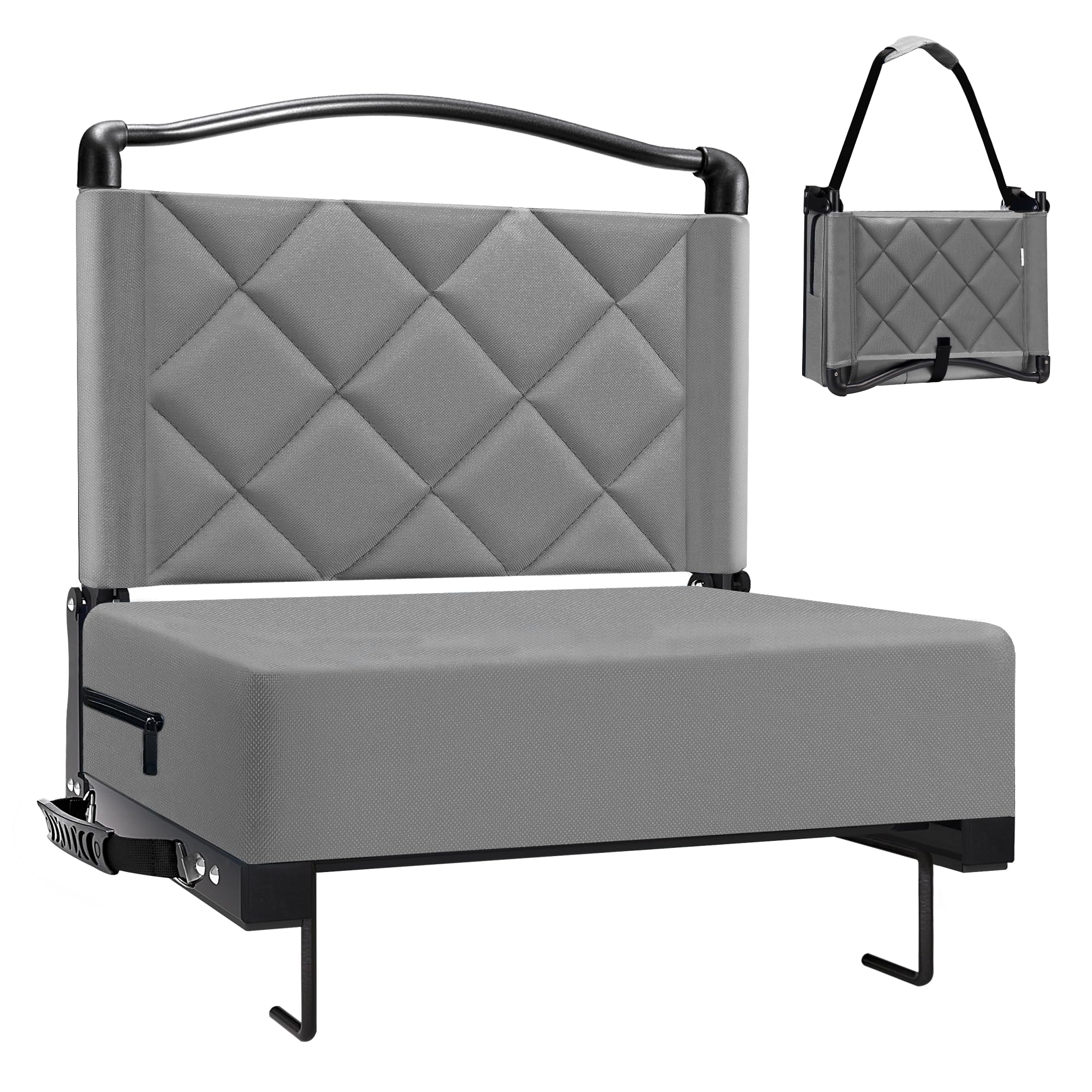
The Kaganoon uses a 3.2-inch foam cushion with a pillow-style backrest, offering the thickest seat pan in its price bracket. The ergonomic crossbar on the backrest flexes slightly with the user’s movement, a feature normally found on models costing significantly more. The cushion retains its shape well after repeated folding, thanks to a foam density that resists permanent compression even during long storage in a car trunk.
The folding footprint measures 17 by 13.5 by 4.5 inches, making it one of the most compact units when collapsed. The padded shoulder strap and widened handle reduce pressure points on the hand during long carries — a minor detail that becomes important when walking from a distant parking lot to the gate. The bottom uses two steel hooks plus two rubber anti-slip strips, a configuration that proves stable on both wooden and metal bleacher surfaces.
This model lacks side pockets or cup holders, which may frustrate users who prefer to keep drinks and phones within arm’s reach. Some reviewers note that the top metal bar of the backrest can dig into the upper back area for taller users, with one recommending adding a pool noodle as a DIY pad. For those prioritizing pure seat thickness and compact portability over storage features, the Kaganoon delivers excellent value.
Why it’s great
- 3.2-inch foam at a budget-friendly price
- Compact fold for tight trunk storage
- Padded handle and shoulder strap
Good to know
- No storage pockets or cup holders
- Top metal bar may bother upper back
4. Sekey Stadium Seat (18.4-Inch Wide)
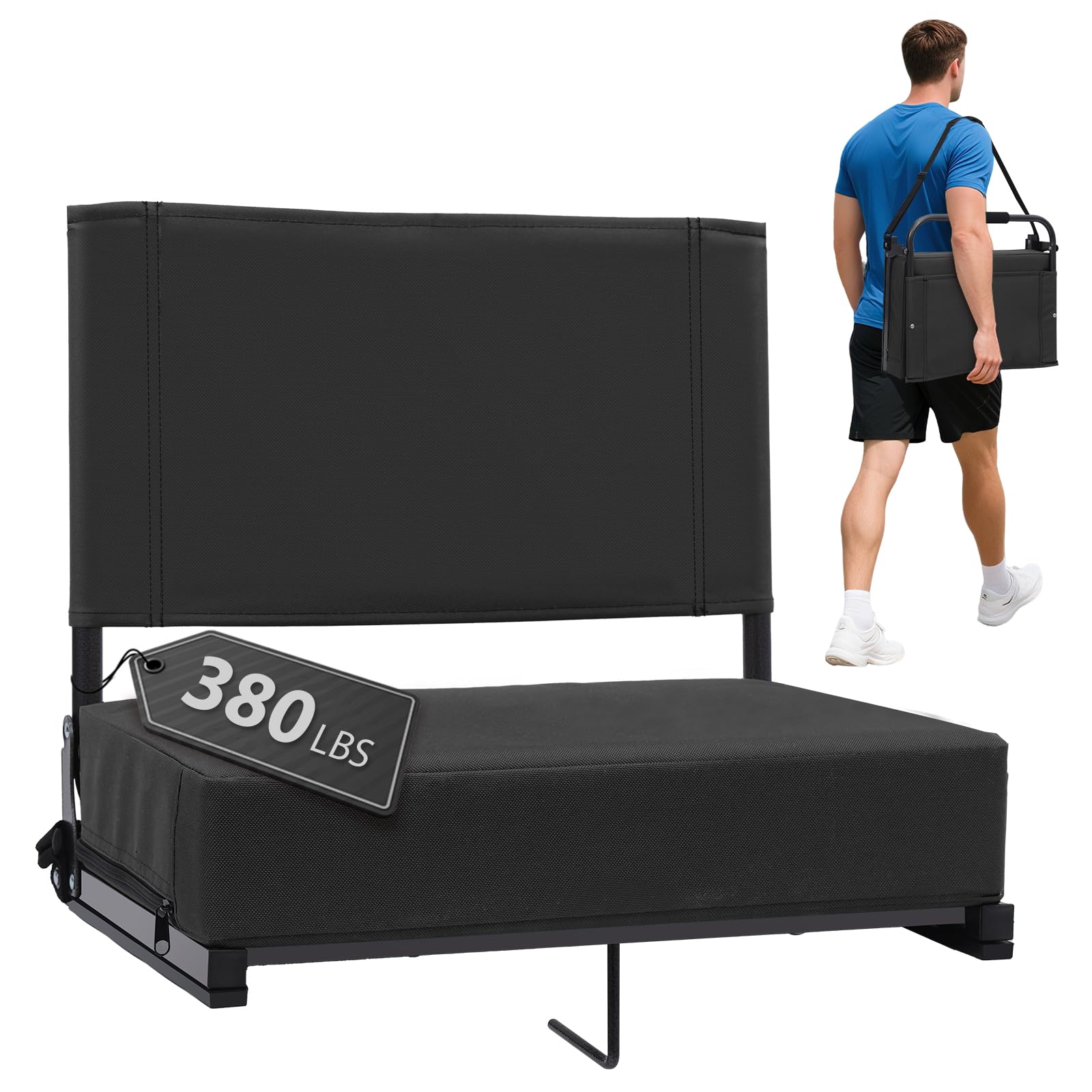
The Sekey stands out with an 18.4-inch seat width, making it the widest unit in this roundup and a strong option for users who feel constrained by standard 16-inch platforms. The 3.2-inch high-density cushion uses a thicker foam core than most competitors, and the 16.85-inch fixed backrest provides solid lumbar support without the complexity of reclining mechanisms. The carbon steel frame supports up to 380 pounds without noticeable flex during side-to-side shifting.
The 600D Oxford fabric carries a water-resistant coating that beads moisture on contact rather than absorbing it. This feature proves useful during unexpected rain showers or spilled concession drinks, as a quick wipe restores the surface to dry condition. The bottom hooks fold flat when not in use, and the non-slip rubber feet add traction on both wood and metal bleacher surfaces. The adjustable shoulder strap and metal handle make one-handed transport straightforward.
The fixed backrest lacks reclining adjustability, so users who prefer to alternate between upright and slouched postures will not have that option. A few users reported that the anti-slide rubber strip at the bottom requires reattachment after the initial setup because it detaches during the first unboxing. For the widest sitting surface and real water resistance, the Sekey provides a compelling option for larger-framed individuals or anyone who values extra lateral space.
Why it’s great
- Widest seat at 18.4 inches
- Water-resistant 600D fabric
- Strong carbon steel frame
Good to know
- Fixed backrest with no recline
- Bottom rubber strip may detach initially
5. VIVOHOME Stadium Seat with Armrests
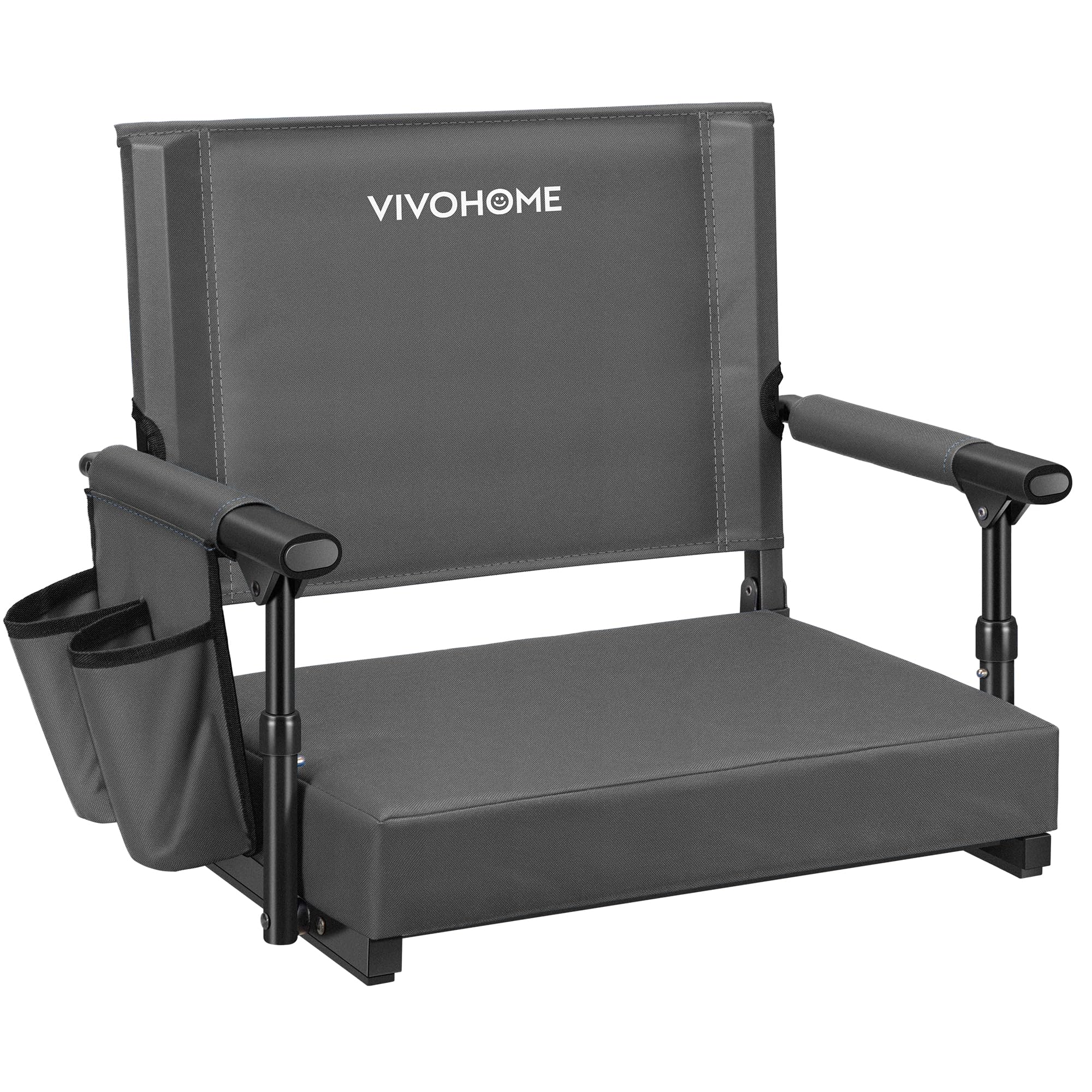
The VIVOHOME incorporates padded armrests into the folding stadium seat design, a feature that changes the sitting dynamic for users who need upper-body support during long events. The armrests provide leverage for standing up, reducing strain on the knees and lower back. The 2.8-inch soft sponge cushion uses a medium-density fill that balances comfort with support, avoiding the overly firm feel of some budget alternatives while still maintaining shape over repeated use.
The unit includes two cup holders integrated into the armrest structure, keeping beverages secure without requiring the user to hold them. The 600D Oxford cloth and PVC coating provide reasonable weather resistance, and the powder-coated steel frame resists rust in humid stadium environments. The folding mechanism collapses the chair to a flat profile, and the built-in adjustable shoulder strap switches between hand-carry and over-shoulder modes depending on preference.
The weight comes in at 7.2 pounds, which is noticeably heavier than most competitors. Users who walk long distances from parking lots may find the extra poundage tiring on the shoulder. The seat depth is slightly shorter at 14 inches, so taller users with longer femurs may feel the edge of the cushion hitting behind the knees. For close-parking or car-to-gate scenarios where armrests matter, the VIVOHOME earns its premium positioning.
Why it’s great
- Padded armrests aid standing up
- Two secure cup holders
- Medium-density foam balances comfort
Good to know
- Heavier at 7.2 pounds
- Shorter seat depth for taller users
6. TOPSKY Stadium Chair with 3-Position Recline

The TOPSKY introduces a 3-position reclining backrest, a rarity in the portable stadium seat category that allows the user to shift from upright alertness to a relaxed recline during breaks in the action. The 3-inch high-rebound foam uses 30D density, which provides a responsive feel that springs back immediately after each use without developing a permanent depression. The 17-inch actual sitting width offers enough room for average to larger body types without feeling cramped.
The armrests include side pockets on both sides, providing dedicated slots for a phone on one side and a water bottle on the other. The chair folds into a flat square that can be carried like a backpack using the integrated over-the-shoulder strap, leaving both hands free for carrying snacks or a jacket. The two steel hooks at the bottom lock onto the bleacher front edge, and the 250-pound weight capacity is lower than many competitors but sufficient for most standard-frame adults.
The reclining mechanism adds mechanical complexity and a slight weight penalty. The unit is slightly bulkier when folded compared to simpler folding chairs, which may matter for users with very compact car trunks. Some users at the 200-pound mark report that the backrest feels secure when fully upright but exhibits minor wobble in the rearmost recline position. For anyone who values adjustable posture over minimal weight, the TOPSKY delivers a uniquely versatile experience.
Why it’s great
- Three reclining positions for posture variety
- Backpack carry leaves hands free
- 30D high-rebound foam resists sagging
Good to know
- 250 lb capacity is lower than others
- Minor backrest wobble at full recline
7. Lifted Lumbar Adjustable Cushion
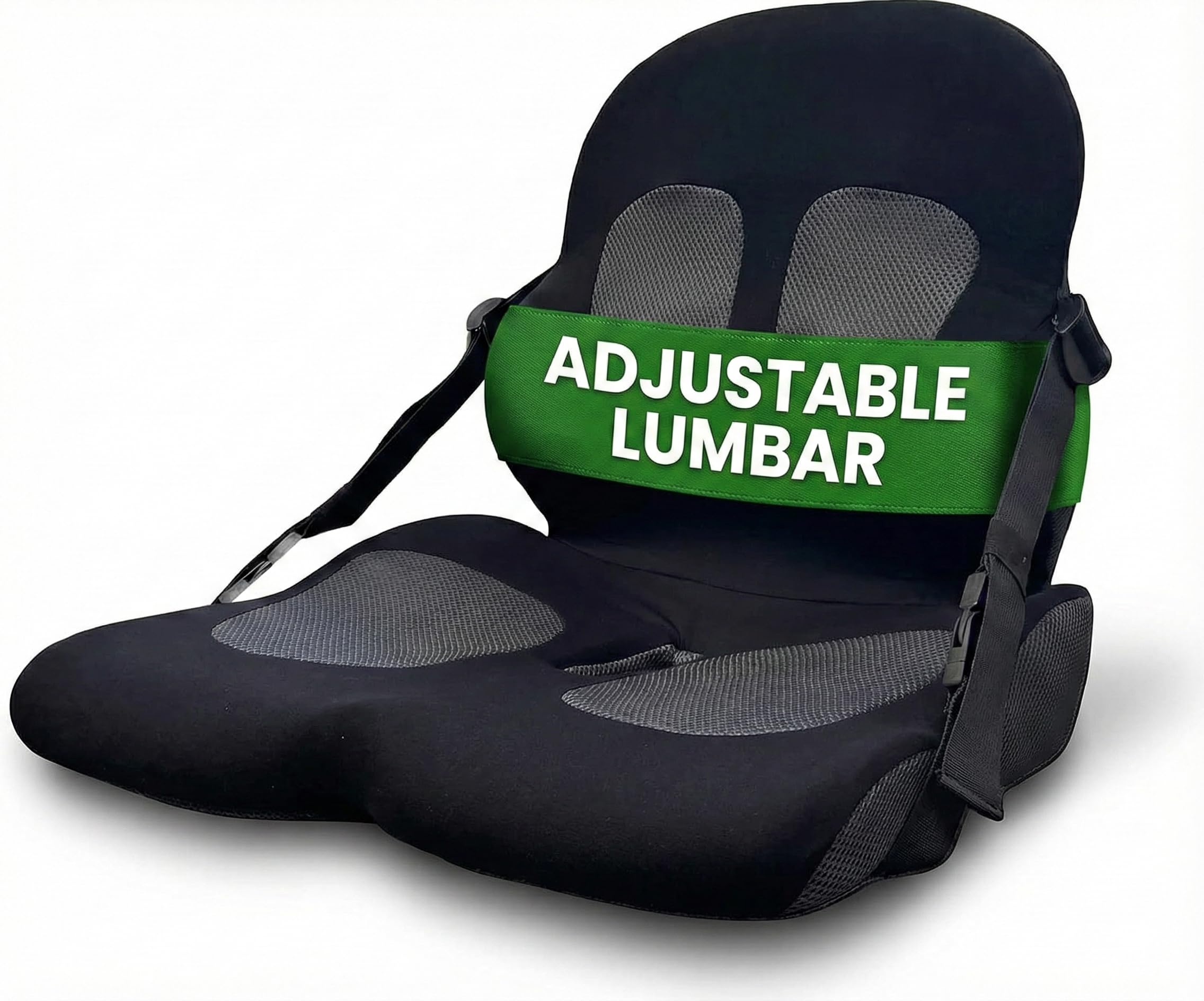
Doctor-developed and designed with spine specialists, the Lifted Lumbar takes a fundamentally different approach: it is a standalone cushion and lumbar support system that works on bleachers, car seats, office chairs, and airplane seats. The memory foam core contours to the user’s specific sit-bone geometry, providing coccyx and tailbone pressure relief that fixed foam pads cannot match. The adjustable strap tension and lumbar height adjustment allow fine-tuning of the lower back curve within seconds.
The cushion is tested for 14-hour sitting comfort, making it a strong option for marathon events like tournament weekends or music festivals. The firm memory foam maintains its shape even after extended compression in a suitcase or car trunk. The strap system anchors the cushion to any chair back, including bleachers with vertical slats, preventing the unit from shifting during sitz changes. The black fabric and neutral appearance blend into almost any environment without drawing attention.
This is not a traditional stadium seat — it lacks a folding frame, hooks, and the wide base that keeps a bleacher cushion from tipping sideways. Users who want a self-contained seat that stays put on a sloped plank without manual adjustment will find this unit less stable than purpose-built options. The Lifted Lumbar works best as an add-on to an existing bleacher seat or for users who already own a stadium seat with poor lumbar support and want to upgrade the back area independently.
Why it’s great
- Adjustable lumbar height and strap tension
- Memory foam contours to sit bones
- Multi-surface versatility beyond bleachers
Good to know
- No frame or hooks for bleacher stability
- Requires a backrest to function properly
FAQ
How much foam thickness do I need to avoid feeling the bleacher edge?
Will a bleacher seat cushion fit on all types of stadium seating?
What is the difference between open-back and solid-back stadium seats?
Final Thoughts: The Verdict
For most users, the best bleacher seat cushion winner is the Maeytau Stadium Seat because it brings the most balanced combination of foam thickness, supportive backrest, and practical storage at a price that undercuts many thinner alternatives. If you want the widest sitting surface for extra hip and thigh coverage, grab the Sekey Stadium Seat. And for adjusting your sitting angle throughout a long game, nothing beats the TOPSKY Stadium Chair with its three-position reclining backrest.