
A loose vinyl tile that shifts underfoot or a plank edge curling up at the seam isn’t just an eyesore — it’s a trip hazard and a sign the wrong adhesive was used. Vinyl tile flooring demands a bond that can handle subfloor movement, temperature swings, and heavy foot traffic without breaking down.
I’m Min — the co-founder and writer behind Gadgets Feed. After analyzing hundreds of product spec sheets, customer stress tests, and adhesive chemistry breakdowns, I’ve zeroed in on the formulations that actually keep vinyl locked down for the long haul.
Whether you are tackling a whole-room install or gluing down a single lifted corner, this guide breaks down the best adhesive for vinyl tile flooring across every budget and use case.
How To Choose The Best Adhesive For Vinyl Tile Flooring
Choosing the wrong glue for vinyl tile leads to bubbling, edge curling, or tiles popping loose within months. The right formulation depends on your tile backing, subfloor material, and traffic level — each variable changes the chemistry you need.
Solvent-Free vs. Solvent-Based
Solvent-free acrylic latex adhesives have become the standard for indoor vinyl tile because they emit far fewer volatile organic compounds (VOCs) and won’t soften or distort certain vinyl backings. Solvent-based contact cements, like the 3M Hi-Strength 94, offer extremely aggressive tack and heat resistance but require heavy ventilation and are better suited for vertical laminations or small repairs than whole floors.
Pressure-Sensitive vs. Wet-Set Adhesives
Pressure-sensitive adhesives (PSAs) remain tacky after drying, allowing tiles to be pressed into place and replaced individually later — ideal for LVT click-lock planks that also need a glue-down option. Wet-set adhesives, like the Roberts 3085, cure chemically and form a permanent rigid bond, which is better for sheet vinyl and VCT that should never move after install.
Coverage Rate and Working Time
A quart covering roughly 40 square feet versus a gallon covering up to 100 square feet changes how much you order. Equally critical is open time — the window after spreading adhesive before the tile must be laid. Fast-set formulas like the Roberts 3085 allow a 30-minute lay window, while pressure-sensitive adhesives can stay workable for several hours.
Quick Comparison
On smaller screens, swipe sideways to see the full table.
| Model | Category | Best For | Key Spec | Amazon |
|---|---|---|---|---|
| ROBERTS Universal Resilient Flooring Adhesive | Premium Mid-Range | Whole-room LVT/LVP installations | Acrylic Latex, Solvent-Free, Microban | Amazon |
| Fix-A-Floor PRO Pack | Premium Specialty | Spot repair of loose tiles | Micro Syringe Injector, 24hr cure | Amazon |
| DAP Floor Tile Adhesive | Premium All-Purpose | Ceramic, porcelain, engineered wood | Clear formula, 55-min wait time | Amazon |
| Roberts 3085 Multipurpose | Mid-Range Workhorse | Sheet vinyl and felt-back flooring | SBR Latex, Solvent-Free, Fast-Set | Amazon |
| Lucida Surfaces CoreBond | Mid-Range Solvent-Free | Porous and non-porous substrates | Solvent-Free, 30-min open time | Amazon |
| Titebond Tongue and Groove | Mid-Range Laminate | Floating floor tongue-and-groove seams | Water-Resistant Type II, FloorScore | Amazon |
| 3M Hi-Strength 94 Spray | Budget Contact Cement | Foam, carpet, wood laminations | Spray, 60-min bonding range, Low VOC | Amazon |
In‑Depth Reviews
1. ROBERTS Universal Resilient Flooring & Vinyl-Backed Carpet Tile Adhesive

The ROBERTS Universal Resilient Flooring Adhesive is a solvent-free acrylic latex formulation that delivers high initial tack while staying workable for several hours — a rare combination that makes it forgiving for large-area LVT, LVP, and VCT installations. The pressure-sensitive chemistry means tiles can be pressed into place after the adhesive dries to a clear, tacky film, which reduces the risk of squeezing glue up through grout lines.
Microban antimicrobial protection is integrated into the formula, fighting stain-causing microbes that can degrade the bond over time in moisture-prone environments like basements or kitchens. At a gallon covering roughly 80–100 square feet depending on trowel notch size, it hits the sweet spot of value and volume for a full room.
Customer reports confirm it withstands foot traffic, snow melt, and mud tracked indoors without tiles lifting after six months. The only downside is cleanup — wet adhesive wipes off with damp cloth, but dried residue requires mineral spirits.
Why it’s great
- Long open time of several hours reduces install pressure
- Microban protection prevents bond degradation from microbes
- Compatible with concrete, plywood, steel, and existing VCT
Good to know
- Dried adhesive requires mineral spirits for cleanup
- Lid may leak during shipping if container is not taped
2. Fix-A-Floor PRO Pack with Micro Syringe Injector
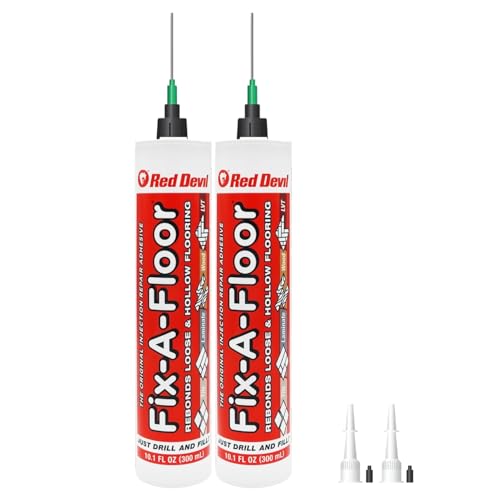
The Fix-A-Floor PRO Pack is purpose-built for one specific job: re-bonding loose or hollow tiles without removing them. The kit includes two 10.1-ounce tubes of CoPolymer adhesive, two micro syringe adapters with resealable caps, a pair of 14-gauge blunt steel injection needles, and two 2.5mm diamond drill bits — everything needed to drill a few holes through the grout or tile face and inject adhesive directly into the void.
The low-viscosity CoPolymer formula flows like milk through the needle and cures to a semi-rigid solid in 24 hours, effectively re-anchoring tiles to concrete subfloors. It works on ceramic, porcelain, marble, stone, engineered wood, and even LVP, making it a universal repair solution for a single loose tile in an otherwise sound floor.
Some users found the included drill bits too fragile for hard porcelain and recommend using a carbide masonry bit instead. The adhesive can also ooze from the tube end if the syringe adapter is not seated perfectly. Still, for avoiding the demolition and replacement of a single loose tile, it is remarkably cost-effective.
Why it’s great
- Inject adhesive under loose tile without removing it
- Cures clear and bonds to stone, porcelain, and engineered wood
- Resealable caps allow multi-use over several days
Good to know
- Included diamond drill bits may fail on hard tile
- Requires a standard caulk gun, not skeleton-style
3. DAP Floor Tile Adhesive, 1 gal

DAP Floor Tile Adhesive is a clear-drying, solvent-based formulation that bonds wood, ceramic, porcelain, and engineered wood tiles to subfloors. The key to using it effectively is respecting the 55-minute wait time after spreading — the adhesive must become clear before tiles are set, otherwise the bond-out time is thrown off and tiles may not stick properly.
The gallon pail provides generous coverage for medium-sized rooms, and the clear finish means any squeeze-out between tile seams is nearly invisible. Customer reports show it works well for regluing laminate tiles after water damage, provided the subfloor is allowed to dry completely before application.
A minority of users reported the adhesive expands slightly during cure, which can raise a tile an eighth of an inch above its neighbor if not weighted down. Using a roller or weighted bricks during the 24-hour cure period mitigates this issue entirely. For ceramic and engineered wood flooring, DAP remains a trusted choice.
Why it’s great
- Clear drying formula hides squeeze-out between tiles
- Bonds wood, ceramic, porcelain, and engineered wood
- Large gallon pail covers a full room
Good to know
- May expand slightly during cure if tile is not weighted
- Cannot be used on vinyl-backed or LVT flooring
4. Roberts 3085 Multipurpose Adhesive, 1 Gal
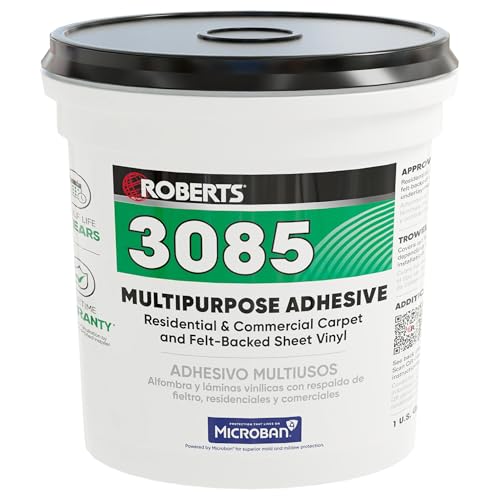
The Roberts 3085 is an SBR latex, solvent-free adhesive with a fast-set formulation that locks down felt-back sheet vinyl, carpet, and acoustical cork underlayment in roughly 30 minutes. The fast-setting chemistry is ideal for impatient DIYers or commercial installers who need to walk on the floor the same day.
One gallon covers approximately 92 square feet based on customer measurements, and the bond holds up well on concrete, APA-rated plywood, terrazzo, and properly prepared VCT. The solvent-free formula means no harsh fumes during application, making it safe for interior use without industrial ventilation.
Packaging consistency has been an occasional problem — some customers received cans with broken seals and leaking adhesive. Ordering from a reliable seller with good packaging practices minimizes this risk. For sheet vinyl and felt-back flooring, the 3085 delivers a solid, permanent bond at a mid-range price.
Why it’s great
- Fast-set allows foot traffic within 30 minutes of spreading
- Solvent-free formula keeps indoor air quality high
- Good coverage of roughly 92 sq ft per gallon
Good to know
- Seal occasionally fails in transit causing leaks
- Not recommended for luxury vinyl plank (LVP)
5. Lucida Surfaces CoreBond Pro-Grade Solvent Free Adhesive
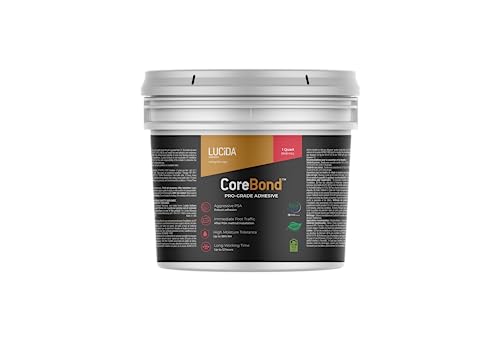
Lucida Surfaces CoreBond is a solvent-free, pressure-sensitive adhesive engineered specifically for vinyl flooring types including LVT, vinyl plank without attached backing, PVC tile, VCT, quartz tile, and vinyl-backed sheet flooring. It handles both porous subfloors like concrete and non-porous surfaces like existing tile, giving it unusual versatility for a quart-sized container.
With wet adhesive cleanable by damp cloth and dried residue removable with mineral spirits, the cleanup is straightforward. The working time of 30 minutes to 1 hour provides a reasonable window for laying tiles before the adhesive skins over, and the pressure-sensitive nature allows individual tile replacement later.
Customer feedback consistently praises its stickiness — one user noted the adhesive remained tacky even after being uncovered for a week. The main limitation is the 1-quart size covering only 40 square feet, so larger rooms require multiple units. For small bathrooms, RV repairs, or spot installations, the CoreBond offers professional-grade performance in a small package.
Why it’s great
- Bonds to both porous and non-porous subfloors
- Remains tacky for days, allowing flexible installation pace
- Solvent-free with easy wet cleanup
Good to know
- Quart size only covers 40 sq ft
- Not ideal for whole-room installations over 100 sq ft
6. Titebond Tongue and Groove Glue, 16 oz

The Titebond 2104 is a polymer-based adhesive designed specifically for tongue-and-groove joints in laminate and engineered hardwood floating floors. Unlike trowel-on adhesives that glue the entire tile to the subfloor, this bottle-applied glue locks the planks together at the seams, preventing moisture from penetrating between boards and causing cupping or edge separation.
The formula passes Type II water-resistance testing and is FloorScore certified for low VOC emissions, making it safe for indoor use. The ergonomic bottle with a precision tip allows controlled application directly into the groove without excess squeeze-out — a critical feature since over-application can cause adhesive to ooze onto the floor surface and collect dust.
Customers report one bottle covers approximately 100 square feet for 3-inch wide boards, and the bond strength often exceeds the material strength of the plank itself. For floating floor installations over radiant heating systems, this is the only adhesive on the list rated for that environment.
Why it’s great
- Type II water-resistant seal prevents moisture between planks
- FloorScore certified for low emissions
- Precision tip minimizes messy squeeze-out
Good to know
- Not suitable for gluing vinyl tile to a subfloor
- Only works on tongue-and-groove edges of floating floors
7. 3M Hi-Strength 94 ET Spray Adhesive, 19.75 oz
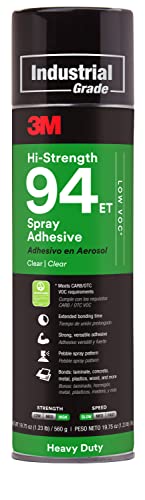
The 3M Hi-Strength 94 is a spray-on contact cement with a 60-minute bonding range and aggressive initial tack that grabs materials immediately upon contact. While it is not a traditional trowel-on adhesive for full vinyl tile floors, it excels at bonding carpet, foam, rubber, and metal to vinyl surfaces for smaller projects like soundproofing panels on vinyl walls or gluing carpet binding to vinyl edges.
Its GREENGUARD certification and CARB/SCAQMD compliance mean the VOC levels are lower than older spray adhesives, but the solvent smell is still strong — adequate ventilation and a respirator mask are mandatory. The spray format provides even coverage on large surface areas quickly, and the bond holds in cold temperatures where liquid adhesives thicken.
For dedicated full-floor vinyl tile installations, a trowel-on pressure-sensitive adhesive is more appropriate. But for small repairs, edge bonding, or laminating vinyl to other materials, the 3M 94 provides industrial strength in an easy-to-use aerosol can.
Why it’s great
- 60-minute bonding range allows ample adjustment time
- Low VOC compared to older contact cements
- Excellent cold-temperature bond performance
Good to know
- Strong solvent smell requires good ventilation
- Not designed for full-spread vinyl tile flooring installation
FAQ
Can I use any adhesive on LVT or LVP flooring?
How do I remove old adhesive before applying new vinyl tile adhesive?
How long does vinyl tile adhesive need to dry before walking on it?
Final Thoughts: The Verdict
For most users, the adhesive for vinyl tile flooring winner is the ROBERTS Universal Resilient Flooring Adhesive because its solvent-free acrylic latex formulation delivers long open time, Microban antimicrobial protection, and broad compatibility with LVT, LVP, VCT, and carpet tile — all at a coverage rate that makes a single gallon sufficient for a full room. If you need a spot repair for a single loose tile without demolition, grab the Fix-A-Floor PRO Pack. And for a floating laminate floor installation where moisture seal between planks is the priority, nothing beats the Titebond Tongue and Groove Glue.