
Surface rust starts as a minor cosmetic annoyance on a fender edge or undercarriage bolt, but left unchecked it turns structural metal into brittle, flaking debris. The chemical reaction feeds on moisture and oxygen, tunneling beneath paint layers until the repair bill multiplies. Stopping that electrochemical chain reaction requires a chemistry-matched product, not a generic spray-and-pray approach.
I’m Min — the co-founder and writer behind Gadgets Feed. I spend hours analyzing the reactive agents and application mechanics of dozens of rust treatments to separate the chemically-sound converters from the temporary concealers.
Whether you need a spray-on wax barrier for winter underbody protection or a soaking solution to reclaim a seized tool, this guide to best automotive rust killer options helps you match the right chemistry to your specific rust problem.
How To Choose The Best Automotive Rust Killer
The least useful product is the one with a shiny label but no real chemical ability to neutralize ferrous oxidation at the molecular level. Understanding the substrate you are treating — bare metal, painted panels, or structural steel — drives the buying decision more than brand familiarity.
Converter vs. Remover vs. Inhibitor
A rust converter uses tannic acid or similar organic agents to react with iron oxide (Fe₂O₃) and form a stable, black-colored ferric-tannate layer that can be painted over directly. A rust remover dissolves the oxide chemically, requiring the part to be submerged or saturated, and then rinsed away to expose clean metal. An inhibitor prevents the formation of new oxide by blocking moisture and oxygen from reaching the metal surface through a waxy, oily, or dielectric film — it does not fix existing damage.
Application Method and Surface Area
Large underbody sections or frame rails benefit from aerosol sprays that coat complex geometry without disassembly. Smaller items like bolts, tools, or brackets often respond better to immersion in a chelating solution like a water-based remover that gets into threads and crevices. If the area is vertical or overhead, a gel or thick aerosol that does not drip off is the only practical choice.
Film Toughness and Paintability
A waxy self-sealing coating that remains slightly soft will resist chipping from road debris but may attract dust during application. A hard, flat matte converter that dries to a touchable finish allows immediate top-coating with automotive paint but may crack if applied over a flexible plastic panel. Check whether the product needs to be painted over for UV protection or can serve as a final layer in low-exposure cavities.
Quick Comparison
On smaller screens, swipe sideways to see the full table.
| Model | Category | Best For | Key Spec | Amazon |
|---|---|---|---|---|
| CorrosionX 90102 | Inhibitor | Dielectric marine protection | 39,000V dielectric rating | Amazon |
| Evapo-Rust ER013 | Remover | Immersion of heavy rust parts | 5 gallon water-based soak | Amazon |
| Rust-Oleum 7830730 | Converter | Spot treatment of garden metal | 20 sq. ft. per 8 oz can | Amazon |
| Dupli-Color ERF129 | Converter | Auto body panel rust spots | 10.25 oz aerosol clear-to-black | Amazon |
| JENOLITE Waxoil 89005 | Inhibitor | Underbody and box section coating | Self-sealing waxy aerosol film | Amazon |
| CARPRO IronX 15LS | Remover | Paint decontamination prep | pH neutral iron particle dissolver | Amazon |
| Rust Kutter 9099 | Converter | Large surface area application | Gallon-sized brush-on formula | Amazon |
In‑Depth Reviews
1. CorrosionX 90102

CorrosionX uses a proprietary molecular bonding technology that links the oil-based carrier to the metal surface at the sub-micron level, creating a self-healing film that resists washout from salt spray and rain. The dielectric rating exceeds 39,000 volts, making it safe for electrical connections and battery terminals while preventing galvanic corrosion between dissimilar metals.
The aerosol delivers a penetrating fluid that creeps along threads and between stacked surfaces, freeing seized bolts while simultaneously leaving behind a light lubricating layer. Users report that it revives old chain links and gun metal that other penetrants left unaffected, and the film remains flexible so it self-seals after scratches from road debris.
Overspray requires immediate wiping because the oil-based residue stains painted surfaces if left to sit. The 16-ounce can lasts through several applications on a truck frame or boat trailer, but the industrial strength means the mist can drift onto windows and door seals if you are not deliberate with your spray pattern.
Why it’s great
- Molecular bonding resists washout from salt spray and heavy rain
- Acts as lubricant, penetrant, and dielectric protectant in one aerosol
- U.S. Navy qualified for advanced marine corrosion protection
Good to know
- Oil overspray stains adjacent painted surfaces if not wiped promptly
- Does not convert existing heavy rust into paintable primer
2. Evapo-Rust ER013

Evapo-Rust uses a water-based chelating chemistry that selectively binds to iron oxide molecules and lifts them off the metal surface without attacking the underlying steel. The solution is non-toxic, non-flammable, and biodegradable, making it the safest option for indoor workshop use where aerosol fumes are undesirable.
Immersion is the intended method — fully submerge the part for 12 to 24 hours, and heavy rust layers dissolve without any scrubbing or sanding. Users report that a single five-gallon bucket remains effective through three or four heavy-duty cycles before the liquid turns dark and slows down, and sealed storage extends the life to years.
The treated bare metal needs immediate protection after rinsing because the chelating process leaves the surface chemically clean and highly reactive to atmospheric oxygen. Without a follow-up coat of oil or wax, flash rust forms within hours. The bucket size is practical for car control arms, engine brackets, and tools, but impractical for panels that cannot be removed.
Why it’s great
- Removes rust down to bare metal without abrasive scrubbing
- Biodegradable and non-toxic formula is safe for indoor shop use
- Reusable liquid provides multiple treatment cycles before depletion
Good to know
- Requires full immersion of parts, limiting use to removable components
- Treated metal must be coated immediately to prevent instant flash rust
3. Rust-Oleum 7830730

The Rust-Oleum Stops Rust Rust Reformer uses a tannic-acid-based converter that reacts with iron oxide to produce a stable, black-colored ferric-tannate surface. It eliminates the need to sand down to bare metal, cutting prep time significantly when treating garden tools, trailer hitches, or fence stakes.
The 8-ounce aerosol covers roughly 20 square feet and dries to a flat matte black finish that accepts most oil-based top coats or primers. Experienced users report that it works best when the rust layer is light to moderate — loose flakes and heavy scale should be wire-brushed off first for the chemical reaction to reach the active iron oxide beneath.
Durability suffers on reassembled machine parts where the coating rubs against mating surfaces; the converted layer is not a structural hardener and can peel if mechanically abraded. The nozzle tends to clog if not cleaned after each use, and the labeling says black but the liquid inside is white, which can cause confusion during application.
Why it’s great
- Chemically converts rust into paintable primer without bare metal sanding
- Dries quickly to a flat black finish that accepts oil-based top coats
- Affordable price point makes it practical for regular garden and tool touch-ups
Good to know
- Converted layer can peel under mechanical abrasion on moving parts
- Requires loose rust removal before application for full chemical bond
5. Dupli-Color ERF129 Rust Fix

The Dupli-Color Rust Fix sprays on as a clear liquid and chemically transforms to black upon contact with iron oxide, creating a visual indicator that the reaction is occurring. The 10.25-ounce can is one of the largest aerosol converters available, providing enough coverage for two car doors or a quarter panel with a single coat.
The converted surface sands smooth after curing, allowing body filler and fiberglass repairs to adhere without the extra step of grinding to bare metal. The full cure time is one hour, which accelerates the workflow compared to converters that require overnight drying before top-coating.
Light rust scale converts reliably, but thick crusted rust that has not been wire-brushed first leaves a rough texture that bridges rather than bonds. The clear-to-black transition creates a darker finish than some may expect, and the tint shows through lighter paint colors if you skip a primer coat after conversion.
Why it’s great
- Sprays clear and turns black on contact with rust for visual confirmation
- Sandable surface allows direct body filler and fiberglass application
- One-hour full cure time speeds up the refinishing process
Good to know
- Heavy flake rust must be removed first for proper chemical conversion
- Black tint may show through lighter paint colors without a primer layer
6. JENOLITE Waxoil 89005

JENOLITE Waxoil is a thick waxy aerosol that dries to a clear, slightly tacky film designed for hard-to-reach areas like box sections, door sills, and wheel arches. The formulation drives out moisture on contact and leaves a self-sealing barrier that re-forms when scratched by road debris, providing continuous protection in winter salt conditions.
The spray pattern covers internal cavity surfaces without needing a special wand, and the clear finish leaves no black smudge on fingers when you later reach into the wheel well. Users in the Iowa and UK rust belts report the coating holds up through an entire winter season on new suspension parts and truck frames, outperforming lanolin-based alternatives that wash out over time.
The wax film remains slightly soft, so it collects dust and road grime over the driving season, and it is not paintable — any top coat will sit on the waxy surface rather than bond to metal. The 500-milliliter can covers a small car undercarriage with one coat, but a full-size SUV or long-bed truck requires two to three cans for thorough coverage.
Why it’s great
- Self-sealing waxy film re-forms after scratches from road debris
- Clear, non-smudge finish leaves no black marks on hands or tools
- Drives out moisture from box sections and cavity seams effectively
Good to know
- Soft film collects road grime and dust during driving season
- Not paintable; any top coat will not bond to the waxy layer
7. CARPRO IronX 15LS
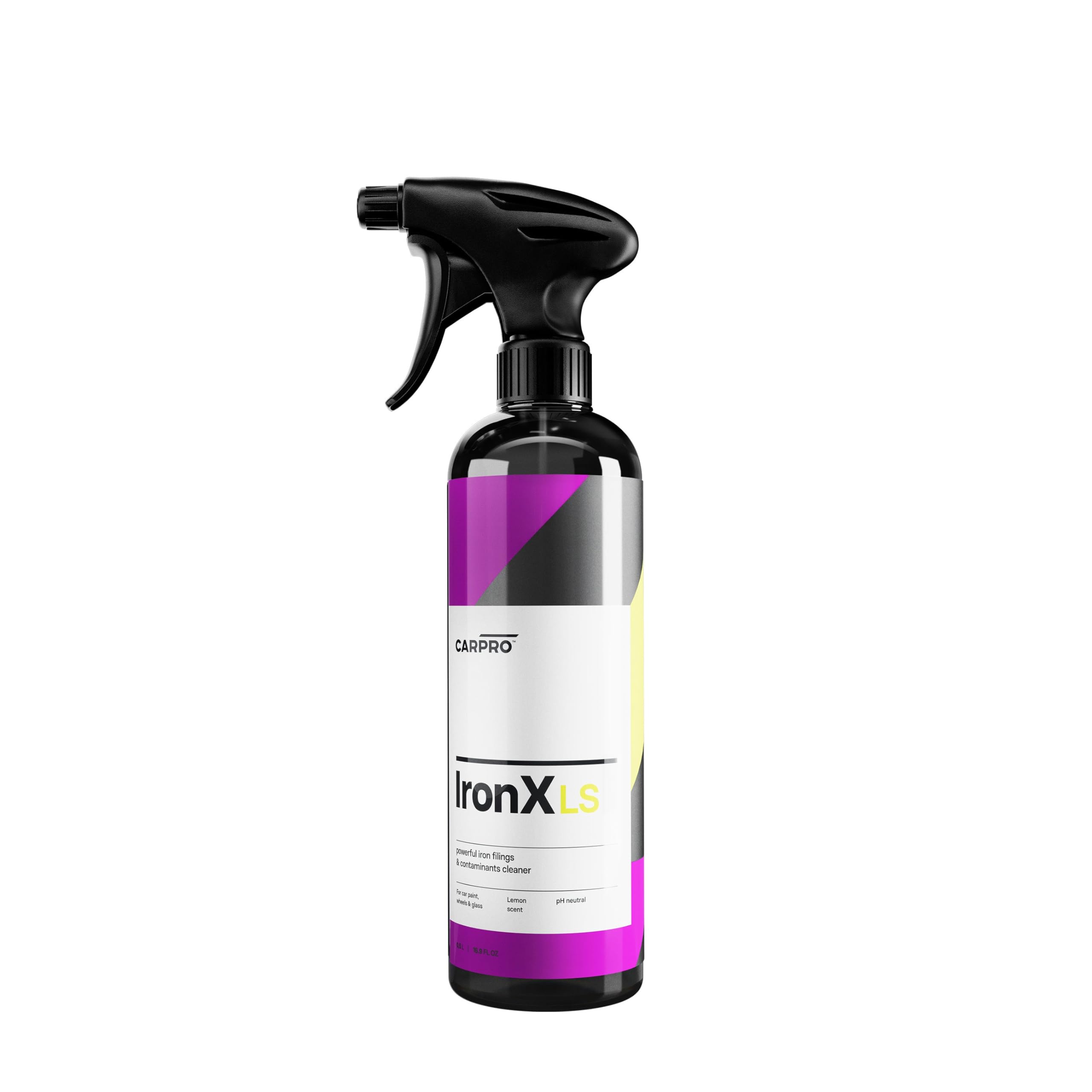
CARPRO IronX is an acid-free, pH neutral iron contaminant remover designed for clear coat paint surfaces rather than structural steel repair. The lemon-scented formula is 10% more potent than the original, and it chemically dissolves embedded iron particles from brake dust and rail dust that cause microscopic rust spots under the clear coat.
The liquid changes color as it reacts with iron, turning purple or red on contact, which gives visual confirmation of the decontamination process. Professionals use it as a pre-polishing step to prevent clear coat failure caused by ferrous particles rusting and expanding beneath the paint layer.
The odor is the biggest drawback — even the lemon scent version carries a chemical smell that users describe as resembling flatulence or perm solution, requiring outdoor or well-ventilated application. The trigger sprayer nozzle is slightly too long for the bottle and requires trimming to fit properly, which is an irritating packaging oversight at this price tier.
Why it’s great
- pH neutral formula dissolves iron particles without damaging clear coat
- Color-changing reaction provides visual confirmation of decontamination
- Prevents clear coat failure from embedded ferrous metal expansion
Good to know
- Strong chemical odor lingers during and after application
- Spray nozzle design is slightly incompatible with the bottle
4. Rust Kutter 9099

Rust Kutter uses a water-based conversion chemistry that binds to the metal surface and forms a barrier layer that prevents moisture and oxygen from reaching the steel. The gallon-sized container allows you to apply it with a brush, spray bottle, or roller, making it practical for large structural areas like truck frames, trailer decks, and fencing.
The process is straightforward: scrape off loose paint and rust with a wire brush, apply the liquid, let it dry for 24 hours, rinse off the residual oxidation, and then paint over the converted surface. Users report it removes 99% of rust on Minnesota winter vehicles after two coats, and the formula neutralizes the remaining iron oxide so deeply that the treated area stays rust-free for months without top coating.
The product requires rust to be present to work — it does nothing on clean painted metal. The 24-hour dry time is slower than aerosol converters, and the acid bleed-through risk means a baking soda rinse is recommended before painting to prevent the primer from reacting. Amazon shipping leaks are reported frequently due to the gallon jug design, so expect some clean-up on arrival.
Why it’s great
- Gallon bottle provides high volume for large-area structural applications
- Binds to metal forming a permanent barrier against moisture and oxygen
- Effective on heavy rust with two-coat treatment schedule
Good to know
- 24-hour dry time between coats extends the total treatment duration
- Baking soda rinse recommended before painting to prevent acid bleed
FAQ
Can I paint directly over a rust converter without sanding?
How long does a waxy underbody coating last through road salt exposure?
Does a rust remover damage good paint or chrome plating?
Final Thoughts: The Verdict
For most users, the best automotive rust killer winner is the CorrosionX 90102 because it delivers penetrating, dielectric, lubricating, and inhibiting performance in a single aerosol — the broadest real-world utility against both existing corrosion and future moisture exposure. If you need to restore heavy rusted parts by soaking, grab the Evapo-Rust ER013. And for cheap, fast conversion of surface rust on garden tools and small auto panels, nothing beats the Rust-Oleum 7830730.