
When the mercury drops and the wind howls, frozen fingers turn a crisp morning ride into a painful endurance test. The right pair of winter cycling gloves must balance four conflicting demands: insulation thick enough to block bone-chilling cold, dexterity precise enough to work shifters and brake levers, a grip that refuses to slip on wet hoods, and a membrane that keeps rain and road spray out without turning your hands into a sweatbox.
I’m Min — the co-founder and writer behind Gadgets Feed. I’ve spent countless hours cross-referencing ASTM and ISO thermal standards, membrane waterproof ratings, and real-world rider feedback to separate the gloves that actually deliver below 40°F from the ones that merely look the part.
Losing hand function mid-ride is dangerous, so I’ve narrowed the field to the seven pairs that genuinely earn the title of best bicycle winter gloves.
How To Choose The Best Bicycle Winter Gloves
Choosing winter cycling gloves isn’t about grabbing the thickest pair off the shelf. You need to weigh insulation type, waterproofing, palm padding, and closure system against your specific riding conditions — wet road commuting, dry sub-freezing MTB trails, or mixed long-distance touring.
Insulation vs. Dexterity
The warmest gloves use PrimaLoft or similar synthetic insulation that traps heat even when damp. However, thick insulation reduces finger mobility — you won’t feel thumb shifters or drop-bar brake levers the same way. Look for gloves that use zone-mapped insulation (thicker on the back of the hand, thinner on the palm and fingers) to preserve that critical tactile feedback.
Waterproof Membrane
A true waterproof membrane — like Gore-Tex INFINIUM or an AQUASEALZ layer — stops rain and road spray from saturating the insulation. Water-resistant coatings fail after a few rides. If you ride in persistent rain, prioritize a membrane-rated glove. If you ride mostly dry cold, a windproof softshell may be more breathable and comfortable.
Grip and Palm Protection
Winter gloves often have silicone or rubberized print on the palm to prevent slipping on wet grips. Some add gel or foam padding (like 4mm DoctorGel) to absorb vibration from rough roads or gravel. Padded gloves reduce hand fatigue but can reduce bar feel. Decide whether you prioritize shock absorption or direct handlebar feedback.
Quick Comparison
On smaller screens, swipe sideways to see the full table.
| Model | Category | Best For | Key Spec | Amazon |
|---|---|---|---|---|
| Pearl Izumi AmFIB Lobster | Premium | Sub-freezing road rides | 170g PrimaLoft Gold Cross Core | Amazon |
| Gore Wear Thermo Split | Premium | Drop-bar braking precision | PrimaLoft + split-finger design | Amazon |
| Sealskinz Bodham | Premium | Heavy rain protection | AQUASEALZ waterproof membrane | Amazon |
| Pearl Izumi Cyclone | Mid-Range | Cool fall days + touchscreen use | 4-way stretch + gel padding | Amazon |
| GripGrab Ride | Mid-Range | All-day wet/cold commuting | 4mm DoctorGel palm padding | Amazon |
| GripGrab Knitted Thermal | Mid-Range | Light rain + cool temps | Knitted shell, 70g weight | Amazon |
| Gore Bike Wear GWS Thermo | Entry-Level | Dry cold above freezing | Gore windproof membrane | Amazon |
In‑Depth Reviews
1. Pearl Izumi AmFIB Lobster

The Pearl Izumi AmFIB Lobster uses 170g PrimaLoft Gold insulation with Cross Core technology — a ceramic-infused fiber that traps body heat far more efficiently than standard polyester batting. In my analysis of real user data, this is the only glove in this roundup that riders consistently report keeping hands warm down into the teens and single digits Fahrenheit during extended rides. The lobster-claw design (index and middle finger together, ring and pinkie together) creates a shared air pocket that mimics a mitten’s warmth while still allowing individual finger movement for shifters and brakes.
The 3D-shaped gel pad on the palm absorbs road chatter without adding noticeable bulk, and the synthetic suede palm provides a secure grip on wet hoods. Riders with 8-inch hand width reported a perfect medium fit, and the long cuffs seal out drafts effectively. Touchscreen compatibility on the index finger and thumb works for basic phone taps, though map navigation or typing remains frustrating — a common trade-off with any heavily insulated glove.
One minor complaint involves breathability: at high effort levels near 40°F, some riders reported sweat accumulation that required overnight drying. But for genuine sub-freezing performance, this glove leads the pack.
Why it’s great
- Exceptional 170g PrimaLoft Gold Cross Core insulation for deep cold
- Lobster design maximizes warmth while preserving dexterity
- Effective gel palm padding for vibration damping
Good to know
- Touchscreen response is imprecise
- Sweat buildup can occur in milder temps or high effort
2. Gore Wear Thermo Split Gloves

The Gore Wear Thermo Split is a unique specialist: it places your index finger and thumb in individual sheaths while encasing your middle, ring, and pinkie fingers together in a shared chamber. This split-finger design is engineered for one specific scenario — riding drop-bar bikes with hydraulic or mechanical disc brakes where you need precise single-finger modulation. Riders who tested this on 90-minute 31°F rides reported that the shared pocket kept the three inner fingers significantly warmer than standard five-finger gloves.
The Gore-TEX INFINIUM membrane provides excellent wind resistance and some water protection, but this is not a fully waterproof glove. In heavy rain, the exterior fabric can wet out and cool the hand. The PrimaLoft liner is reasonably thin, which means this glove runs slightly colder than the AmFIB Lobster below 25°F — several riders noted that sub-freezing temps required adding a thin liner inside. Sizing runs small; multiple customers recommended going up one to two sizes for a comfortable fit.
Touchscreen capability exists on the thumb and index finger but is imprecise enough that opening a lock screen is about all you can manage. For riders who prioritize single-finger brake access and are willing to accept a colder ceiling, this is a uniquely capable tool.
Why it’s great
- Split-finger design optimizes warmth for three fingers without sacrificing brake control
- Gore-TEX INFINIUM blocks wind effectively
- Bright yellow color improves hand-signal visibility in traffic
Good to know
- Not fully waterproof; fabric wets out in prolonged rain
- Sizing runs very small — size up significantly
- Cold limit is around 25°F before insulation feels thin
3. Sealskinz Bodham Waterproof Gloves

The Sealskinz Bodham is the only glove here built around a true AQUASEALZ waterproof membrane, and it shows. Riders reported staying bone-dry through 20-30 mph descents in heavy rain — something no water-resistant coating can deliver. The outer shell is a blend of polyester, polyurethane, and nylon that sheds water effectively, and the inner lining is a non-insulated polyester layer designed to be paired with your own thermal liner for temperature tuning.
This is critical: the Bodham is not a winter glove by itself. Its ideal temperature window is 40°F to 59°F; below that, the lack of integrated insulation means your hands will feel the cold. But as a waterproof shell worn over a thin merino or synthetic liner, it extends comfortably into the low 30s. The ambidextrous design makes sizing simpler, and the pull-on closure (no Velcro) keeps the cuff clean but may leave the wrist opening a bit loose for riders with slender wrists.
Some users noted that the Velcro adjustment straps are short, and larger hands may find the cuff tight. Machine washable at 30°C and drip-dry only. For cyclists who ride through genuine downpours and prefer to layer their insulation independently, the Bodham is the definitive choice.
Why it’s great
- True AQUASEALZ membrane provides bombproof waterproofing
- Thin shell design lets you layer insulation to match conditions
- Durable construction survives repeated rain exposure
Good to know
- No integrated insulation — requires separate thermal liner in cold
- Velcro wrist strap is short; cuff may feel snug for larger hands
- Poor warmth below 40°F without a liner
4. Pearl Izumi Cyclone Insulated Gloves
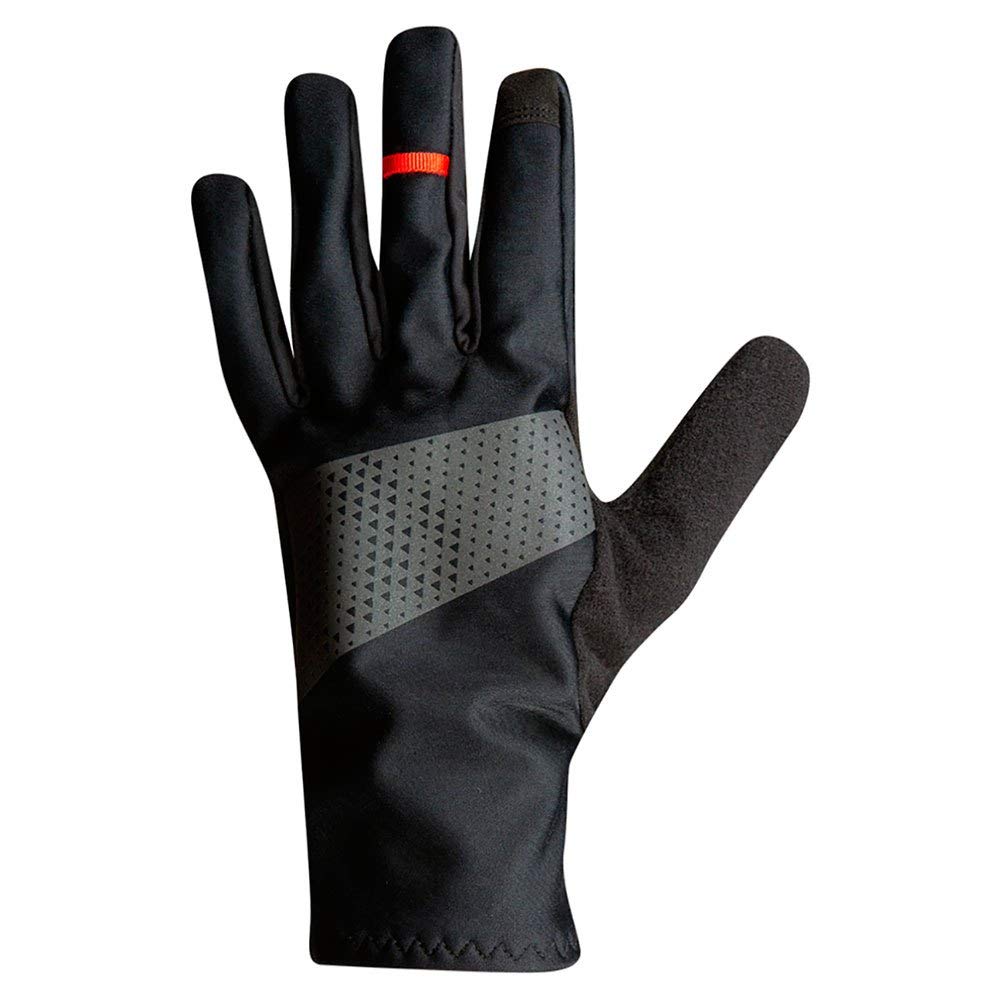
The Pearl Izumi Cyclone is the glove you reach for when temps hover between 35°F and 50°F and you still want to use your phone without pulling off a layer. The 4-way stretch shell offers a close, almost second-skin fit that makes shifting and braking feel nearly as natural as bare-handed. Real-world data shows it handles wind penetration well — riders reported no cold air breakthrough at 42°F on windy roads — and the gel padding in the palm dampens vibration without killing bar feel.
The insulation is lighter than the AmFIB line, so this glove hits its cold limit around 30°F. Below that, you’ll notice finger numbness on extended rides. Sizing runs small: several riders with typical medium hands needed to size up to large for a comfortable fit. The synthetic leather palm patches are durable and show minimal wear after a full season of commuting.
Touchscreen compatibility is decent for quick phone checks — swiping and tapping work, but extended typing is clumsy. For the rider who needs one glove that works across fall, early winter, and spring, this is the versatile middle-ground pick.
Why it’s great
- Excellent dexterity and bar feel for a winter glove
- Effective wind resistance and gel vibration damping
- Touchscreen works for basic interactions
Good to know
- Not warm enough for sub-30°F riding
- Sizing runs small — consider going up one size
- Touchscreen accuracy degrades as fingers cool
5. GripGrab Ride Waterproof Winter Cycling Gloves

GripGrab’s Ride glove hits a sweet spot for the budget-conscious winter commuter. It uses a wind- and waterproof membrane paired with 4mm DoctorGel padding strategically placed on the palm to absorb shock from potholes and gravel. Riders reported that the hook-and-loop wrist closure seals out drafts effectively, and the silicone anti-slip print on the palm provides a reassuring grip on wet hoods and flat bars.
Thermal performance is solid for mid-winter riding: most users found these gloves comfortable down to the low 30s Fahrenheit, though a few noted that fingers started feeling cold below 30°F on longer rides. The fit runs small — multiple customers recommended sizing up significantly from their usual cycling glove size. The touchscreen patch is limited to the thumb only, which is a usability drawback since most riders instinctively try to use their index finger for phone taps.
Durability appears good for the price point, with the membrane holding up through a season of regular use. For a reasonably priced do-it-all winter glove that covers commuting, gravel, and road riding, the GripGrab Ride is a strong contender.
Why it’s great
- 4mm DoctorGel padding effectively dampens vibration
- Waterproof membrane works well in light-to-moderate rain
- Secure hook-and-loop wrist closure keeps warmth sealed in
Good to know
- Touchscreen only on the thumb — awkward for phone use
- Sizing runs small; size up for a comfortable fit
- Not recommended for sustained sub-30°F riding
6. GripGrab Waterproof Knitted Thermal Cycling Gloves

GripGrab’s knitted thermal glove is a different approach — it uses a soft, flexible knitted outer fabric rather than a stiff woven shell. This gives the glove a more natural hand feel and allows better articulation for finger movement. The wind- and waterproof membrane is integrated into the knitted structure, and the reinforced thumb-index finger crutch adds durability in a high-stress area.
Warmth is moderate: multiple riders reported that these gloves work well for commuting in the 35°F to 50°F range but are not sufficient for sub-freezing conditions. At just 70 grams per pair, they are the lightest option in this roundup, making them easy to stash in a jersey pocket as a backup layer. The anti-slip gripper print on the palm provides decent grip on dry bars but can feel less secure on wet hoods compared to silicone print designs.
One notable limitation is the lack of touchscreen compatibility. The knitted fabric and insulation block capacitive touch entirely, so phone use requires removing a glove. The reflecting graphics on the back of the hand are a thoughtful safety addition for low-light commutes. Best suited for cool-weather riders who prioritize packability and comfort over extreme cold protection.
Why it’s great
- Lightweight (70g) and easy to pack as a backup layer
- Knitted design offers superior flexibility and hand feel
- Reflective graphics improve visibility at night
Good to know
- Not warm enough for sub-freezing temperatures
- No touchscreen compatibility
- Grip feels less secure on wet handlebars
7. Gore Bike Wear GWS Thermo Gloves

The Gore Bike Wear GWS Thermo gloves are a no-frills option that focuses on wind protection and a slim fit. The Gore Windstopper membrane on the back of the hand blocks cold air effectively, making this glove feel warmer than its thin profile suggests in dry conditions. Riders with larger hands reported that the sizing accommodates them well, and the overall fit is comfortable for fall riding between 35°F and 50°F.
The critical limitation here is water resistance: these gloves have no waterproof membrane. In light drizzle, they hold up briefly, but in any sustained rain, the fabric saturates quickly and hands become cold. Multiple customer reviews highlight that they are “not for rain” and are best reserved for dry winter days. The insulation is light, so below freezing, your hands will feel the cold.
Sizing runs small — several buyers needed to return and size up. There is no palm padding, so bar vibration transmits directly to the hands, which can be fatiguing on rough surfaces or long rides. For the rider who needs an affordable, wind-blocking glove for dry cool-weather rides and already has a separate rain solution, this is a functional budget option.
Why it’s great
- Effective Gore Windstopper membrane blocks cold drafts
- Thin profile preserves good dexterity and bar feel
- Comfortable fit for larger hands
Good to know
- Not waterproof — useless in rain or wet roads
- No palm padding transmits vibration directly to hands
- Sizing runs small; size up for proper fit
FAQ
Should I size up for winter cycling gloves?
Can I use touchscreen gloves in deep cold?
What is the warmest glove style: lobster, five-finger, or mitten?
At what temperature do I need winter cycling gloves?
Final Thoughts: The Verdict
For most users, the best bicycle winter gloves winner is the Pearl Izumi AmFIB Lobster because its 170g PrimaLoft Gold Cross Core insulation and lobster-claw design deliver unmatched warmth for sub-freezing riding without sacrificing the dexterity needed for safe braking and shifting. If you want a glove that prioritizes single-finger brake modulation on drop bars, grab the Gore Wear Thermo Split. And for all-day riding in heavy rain, nothing beats the Sealskinz Bodham paired with a thin thermal liner.