
A 3D printer for drones needs to do more than just melt plastic into a shape — it must produce parts rigid enough to handle high-RPM vibration, light enough to not compromise flight time, and dimensionally stable so that a motor mount or an arm fits the frame without filing down edges. Enthusiasts building their own quadcopters, FPV frames, or camera gimbals routinely discover that a printer marketed as “good enough” produces parts that warp under heat or delaminate mid-flight. The difference between a drone that flies smoothly and one that wobbles out of the sky often comes down to the thermal capacity of the hotend, the rigidity of the motion system, and the chamber temperature a printer can maintain.
I’m Min — the co-founder and writer behind Gadgets Feed. I’ve spent hundreds of hours analyzing build volumes, nozzle temperatures, motion systems, and material compatibility across dozens of FDM printers to identify which machines deliver the layer adhesion, accuracy, and structural integrity that drone builders actually need.
Whether you are printing reinforced frame parts, lightweight camera mounts, or functional propulsion accessories, the ideal machine balances speed with thermal stability. This guide breaks down the strongest contenders for the best 3d printer for drones by analyzing real-world performance data and component-level specifications.
How To Choose A 3D Printer For Drones
A drone component sees forces that a desk ornament never will — constant vibration from motors, sudden G-forces during maneuvers, and exposure to sunlight that can soften cheap PLA. Selecting a printer for drone work means prioritizing chamber temperature, motion system rigidity, and nozzle capability above marketing speed numbers.
Heated Chamber vs. Open Frame
An enclosed printer with an actively heated chamber massively reduces warping in engineering filaments like ABS, polycarbonate, and carbon-fiber nylons. Open-frame printers struggle with these materials because temperature gradients cause the part edges to curl up mid-print, ruining dimensional accuracy for motor mounts or arm brackets. For drone parts that demand structural integrity, a printer capable of maintaining 55°C to 65°C inside the chamber is a significant advantage.
Nozzle Temperature and Material Range
The hotend peak temperature determines whether you can print carbon-fiber-reinforced composites (PLA-CF, PETG-CF, PA-CF) that offer the stiffness-to-weight ratio drone builders require. A nozzle reaching at least 300°C is essential for most carbon blends, while 350°C unlocks PPA-CF and high-temperature nylons. Hardened steel or bimetal nozzles are mandatory — brass nozzles wear out rapidly when abrasive filaments pass through.
Build Volume and Motion System
Most racing and freestyle drone frames fit within a 220 mm³ build volume, but larger industrial drones or hull-style platforms need 300 mm³ or more. CoreXY motion systems maintain better accuracy at high speeds than traditional bed slingers because the print head mass is distributed across two belts rather than carried by a single cantilever arm. For drone parts, this translates to cleaner layer lines and tighter tolerances on screw holes.
Quick Comparison
On smaller screens, swipe sideways to see the full table.
| Model | Category | Best For | Key Spec | Amazon |
|---|---|---|---|---|
| Anycubic Kobra X | Mid-Range | Beginner drone builders | 300°C nozzle, 260 mm³ | Amazon |
| FLASHFORGE AD5X | Mid-Range | Multi-color drone parts | 300°C direct-drive, 220 mm³ | Amazon |
| ELEGOO Centauri Carbon | Mid-Range | Carbon fiber drone frames | 320°C nozzle, 256 mm³ | Amazon |
| FLASHFORGE Adventurer 5M Pro | Mid-Range | Fast prototyping of mounts | 280°C nozzle, enclosed, 220 mm³ | Amazon |
| FLASHFORGE AD5M Pro | Mid-Range | Enclosed home studio printing | Quick-swap 280°C, 220 mm³ | Amazon |
| Creality K1C | Mid-Range | Carbon fiber drone components | 300°C tri-metal nozzle, 220 mm³ | Amazon |
| Bambu Lab P1S | Premium | Multi-material drone systems | 500mm/s, 260 mm³, enclosed | Amazon |
| Bambu Lab A1 Combo | Premium | Multi-color drone prototypes | AMS Lite, 10,000 mm/s² accel | Amazon |
| QIDI Q1 Pro | Premium | High-temp drone materials | 350°C nozzle, 60°C chamber, 245 mm³ | Amazon |
| Creality Ender 5 Max | Premium | Large industrial drone parts | 400 mm³, 700 mm/s, 64-point leveling | Amazon |
| QIDI Max4 Combo | Premium | Production drone-grade parts | 390 mm³, 800 mm/s, 65°C chamber | Amazon |
In‑Depth Reviews
1. Anycubic Kobra X Multicolor 3D Printer
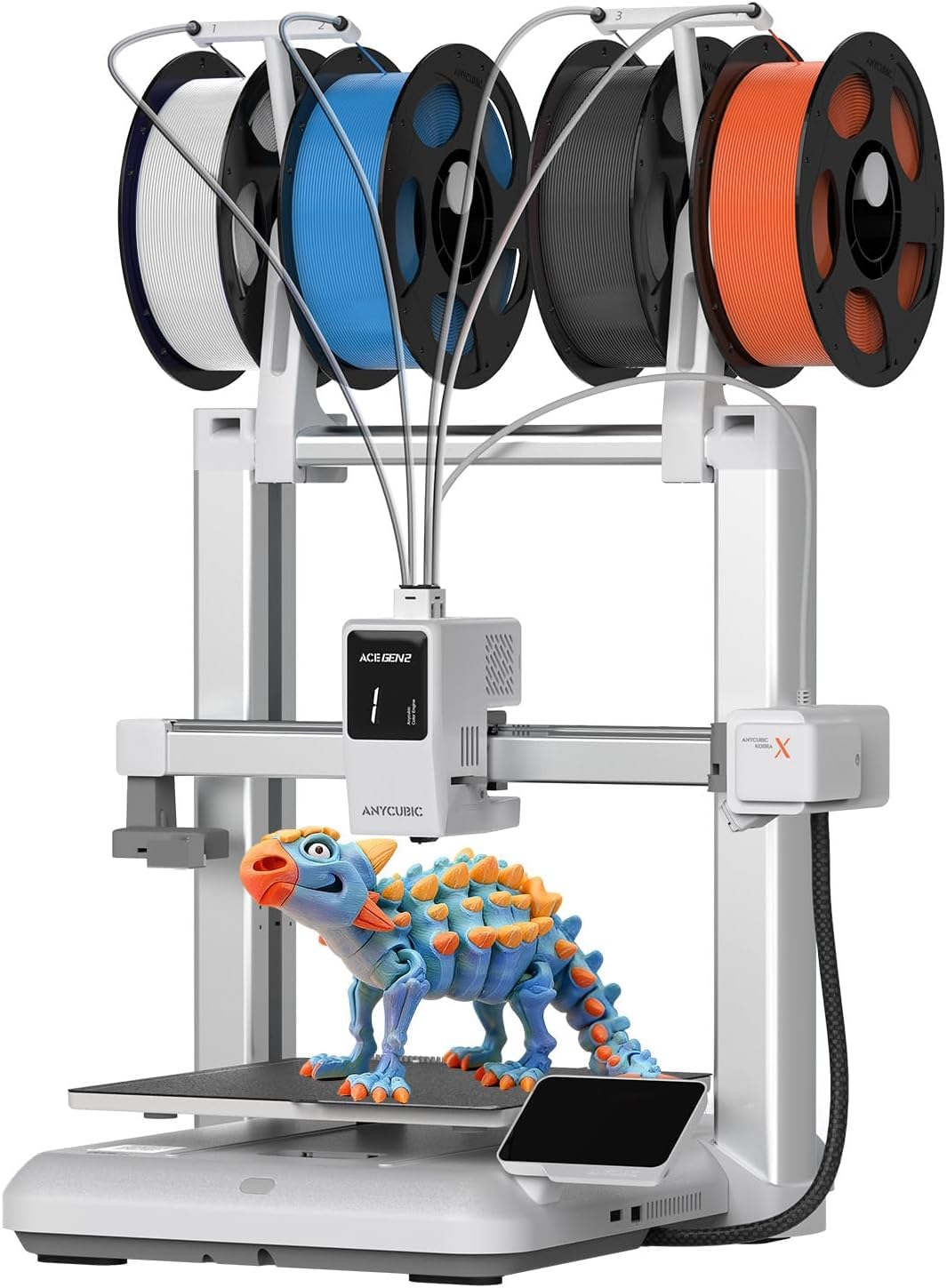
The Anycubic Kobra X stands out for drone builders because its native 4-color printing capability with the ACE 2 Pro system allows printing functional parts in multiple materials simultaneously — a stiff PLA-CF frame section with TPU vibration dampening pads in the same run. The 600 mm/s maximum speed and hardened steel nozzle handle abrasive carbon filaments without frequent nozzle swaps.
With a 260 mm³ build volume, the Kobra X accommodates most 5-inch and 7-inch drone frames without splitting the model. The LeviQ 3.0 auto-leveling system uses 49-point calibration, which eliminates the first-layer adhesion failures that waste filament when printing large flat motor mounts. Dual-band Wi-Fi enables remote monitoring through the Anycubic app so you can check a long print from the field.
The 45 dB noise rating makes this printer unobtrusive in a home workshop, and customer reviews consistently note zero adhesion or clogging issues after hundreds of hours with PLA, PETG, and TPU. The multicolor path reduces purge waste by 81.25% compared to conventional AMS setups, saving material when iterating on multi-part drone assemblies.
Why it’s great
- 300°C hardened steel nozzle ready for PLA-CF and PETG-CF
- 260 mm³ build fits most racing and freestyle frames
- Quiet 45 dB operation good for home workshops
Good to know
- ACE 2 Pro multi-color unit sold separately
- Some users report phone app needs polish
2. FLASHFORGE AD5X Multi-Color 3D Printer
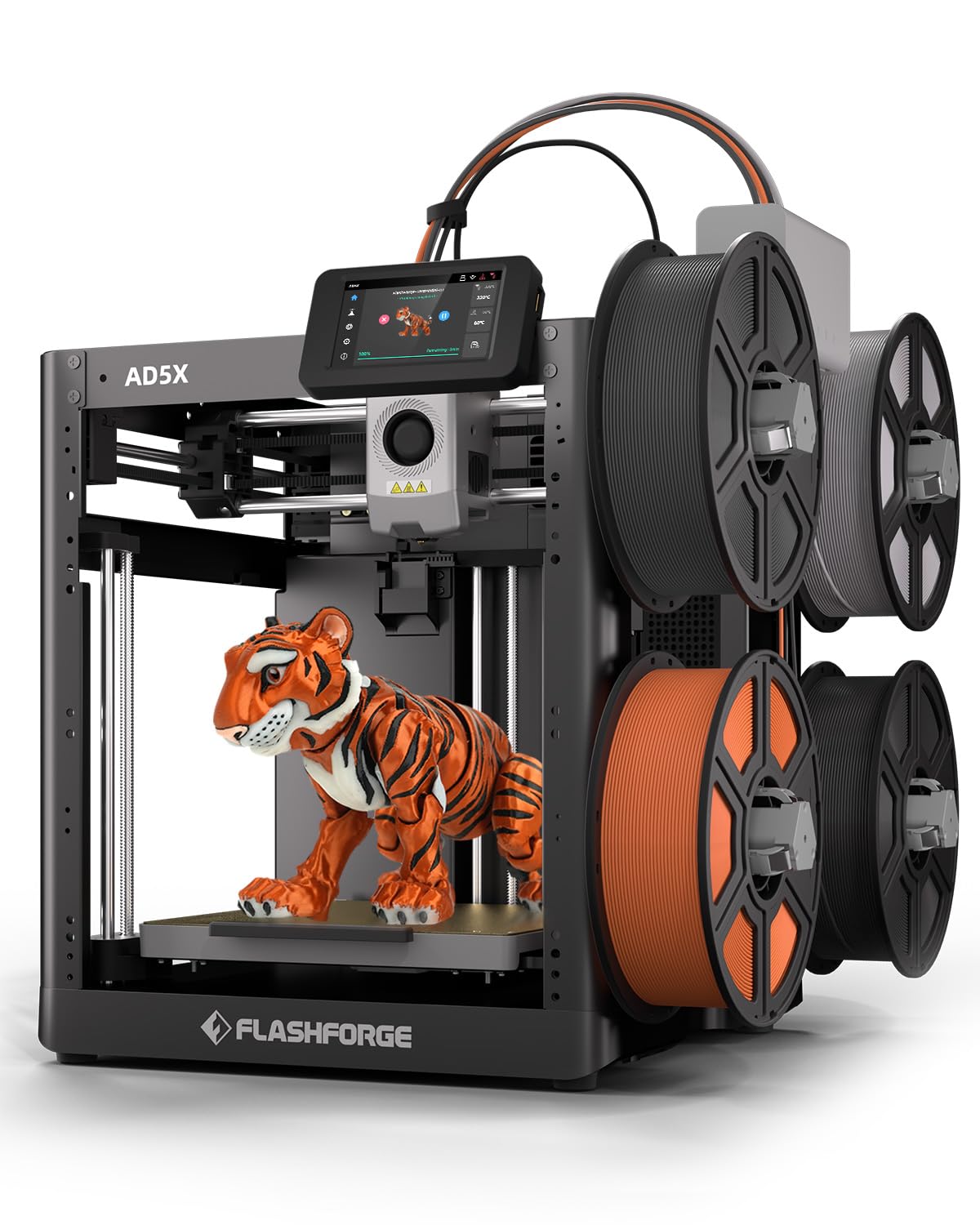
The FLASHFORGE AD5X brings a CoreXY motion system to the mid-range bracket, delivering up to 600 mm/s print speed and 20,000 mm/s² acceleration that translates directly to faster drone part iteration. The direct-drive extruder at 300°C handles flexible filaments like TPU for landing gear pads and vibration isolators without jamming.
Automatic one-click bed leveling and a 0.4 mm pre-installed nozzle mean the first print after unboxing can be a motor mount within 30 minutes. Users praise the reliable first layers and excellent bed adhesion, noting that 100+ hours of continuous printing produced no clogs. The 4-in-1 filament switcher keeps waste manageable when printing multi-material drone components.
Noise levels are reasonable for a machine in this speed class, though the purge waste bucket creates a noticeable “popping” sound during filament changes. The Flash Maker mobile app provides remote monitoring and control, making it easier to supervise overnight prints of large propeller guards or camera gimbals.
Why it’s great
- CoreXY motion for vibration-free high-speed drone parts
- 300°C direct-drive handles TPU and PLAs
- Auto-leveling gets you printing under 30 minutes
Good to know
- Phone app has fewer features than desktop slicer
- Multi-color mode creates purge waste
3. ELEGOO Centauri Carbon 3D Printer
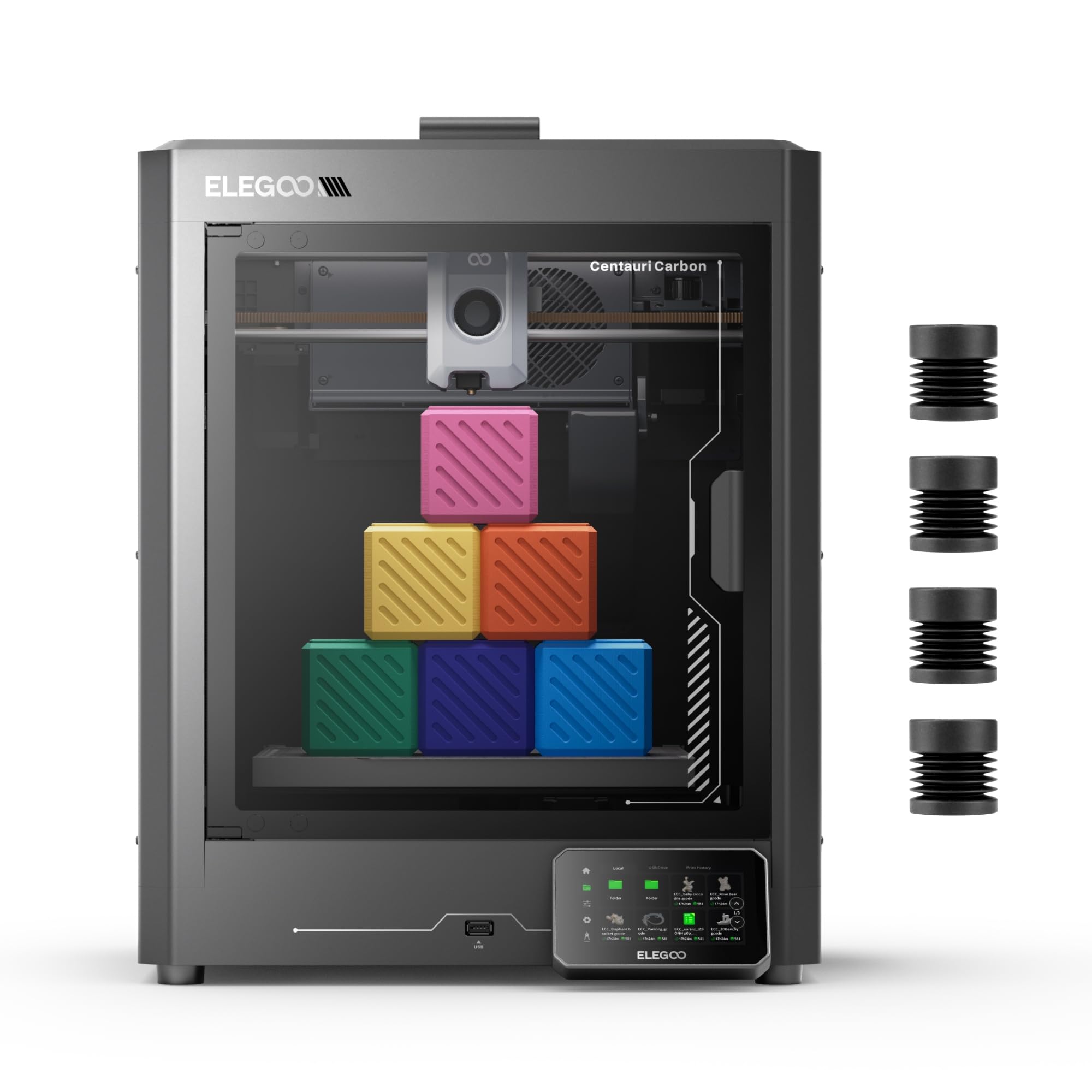
The Centauri Carbon is purpose-built for drone-grade engineering materials. Its 320°C hardened steel nozzle, enclosed chamber, and die-cast aluminum frame target users printing carbon-fiber-reinforced filaments — PLA-CF, PETG-CF, and PA-CF — which produce the lightweight, heat-resistant parts needed for high-performance drone frames and propeller ducts.
500 mm/s printing speed with automatic vibration compensation keeps details crisp even when the machine accelerates to 20,000 mm/s². Customer reviews highlight that the Centauri Carbon arrives fully assembled and prints flawlessly out of the box with ABS profiles — no calibration tweaks required. The 256 mm³ build volume handles most 7-inch drone frames and larger camera gimbal housings.
The built-in chamber camera captures time-lapse footage, useful for documenting print quality over long runs of structural parts. Some users experienced initial hotend communication failures, but ELEGOO’s replacement process and subsequent reliability (300–400 hours error-free) suggest the design is sound once units are properly vetted.
Why it’s great
- 320°C hotend and enclosed chamber for carbon filaments
- Die-cast aluminum frame minimizes vibration at high speeds
- Pre-calibrated and ready to print out of the box
Good to know
- Some early units had hotend connector issues
- Heavy 38.5-pound machine — not portable
4. FLASHFORGE Adventurer 5M Pro 3D Printer

Speed is the Adventurer 5M Pro’s defining trait for drone prototyping — the nozzle reaches 200°C in 35 seconds, and the CoreXY all-metal structure accelerates to 20,000 mm/s². This means a motor mount prototype that takes 45 minutes on a slower printer completes in under 20 on the 5M Pro, letting you iterate design variants in a single afternoon.
Pressure-sensing automatic bed leveling eliminates manual Z-axis calibration, and the dual-sided PEI platform allows tool-less model removal — useful when printing multiple small parts like ESC mounts or antenna holders in a single session. The enclosed design with HEPA and active carbon filtration reduces fume exposure when printing ABS or ASA drone parts.
The 280°C full-metal direct extruder supports PLA, PETG, ABS, ASA, TPU, and PLA-CF, covering the majority of materials drone builders need. Some users noted software installation issues on newer macOS versions, but once the slicer is operational, the printer delivers consistent results with minimal fiddling.
Why it’s great
- 35-second nozzle heat-up for rapid iteration
- Enclosed with HEPA filtration for safer ABS printing
- Tool-free PEI platform for quick part removal
Good to know
- First unit defects reported — quality control varies
- Phone app required for WiFi setup
5. FLASHFORGE AD5M Pro 3D Printer

The AD5M Pro differentiates itself with a 3-second quick-swap nozzle system that lets you switch between a 0.4 mm nozzle for detailed gimbal brackets and a 0.6 mm nozzle for thicker-walled frame arms without tools. This flexibility shortens the changeover time when moving between different drone component types in a single design session.
Fully enclosed with dual-layer filtration, the printer maintains stable chamber temperatures for ABS and ASA — materials that produce stronger, more heat-resistant drone parts than standard PLA. The vibration compensation system keeps layers smooth at 600 mm/s, which matters for parts where surface finish affects aerodynamic drag.
Customer feedback highlights the printer’s reliability over extended runs — one user reported over a month of non-stop operation with only three nozzle clogs attributed to cheap filament. The built-in camera and Filament Runout Detection provide peace of mind during overnight prints of large parts like landing skids or ducted fan housings.
Why it’s great
- 3-second quick-swap nozzles for multi-part drone projects
- Enclosed design with filtration for safer ABS printing
- Built-in camera and runout detection
Good to know
- Some users found packaging insufficient during shipping
- A few early units had extruder failures after short use
6. Creality K1C 3D Printer

The Creality K1C earns its place with a clog-free extruder designed for 1,000 hours of continuous operation and a tri-metal nozzle that handles carbon-fiber filaments like PLA-CF and PETG-CF natively. The 300°C hotend and enclosed chamber create the stable thermal environment needed for printing drone parts that resist warping under summer sun exposure.
600 mm/s CoreXY speed with vibration compensation produces clean layers even on tall prints like folding arm brackets. The AI camera monitors for spaghetti failures and can isolate a single failed part in batch printing — useful when printing multiple small drone components in a single run. Silent mode drops noise to ≤45 dB, making it suitable for overnight use.
Users upgrading from older Creality machines (like the Ender 3) report dramatic improvements in print quality and reliability, noting over 200 successful prints with TPU, PETG, and PLA. The active carbon filter helps manage fumes when printing ABS for structural components, and Creality OS — based on Klipper — is fully open source for advanced tuning.
Why it’s great
- 1,000-hour clog-free extruder for production runs
- Tri-metal nozzle handles carbon-fiber filaments
- Silent mode ≤45 dB for overnight printing
Good to know
- Smooth plate requires glue stick for PLA adhesion
- Some users report poor customer service from Creality
7. Bambu Lab P1S 3D Printer

The Bambu Lab P1S represents a significant step up for drone builders who need consistency across multiple materials. The fully enclosed design stabilizes chamber temperature for ABS and ASA, and the AMS system (sold separately) enables up to 16-color multi-material printing — useful for marking structural parts with strain indicators or printing flexible TPU seals alongside rigid PETG frames in one go.
500 mm/s speed with 20,000 mm/s² acceleration means the P1S chews through a batch of motor mounts in under half the time of a typical bed slinger. The 260 mm³ build volume fits the majority of consumer drone frames, and the auto bed leveling ensures the first layer sticks across the full surface. Bambu Studio slicer offers well-optimized profiles for PLA, PETG, TPU, ABS, and ASA.
Reviews consistently highlight the P1S as a workhorse — users note it “works out of the box without tweaking” and gives “95/100 print quality” with minimal post-processing. The quiet operation and built-in camera make it viable for both home workshops and small production runs of drone components.
Why it’s great
- Enclosed design maintains stable temps for ABS/ASA drone parts
- 16-color AMS support for multi-material prints
- Auto-leveling and filament detection for reliability
Good to know
- AMS unit required for multi-color — sold separately
- Not recommended for carbon/glass fiber filaments
8. Bambu Lab A1 Combo + LED Lamp Kit
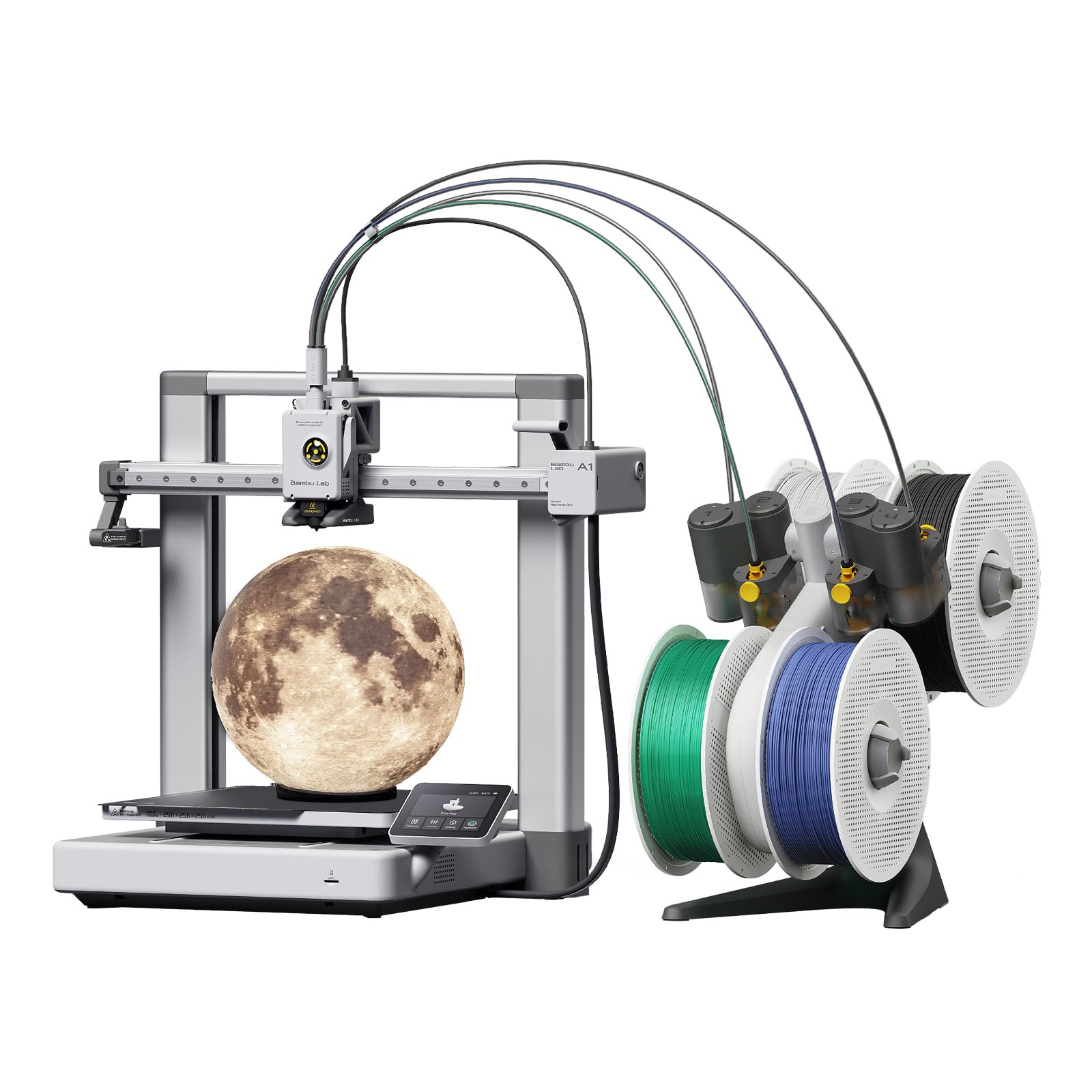
The Bambu Lab A1 Combo brings multi-color printing to drone prototyping at a lower entry point than the P1S. The AMS Lite system enables up to four-color prints, allowing drone builders to print structural parts with embedded color-coded orientation markings or produce translucent LED housings for navigation lights without post-processing.
Full-auto calibration handles Z-offset, bed leveling, and flow rate compensation automatically — removing the learning curve that discourages many from printing functional parts. The active motor noise cancelation keeps operation under 48 dB, and the touchscreen interface makes it easy to start prints from the included design library. Customers report using the A1 for everything from full-size cosplay swords to replacement drone landing gear, citing its reliability over weeks of non-stop printing.
The A1’s 10,000 mm/s² acceleration is lower than the CoreXY machines on this list, but its accuracy at lower speeds makes it ideal for detailed parts like camera gimbal brackets where surface finish matters more than raw speed. The included LED Lamp Kit adds functional lighting capability for decorative drone payload builds.
Why it’s great
- AMS Lite makes multi-color drone parts accessible
- Full-auto calibration eliminates beginner errors
- Very quiet operation for home workshops
Good to know
- Not enclosed — struggles with ABS/ASA large parts
- Setup instructions lack detail for beginners
9. QIDI Q1 Pro 3D Printer

The QIDI Q1 Pro is engineered specifically for high-temperature engineering filaments that produce the strongest drone parts. Its 350°C bimetal nozzle can melt PPA-CF, polycarbonate, and high-temperature nylons — materials that give drone frames the stiffness-to-weight ratio of aluminum without the machining cost. The active 60°C heated chamber prevents warping in these demanding materials.
600 mm/s speed with independent dual Z-axis motors ensures the print head stays square across the 245 mm³ build volume, producing accurate screw-hole alignment for motor mounts. The intelligent Hall filament runout sensor detects tangles before they cause a failed print — a real advantage when running 24-hour builds of large drone hulls.
Users report excellent out-of-box performance with ABS and ASA, noting “no adhesive needed” for secure first layers. The QIDI Studio slicer (Orca-based) includes tuned profiles for each material. The printer is completely open-source (Klipper-based), allowing advanced drone builders to fine-tune acceleration and jerk settings for specific part geometries.
Why it’s great
- 350°C nozzle unlocks PPA-CF and high-temp nylons
- 60°C active chamber eliminates warping in ABS/PC
- Open-source Klipper for advanced tuning
Good to know
- No built-in carbon filter — optional printed design
- Side spool mount feels flimsy
10. Creality Ender 5 Max 3D Printer
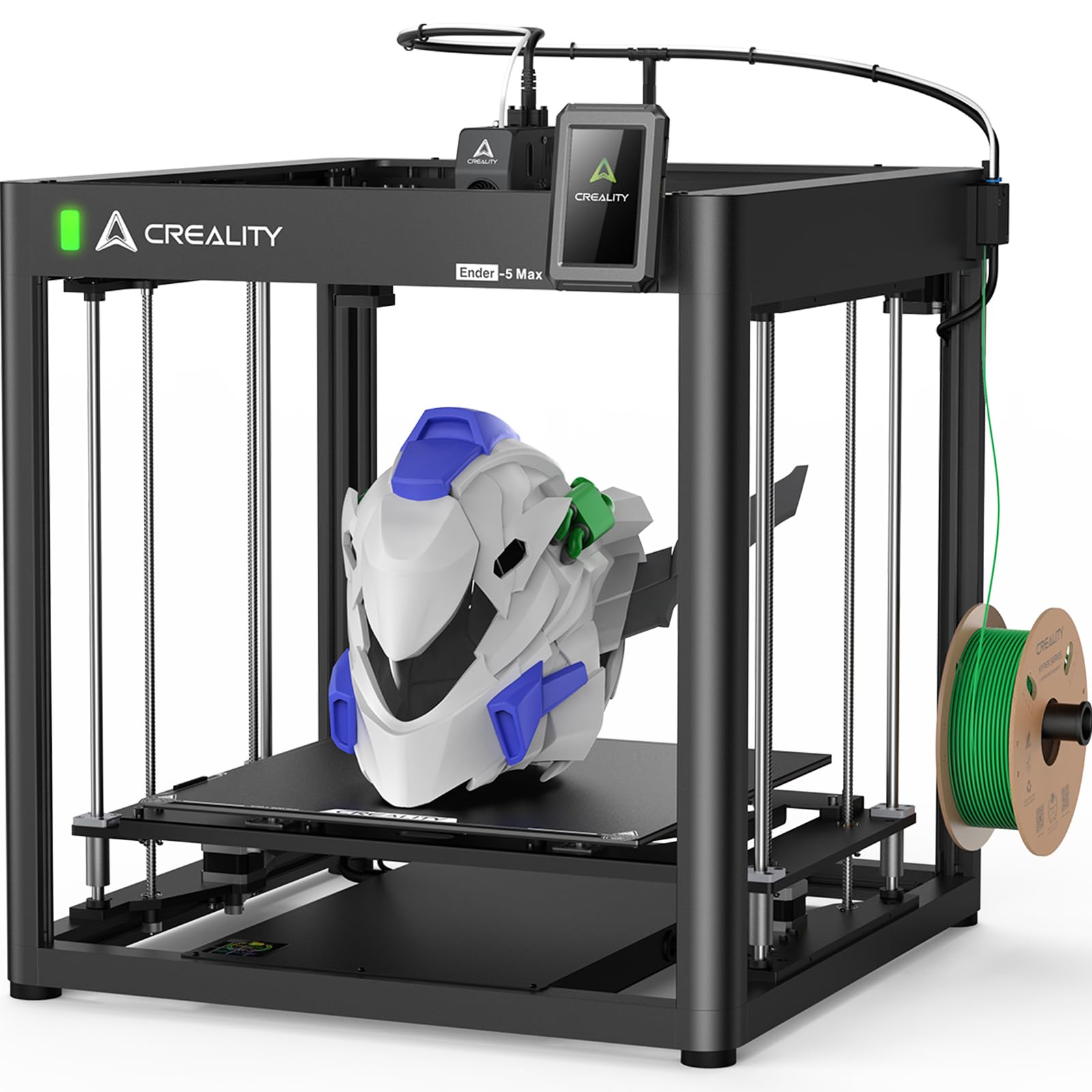
The Ender 5 Max solves a specific drone builder problem: printing large one-piece frames for industrial or heavy-lift drones without splitting the model. Its 400 mm³ build volume fits frames up to 15 inches diagonal, and the 700 mm/s CoreXY system means these large prints complete in reasonable time rather than multi-day marathons.
The reinforced die-cast aluminum frame with a precision X-axis linear rail minimizes vibration, which is critical for maintaining accuracy across such a large print area. A 1000W rapid-heating bed reaches temperature quickly, and the 64-point auto leveling ensures the first layer sticks across the entire 400 mm surface. The WLAN multi-printer control supports scaling to a small print farm for batch production of drone components.
Customer feedback is mixed — some users report excellent results printing PLA and PETG, while others experienced severe bed adhesion issues and shaking. The machine requires careful assembly due to its 68.9-pound weight, and the AI failure detection is less reliable than dedicated camera-based systems, so external monitoring is recommended for critical drone part runs.
Why it’s great
- 400 mm³ build fits large industrial drone frames
- 700 mm/s speed for quick large-format prints
- 64-point auto leveling for reliable first layers
Good to know
- Mixed reliability — some units fail after a few hours
- Heavy 68.9 pounds — requires dedicated space
11. QIDI Max4 Combo 3D Printer
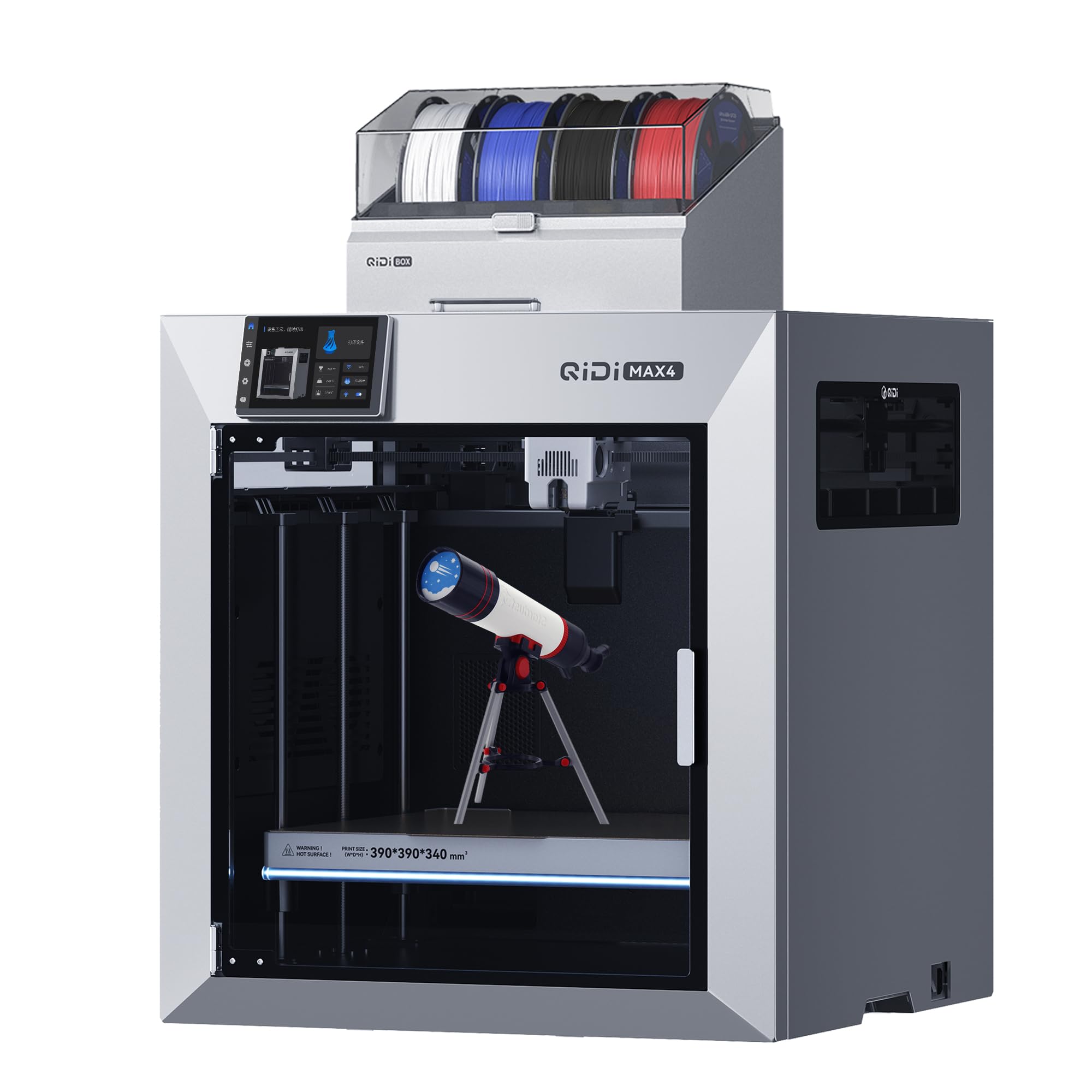
The QIDI Max4 Combo is the heavy lifter of this guide, purpose-built for producing drone-grade parts at scale. Its 390 × 390 × 340 mm build volume handles full-size drone arms and hull sections in one piece, and the 65°C actively heated chamber creates the ideal environment for ABS-CF, PC, and PPS-CF — materials used in commercial drone frames that withstand high temperatures and impacts.
800 mm/s speed with 30,000 mm/s² acceleration and closed-loop X/Y motors deliver both speed and positional accuracy. The 40 mm³/s high-flow hotend with hardened steel nozzle handles abrasive carbon-fiber materials without slowdown. The built-in AI camera detects print failures automatically, pausing the job to save material — important when a single print uses a full spool of expensive PPA-CF.
Customer reviews from drone-focused users praise the Max4’s ability to print PPA-CF and ABS-CF parts with consistent quality, noting that the open-source ecosystem (Klipper) and compatibility with multiple slicers make it a flexible platform. The QIDI BOX add-on enables 16-color multi-material printing for complex assemblies, and users report the setup is straightforward despite the machine’s 120-pound weight.
Why it’s great
- 65°C chamber handles PPS-CF and other aerospace-grade materials
- 390 mm³ build fits full drone frames without splitting
- Closed-loop motors for precision at 800 mm/s
Good to know
- Very heavy — 120 pounds, needs a sturdy table
- High initial power draw, long pre-print time
FAQ
Can a standard PLA printer handle drone frame parts?
What build volume do I need for a typical FPV drone frame?
Is an enclosed printer necessary for drone parts?
Do I need multi-color printing for drone parts?
Final Thoughts: The Verdict
For most drone builders, the best 3d printer for drones winner is the Anycubic Kobra X because it balances a 300°C hardened nozzle, 260 mm³ build volume, and quiet operation at a price that leaves room for filament. If you need high-temperature engineering materials like PPA-CF, grab the QIDI Q1 Pro with its 350°C hotend and 60°C chamber. And for large-scale production of drone frames without splitting parts, nothing beats the QIDI Max4 Combo with its 390 mm³ build and 65°C chamber.