
That sour, musty blast of air when you first turn on your car’s AC isn’t just unpleasant—it signals a biofilm colony thriving on your evaporator core. The humidity and darkness inside the HVAC box create the perfect breeding ground for mold and bacteria, and air fresheners only mask the problem. The real fix requires a foaming chemical that penetrates deep into the evaporator fins, liquefies the biological gunk, and flushes it out through the drain tube.
I’m Min — the co-founder and writer behind Gadgets Feed. I’ve spent hundreds of hours analyzing chemical formulations, foam density data, and real-world user reports across dozens of automotive HVAC cleaning products to separate the few that actually remediate odors from the many that just perfume the problem.
Whether you drive a daily commuter showing early signs of “dirty sock syndrome” or you’re prepping a vehicle for resale, the right cleaner determines whether that musty return is a one-time fix or a recurring battle. This guide breaks down the best automotive evaporator cleaner options based on foam action, enzyme effectiveness, and ease of application.
How To Choose The Best Automotive Evaporator Cleaner
Selecting the right evaporator cleaner comes down to three variables: how the foam behaves inside the HVAC case, whether the formula targets biological growth or surface dirt, and how much disassembly your vehicle requires. A cleaner that works brilliantly on a central AC unit may fail to reach the evaporator core in a tightly packed dashboard.
Foam Expansion and Dwell Time
The defining characteristic of an effective automotive evaporator cleaner is its foam expansion ratio and how long the foam stays wet on the coil. A high-expansion foam fills the evaporator case, forcing itself into every crevice of the fin pack. A short dwell time—less than 10 minutes—means the chemicals have insufficient contact to break down biofilm. Look for products that specifically advertise a self-expanding or self-propelling foam action rather than a simple liquid spray.
Enzyme vs. Chemical Digestion
Household bleach and alkaline degreasers can clean a coil, but they pose risks to aluminum fins and may leave residues that harm the drain pan. Enzyme-based formulas like those in the premium tier are specifically designed to digest the organic matter—mold, mildew, bacteria—without corroding metal components. For vehicles with recurring dirty-sock syndrome, an enzyme cleaner that doesn’t require rinsing is often the only permanent solution.
Application Method and Drain Tube Access
Not all vehicles allow direct access to the evaporator core. Some cleaners include a straw or flexible tube for injection through the drain outlet, while others rely on the cabin air filter slot or blower motor opening. If you drive a modern luxury or EV model with limited access, a cleaner like the Lubegard Kool-It that works through the drain hose is a practical choice. For DIY users with older vehicles, a simple spray-on, rinse-off aerosol may suffice.
Quick Comparison
On smaller screens, swipe sideways to see the full table.
| Model | Category | Best For | Key Spec | Amazon |
|---|---|---|---|---|
| EZGA EZ Green | Budget Cleaner | Home AC coils and light automotive use | 19 oz, Biodegradable, 360° Nozzle | Amazon |
| Rectorseal Clean-N-Safe | Mid-Range Cleaner | Safe cleaning for microchannel coils | 20 oz, Non-Acid, Corrosion Free | Amazon |
| Refrigeration Technologies Viper Evap+ | Enzyme Cleaner | Mini-splits and dirty-sock syndrome | 128 oz, Non-Rinsing, Enzyme Formula | Amazon |
| BERlOVE Foaming AC Coil Cleaner | Mid-Range Cleaner | Quick no-rinse maintenance for DIY users | 19 oz, No-Rinse, High-Efficiency Foam | Amazon |
| Lubegard Kool-It 96030 | Premium Cleaner | Eliminating car AC musty odors without disassembly | 6 oz, Foam, No Drilling Required | Amazon |
| Nu-Calgon 417175 Evap Foam | Premium Cleaner | Self-rinsing coil cleaning for accessible units | Aerosol, Self-Rinsing, Corrosion Inhibitors | Amazon |
| FJC 5914 Foaming Evaporator Cleaner | Auto-Specific Cleaner | Repeated treatment for recurring musty odors | 16 oz, Foaming, Neutral Scent | Amazon |
In‑Depth Reviews
1. Lubegard Kool-It 96030 Evaporator and Heater Foam Cleaner
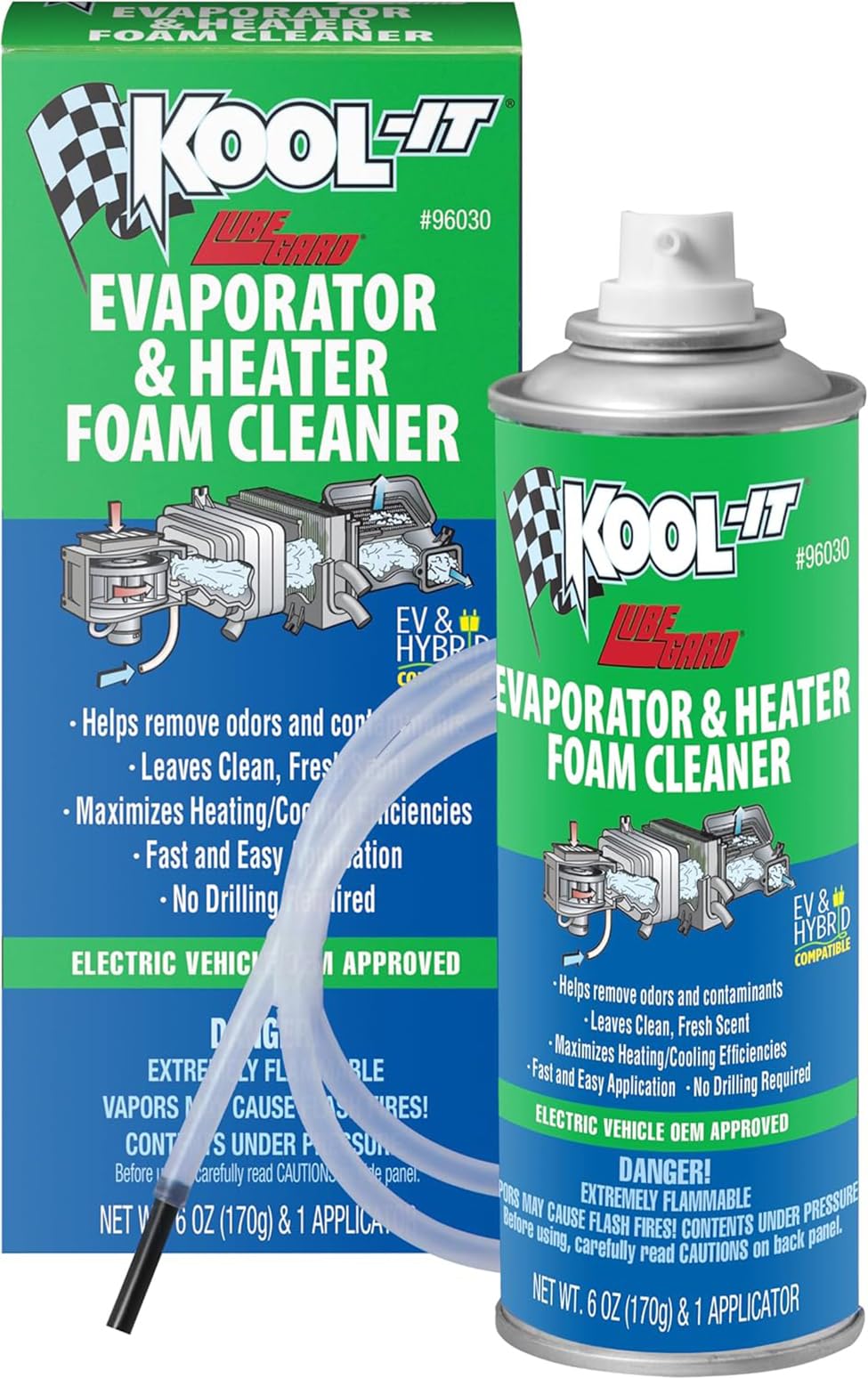
The Lubegard Kool-It is the benchmark for automotive evaporator cleaners because its foam formula is specifically engineered for vehicle HVAC systems—not a repurposed home coil cleaner. The 6-ounce can delivers a targeted, expanding foam that can be injected through the drain tube or cabin filter slot, meaning you don’t need to disassemble the dashboard. Users report dramatic reduction in musty, sour smells after one treatment, with effects lasting weeks or months depending on humidity levels.
The key to its performance is the foam’s ability to coat the entire evaporator surface and penetrate the biofilm where bacteria live. Unlike liquid sprays that just run down the coil, the Kool-It foam stays in contact long enough to kill mold spores and bacteria. The formula is safe for hybrids and EVs, which is important for owners of Tesla models that frequently suffer from “dirty sock syndrome.” A one-hour chemical smell post-application is normal, but it fades to a completely neutral, odor-free air stream.
For the price, this is the most reliable tool for a single-vehicle owner dealing with a stinky AC. The only catch is the small can size—if you need to treat multiple vehicles or a very heavily contaminated system, a second can may be necessary. But for most cases, one Kool-It treatment combined with a cabin filter change eliminates the smell at the source.
Why it’s great
- No dashboard disassembly required; works through drain tube or cabin filter slot
- Foam formula coats the entire evaporator surface for thorough biofilm digestion
- Safe for hybrids, EVs, and conventional gasoline vehicles
Good to know
- 6-ounce can may require a second application for heavily contaminated systems
- Initial chemical odor dissipates after about one hour of running the AC
2. Refrigeration Technologies Viper Evap+ Coil Cleaner & Deodorizer

The Viper Evap+ is a gallon-sized, no-rinse enzyme formula that attacks odor-causing bacteria at the biological level. While it’s marketed primarily for mini-splits and residential HVAC, automotive users have found it incredibly effective for treating the evaporator core in vehicles, especially those with persistent “dirty sock syndrome” that other cleaners only temporarily suppress. The 128-ounce supply is enough for many treatments, making the per-use cost very low.
The no-rinse design is a major advantage for automotive use because you don’t need to access the evaporator drain to flush water through the system. You simply apply the solution with a pump sprayer directly onto the coil (or through an access point), let it sit for 10-15 minutes, and the enzymes continue working even after the liquid dries. Multiple user reports confirm that this product consistently removed moldy smells from Mitsubishi mini-splits when no other cleaner could.
The trade-off is that Viper Evap+ requires more preparation than a simple aerosol. You need a garden sprayer to apply it, and accessing the evaporator coil in some vehicles may still require partial dashboard removal. But for the DIY enthusiast willing to put in the effort, this offers the deepest biological remediation available in this price range.
Why it’s great
- Enzyme-based formula digests biofilm rather than just cleaning surface dirt
- No-rinse design eliminates the need for water flushing in the HVAC box
- Gallon size provides excellent value for multiple treatments
Good to know
- Requires a pump sprayer for application; not a ready-to-use aerosol
- May need 24-48 hours of AC-off drying for complete odor removal
3. FJC 5914 Foaming Evaporator Cleaner

The FJC 5914 is designed specifically for automotive evaporator cleaning, with a foaming action that expands to fill the evaporator case. This is crucial because a loose-fitting spray may only wet the bottom half of the coil, leaving the biofilm on the upper fins untouched. The FJC foam expands aggressively, ensuring complete surface coverage. Users consistently report that the product eliminates mildew smells after a single treatment, with results lasting several weeks to a month.
One of the standout features is its neutral scent profile. Many coil cleaners leave behind a strong fragrance that masks the musty smell temporarily, but the FJC 5914 is formulated to be a chemical decontaminant rather than a perfume cover-up. The foam breaks down organic residues on the evaporator surface and leaves no lingering scent after the system dries. For drivers sensitive to artificial fragrances, this is the right choice.
The short feeder tube included with the can can be a point of frustration—some users found it wouldn’t stay attached to the nozzle due to the foam’s pressure. A simple workaround is to use longer tubing from a hardware store or reuse the tube from a previous evaporator cleaner. Despite this minor design flaw, the cleaning performance itself is top-tier for automotive applications.
Why it’s great
- Expanding foam fills the entire evaporator case for complete coverage
- Neutral scent means no artificial perfume, just odor elimination
- Enough foam for 2-3 treatments per can for maintenance regimens
Good to know
- Short feeder tube may detach; consider replacing with longer tubing
- Odors may return after a month in humid climates, requiring reapplication
4. Nu-Calgon 417175 Evap Foam

Nu-Calgon’s Evap Foam earns its premium spot with a self-rinsing formula that liquefies dirt, grease, and oil on contact and then washes the emulsified matter off the coil without manual scrubbing. The foam is fortified with corrosion inhibitors, making it safe for aluminum, copper, and steel components inside the HVAC box. For vehicles that have accumulated years of oily dirt from cabin air and engine fumes, this provides a deep clean that restores airflow and cooling efficiency.
The self-rinsing action is particularly useful for automotive evaporators that are easy to access—like those in older vehicles or where the blower motor housing can be removed. After spraying, the foam breaks loose the grime, and the natural condensation runoff flushes it through the drain tube. Users have reported measurable drops in AC discharge temperature after treatment, with some seeing a 3-degree improvement (from 56°F to 53°F) immediately after cleaning.
The citrus scent is pleasant but can be a bit strong for some users—one reviewer compared it to a public restroom cleaner. This is a minor cosmetic issue; the functional performance is excellent for deep degreasing. For DIYers who already have access to the evaporator coil, this is a fast, effective way to restore HVAC performance.
Why it’s great
- Self-rinsing foam eliminates the need for a separate water flush
- Corrosion inhibitors protect metal components during cleaning
- Proven to lower AC discharge temperature by improving coil heat transfer
Good to know
- Strong citrus scent may not appeal to all users
- Requires good access to the evaporator coil for best results
5. BERlOVE Foaming AC Coil Cleaner
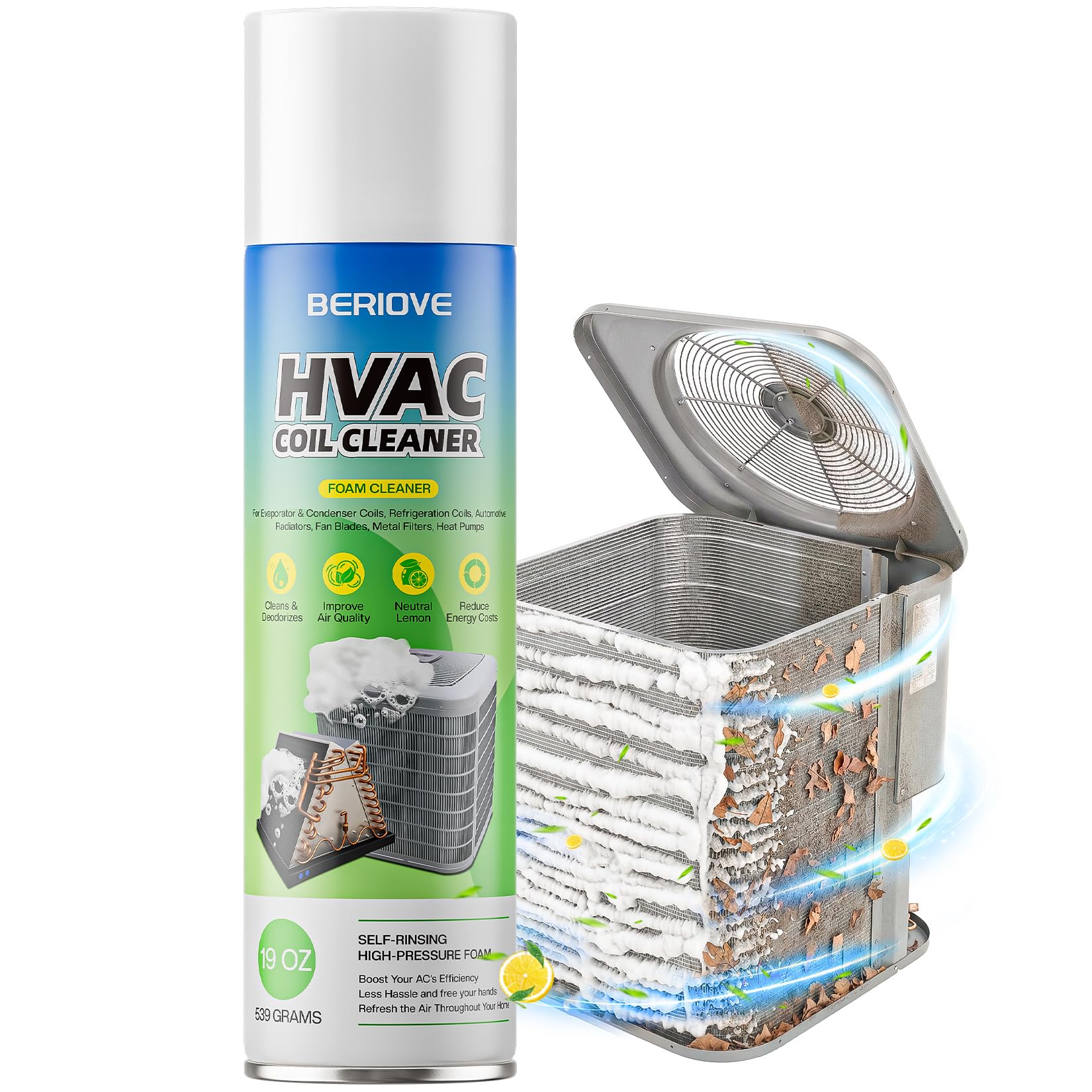
The BERlOVE Foaming AC Coil Cleaner is a strong mid-range option that bridges the gap between budget aerosols and premium enzyme-based formulas. Its 19-ounce can is high-pressure with a delayed foaming action that penetrates deep into coil fins before expanding. The no-rinse design is a convenient feature for evaporator coils—you simply spray it on, let the foam work, and the condensate washes the residue away during normal AC operation.
Users report that this cleaner is particularly effective for restoring cooling performance in units that have lost efficiency due to dust and grime buildup. The foam lifts dirt from both evaporator and condenser coils without damaging the aluminum fins. The fresh scent is noticeable during application but fades quickly, leaving behind a neutral-smelling air stream. For homeowners who want to maintain both their home AC and vehicle evaporator with the same product, this is a versatile choice.
One thing to note is that the extension straw is no longer included in recent production runs. This is a minor setback for automotive applications where precise injection through a drain tube is needed. You can purchase a standard straw separately or use the can for direct spray on accessible coils. For the price, the cleaning power and can volume make it a solid value.
Why it’s great
- Delayed foaming action ensures deep penetration into coil fin packs
- No-rinse formula simplifies the maintenance process
- 19-ounce can provides ample product for multiple cleanings
Good to know
- Extension straw not included; requires separate purchase for drain tube injection
- Best suited for accessible coils rather than deeply buried automotive evaporators
6. Rectorseal Clean-N-Safe 83780 Coil Cleaner

Rectorseal Clean-N-Safe is a non-acid foaming cleaner that prioritizes safety for sensitive components like microchannel coils. The formula is biodegradable and presents almost no hazard to people, animals, or aquatic life, which is important for users who are environmentally conscious or work in food-processing areas. The foam itself is highly effective at removing dirt, grease, and light biological buildup from evaporator and condenser coils.
The 20-ounce can is generous, and the foam expands well to cover typical AC coil surfaces. Users have reported dramatic improvements in cooling performance after application, with one reviewer noting a drop in their electric bill after cleaning outdoor condensing coils. For automotive use, the non-acid nature makes it safe for the delicate aluminum fins of modern evaporator cores, but the product works best when the coil is accessible for direct spray application.
Where this product falls short for automotive evaporator cleaning is its lack of targeted enzyme action. It’s a detergent degreaser, not a biological digester, so it works well on dirt and grease but may not fully eliminate deeply embedded mold smells. It’s a great choice for maintaining visible coils and ensuring airflow, but for musty odor removal at the source, the enzyme-based options are more effective.
Why it’s great
- Non-acid formula is safe for microchannel and aluminum coils
- Biodegradable and environmentally friendly
- 20-ounce can provides good coverage for larger coil surfaces
Good to know
- Detergent-based; less effective on embedded biological odors than enzyme cleaners
- Best for accessible coils; less suited for deep-dashboard automotive applications
7. EZGA EZ Green Biodegradable HVAC and Air Conditioner Coil Cleaner

The EZGA EZ Green is a budget-friendly entry point for anyone who needs to clean accessible AC coils without spending much. The 19-ounce can features a 360-degree nozzle that makes it easy to reach around obstacles, and the biodegradable formula meets industry green standards. Users have successfully used it to clean both the indoor evaporator coils and outdoor condenser units on home AC systems, with the foam expanding well and rinsing off cleanly.
For automotive evaporator cleaning, this product is best suited for vehicles where the evaporator is easily visible—such as in some vans or trucks with accessible HVAC boxes. The self-expanding foam does a credible job at liquefying dirt buildup after a 5-10 minute dwell time. The fresh scent is pleasant and leaves the system smelling clean after rinsing. For the price, it’s a capable degreaser and dust remover.
The limitation is clear: this is a general-purpose coil cleaner, not a specialized automotive evaporator formulation. It lacks the enzyme activity needed to kill mold and bacteria at a biological level, so if your AC smells musty due to biofilm, this cleaner will only provide a temporary cosmetic fix. It’s a good option for routine maintenance on clean-ish systems, but not a solution for persistent dirty-sock syndrome.
Why it’s great
- Very budget-friendly price for a 19-ounce can
- 360-degree nozzle improves reach in tight spaces
- Biodegradable formula is environmentally conscious
Good to know
- No enzyme action; doesn’t kill mold or bacteria for long-term odor control
- Best suited for accessible coils rather than deep-dashboard automotive use
FAQ
How often should I clean my car’s evaporator core?
Can I use a home HVAC coil cleaner in my car’s evaporator?
Why does my AC smell like dirty socks even after cleaning?
Do I need to remove the dashboard to clean the evaporator coil?
Final Thoughts: The Verdict
For most users, the automotive evaporator cleaner winner is the Lubegard Kool-It 96030 because it combines a powerful foam expansion with a formula specifically engineered for vehicle HVAC systems—no dashboard disassembly required, and it kills the biofilm that causes musty smells. If you want a deep enzyme-based treatment that can handle even the worst dirty-sock syndrome, grab the Refrigeration Technologies Viper Evap+. And for routine maintenance on accessible coils at a budget-friendly price, nothing beats the FJC 5914 Foaming Evaporator Cleaner.