
The difference between a smooth, swirl-free finish and a sanded surface that looks worse than when you started often comes down to the random orbit action of your tool. A quality 6-inch random orbit sander removes material evenly, reduces vibration fatigue, and delivers a consistent scratch pattern that paint or stain adheres to properly—an outcome that budget dual-action alternatives frequently fail to achieve.
I’m Min — the co-founder and writer behind Gadgets Feed. After analyzing dozens of technical spec sheets, cross-referencing user reviews for real-world durability insights, and comparing stall behavior under load across multiple air and electric platforms, I’ve compiled the data that separates genuine workhorse sanders from tools that just spin.
Whether you are prepping an automotive panel for refinishing or smoothing a furniture surface before staining, understanding pad orbit, air consumption, and vibration control is essential. This guide cuts through the marketing to help you select the right 6-inch random orbit sander for your specific application.
How To Choose The Best 6-Inch Random Orbit Sander
Selecting the right DA sander means matching the power source to your workspace, understanding the orbit diameter that fits your sanding stage, and confirming your air compressor can feed the tool without constant cycling. Ignoring any one of these leads to frustration, wasted abrasives, or a finish that requires rework.
Power Source: Pneumatic vs. Cordless Electric
Pneumatic sanders offer a higher power-to-weight ratio and virtually unlimited runtime as long as your compressor delivers sufficient CFM at 90 PSI. A sander consuming 17 CFM will quickly overwhelm a small 8-gallon tank, making cordless electric options like a brushless 20V model more practical for jobsite work without a large stationary compressor. Electric tools sacrifice some continuous runtime for portability and quieter operation.
Orbit Diameter and Pad Speed
The standard orbit for material removal on a 6-inch DA sander is 3/16-inch. A 3/32-inch stroke is better suited for final finishing because it produces a finer scratch pattern that buffs out faster. Free speed ratings between 10,000 and 12,000 RPM indicate the no-load rotational speed; under load, a motor that stalls easily at 90 PSI will slow down significantly, reducing cut rate and increasing vibration.
Air Consumption and Compressor Fit
Every pneumatic sander lists a CFM rating—usually between 4.5 CFM and 17 CFM at free speed. Rule of thumb: your compressor should deliver at least 1.5 times the sander’s rated CFM to avoid short cycling. A 4.5 CFM sander can run on a 20-gallon tank with a 2 HP motor, but a 17 CFM unit requires a 60-gallon or larger setup. Ignoring this mismatch is the most common reason for disappointing pneumatic sander performance.
Quick Comparison
On smaller screens, swipe sideways to see the full table.
| Model | Category | Best For | Key Spec | Amazon |
|---|---|---|---|---|
| TCP Global SA7336 | Pneumatic | Versatile shop use | 4.5 CFM / 10,000 RPM | Amazon |
| Power Aero Novia DA | Pneumatic | Budget auto prep | 3/16″ orbit / 10,000 RPM | Amazon |
| Gedu GAOA124-3 | Pneumatic | Low vibration finishing | 1.0 kg / 12,000 RPM | Amazon |
| DEWALT DCW210B | Cordless Electric | Jobsite portability | 8,000-12,000 OPM | Amazon |
| Astro 325 ONYX | Pneumatic | Color sanding finish | 3/32″ orbit / 1.5 lbs | Amazon |
| Ingersoll Rand 311A | Pneumatic | Heavy material removal | 0.25 hp / 17 CFM | Amazon |
| Ingersoll Rand 300G | Pneumatic | Lightweight daily driver | 0.2 hp / 3/16″ orbit | Amazon |
In‑Depth Reviews
1. TCP Global Professional SA7336

TCP Global’s SA7336 is a pneumatic dual-action sander that ships with both a PSA backing plate and a hook-and-loop backing plate, giving you immediate flexibility for different paper types without purchasing extra accessories. The thumb-controlled variable speed lever lets you dial in rpm while sanding, which is rare at this price point—most entry-level DA sanders force you to stop and adjust with a separate regulator.
At 1.89 pounds with heat-treated steel and ball-bearing construction, this sander delivers a vibration-free experience that reduces hand fatigue during longer prep sessions on metal, wood, or fiberglass. The 4.5 CFM air consumption at 90 PSI means a 20-gallon compressor with a 2 HP motor can keep pace during sustained use, though users with smaller tanks report needing to alternate with block sanding on large panels like truck hoods.
The included coupler plug, lubricating oil, and wrench add immediate value. While the aluminum housing lacks the rubber overmold grip of premium competitors, the rubber palm grip remains comfortable during extended operation. For shop owners needing a versatile, low-maintenance DA sander that handles both PSA and hook-and-loop discs out of the box, this is the most balanced option available.
Why it’s great
- Includes both PSA and hook-and-loop backing pads
- Thumb-controlled variable speed while running
- Low 4.5 CFM consumption compatible with smaller compressors
Good to know
- Higher air usage than stated when under heavy load
- No dust collection shroud included
2. Gedu Professional GAOA124-3

The Gedu GAOA124-3 stands out for its extremely low vibration and quiet operation—users consistently report it feels smoother and quieter than Harbor Freight models and approaches the refinement of premium industrial units like 3M’s lineup. The low center-of-gravity design and lightweight 1.0 kg body make it ideal for vertical and overhead sanding where fatigue accumulates quickly with heavier tools.
Free speed reaches 12,000 RPM, giving it a faster no-load rotation than the 10,000 RPM standard. Under load, the enhanced heat-treated cast steel cylinder maintains power without stalling, which is critical when sanding body filler or removing paint on automotive panels. Users have logged 20-30 hours of continuous use on paint, bondo, and fiberglass without degradation.
One caveat: the sander ships with a hook-and-loop backing pad, and some users prefer PSA discs for certain applications. The included tools are minimal, so plan to purchase additional wrenches if yours tend to walk away. For the price, the combination of low vibration, efficient air use, and palm-fit ergonomics makes this a compelling mid-range choice for auto body technicians.
Why it’s great
- Remarkably low vibration for its class
- Maintains speed under heavy pressure
- Excellent for overhead and vertical work
Good to know
- Hook-and-loop pad only; no PSA option included
- Not manufactured in the US
3. DEWALT 20V MAX DCW210B

DEWALT’s DCW210B brings brushless motor efficiency to the cordless sander category, delivering a variable speed range from 8,000 to 12,000 orbits per minute. The low-profile head height lets you reach into tight spaces near edges and corners, and the texturized rubber overmold grip provides secure handling even with oily or gloved hands. As a bare tool, it integrates into existing DEWALT 20V battery systems without requiring a new charger.
Dust management is handled by a one-handed locking dust bag and a dust-sealed switch that prevents fine particulate from damaging the electronics. The dust port fits directly to DEWALT dust collectors or, with an adapter, to 1-1/4 inch vacuum hoses. Users report excellent dust pickup when connected to a shop vac, making it a viable option for indoor finishing work where airborne particles are a concern.
The trade-off is runtime: aggressive sanding on a 4Ah battery provides roughly 15-20 minutes of continuous operation, so large panel work requires multiple batteries. The 8-hole hook-and-loop pad is replaceable, but the adhesive disc pads degrade faster than pneumatic equivalents under sustained heat. For job sites without compressor access or where cordless freedom is essential, this is the strongest electric option in the 6-inch class.
Why it’s great
- Cordless convenience with brushless motor efficiency
- Excellent dust collection when paired with a vacuum
- Variable speed dial matches application to power
Good to know
- Requires multiple batteries for large jobs
- Pad wears faster under aggressive use
4. Astro 325 ONYX

The Astro 325 ONYX is purpose-built for finishing work, specifically color sanding clearcoat before buffing. Its 3/32-inch orbit stroke produces a swirl-free finish that polishes out faster than the standard 3/16-inch stroke, making it the preferred choice for body shops doing final-stage paint correction. At just 1.5 pounds, it is among the lightest 6-inch DA sanders on the market, reducing fatigue during long buffing sessions.
The built-in speed regulator gives you precise control over pad orbit speed without needing an external regulator. Users consistently report it runs smoother and quieter than higher-priced competitors like Dynabrade, with one review noting superior performance through grits from 180 to 3000. The ergonomic design with a compact motor housing makes it easy to maneuver around compound curves on automotive panels.
The trade-off is material removal rate: the short stroke is not designed for aggressive paint stripping or heavy body filler work. For those tasks, a 3/16-inch orbit sander is more appropriate. The 325 also ships as a bare tool without a case or extra backing plates, so budget for those separately if needed. For the dedicated finisher focused on achieving a perfect buff-ready surface, this tool is category-specific and highly effective.
Why it’s great
- Ultra-smooth 3/32-inch finishing stroke
- Extremely lightweight at 1.5 pounds
- Quieter and smoother than higher-priced brands
Good to know
- Not suited for aggressive material removal
- No hard case or extra backing plates included
5. Power Aero Novia 6″ DA Sander
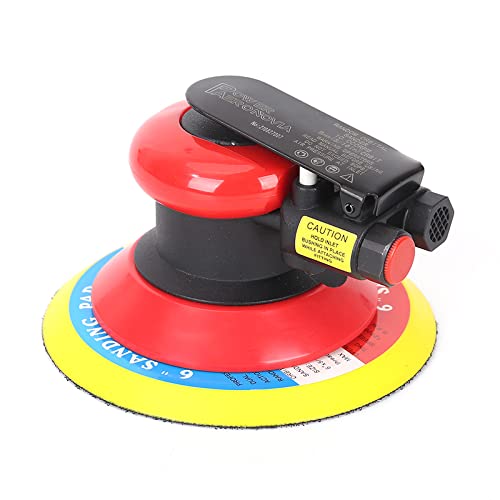
The Power Aero Novia dual-action air sander offers the most accessible entry point into 6-inch pneumatic sanding without sacrificing the core features that matter. Its nodular cast iron cylinder provides wear resistance superior to aluminum cylinders found on cheaper units, and the high-density powder metallurgy rotor with vacuum-oiled blades maintains consistent performance over time. Rear exhaust directs air away from the work surface, preventing dust blowback that can obscure your sanding area.
The 3/16-inch orbit and 10,000 RPM free speed match the standard for material removal. Users in auto collision classes report it holds up well against high-dollar pro sanders, with one instructor-level review noting it sands like premium tools at a fraction of the price. The hook-and-loop pad allows quick disc changes, and the compact alloy housing weighs little enough for single-hand operation during extended prep work.
The main limitation is a slightly higher vibration level compared to expensive models like the 3M or Dynabrade. The tool also struggles with harder composites like cured fiberglass, where additional cutting power is required. For automotive body filler, polyester, vinyl, and general woodworking, this is a reliable budget-friendly option that outperforms its price point significantly.
Why it’s great
- Excellent value-to-performance ratio
- Durable nodular cast iron cylinder
- Rear exhaust keeps dust off work surface
Good to know
- More vibration than premium pro models
- Limited cutting power on hard composites
6. Ingersoll Rand 311A
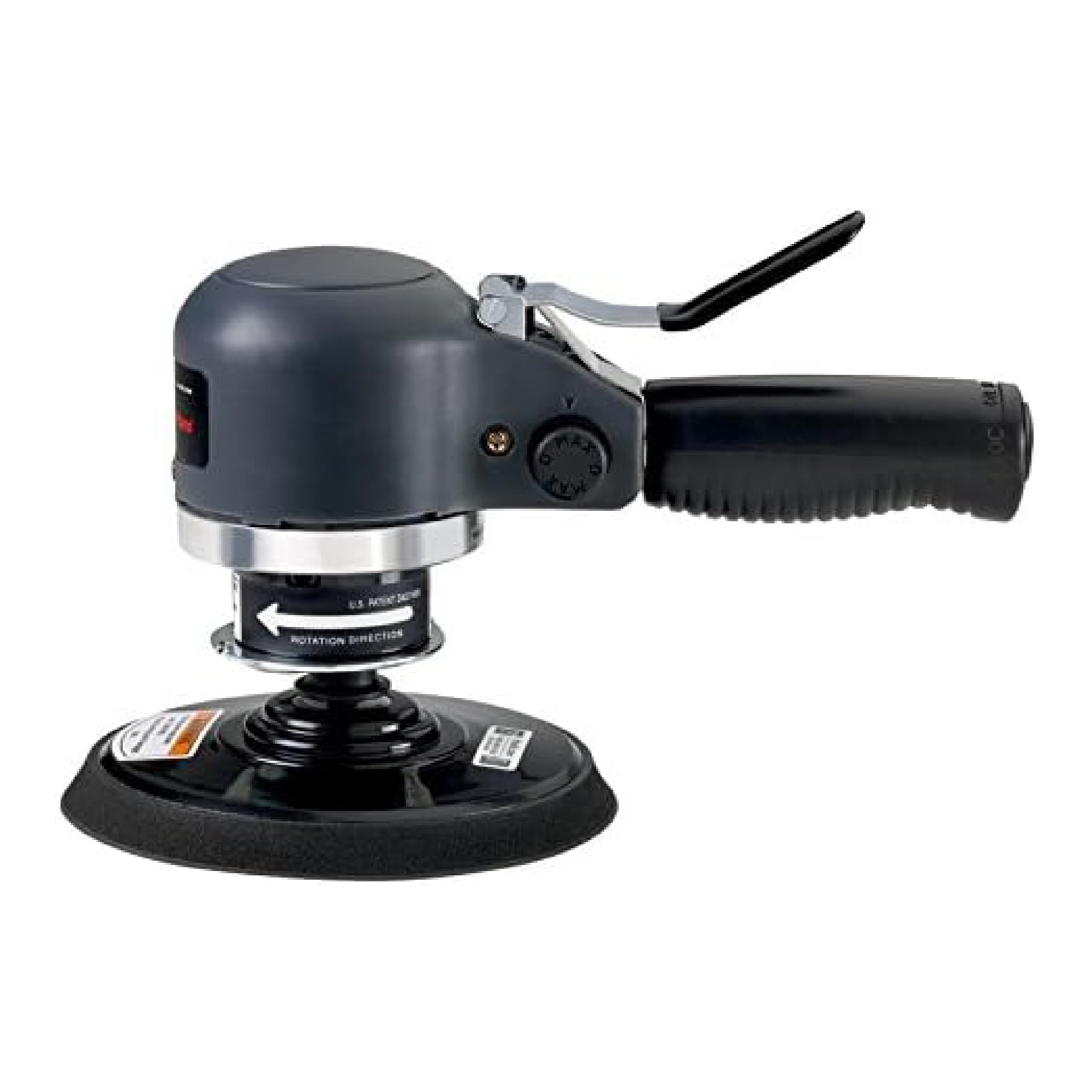
The Ingersoll Rand 311A is a high-output pneumatic sander designed for sustained material removal, featuring a 0.25 HP motor that delivers 12,000 RPM free speed. The built-in silencer reduces noise significantly compared to standard DA sanders, making it easier on the ears during full-shift use. Balanced ball-bearing construction reduces vibration and extends tool life, and the compact 9.76-inch profile lets it access tight spaces that bulkier sanders cannot reach.
The 311A’s power comes with a significant air requirement: 17 CFM at free speed. This is not a tool for a home 8-gallon compressor. Users with 5 HP, 60-gallon setups report they can only use edge sanding because the compressor cannot maintain full pad contact. A 1/2-inch hose is recommended to minimize pressure drop, and even then, an 80-gallon or larger tank provides the best experience.
Durability is mixed: the ball-bearing construction is robust, but the plastic air regulator has been reported as a weak point that can snap after frequent use with regular oiling. Replacement parts are available and the tool is repairable. For shops with adequate compressed air infrastructure, the 311A delivers high-speed, quiet material removal unmatched by lower-CFM options.
Why it’s great
- High 0.25 HP motor for aggressive cutting
- Built-in silencer reduces noise
- Compact design fits tight spaces
Good to know
- Requires a large compressor (60+ gallons)
- Plastic regulator can fail under heavy use
7. Ingersoll Rand 300G

The Ingersoll Rand 300G is engineered for professional auto body technicians who need a lightweight, reliable daily driver. At under 2 pounds with a contoured composite grip, it minimizes hand fatigue during full-day use on prep work, feather edging, and light body filler sanding. The 360-degree swivel vacuum adaptor keeps the hose out of the way, and the diffused rear exhaust prevents air from blowing dust into your face.
The 0.2 HP motor and 10,000 RPM free speed are well-matched for finishing and light material removal. Users who compared it directly to Snap-On DA sanders report identical performance and feel at a fraction of the cost. The adhesive pad is included, but many users add an inline regulator because the tool lacks its own speed adjustment. The 300G consumes more air than the lower-tier TCP Global or Gedu models, requiring a compressor that delivers consistent CFM at 90 PSI.
The lack of a built-in speed adjustment is the most frequently cited drawback—without an external regulator, the sander runs at full speed regardless of application. The tool also ships without a hook-and-loop pad, so budget for that purchase if you prefer quick disc changes. For professional shops already equipped with high-CFM compressors and looking for a lightweight alternative to heavy industrial sanders, the 300G delivers pro-level durability in a compact form.
Why it’s great
- Ultralight composite body reduces fatigue
- Performance matches Snap-On at lower cost
- Swivel vacuum adaptor improves hose management
Good to know
- No built-in speed adjustment
- Comes with adhesive pad only; requires hook-and-loop upgrade
FAQ
Can I use a 6-inch random orbit sander on a standard home air compressor?
What is the difference between a random orbit sander and a dual-action sander?
How do I reduce vibration when using a pneumatic DA sander?
Should I choose a pneumatic or cordless electric 6-inch random orbit sander?
Final Thoughts: The Verdict
For most users, the best 6-inch random orbit sander winner is the TCP Global SA7336 because it combines dual backing pad compatibility, thumb-controlled variable speed, and moderate 4.5 CFM air consumption into a single versatile package. If you need cordless freedom and already own DEWALT 20V batteries, grab the DEWALT DCW210B. And for a dedicated finishing tool that delivers a swirl-free surface ready for buffing, nothing beats the Astro 325 ONYX.