
The silent drain on your wallet isn’t a subscription — it’s the box of single-use alkaline cells you grab every month for game controllers, smart locks, and kid toys. Modern battery tech has moved past the bulky plastic charger towers and the 1.2V sag of old Ni-MH, offering cells that charge through the same USB-C cable your phone uses, hold a steady 1.5V until the very end, and outlast your devices by hundreds of cycles.
I’m Min — the co-founder and writer behind Gadgets Feed. I’ve spent hours cross-referencing capacity claims, charge rates, cycle counts, and real-user feedback on the latest generation of lithium-ion and lithium-polymer cells to find the ones that actually deliver on their spec sheet promises.
Whether you need fresh power for a Blink camera, an Xbox controller, or a smoke detector, best battery type c rechargeable options now combine convenience and constant voltage in a single compact cell.
How To Choose The Best Battery Type C Rechargeable
Not all USB-C rechargeable cells are built alike. The biggest trap buyers fall into is assuming capacity specs are interchangeable. You need to match the battery’s output personality to your device’s needs.
Constant 1.5V vs. Drooping Voltage
Standard Ni-MH rechargeables output around 1.2V and their voltage sags under load. Many devices — smart locks, camera flashes, motorized toys — need a steady 1.5V to function at full speed. Lithium cells with a built-in regulator keep the voltage flat from full to empty, so your gear never slows down mid-use or shuts off prematurely.
mWh vs. mAh: Read the Fine Print
Manufacturers may list capacity in mWh (milliwatt-hours) or mAh (milliamp-hours). Because power equals voltage times current, a 1.5V cell rated at 4000 mWh holds roughly 2666 mAh — the same energy as one rated 2666 mAh at 1.5V. Always compare apples to apples by converting to mWh or checking the product’s technical specs for both numbers.
Cycle Life and Charging Speed
A good lithium cell should survive 1000 to 2000 cycles before its capacity meaningfully degrades. Charging speed ranges from 1 to 3 hours for a full set of four. Look for bundled 4-in-1 USB-C cables that let you charge all cells simultaneously, and built-in protection ICs that prevent overcharge and short circuits.
Quick Comparison
On smaller screens, swipe sideways to see the full table.
| Model | Category | Best For | Key Spec | Amazon |
|---|---|---|---|---|
| CHICNOD 8-Pack | Premium | High-drain cameras & controllers | 4255 mWh, 2000+ cycles | Amazon |
| insziii 4100mWh AA | Premium | Smart door locks & outdoor cams | 4100 mWh, 1200+ cycles | Amazon |
| Artman C Cell 4-Pack | Mid-Range | Floodlights & high-drain toys | 9000 mWh, 1200+ cycles | Amazon |
| paleblue AAA 4-Pack | Mid-Range | Remotes & low-drain devices | 1-hour charge, 1000+ cycles | Amazon |
| HW 9V 4-Pack | Mid-Range | Smoke detectors & alarms | 1400 mAh, 1000 cycles | Amazon |
| volkate AA 4-Pack | Budget | Everyday remotes & toys | 4000 mWh, 1200 cycles | Amazon |
| HW AA 4-Pack | Budget | Camping & emergency kits | 3600 mWh, 1000+ cycles | Amazon |
In‑Depth Reviews
1. CHICNOD 8-Pack AA Batteries with USB-C Charging Case
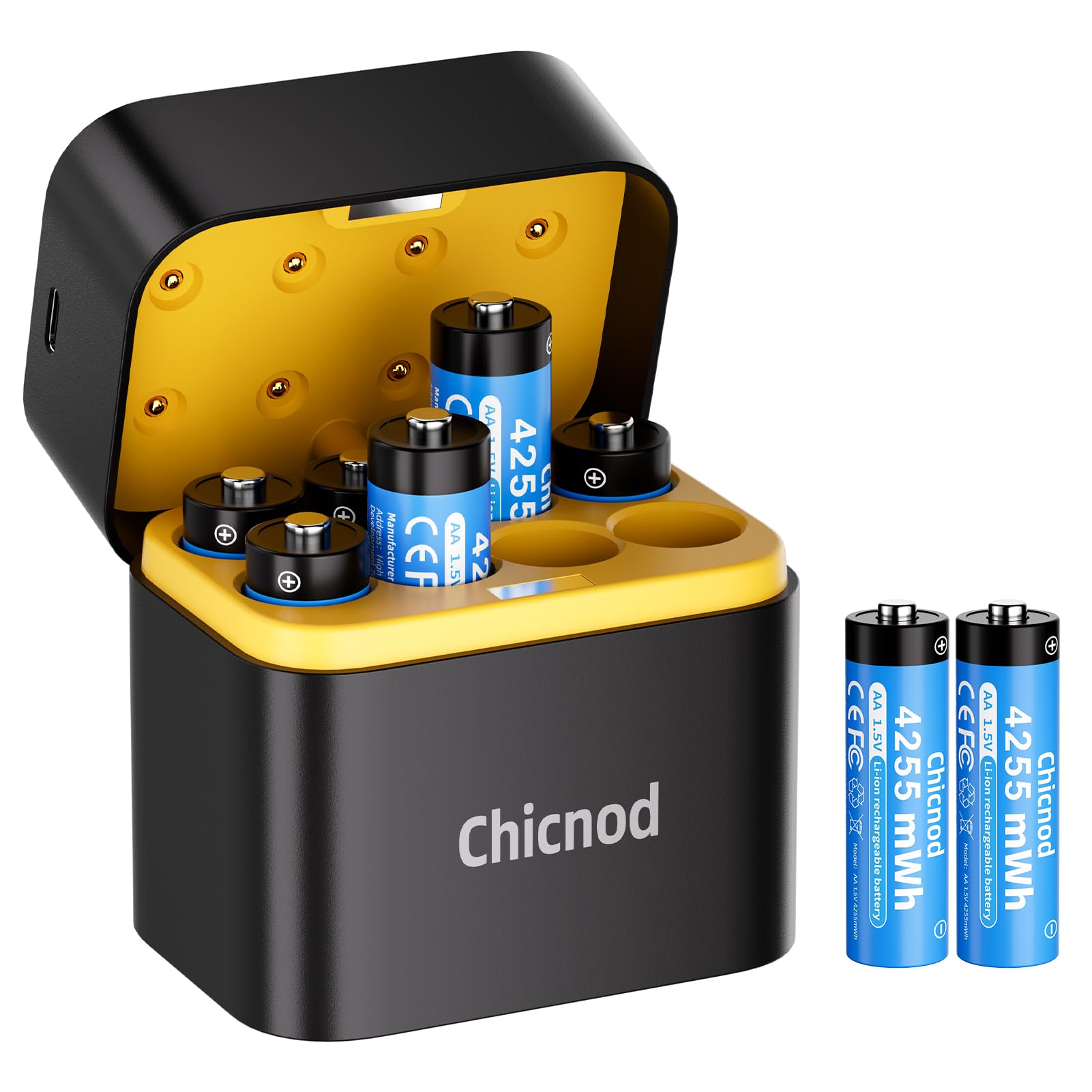
CHICNOD leads the pack with the highest per-cell capacity in this roundup — 4255 mWh — translating to roughly 30% more runtime than standard Ni-MH cells in power-hungry gadgets like Blink Outdoor cameras and Xbox controllers. The included USB-C charging case powers up all eight AA cells in about 3 hours, and its compact design doubles as a storage organizer for travel or emergency kits.
Each cell maintains a constant 1.5V from full charge to depletion, eliminating the voltage sag that causes mid-game lag in controllers or unexpected shutdowns in security cameras. With 2000+ recharge cycles claimed per battery, this set effectively replaces over 13,000 disposable alkalines over its lifespan, making it the most cost-effective solution for heavy users.
The integrated smart protection chip guards against overcharge, short circuits, and overheating, though the charging case itself adds a bit of bulk compared to bare cells. The 8-pack size is ideal for households running multiple high-drain devices simultaneously.
Why it’s great
- Highest per-cell capacity (4255 mWh) in the test
- USB-C charging case charges 8 cells in 3 hours
- 2000+ recharge cycles dramatically reduce waste
Good to know
- Charging case is larger than a simple cable
- Pre-charge recommended before first use for max runtime
2. insziii 4100mWh AA 4-Pack
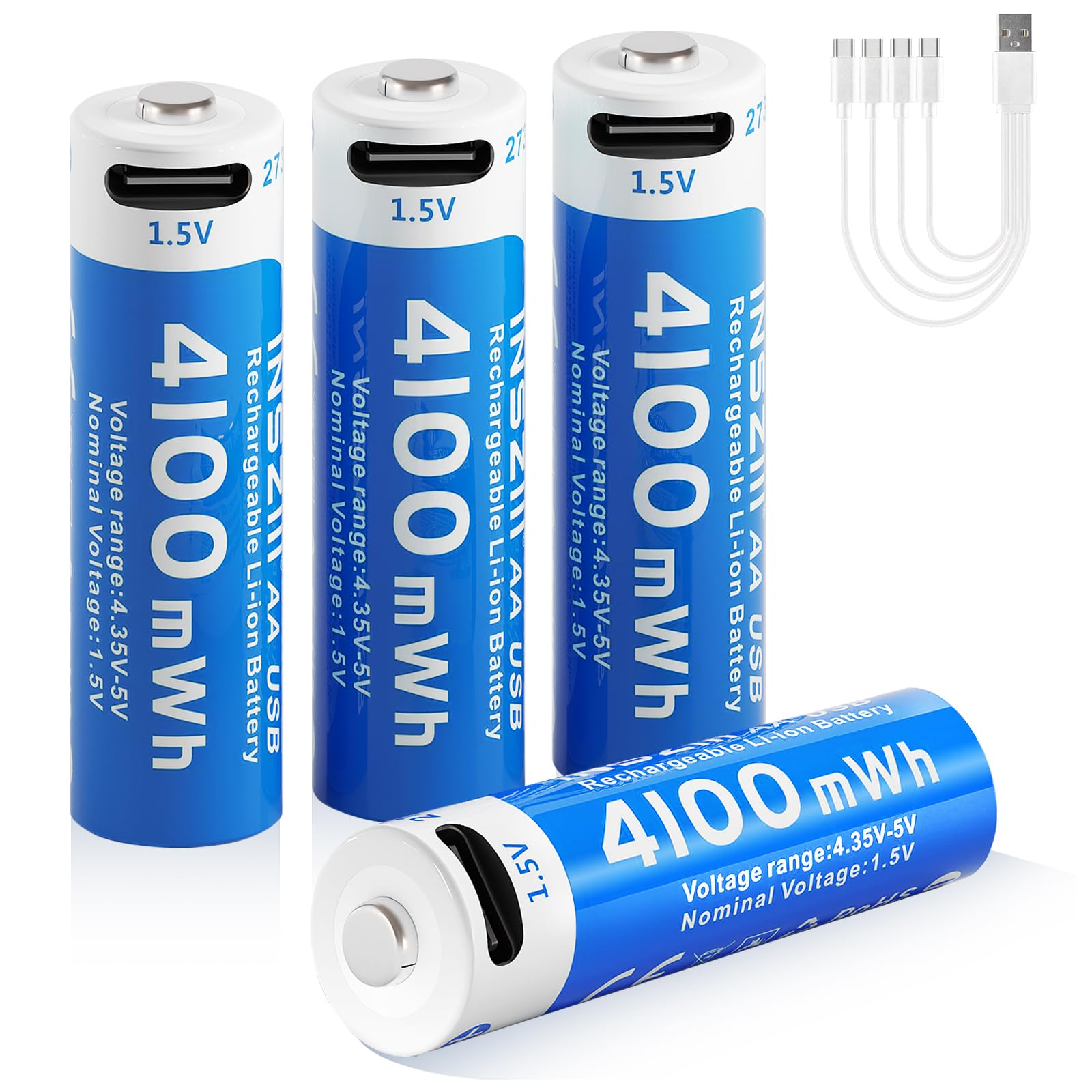
The insziii AA cells pack 4100 mWh into a standard AA form factor, making them a close runner-up to the CHICNOD in raw capacity. They charge via a 4-in-1 USB-C cable in roughly 2.5 hours, and the LED indicator on each cell flashes green during charging then stays solid green when full — a simple visual cue that removes guesswork.
Owners report these work exceptionally well in smart door locks where consistent 1.5V output is critical for driving the deadbolt motor, and in digital cameras that demand instantaneous power for flash recharge. The 1200-cycle rating ensures years of daily use before any meaningful capacity fade appears.
A small percentage of units have arrived with one dead cell out of the box, so testing each battery on first charge is wise. The split USB-C cable design avoids a bulky charger, making this set travel-friendly for powering handheld gaming devices on the go.
Why it’s great
- Near-top capacity at 4100 mWh per cell
- Clear LED charging indicator on each battery
- Excellent performance in high-draw smart locks
Good to know
- Occasional dead-on-arrival cell reported
- Requires 2.5 hours for full charge
3. Artman Rechargeable C Batteries 4-Pack
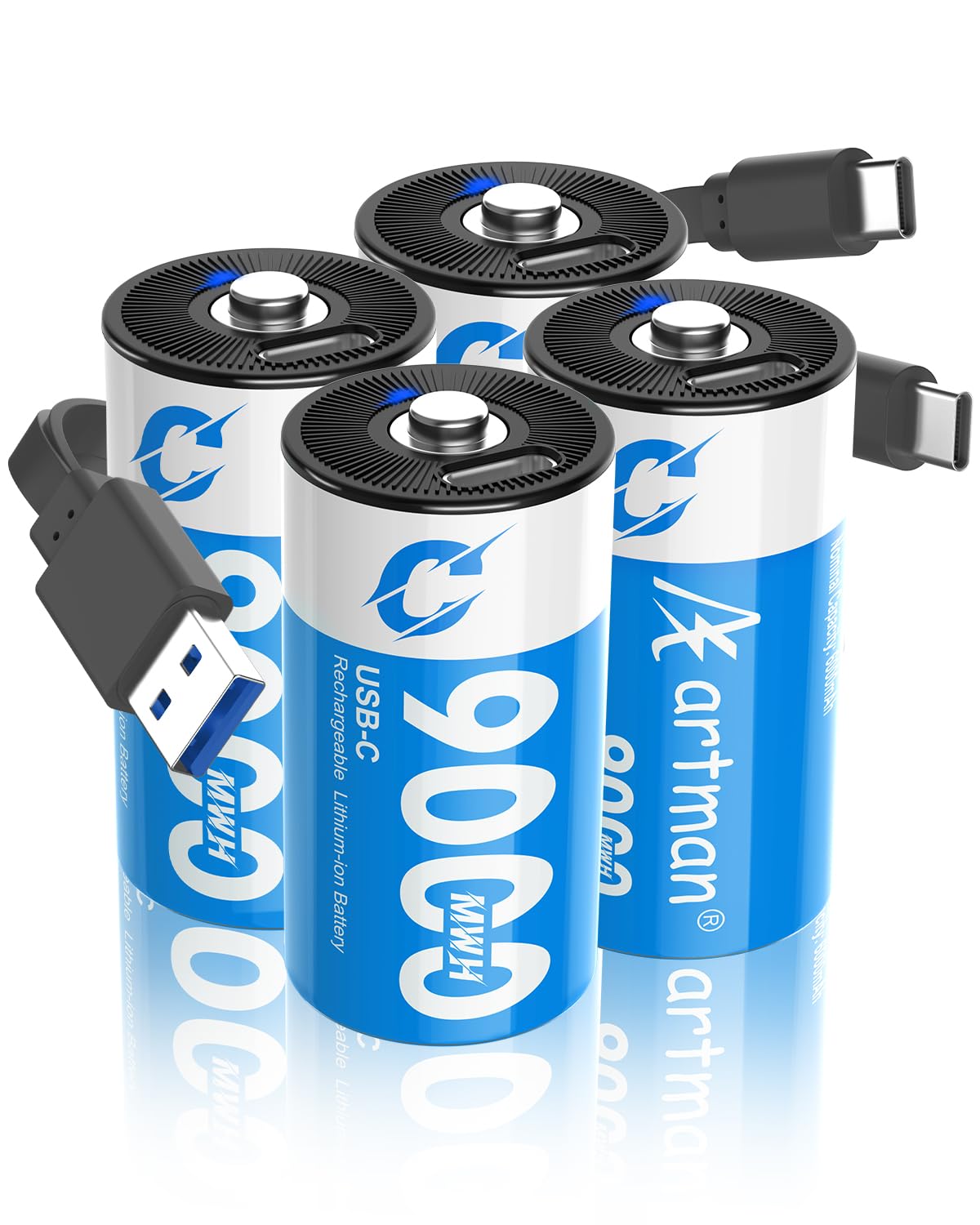
C cells are often the forgotten format, yet they power everything from large floodlights to baby swings and electronic pianos. The Artman 4-pack delivers a hefty 9000 mWh per cell — roughly 6000 mAh at 1.5V — and charges via a 2-in-1 USB-C cable in about 2 hours, with a blue LED that glows solid when charging is complete.
Real-world testing in an infant swing showed 20 days of continuous use from a set of four, and multiple reviewers confirm the constant 1.5V output keeps voltage-sensitive devices running at full brightness or speed. The lithium chemistry eliminates the leakage risk associated with alkaline C cells inside expensive electronics.
Some capacity testing reveals actual output measures around 3500–4000 mAh instead of the advertised 9000 mWh, so the real-world capacity is roughly 55–60% of the headline figure. Still, even at the lower end, these outperform most alkaline C cells and pay for themselves after a few recharge cycles.
Why it’s great
- High 9000 mWh capacity for large-format devices
- USB-C charging with clear LED status
- No leakage risk vs. alkaline C cells
Good to know
- Real capacity tests show roughly 55-60% of headline
- No auto-shutoff when fully charged, avoid long over-charge
4. paleblue AAA 4-Pack

paleblue’s AAA cells stand out for their blistering 1-hour charge time — up to 12 times faster than conventional rechargeable batteries. The included 4-in-1 USB-A to USB-C cable charges all four AAA cells simultaneously, and the built-in LED indicator confirms when charging is complete. Each battery weighs just 8 grams, making them virtually weightless in remote controls and computer mice.
Like all lithium cells in this guide, they maintain a constant 1.5V output until the very end, but that also means there is no gradual dimming warning — the battery goes from full power to zero with no intermediate step. This is fine for remotes and game controllers but less ideal for critical devices where a low-battery alert is helpful.
The 1000-cycle rating and limited lifetime warranty (upon registration) back the build quality, though the 600 mAh capacity is naturally lower than larger AA or C cells, meaning you will recharge more frequently in high-drain AAA devices like wireless doorbell chimes.
Why it’s great
- Industry-leading 1-hour full charge
- Ultra light at 8 grams per cell
- Lifetime warranty with registration
Good to know
- No low-battery warning — voltage drops suddenly
- Lower 600 mAh capacity vs. AA alternatives
5. HW 9V 4-Pack Rechargeable Lithium Batteries
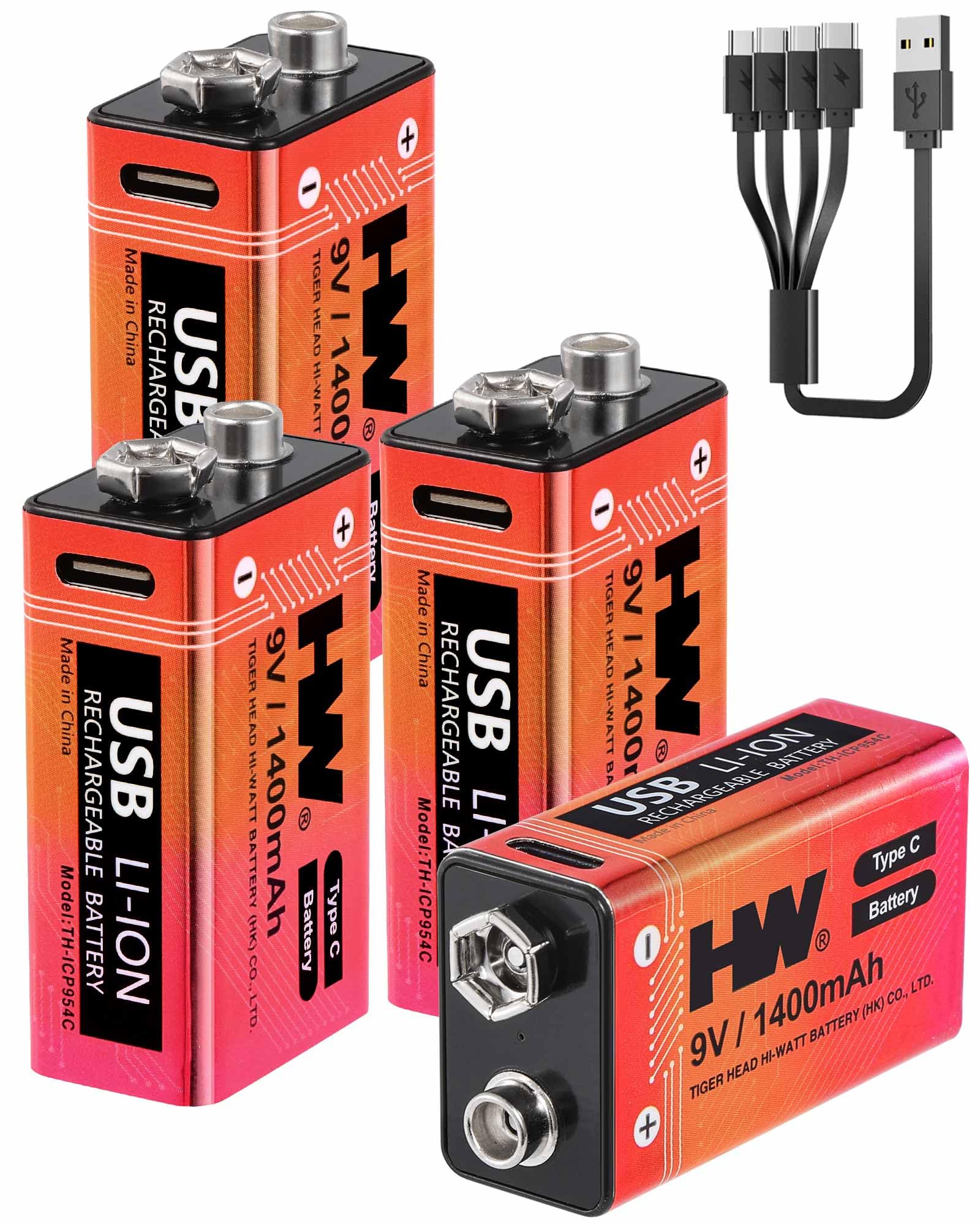
The HW 9V cells solve the perennial annoyance of smoke detector chirping in the middle of the night by replacing disposables with a USB-C rechargeable solution. Each square battery packs 1400 mAh and charges through a built-in USB-C port on the top edge, with the included 4-in-1 cable handling all four units simultaneously. A red LED indicates charging, switching to blue when full.
Constant voltage output ensures smoke detectors, walkie-talkies, and medical devices receive steady 9V power without the drop-off that causes false low-battery alerts. The lithium-polymer chemistry has no memory effect, so you can top up at any partial charge level without degrading long-term capacity. The 2-year manufacturer warranty provides extra peace of mind for safety-critical applications.
One reviewer notes the charging cable is USB-A to USB-C rather than the more modern USB-C-to-C standard, so you will need an adapter if your wall charger lacks a USB-A port. The 4-pack covers most household smoke detectors in one purchase.
Why it’s great
- Perfect for smoke detectors and fire alarms
- Built-in USB-C port on each battery
- No memory effect for partial recharges
Good to know
- Included cable is USB-A, not USB-C-to-C
- Long-term capacity retention still unverified
6. volkate 4000mWh AA 4-Pack
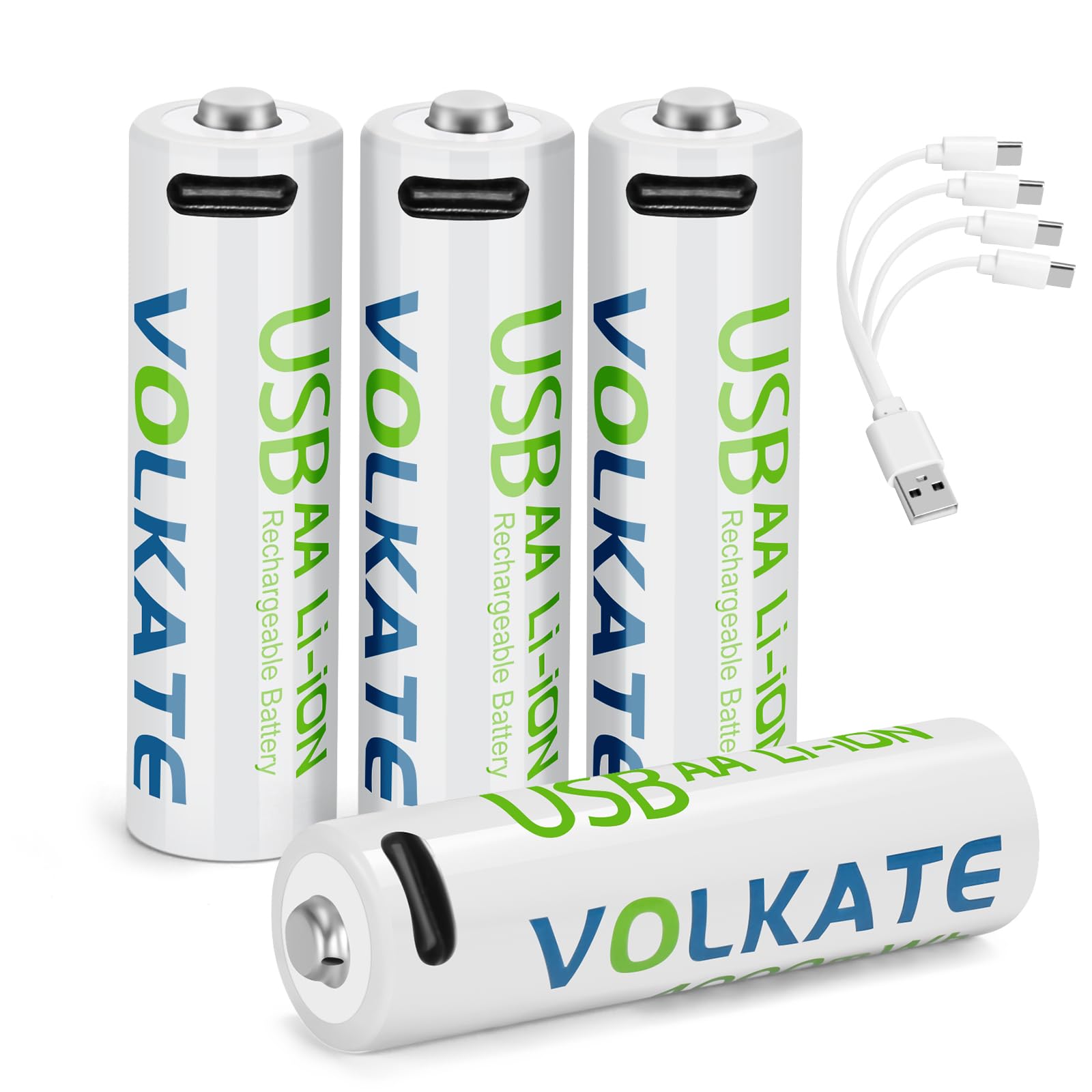
The volkate AA 4-pack offers a compelling entry point into USB-C rechargeable lithium cells without sacrificing core features. Each battery holds 4000 mWh of energy, charges via a 4-in-1 USB-C cable in about 2 hours, and includes an intelligent protection IC that prevents overcharge, over-discharge, and short circuits. The LED flashes green during charging and stays solid when fully topped up.
Multiple buyers report these batteries outlasting name-brand alkaline cells in Blink doorbell cameras and driveway alarms, with the 1.5V constant output eliminating the dimming that plagues dying disposables. The 1200-cycle rating means each cell replaces roughly 1200 single-use batteries over its lifespan, making this an eco-friendly switch.
The included carrying case is a nice bonus for organization, but one reviewer notes the packaging advertises three charging cables while only one is included (a 4-in-1 cable). The seller resolved the confusion quickly, but it is worth reading the listing carefully to set expectations.
Why it’s great
- Strong 4000 mWh capacity at a low entry cost
- Built-in protection IC for safe charging
- Includes carrying case for storage
Good to know
- Packaging may overstate number of cables
- Slightly lower capacity than premium 4100+ mWh cells
7. HW AA 4-Pack 3600mWh
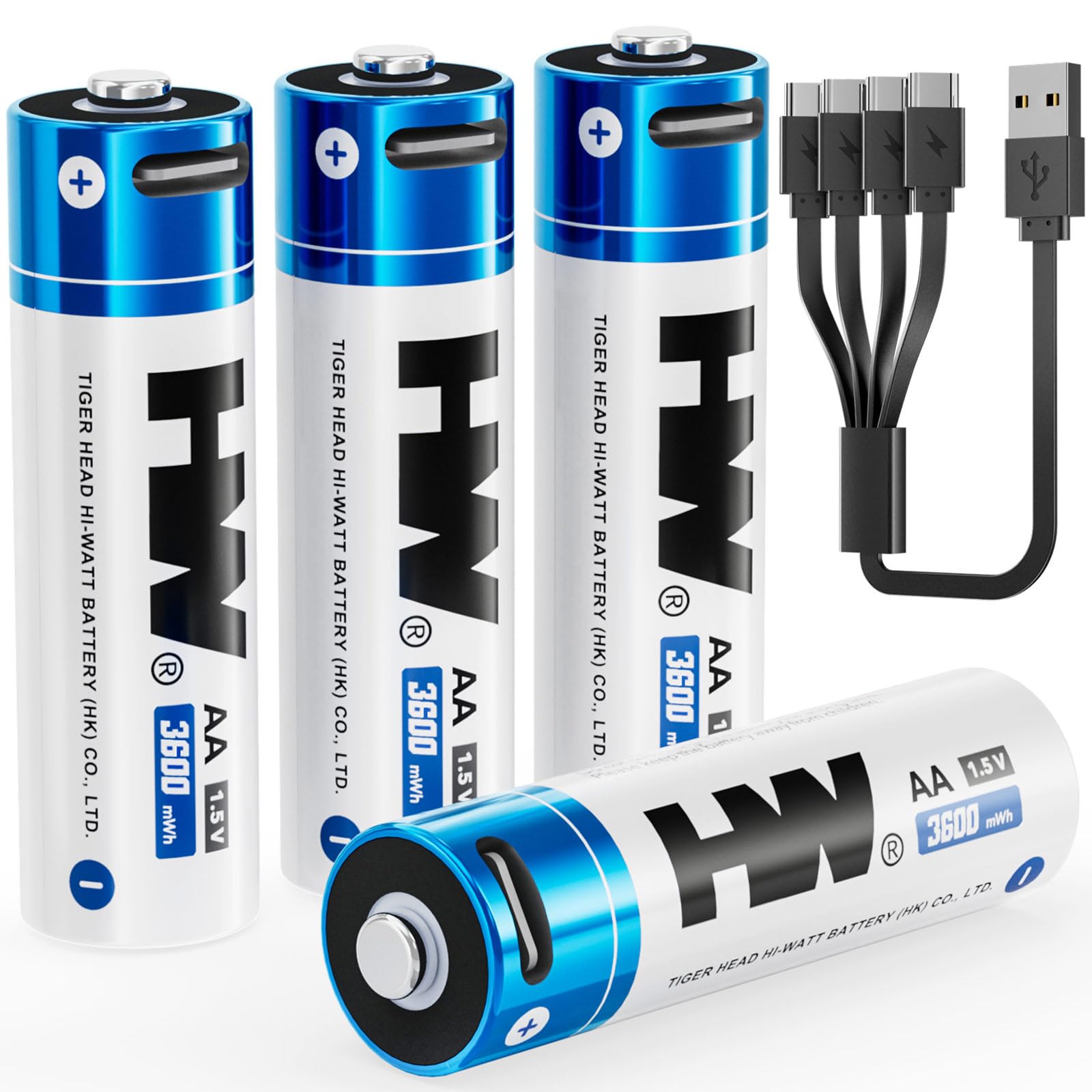
HW’s 4-pack of AA lithium batteries delivers a solid 3600 mWh per cell, engineered with a gradual voltage decline that mimics the discharge curve of premium alkaline cells. This design ensures high-draw devices like foil shavers and blood pressure monitors run at full speed until the battery is nearly exhausted, rather than slowing midway through the charge.
The 4-in-1 USB-C charging cable fully replenishes all four cells in around 2 hours, and the included battery box keeps them organized for camping or emergency prep. Reviewers specifically praise the 1.55V initial output (matching fresh alkaline) versus standard Ni-MH’s 1.2-1.3V, which means devices see full power from the moment the battery is installed.
Six-month product care service is included, but the 1000-cycle rating is slightly lower than the 1200-2000 cycles offered by some competitors. For most household applications — remotes, clocks, and medium-drain toys — these provide an excellent balance of performance and cost.
Why it’s great
- Gradual voltage decline keeps high-draw devices at full speed
- Matches fresh alkaline voltage (1.55V) out of the box
- Compact charging cable and battery box included
Good to know
- 1000 cycles is lower than some competitors
- May need initial full charge before first use
FAQ
Can I use USB-C rechargeable lithium batteries in any device that takes alkaline batteries?
Why do some lithium rechargeables shut off without warning?
Final Thoughts: The Verdict
For most users, the best battery type c rechargeable winner is the CHICNOD 8-Pack because it combines the highest per-cell capacity (4255 mWh), a fast USB-C charging case, and 2000+ recharge cycles in one package. If you need a reliable 9V solution for smoke detectors, grab the HW 9V 4-Pack. And for budget-conscious shoppers who want constant 1.5V power without the premium price tag, nothing beats the volkate AA 4-Pack.