
Every dent, ding, and rust hole you face in a body repair job leads back to one critical decision: the filler you choose to shape it all back to factory spec. A filler that cures with pinholes, sags on vertical panels, or refuses to sand flat turns a weekend project into a month of frustration. Getting the right compound for your specific panel material—steel, aluminum, fiberglass, or even concrete—determines whether your final paint job looks professional or amateur.
I’m Min — the co-founder and writer behind Gadgets Feed. This guide distills hundreds of hours spent analyzing cure rates, particle density, adhesion tests, and real-world sanding feedback on the most talked-about polyester fillers on the market today.
Below, you will find a clear head-to-head comparison of the best auto body filler options available right now, with everything from premium sanding compounds to budget workhorse fillers broken down by their real measurable performance.
How To Choose The Best Auto Body Filler
Selecting the right polyester filler starts with understanding the specific substrate you are repairing and the environment the vehicle operates in. A filler optimized for adhesion on aluminum will behave differently on fiberglass or bare steel, and the wrong choice leads to delamination or micro-cracking after paint.
Filler Body Type vs. Panel Material
Lightweight fillers use microspheres to reduce weight and sanding effort, but their lower density means they are less suitable for high-impact areas or large structural repairs. Fiberglass-reinforced putties, like those with long strand glass fibers, deliver superior impact resistance and elasticity for bonding stringers, decks, and repairing holes in fiberglass hulls or metal panels. Finishing putties are designed as a thin topcoat to fill pinholes and sand scratches left by coarser body fillers.
Working Time and Cure Rate
The pot life of a catalyzed filler—usually 10 to 20 minutes at 70°F—dictates how much area you can cover before the compound becomes unworkable. Faster cures (15 minutes) are ideal for warm environments and small patch jobs, while slower formulations (4 hours full cure) give you time to shape and sculpt larger panels. Adjusting the catalyst ratio can shift this window, but exceeding the manufacturer’s recommended mix compromises the final hardness.
Sanding Characteristics and Feathering
Fillers with additives like Hattonite reduce heat buildup during sanding, extending sandpaper life and preventing the filler from gumming up on 80-grit discs. Feathering ability—how smoothly the edge of the filler blends into the surrounding paint—is directly tied to the particle size distribution of the filler. Premium options like Evercoat Rage Ultra are formulated specifically to sand with minimal effort and produce a feather edge that requires less primer later.
Quick Comparison
On smaller screens, swipe sideways to see the full table.
| Model | Category | Best For | Key Spec | Amazon |
|---|---|---|---|---|
| Evercoat Rage Ultra | Premium | Professional sanding finish | 102.4 fl oz (EcoResin) | Amazon |
| Bondo Original Formula (3M) | Premium | Versatile multi-surface repair | 20 min cure time | Amazon |
| Duraglas Fiberglass Filled | Premium | Structural fiberglass repair | Short strand fiberglass | Amazon |
| Evercoat Z-Grip Lightweight | Mid-Range | Aluminum & fiberglass bonding | 128 fl oz (Hattonite) | Amazon |
| TotalBoat Polyester Putty | Mid-Range | Marine-grade structural fill | Long strand glass fibers | Amazon |
| U.S. Chemical Special Lite | Budget | Lightweight bulk filling | 0.8 gal (102.4 fl oz) | Amazon |
| U.S. Chemical Finishing Putty 26006 | Budget | Final pinhole & scratch fill | 1.8 lbs (polyester putty) | Amazon |
In‑Depth Reviews
1. Evercoat Rage Ultra – Sanding Body Filler (128 fl oz)
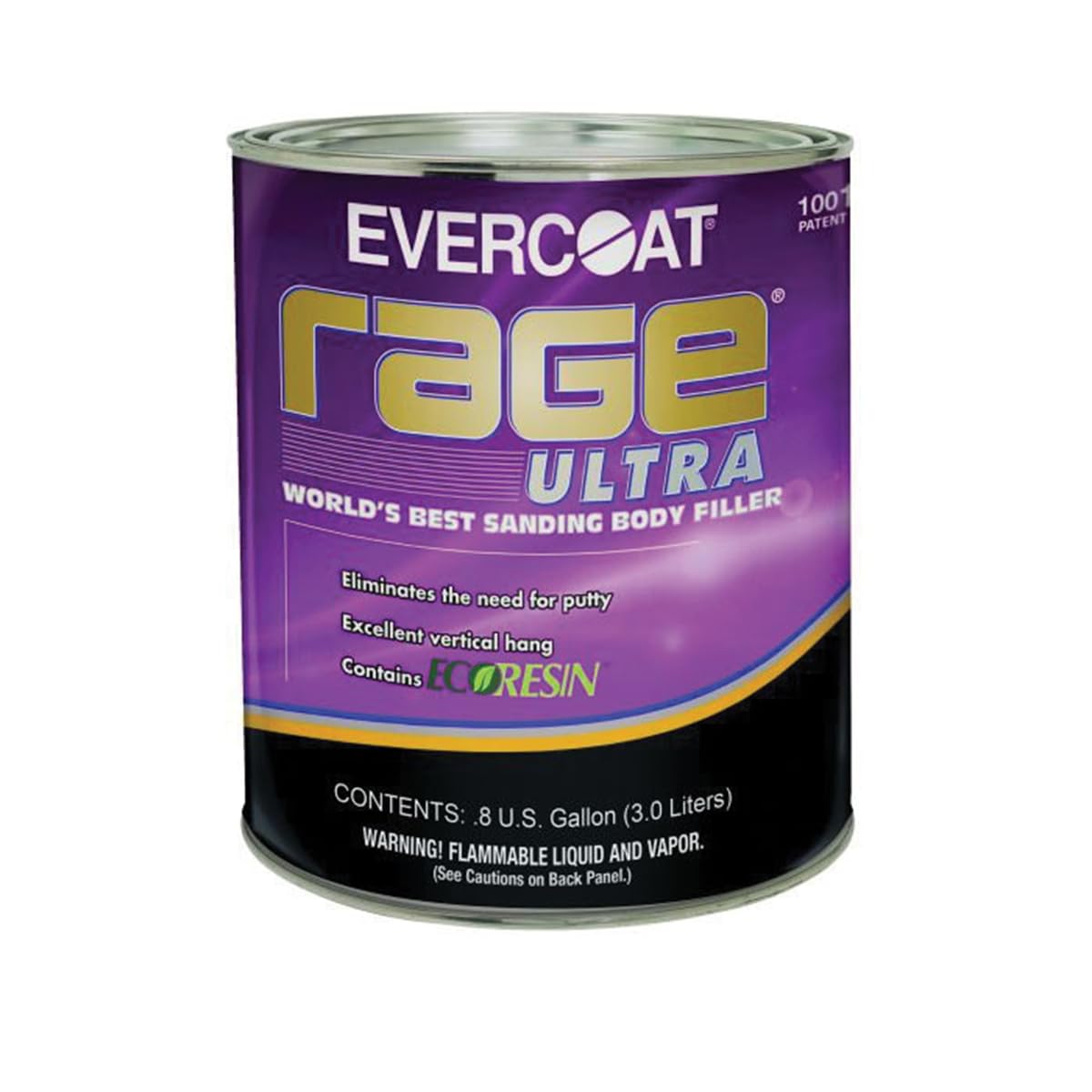
The Rage Ultra uses Evercoat’s EcoResin formulation to deliver what professional body men consistently report as the easiest sanding experience available in a consumer-available can. At a container size of 102.4 fluid ounces (0.8 gallon), this is a premium-tier filler, but the reduction in sanding time directly offsets the upfront cost for anyone who values their labor hours. The creamy, fine texture feathers exceptionally well, leaving an edge that requires significantly less primer and block sanding to blend into the surrounding substrate.
This filler is engineered specifically for application on steel, aluminum, and fiberglass, with a non-sag characteristic that holds vertical panels without slumping. Users note that mixing it 50/50 with Rage Ultra Extra extends the working time, smoothing the application further and reducing pinhole formation, a trick often employed by restoration shops to maximize yield from each can. The recommended sanding grit is 80, and the material responds predictably without clogging discs prematurely.
One critical limitation identified by experienced users is its sensitivity to ambient heat—above 85°F, the filler becomes runny and more prone to pinholes compared to Evercoat’s own Z-Grip line. In moderate temperatures, however, it delivers a finish quality that approaches spray-on primer readiness straight off the sanding block. For professionals and serious hobbyists who prioritize sanding ease above all else, this is the definitive choice.
Why it’s great
- Sands with minimal effort using 80 grit; feathers to a near-invisible edge
- Non-sag formula holds perfectly on vertical body panels and curves
- EcoResin technology reduces heat buildup, extending sandpaper life
Good to know
- Container is 102.4 fl oz (0.8 gal), not a full gallon—verify volume before purchase
- Highly heat-sensitive; performance degrades noticeably above 85°F
2. Bondo Body Filler, Original Formula (3M 00265)

The 3M Bondo Original Formula is the benchmark that every other polyester filler is compared to, and for good reason. This two-part compound cures in 20 minutes, making it one of the faster full-cure fillers in the premium segment, which allows for same-day sanding and priming. The salmon-pink color provides excellent visual contrast during skim coating, making it easy to identify low spots and high points before the sanding stage begins.
Bondo Original is formulated to be non-shrinking, a critical property for large dent repairs on steel and aluminum panels where volumetric shrinkage leads to visible depressions after paint cures. It is compatible with wood, fiberglass, and concrete in addition to automotive metals, which explains why many users report success using it for non-automotive applications like cast iron sewer pipe repairs and wood filling. The included hardener tube is generous at 2.75 ounces, enough for multiple batch mixes.
Some users note that the can is often delivered only three-quarters full despite being labeled as a gallon-sized container, a recurring packaging complaint across multiple reviews. Additionally, the working time is relatively short compared to lightweight fillers, forcing you to work quickly and avoid over-catalyzing. For a fast, reliable, industry-standard body filler that has proven its consistency over decades, this remains the default go-to choice for most body shops.
Why it’s great
- Fast 20-minute cure allows same-day repair cycle from filler to primer
- Non-shrinking formula eliminates post-paint depressions in large fills
- Versatile compatibility with steel, aluminum, fiberglass, wood, and concrete
Good to know
- Container fill level may be less than advertised; check before starting a large job
- Short working time demands quick application; not beginner-friendly for large areas
3. TotalBoat Polyester Structural Repair Putty

The TotalBoat Polyester Structural Repair Putty is distinct from standard body fillers because it is pre-thickened with long strand glass fibers specifically engineered for high-strength structural filling, bonding, bedding, and radius forming above or below the waterline. This is not a cosmetic fairing compound—it is a structural adhesive designed to bond stringers, decks, and liners to hulls, as well as fill screw holes, bolt holes, chips, and dents in fiberglass laminates.
With a recommended 1% MEKP catalyst ratio for a 100-gram mass, you get a 15–20 minute working window at 70°F, and the paste-like consistency is formulated to resist sagging on vertical surfaces. The inclusion of long strand glass fibers gives this putty superior impact resistance and elasticity compared to standard lightweight fillers, making it the correct choice for structural repairs where flexural strength matters. It is available in quart and gallon kits and includes 2 ounces of MEKP hardener.
Users report that it goes on smoothly, stays put without running, and dries extremely hard—almost too hard for casual sanding without power tools. One review noted that it is noticeably more difficult to sand than standard Bondo, which is expected given the fiber content. For cosmetic fairing after structural repair, TotalBoat recommends overcoating with their Polyester Fairing Compound. If your repair is structural—filling a hole in a fiberglass hull or bonding a bulkhead—this is the correct tool.
Why it’s great
- Long strand glass fibers provide superior impact resistance and elasticity for structural repairs
- Non-sag paste stays put on vertical surfaces and overhead applications
- Versatile for bonding dissimilar materials—fiberglass, wood, metal, concrete
Good to know
- Harder to sand than standard lightweight body fillers; power sanding recommended
- Not suitable as a standalone cosmetic fairing compound—requires overcoating
4. Evercoat Z-Grip Lightweight Body Filler (128 fl oz)

The Evercoat Z-Grip delivers a unique value proposition for mid-range buyers: a clog-free formula that includes Hattonite, a proprietary additive designed to reduce heat and friction during sanding, which translates directly into longer sandpaper life and less arm fatigue. This 128-fluid ounce container (one full gallon) positions it as a volume leader in the lightweight filler segment, ideal for shops that go through filler quickly on multiple panels.
Z-Grip is formulated with superior adhesion to galvanized steel and aluminum, which is a common pain point for many fillers that struggle to bond with the zinc coating on galvanized surfaces. The cream texture spreads smoothly and consistently, and users consistently report very few pinholes compared to competing lightweight fillers. It sands easily with 80-grit sandpaper and feathers cleanly, leaving a surface that accepts primer without excessive blocking.
Some users report packaging issues during Amazon delivery, with cans arriving dented or having leaked due to inadequate padding and missing lid clips. This is a shipping problem, not a product problem, but it bears noting when ordering online. For the volume, sanding ease, and reliable adhesion on difficult substrates like aluminum and galvanized steel, this is the best value proposition in the mid-range segment.
Why it’s great
- Hattonite additive reduces friction heat, extending sandpaper life significantly
- Excellent adhesion to aluminum and galvanized steel without special primers
- Full gallon container (128 fl oz) offers the lowest cost per ounce in its tier
Good to know
- Shipping packaging is insufficient—cans often arrive dented or with lid damage
- Not as finely textured as premium Rage Ultra; may require additional surfacer for show-quality finish
5. Duraglas Fiberglass Filled Filler (1 Gallon)
The Duraglas from U.S. Chemical & Plastics is a fiberglass-reinforced filler with short strand glass fibers embedded in the polyester matrix, making it the go-to option for repairing rusted-out sections on metal panels and cracks or holes in fiberglass substrates. It cures in 15 minutes, which is among the fastest in this comparison, allowing rapid progression from application to sanding. The blue-green color provides good visual feedback during the sanding stage.
This filler is not intended for cosmetic finishing alone—it is designed to provide structural integrity to compromised panels. Users report excellent results patching rivet holes in aluminum campers and smoothing fiberglass RV shells, with the short strand fibers creating a mechanical bond that resists delamination. It is waterproof, making it viable for exterior applications that will be exposed to the elements before painting.
The main drawback reported by experienced users is the prevalence of pinholes after sanding, which require a finishing putty or gel coat with a spreader to fill. It also sticks aggressively to the spreader during application, requiring solvent cleanup. One user reported receiving a can that was only 80% full (short by roughly 20% of expected volume). For structural repairs where strength is prioritized over surface perfection, Duraglas delivers exactly what it promises.
Why it’s great
- Fast 15-minute cure enables rapid multi-layer buildup for structural repairs
- Short strand fiberglass provides mechanical reinforcement for rust repair and fiberglass patches
- Waterproof formula holds up in marine and exterior applications before paint
Good to know
- Pinholes are common after sanding; requires finishing putty or gel coat for a smooth surface
- Sticks aggressively to spreaders and requires solvent for cleanup during application
6. U. S. Chemical & Plastics Special Lite Lightweight Filler (0.8 Gallon)

The U.S. Chemical & Plastics Special Lite Lightweight Filler delivers a creamy, off-white formulation that is significantly easier to spread than traditional fillers, making it an excellent entry-level choice for DIY enthusiasts tackling their first major body repair. The container holds 102.4 fluid ounces (0.8 gallon), and the full cure time is 4 hours, which allows generous working time for sculpting and shaping large areas before it sets hard.
Users consistently praise its lightweight nature, which reduces the overall weight added to the panel compared to standard fillers, and its non-sag characteristic that works well on vertical surfaces when applied in moderate thicknesses. The blue activator is preferred over the pink version for better color contrast during sanding. Several experienced users also report using it for sculpting and mold making by mixing with polyester resin and additional catalyst for a customized pot life.
The primary complaint across multiple reviews is not about the filler itself but about Amazon’s packaging: the cans ship without lid clips and without padding in the box, leading to spills, leaks, and safety hazards during transit. One user reported receiving an empty container due to spillage. For the price per ounce, this is a very capable lightweight filler that performs well above its cost, provided you source it from a seller who packages it securely.
Why it’s great
- Lightweight texture reduces sanding effort and overall panel weight
- 4-hour full cure provides extended working time for large area application and sculpting
- Creamy consistency spreads smoothly with minimal resistance on vertical surfaces
Good to know
- Amazon shipping packaging is inadequate—cans frequently leak or arrive damaged
- No lid clips included, allowing the can to unseal during transit or storage
7. U. S. CHEMICAL & PLASTICS Polyester Finishing Putty (26006)

The U.S. Chemical & Plastics 26006 is not a bulk body filler—it is a polyester finishing putty designed for the final stage of body repair, specifically to fill pinholes, sand scratches, and minor surface imperfections left by coarser fillers. At 1.8 pounds, this is a small tube-style container intended for targeted touch-up work, not for filling large dents. It offers exceptional adhesion to metal, fiberglass, and previously applied filler.
This finishing putty sets up fast even with a conservative amount of catalyst, so it requires quick application but rewards the user with a smooth, tack-free surface that sands easily with both dry and wet sandpaper. Users report that it does not stain the surrounding paint and exhibits no shrinkage after curing, which is critical for achieving a level surface that will not telegraph through the final paint coat. It is pinhole resistant and works well as a skim coat over larger filler repairs.
Because the container is small and the material sets quickly, it is best suited for localized repairs rather than covering entire panels. One user noted that the smell is identical to standard body filler, and proper ventilation is mandatory. For the finishing stage of any serious body repair, this putty fills the narrow gap between filler and primer better than attempting to sand a coarser filler to a flawless surface.
Why it’s great
- Pinhole resistant formula eliminates the need for multiple skim coats
- No shrinkage or staining after cure, preserving surrounding paint and filler
- Exceptional adhesion to bare metal and existing filler without delamination
Good to know
- Small 1.8-pound container is not suitable for large area filling or major dent repair
- Sets very quickly even with minimal catalyst; requires fast and accurate application
FAQ
Can I use a lightweight body filler on aluminum panels without special primer?
Why does my body filler keep cracking after I paint it?
How do I fix pinholes in cured body filler before primer?
Final Thoughts: The Verdict
For most users, the best auto body filler winner is the Evercoat Rage Ultra because it delivers the easiest sanding experience and a feather edge that minimizes prep work before primer. If you want a fast-curing multi-surface filler for general repair, grab the Bondo Original Formula. And for structural fiberglass repairs where flexural strength matters, nothing beats the Duraglas Fiberglass Filled Filler.