
Finding a printer that can consistently handle cardstock without jamming, curling, or smudging is a specific challenge that separates general-use machines from serious tools. Standard office printers are tuned for 20-lb bond paper, and their rollers, fuser temperatures, and paper paths often fail when fed 60-lb or 80-lb cover stock. The right machine for this job must feature a straight-through or rear paper path, robust roller traction, and adjustable media settings that respect the thickness and stiffness of your material.
I’m Min — the co-founder and writer behind Gadgets Feed. I’ve spent the last three weeks analyzing the feed mechanisms, toner adhesion properties, and physical tolerances of nine current-generation printers to find the ones that actually deliver crisp, flat results on cardstock without constant intervention.
After evaluating physical specs, real-world user feedback, and media-handling capabilities across every tier, I’ve compiled the definitive guide to the best all-in-one printer for cardstock for your home office or creative studio.
How To Choose The Best All-In-One Printer For Cardstock
Picking a printer for cardstock forces you to look past page-per-minute ratings and focus on the mechanical and thermal systems that separate a reliable machine from a frustration-prone one. The wrong choice leads to curled pages, smeared ink, and jammed rollers that waste both paper and time.
Paper Path Design: Straight vs. Curved
The most critical physical feature for cardstock handling is a straight-through paper path. Standard printers feed paper around a curved path from the input tray to the fuser, which forces thick, stiff stock to bend sharply — causing jams or permanent creases. A rear feed slot or straight-through bypass lets heavy media travel in a flat line from input to output, eliminating the bending stress. Machines without this feature are usually incapable of reliably handling cardstock above 80-lb cover.
Fuser Temperature and Curl Control
Laser printers rely on heat to fuse toner onto the page. When that fuser runs too hot or the roller pressure is high, cardstock comes out curled or with a paper-wavy texture. Some printers offer a “cardstock” or “thick paper” mode that reduces fuser temperature and slows down the feed rate to minimize curl. Inkjet printers with pigment-based inks also benefit from slower drying cycles on coated cardstock, preventing smears. A model with adjustable media type settings gives you fine-grained control here.
Media Weight Specification (gsm)
Manufacturers list a maximum media weight in gsm (grams per square meter) within the technical spec sheet — not the product description box. Common cardstock ranges from 60 lb (163 gsm) to 110 lb (300 gsm). A printer rated for at least 200 gsm through the manual feed slot is the practical baseline for greeting cards, invitations, or scrapbook pages. Models that claim cardstock support but list a max of 163 gsm will jam on anything thicker.
Input Tray Capacity and Sheet Loading
Thick media stacks taller than standard paper, so a 250-sheet tray rated for 20-lb bond might only hold 30-50 sheets of cardstock before the pickup roller struggles. Look for printers with a dedicated rear feed tray for single sheets or a front tray with adjustable guides that don’t pinch heavy stock. Some high-end business machines feature an adjustable media cassette with a secondary pressure plate that compensates for thickness, allowing a larger cardstock stack without misfeeds.
Quick Comparison
On smaller screens, swipe sideways to see the full table.
| Model | Category | Best For | Key Spec | Amazon |
|---|---|---|---|---|
| Brother MFC-L3720CDW | Color Laser | High-volume color cardstock | 19 ppm color, 50-sheet ADF | Amazon |
| Canon MegaTank MAXIFY GX2020 | Pigment Ink | Cardstock & sticker paper | 3,000 b/w pages per ink set | Amazon |
| HP LaserJet Pro MFP 3101fdw | Monochrome Laser | Business card & paper forms | 35 ppm, 50-sheet ADF | Amazon |
| HP LaserJet Pro MFP 3101sdw | Monochrome Laser | Small-team cardstock workflow | 40 ppm, 250-sheet tray | Amazon |
| Brother Professional HL-L6210DW | Monochrome Laser | Ultra-high volume monochrome | 50 ppm, 1,660-sheet max | Amazon |
| Epson EcoTank ET-2980 | Inkjet Supertank | Cost-efficient color cardstock | 6,600 pages b/w per refill | Amazon |
| HP LaserJet M209d | Monochrome Laser | Simple wired cardstock printing | 30 ppm, auto duplex | Amazon |
| Epson Artisan 1430 | Wide-Format Inkjet | 13×19” cardstock & scrapbooks | Borderless 13×19”, 6-color ink | Amazon |
In‑Depth Reviews
1. Brother MFC-L3720CDW

The Brother MFC-L3720CDW is a color laser all-in-one that handles cardstock better than any inkjet in this class, largely thanks to its straight paper path through the manual feed slot and a fuser that applies consistent heat without overshooting. Users report crisp, vibrant prints on 80-lb cardstock with no noticeable curl, and the 50-sheet auto document feeder keeps multi-page jobs moving without jams.
Its 3.5-inch color touchscreen offers 48 customizable shortcuts that can store specific media-type settings, so switching between 20-lb bond and 100-lb cover stock takes two taps. The built-in dual-band Wi-Fi and support for cloud services like Google Drive and Dropbox let you send cardstock prints directly from your phone without a computer involved.
Long-term cost is favorable thanks to high-yield toner cartridges that deliver about 6,000 black pages before replacement. The waste toner system does require periodic maintenance, but Brother’s track record for reliability in small-to-medium offices makes this a strong pick for anyone printing marketing collateral, invitations, or cardstock flyers in color.
Why it’s great
- Color laser output that doesn’t smear on glossy cardstock
- 50-sheet ADF handles stacks of mixed media
Good to know
- Waste toner cartridge can lock printer early if not replaced
- Maximum media weight through the manual slot is around 220 gsm — check your specific stock
2. Canon MegaTank MAXIFY GX2020

The Canon MegaTank MAXIFY GX2020 is a pigment-based inkjet that excels on cardstock because its ink formulations dry quickly and resist smearing even on coated or glossy surfaces. The 250-sheet front tray handles cardstock up to 200 gsm without jams, and the auto duplex printing works on lighter cardstock without the curl typical of lower-end inkjets.
A 2.7-inch color touchscreen gives you direct access to media-type settings, and the 35-sheet auto document feeder speeds up scanning multi-page cardstock projects. Users specifically praise its performance on sticker paper and 12×12 scrapbook pages, with minimal ink pooling on coated surfaces compared to dye-based competitors.
Running costs are dramatically lower than cartridge-based inkjets: a full set of GI-25 bottles yields about 3,000 color pages, and the refill process is clean with auto-stop bottles that prevent overfills. One caveat: the fuser-like drying system can still produce a slight curl on very heavy cardstock printed in high-quality mode, so experimenting with the “normal” setting is recommended.
Why it’s great
- Pigment ink resists water and smudges on cardstock
- Auto-stop ink bottles make refills effortless
Good to know
- Some users note cardstock curl on high-quality mode
- Automatic duplex on cardstock requires careful tray loading
3. HP LaserJet Pro MFP 3101fdw
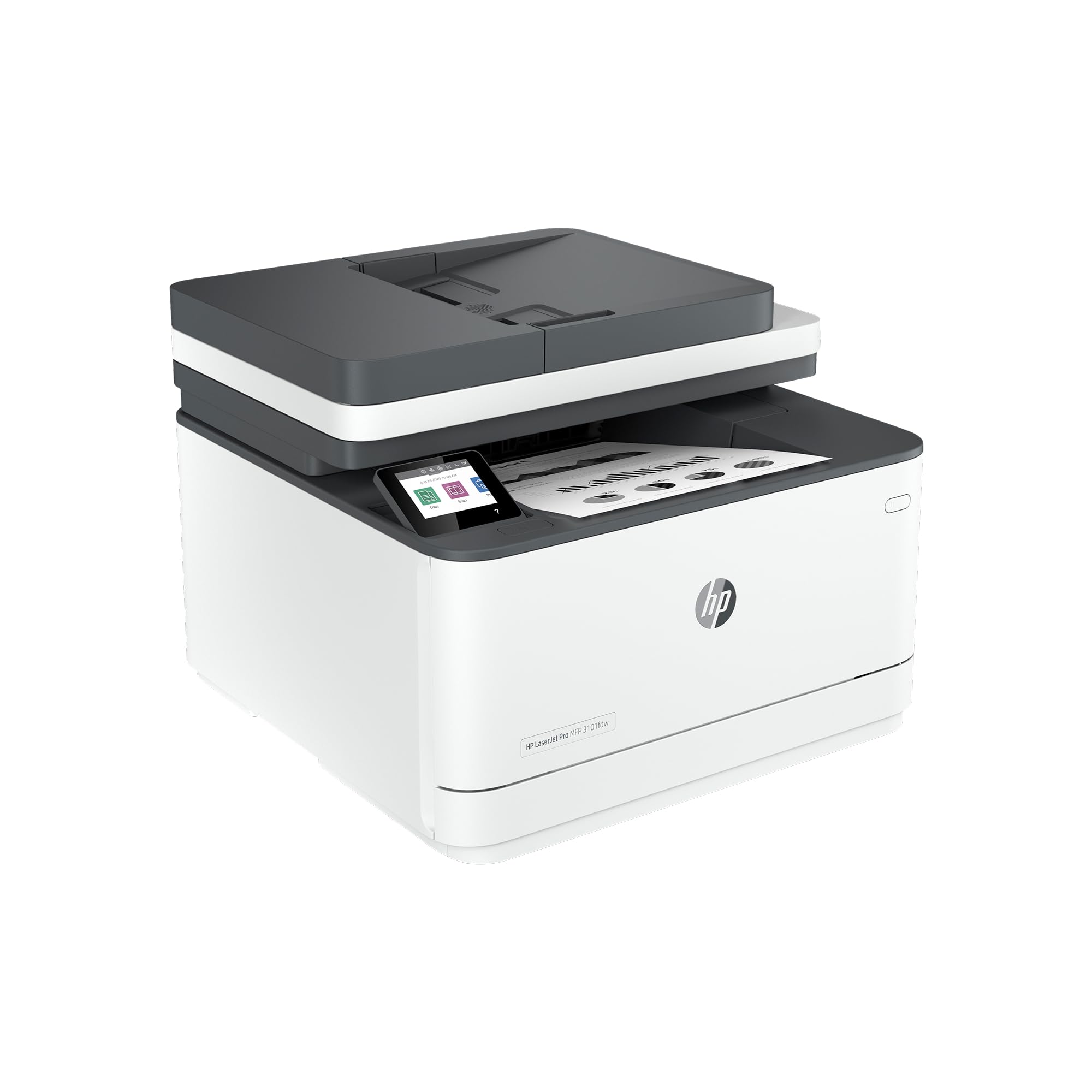
The HP LaserJet Pro MFP 3101fdw brings enterprise-grade paper handling to a compact chassis, with a 50-sheet auto document feeder and a rear straight-through slot that handles cardstock up to 220 gsm without bending. The fuser temperature is adjustable via the media-type selection, and users report flat, professional-looking prints on 80-lb cardstock with zero curl.
Its intelligent Wi-Fi automatically picks the strongest connection band, reducing network dropouts during large print jobs. The 250-sheet input tray is supplemented by a 10-sheet priority bypass slot, which is ideal for inserting a single sheet of heavy cover stock without emptying the main tray. HP Wolf Pro Security adds firmware-level protection for office environments.
Starter toner is rated for about 1,000 pages, but high-yield replacements push that to 5,000 pages, keeping per-page costs low for cardstock-intensive tasks. Some early units have reported occasional scanning glitches, but the overall reliability and speed make this a strong monochrome workhorse for business card runs and report covers.
Why it’s great
- Rear straight-through slot eliminates cardstock curl
- 50-sheet ADF handles mixed media stacks efficiently
Good to know
- HP firmware blocks non-HP toner cartridges
- Wireless setup can be finicky on first configuration
4. HP LaserJet Pro MFP 3101sdw
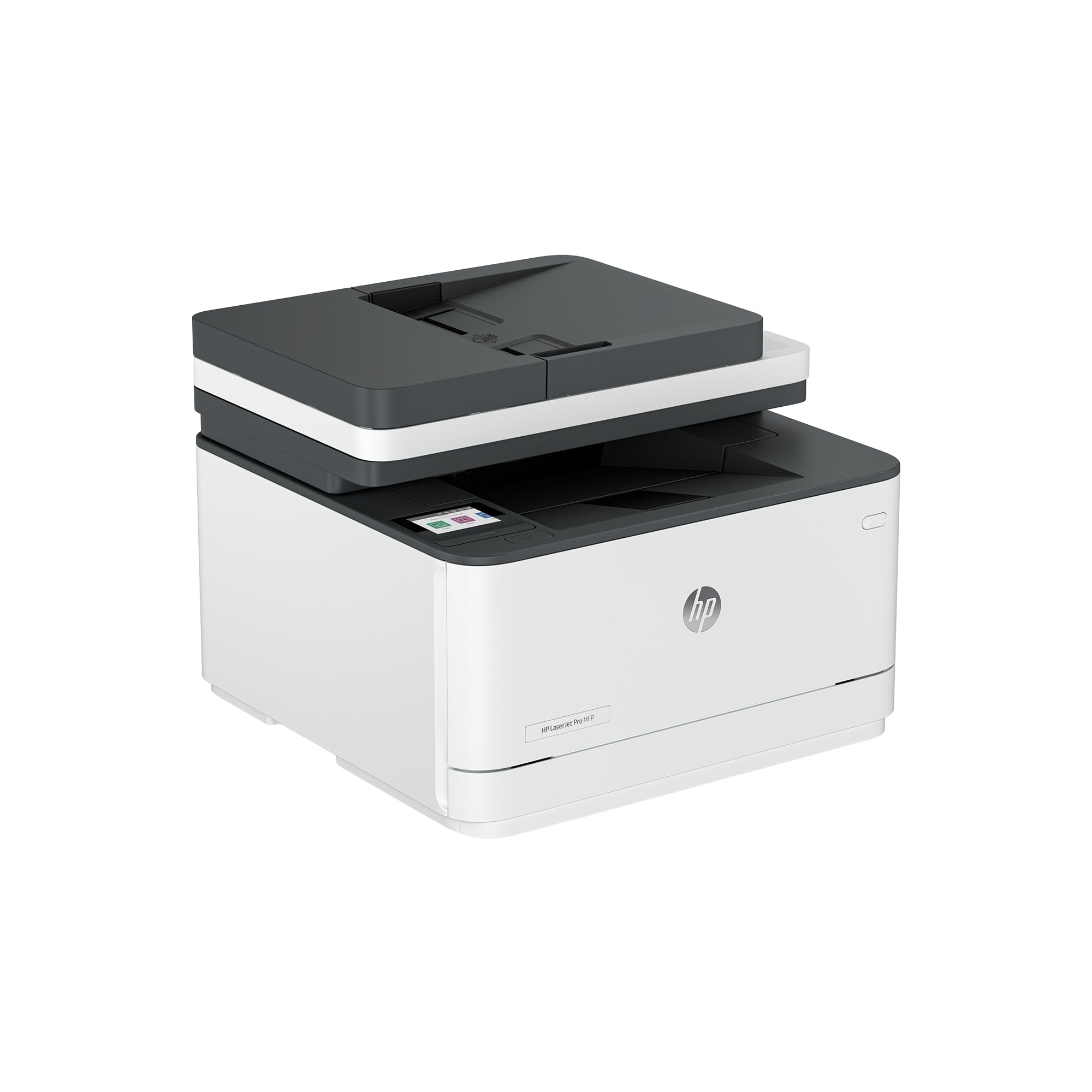
The HP LaserJet Pro MFP 3101sdw delivers the same core paper-handling DNA as the 3101fdw but with slightly faster black output at 40 pages per minute. Its 250-sheet input tray combined with a 50-sheet auto document feeder makes it easy to power through cardstock runs without reloading every few minutes.
The dedicated rear feed slot accepts single sheets of cardstock up to 220 gsm, and the media-type setting in the driver lowers fuser temperature to minimize curl. Users consistently report crisp text and solid fills on 100-lb cover stock, with no jams after hundreds of pages. The printer also supports Ethernet and USB for wired reliability in shared office environments.
Starter toner is introductory-grade (roughly 1,000 pages), but standard cartridges yield 3,000 pages and high-yield options reach 7,000. HP’s firmware updates have been known to block third-party cartridges, so users comfortable with generic toner should avoid installing updates. For a small team that needs fast, reliable black-on-cardstock output, this is a top contender.
Why it’s great
- Fast 40 ppm output saves time on large cardstock runs
- Dedicated rear slot handles thick media without creasing
Good to know
- Firmware updates can block third-party toner
- Starter cartridge runs out quickly; budget for replacements
5. Brother Professional HL-L6210DW

The Brother Professional HL-L6210DW is a monochrome laser printer built for high-volume cardstock output, with a 50 ppm engine and a robust 520-sheet main tray that can be expanded to 1,660 sheets with optional add-ons. The 100-sheet multipurpose tray is the straight-through path that handles cardstock up to 200 gsm, and users with heavy print demands report zero jams after tens of thousands of pages.
Its Gigabit Ethernet and dual-band wireless networking make it easy to share across a large office floor, and the Triple Layer Security features protect sensitive document runs. The 3,000-page starter toner is generous, and the ultra-high-yield TN-920XXL cartridge delivers up to 18,000 pages, dropping per-page costs to under a cent for black text.
One limitation: this is a print-only unit without scanning or copying functionality, so you’ll need a separate scanner if your cardstock workflow includes digitization. Some users have reported that the deep sleep mode can be tricky to disable, but the printer’s overall build quality and speed make it a favorite for offices that burn through cardstock monthly.
Why it’s great
- 50 ppm speed with expandable 1,660-sheet capacity
- Ultra-high-yield toner drops per-page cost dramatically
Good to know
- Print-only machine — no scan or copy functions
- Deep sleep mode may interfere with remote wake-up
6. Epson EcoTank ET-2980
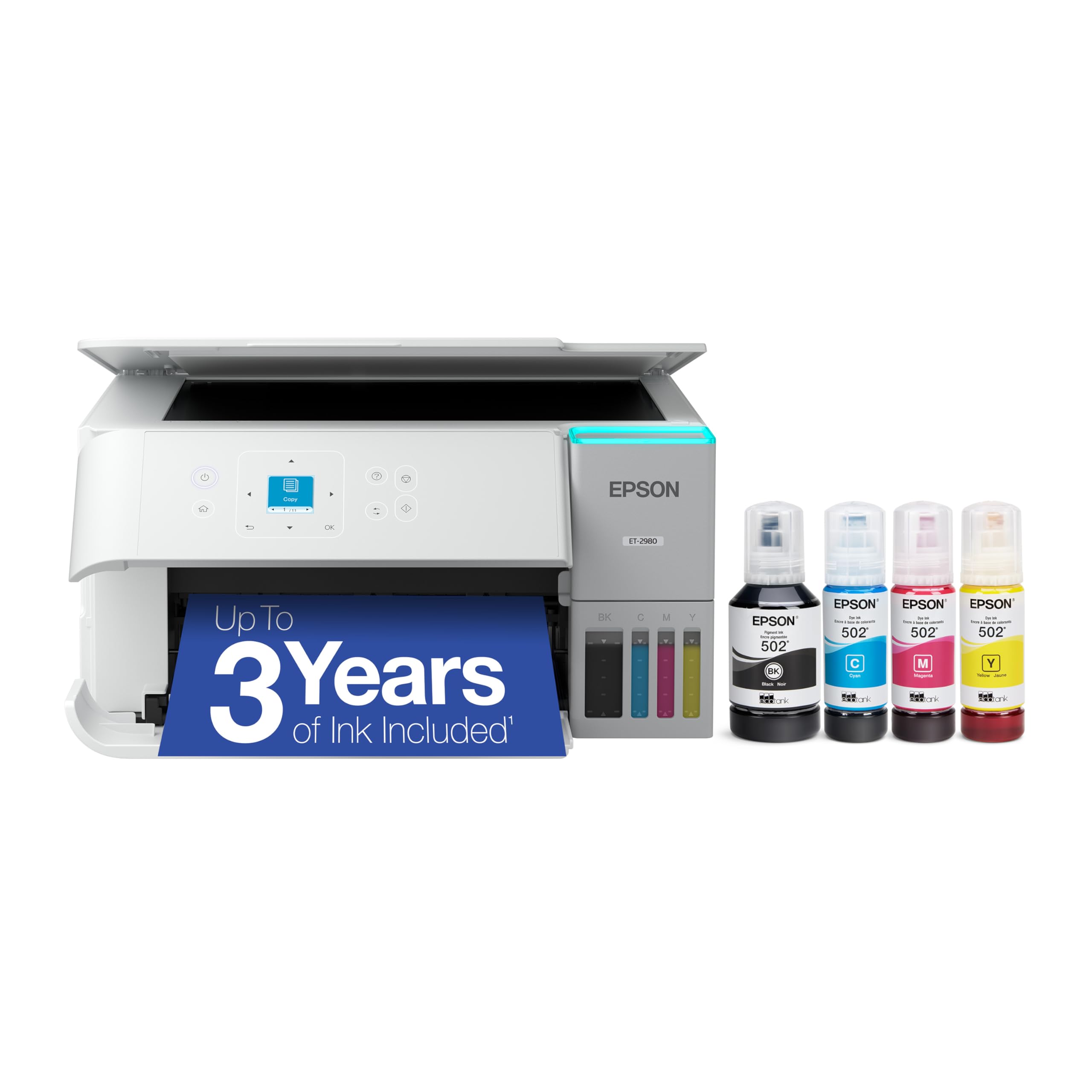
The Epson EcoTank ET-2980 is a cartridge-free inkjet that brings ultra-low running costs to cardstock printing, with included ink bottles good for 6,600 black or 5,500 color pages. Its front tray handles cardstock up to about 220 gsm, and the auto duplex printing works reliably on lighter cardstock without the smearing common in budget dye-based printers.
The 7th-generation EcoTank design refines the ink fill process with EcoFit bottles that snap into place and auto-stop, eliminating mess. Print quality on plain paper is excellent, and color cardstock emerges with good saturation and minimal banding as long as you use the appropriate media type setting. The 1.44-inch color touchscreen gives quick access to copy and scan functions.
Users note that the printer lacks an auto document feeder, so multi-page cardstock scanning requires manual page-by-page feeding. The output tray is automatic but small, and the all-in-one ink system means that running out of any color halts all printing. For light-to-moderate cardstock use, this is a cost-efficient workhorse that sidesteps the cartridge replacement treadmill entirely.
Why it’s great
- Included ink bottles last for thousands of cardstock pages
- Auto-stop refill bottles prevent spills
Good to know
- No ADF for multi-page document scanning
- Color ink runs as a single system; one low color stops all prints
7. HP LaserJet M209d
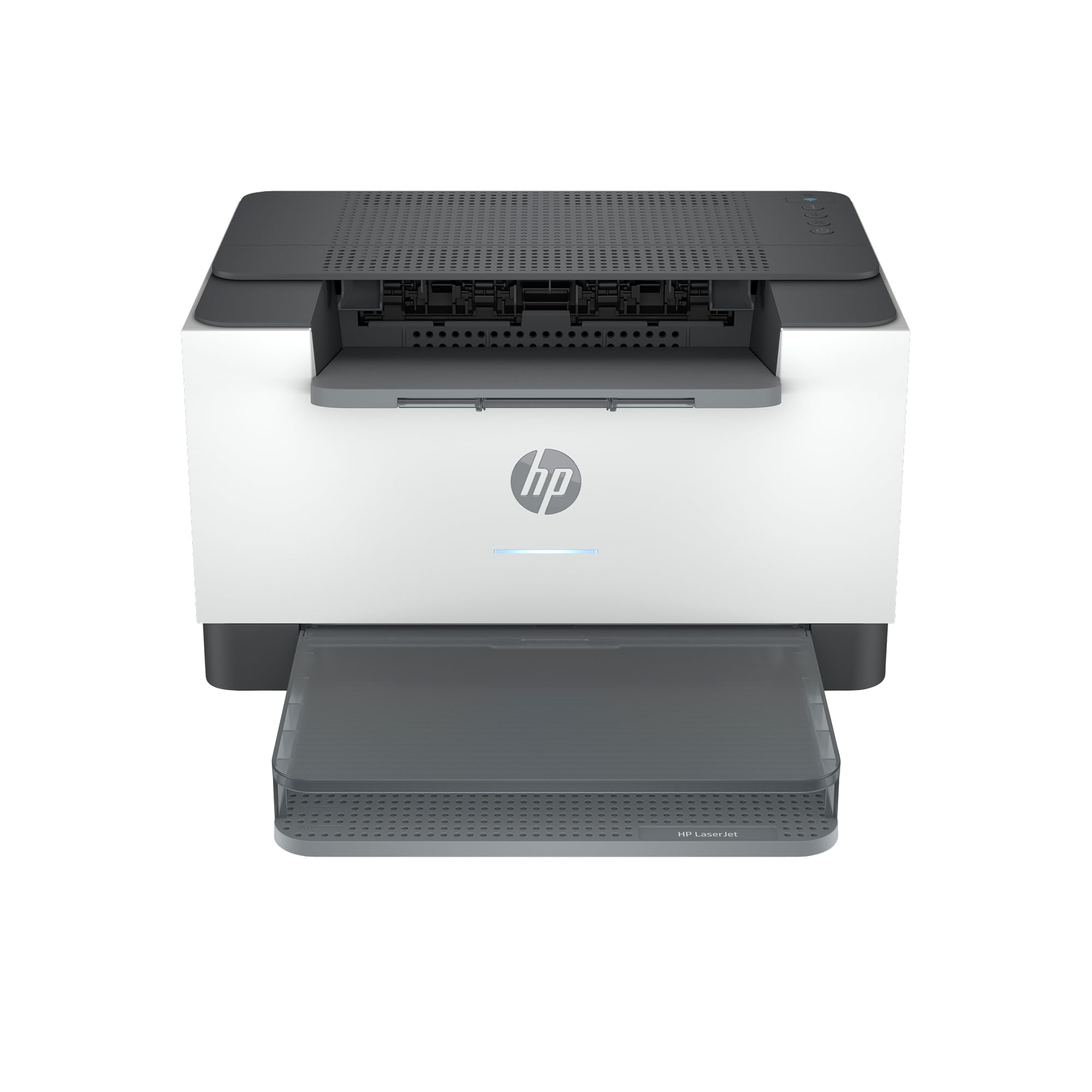
The HP LaserJet M209d is a wired monochrome laser printer that strips away wireless and scanning to deliver fast, reliable cardstock printing at a entry-level cost. Its USB-only connection eliminates Wi-Fi dropouts, and the auto duplex printing works well on cardstock up to 120 lb via the rear straight-through slot, producing flat, professional results.
At 30 pages per minute, it keeps pace with small-office needs, and the 150-sheet input tray holds roughly 30-40 sheets of cardstock before needing a reload. Setup is genuinely plug-and-play on Windows, though Mac users should verify driver compatibility before purchasing, as some older macOS versions lack support.
Toner economy is strong: the starter cartridge lasts about 1,000 pages, but standard replacements deliver 3,000 pages at a low per-page cost. The printer’s compact footprint (8 x 14 inches) fits tight desks. The major trade-off is the lack of a scanner, so this is best suited for users who only need to print cardstock — not copy or digitize it.
Why it’s great
- Straight-through rear path handles thick cardstock cleanly
- Wired connection removes Wi-Fi instability
Good to know
- No wireless, scanning, or copying functions
- Mac driver support is limited — confirm before purchase
8. Epson Artisan 1430

The Epson Artisan 1430 is a wide-format inkjet built specifically for creative cardstock applications, printing borderless up to 13×19 inches and supporting CD/DVD media directly. Its six-color Claria Hi-Definition ink system produces vibrant, gallery-quality results on glossy cardstock, making it a favorite among scrapbookers, invitation designers, and digital artists.
The straight-through paper path via the rear feed handles cardstock up to 13 inches wide without creasing, and the front tray accepts letter-size sheets for everyday tasks. Users running continuous ink supply systems (CISS) report dramatically reduced operating costs — under for bulk ink that replaces worth of cartridges over the printer’s life.
The main drawbacks are its age (this model has been around for years) and the lack of automatic duplex printing. It also has a large footprint (24 x 13 inches) and requires a USB cable for initial setup. For anyone needing large-format cardstock with vibrant color output, however, this remains the undisputed champion in its niche.
Why it’s great
- Borderless 13×19” output on cardstock and photo paper
- CD/DVD printing capability for media labels
Good to know
- No automatic duplex printing on cardstock
- Large footprint and USB-only setup for initial configuration
9. Canon PIXMA TR7120

The Canon PIXMA TR7120 is an entry-level all-in-one inkjet that handles light cardstock duty through its rear feed slot, printing on up to 8.5×11 inch media without jamming. Its 2-cartridge hybrid ink system delivers acceptable text and color on 60-lb cardstock, making it a low-cost option for occasional invitations or craft projects.
The auto document feeder handles multi-page scanning, and automatic duplex printing saves paper on lighter media. The 1.42-inch monochrome OLED screen provides quick status checks on ink levels and settings. Users report that starter cartridges run out after roughly 150 pages, which is typical for budget inkjets, and replacement ink costs can add up quickly if you print cardstock regularly.
This printer’s small footprint and wireless connectivity make it easy to place on a desk next to a craft station. However, the paper tray holds only 100 sheets of standard paper, and cardstock capacity is even lower (about 20-30 sheets). For very light, infrequent cardstock use, the TR7120 gets the job done, but heavier workloads will demand a more robust machine.
Why it’s great
- Compact profile for tight creative workspaces
- Auto duplex and ADF for efficient multi-page jobs
Good to know
- Starter ink packs run out quickly — factor in replacement cost
- Paper tray holds very few cardstock sheets before reloading
FAQ
What gsm rating should my printer have for 80-lb cardstock?
Is laser or inkjet better for cardstock printing?
Why does my cardstock come out curled after printing?
Final Thoughts: The Verdict
For most users, the best all-in-one printer for cardstock winner is the Canon MegaTank MAXIFY GX2020 because it combines pigment ink for smudge-resistant cardstock prints, a straight-through paper path, and famously low running costs from the refillable tank system. If you need vibrant, borderless color output on large-format cardstock, grab the Epson Artisan 1430. And for high-volume monochrome cardstock runs, nothing beats the Brother HL-L6210DW.