
Flimsy paper that curls under a marker tip, bleeds ink onto the next page, and buckles in a standard printer tray is a persistent frustration for anyone crafting invitations, building business presentations, or creating durable flashcards. Reaching for a sheet that feels substantial and holds its shape under pressure is the only way to avoid these daily workflow headaches, and that reliability starts with a specific weight and finish known as 12pt card stock.
I’m Min — the co-founder and writer behind Gadgets Feed. I’ve spent countless hours analyzing the subtle but critical differences in paper density, GSM ratings, printer compatibility, and surface texture to separate the genuinely rigid sheets from the ones that just look thick on the box.
Whether you’re printing double-sided business cards or building layered scrapbook pages, this guide breaks down the best options so you can buy with total confidence in the best 12pt card stock for your next project.
How To Choose The Best 12pt Card Stock
Selecting the right card stock goes far beyond picking the thickest paper on the shelf. The interplay between sheet weight, surface finish, printer mechanics, and project purpose determines whether your final product looks crisp and professional or buckled and amateurish. This guide focuses on the three most critical factors that separate a smart purchase from a frustrating mistake.
Weight Equivalence: GSM vs. Point (pt)
12pt card stock refers to the physical thickness of a single sheet measured in thousandths of an inch, not a point-based scoring system. 12pt means the paper is 0.012 inches thick, which roughly equates to a weight range of 300 to 325 GSM (grams per square meter). A standard 65lb cover stock is closer to 9pt, so 12pt is a significant jump in rigidity. Be careful when comparing products marketed as “heavyweight” — a 100lb cover stock may only be 11pt, which can be noticeably flimsier for postcards or business card blanks.
Printer Feed Throat Clearance
Not every home or office printer can reliably handle 12pt card stock. Most inkjet and laser printers have a maximum paper weight specification listed in the manual, often communicated as a GSM limit. 12pt material can exceed the straight-through or U-turn path tolerance of many consumer-grade machines, leading to frustrating paper jams or misfeeds. Check your printer’s “max paper weight” spec before purchasing, and look for sheets with a smooth, uncoated finish that reduces friction during feeding. If your printer is sensitive, a 110lb index stock (around 9-10pt) might be a safer compromise.
Surface Texture and Adhesion
The finish of 12pt card stock directly impacts how inks, toners, and adhesives behave. A smooth matte finish delivers excellent ink and toner adhesion for laser and inkjet printers, minimizing smudging and allowing for clean, sharp text. Textured or vellum finishes, while aesthetically pleasing, can cause toner to flake or ink to pool unevenly. For stamping, embossing, and gluing, an uncoated, slightly porous surface provides the most reliable grip. Solid-core paper, dyed all the way through, ensures cut edges match the surface color — critical for visible edges on folded cards and intricate die-cuts.
Quick Comparison
On smaller screens, swipe sideways to see the full table.
| Model | Category | Best For | Key Spec | Amazon |
|---|---|---|---|---|
| PENPRIS White 120ct | Mid-Range | Bulk printing & office crafts | 230 GSM / 85lb | Amazon |
| CreGear White 100ct | Mid-Range | Cricut & Silhouette die-cutting | 250 GSM / 92lb | Amazon |
| TUXIYA Colored 100ct | Mid-Range | Multi-color school & party projects | 180 GSM / 65lb | Amazon |
| Aidunmis White 120ct | Mid-Range | Printer-friendly invitation printing | 200 GSM | Amazon |
| DTP Supplies 120lb Cover 50ct | Premium | Business cards & heavy-duty postcards | 325 GSM / 120lb Cover | Amazon |
| MOS White 110ct | Premium | Professional printing & certificates | 250 GSM | Amazon |
| SANZIX Black 12×12 120ct | Premium | Scrapbooking & 12×12 page layouts | 220 GSM / 80lb | Amazon |
In‑Depth Reviews
1. PENPRIS 120 Sheets White Cardstock

This pack delivers a solid 230 GSM weight that hits a sweet spot for most home inkjet and laser printers without jamming, while still providing enough rigidity to stand upright as a greeting card base or business card blank. The acid-free, archival-quality paper ensures that projects won’t yellow or degrade over time, making it a reliable choice for professional portfolio pieces or keepsake invitations.
Customer feedback consistently highlights the smooth, non-bleeding surface that works equally well with Cricut cutting machines for clean, precise cuts and with standard office printers for sharp, vibrant color prints. The 120-sheet count offers strong value for bulk projects like classroom materials or small business marketing collateral where consistent quality across every sheet is non-negotiable.
Where this stock truly shines is in its protective packaging, which keeps the sheets flat and pristine even during shipping — a detail that eliminates the frustrating problem of dented corners that plagues thinner packaging. The 85lb cover weight also scores easily with a bone folder, giving you clean folds without cracking the surface.
Why it’s great
- Truly acid-free archival quality for long-term storage
- Excellent printer compatibility with minimal curling
- Protective packaging prevents corner damage
Good to know
- Not thick enough for heavy embossing or metal stamping
- White core is visible on torn edges
2. CreGear 100 Sheets White Cardstock

Pushing slightly thicker at 250 GSM (92lb), the CreGear card stock is a favorite among die-cutting enthusiasts because its density provides the rigidity needed for intricate shapes without tearing or fraying at the edges. The double-sided matte finish is engineered specifically for inkjet and laser printers, delivering jam-free feeding and preventing bleed-through on dense, full-background prints.
Users report excellent results with Cricut and Silhouette machines, where the extra half-point of thickness translates to cutouts that hold their shape during assembly. The acid-free, lignin-free construction also means this paper won’t become brittle or discolor when exposed to light over months or years, a critical factor for crafters selling their work or preserving scrapbooks.
The 18-month after-sales support from CreGear adds a layer of confidence for bulk buyers, and the off-white hue noted by some users can actually be an advantage for vintage-style projects or invitations where a slightly warmer base tone is desirable. If you value clean die-cuts over pure paper-white brightness, this is a top contender.
Why it’s great
- Exceptional performance with Cricut and die-cut machines
- No ink bleed-through on double-sided prints
- 18-month after-sales support included
Good to know
- Slightly off-white hue may not match bright white card blanks
- Some users prefer a more textured surface
3. TUXIYA 100 Sheets Colored Cardstock
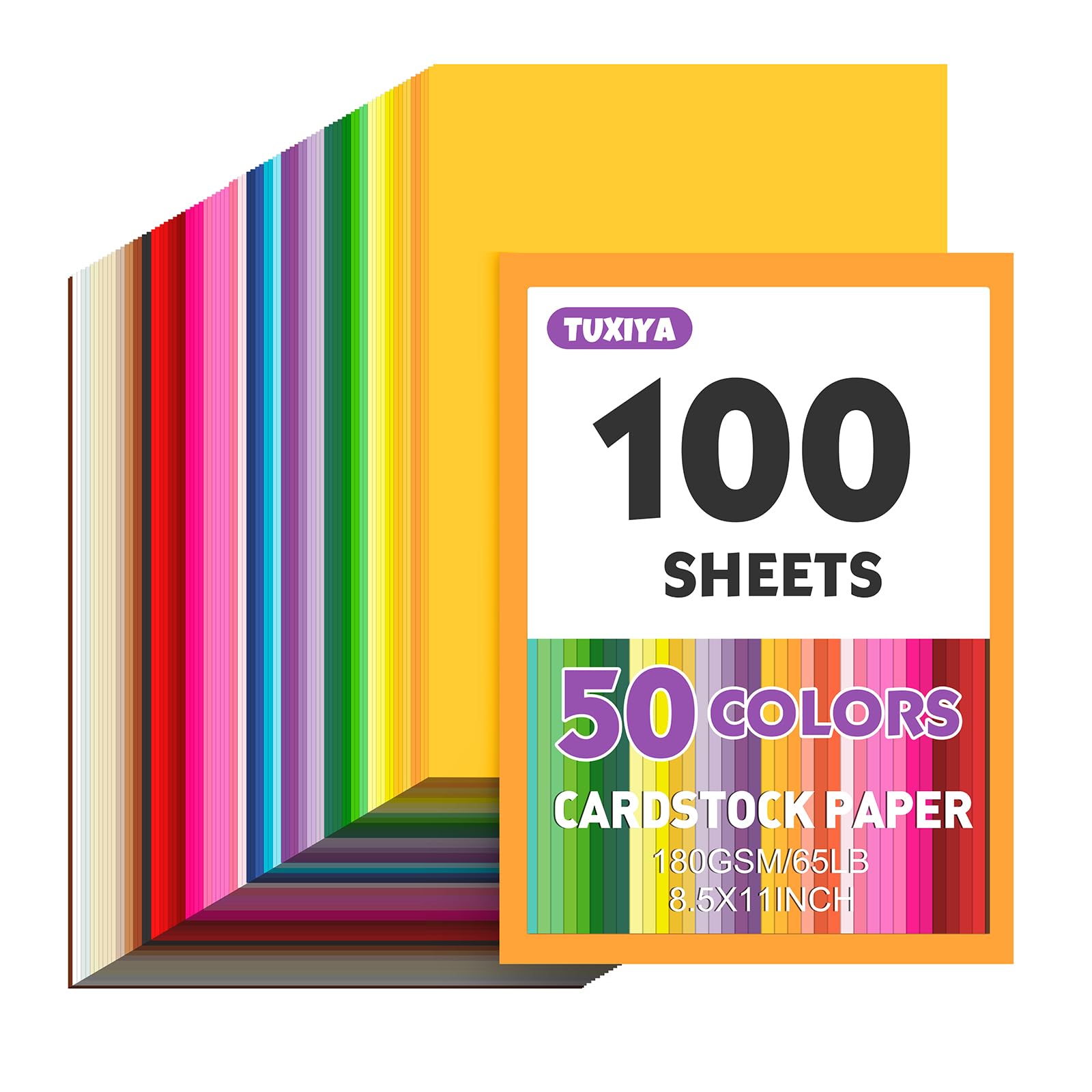
While 180 GSM (65lb) is lighter than true 12pt card stock, TUXIYA’s colored pack earns its place here because the full-core dye process ensures every cut, fold, and torn edge reveals the same vibrant color with no unsightly white core. For projects where the edge is part of the design — like layered paper flowers, party bunting, or origami — this color consistency is a massive advantage over cheaper white-core alternatives.
The 50-color assortment covers the full spectrum from pale pastels to deep jewel tones and bright fluorescents, making it a versatile staple for teachers creating classroom displays, parents organizing birthday decorations, or crafters building color-coded scrapbook layouts. The paper is sturdy enough to hold marker, gel pen, and glue without bleeding or warping, yet thin enough to cut easily with scissors or a guillotine trimmer.
At this weight, feeding through most inkjet printers is reliable without the risk of jams that heavier 12pt sheets can cause. The main trade-off is that the sheets lack the heft for standalone professional business cards or postcards that need to endure repeated handling, but for decorative and educational projects, the color range and solid-core integrity make this an unbeatable value.
Why it’s great
- Full-core dye — no white edges on cuts or tears
- 50 unique colors in a single pack
- Printer-friendly 180 GSM weight for jam-free use
Good to know
- Not thick enough for business cards or heavy postcards
- Only 2 sheets per color may limit bulk projects
4. Aidunmis 120 Sheets White Cardstock
At 200 GSM, the Aidunmis card stock occupies a practical middle ground between lightweight construction paper and ultra-heavy cover stock, making it one of the most versatile options in this guide for users who want a single paper for multiple tasks. The double-sided, blank layout gives you full freedom for duplex printing on wedding invitations, holiday newsletters, or photo frames without opacity issues.
The surface finish is smooth enough to prevent toner from flaking during folding but textured enough to accept water-based markers and stamp pads without beading up — a balancing act that many budget card stocks fail to achieve. Inkjet users particularly appreciate how the paper handles high-coverage color prints without curling at the edges, a common failure mode in thinner or less-dense sheets.
Aidunmis markets this specifically for wedding and event invitations, and the 120-sheet count gives you plenty of room for test prints before committing to final runs. The one caveat is that the 200 GSM density, while printer-friendly, lacks the authoritative snap of true 12pt stock for single-sheet postcards or heavy-use business cards that need to resist bending.
Why it’s great
- Smooth surface handles both laser toner and wet media well
- Excellent opacity for double-sided printing
- Generous 120-sheet quantity for test runs
Good to know
- 200 GSM is lighter than true 12pt (300+ GSM)
- Not ideal for heavy embossing or wet glue layering
5. Desktop Publishing Supplies 120lb Cover Cardstock
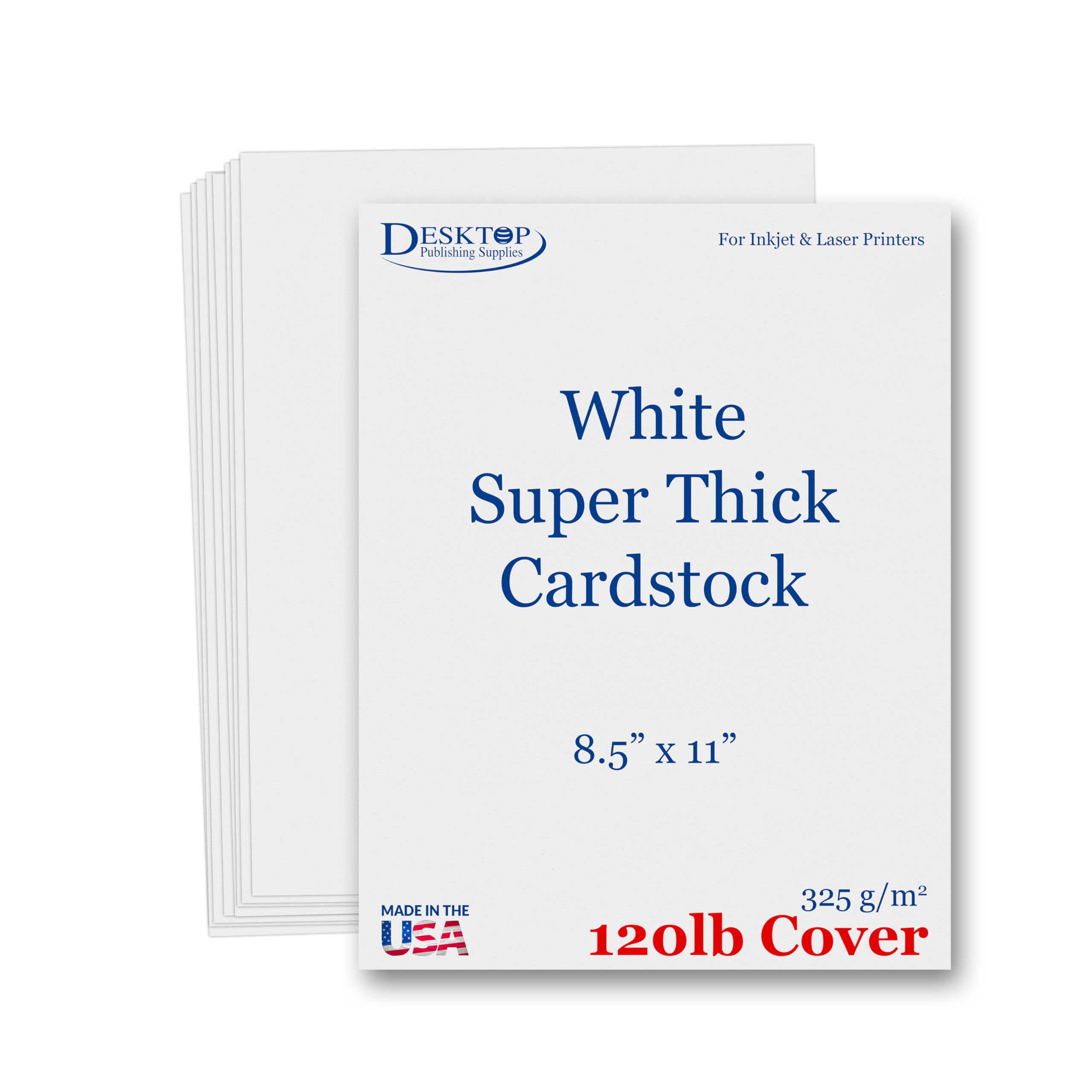
This is card stock at its most rigid — 325 GSM (120lb cover) is the heaviest sheet in this lineup and the closest you can get to a thin cardboard without crossing into chipboard territory. The smooth matte finish provides excellent ink and toner adhesion, producing sharp, vibrant results on laser printers that can accommodate its thickness. This is the go-to choice for premium business cards, heavy postcards, and presentation covers where first impressions matter and flimsiness is not an option.
Customer reviews consistently highlight that this paper passes the “poker chip test” — it feels substantial in the hand and resists bending even when carried loosely in a pocket or bag. For greeting card bases, the paper takes ink blending beautifully and provides a truly professional weight that recipients immediately notice. Laser engravers also report excellent results, with the dense material producing clean, high-contrast burns.
The critical warning here is printer compatibility — this stock will jam most consumer-grade printers that lack a straight-through paper path. You must check your printer’s maximum GSM rating before purchasing, and you will need to score every fold with a bone folder to avoid cracking. The 50-sheet count also reflects the industrial nature of this paper; it’s intended for focused, high-stakes projects rather than bulk classroom use.
Why it’s great
- True 325 GSM weight for ultra-rigid professional results
- Excellent for laser engraving and hot foil stamping
- Matte finish provides superb toner adhesion
Good to know
- Requires scoring before folding to prevent cracking
- Incompatible with most home inkjet and laser printers
6. MOS White Cardstock 110 Sheets
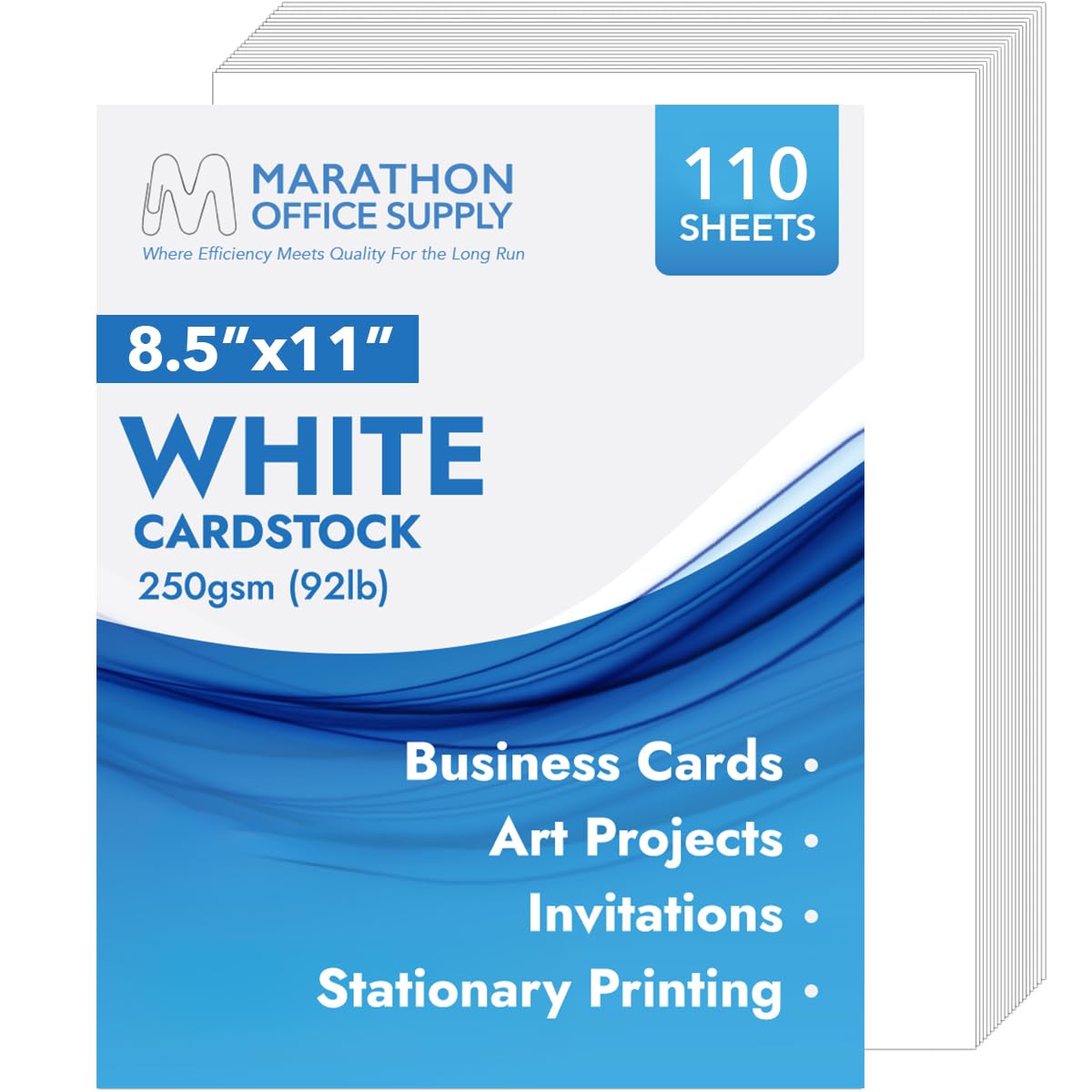
The MOS card stock hits the same 250 GSM weight as the CreGear but stands out for its uncoated, smooth finish that is especially friendly to high-volume office printing. Teachers, small business owners, and administrative staff will appreciate how this paper runs through Brother, HP, and Canon printers without the frequent misfeeds that plague heavily coated or ultra-thick card stocks. The bright white hue provides a clean, neutral canvas for certificates, menus, and professional presentations.
Customers report excellent results using this stock for book covers and graduation announcements, noting that the weight is sufficient to protect contents without adding impractical bulk to mailing envelopes. The paper also handles cutting and folding well, with a surface that resists fingerprint smudging during handling — a practical advantage when you’re assembling dozens of invitations or programs by hand.
MOS offers this in multiple sizes (Letter, Legal, and 11×14), making it a flexible choice for users who need consistent paper across different project formats. The 110-sheet count is generous for the mid-premium price tier, and the uncoated finish means glue, tape, and adhesive dots bond reliably without sliding off. The only downside is that the smooth matte surface doesn’t have the “toothy” feel that some stampers and mixed-media artists prefer.
Why it’s great
- Exceptionally reliable feeding in high-volume office printers
- Available in Letter, Legal, and 11×14 sizes
- Uncoated surface ensures strong adhesive bonding
Good to know
- Smooth texture may not suit all stamping techniques
- Not as rigid as true 300+ GSM 12pt stock
7. SANZIX 120 Sheets Black Cardstock 12×12
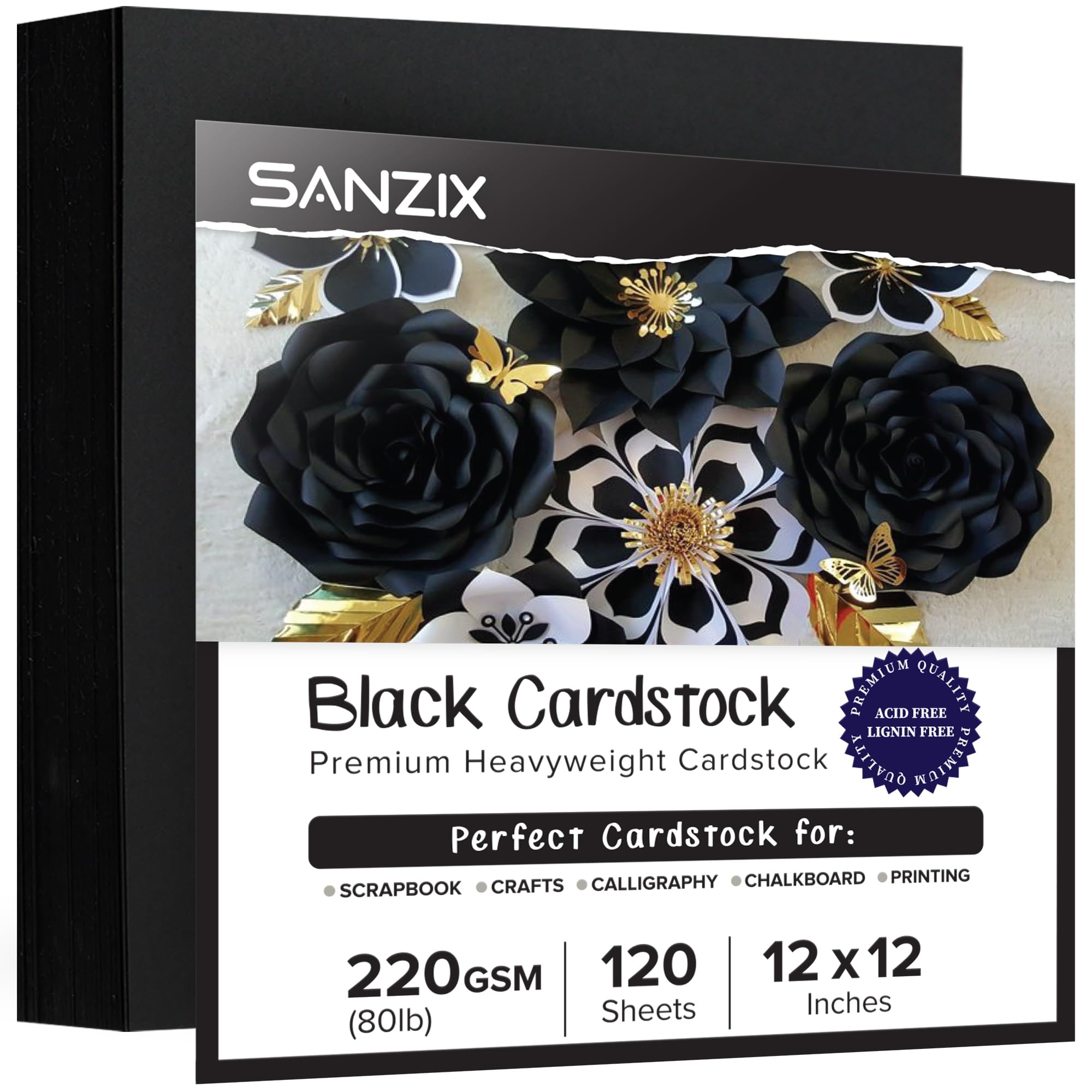
This SANZIX pack is specifically designed for scrapbooking and 12×12 page layouts, a format that standard letter-size card stock simply cannot accommodate. The 220 GSM (80lb) weight provides enough stability to serve as a scrapbook page base or a die-cut backdrop without being so thick that it trimmers poorly or bulks up a finished album. The deep, rich black color is achieved through a dye process that resists fading and maintains its intensity even when exposed to sunlight over time.
Crafters using this paper report that it scores and cuts beautifully without cracking — a critical requirement for card making where folded edges must remain pristine. The paper is also compatible with both laser and inkjet printers, allowing you to print custom backgrounds, titles, or photo mats directly onto the black surface using white or metallic ink cartridges. The 120-sheet count is generous for 12×12 stock, which is often sold in smaller packs at a higher per-sheet cost.
The main trade-off with the SANZIX paper is the weight — at 220 GSM, it is lighter than standard 12pt cover stock, and some users note that it can tear along the fold line if creased without first scoring. Additionally, the color, while a true deep black, is reported to be slightly less vibrant than some premium brands. However, for the sheet count and the specialty 12×12 format, this remains a compelling value for dedicated scrapbookers.
Why it’s great
- True 12×12 format for scrapbooking and large layouts
- Easy to score and cut without cracking
- Printer compatible for custom black-background prints
Good to know
- 220 GSM is lighter than standard 12pt stock
- Can tear along fold if not pre-scored
FAQ
Can my home printer handle true 12pt (300+ GSM) card stock?
What is the difference between 12pt card stock and 110lb index stock?
Why does my card stock crack when I fold it?
Final Thoughts: The Verdict
For most users, the best 12pt card stock winner is the PENPRIS White 120ct because it delivers a reliable 230 GSM weight that runs smoothly through most home printers while still providing enough rigidity for professional-grade invitations and business cards. If you need the absolute thickest stock for premium business cards that demand an immediate tactile impression, grab the Desktop Publishing Supplies 120lb Cover — but confirm your printer can handle 325 GSM. And for crafters who need a rainbow of solid-core colors without white edges showing on cuts, nothing beats the TUXIYA 50-Color Assortment for school projects, party decorations, and layered paper crafts.