
An air orbital sander that leaves swirl marks, stalls under pressure, or drains your compressor in seconds is worse than useless. The right pneumatic dual-action sander delivers a smooth, consistent finish on auto body filler, primer, wood, and metal without the chatter and vibration that destroy your work. But with cheap units flooding the market—some promising 12,000 RPM but failing to maintain orbit—finding a reliable tool demands knowing exactly which specs matter.
I’m Min — the co-founder and writer behind Gadgets Feed. I’ve spent hundreds of hours analyzing pneumatic sander specifications, cross-referencing real-world performance data, and separating marketing noise from the measurable metrics that actually dictate sanding quality, tool longevity, and value.
This guide focuses on the best air orbital sander models that balance low vibration, consistent pad rotation, and manageable air consumption without forcing you to guess which dual-action tool earns its place in your shop.
How To Choose The Best Air Orbital Sander
Pneumatic sanders are simple machines, but selecting the right one for your compressor setup and the work you do requires understanding three core factors: air consumption, pad control, and ergonomics. Ignore these and you risk buying a tool that either starves for air or vibrates your hands numb.
Match Air Consumption (CFM) to Your Compressor
The single biggest mistake buyers make is ignoring the sander’s average and maximum CFM (cubic feet per minute) draw. A 5-inch DA sander consuming 10 to 17 CFM at 90 PSI requires a compressor with at least a 20-gallon tank and a pump delivering 6–8 SCFM continuously. Underpowered compressors cause the sander to stall, reducing orbit action and burning the workpiece. Always check the CFM rating at free speed, not idle.
Orbit Diameter and Pad Control
Standard dual-action orbit diameters range from 3/16-inch (fine finishing) to 3/8-inch (aggressive stock removal). A 3/16-inch orbit produces a finer swirl pattern suitable for primer and paint prep, while a 3/8-inch orbit removes material faster but leaves a coarser surface. The backing pad’s durometer (hardness) also matters—softer pads conform to curved panels better, while harder pads transfer more power to flat surfaces.
Exhaust Direction and Vibration Isolation
Rear-exhaust sanders direct expelled air away from the workpiece, keeping dust from blowing around your face but often muffling the exhaust with a felt pad. Side-exhaust models push air laterally, which can be louder but keeps the sander cooler during extended use. Low-vibration designs rely on balanced bearing assemblies and counterweight systems—cheaper models skip this, transmitting 50 to 100 Hz vibration directly to your palm.
Quick Comparison
On smaller screens, swipe sideways to see the full table.
| Model | Category | Best For | Key Spec | Amazon |
|---|---|---|---|---|
| Bosch ROS20VSK | Premium Corded | Fine wood finishing & dust control | 12,000 OPM / 2.5 Amp motor | Amazon |
| Ingersoll Rand 311A | Premium Pneumatic | Auto body & heavy stock removal | 17 CFM / 12,000 RPM | Amazon |
| DEWALT DWE6420 | Mid-Range Corded | Woodworking & PSA disc users | 12,000 OPM / 3.0 Amp motor | Amazon |
| BOSCH GEX12V-5N | Mid-Range Cordless | Quick touch-ups & portability | 10,000 OPM / 12V brushless | Amazon |
| Metabo HPT SV13YST | Mid-Range Corded | Furniture finishing & value | 13,000 RPM / 2.8 Amp motor | Amazon |
| Gedu Professional DA Sander | Entry Pneumatic | Vertical & overhead sanding | 12,000 RPM / 10.5 CFM | Amazon |
| Autolock 5-Inch DA Sander | Budget Pneumatic | Value kit with accessories | 12,000 RPM / 1.39 kg weight | Amazon |
In‑Depth Reviews
1. Bosch ROS20VSK 5 Inch Palm Random Orbit Sander
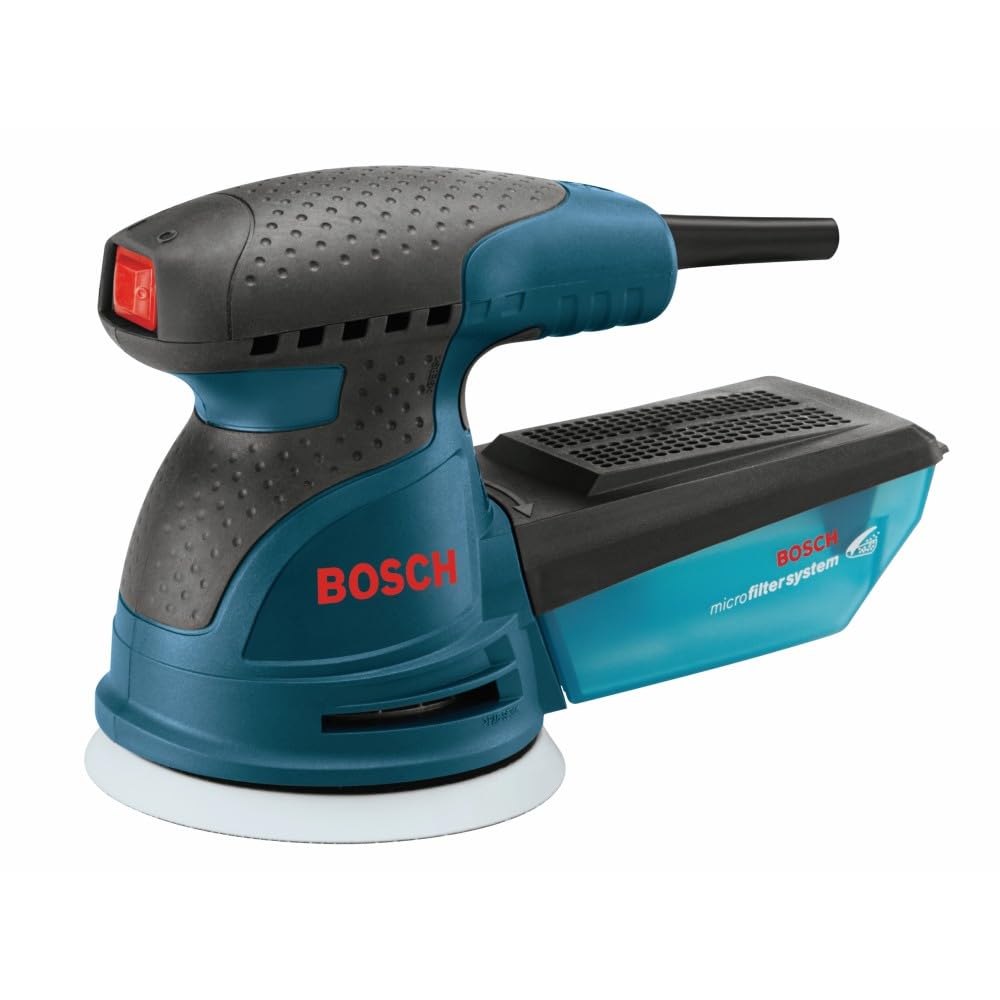
The Bosch ROS20VSK integrates a patented pad-dampening braking system that actively counters the sander’s orbit when lifted from the workpiece, nearly eliminating the swirl marks that plague cheaper orbital tools. With a variable-speed range of 7,500 to 12,000 OPM, you can dial down for softwood final passes or crank up for aggressive stock removal on hardwood and epoxy. The microcellular backing pad conforms to slight panel irregularities, improving contact consistency without requiring heavy downward pressure.
Dust collection on the ROS20VSK sets a benchmark in the corded category: the on-board canister captures fine particulates effectively, and the included vacuum hose adapter connects directly to standard 1-1/4-inch shop vac ports. Some users report the canister lid o-ring can loosen over time—losing seal integrity—but this is manageable by cleaning the rubber seal periodically. The 2.5-amp motor delivers adequate torque for continuous use without bogging, though it lacks the raw grunt of DEWALT’s 3-amp unit.
Real-world feedback from woodworkers and epoxy finishers consistently praises the residual finish quality straight off the pad. Paired with 3M Cubitron II discs, the ROS20VSK leaves a surface that often requires no intermediate hand-sanding before finishing. The soft-grip top and body reduce hand fatigue during extended sessions, and the included contractor-grade carrying case protects the sander between jobs.
Why it’s great
- Pad-dampening brake eliminates swirl marks on lift-off
- Variable-speed dial provides fine control across materials
- Superior dust collection with both canister and vac adapter
- Low vibration profile reduces fatigue during long sessions
Good to know
- Canister o-ring may need periodic cleaning to maintain seal
- Replacement dust canister costs nearly half the sander’s price
- 2.5-amp motor is sufficient but not the most powerful in class
2. Ingersoll Rand 311A Dual-Action Air Sander
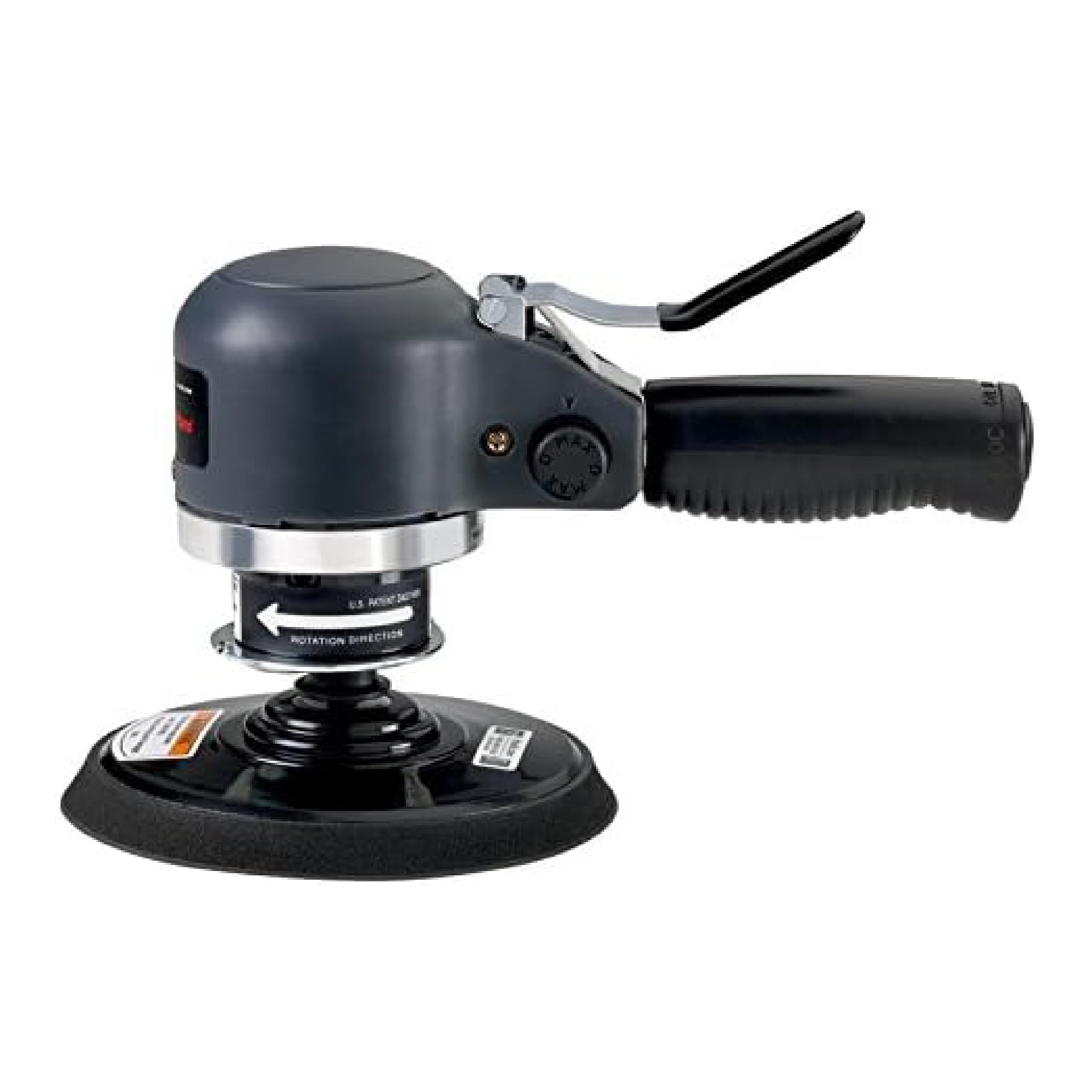
The Ingersoll Rand 311A delivers a 6-inch adhesive pad (pressure-sensitive adhesive, not hook-and-loop) spinning at 12,000 RPM driven by a balanced ball-bearing assembly designed for heavy-duty auto body work. This is not a sander for small compressors—its average air consumption of 17 CFM at free speed demands a 60-gallon tank or larger to sustain continuous operation without pressure drop. The 0.25 hp motor provides enough torque to keep the pad oscillating under aggressive pressure on filler and primer.
A built-in adjustable regulator on the tool body allows you to trim speed without changing compressor settings, and the integrated silencer reduces the high-frequency whine typical of pneumatic sanders. The side exhaust design blows spent air laterally rather than onto the workpiece, which helps keep sanding dust from getting stirred back into your face. However, that same side exhaust can be loud in a closed shop, and the tool’s 4.2-pound weight is noticeable during overhead work.
Long-term owner reports highlight the 311A’s durability—units have survived two years of frequent use before the plastic regulator snapped, a replaceable part. The tool is built around a 3/8-inch hose fitting and 1/4-inch air inlet, requiring a 1/2-inch supply line for full performance. If you have the air capacity to feed it, the 311A produces a truly swirl-free finish on metal prep and body filler that matches tools costing significantly more.
Why it’s great
- Balanced ball-bearing assembly for reduced vibration
- Built-in silencer lowers noise during operation
- 6-inch pad covers larger surface area faster
- Adjustable speed regulator integrated into handle
Good to know
- 17 CFM demand requires a large compressor (60+ gallons)
- Uses adhesive PSA pads, not hook-and-loop discs
- Plastic regulator can crack with heavy abuse
3. DEWALT Random Orbit Sander DWE6420

The DEWALT DWE6420 puts 3.0 amps behind a separate counterweight design that physically isolates vibration from the user’s hand—a significant ergonomic advantage over units that couple the motor mass directly to the housing. The pad spins at 12,000 OPM constant speed (non-variable) and uses a pressure-sensitive adhesive mounting system rather than hook-and-loop. This PSA approach gives the disc a flatter, more uniform contact surface but limits the ability to swap grits quickly between passes.
Dust collection on the DWE6420 improved significantly over earlier DEWALT generations: the one-handed locking dust bag stays attached during heavy use, and the dust port fits directly to DEWALT’s DWV010 or DWV012 dust extractors without adapters. For users with standard 1-1/4-inch shop vac hoses, the DWV9000 universal quick connector bridges the gap. The rubber over-mold on the grip and top of the housing provides reliable hold, even with oily or gloved hands.
The 3.4-pound weight and shorter 6-inch height give the DWE6420 a low center of gravity that reduces tipping when sanding vertical surfaces. It is ideal for flat wood panels, cabinet doors, and drywall patches where consistent pressure is easy to maintain. Not having variable speed is the biggest limitation—most competitor tools in this range now offer it—and the PSA system means stocking adhesive-backed discs rather than the more common hook-and-loop variety.
Why it’s great
- 3.0 amp motor delivers high torque without stalling
- Separate counterweight dramatically reduces vibration
- Excellent compatibility with DEWALT dust extractors
- Compact grip height improves control on vertical work
Good to know
- Lacks variable-speed control found on competitor models
- PSA disc system incompatible with hook-and-loop sandpaper
- Some users report the included dust bag fills quickly
4. BOSCH GEX12V-5N 12V Max Brushless Random Orbit Sander

The Bosch GEX12V-5N redefines the air orbital sander concept by eliminating the air hose entirely—it is a 12V Max brushless cordless random orbit sander weighing just 1.8 pounds with the battery installed. The brushless motor delivers up to 10,000 OPM through a 5-inch 8-hole hook-and-loop pad, and the soft-start technology ramps up speed gradually to prevent the tool from jumping on startup. For small jobs, trim work, and touch-ups where dragging a hose or cord is impractical, this tool shines.
The palm-grip design is exceptionally compact at 7.6 inches long, fitting into tight spaces where full-size sanders simply cannot reach, such as inside cabinet carcasses or between stair balusters. Bosch offers both a dust bag attachment and a vac hose interface, giving users flexibility depending on the work environment. The instant-stop brake when you release the trigger is a noticeable improvement over corded models that coast—it prevents accidental marring when setting the tool down.
Battery life is the primary constraint: a standard 2.0 Ah 12V battery lasts roughly 5-10 minutes of continuous full-speed sanding. This positions the GEX12V-5N as a finishing companion rather than a primary stock-removal tool. It complements larger orbital sanders perfectly, handling the final 180-to-320-grit passes and edge work while the big electric or pneumatic sander does the heavy lifting. The included medium backing pad handles flat and slightly contoured surfaces with equal fluency.
Why it’s great
- Ultra-light 1.8-pound design for one-handed use
- Instant-stop brake prevents workpiece damage
- Soft-start eliminates jump on startup
- Compact body reaches tight spaces easily
Good to know
- Battery life is limited to 5-10 minutes at full speed
- Not suitable for heavy stock removal tasks
- Battery and charger sold separately
5. Metabo HPT SV13YST 5-Inch Random Orbit Finishing Sander

The Metabo HPT SV13YST delivers a variable-speed range from 9,000 to 13,000 OPM through a 230W (2.8 amp) motor, making it one of the more adjustable corded palm sanders at an approachable price point. The palm-style comfort grip uses a soft rubber over-mold that absorbs hand-transmitted vibration noticeably better than the hard plastic housings found on similarly priced tools. It uses a standard 5-inch hook-and-loop pad for quick disc changes and includes five pieces of 120-grit sandpaper to get started.
Dust collection with the included bag is functional but not exceptional—several users note the snap-on bag can pop loose during heavy use (a strip of tape solves this). However, the dust collection hose connector and adapter provide a solid seal when connected to a shop vac, transforming the tool into a near-dustless sander. The dust-sealed rocker switch prevents grit from fouling the contacts, an area where many budget sanders fail within months.
Owner feedback consistently highlights the SV13YST’s ability to produce finish quality comparable to premium brands like Makita on hardwoods up to 320 grit. The trade-offs come in ergonomics—it is slightly heavier and louder than the Bosch ROS20VSK, and the hook-and-loop holding power is adequate but not the strongest in class. For the user needing a reliable variable-speed sander for furniture finishing without spending premium money, this Metabo HPT punches well above its weight class.
Why it’s great
- Variable-speed dial from 9,000 to 13,000 OPM
- Soft rubber grip reduces vibration fatigue
- Dust-sealed rocker switch extends tool life
- Includes vac adapter for near-dustless operation
Good to know
- Dust bag attachment is prone to popping off
- Hook-and-loop pad grip is weaker than premium sanders
- Louder and heavier than top-tier models
6. Gedu Professional Air Random Orbital Palm Sander

The Gedu Professional Air Orbital Palm Sander offers a lighter air-motor assembly that brings the tool weight down to 2.6 pounds, making it particularly suitable for vertical and overhead sanding tasks without causing rapid arm fatigue. It uses a rear exhaust design that routes spent air away from the workpiece and user, reducing airborne dust exposure during auto body work. The hook-and-loop 5-inch pad provides a secure disc grip and allows fast grit changes between sanding stages.
Free speed is rated at 12,000 RPM with a built-in regulator on the bottom of the tool body for adjusting pad speed, plus a top-mounted paddle throttle for feathering during detail passes. Average air consumption sits at a manageable 10.5 CFM at 90 PSI—significantly lower than the Ingersoll Rand 311A—meaning it can run on a smaller 20- to 30-gallon compressor without constant cycling. The low vibration reported by users matches the smoothness of professional-grade 3M industrial sanders costing several times more.
Real-world users report 15 to 30 hours of use on paint, Bondo, and fiberglass with no performance degradation. The tool’s ability to maintain speed under moderate pressure without stalling sets it apart from ultra-budget pneumatic sanders that bog down when any real load is applied. It does require Teflon tape on the air inlet threads to prevent leaks, and the maximum operating pressure should not exceed 90 PSI to avoid damaging the rear exhaust felt.
Why it’s great
- Low 10.5 CFM consumption works with smaller compressors
- Light 2.6-pound body ideal for overhead work
- Rear exhaust keeps dust away from user and workpiece
- Top paddle throttle allows fine speed control
Good to know
- Maximum pressure limited to 90 PSI
- Requires Teflon tape on inlet threads to seal
- Long-term durability yet to be proven beyond 30 hours
7. Autolock 5-Inch Air Random Orbital Sander Kit

The Autolock 5-Inch Air Random Orbital Sander comes as a complete kit with the sander body, a hook-and-loop pad, a wrench, a quick-connect air fitting, seven pieces of 120-grit sandpaper, three sponge pads, two microfiber cloths, and a washing mitt. For a first-time pneumatic sander buyer or someone needing a spare tool for basic auto body prep, this kit provides everything needed to start sanding immediately—no separate purchases required.
The tool itself features a built-in speed regulator and a free speed of 12,000 RPM, powered by a precision-balanced motor that Autolock claims reduces vibration. The dual-action (DA) orbit pattern helps minimize swirl marks on primer and filler, though the consistency of the orbit under heavy load is less predictable than mid-range pneumatic sanders. The 1.39 kg weight places it firmly in the lightweight category, suitable for extended use on horizontal panels.
Owner feedback is overwhelmingly positive at this price tier, with multiple users noting the sander works smoothly out of the box and produces acceptable results on auto body filler and wood. The sander’s construction feels solid for the price point, though the included accessories (sponge pads and cloths) are basic. This sander is best viewed as an entry-level tool for the hobbyist or DIYer who needs a functional DA sander for occasional projects and wants a full accessory kit included.
Why it’s great
- Complete kit includes sandpaper, pads, and cloths
- Lightweight 1.39 kg body reduces arm fatigue
- Built-in speed regulator for material matching
- DA orbit helps reduce swirl marks
Good to know
- Orbit consistency can vary under heavy load
- Included accessories are basic quality
- Long-term durability unknown for heavy pro use
FAQ
What PSI should I run my air orbital sander at?
Why does my DA sander leave swirl marks even with fine grit?
How much CFM do I really need for a 5-inch air sander?
Is a rear exhaust or side exhaust sander better for auto body work?
Final Thoughts: The Verdict
For most users, the best air orbital sander winner is the Bosch ROS20VSK because its pad-dampening brake, variable speed control, and superior dust management produce a finish quality that surpasses competitors at any price tier. If you need a pneumatic tool for auto body work and have a large compressor, grab the Ingersoll Rand 311A. And for lightweight vertical or overhead sanding on a modest compressor, nothing beats the Gedu Professional DA Sander for smooth operation and reasonable air consumption.