
Buying a camera for high-speed video means chasing a specific number: 240 frames per second. That spec unlocks smooth, dramatic slow motion that distinguishes professional content from casual footage. But not every camera that advertises 240fps delivers usable quality—some hit the frame rate by dropping resolution or sacrificing light sensitivity, leaving you with footage that looks soft or noisy.
I’m Min — the co-founder and writer behind Gadgets Feed. My focus on this guide has been parsing the technical specifications of high-frame-rate sensors, codecs, and stabilization systems to find cameras that actually deliver clean, usable 240fps video.
Whether you want extreme slo-mo for action sports or cinematic B-roll, the best 240 fps camera matches high frame rates with strong low-light performance and reliable autofocus so your shots are sharp and dramatic from start to finish.
How To Choose The Best 240 FPS Camera
Shooting at 240 frames per second places unique demands on a camera’s sensor, processor, and storage. Many cameras offer the number but compromise on resolution, bitrate, or autofocus when you actually engage the mode. Here are the key factors to check before you buy.
Resolution at High Frame Rates
Some cameras only reach 240fps by dropping to 1080p or even 720p. Look for a camera that maintains at least 1080p resolution at 240fps—and ideally offers 4K at 120fps as a bonus for flexibility. The higher the native resolution at the high frame rate, the more detail your slow-motion footage will retain after editing.
Sensor Size and Low-Light Performance
High frame rates require fast shutter speeds, which reduce the amount of light hitting the sensor. A larger sensor—like 1-inch, APS-C, or full frame—captures more light and produces cleaner slow-motion video in dim conditions. Small sensors can look noisy and grainy when shooting 240fps indoors or at dusk.
Codec and Bitrate
The bitrate and codec determine how much data each frame carries. Cameras with high bitrates (200 Mbps or more) and modern codecs like H.265, ProRes, or Blackmagic RAW preserve details and smooth motion. Low-bitrate 240fps footage often shows artifacts and blockiness that ruin the slow-motion effect.
Quick Comparison
On smaller screens, swipe sideways to see the full table.
| Model | Category | Best For | Key Spec | Amazon |
|---|---|---|---|---|
| GoPro HERO10 Black | Action Camera | Action Sports Slow Motion | 4K at 120fps / 2.7K at 240fps | Amazon |
| DJI Osmo Pocket 3 | Pocket Gimbal Camera | Stabilized Vlogging & Travel | 4K at 120fps / 1-inch CMOS | Amazon |
| Insta360 Ace Pro 2 | Action Camera | Low Light & 8K Slow Motion | 8K at 30fps / 4K at 60fps HDR | Amazon |
| Xtra Muse | Pocket Gimbal Camera | Budget-Friendly Stabilized Video | 4K at 120fps / 3-Axis Gimbal | Amazon |
| Blackmagic Pocket Cinema Camera 4K | Cinema Camera | Professional RAW Slow Motion | 4K at 60fps / 13 Stops Dynamic Range | Amazon |
| Sony FX30 | Cinema Line Camera | APS-C Cinema Slow Motion | 4K at 120fps / Dual Base ISO | Amazon |
| Canon EOS R6 Mark II | Mirrorless Camera | Hybrid Photo & High-FPS Video | 4K at 60fps / 180fps 1080p | Amazon |
| Canon EOS R5 | Mirrorless Camera | High-Resolution 8K Slow Motion | 4K at 120fps / 45MP Sensor | Amazon |
| Sony FX3 | Cinema Line Camera | Full-Frame Cinema Slow Motion | 4K at 120fps / 15+ Stops DR | Amazon |
In‑Depth Reviews
1. Insta360 Ace Pro 2 Dual Battery Bundle
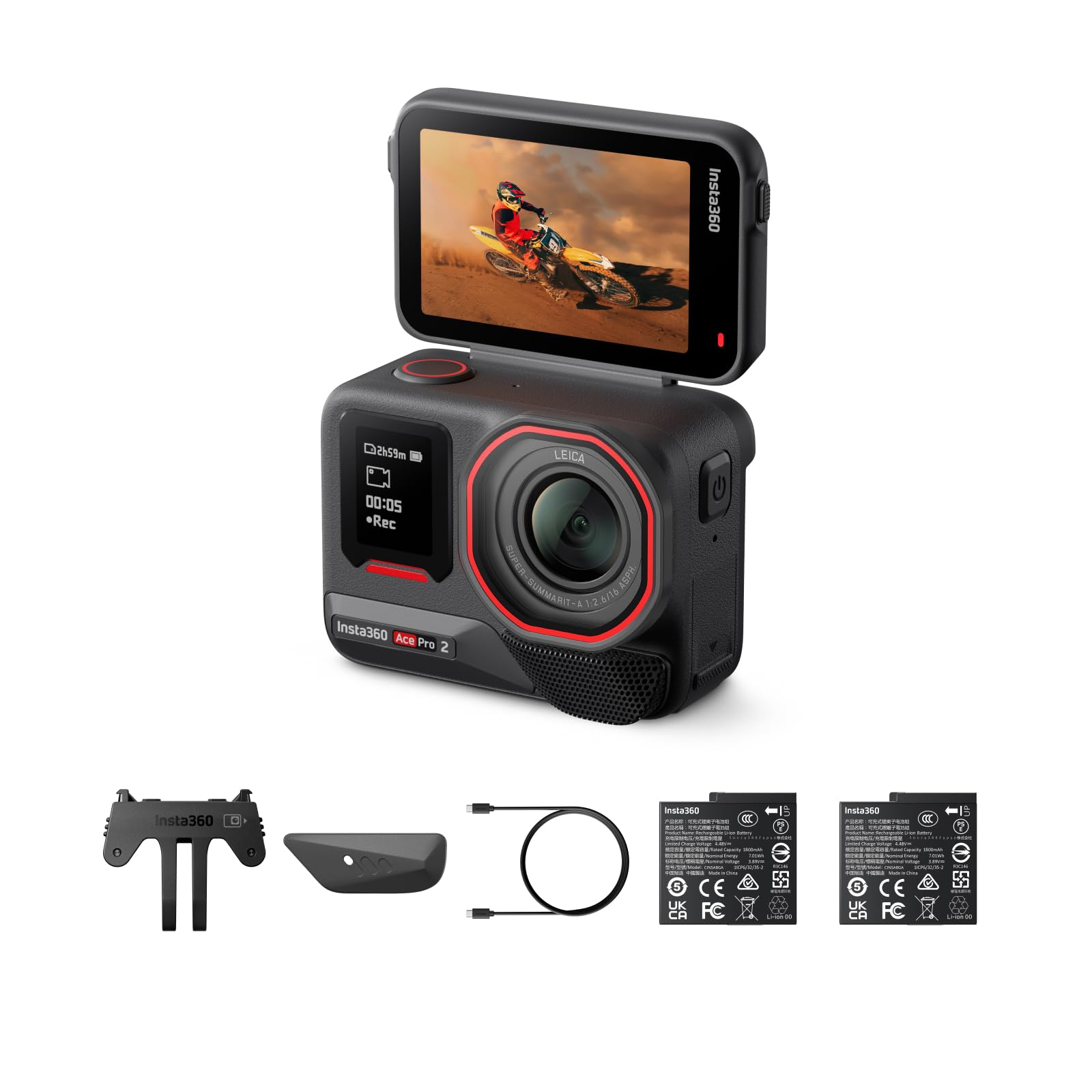
Insta360 has redefined the action camera category with the Ace Pro 2, co-engineered with Leica. The new 1/1.3-inch 8K sensor delivers 13.5 stops of dynamic range and a 2.4μm equivalent pixel size that pulls remarkable detail even in dim conditions. When you need slow motion at high resolution, the PureVideo Mode supports 4K60fps active HDR, while the Dual AI Chip ensures clean noise reduction in every frame.
The 2.5-inch flip touchscreen gives you clear framing even in bright sunlight, and the included dual-battery bundle addresses the one real pain point of high-frame-rate shooting: battery drain. The Wind Guard minimizes audio noise, and the camera is waterproof to 39 feet without a housing, making it ready for motorcycle runs, underwater pool shots, or winter sports.
For creators who want one camera that does everything—8K resolution, excellent low-light performance, and stabilized slow motion—the Ace Pro 2 is the most versatile option on the list. The 157-degree wide-angle lens with MegaView FOV captures immersive action, and FlowState Stabilization keeps the footage smooth even on rough terrain.
Why it’s great
- Leica co-engineered 8K sensor produces stunning detail and dynamic range
- Dual AI chip delivers exceptional low-light performance and noise reduction
- Dual battery bundle eliminates downtime during extended shoots
Good to know
- Slightly larger body than older action cameras
- Battery drains quickly during continuous 4K HDR recording
2. DJI Osmo Pocket 3 Creator Combo
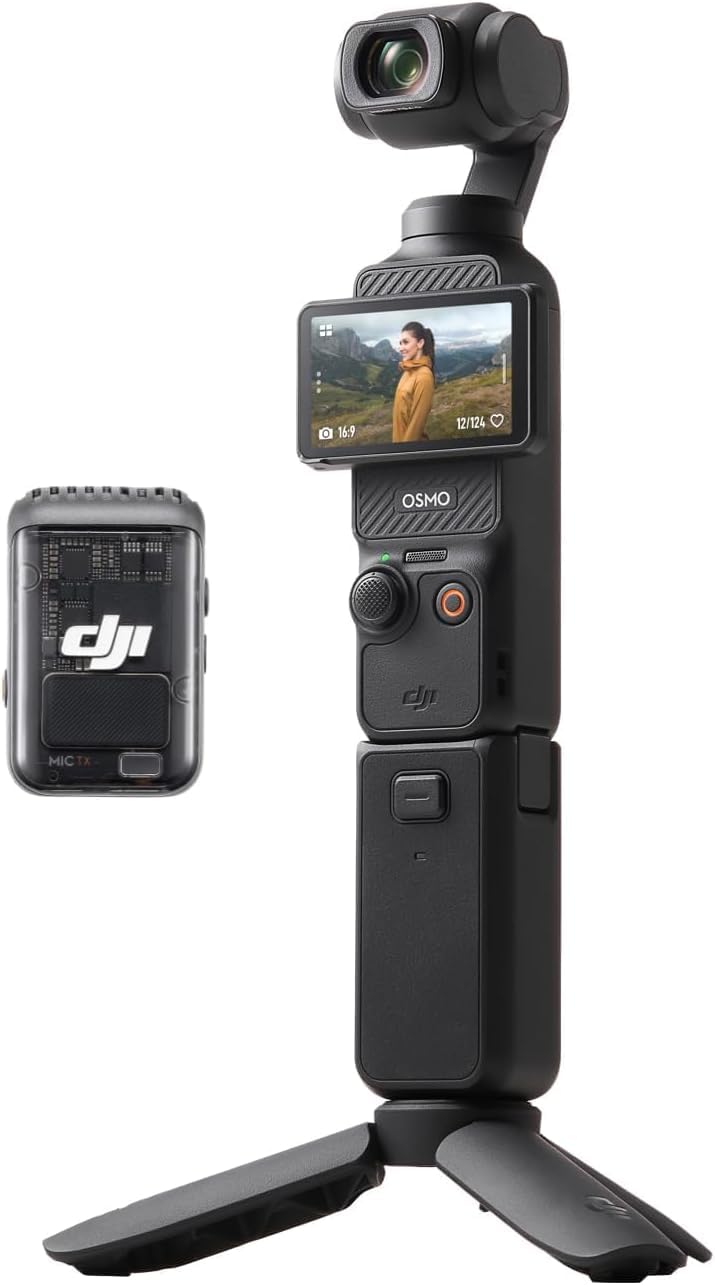
The DJI Osmo Pocket 3 packs a 1-inch CMOS sensor into a form factor that fits in your palm, and it records 4K video at 120fps for smooth 4x slow motion. The 3-axis mechanical stabilization is among the best in its class—footage stays silky even when you are walking, running, or chasing a pet. The rotating 2-inch touchscreen makes it effortless to switch between horizontal and vertical framing for social media content.
ActiveTrack 6.0 face and object tracking locks onto your subject reliably, which is essential for solo creators who film themselves. The Creator Combo includes the DJI Mic 2 transmitter for clear audio, a wide-angle lens, a battery handle for extended runtime, and a mini tripod. With a battery life of 166 minutes, you can shoot slow-motion clips all day without constantly searching for an outlet.
The D-Log M 10-bit color profile captures over one billion colors, giving you plenty of latitude in post-production for color grading sunrises, sunsets, and richly lit scenes. The pocket size means you will actually carry it with you, making it the best option for vloggers and travelers who demand gimbal-smooth 120fps footage without a heavy rig.
Why it’s great
- 1-inch CMOS sensor with 4K at 120fps produces sharp, clean slow motion
- 3-axis mechanical stabilization is best-in-class for pocket cameras
- ActiveTrack 6.0 keeps subjects centered and in focus automatically
Good to know
- Gimbal is fragile and may not survive hard drops
- Creator Combo is expensive, but the base model lacks key accessories
3. GoPro HERO10 Black (Bundle)

The GoPro HERO10 Black, powered by the GP2 chip, is the action camera that started the 240fps slow-motion revolution. It records 2.7K video at 240fps and 1080p at 240fps, giving you 8x slow-motion that reveals every detail of a skateboard flip, a wave crash, or a mountain bike jump. The GP2 processor ensures that the high frame rate does not compromise responsiveness—burst capture and live preview remain fluid.
HyperSmooth 4.0 stabilization is groundbreaking, delivering gimbal-like smoothness even on bumpy trails. The front LCD screen makes vlogging easy, and the rear touchscreen provides intuitive control over presets like Slo-Mo or Activity mode. This bundle includes two extra batteries, a 64GB microSDXC card, and a 50-piece accessory kit, which covers the basics for outdoor shooting.
Waterproof to 33 feet without a housing, the HERO10 is built for underwater pool shots, rainy rides, and snow days. The 23MP photo mode with RAW support adds still photography flexibility. For action sports enthusiasts who need the highest frame rates in a rugged, waterproof body, the HERO10 remains a benchmark choice.
Why it’s great
- Records 2.7K at 240fps for crisp 8x slow-motion footage
- HyperSmooth 4.0 stabilization delivers gimbal-quality smoothness
- Waterproof to 33 feet without an extra housing
Good to know
- Bundled spare batteries have shorter lifespan than official GoPro batteries
- Accessories in the kit are functional but feel inexpensive
4. Xtra Muse Vlogging Camera

The Xtra Muse offers a compelling alternative to the DJI Osmo Pocket 3 at a lower price point. It features a 1-inch CMOS sensor that records 4K video at 120fps, delivering smooth slow-motion footage with good detail. The built-in 3-axis gimbal stabilizer eliminates handheld shake during walking, running, or hiking, and the 2-inch touchscreen makes framing and playback straightforward.
Face and object tracking keeps you in focus when you are moving around a tripod, which is essential for solo vloggers. The X-Log 10-bit color mode captures up to one billion colors, giving you flexibility in post-production for grading dramatic skies or vibrant landscapes. The 161-minute battery life is solid for a pocket gimbal camera, and USB-C PD charging allows you to extend runtime with an external power bank.
For creators who want gimbal-stabilized 4K slow motion without paying a premium, the Xtra Muse is the smart middle-ground choice. The included carrying bag, wrist strap, and 1/4-inch threaded handle make it ready for travel and tripod use out of the box.
Why it’s great
- 4K at 120fps with a 1-inch CMOS for clean slow motion
- 3-axis gimbal delivers smooth stabilized footage
- X-Log 10-bit color for professional post-production grading
Good to know
- Newer brand with a smaller ecosystem of accessories
- Touchscreen responsiveness is good but not as refined as DJI
5. Blackmagic Pocket Cinema Camera 4K

The Blackmagic Pocket Cinema Camera 4K brings studio-grade image quality to a compact body. Its 4/3-inch sensor with 13 stops of dynamic range captures and retains detail in shadows and highlights simultaneously. The 4K resolution with an active MFT lens mount allows you to use vintage and modern glass, and the dual native ISO up to 25,600 keeps noise under control in low-light scenarios where high frame rates demand fast shutter speeds.
This camera supports Blackmagic RAW and Apple ProRes recording to SD/UHS-II, CFast 2.0, or external USB-C SSD. The 5-inch LCD touchscreen eliminates the need for an external monitor and provides clear focus peaking for manual lenses. The included DaVinci Resolve Studio activation key covers your entire post-production workflow, from color grading to audio editing.
The Pocket 4K is best suited for filmmakers and serious videographers who want raw-quality slow-motion footage. Its 60fps ceiling at 4K is lower than some competitors, but the codec depth and dynamic range surpass most consumer cameras. The lightweight carbon polycarbonate body and multifunction handgrip make it comfortable for run-and-gun documentary work.
Why it’s great
- 13 stops of dynamic range for high-quality slow-motion grading
- Records native Blackmagic RAW for maximum editing flexibility
- 5-inch LCD touchscreen is large and bright for manual focus
Good to know
- No in-body stabilization—requires a gimbal for smooth handheld shots
- Battery life is short, around 30 minutes with the included LP-E6
6. Sony FX30 Cinema Line

The Sony FX30 is a Super 35 (APS-C) cinema camera that delivers 4K at 120fps with 10-bit 4:2:2 internal recording. Its 20.1MP Exmor R sensor uses dual base ISO to maintain clean shadow detail even when you push the sensitivity for indoor or evening slow-motion shoots. S-Cinetone color science gives you a cinematic look straight out of the camera without requiring heavy grading.
The Cine EI Quick and Cine EI Log modes optimize exposure for maximum dynamic range, and user LUTs can be applied directly to the LCD output and embedded in clips. The 495-point phase-detection autofocus system is fast and reliable for keeping moving subjects sharp during 120fps bursts. Active cooling prevents overheating during long recording sessions, which is critical for filmmakers shooting interviews or events.
For content creators moving into professional cinema work, the FX30 offers 90% of the FX3’s performance at a lower entry point. The dual card slots support CFexpress Type A and SD cards, giving you flexible workflow options. It is a camera that demands good glass but rewards you with a clean, punchy image that grades beautifully in post.
Why it’s great
- 4K at 120fps in 10-bit 4:2:2 with reliable phase-detection autofocus
- S-Cinetone color science delivers cinematic footage without grading
- Active cooling fan prevents overheating during extended 120fps recording
Good to know
- APS-C sensor means crop factor on full-frame lenses
- Battery life is decent but expect 1-2 hours of continuous recording
7. Canon EOS R6 Mark II (Body Only)

The Canon EOS R6 Mark II is a full-frame hybrid camera that balances high-resolution stills with strong video capabilities. It records 6K oversampled 4K at up to 60fps and 1080p high-frame-rate video at up to 180fps, giving you 7.5x slow-motion for action sequences. The 24.2MP CMOS sensor paired with the DIGIC X processor delivers clean, detailed footage with minimal noise, even at higher ISOs.
Dual Pixel CMOS AF II tracks faces, eyes, and subjects with remarkable precision—it can detect horses, trains, and aircraft in addition to people and animals. The 8-stop in-body image stabilization (IBIS) steadies handheld slow-motion shots, reducing the need for a gimbal in many scenarios. The vari-angle 3-inch touchscreen makes it easy to frame from low or high angles.
For photographers and videographers who need one camera for both roles, the R6 Mark II excels. Its fast 40fps electronic shutter captures split-second moments, and the 6-hour continuous Full HD recording limit means no overheating concerns during long shoots. The RF mount opens access to Canon’s excellent lens lineup.
Why it’s great
- 6K oversampled 4K video with outstanding sharpness and color
- 1080p at 180fps delivers smooth slow motion for action
- 8-stop IBIS reduces shake for stable handheld slow-motion clips
Good to know
- 4K at 120fps is not supported—only 1080p at 180fps
- Body-only purchase requires separate RF lens investment
8. Canon EOS R5 (Body Only)

The Canon EOS R5 is a professional-grade hybrid camera that pushes boundaries with 8K RAW internal recording and 4K at 120fps internal in all formats. The 45MP full-frame sensor is back-side illuminated for exceptional low-light performance, and the DIGIC X processor handles the massive data throughput required for high-frame-rate capture with edge-to-edge autofocus coverage.
The Dual Pixel CMOS AF II system has 1,053 AF points covering approximately 100% of the sensor area, and the Eye Control AF capability lets you select focus points just by looking through the viewfinder. The 8-stop IBIS works together with optically stabilized RF lenses for rock-steady handheld 4K 120fps footage. The body is weather-sealed and robust for demanding field work.
For professionals who need both high-resolution stills and cinematic slow motion, the R5 delivers. The 4K at 120fps footage is oversampled from the 8K sensor, giving it detail that surpasses standard 4K output. The overheating concerns from early firmware releases have been largely addressed, making it a reliable tool for serious video production.
Why it’s great
- 4K at 120fps oversampled from 8K sensor for extreme detail
- 45MP full-frame sensor with excellent dynamic range and low noise
- Eye Control AF for intuitive focus selection through the electronic viewfinder
Good to know
- 8K internal recording can trigger thermal limits without active cooling
- Battery life is shorter than DSLR equivalents
9. Sony FX3 Full-Frame Cinema Line

The Sony FX3 is the ultimate cinema camera for high-frame-rate work. Its full-frame sensor delivers 4K at 120fps with 10-bit 4:2:2 internal recording and full pixel readout in all modes. The 15+ stop dynamic range captures detail across the entire luminance range, and the dual base ISO architecture ensures clean footage at high sensitivities for slow-motion shooting in challenging light.
S-Cinetone color science, inspired by the VENICE cinema camera, produces organic skin tones and a filmic look right out of the box. The compact body features a built-in cooling fan for uninterrupted 4K 60p recording and extended 4K 120p bursts. The cage-free design includes 1/4-inch-20 mounting points and an XLR top handle for professional audio capture.
For independent filmmakers, commercial producers, and event videographers, the FX3 is the gold standard in its class. The 627-point phase-detection autofocus tracks subjects reliably during slow-motion clips, and the compact form factor allows for stealthy gimbal mounting or handheld shooting. It is Netflix-approved for original productions, cementing its place as a serious cinema tool.
Why it’s great
- Full-frame 4K at 120fps with 10-bit 4:2:2 and 15+ stops dynamic range
- Built-in cooling fan enables uninterrupted high-frame-rate recording
- Netflix-approved with S-Cinetone color for professional productions
Good to know
- No built-in ND filters—you will need external ND for bright conditions
- Premium price is an investment for serious videographers only
FAQ
What is the highest usable resolution for 240fps slow motion?
Do I need a fast memory card for high-frame-rate shooting?
How does stabilization affect slow-motion footage quality?
Final Thoughts: The Verdict
For most users, the 240 fps camera winner is the GoPro HERO10 Black because it offers 2.7K at 240fps, HyperSmooth stabilization, and waterproof durability at a mid-range price. If you want gimbal-stabilized 4K at 120fps in a pocket-sized body, grab the DJI Osmo Pocket 3. And for professional cinema-grade slow motion with full-frame depth, nothing beats the Sony FX3.