
A persistent fungal infection on your horse doesn’t just ruin a show coat—it creates raw, itchy patches that can lead to secondary bacterial infections if left unchecked. The right antifungal shampoo targets the specific yeast or dermatophyte at the source while respecting your horse’s sensitive skin pH.
I’m Min — the co-founder and writer behind Gadgets Feed. I’ve spent hundreds of hours cross-referencing veterinary dermatology protocols with real-world user feedback to separate marketing fluff from genuinely effective formulas in the equine antifungal space.
This guide breaks down the active ingredients, contact time requirements, and coverage volume you need to confidently choose the best antifungal shampoo for horses for your specific situation.
How To Choose The Best Antifungal Shampoo For Horses
Selecting an equine antifungal shampoo requires understanding the active ingredients, the form factor that matches your bathing routine, and the concentration needed for your horse’s specific skin condition. A one-size-fits-all approach rarely works when dealing with fungal overgrowth, rain rot, or ringworm.
Active Ingredients: What Actually Kills Fungus
The three most proven antifungal agents for horses are ketoconazole, miconazole, and chlorhexidine (though chlorhexidine is primarily antibacterial, it works synergistically with antifungals). Ketoconazole at 1–2% concentration is the gold standard for yeast and dermatophyte suppression. Miconazole at 1% is another strong choice, often found in sprayable foams. Some premium formulas add MicroSilver BG or chloroxylenol for broader coverage against biofilm and bacterial co-infections.
Contact Time: The 10-Minute Rule
No antifungal shampoo works instantly — the active agents require sustained contact with the skin to penetrate the fungal cell wall. A five-minute minimum is the baseline, and ten minutes is what most veterinary dermatologists recommend for full efficacy. If you cannot leave the shampoo on your horse for that long due to weather or temperament, a sprayable foam that sticks to the coat may be a more practical choice than a runny liquid that drips off.
Volume and Dilution Ratio
A single full-body wash on an adult horse typically requires 8 to 16 ounces of undiluted shampoo. If the product is a concentrated formula, check whether it needs to be mixed with water — failure to dilute properly can cause skin irritation, while over-diluting reduces the antifungal strength. For regular maintenance, a gallon-sized bottle offers the best cost-per-wash value for multi-horse barns.
Quick Comparison
On smaller screens, swipe sideways to see the full table.
| Model | Category | Best For | Key Spec | Amazon |
|---|---|---|---|---|
| Truseb Ketoconazole & Chlorhexidine | Mid-Range | Dual antifungal + antibacterial action | 2% Ketoconazole + 1% Chlorhexidine | Amazon |
| Vetoquinol Sebozole | Premium | Gentle deep-cleansing routine use | 473 mL liquid, sulfate-free | Amazon |
| Vetericyn FoamCare Medicated | Premium | Sprayable foam for quick applications | 1% Miconazole, 32 fl oz foam | Amazon |
| BioHex Chlorhexidine & MicroSilver | Premium | Biofilm disruption on stubborn infections | MicroSilver BG + Ceramide III | Amazon |
| Saratoga Veterinary Antifungal | Premium | Gallon-sized value for multi-horse barns | Chloroxylenol, 1 gallon lotion | Amazon |
| E3 Antifungal Ketoconazole & Thymol | Value | Nano vitamin fortification for coat health | 8 fl oz, Nano vitamins A, C, E & F | Amazon |
| KetoWELL Topical Shampoo | Value | Budget-friendly entry-level antifungal | 16 fl oz, 2% Ketoconazole | Amazon |
In‑Depth Reviews
1. Truseb Topical Ketoconazole and Chlorhexidine Shampoo
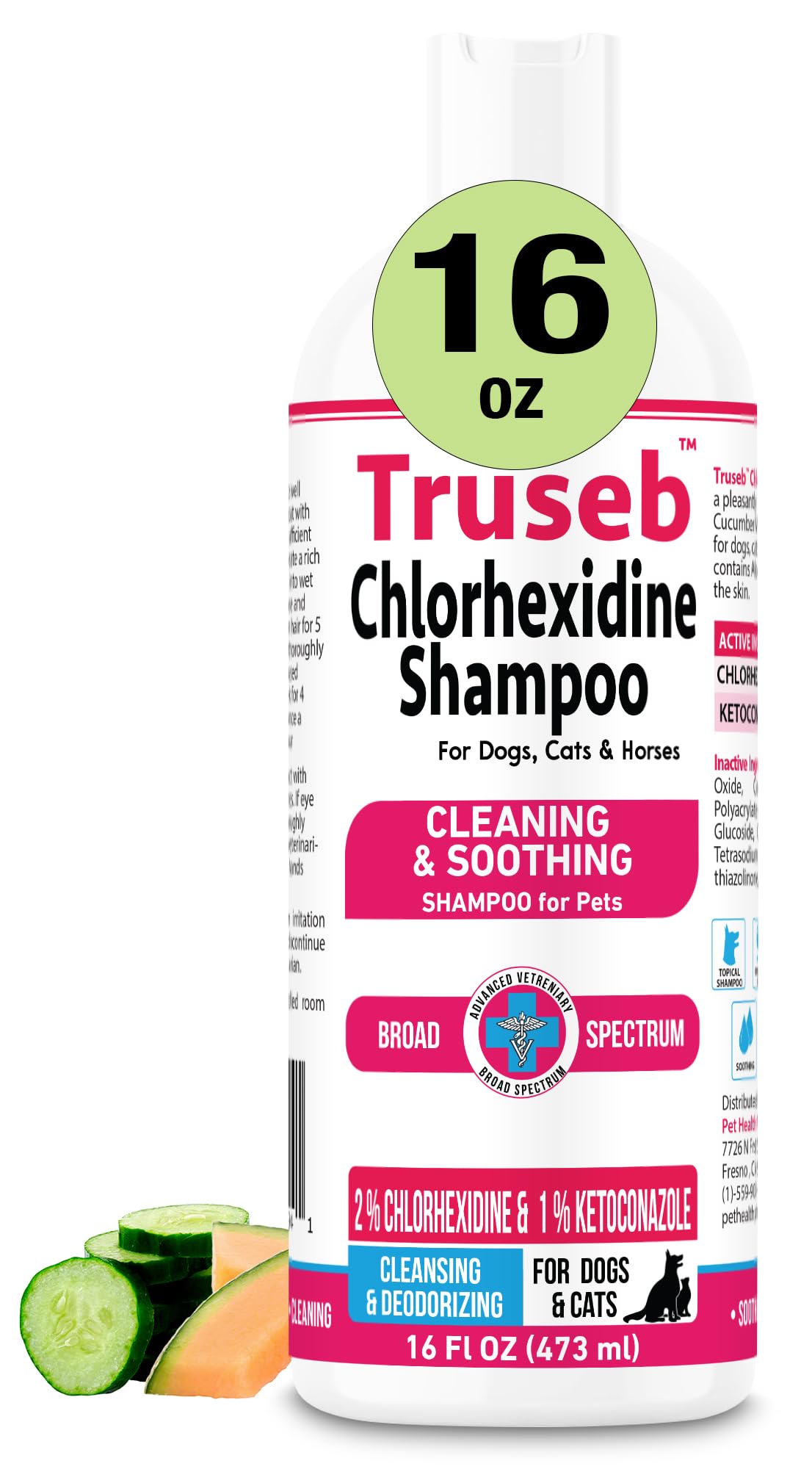
The Truseb formula delivers the most proven dual-action approach for equine fungal skin issues by combining 2% ketoconazole with 1% chlorhexidine. This combination covers both yeast overgrowth and the bacterial populations that often colonize broken skin secondary to fungal infection — a critical detail when dealing with rain rot or scratches that have already caused open lesions.
The 16-ounce bottle is a practical size for two to three full-body washes on an adult horse. Users consistently report visible improvement in hot spots and itchy patches after a single application with a 10-minute contact time, and the cucumber melon scent effectively masks the medicinal odor without being overpowering in the barn.
Produced in a GMP-certified U.S. facility and free of soap and parabens, this shampoo strikes the best balance between veterinary-grade potency and gentleness for sensitive equine skin. The aloe vera addition further helps calm irritated areas during the healing process.
Why it’s great
- Veterinary-strength dual antifungal and antibacterial action
- Soap-free and paraben-free formula is gentle for repeated use
- Pleasant cucumber melon scent masks medicinal odor
Good to know
- Requires full 10-minute contact time for maximum efficacy
- Bottle size may be small for large draft breeds
2. Vetoquinol Sebozole Shampoo
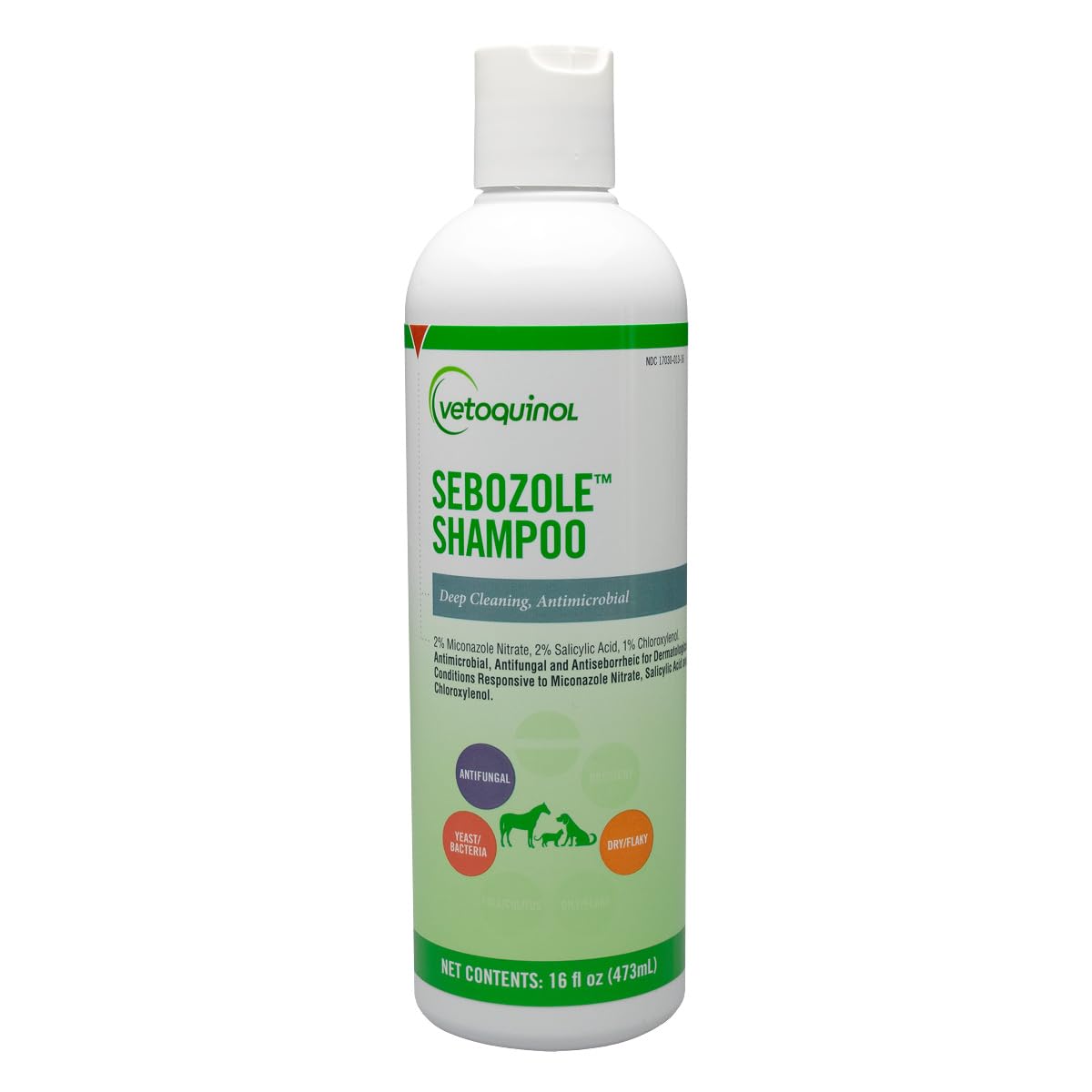
Vetoquinol Sebozole is specifically formulated for long-term maintenance of skin hygiene in horses, dogs, and cats. It uses a deep-cleansing mechanism that removes sebum and scale buildup — a common issue in horses with seborrhea or chronic dandruff that creates a breeding ground for fungal overgrowth.
The 10-minute contact time is explicitly stated on the label, which means the manufacturer has formulated the product knowing that sustained skin contact is necessary. Users report that it works well for dry, itchy patches when used twice weekly as directed, and the mild scent leaves the coat smelling fresh without the heavy perfume that can irritate sensitive respiratory systems.
At 473 mL, the bottle is ideal for single-horse owners who need a reliable weekly wash. The sulfate-free formulation ensures the skin barrier isn’t stripped of its protective oils, which is especially important during the colder months when equine skin is already prone to dryness.
Why it’s great
- Safe for twice-weekly routine use without stripping natural oils
- Effective against seborrhea and dandruff-related fungal issues
- Veterinarian-recommended for long-term maintenance
Good to know
- Not as potent for active, severe fungal infections as ketoconazole-only formulas
- Requires consistent scheduling to maintain results
3. Vetericyn FoamCare Medicated Horse Shampoo

The Vetericyn FoamCare stands apart from every other product on this list because it is a sprayable foam rather than a liquid. This form factor is a genuine game-changer for horse owners who struggle with runny liquid shampoos that drip off before the active ingredients have time to work — especially when treating sensitive areas like the lower legs where rain rot commonly appears.
With 1% miconazole as the active antifungal agent, the formula targets ringworm, scratches, and general fungal disorders effectively. The foam consistency clings to the coat and skin, which naturally increases contact time without requiring the handler to keep the horse still for extended periods. Users report that a single bottle provides multiple applications and that the aloe scent is pleasant without being cloying.
The formula is pH-balanced and hypoallergenic, free of sulfates, parabens, chemical dyes, and artificial fragrances. This makes it a strong choice for horses with known chemical sensitivities or those recovering from skin damage that needs gentle handling.
Why it’s great
- Spray-foam application stays on skin longer than liquid shampoos
- pH-balanced and hypoallergenic for sensitive equine skin
- Large 32-ounce bottle offers excellent value per application
Good to know
- Miconazole at 1% may be less potent than 2% ketoconazole for severe infections
- Foam requires shaking before each use to maintain consistency
4. BioHex Chlorhexidine and MicroSilver Shampoo

BioHex introduces a proprietary ingredient — MicroSilver BG — that mechanically disrupts biofilm, the protective matrix that fungi and bacteria create to resist treatment. For horses with chronic, recurring fungal infections that seem to bounce back after every wash, this biofilm disruption can be the difference between temporary relief and lasting resolution.
The formula pairs chlorhexidine with miconazole, providing both antibacterial and antifungal coverage. The addition of Ceramide III helps restore the skin barrier after infection has compromised it, which is a thoughtful inclusion that many competing shampoos overlook. Users report that it works especially well for horses with allergy-prone skin that develops secondary fungal infections from scratching.
Veterinary dermatologists recommend this product more often than competing options, according to the manufacturer. The 16-ounce bottle is suitable for a single-horse household, and the kiwi scent is mild enough that most horses tolerate it well during bathing.
Why it’s great
- MicroSilver BG breaks through biofilm for deeper antifungal action
- Ceramide III actively repairs damaged skin barrier
- Recommended by veterinary dermatologists for complex cases
Good to know
- Premium pricing reflects the advanced ingredient profile
- May be overkill for mild, isolated fungal spots
5. Saratoga Veterinary Antifungal Shampoo
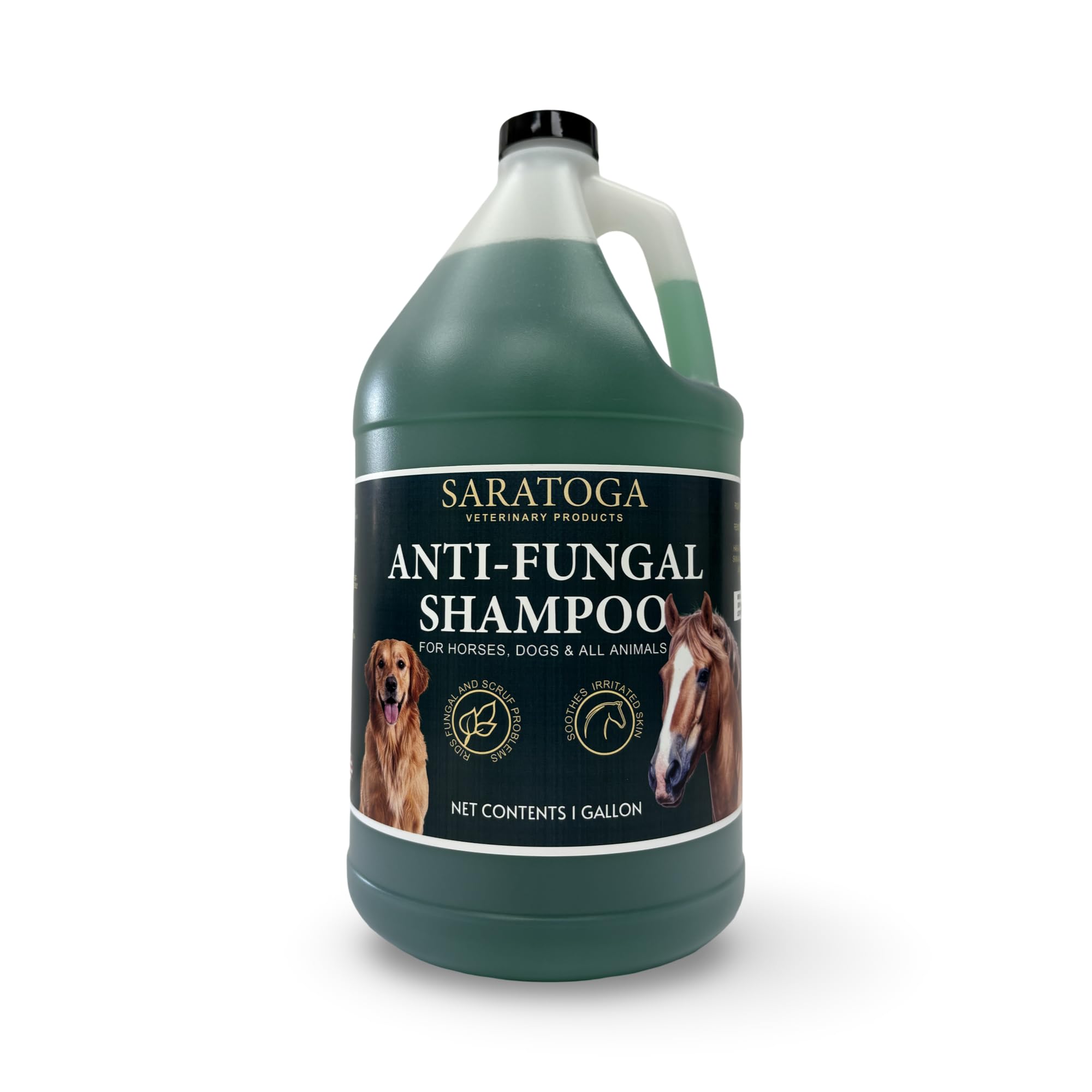
The Saratoga Veterinary Antifungal Shampoo uses chloroxylenol as its active antifungal agent, a compound that targets deeply embedded fungal particles and provides ongoing protection between washes. This is an effective alternative for horses that do not respond well to azole-based treatments like ketoconazole or miconazole.
The one-gallon bottle is the standout feature here — it delivers the lowest cost per wash among all products reviewed, making it the clear choice for barns with multiple horses or for owners treating large draft breeds that require significant product per bath. Users report that a little goes a long way when mixed with water, and the aloe vera scent is pleasant and non-irritating.
The formula also functions as a conditioner, adding a show-ready shine to the coat while delivering its antifungal benefits. For owners who want both treatment and cosmetic results in a single product, this gallon-sized shampoo is hard to beat on value.
Why it’s great
- Gallon size provides exceptional value for multi-horse barns
- Chloroxylenol targets fungal particles that azoles may miss
- Dual antifungal and conditioning action for show-ready coats
Good to know
- Some users find the formula thinner than expected
- Chloroxylenol may not be as effective as ketoconazole for yeast-heavy infections
6. E3 Antifungal Ketoconazole and Thymol Skincare Shampoo

The E3 shampoo takes a skincare-forward approach by fortifying the formula with Nano vitamins A, C, E, and F. These micronized vitamins are designed to penetrate the skin layers more effectively than standard vitamin additives, delivering nutrients directly to the site of infection to support healing from within the tissue.
The active ingredients include ketoconazole for antifungal action and thymol, a natural compound with antimicrobial properties. Users report that it works well for bug bites and surface-level skin buildup, and that it helps restore dapples on horses whose coats had dulled due to fungal irritation. The unscented formulation is a plus for horses that react to artificial fragrances.
At 8 fluid ounces, this is a smaller bottle than most competitors, so it is best suited for spot treatments or for smaller horses and ponies rather than full-body baths on large warmbloods or drafts. The gel consistency lathers well and rinses cleanly without leaving residue.
Why it’s great
- Nano vitamin fortification supports skin healing at the cellular level
- Unscented formula avoids fragrance-related skin reactions
- Ketoconazole and thymol provide dual antifungal action
Good to know
- 8-ounce bottle is small for full-body washes on large horses
- Some users report needing supplemental products for stubborn hot spots
7. KetoWELL Topical Shampoo for Dogs, Cats and Horses

KetoWELL delivers the same 2% ketoconazole concentration found in far more expensive veterinary shampoos, making it the most accessible entry point for horse owners who need an effective antifungal wash without a premium price tag. The 16-ounce bottle provides enough volume for multiple full-body baths, and the paraben-free formulation is gentle enough for weekly use.
Users report dramatic results — full resolution of scabby spots, hair loss, and itching after just two to three washes over a two-week period when used with the recommended 5-to-10-minute contact time. While the marketing emphasizes use for dogs, the formula is equally effective for horses, and the conditioning agents leave the coat soft and shiny.
The main caveat is packaging: multiple customers have reported that the cap can loosen during shipping, resulting in leakage. This is a fulfillment issue rather than a product quality issue, but it is worth noting for the first purchase. Once you have the bottle in hand, the performance is comparable to mid-range alternatives at a lower cost.
Why it’s great
- Full 2% ketoconazole at the most accessible price point
- 16-ounce bottle provides good volume for multiple washes
- Paraben-free and gentle enough for regular use
Good to know
- Shipping cap can loosen and cause leakage in transit
- Labeled primarily for dogs — requires buyer confidence for equine use
FAQ
How often can I bathe my horse with antifungal shampoo?
What is the difference between ketoconazole and chlorhexidine for horses?
Can I use human antifungal shampoo on my horse?
Final Thoughts: The Verdict
For most users, the best antifungal shampoo for horses winner is the Truseb Ketoconazole and Chlorhexidine Shampoo because its 2% ketoconazole and 1% chlorhexidine dual-action formula addresses both fungal and bacterial components of equine skin infections in a gentle, soap-free base. If you need a sprayable option that stays on tricky areas like the lower legs, grab the Vetericyn FoamCare. And for multi-horse barns where cost per wash matters most, nothing beats the gallon-sized Saratoga Veterinary Antifungal Shampoo.