
A dead battery at the dock after a rainstorm. A soggy bilge that’s one clog away from swamping your boat. That’s the gamble you take with a manual bilge pump or a failing float switch. The right mechanical float switch eliminates that worry, turning your pump into a silent sentinel that activates the moment water hits the hull — no thinking, no forgetting, no wading out in the dark to flip a switch. But not all switches are built to survive years of vibration, fuel fumes, and saltwater creep. The difference between a switch that fires every time and one that sticks open or closed comes down to internal design, amp rating, and how well the housing seals against moisture.
I’m Min — the co-founder and writer behind Gadgets Feed. I’ve spent countless hours cross-referencing ampacity charts, wire gauge specs, and real-world corrosion reports across dozens of bilge pump float switch product listings and customer testimonies to separate the switches that actually perform from those that fail at the worst possible moment.
Whether you’re rewiring an old runabout or outfitting a new offshore vessel, choosing the right bilge pump float switch means balancing water-level activation height, current handling, and long-term reliability against the specific conditions of your bilge environment.
How To Choose The Best Bilge Pump Float Switch
A bilge pump float switch is a low-stakes item until it fails. The wrong choice can mean a pump that never turns on, or one that runs continuously until it drains your battery. Focus on the internal mechanism, current capacity, activation depth, and environmental sealing.
Internal Mechanism: Mechanical vs. Electronic vs. Mercury-Free
Mercury switches are banned in many regions and are rapidly disappearing. Modern mechanical switches use either a rolling steel ball that tips a micro-switch or a pivoting arm with a magnetic reed. Rolling-ball designs like the Johnson Pump AS888 have no pivot seals to swell or leak, making them inherently more resistant to saltwater intrusion. Pivot-arm switches like the Attwood 4202-7 are more compact and can mount on angled surfaces up to 24 degrees, but the seal around the pivot shaft is a potential failure point if the bilge is particularly grimy.
Amp Rating and Wire Gauge
The switch must handle the start-up surge of your pump. A 12-amp rated switch (like the Attwood) is fine for smaller 500-750 GPH pumps. For high-capacity pumps drawing 15-25 amps, you need a switch rated for that load, such as the SEAFLO 03-Series with 25A at 12V. If the switch can’t handle the current, the contacts pit and weld shut. Use 14 AWG or thicker marine-grade tinned wire; the thin 18 AWG wires on some budget switches introduce voltage drop that reduces pump output significantly over a long run.
Activation Height and Dead Band
The activation height is the water level at which the switch closes and turns the pump on. The dead band is the difference between the on-level and off-level. A switch that turns on at 1.77 inches and off at 0.79 inches (like the SEAFLO) provides efficient water removal without short-cycling. A switch that requires the water to rise higher before activating allows more water to accumulate in the bilge, which is fine for larger vessels but may be undesirable in smaller boats where every inch of freeboard matters.
Quick Comparison
On smaller screens, swipe sideways to see the full table.
| Model | Category | Best For | Key Spec | Amazon |
|---|---|---|---|---|
| Rule 40A Rule-A-Matic Plus | Premium | Maximum reliability in harsh marine conditions | Stainless steel housing, 0.5 in dead band | Amazon |
| SEAFLO 03-Series Heavy Duty | Mid-Range | High-amp pumps and larger vessels | 25A at 12V, 4-year warranty | Amazon |
| Johnson Pump 26014 AS888 | Mid-Range | Mercury-free, durable rolling-ball design | 15A max, no pivot seals | Amazon |
| Attwood 4202-7 | Mid-Range | Compact fit on angled bilge surfaces | 12A at 12V, mounts up to 24° angle | Amazon |
| Seachoice Universal Series | Budget | Simple automatic conversion for 6-36V systems | Non-corrosive ABS, 36V max | Amazon |
| PumpSpy TS-100 Tethered Float | Premium | Sump pump automation with piggyback plug | 10A at 120VAC, 10-ft cord | Amazon |
| Rule 2000 GPH Bilge Pump 12V | Premium | Integrated pump + switch for high-volume applications | 2000 GPH, anti-airlock design | Amazon |
In‑Depth Reviews
1. Rule 40A Rule-A-Matic Plus Bilge Pump Float Switch

The Rule 40A is the benchmark that other float switches are measured against. Its stainless steel housing and fully integrated impact-resistant cover are purpose-built for the corrosive, debris-laden environment of a marine bilge. The sealed switch mechanism is moisture-tight and ignition-protected, meaning it won’t spark and ignite fuel vapors — a critical safety feature for any inboard engine compartment.
What separates the 40A from lesser switches is its dead band performance. The switch activates quickly when water rises and shuts off when the bilge is virtually dry — around 0.5 inches of residual water — preventing the pump from running continuously and draining the battery. It works with 12V, 24V, and 32V systems, making it a versatile choice for boats that run higher-voltage house banks. The compact footprint (4.87 x 2.75 x 2.75 inches) fits easily into tight bilge spaces where larger switches won’t mount.
Installation is straightforward with the included hardware, and the 36-inch pigtail wires are long enough for most installations without splicing. The only downside is the premium price point, but given that a switch failure can sink a boat, the extra cost is a form of cheap insurance that experienced mariners happily pay.
Why it’s great
- Stainless steel housing resists corrosion better than any plastic switch
- Shuts off at extremely low water level to prevent battery drain
- Ignition-protected for safety in fuel-vapor environments
Good to know
- Premium pricing compared to budget alternatives
- Some users report occasional hang-up if debris accumulates around the float
2. SEAFLO 03-Series Heavy Duty Bilge Pump Float Switch

SEAFLO’s 03-Series offers an uncommon balance of high current capacity and affordability. With a 25-amp rating at 12V, it can drive the largest 2000+ GPH pumps directly without needing an intermediate relay. This makes it a strong choice for bigger boats with high-capacity bilge systems, or for industrial applications where manual pump control is not feasible. The ABS housing is ultrasonic-welded, which means no gaskets to fail and no screws to corrode — the case is effectively sealed as one solid piece.
The activation points are clearly specified: the switch turns the pump on at 1.77 inches of water and off at 0.79 inches. This 0.98-inch dead band is wide enough to prevent rapid cycling but narrow enough to keep the bilge genuinely dry. The 14 AWG wire leads are thicker than the 18 AWG found on many competitors, which reduces resistance and voltage drop over longer runs. Users report that it works reliably where other switches, particularly the Rule brand’s lower-tier models, have failed within days or weeks.
The IP54 international protection rating means it’s protected against splashing water and dust ingress, though it’s not rated for submersion. Keep the connection points above the expected water level. SEAFLO offers a 4-year limited warranty when registered, which is double the industry standard and indicates confidence in their ultrasonic welding process.
Why it’s great
- 25A rating handles large pumps without a relay
- Ultrasonic-welded ABS shell prevents water intrusion
- Generous 4-year warranty backs the product
Good to know
- Not fully submersible despite the IP54 rating
- Quick-connect terminals may not be as secure as screw terminals for marine use
3. Johnson Pump 26014 AS888 Automatic Float Switch
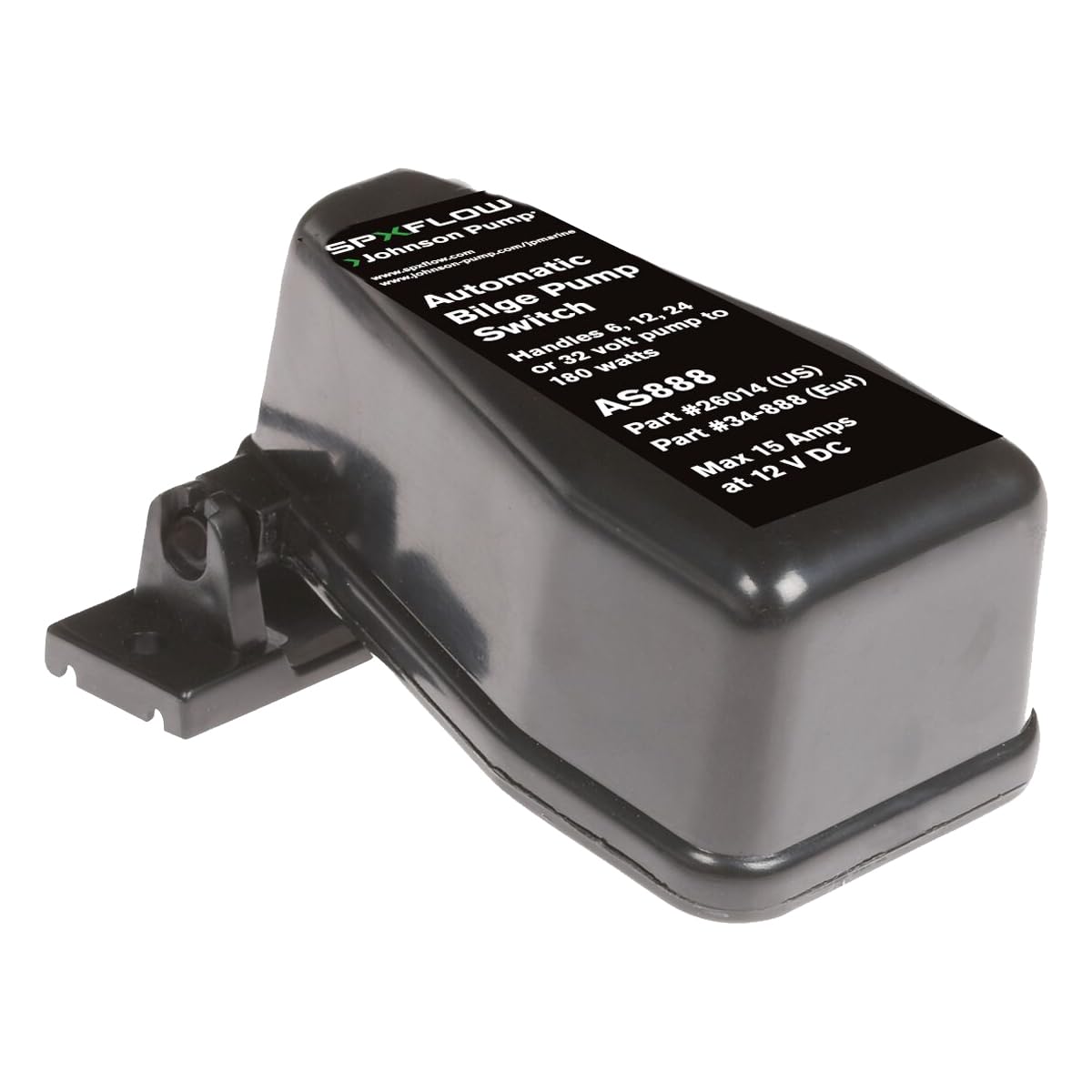
The Johnson Pump AS888 stands out because of its clever internal mechanics. Instead of a pivoting arm that relies on a shaft seal (which can swell and stick in saltwater), this switch uses a rolling steel ball inside a plastic chamber. As the float tips, the ball rolls against a micro-switch, making the connection. There are no pivot seals to leak, no magnetic reeds to fail, and the wires exit through a potted base that prevents moisture from tracking along the conductors into the switch.
The 15-amp max rating is sufficient for most 500-1000 GPH pumps. For heavy-duty pumps drawing more current, the switch can be wired to a 40-amp relay, which several users have done successfully. The long wire leads make splicing easy even in cramped bilge spaces. Customers report that this switch regularly outlives Rule switches, with multiple accounts of 5-10 years of service in saltwater without failure. One reviewer noted that it survived 10 years in a saltwater bilge, outlasting three different pumps.
The design does have quirks. The float must nearly touch the bilge floor to turn the pump off, so mounting angle is critical — users recommend elevating the screw side slightly to ensure complete shut-off. The wire attachment method is a bit fiddly; some owners drill out the holes and cut the slots deeper for a more secure fit. But these are minor modifications for a switch that delivers peace of mind far beyond its price class.
Why it’s great
- No pivot seals to swell or leak in saltwater
- Proven longevity of 5-10+ years in marine environments
- Can be wired with a relay for high-current pumps
Good to know
- Mounting angle must be precise for reliable shut-off
- Wire attachment slots may need slight modification for a secure fit
4. Attwood 4202-7 Float Switch

The Attwood 4202-7 is the go-to replacement switch for countless OEM installations, particularly on Sea Ray and other production boats where space is tight. Its low-profile design (only 1.375 inches tall) fits where taller switches won’t, and it can be mounted on surfaces angled up to 24 degrees from horizontal — essential for V-hull bilges where the mounting surface is never perfectly flat. The sealed mechanical switch is ignition-protected and resists moisture and fuel fumes.
The switch actuates the pump at 2 inches of water level, which is slightly higher than some competitors. This is fine for most hulls, but if your bilge fills quickly, you may want a switch that activates sooner. The 36-inch wire leads are adequate for most installations, though some installations may require splicing. The maximum current rating is 12 amps at 12V or 6 amps at 24V, which limits switch usage to pumps drawing 12 amps or less. Users report that when properly mounted, these switches last 10-15 years before requiring replacement.
One common issue is the need to shim the switch for proper pump shut-off. Because the switch’s standing water level is relatively high, the float may not drop far enough to break the circuit if the bilge floor is uneven. Adjusting the mounting angle with a small shim is usually all it takes. Overall, this is a proven, inexpensive switch that would be the top pick if not for the SEAFLO’s higher amp rating and the Johnson’s superior rolling-ball durability.
Why it’s great
- Low-profile design fits tight bilge spaces
- Certified for mounting on surfaces up to 24° angle
- Long service life when installed correctly
Good to know
- 12A max rating limits use with high-capacity pumps
- May require shimming for proper pump shut-off
5. Seachoice Universal Series Automatic Marine Bilge Pump Float Switch
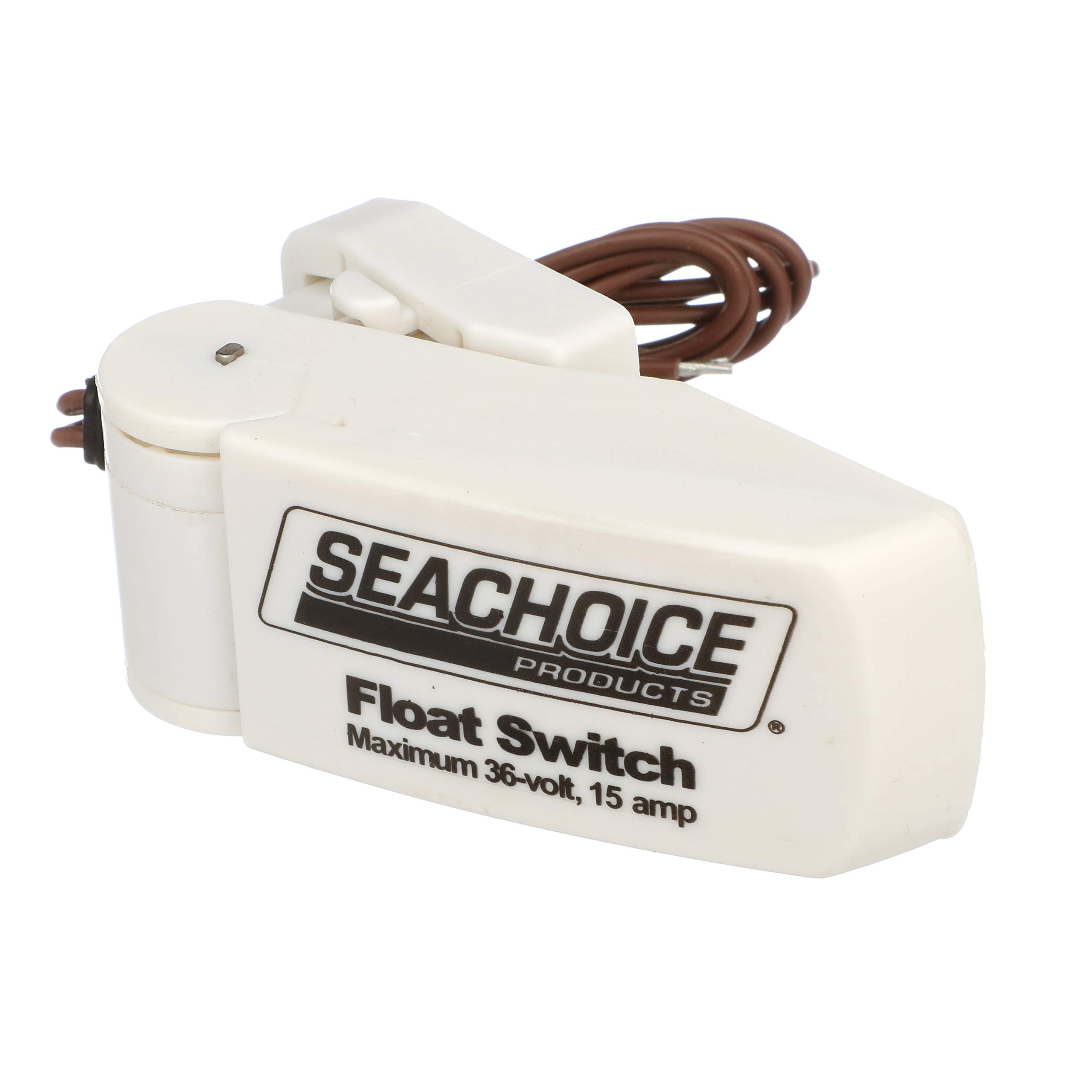
Seachoice’s Universal Series is the entry-level option that gets the job done without breaking the bank. Its wide voltage range — 6 to 36 volts — makes it unusually versatile, working on everything from tiny 6V bilge systems on small skiffs to 36V house banks on larger vessels. The non-corrosive ABS plastic construction is lightweight (0.25 pounds) and won’t rust, though it lacks the impact resistance of the stainless steel Rule or the ultrasonic-welded SEAFLO.
The two-year warranty is standard for this price tier, and the included components are just the switch and mounting hardware — no extra wire or connectors. The 2-inch lift height is low, meaning the switch activates with a relatively small amount of water. Customer reports are mixed: some users report flawless operation for years, while others say the switch failed within months, running the pump at half power or not at all until manually lifted. This variability in quality control is typical of budget-tier switches, and it’s the main reason this unit sits lower in the rankings.
For a weekend fisherman who keeps the boat on a trailer and wants automation on a shoestring, the Seachoice is adequate. For anyone whose boat lives in the water or who relies on the switch to prevent swamping, the extra money for a more reliable unit is money well spent. The marine-grade tinned wire with PVC jacket is a nice touch at this price point, helping to resist corrosion in the bilge.
Why it’s great
- Works on 6V to 36V systems for wide compatibility
- Lightweight ABS plastic won’t rust
- Affordable entry point for basic automation
Good to know
- Reliability is inconsistent across units
- ABS housing is less durable than stainless steel or welded plastic
6. PumpSpy Sump Pump Tethered Universal Float Switch

PumpSpy’s tethered float switch is designed primarily for sump and sewage pumps, but its quality construction makes it a viable option for certain bilge applications, particularly in larger vessels where the switch can be mounted externally on the discharge pipe. The gold-plated electrical connections resist pitting and wear far better than standard brass or tin-plated contacts, extending switch life in damp environments. The 10-foot cord provides plenty of reach for deep bilges or complex routing.
The switch is normally open and rated for 10 amps at 120VAC, which means it’s best used with an intermediate relay for 12V bilge pumps unless the pump draws less than 10 amps. The piggyback plug creates a universal connection that simplifies wiring, but this feature is really designed for AC-powered sump pumps, not DC marine pumps. If you’re using it on a boat, you’ll likely cut off the plug and hardwire it. The included hose clamp and mounting clamp make installation straightforward on any pipe or strut.
One user caution: the switch is very touchy. It must be fully upright or fully inverted to trigger. If tethered too loosely, it may not turn off completely, leading to a continuously running pump. Secure it low in the bilge so the slightest water rise flips it completely. The molded seam can also catch solids in dirty bilges, so this switch is best suited for relatively clean water applications.
Why it’s great
- Gold-plated contacts resist corrosion and arcing
- Very long 10-foot cord for flexible installations
- Includes hose clamp and mounting hardware
Good to know
- Designed for 120VAC sump pumps, not ideal for 12V bilge systems
- Fussy tether adjustment required for reliable shut-off
7. Rule 2000 GPH Bilge Pump 12V

While this is technically a complete bilge pump rather than a standalone float switch, the Rule 2000 is included here because many buyers will pair it with one of the switches above, and understanding its specs helps you choose the right companion switch. The 2000 GPH pump moves water aggressively — 33 gallons per minute — making it suitable for larger vessels or as a primary pump in a boat with a known leak. The anti-airlock design prevents the pump from losing prime, a common failure mode in high-output pumps.
The pump is submersible and constructed with corrosion-resistant materials, including stainless steel components. The snap-lock strainer makes cleaning quick, which is essential because a clogged strainer will destroy any pump’s performance. The 3-year warranty is better than average and reflects Rule’s confidence in their motor and seal design. Users consistently report these pumps lasting 20-30 years, with one reviewer noting his 30-year-old pump was still going strong.
For optimal automation, pair this pump with the Rule 40A float switch reviewed above. The combination provides ignition protection, a stainless steel housing for both components, and the ability to wire them in series with a manual override switch. The pump draws around 15 amps at full load, which is within the 40A’s capability, but using a dedicated relay is still recommended for long wire runs to prevent voltage drop.
Why it’s great
- Extremely high flow rate moves water fast
- Anti-airlock design ensures reliable priming
- Proven durability with 20-30 year service life
Good to know
- Draws 15A at full load, requiring a matching switch or relay
- High price reflects premium construction
FAQ
What is the difference between a mechanical float switch and an electronic bilge pump switch?
Can I use a sump pump float switch in my boat’s bilge?
How often should I test my bilge pump float switch?
What wire gauge should I use for a bilge pump float switch?
Final Thoughts: The Verdict
For most users, the bilge pump float switch winner is the Rule 40A Rule-A-Matic Plus because its stainless steel housing and tight dead band deliver unmatched reliability in the harsh marine environment. If you need high current handling for a large pump without breaking the bank, grab the SEAFLO 03-Series. And for a mercury-free, long-lasting rolling-ball design that eliminates pivot seal failures, nothing beats the Johnson Pump AS888.