
Standing on concrete for hours is punishing. The unyielding surface transmits shock straight up through your heels, knees, and lower back, turning a simple task like cooking dinner or working at a standing desk into an endurance event. An effective anti-fatigue mat creates a forgiving barrier that absorbs impact and encourages subtle micro-movements, keeping your body from locking up.
I’m Min — the co-founder and writer behind Gadgets Feed. My research for this guide involved cross-referencing hundreds of customer experiences and analyzing the foam densities, thickness metrics, and surface textures that actually make a difference on hard concrete subfloors.
Whether you’re in a garage workshop, a kitchen with a concrete slab, or an industrial workspace, the right anti fatigue mat for concrete floors can transform your day from a source of pain into a sustainable work session.
How To Choose The Best Anti Fatigue Mat For Concrete Floors
Concrete is one of the most demanding surfaces for an anti-fatigue mat. Unlike carpet or wood, it offers zero natural give. Here are the key factors that separate a mat that truly works from one that just sits on the floor.
Core Material and Density
Not all foam is created equal. High-density memory foam (like that used in the ComfiLife) provides a slow-sinking support that contours to your feet. Polyurethane (PU) foam offers a firmer, more resilient feel that resists bottoming out under heavier loads. Rubber mats, while thinner, provide excellent durability and a different kind of spring-back that some industrial users prefer. For concrete, you generally want a material that won’t compress completely under your weight — the mat should still offer rebound after hours of standing.
Thickness and Beveling
Thickness directly correlates with the amount of shock absorption. A half-inch mat is a basic barrier, but for concrete, three-quarters of an inch to a full inch is the sweet spot. However, a thick mat with square edges is a tripping hazard. Beveled edges that taper smoothly to the floor are non-negotiable for safety, especially in high-traffic areas like kitchens or workshops. The bevel also prevents the mat from curling up over time.
Surface Texture and Grip
A smooth mat on a smooth concrete floor can become a slip-and-slide hazard. Look for a textured top surface (like the Diamond Tred design from NoTrax) that provides grip for your shoes or bare feet. The bottom of the mat is equally critical — a non-slip rubber backing or grippy foam base is essential to keep the mat from migrating across the concrete as you move.
Quick Comparison
On smaller screens, swipe sideways to see the full table.
| Model | Category | Best For | Key Spec | Amazon |
|---|---|---|---|---|
| iPrimio 1-Inch Thick | Memory Foam | Maximum Cushioning | 1 inch thick / 36″x24″ | Amazon |
| Extreme Standing Mat 2’x3′ | Industrial Rubber | Heavy-Duty Workshop | 1 inch thick / Safety Stripes | Amazon |
| FEATOL PU Foam Mat | Polyurethane | Resilient Support | 0.9 inch thick / PU leather top | Amazon |
| ComfiLife 3/4 Inch | Memory Foam | Kitchen & Desk Comfort | 0.75 inch thick / High-density foam | Amazon |
| Mount-It! Gel Foam | Rubberized Gel | Portable & Compact | 0.75 inch thick / Carry handle | Amazon |
| NoTrax Diamond Tred | PVC Foam | Large Coverage Areas | 0.38 inch thick / 3’x12′ runner | Amazon |
| New Star Foodservice | Commercial Rubber | Grease-Prone Garages | 0.38 inch thick / Drainage holes | Amazon |
In‑Depth Reviews
1. iPrimio Anti Fatigue Standing Mat, 1-inch Thick

The iPrimio mat is the benchmark for cushioning on concrete. At a full one-inch thickness, it uses an air-soft foam core that feels plush underfoot without sacrificing support. Users weighing over 230 pounds report that they never bottom out, which is a critical test for any mat meant for hard surfaces. The beveled edges are seamless and low-angle, reducing the tripping risk that plagues thicker mats.
The size — 36 by 24 inches — provides enough real estate for comfortable movement at a standing desk or kitchen sink without being obtrusive. The non-toxic, phthalate-free construction is a welcome assurance for indoor use. Customer reviews consistently highlight its durability over multiple years, with no signs of foam disintegration or edge curling even after prolonged use on concrete and tile.
One important consideration is the adjustment period. The substantial height (one inch) can feel unusual at first, particularly if you are transitioning from a thinner mat or bare floor. Some users also note that the mat’s thick profile makes it slightly heavier to roll up for storage, though it does not require any break-in period to lay flat.
Why it’s great
- Full 1-inch thickness provides unmatched shock absorption on concrete
- Beveled edges lay perfectly flat with zero curling
- Durable foam shows no wear even after several years of daily use
Good to know
- The 1-inch height takes a short adjustment period to get used to
- Heavier to transport compared to thinner, lighter mats
2. Extreme Standing Mat 2’ x 3’ Black 1” Thick
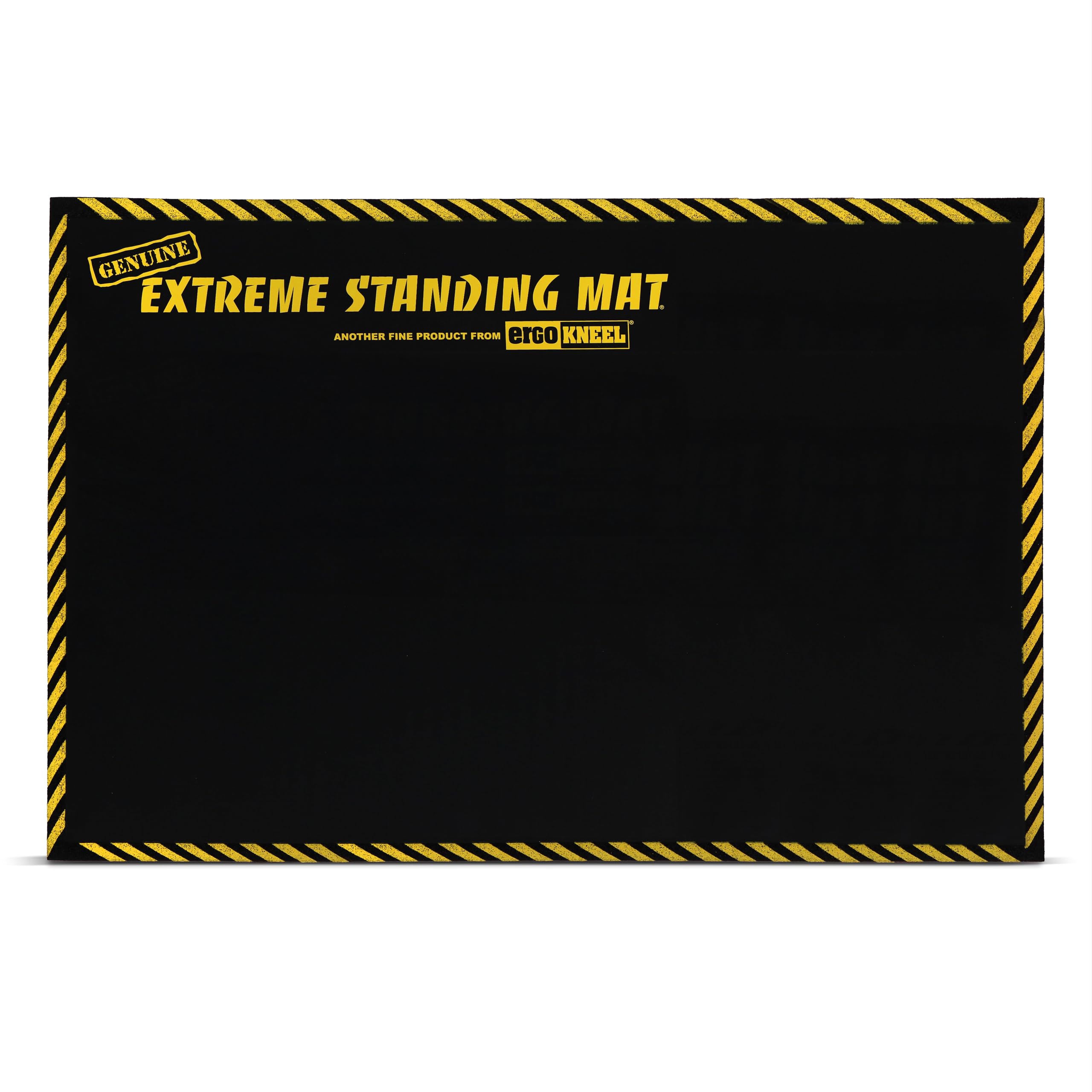
This mat from Working Concepts is engineered for the harshest industrial environments. At one inch thick with a rubber construction, it provides the same vertical cushioning as the iPrimio but with a much firmer, more resilient feel that holds up against oil, grease, and heavy foot traffic. The high-visibility safety yellow stripes are not just aesthetic — they serve a real safety function in dimly lit workshops and garages.
An unusual and valuable spec is the dielectric testing to 56kV, meaning this mat offers electrical insulation for added safety around power tools. Customer accounts confirm it survives welding sparks, metal shavings, and kneeling for extended periods without degrading. Multiple buyers report the mat lasting over a decade with no changes to its texture or cushioning properties. It also encourages subtle movement which promotes circulation during long standing sessions on concrete.
The main drawback for some users is the yellow and black color scheme, which one reviewer described as resembling a crime scene tape. It is visually utilitarian and may not suit a home kitchen or living room aesthetic. Additionally, the mat is relatively heavy for its size, making it less portable than foam alternatives.
Why it’s great
- Dielectrically tested to 56kV for electrical safety in workshops
- Extremely durable rubber construction lasts over a decade
- High-visibility safety stripes enhance workplace safety
Good to know
- Yellow stripes give it a strictly industrial appearance
- Heavier than foam mats, making repositioning less convenient
3. FEATOL Anti Fatigue Mat Industrial

The FEATOL mat uses a 0.9-inch thick polyurethane core, which offers a distinct feel compared to memory foam. PU foam is denser and more resilient — it snaps back quickly after compression rather than slowly returning to shape. This gives the mat a firmer, more supportive platform that is particularly effective for heavier individuals or those who shift weight frequently. The PU leather top layer adds a smooth, puncture-resistant surface that is easy to wipe clean.
The yellow border safety strip provides clear visual warning, which is valuable in busy workshops or garage environments. The bottom features a non-slip design with seamless, low-angle beveled edges that grip the floor securely. Customer reviews specifically mention it reducing back and foot pain on concrete floors, with one reviewer using it for pop-up events on hard surfaces. The mat also arrives perfectly flat with no curling or odor issues reported.
The biggest complaint involves the black PU coating, which some users report transferring onto the bottom of shoes and tracking onto other surfaces. This appears to be more pronounced in the initial weeks of use. The surface also shows scuff marks more readily than textured or rubber mats, though these can be wiped off.
Why it’s great
- Dense PU foam offers resilient support that resists bottoming out
- PU leather top is puncture-resistant and easy to clean
- Safety yellow border improves visibility in workspaces
Good to know
- Black coating may transfer onto shoes during initial use
- PU surface shows scuffs more easily than textured rubber mats
4. ComfiLife Anti Fatigue Floor Mat – 3/4 Inch Thick

The ComfiLife mat strikes a strong balance between comfort and cost. Its 3/4-inch high-density memory foam core provides a noticeably cushioned feel that many users describe as comfortable for hours of standing in front of a sink or at a standing desk. The memory foam conforms to the shape of your feet, creating a personalized support zone that reduces pressure points. The stain-resistant top layer and non-slip rubber backing keep the mat secure on concrete floors.
The 20 by 32 inch size is a practical middle ground — larger than compact travel mats but smaller than industrial floor covers. It fits well under a standard standing desk or in front of kitchen counters without protruding into walkways. Customer reviews highlight its stability, noting that it does not slide even when stepped on at the edge. Multiple users also report no cracking or foam degradation over time, unlike some cheaper alternatives they had tried previously.
One limitation is that the mat can be kicked out of position if you catch the edge with your foot while walking past. It is not as heavy as rubber industrial mats, so it can shift if subjected to lateral force. Additionally, users caution against using a vacuum cleaner with a rotating brush head on the mat, as it can damage the foam surface.
Why it’s great
- High-density memory foam conforms to feet for personalized support
- Non-slip rubber backing stays firmly in place on concrete
- Stain-resistant surface is easy to maintain with a damp cloth
Good to know
- Can be displaced if the edge is accidentally kicked
- Not suitable for vacuuming with rotating brush attachments
5. Mount-It! Anti Fatigue Floor Mat 18″x22″

The Mount-It! mat is purpose-built for mobility. Measuring just 18 by 22 inches with an integrated carry handle, it is designed for users who need to move their anti-fatigue mat between locations — from a standing desk to a kitchen counter to a garage workspace. Despite its compact footprint, it maintains a respectable 0.75-inch thickness made from rubberized gel foam that offers a soft, supportive feel underfoot.
The beveled edges and anti-slip top and bottom surfaces ensure safety, while the water-resistant and stain-resistant construction makes it suitable for varied environments. Customer reviews specifically mention using it for trade show demos, arcade gaming, and drink demonstrations where portability is the main requirement. The mat rolls up easily and the handle makes one-handed transport possible.
The primary trade-off is the smaller surface area. At 18 by 22 inches, it provides just enough room for both feet to stand side by side, but you cannot take steps or shift your stance significantly without stepping off the mat. Some users also note that the mat can slide on certain floor surfaces despite the anti-slip liner, particularly on low-pile carpet rather than concrete.
Why it’s great
- Integrated carry handle makes it truly portable between workspaces
- Rubberized gel foam provides good cushioning at a compact size
- Beveled edges and anti-slip surfaces enhance safety during transport
Good to know
- Small surface area limits movement to a fixed standing position
- May require a thin grip underneath for extra stability on some floors
6. NoTrax 418 Diamond Tred 3′ x 12′ Anti Fatigue Mat
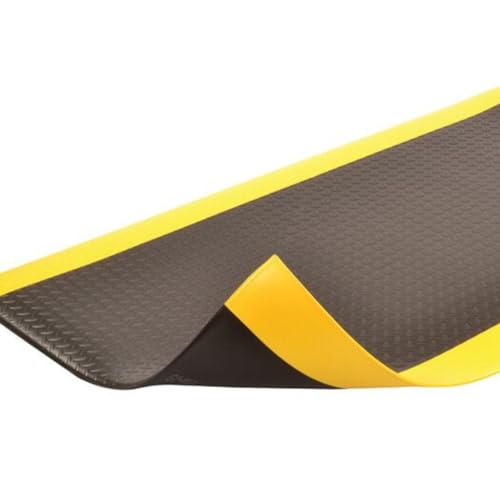
When you need to cover a long stretch of concrete floor — such as a parts counter, assembly line, or kitchen runner — the NoTrax Diamond Tred delivers in a 3-foot by 12-foot roll. The closed-cell PVC foam construction provides insulation against cold concrete floors while alleviating leg and back discomfort. The diamond-textured top surface creates a slip-resistant platform that is particularly useful in commercial kitchens or workshop aisles.
The beveled edges on all four sides ensure a smooth transition from the mat to the floor, reducing tripping hazards even in high-traffic areas. The surface pattern is molded directly into the foam base, which prevents cracking and peeling that can occur with laminated mats. Customer reviews note that it is lightweight enough to sweep and mop easily, and the memory foam bounces back from furniture indentations left by heavy machinery or cabinets.
The primary consideration is thickness. At 0.38 inches, this mat is significantly thinner than the one-inch options. While it provides meaningful relief compared to bare concrete, it does not offer the deep-cushion comfort of thicker foam or rubber mats. It is best suited for scenarios where the priority is covering a large area with a low-profile solution rather than maximum shock absorption.
Why it’s great
- Generous 3×12 foot coverage for large work areas or runners
- Diamond textured surface provides excellent slip resistance
- Lightweight and easy to clean with a sweep or mop
Good to know
- Thinner profile (0.38 inch) offers less cushioning than thick foam mats
- Some units may arrive with manufacturing defects like bubbles
7. New Star Foodservice Commercial Grade Anti-Fatigue Mat
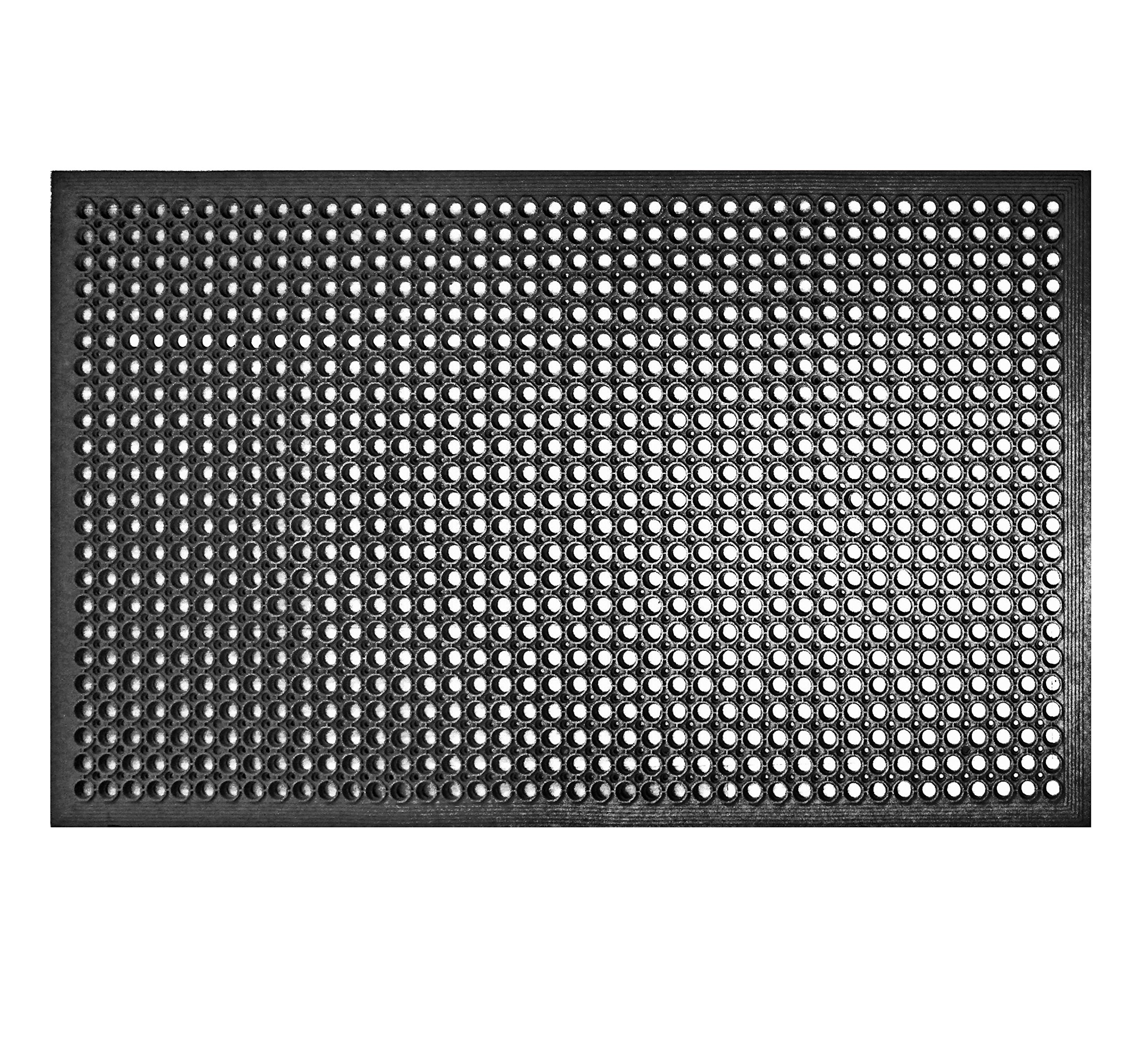
The New Star Foodservice mat is built specifically for environments where grease, oil, and liquid spills are a daily reality. Its commercial-grade rubber construction features drainage holes that allow fluids to pass through, keeping the standing surface clean and dry. This makes it a top choice for restaurant kitchens, auto body shops, and mechanic garages where a solid foam mat would become a slip hazard and a sanitation issue.
Measuring 36 by 60 inches, it provides a large standing area for workstations and assembly lines. The 0.38-inch profile is low enough to avoid tripping but still offers anti-fatigue properties that make a noticeable difference over a full shift on concrete. Customers report using it successfully in woodshops and outdoor applications like stair treads, where its rubber grip excels even in icy conditions. The mat is heavy at 16.4 pounds, which keeps it planted firmly in place.
The biggest drawback is the initial rubber odor, which several customers note is quite strong upon unboxing. This smell dissipates over time with ventilation. Additionally, the thin profile means it provides less cushioning than thicker memory foam mats, so users accustomed to a plush surface may find it firmer than expected. It is best understood as a functional tool for messy, high-traffic environments rather than a luxury comfort mat.
Why it’s great
- Drainage holes keep the surface dry and clean in wet environments
- Commercial-grade rubber resists grease, oil, and heavy wear
- Heavy weight ensures it stays in place on concrete floors
Good to know
- Strong rubber odor requires airing out after unboxing
- Thinner profile offers less cushioning than thick foam alternatives
FAQ
Is a thicker mat always better for concrete floors?
Can I use a kitchen anti-fatigue mat in my garage workshop?
How do I clean an anti-fatigue mat for concrete floors?
Final Thoughts: The Verdict
For most users, the anti fatigue mat for concrete floors winner is the iPrimio 1-Inch Thick Mat because it delivers the deepest cushioning available in a durable, non-toxic foam package with beveled edges that stay flat on concrete. If you want industrial-grade resilience for a workshop, grab the Extreme Standing Mat 2’x3′. And for large-area coverage where slip resistance is critical, nothing beats the NoTrax Diamond Tred.