
Choosing a mirrorless camera in 2025 means navigating a sea of sensors, autofocus systems, and stabilization claims far beyond simple megapixel counts. The real question isn’t just about resolution—it’s about which body delivers the specific mix of handling, lens ecosystem, and computational tools that match how you actually shoot.
I’m Min — the co-founder and writer behind Gadgets Feed. I spend hundreds of hours each year cross-referencing lab-level spec sheets, comparing real-world autofocus performance, and evaluating sensor behavior across Micro Four Thirds, APS-C, and full-frame models to find the actual differences that matter to photographers.
After analyzing over a dozen models across every major mount and price tier, these are the mirrorless bodies that earn their place on your shortlist. This is the definitive guide to finding the absolute best camera mirrorless for your specific needs and budget right now.
How To Choose The Best Camera Mirrorless
Every mirrorless camera is a compromise between sensor size, body weight, lens availability, and budget. Your job is to understand which trade-offs are acceptable for your shooting style. This section breaks down the four critical decisions you’ll face.
Sensor Size — Full-Frame vs. APS-C vs. Micro Four Thirds
Full-frame sensors (like the 45MP Canon EOS R5 or 24.2MP Sony a7 III) offer the best dynamic range, low-light performance, and depth-of-field control, but they require larger, heavier lenses. APS-C sensors (like the 26.1MP Fujifilm X-T30 III) strike a balance between size and image quality, while Micro Four Thirds sensors (found in the Panasonic G85 and OM System E-M10 Mark IV) prioritize compact, lightweight systems with exceptional in-body stabilization. Real-world testing shows that a well-exposed shot from a 20MP MFT sensor looks nearly identical to a full-frame shot in good light — the gap widens only in extreme shadows or at very high ISO.
Autofocus Performance — Phase Detection vs. Contrast Detection
Phase-detection autofocus (PDAF) — used in the Sony a7 IV, Canon EOS R5, and Nikon Z 6II — delivers fast, reliable subject tracking and works well in low light. Contrast-detection AF (CDAF), while accurate, hunts more in dim conditions and struggles with fast-moving subjects. Hybrid systems combine both, offering the best of both worlds. The Panasonic S5II marked a turning point by adding phase-detect AF to Panasonic’s traditionally contrast-detect lineup, making it a serious contender for action and video work. For bird, sports, or child photography, ensure your camera has PDAF with at least 273 AF points.
IBIS Stabilization — The Difference Between Sharp and Soft Handheld Shots
In-Body Image Stabilization (IBIS) is rated in “stops” — a 5-stop system allows you to shoot at 1/8 second instead of 1/250 second while keeping images sharp. The OM System OM-5 Mark II leads with 6.5 to 7.5 stops of stabilization, making handheld long exposures and smooth video possible without a tripod. The Panasonic Lumix G85 offers 5-axis dual stabilization that works with compatible lenses. Body-only stabilization becomes critical for adapted lenses, third-party glass, or prime lenses without built-in OIS. If you shoot frequently in low light without a tripod, prioritize a camera with at least 5 stops of IBIS.
Lens Ecosystem — Committing to a Mount
Your mirrorless camera body is just the entry point. The real long-term investment is the lens mount. Canon’s RF mount offers excellent optics but limited third-party support. Sony’s E-mount boasts the widest selection of native and third-party lenses (Zeiss, Sigma, Tamron, Samyang). Nikon’s Z mount has grown rapidly with excellent S-line glass and FTZ adapter compatibility for F-mount lenses. The L-Mount Alliance (Panasonic, Sigma, Leica) gives the S5II access to high-quality Sigma Art lenses. Micro Four Thirds, shared by Panasonic and OM System, offers the deepest lens library of any mirrorless system. Choose a mount with lenses that fit your budget and focal length needs for the next five years.
Quick Comparison
On smaller screens, swipe sideways to see the full table.
| Model | Category | Best For | Key Spec | Amazon |
|---|---|---|---|---|
| Sony Alpha 7 IV | Full-Frame | Hybrid stills/video pros | 33MP / 4K 60p 10-bit | Amazon |
| Canon EOS R5 | Full-Frame | High-res stills & 8K video | 45MP / 8K RAW | Amazon |
| Panasonic Lumix S5II | Full-Frame | Video-first hybrid shooters | 24.2MP / Unlimited 10-bit | Amazon |
| Sony a7 III | Full-Frame | Budget full-frame entry | 24.2MP / 693 AF points | Amazon |
| Nikon Z 6II | Full-Frame | Low-light & dual card slots | 24.5MP / Dual slots | Amazon |
| Canon EOS RP | Full-Frame | Travel & vlogging | 26.2MP / 4K UHD | Amazon |
| Fujifilm X-T30 III | APS-C | Film simulation & style | 26.1MP / 20 Film Sims | Amazon |
| OM System OM-5 Mark II | MFT | Weather-sealed travel | 20MP / 7.5-stop IBIS | Amazon |
| OM System E-M10 Mark IV | MFT | Budget-friendly entry | 20MP / 4.5-stop IBIS | Amazon |
| Nikon Z 30 | APS-C | Vlogging & streaming | 20.9MP / Flip screen | Amazon |
| Panasonic Lumix G85 | MFT | Budget hybrid & IBIS | 16MP / 5-axis IBIS | Amazon |
In‑Depth Reviews
1. Sony Alpha 7 IV Full-frame Mirrorless Camera

The Sony Alpha 7 IV strikes the most balanced compromise across the entire full-frame market. Its 33MP back-illuminated Exmor R sensor delivers noticeably more resolution than the 24MP class while keeping noise levels impressively low up to ISO 6400. The BIONZ XR processor handles the heavier data pipeline without lag, enabling 4K 60p 10-bit 4:2:2 recording that hybrid shooters will appreciate. Real-time Eye AF for humans, animals, and birds is consistently sticky even in challenging side-lighting scenarios where older PDAF systems lose lock.
Build quality feels refined compared to the a7 III — the grip is slightly deeper, the weather sealing is improved, and the fully articulating 3-inch touchscreen finally matches what competitors have offered. The 7K oversampling for 4K 30p footage produces noticeably cleaner detail than line-skipped or binned alternatives. Dual card slots (CFexpress Type A / SD) give working professionals redundancy for paid shoots, though CFexpress Type A cards remain expensive compared to standard SD media.
This camera rewards users who shoot both stills and video in equal measure. The S-Cinetone color profile inherited from Sony’s cinema line reduces grading time, while the 33MP sensor ensures landscape and portrait work doesn’t feel compromised. It’s the most versatile full-frame mirrorless under two thousand in current retail — the one body that asks the fewest compromises for general-purpose photography.
Why it’s great
- 33MP sensor provides meaningful resolution upgrade over 24MP competitors
- Excellent Real-time Eye AF tracks reliably in challenging lighting
- 4K 60p 10-bit with 7K oversampling at 30p for clean video
- Dual card slots with CFexpress Type A/SD compatibility
Good to know
- CFexpress Type A cards are expensive and less common
- Menu system still requires learning investment for full customization
- 4K 60p has a slight crop factor compared to Nikon Z and Canon R
2. Canon EOS R5 Mirrorless Camera

The Canon EOS R5 remains the reference point for hybrid performance in the full-frame segment three years after launch, and for good reason. Its 45MP stacked back-illuminated sensor paired with the DIGIC X processor delivers still image detail that rivals medium format territory when paired with RF L-series glass. The mechanical shutter bursts at 12 fps, while the electronic shutter reaches 20 fps — both with full autofocus tracking. Dual Pixel CMOS AF II covers approximately 100% of the frame with 1,053 AF points, using deep learning algorithms for subject detection on people, animals, and vehicles.
Video capabilities are genuinely overbuilt for a stills camera: internal 8K RAW at 29.97 fps, 4K up to 120 fps in all formats with autofocus active. The overheating concerns from early firmware releases have been largely addressed — in-camera 8K recording now comfortably exceeds 30 minutes at room temperature when the overheat protection is set to high. In-body image stabilization offers up to 8 stops of correction when paired with compatible RF lenses, making handheld half-second exposures consistently sharp.
The trade-off is battery life and price. The LP-E6NH battery yields around 650 shots per charge, well below the Sony a7 IV’s endurance. And the body-only cost places this firmly in pro territory. But for those who need maximum resolution, uncompromised video, and the best Canon color science in a mirrorless body, the R5 justifies every dollar of its premium positioning.
Why it’s great
- 45MP sensor captures extraordinary still detail with wide dynamic range
- 8K RAW and 4K 120 fps video capability
- 100% frame coverage Dual Pixel AF with deep learning tracking
- Up to 8 stops of IBIS with compatible lenses
Good to know
- Battery life on the lower side for full-frame at ~650 shots
- 8K recording triggers heat management after extended use
- Body-only cost is a significant investment without a lens
3. Panasonic Lumix S5II Mirrorless Camera
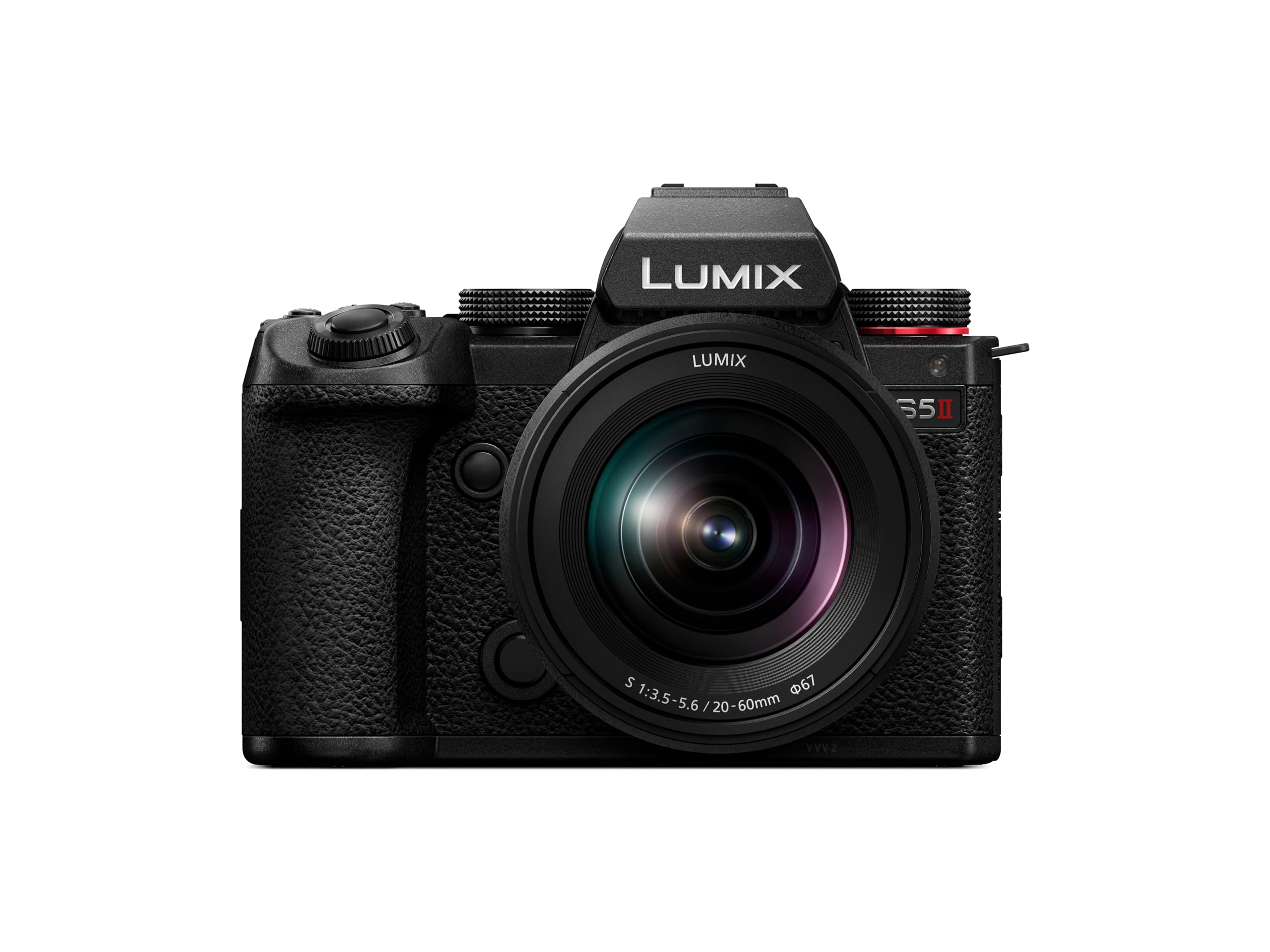
The Panasonic Lumix S5II is the most important mirrorless launch in the L-Mount ecosystem because it finally delivers phase hybrid autofocus — the single feature that kept Panasonic’s otherwise excellent S series from competing with Sony and Canon. The 24.2MP full-frame CMOS sensor now pairs contrast detection with phase detection points, giving reliable subject tracking and Eye AF that stays locked on moving subjects. The new Active I.S. technology uses gyro data combined with electronic stabilization to smooth out walking footage to gimbal-like levels, a real advantage for run-and-gun videographers.
Video specifications are class-leading for this price tier: unlimited 4:2:2 10-bit internal recording with no time limit thanks to a built-in cooling fan that keeps the sensor from overheating. The 14+ stop V-Log/V-Gamut capture provides extensive dynamic range for color grading, and the Real Time LUT function allows in-camera color grading without post-processing. The 20-60mm F3.5-5.6 kit lens is unusually wide for a standard zoom, offering genuine utility for real estate, architecture, and group shots.
The trade-off is a body that feels slightly boxy in hand, with a battery that drains faster than the Sony a7 IV — the high-performance stabilization and active cooling demand extra power. But for anyone prioritizing video features, color science, and unlimited recording in a full-frame body with the Sigma L-Mount lens ecosystem backing it up, the S5II is the most compelling option in its segment.
Why it’s great
- Phase hybrid AF finally matches Panasonic’s video prowess with reliable tracking
- Active I.S. delivers gimbal-like stabilization for walking video
- Unlimited 4:2:2 10-bit recording with internal fan for heat management
- 14+ stop V-Log and Real Time LUT for in-camera grading
Good to know
- Battery life is below average for full-frame, use a grip for long shoots
- Body design is functional but less ergonomic than competitors
- High ISO noise increases noticeably above 51,200
4. Sony a7 III Full-Frame Mirrorless Camera

The Sony a7 III is the camera that defined the affordable full-frame mirrorless segment when it launched, and it continues to hold relevance thanks to its well-rounded feature set and now significantly reduced retail price. The 24.2MP back-illuminated Exmor R sensor still delivers excellent dynamic range at 15 stops, clean files up to ISO 6400, and reliable autofocus across 693 phase-detection points covering 93% of the frame. The NP-FZ100 battery is the best in class among full-frame cameras — most users can shoot an entire wedding or day-long event on a single charge, something no Canon or Nikon full-frame rival can claim.
The trade-off is that the a7 III is now showing its age in video features. It maxes out at 4K 30p 8-bit with no 10-bit internal recording, and the menu system remains the cluttered, multi-tabbed interface that Sony has since improved. The 28-70mm f/3.5-5.6 kit lens is serviceable but optically soft at the edges compared to the RF 24-105mm or Nikon Z 24-70mm f/4. Still, the body itself offers outstanding value for photographers migrating from DSLRs who want full-frame depth of field and low-light capability without spending premium-tier money.
For stills-focused users who don’t need advanced video features, the a7 III body paired with a Sigma 24-70mm f/2.8 Art lens delivers professional-grade results at a fraction of the cost of a new Canon R5 or Nikon Z 8 setup. The massive E-mount lens ecosystem — spanning Sony, Sigma, Tamron, Samyang, and Zeiss — ensures you’ll find glass at any price point. This camera is the pragmatic choice for buyers who prioritize lens selection and battery life over the latest video specs.
Why it’s great
- Outstanding battery life for a full-frame mirrorless camera
- 15-stop dynamic range and clean ISO performance through 6400
- 693-point phase-detect AF covers 93% of the frame
- Unmatched E-mount third-party lens ecosystem
Good to know
- Video limited to 4K 30p 8-bit with no 10-bit option
- 28-70mm kit lens is optically soft at edges
- Menu system is less intuitive than newer Sony models
5. Nikon Z 6II Full-Frame Mirrorless Camera

The Nikon Z 6II is a refinement of the original Z 6 that fixes nearly every complaint early adopters had. The 24.5MP back-illuminated sensor shares the same excellent low-light performance as the original — delivering clean, detailed files at ISO 6400 that rival the Sony a7 III — but the dual EXPEED 6 processors now provide a 3.5x buffer depth increase for extended burst shooting at 14 fps. The dual card slots (CFexpress/XQD + UHS-II SD) give working photographers redundancy that the single-slot Z 6 lacked, making it viable for professional wedding and event work.
The Z mount itself remains one of the widest in the industry, with a 55mm inner diameter that allows Nikon to design optically superior lenses with less distortion. The S-line glass — particularly the Z 35mm f/1.8 S and Z 24-70mm f/2.8 S — delivers edge-to-edge sharpness that challenges Leica and Zeiss optics. The FTZ adapter allows seamless use of over 360 F-mount Nikkor lenses with full autofocus and VR compatibility, protecting older glass investments.
The Z 6II’s autofocus is reliable but not class-leading — subject tracking can drop focus on fast erratically moving subjects where the Sony a7 IV would maintain lock. The screen also does not flip forward for selfie monitoring, a limitation for vloggers. But for stills photographers who prioritize ergonomics, viewfinder quality (3.69M-dot OLED with 0.8x magnification), and tack-sharp Z glass, the Z 6II delivers an exceptionally refined shooting experience.
Why it’s great
- Excellent low-light performance with clean files at ISO 6400
- Dual card slots (CFexpress/XQD + SD) for redundancy
- Superb ergonomics and one of the best EVFs in the class
- Z mount optics are among the sharpest available
Good to know
- Subject tracking is not class-leading vs. Sony a7 IV
- No forward-facing screen for selfie or vlogging use
- Z mount lens selection smaller than Sony E-mount
6. Canon EOS RP + RF24-105mm Lens Kit

The Canon EOS RP remains the lightest and smallest full-frame mirrorless camera you can buy with an RF mount, tipping the scales at just 440g body-only. Combined with the RF 24-105mm f/4-7.1 IS STM lens, the entire kit weighs less than many APS-C setups from Sony or Fujifilm. The 26.2MP sensor delivers the wide dynamic range and beautiful color science Canon is known for, with Dual Pixel CMOS AF providing smooth and reliable phase-detection autofocus across 88% of the frame width.
The RF mount compatibility is the real draw here. You gain access to Canon’s excellent RF lens lineup — from the compact RF 35mm f/1.8 Macro IS STM to the professional RF 70-200mm f/2.8L IS USM — and via the optional EF-EOS R adapter, you can mount any Canon EF or EF-S lens with full autofocus and image stabilization. This makes the EOS RP an affordable entry point into a lens system that can grow with you over time. The 4K video mode is cropped at 1.7x and limited to 24p, but 1080p video with Dual Pixel AF is excellent for casual vlogging and family documentation.
The trade-offs are significant. The single UHS-II SD card slot lacks redundancy, the 4K crop is aggressive, and the 2.36M-dot EVF is lower resolution than competitors. Battery life from the LP-E17 cell is modest at approximately 250 shots per charge. But for the photographer who wants full-frame sensor performance, Canon’s intuitive interface, and a compact travel-friendly package at a value-tier price, the EOS RP remains an excellent gateway into the RF system.
Why it’s great
- Lightest full-frame mirrorless body available at 440g
- Excellent Dual Pixel CMOS AF for reliable focusing
- Full RF lens mount compatibility for future system growth
- Canon color science produces beautiful JPEGs straight out of camera
Good to know
- 4K video mode has a 1.7x crop and is limited to 24p
- Battery life is below average at ~250 shots per charge
- Single SD card slot and lower resolution EVF
7. Fujifilm X-T30 III Mirrorless Camera
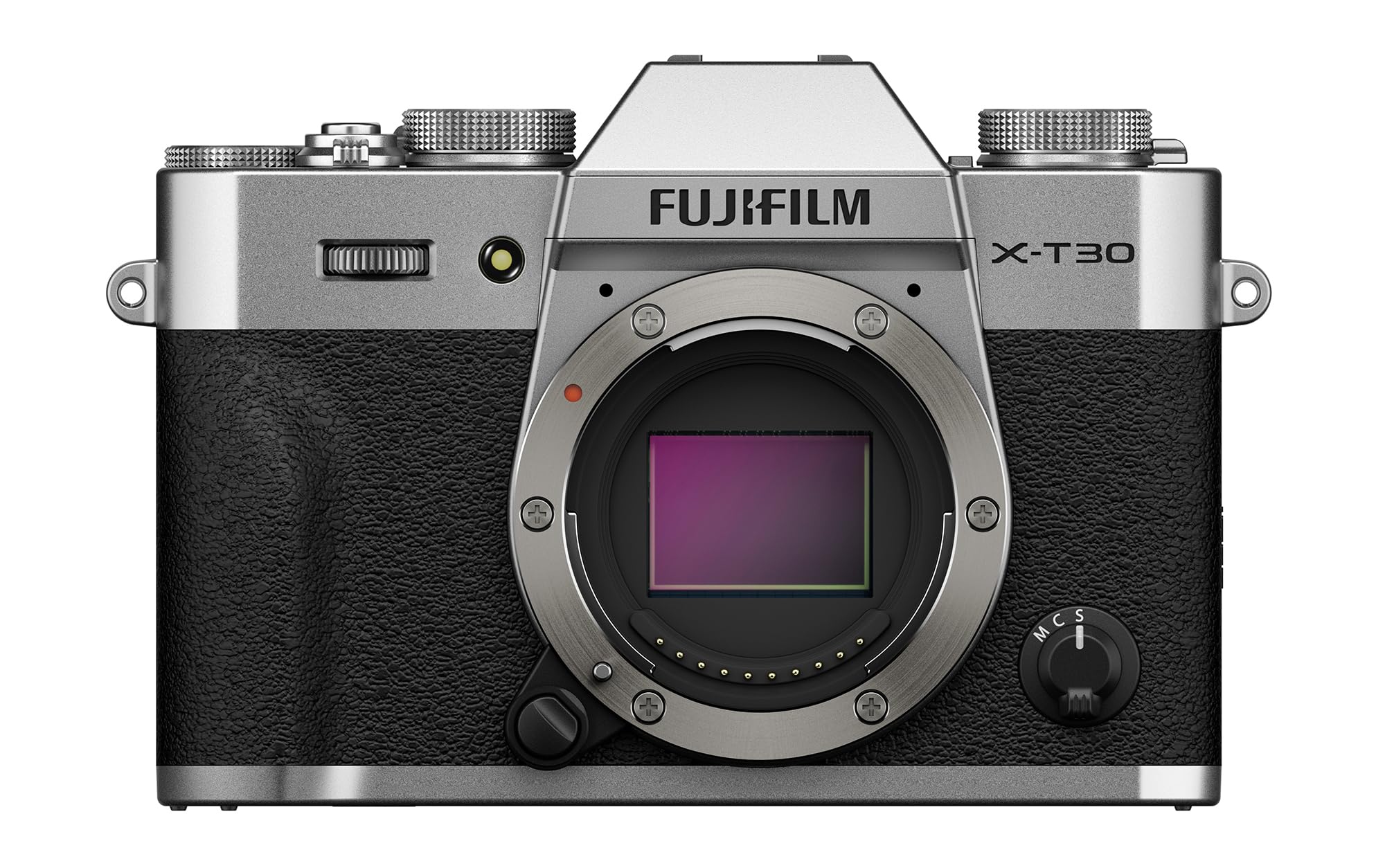
The Fujifilm X-T30 III delivers the celebrated X-Trans color science and analog-inspired shooting experience in a compact APS-C body that fits in a jacket pocket. The 26.1MP X-Trans CMOS 4 sensor with back-illumination produces excellent image quality with the film-like grain structure that Fujifilm users love, and the 20 built-in Film Simulation modes — including the popular Classic Chrome, Velvia, and Nostalgic Neg — let you generate finished JPEGs that need zero post-processing. The X-Processor 4 engine powers AI-powered subject detection autofocus that covers humans, animals, birds, and vehicles with 179 hybrid AF points.
The physical controls set this apart from the all-menu-driven competition. Dedicated shutter speed, exposure compensation, and ISO dials allow tactile setting changes without entering menus, replicating the experience of a classic rangefinder. The 0.39-inch OLED EVF at 2.36M dots is bright and responsive, though smaller than what full-frame bodies offer. The Auto mode lets less experienced users hand the camera to family and get excellent results, while manual controls satisfy enthusiasts who want full creative command.
The trade-offs are modest but real. There is no in-body flash, and the 4K video is capped at 30p with a 1.18x crop in some modes. The X-T30 III lacks the weather sealing of the pricier X-T5. But for photographers who value out-of-camera JPEG quality, tactile dials, and the Fujifilm ecosystem’s unique character, the X-T30 III is a compact powerhouse that delivers more photographic enjoyment per gram than almost any other APS-C body.
Why it’s great
- 20 Film Simulation modes produce stunning straight-out-of-camera JPEGs
- Tactile shutter speed, ISO, and exposure compensation dials
- AI-powered subject detection AF for people, animals, and vehicles
- Compact body with excellent X-Trans sensor image quality
Good to know
- No in-body flash and no weather sealing
- 4K video limited to 30p with slight crop in some modes
- EVF is smaller than full-frame counterparts
8. OM System OM-5 Mark II w/14-150mm Lens
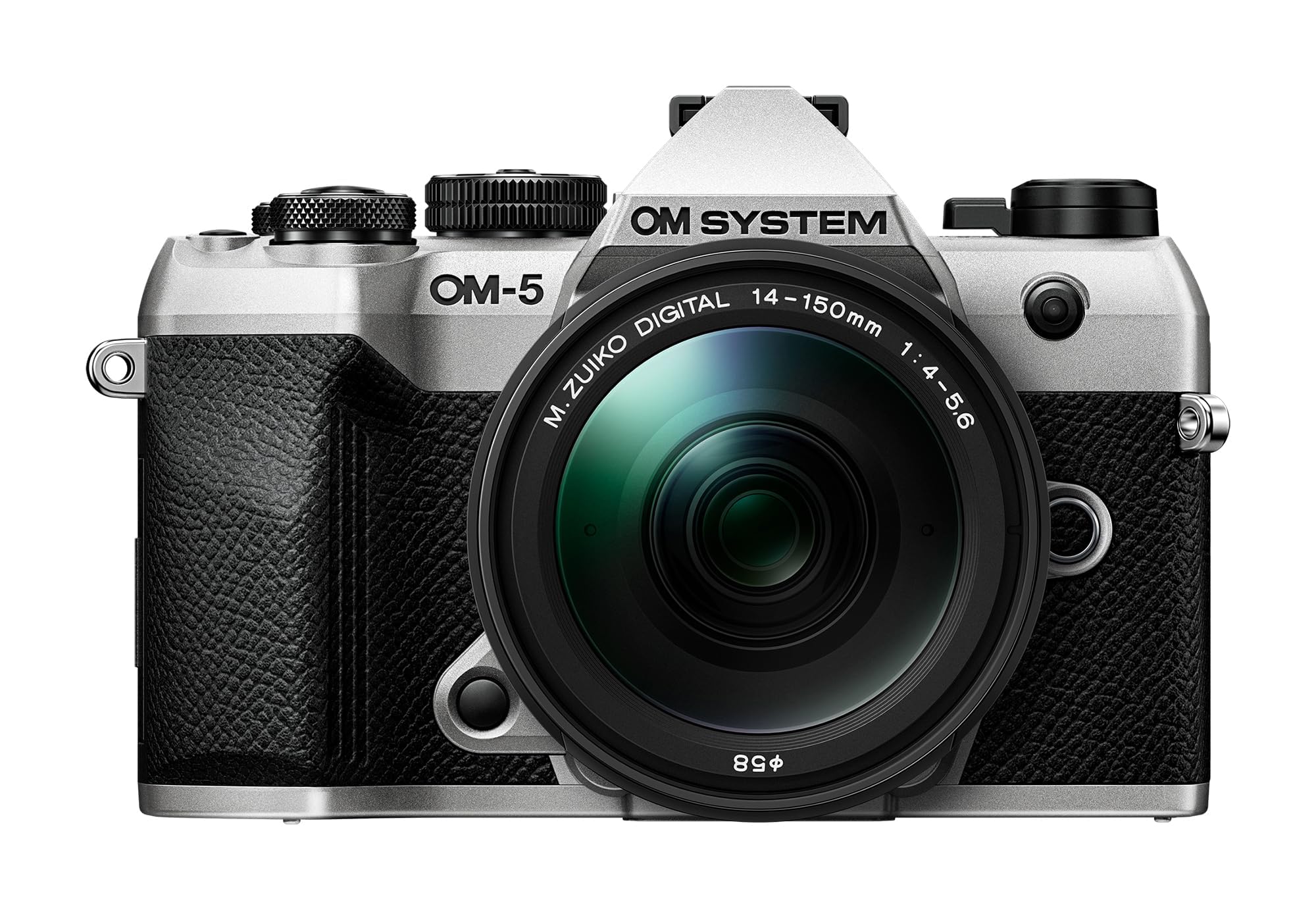
The OM System OM-5 Mark II redefines what a travel camera can handle. The 20MP Live MOS Micro Four Thirds sensor may seem modest on paper, but paired with the 5-axis in-body image stabilization rated at 6.5 to 7.5 stops — the best in any mirrorless camera at this price — it delivers handheld sharpness that full-frame cameras without IBIS cannot match in dim environments. The IP53 weather sealing means it survives rain, dust, and freezing temperatures that would shut down most cameras, and the compact body with the 14-150mm lens (28-300mm full-frame equivalent) covers wide-angle to telephoto in a single, lightweight package.
The OM-5 Mark II includes computational photography tools that go beyond typical mirrorless functionality. The built-in focus bracketing and stacking mode is invaluable for macro and product photography. The Live ND feature simulates neutral density filters without physical glass, enabling long-exposure waterfall shots in daylight. High Res Shot mode uses sensor shift to produce 50MP images that rival medium format for architectural and still-life work. The Starry Sky AF enables automatic astrophotography focus — a feature absent from most full-frame competitors.
The trade-off is the Micro Four Thirds sensor’s smaller surface area, which produces more noise at high ISO than full-frame alternatives and offers less shallow depth of field for portrait isolation. The battery is small too, requiring a spare for a full day of heavy shooting. But for outdoor adventurers, hikers, and travel photographers who prioritize portability, durability, and stabilization above all else, the OM-5 Mark II is the most capable compact system available.
Why it’s great
- Industry-leading 6.5-7.5 stop IBIS for hand-held sharpness
- IP53 weather sealing for rain, dust, and freezing temperatures
- Built-in focus stacking, Live ND, and High Res Shot modes
- 14-150mm lens offers 28-300mm equivalent range in one compact lens
Good to know
- No built-in flash, requires hotshoe unit
- High ISO performance trails full-frame sensors in low light
- Small battery requires spare for full-day shooting
9. OM System E-M10 Mark IV w/14-42mm EZ Lens

The OM System (formerly Olympus) E-M10 Mark IV is the entry point into the Micro Four Thirds ecosystem that prioritizes affordability without cutting essential features. The 20MP Live MOS sensor paired with the TruePic VIII processor delivers solid image quality that outperforms any smartphone by a wide margin, and the 5-axis in-body image stabilization rated at 4.5 stops allows handheld shooting at shutter speeds down to 1/2 second. The flip-down touchscreen activates a dedicated selfie mode that automatically switches to face detection, making it one of the most beginner-friendly cameras for casual portraiture.
The 14-42mm EZ pancake lens collapses for storage, making the entire kit small enough to fit in a jacket pocket — the most compact interchangeable-lens camera system you can buy with stabilization. The 16 Art Filters (including Instant Film for a nostalgic look) give new photographers creative options without needing to learn post-processing. The in-camera panorama stitching and focus bracketing modes add functionality typically found only in higher-tier models.
The trade-offs are clear: the 14-42mm lens is optically decent but not sharp wide open, the autofocus uses contrast detection only (no phase detection), making it slower in low light for moving subjects, and the EVF at 2.36M dots is adequate but not premium. The battery is tiny and requires a spare for day-long shoots. But for the absolute best value in a stabilized, interchangeable-lens mirrorless camera that can grow with the user through the massive Micro Four Thirds lens library, the E-M10 Mark IV is unbeatable.
Why it’s great
- Smallest interchangeable-lens camera with IBIS, fits in a jacket pocket
- 4.5-stop stabilization enables low-light handheld shooting
- Flip-down screen with dedicated selfie mode
- Excellent value with access to huge MFT lens ecosystem
Good to know
- Contrast-detection AF hunts in low light for moving subjects
- Kit lens is decent but not optically exceptional
- Small battery requires spare for full-day shooting
10. Nikon Z 30 w/16-50mm Lens

The Nikon Z 30 is Nikon’s most focused attempt at a creator-first mirrorless camera, designed from the ground up for vlogging and live streaming rather than traditional photography. The 20.9MP DX-format APS-C sensor delivers sharp 4K UHD video with full pixel readout and no crop, paired with hybrid autofocus (209 phase-detection points) that includes reliable eye tracking for both people and pets. The fully articulating 3-inch touchscreen flips forward for self-monitoring with a red REC light that makes it clear when recording is active.
The kit lens, a NIKKOR Z DX 16-50mm f/3.5-6.3 VR, provides a wide-angle starting point at 16mm that is ideal for selfie-style vlogging with a natural perspective. The built-in stereo microphone includes adjustable sensitivity, and the camera supports plug-and-play UVC/UAC webcam operation over USB-C for smooth Full HD 60p streaming without additional hardware. The constant power over USB-C eliminates battery anxiety during long streaming sessions, and the compact body weighs just 405g including battery and card.
The Z 30 has no electronic viewfinder, a deliberate omission to reduce size and cost. Stills shooters used to composing through an EVF will need to rely entirely on the LCD, which can be challenging in bright sunlight. The 16-50mm kit lens, while compact, has a variable aperture that reduces light at the telephoto end. But for vloggers and streamers who want Nikon’s reliable autofocus and Z-mount lens compatibility in the most portable body they offer, the Z 30 is the purpose-built tool for content creation.
Why it’s great
- Designed specifically for vlogging with forward-facing flip screen and REC light
- Excellent hybrid autofocus with eye tracking for people and pets
- Plug-and-play UVC webcam operation over USB-C
- Compact and lightweight at 405g with full Z-mount compatibility
Good to know
- No electronic viewfinder — composing relies entirely on LCD
- Kit lens variable aperture reduces light at 50mm end
- 4K video is excellent but limited to 30p
11. Panasonic Lumix G85 w/12-60mm Lens

The Panasonic Lumix G85 continues to be a compelling entry point for budget-conscious photographers who refuse to compromise on stabilization. The 16MP Micro Four Thirds sensor removes the low-pass filter, delivering noticeably sharper fine detail than older 16MP MFT sensors — nearly a 10% improvement in resolving power. The class-leading 5-axis in-body dual image stabilization works in both photo and video mode, allowing clean handheld 4K footage and sharp stills at shutter speeds that would be impossible on unstabilized systems.
The 12-60mm Power O.I.S. kit lens provides a 24-120mm full-frame equivalent range, covering wide-angle to short telephoto with optical image stabilization that works in concert with the IBIS for maximum shake reduction. The magnesium alloy front panel and weather-sealed construction give it a durable feel unusual at this price point. The OLED live viewfinder at 2,360K dots is clear and responsive, and the 3-inch touch-enabled tilt LCD allows flexible composition. The Lumix 4K Photo mode captures 30 fps bursts, letting you extract the perfect frame from fast action — a genuinely useful tool for sports and wildlife on a budget.
The G85 shows its age in a few areas. The 16MP sensor trails the 20MP+ sensors in modern MFT competitors for cropping flexibility. The contrast-detect autofocus is reliable in good light but hunts in low light for video, and there is no headphone jack for audio monitoring. The 12-60mm kit lens can exhibit softness at the edges at certain focal lengths in some samples. But for the price, you get a weather-sealed body, class-leading stabilization, 4K video, and a versatile kit lens — making the G85 the best value for beginners who want a versatile, sturdy system to learn on.
Why it’s great
- Excellent 5-axis dual IBIS for handheld shooting and video
- Weather-sealed magnesium alloy build at budget price
- 12-60mm kit lens provides versatile 24-120mm equivalent range
- 28 fps 4K Photo mode for extracting perfect action shots
Good to know
- 16MP sensor limits cropping compared to 20MP MFT alternatives
- Contrast-detect AF hunts in dim conditions for video
- No headphone jack for audio monitoring during recording
FAQ
Should I buy a full-frame camera as my first mirrorless?
How important is IBIS when choosing a mirrorless camera?
What is the advantage of a larger Micro Four Thirds lens ecosystem?
Final Thoughts: The Verdict
For most users, the best camera mirrorless winner is the Sony Alpha 7 IV because it offers the best balance of resolution, autofocus, video capability, and lens ecosystem, serving both stills and video work without forcing major compromises. If you want maximum image quality and professional-grade video in one body, grab the Canon EOS R5. And for rugged outdoor travel with unmatched stabilization and weather sealing, nothing beats the OM System OM-5 Mark II.