
The leap from a standard LED or IPS display to a 4K OLED panel is not a small upgrade; it is a fundamental shift in how you perceive moving images. The combination of a 4K resolution (3840 x 2160) with a 120Hz refresh rate on an OLED panel delivers pixel-level control of light, resulting in infinite contrast, true blacks, and motion clarity that liquid crystal displays cannot physically match. This guide is built for anyone ready to move past the compromises of older display technology and invest in a monitor that redefines visual fidelity for both demanding productivity and high-frame-rate gaming.
I’m Min — the co-founder and writer behind Gadgets Feed. Over the past two months, I analyzed market-wide data on over a dozen 4K OLED monitors, comparing panel technologies like QD-OLED and WOLED, refresh rate capabilities, color accuracy specifications, and the real-world impact of features like DisplayHDR True Black certification and burn-in mitigation tools.
The goal of this guide is to cut through the technical noise and help you select the right monitor. Here you will find in-depth reviews and a clear comparison of the top models, making it the definitive resource for anyone searching for the best 4k 120hz oled monitor.
How To Choose The Best 4K 120Hz OLED Monitor
Choosing a 4K OLED monitor involves balancing panel technology, refresh rate, connectivity, and burn-in prevention. The market has matured, but not all OLEDs are created equal. Understanding the core differentiators will help you avoid a costly mismatch for your specific use case.
Panel Type: QD-OLED vs. WOLED
The two dominant OLED panel technologies are Quantum Dot OLED (QD-OLED) and White OLED (WOLED). QD-OLED, used in panels from Samsung and often found in monitors from MSI and ASUS, uses quantum dots to convert blue light into pure colors, resulting in a wider color volume and higher peak brightness in HDR, especially in bright environments. WOLED, primarily manufactured by LG Display, uses a white sub-pixel alongside RGB, which can give it an edge in darker room contrast and often results in less text fringing, though its color volume is typically lower than QD-OLED. In bright rooms, QD-OLED can appear washed out if not handled well, while modern WOLED panels like ASUS’s TrueBlack Glossy excel at managing reflections.
Refresh Rate and Motion Clarity
While the keyword specifies 120Hz, many premium OLEDs in this class push to 240Hz and even beyond with dual-mode functionality. A 120Hz rate is more than sufficient for console gaming (where 120fps is the ceiling) and provides a significantly smoother desktop and productivity experience than standard 60Hz. A 240Hz panel offers a tangible advantage for competitive PC gaming, but requires a very powerful GPU to drive 4K at that frame rate. Pay attention to the response time, which is universally below 0.03ms on modern OLEDs, making motion blur virtually non-existent compared to any LCD.
Connectivity: HDMI 2.1 and DisplayPort 2.1
To drive a 4K 120Hz signal, you need HDMI 2.1 (48Gbps) bandwidth. For higher refresh rates like 4K 240Hz, HDMI 2.1 with DSC (Display Stream Compression) is the current standard. The newer DisplayPort 2.1 (UHBR20) offers 80Gbps of bandwidth, which can handle 4K 240Hz without compression. For most users, HDMI 2.1 is adequate. If you are buying for a future-proof build or want to avoid any compression artifacts, a monitor with DP 2.1, like the ASUS ROG Swift PG27AQWP-W, is a safer bet.
Burn-in Mitigation and Warranty
Burn-in (permanent image retention) is the primary concern for OLED longevity. Manufacturers have developed robust solutions. Look for monitors with features like pixel refresh cycles, logo detection that dims static elements, and heatsinks to dissipate heat (which accelerates degradation). Warranty coverage is critical; ASUS and Alienware offer 3-year burn-in warranties on many of their premium OLED models, whereas some brands only offer a standard 1-year panel warranty. This coverage can be the deciding factor between a confident purchase and a fearful one.
Quick Comparison
On smaller screens, swipe sideways to see the full table.
| Model | Category | Best For | Key Spec | Amazon |
|---|---|---|---|---|
| LG 32GX870A-B | Premium | Bright room gaming | MLA+ panel / 1300 nits peak | Amazon |
| ASUS ROG Swift PG32UCDM | Premium | Best all-around gaming | 32″ QD-OLED / 240Hz | Amazon |
| MSI MPG 321URX | Premium | High-refresh QD-OLED | 32″ QD-OLED / 240Hz / 0.03ms | Amazon |
| Samsung Odyssey G8 G81SF | Mid-Range | Console & PC gaming | 27″ QD-OLED / 240Hz / 166 PPI | Amazon |
| Dell UltraSharp U2725QE | Mid-Range | Professional color work | 27″ IPS Black / 120Hz / Thunderbolt 4 | Amazon |
| Alienware AW3425DW | Mid-Range | Immersive ultrawide | 34″ 1440p QD-OLED / 240Hz | Amazon |
| ASUS ROG Strix XG32UCWG | Mid-Range | Glossy screen enthusiasts | 32″ WOLED / 165Hz / Dual Mode | Amazon |
| INNOCN 49Q1S | Premium | Super ultrawide work & play | 49″ 5120×1440 / 240Hz / 32:9 | Amazon |
| LG 40U990A-W | Premium | 4K creator workstation | 40″ 5K2K IPS / 120Hz / Thunderbolt 5 | Amazon |
| ASUS ROG Swift PG32UCDMZ | Premium | Top-tier 4K gaming | 32″ QD-OLED / 240Hz / 0.03ms | Amazon |
| MSI PRO MAX 271UPXW12G | Mid-Range | Mac-focused 4K OLED hub | 27″ QD-OLED / 120Hz / 98W USB-C | Amazon |
| ASUS ROG Swift PG27AQWP-W | Premium | Esports & competitive play | 27″ Tandem OLED / 540Hz QHD | Amazon |
| MSI MPG 321URXW | Premium | White aesthetic build | 32″ QD-OLED / 240Hz / KVM | Amazon |
In‑Depth Reviews
1. LG 32GX870A-B 32-inch Ultragear 4K UHD OLED Gaming Monitor
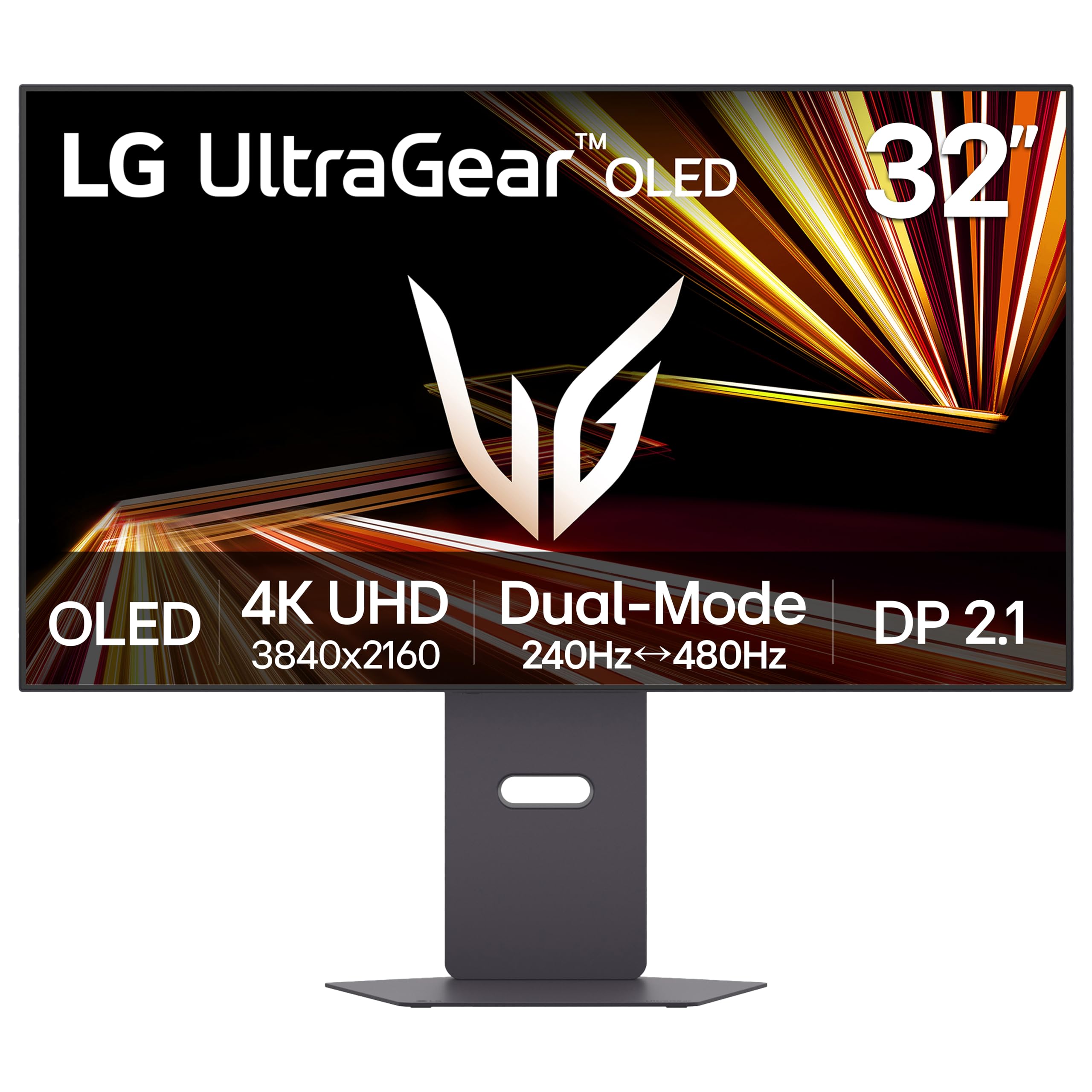
The LG 32GX870A-B is a masterclass in OLED engineering, using Micro Lens Array+ (MLA+) technology to achieve a peak brightness of 1300 nits—the highest in this comparison. This means HDR highlights have a spectacular punch that other WOLED and even some QD-OLED panels struggle to match, all while maintaining the perfect blacks that define OLED. The matte anti-glare coating is superb for bright rooms, keeping reflections at bay without washing out the image, a common pain point for glossy QD-OLED panels in similar environments.
Its dual-mode capability is a standout feature, allowing you to switch from 4K at 240Hz to Full HD at 480Hz with a single hotkey. This flexibility means you can enjoy visually rich RPGs in stunning 4K and then instantly shift to a competitive edge in fast-paced FPS titles where ultra-high frame rates matter. The included DisplayPort 2.1 port provides 80Gbps of bandwidth, future-proofing your setup for uncompressed 4K 240Hz performance. The built-in speakers and DTS Headphone:X support are also class-leading for an OLED monitor.
The most common criticism is minor vertical banding out of the box, but this typically fades after the first few pixel refresh cycles. Text clarity is not as sharp as a high-end IPS display, though this is a characteristic of all current OLED sub-pixel layouts. The 2-year limited warranty on the panel is shorter than some competitors, but the raw performance and brightness make it a compelling choice for those who value HDR excellence and dual-mode versatility above all else.
Why it’s great
- Exceptional 1300-nit peak brightness with MLA+ technology.
- Dual-mode: 4K 240Hz and FHD 480Hz for ultimate flexibility.
- DisplayPort 2.1 for uncompressed high-refresh rate output.
Good to know
- Minor vertical banding reported on initial use.
- Text clarity is typical for OLED, not as sharp as IPS.
- 2-year panel warranty is shorter than some rivals.
2. ASUS ROG Swift 32” 4K OLED Gaming Monitor (PG32UCDM)

The ASUS PG32UCDM is often cited as the gold standard for 4K 240Hz QD-OLED gaming, and for good reason. It delivers a staggering 99% DCI-P3 color gamut with true 10-bit color depth, resulting in an image that is both incredibly vibrant and highly accurate right out of the box. The custom heatsink and graphene film keep the panel cool, directly contributing to a reduced risk of burn-in and allowing for sustained high brightness in HDR content. The 3-year warranty with burn-in coverage from ASUS is a massive vote of confidence in its longevity.
Visual quality is breathtaking. HDR content in supported games and movies displays a level of depth and specular highlight intensity that is difficult to describe without seeing it firsthand. The difference between a standard 4K IPS and this display is the difference between seeing a picture of light and seeing light itself. Connectivity is strong with DP 1.4a, HDMI 2.1, and a USB-C port with 90W power delivery, making it a versatile hub for both a gaming desktop and a powerful laptop.
The glossy screen finish is a double-edged sword. It makes colors and blacks look incredibly deep and vibrant, but in a bright room with direct light, reflections can be distracting. While the text clarity has improved over first-gen QD-OLEDs, it is still not perfect for prolonged word processing. At this price point, it is a no-compromise gaming and media consumption monitor, but its glossy nature means a controlled lighting environment is ideal.
Why it’s great
- Class-leading QD-OLED color volume and accuracy.
- Effective custom heatsink and graphene film for burn-in prevention.
- 3-year warranty includes burn-in coverage.
Good to know
- Glossy screen is reflective in brightly lit rooms.
- Text clarity is good but not IPS-level.
- Requires DSC for 4K 240Hz over HDMI 2.1.
3. MSI MPG 321URX QD-OLED, 32″ 4K UHD Gaming Monitor

The MSI MPG 321URX is the black, slightly more direct sibling of the white 321URXW, and it delivers the same exceptional QD-OLED experience. It packs a 31.5-inch 4K panel with a 240Hz refresh rate and a blistering 0.03ms GtG response time. The VESA DisplayHDR True Black 400 rating means you get the deep, inky blacks that define OLED, combined with vibrant highlights that make HDR content pop. The inclusion of MSI’s OLED Care 2.0 is a robust software suite that includes pixel refresh, panel protect, and taskbar detection to mitigate burn-in.
For connectivity, it is fully equipped with HDMI 2.1, DisplayPort 1.4a, and a USB Type-C port with 90W Power Delivery. The KVM functionality is a boon for users who switch between a desktop PC and a laptop, allowing you to control both from a single keyboard and mouse setup. The built-in Gaming Intelligence software provides useful tools like Smart Crosshair and a simple interface for adjusting OLED Care settings directly from your mouse.
User reviews consistently praise the image quality as a massive upgrade from IPS panels. Some users have noted the stand is large and takes up considerable desk space, and the lack of a more advanced anti-glare coating means a glossy glow in bright conditions. For a pure gaming and high-end productivity monitor, however, the MPG 321URX offers a fantastic balance of performance, features, and price, especially when compared to more expensive ASUS equivalents.
Why it’s great
- Excellent QD-OLED color and contrast with HDR True Black 400.
- USB-C with 90W power delivery and integrated KVM hub.
- Comprehensive OLED Care 2.0 software package.
Good to know
- Large stand base occupies a lot of desk space.
- Glossy screen surface prone to reflections.
- Port selection lacks DisplayPort 2.1.
4. SAMSUNG 27-inch Odyssey QD-OLED G8 (G81SF)
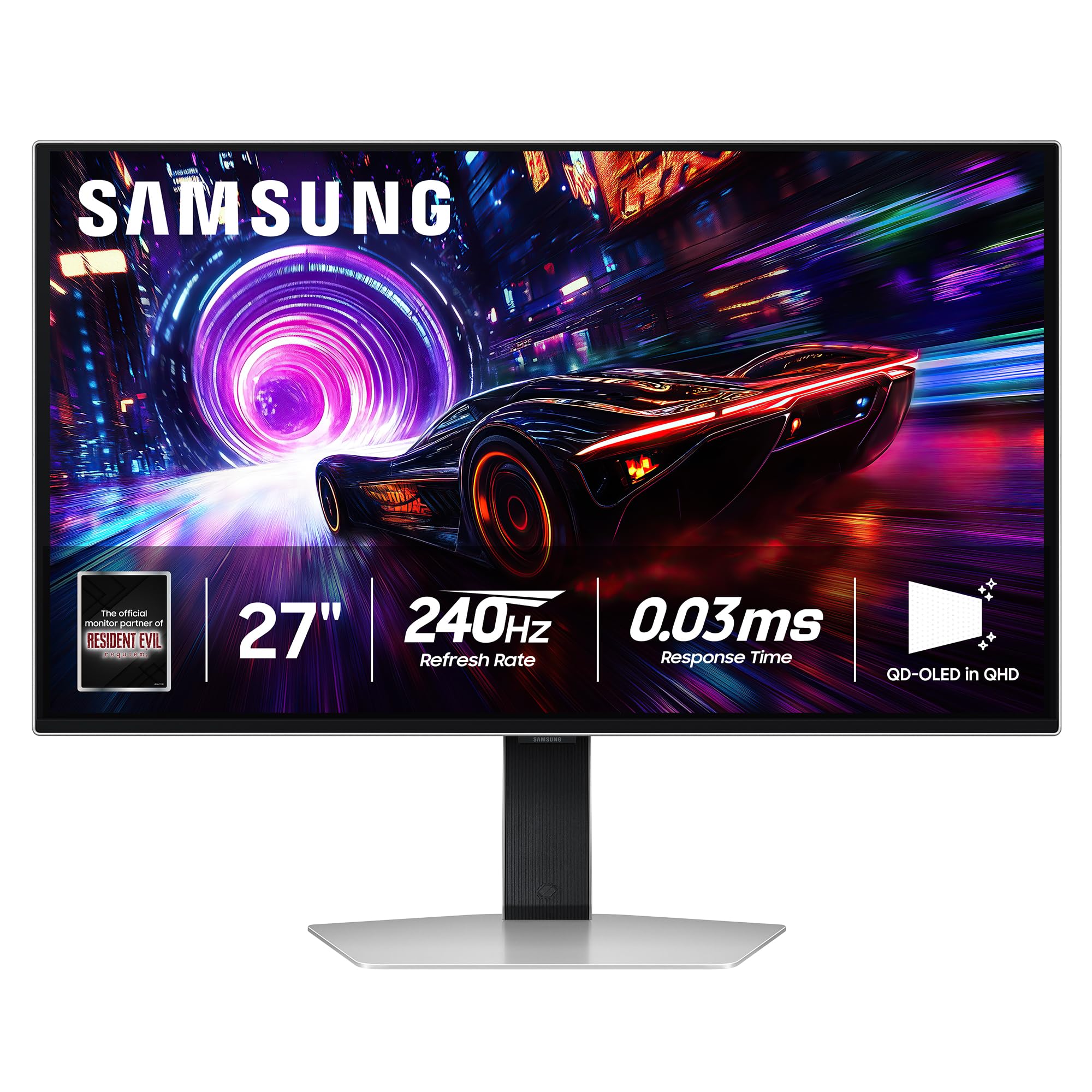
The Samsung Odyssey G8 G81SF brings QD-OLED brilliance to a more manageable and affordable 27-inch form factor. At 166 PPI, it offers incredible pixel density, making text look sharper and images appear more detailed than on the larger 32-inch models. This makes it an excellent choice for those who want a high-end gaming monitor but also need a crisp display for reading code, writing documents, or any productivity task that benefits from a higher dot pitch. Its 240Hz refresh rate and 0.03ms response time provide the competitive edge required for fast-paced gaming.
Samsung’s Glare Free technology is a key differentiator, claiming to be 54% less glossy than conventional anti-reflection films. In practice, this means the monitor handles ambient light exceptionally well for a QD-OLED, preserving contrast and color saturation far better than many of its glossy competitors. The built-in Pulsating Heat Pipe cooling system is a first in a monitor, designed to dissipate heat five times faster than traditional graphite sheets, directly addressing the core concern of OLED burn-in and panel longevity.
The main drawback is the lack of a DisplayPort 2.1 port, relying on DSC for 4K 240Hz. Some users have reported a finicky mini-joystick for OSD navigation. While the 1-year warranty is disappointing for a premium product, Samsung sometimes offers extended promotions. For a high-performance 27-inch QD-OLED that balances gaming speed, text clarity, and a robust cooling solution, the G81SF represents strong value in the premium monitor market.
Why it’s great
- High 166 PPI provides excellent text clarity for a QD-OLED.
- Effective Glare Free technology for use in bright rooms.
- Innovative Pulsating Heat Pipe for superior heat management.
Good to know
- Only a 1-year warranty out of the box.
- No DisplayPort 2.1; requires DSC for 4K 240Hz.
- OSD joystick is small and can be fiddly.
5. Dell UltraSharp U2725QE 27 Inch 4K UHD IPS Black Monitor
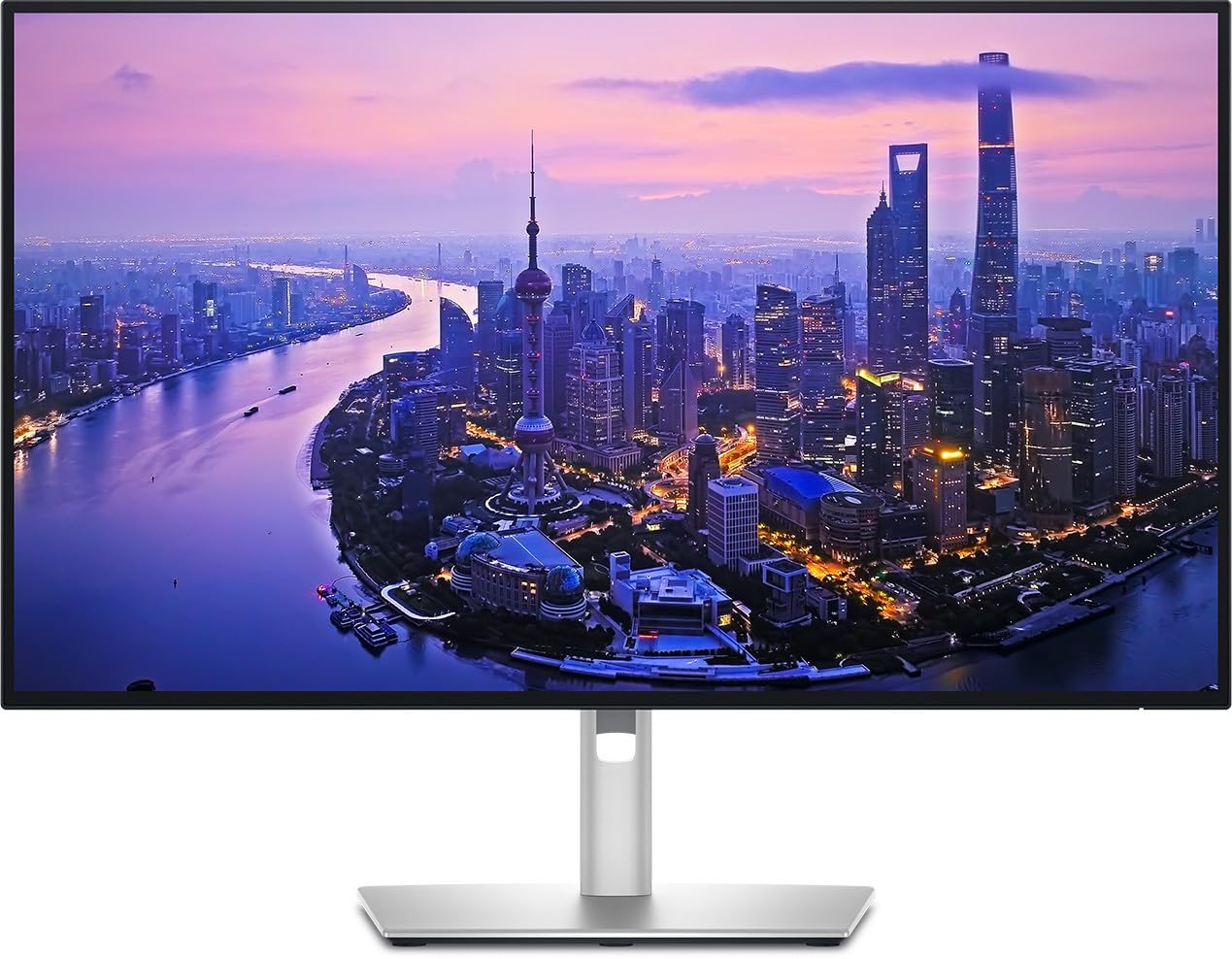
The Dell UltraSharp U2725QE is the professional’s choice. While it is not an OLED, the IPS Black technology is a direct answer to OLED’s primary weakness in office environments: text clarity and burn-in risk. It delivers a 2000:1 contrast ratio, which is double that of standard IPS panels, resulting in deep blacks and rich colors that approach OLED quality without the worry of permanent image retention. Its factory calibration to Delta E less than 1.5 ensures color-critical work is accurate right out of the box.
This monitor is a productivity powerhouse. The Thunderbolt 4 port delivers up to 140W of power delivery, allowing you to charge a high-end laptop like a MacBook Pro with a single cable. The 120Hz refresh rate, while lower than the gaming-focused models, provides a noticeable fluidity to cursor movement and scrolling that eliminates the perceived lag of 60Hz. The built-in KVM and rich port selection (HDMI 2.1, USB-C, USB-A, Ethernet) make it a central hub for a clean, professional desk.
The primary trade-off is that it is not an OLED. While colors are excellent, they lack the infinite contrast and pixel-level glow of a true OLED panel. The 120Hz rate is capped, and it is not designed for high-refresh-rate gaming. For professionals who spend eight hours a day reading text, editing video, or coding, and who value a flawless, burn-in-proof display with a perfect sub-pixel layout, this monitor is the definitive choice.
Why it’s great
- IPS Black technology offers excellent contrast with zero burn-in risk.
- Thunderbolt 4 with 140W power delivery and full hub functionality.
- Factory-calibrated Delta E < 1.5 for professional color accuracy.
Good to know
- Not an OLED; blacks are not as deep as the best OLEDs.
- 120Hz refresh rate is good but not for competitive gaming.
- Premium price for a non-gaming IPS monitor.
6. Alienware 34 240Hz QD-OLED Curved Gaming Monitor AW3425DW

The Alienware AW3425DW is a 34-inch, 21:9 ultrawide monitor that uses a WQHD (3440 x 1440) QD-OLED panel. While it doesn’t fit the strict 4K UHD definition, its ultrawide format offers a level of immersion in gaming and productivity that a standard 16:9 screen cannot match. The 1800R curve wraps the image around your peripheral vision, making you feel inside the game world. The 240Hz refresh rate and 0.03ms response time are top-tier, ensuring buttery-smooth motion in any supported title.
Alienware monitors are known for their excellent build quality, and the AW3425DW is no exception. It features a sleek, dark design with the iconic Alienware lighting on the rear. The 99.3% DCI-P3 color coverage and VESA DisplayHDR TrueBlack 400 certification deliver the stunning color saturation and perfect blacks expected from a premium QD-OLED. The inclusion of NVIDIA G-SYNC Compatible, AMD FreeSync Premium Pro, and VESA AdaptiveSync provides a tear-free experience with any modern graphics card.
The main sacrifice is the lower vertical resolution (1440p vs. 2160p). For productivity, the ultrawide aspect ratio is fantastic for multitasking with multiple windows side-by-side, but the lower pixel density means text is not as sharp as a 4K 27-inch panel. Some users report mild text fringing, a common QD-OLED trait. The glossy screen can also be a benefit or a detriment depending on your lighting. For immersive single-player games and a powerful workstation, this is a phenomenal choice.
Why it’s great
- Extremely immersive ultrawide 21:9 format and 1800R curve.
- High 240Hz refresh rate for smooth motion.
- Excellent build quality and comprehensive adaptive sync support.
Good to know
- WQHD resolution, not standard 4K; lower pixel density.
- Text clarity may show some fringing.
- Not ideal for users who prefer a 16:9 aspect ratio.
7. ASUS ROG Strix 32” 4K OLED Gaming Monitor (XG32UCWG)

The ASUS ROG Strix XG32UCWG is a standout for its use of a new TrueBlack Glossy WOLED panel. This is a direct response to the primary complaint about QD-OLEDs: their poor performance in well-lit rooms. This WOLED panel, with its zero-haze surface, offers exceptionally sharp imagery and handles reflections far better than any QD-OLED on the market, all while maintaining the deep blacks and vibrant colors expected from OLED. Its dual-mode capability toggles between 4K 165Hz and FHD 330Hz, catering to both visual fidelity and competitive speed.
ASUS has packed this monitor with their latest OLED Care Pro technology, including a Neo Proximity Sensor. This sensor detects when you leave the desk and automatically switches the screen to a black panel saver, significantly reducing the risk of burn-in during idle periods. The 3-year warranty with burn-in coverage is another strong point. The custom heatsink design and graphene film work together to keep the panel operating at lower temperatures, further extending its lifespan. Connectivity is modern with DP 1.4a and two HDMI 2.1 ports.
Some users have reported that the panel’s maximum sustained brightness in a full-white window is around 250 nits, which is typical for OLED for power management and burn-in prevention. The glossy coating is highly reflective, which some may dislike in a room with direct light, but its reflection handling is superior to a QD-OLED. For users who want the best of both worlds—an OLED’s image quality without the frustration of compromises in a daytime office—the XG32UCWG is a compelling and thoughtful design.
Why it’s great
- TrueBlack Glossy WOLED excels in bright rooms with minimal reflections.
- Neo Proximity Sensor and OLED Care Pro for burn-in prevention.
- 3-year warranty with burn-in coverage included.
Good to know
- Max sustained brightness in a full white window is around 250 nits.
- Glossy panel is highly reflective in direct light.
- DP 1.4 with DSC required for full 4K 165Hz.
8. INNOCN 49″ 49Q1S OLED Curved Gaming Monitor

The INNOCN 49Q1S takes the concept of “multitasking” to its logical extreme. This 49-inch 32:9 super ultrawide monitor is essentially the equivalent of two 27-inch 1440p monitors side-by-side, without a bezel in the middle. The 5120 x 1440 resolution on a vibrant OLED panel offers an incredible 240Hz refresh rate, making it as powerful for gaming as it is for productivity. The 1800R curvature means you can see the entire screen without turning your head, wrapping the image around your field of view.
It is a hub of connectivity, featuring a USB-C port with 90W power delivery, two DisplayPort 1.4 ports, an HDMI 2.1 port, a USB hub, and even an RJ45 Ethernet jack. The Picture-by-Picture (PbP) mode allows you to display content from two separate input sources simultaneously on the screen, which is invaluable for tasks like monitoring a camera feed while editing video. The integrated speakers are passable for system sounds but should not be relied upon for music or gaming.
The most significant drawback is the resolution. As a 1440p ultrawide, the pixel density is lower than a standard 4K display, meaning text will not be as sharp. Some applications may also have scaling issues on the 32:9 aspect ratio. The build quality, while good for the price, does not feel as premium as ASUS or LG offerings. For a gamer or power user who wants the ultimate immersion and screen real estate, and who is willing to sacrifice some text sharpness for that expanse, this INNOCN is a fantastic value proposition.
Why it’s great
- Massive 49-inch 32:9 screen real estate for extreme multitasking.
- High 240Hz refresh rate on a large OLED panel.
- Excellent connectivity with USB-C 90W and RJ45.
Good to know
- 1440p resolution, not 4K; text is not as sharp.
- Some software may not scale perfectly to the 32:9 ratio.
- Speakers are basic and not suitable for quality audio.
9. LG 40U990A-W 40-inch Ultrafine evo 5K2K Monitor
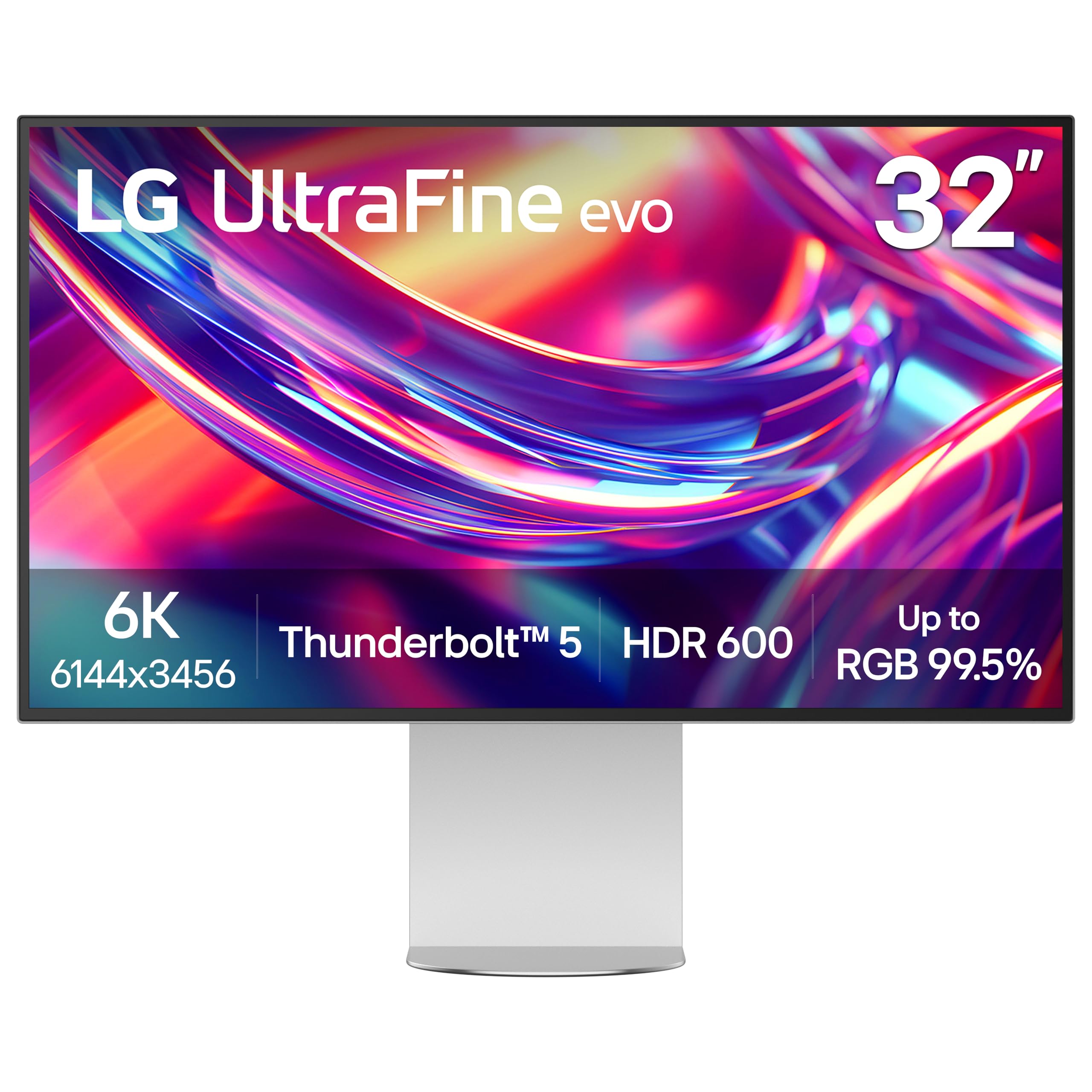
The LG 40U990A-W is not an OLED, but it is a crucial inclusion for any creator who demands pristine image quality without the anxiety of burn-in. It is the world’s first 5K2K (5120 x 2160) monitor with Thunderbolt 5, offering an enormous 40-inch workspace with a gentle 2500R curve. The Nano IPS Black panel delivers a 2000:1 contrast ratio—vastly superior to standard IPS—and a 450-nit brightness, making it a powerhouse for video editing, color grading, and complex data visualization where absolute color precision is paramount.
Its 120Hz refresh rate is a boon for smooth scrolling and basic gaming, but its true purpose is productivity. The Thunderbolt 5 port offers up to 96W of power delivery and supports daisy chaining of additional monitors. The dual speakers with Rich Bass provide genuinely impressive audio for a monitor. The 99% DCI-P3 color gamut and DisplayHDR 600 certification ensure that your creative work looks as intended, whether you are editing a timeline in DaVinci Resolve or laying out a page in InDesign.
The primary trade-off is the high cost and the fact that it is an LCD, not an OLED. While blacks are deep for an IPS, they do not match the infinite contrast of an OLED. Users have reported some issues with Thunderbolt connectivity on specific Mac models, and the external power brick is quite large. For the creative professional who needs a large, color-accurate, and future-proofed workspace with no burn-in concerns, this is a purpose-built tool that is worth the investment.
Why it’s great
- Massive 5K2K resolution with Thunderbolt 5 and 96W power delivery.
- Nano IPS Black panel offers deep blacks and excellent contrast.
- 120Hz refresh rate for fluid professional workflows.
Good to know
- Not OLED; contrast and blacks are not as perfect as true OLED.
- Very high price point.
- Some Mac compatibility issues reported with Thunderbolt.
10. ASUS ROG Swift OLED PG32UCDMZ

The ASUS ROG Swift PG32UCDMZ represents the pinnacle of 4K gaming display technology in this lineup. It is essentially a refined, even more premium version of the already excellent PG32UCDM. It uses the latest QD-OLED panel with a custom heatsink and graphene film for superior thermal management, which is critical for maintaining high HDR brightness and preventing long-term burn-in. The image quality is simply breathtaking, with legendary colors, true blacks, and a 240Hz refresh rate that makes every game feel impossibly smooth.
This model is part of the second generation of ASUS’s QD-OLED monitors, meaning it has improved text clarity and a more effective anti-glare coating compared to earlier models. The built-in features like ASUS DisplayWidget Center allow for easy mouse-controlled adjustments of settings, including the OLED Care features. The 3-year warranty with burn-in coverage is a hard requirement for a monitor at this price, and ASUS provides it. The port selection includes HDMI 2.1, DP 1.4a, and a USB-C port with 90W power delivery.
The major barrier is the high cost. Some users also note the lack of a DisplayPort 2.1 port, which feels like a minor oversight for a monitor of this caliber. For the buyer who wants the absolute best 32-inch 4K gaming monitor money can buy, the PG32UCDMZ is the no-compromise choice, but it requires a commensurate budget.
Why it’s great
- The absolute peak of 4K QD-OLED image quality and gaming performance.
- Superior heatsink and graphene film for excellent burn-in protection.
- 3-year warranty with burn-in coverage for peace of mind.
Good to know
- Extremely high price point, well above other premium models.
- Still uses DP 1.4a with DSC instead of DP 2.1.
- Requires a top-tier GPU to fully utilize its 240Hz potential.
11. MSI PRO MAX 271UPXW12G 27 Inch 4K QD-OLED Hub Monitor
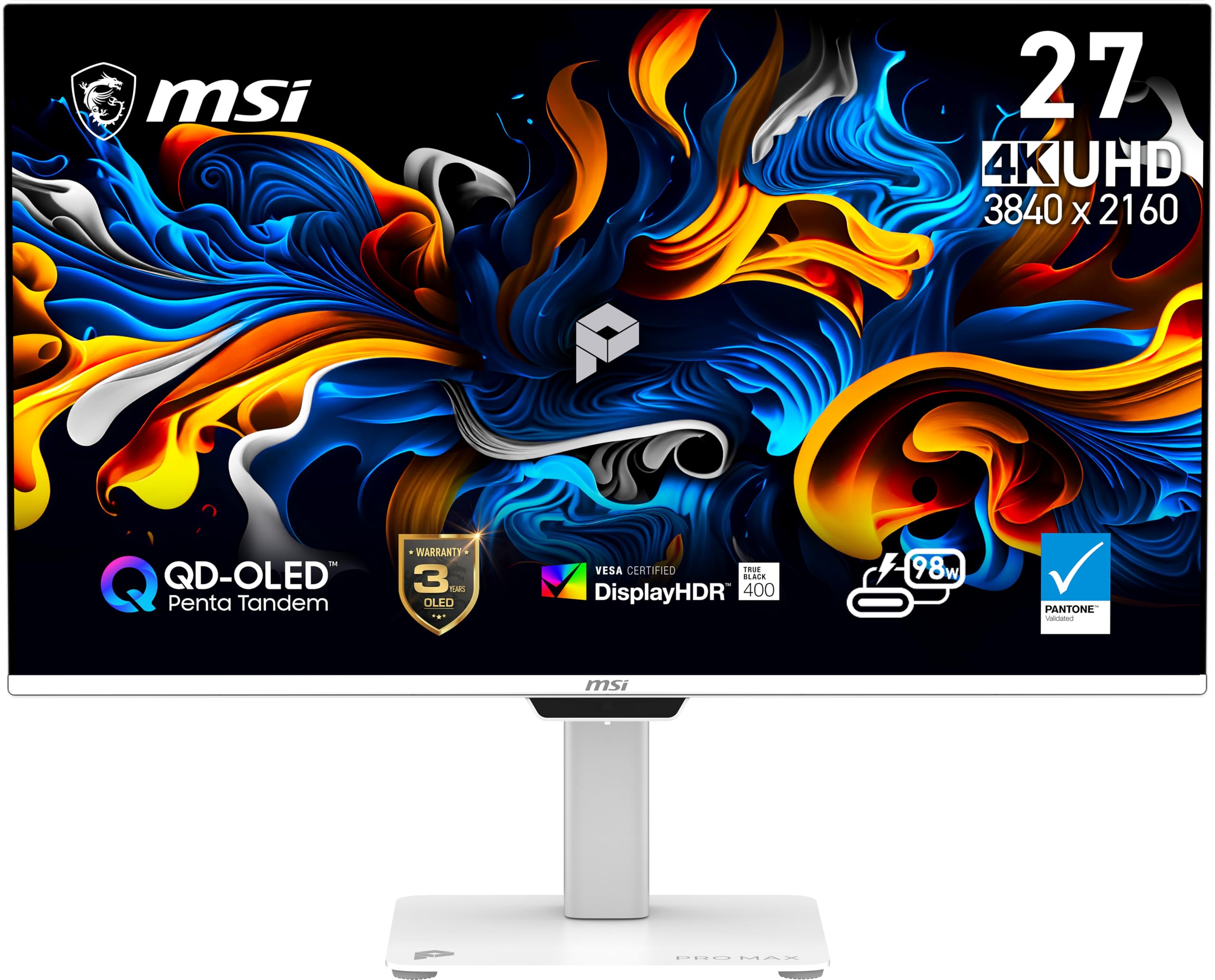
The MSI PRO MAX 271UPXW12G is a unique and forward-thinking monitor designed to bridge the gap between professional work and high-quality entertainment. It is a 27-inch 4K QD-OLED monitor with a 120Hz refresh rate, making it ideal for users who work on a Mac or PC all day and then want to game or watch movies at night. The 120Hz rate is a perfect middle ground, providing smooth motion without the extreme GPU requirements of a 240Hz panel, and it is the maximum for most console gaming.
What sets this model apart is its “Hub Monitor” philosophy. It features dual USB-C ports with up to 98W of power delivery, allowing you to connect a laptop and a desktop or other peripherals as a central hub. MSI has also included Mac optimization software for seamless color synchronization and shortcut key integration. The VESA DisplayHDR True Black 400 and Delta E less than 2 color accuracy ensure that your work and play look vibrant and correct. Its white aesthetic is a clean and modern departure from the standard black gaming monitor.
The 120Hz refresh rate is specifically targeted at professionals, and some high-refresh-rate gamers may find it limiting for competitive play. The glossy QD-OLED panel is susceptible to reflections, which can be a distraction in a brightly lit office. For a user who wants a single, excellent monitor for a Mac-based creative workflow that doubles as a fantastic media consumption and console gaming screen, the PRO MAX 271UPXW12G is a well-considered and stylish solution.
Why it’s great
- 4K QD-OLED quality with a professional-friendly 120Hz refresh rate.
- Dual USB-C with 98W PD for a clean, single-cable hub setup.
- Designed with Mac optimization and a clean white aesthetic.
Good to know
- 120Hz may feel limited for competitive PC gaming.
- Glossy QD-OLED panel is prone to reflections.
- Premium price for a professional-oriented monitor.
12. ASUS ROG Swift 27″ OLED Gaming Monitor (PG27AQWP-W)
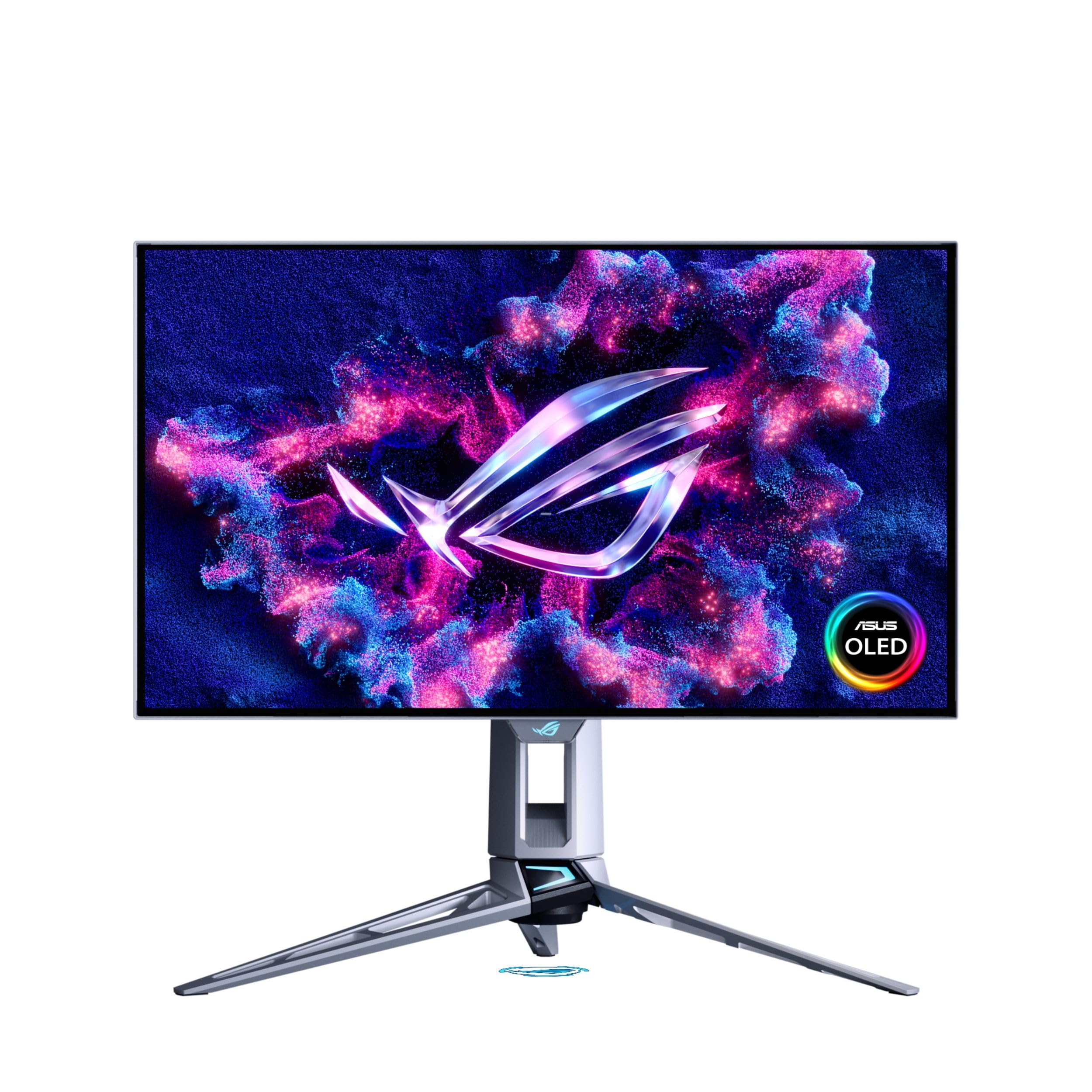
The ASUS ROG Swift PG27AQWP-W is a monitor built for a single purpose: absolute competitive gaming supremacy. It uses a new Tandem OLED technology, which stacks two light-emitting layers to achieve 15% higher peak brightness, a 25% larger color volume, and a 60% longer OLED lifespan compared to standard WOLED panels. The dual-mode functionality is insane, allowing you to switch from QHD (2560 x 1440) at 540Hz to HD (1280 x 720) at a blistering 720Hz. This is motion clarity beyond what the human eye can perceive, offering the ultimate competitive advantage.
Beyond the crazy numbers, this monitor incorporates ASUS’s most advanced OLED Care Pro, including the Neo Proximity Sensor. The panel is a TrueBlack Glossy WOLED, which handles reflections better than a QD-OLED. The inclusion of DisplayPort 2.1 UHBR20 with full 80Gbps bandwidth is critical for driving those extreme refresh rates without compression. For the first time, you can get truly uncompromised, ultra-high motion clarity from an OLED panel. The 3-year warranty with burn-in coverage is a must at this price.
The primary sacrifice is resolution and screen size. It is a 27-inch panel, and to hit 540Hz at QHD or 720Hz, you are operating below native 4K. The text clarity on this WOLED panel is improved, but it is still a 1440p screen. The high price is for a specific use case. For the amateur or professional esports player for whom every millisecond of input lag and every ounce of motion blur matters more than resolution, this monitor is the absolute pinnacle of performance.
Why it’s great
- Unprecedented 540Hz (QHD) and 720Hz (HD) refresh rates.
- New Tandem OLED for better brightness, color, and lifespan.
- DisplayPort 2.1 for uncompressed, high-bandwidth performance.
Good to know
- 1440p resolution, not 4K.
- Extremely high price for an esports-focused monitor.
- Requires a top-tier CPU and GPU to reach those frame rates.
13. MSI MPG 321URXW QD-OLED 31.5 Inch 4K UHD Gaming Monitor

The MSI MPG 321URXW is functionally identical to its black sibling, the 321URX, but wrapped in a clean, all-white chassis. It features the same 31.5-inch 4K panel with a 240Hz refresh rate, 0.03ms response time, and VESA DisplayHDR True Black 400. The Quantum Dot technology produces a stunning 99% DCI-P3 color gamut with exceptional brightness and color accuracy (Delta E less than 2).
The white aesthetic is a major selling point for many, but it also comes with a slightly different port arrangement. The connectivity suite is still extensive, including HDMI 2.1, DP 1.4a, and a USB-C port with 90W power delivery. The KVM function is standard, allowing you to control multiple devices with a single set of peripherals. The included graphene heatsink is fanless, meaning it produces zero noise while keeping the panel cool. The 4-way adjustable stand is fully featured, allowing for height, swivel, pivot, and tilt adjustments.
The price for this white version can sometimes be higher than the black variant, purely for the color preference. The same QD-OLED caveats apply: the glossy screen is reflective, and text clarity, while improved, is not as sharp as high-end IPS. For a builder or user who values a cohesive, light-colored desk setup and wants absolutely uncompromised 4K gaming and media performance, the MPG 321URXW is the perfect finishing touch.
Why it’s great
- Same excellent QD-OLED performance as the standard 321URX.
- Clean white aesthetic for themed PC builds.
- Fanless graphene heatsink for silent operation.
Good to know
- May cost a premium over the black version for the color.
- Glossy screen is reflective in bright environments.
- Text clarity is good but not as sharp as IPS.
FAQ
Is a 4K 120Hz OLED monitor worth it for productivity like coding or writing?
What is the main difference between QD-OLED and WOLED for a 4K monitor?
Can a PS5 or Xbox Series X fully utilize a 4K 120Hz OLED monitor?
What GPU do I need to run a 4K 120Hz or 240Hz OLED monitor?
How can I prevent burn-in on my new 4K OLED monitor?
Final Thoughts: The Verdict
For most users, the best 4k 120hz oled monitor winner is the LG 32GX870A-B because it combines a class-leading bright WOLED panel with superb dual-mode flexibility and modern connectivity like DisplayPort 2.1. If you want the absolute best color volume and HDR for a dark room, grab the ASUS ROG Swift PG32UCDM. And for a professional who needs text clarity and a hub for their Mac, nothing beats the Dell UltraSharp U2725QE.