
Every volleyball player knows the sickening feeling of landing on someone else’s foot and watching your ankle roll. That split-second inversion is the sport’s most common non-contact injury, and once you’ve sprained it, the recurrence rate is brutally high. Reliable support isn’t optional for players who jump, cut, and land repeatedly on hardwood or sand.
I’m Min — the co-founder and writer behind Gadgets Feed. I’ve spent hundreds of hours dissecting the technical specs, reading verified buyer experiences, and cross-referencing competitive features to identify which braces actually prevent ankle rolls during lateral volleyball movements without sacrificing the plantarflexion you need for a proper spike approach.
For athletes who refuse to let a weak ankle bench them mid-season, this guide breaks down the best lace-ups, strap systems, and compression sleeves that offer genuine protection. This is the definitive analysis of the best ankle support for volleyball.
How To Choose The Best Ankle Support For Volleyball
Not all ankle braces are built for the dynamic, multi-directional stress of volleyball. A brace designed for hiking or running lacks the lateral stabilization needed to prevent a roll when you land on a blocker’s foot. The wrong choice can restrict your jump or, worse, give you a false sense of security. Focus on these three critical factors.
Lace-Up vs. Sleeve vs. Strap: The Three Design Architectures
The lace-up design is the gold standard for volleyball because it mimics the basket-weave and heel-lock technique of athletic taping. The laces allow you to dial in compression across the midfoot and lower shin, while integrated non-stretch straps lock the talus against inversion. Pull-on sleeves, like compression socks, provide proprioceptive feedback and mild stability but will not stop a full-force roll. Strap-only braces are a middle ground — quicker to put on than lace-ups but less customizable in tension. Serious volleyball players almost always land on lace-up or combination lace-up/figure-8 designs for the best balance of protection and court feel.
Anatomical Shaping and Malleolar Padding
The medial and lateral malleoli (the ankle bones) are the primary points of impact during a roll. A brace that integrates viscoelastic or memory-foam pads around these bony prominences not only cushions direct hits but also massages the soft tissue to reduce swelling and improve circulation during play. Look for braces with contoured pads that fit snugly against the malleoli without creating pressure points. Premium options like the Bauerfeind MalleoTrain use medical-grade compression knit with anatomically shaped pads that redistribute pressure dynamically as you move.
Low-Profile Fit Inside a Volleyball Shoe
Volleyball shoes have a low-to-the-ground design for court feel and quick lateral cuts. A bulky brace will push your foot out of the shoe, disrupt your proprioception, and make you hesitate. The brace must have minimal material at the forefoot and a thin heel section. The Active Ankle AS1 Pro, for example, removes excess material at the forefoot specifically to solve this problem. Always consider sizing up half a shoe size if you plan to wear a lace-up brace. The ideal brace feels like a second skin inside the shoe — you should forget it’s there until you need it.
Quick Comparison
On smaller screens, swipe sideways to see the full table.
| Model | Category | Best For | Key Spec | Amazon |
|---|---|---|---|---|
| Active Ankle AS1 Pro | Lace-Up | Competitive Volleyball Play | Non-slip silicone sole + non-stretch vertical straps | Amazon |
| DonJoy Performance POD | Molded TPU | Inversion Prevention | On-Demand TPU shell with EVA liner | Amazon |
| Ultra 360 Lace Up | Lace-Up + Straps | Versatile Sport Stability | Adjustable figure-8 straps + lace-up mimic taping | Amazon |
| ARYSE IFAST | Hybrid Sleeve | Low-Profile Everyday Wear | TPU/neoprene dynamic material mimicking ankle joint | Amazon |
| Bauerfeind MalleoTrain | Compression Knit | Pain Relief & Recovery | Medical-grade knit with viscoelastic massage pads | Amazon |
| McDavid Ankle with Strap | Sleeve + Strap | All-Day Comfort | 1/8″ neoprene with figure-6 strap | Amazon |
| McDavid Bio-Logix | Lace-Up + Hinge | Post-Injury Stability | Flex-link hinge + memory foam padding | Amazon |
In‑Depth Reviews
1. Active Ankle AS1 Pro Lace Up Ankle Brace
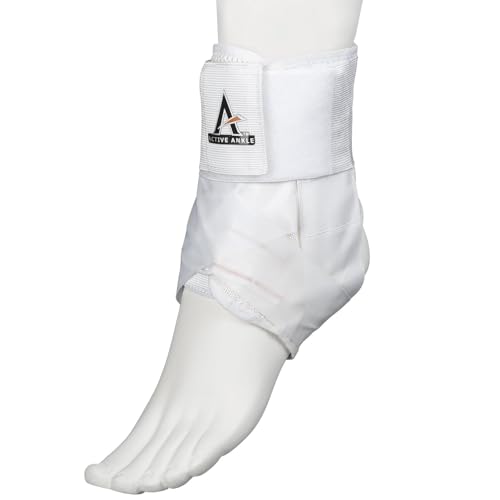
The Active Ankle AS1 Pro has earned its status as the default recommendation from volleyball coaches and orthopedists alike. Its pro-fit design removes excess material at the forefoot, which is the primary complaint against bulkier braces — it actually fits inside a standard volleyball shoe without raising your foot profile. The speed lacing eyelets reduce hotspots and make donning faster between sets, and the reinforced laces resist fraying even after a full season of weekly use.
The real differentiator is the non-stretch vertical straps that simulate the basket-weave and heel-lock technique. When you land on a foot under the net, those straps engage immediately to limit inversion without compromising your ability to point your toe for a jump serve. The non-slip silicone printing on the sole keeps everything anchored against the shoe insole, eliminating the dreaded brace-shift that causes blisters mid-tournament.
Long-term durability is exceptional — verified buyers report only needing a replacement every five years, even with club-level training volume. The criss-cross straps will loosen slightly over extended wear, but re-tightening takes seconds. For any volleyball athlete who has sprained an ankle and refuses to let it happen again, this is the benchmark.
Why it’s great
- Forefoot material is removed for a low-profile shoe fit
- Non-stretch vertical straps mimic athletic taping effectively
- Silicone sole printing prevents brace slippage during play
Good to know
- Criss-cross straps may loosen after prolonged wear
2. DonJoy Performance POD Ankle Brace
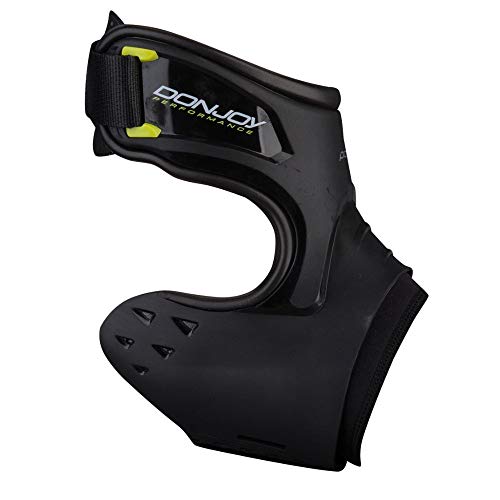
DonJoy’s POD is a different design philosophy altogether — instead of laces and straps, it uses a molded TPU shell that wraps around the calcaneus and adapts to your foot’s anatomical shape. The “On-Demand” technology means the shell remains flexible during normal movement but stiffens instantly when it detects an inversion moment. This is ideal for volleyball players who need full range for approach jumps but absolute lockdown when landing awkwardly.
The super-soft EVA underlayer lining makes this one of the more comfortable semi-rigid braces on the market. It doesn’t dig into the Achilles or the top of the foot, which are common pain points with hard-shell designs. The low-profile construction fits inside most mid-cut volleyball shoes, though players with narrow feet may need to size down for a truly snug shell fit.
Verified buyers with high-instinct feet report that the shell accommodates their arch height better than lace-up braces, which can create tight bands across the dorsal surface. The trade-off is that the POD provides less customizable tension than a lace-up — you get the shell’s inherent stiffness rather than incremental strap adjustments. For players returning from a Grade 2 sprain who prioritize roll prevention over micro-adjustability, this is a superb choice.
Why it’s great
- TPU shell stiffens only during inversion for natural mobility
- Soft EVA lining prevents skin irritation during long matches
- Anatomically adaptive shape works well for high insteps
Good to know
- Less adjustable than lace-up braces for tension customization
3. Ultra 360 Lace Up Ankle Brace
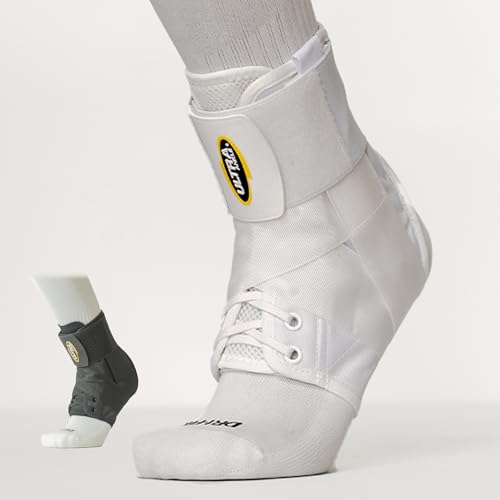
The Ultra 360 delivers a lace-up chassis with adjustable figure-8 straps at a mid-range price point that undercuts many competitors without sacrificing core protection. The lace-up base mimics the tension control of athletic taping, while the figure-8 straps add a secondary layer of stabilization specifically targeting the lateral and medial ligaments. This dual-system approach is exactly what volleyball players need — the laces handle midfoot compression, and the straps lock the talus from rolling.
The breathable nylon construction is noticeably lighter than neoprene-heavy braces, which matters during extended tournament days when heat and sweat can compromise fit. The low-profile design fits into court shoes with minimal accommodation — most users report they don’t need to size up. The Velcro straps are durable and maintain grip even after repeated adjustments during timeouts.
Verified buyer feedback from volleyball parents and players highlights the Ultra 360 as a brace that provides genuine security without the heavy, restrictive feel of traditional lace-up braces. The one caveat is that the lace tension requires careful initial setup — too tight causes foot cramping, too loose reduces stabilization. Once dialed in, it stays put for hours of play.
Why it’s great
- Lace-up plus figure-8 straps for comprehensive inversion protection
- Breathable nylon construction prevents heat buildup
- Fits into court shoes without needing to size up
Good to know
- Lace tension requires careful initial adjustment to avoid discomfort
4. Bauerfeind MalleoTrain Ankle Support

The Bauerfeind MalleoTrain operates in a different league from traditional lace-up braces. It is a medical-grade compression support with anatomically contoured viscoelastic massage pads that sit on the medial and lateral malleoli. These pads redistribute pressure during movement, which is clinically shown to reduce pain and swelling while improving proprioception — your brain’s ability to sense ankle position without looking at it. This proprioceptive feedback is critical for volleyball players who need to know exactly where their foot is in space during a jump set.
The compression knit is soft, breathable, and moisture-wicking, making it comfortable for all-day wear through multiple practices and games. The comfort zone on the instep prevents pressure against the dorsal foot, a common complaint with thicker braces. The pull-on design is the easiest to don and doff of any option here, which matters for players who need to slip it on between rotations during a tournament.
The trade-off is that the MalleoTrain offers moderate compression and proprioceptive stabilization rather than the rigid mechanical restriction of a lace-up brace. It is best suited for players with mild instability, chronic soreness, or those in the recovery phase of a sprain. For athletes who need aggressive roll prevention during high-intensity blocking and hitting, a lace-up brace is still the safer bet. The German materials and construction are durable enough to survive machine washing without losing shape.
Why it’s great
- Viscoelastic pads redistribute pressure and reduce swelling
- Pull-on design is quick and easy for tournament rotations
- Medical-grade knit is breathable, washable, and durable
Good to know
- Provides moderate support, not full mechanical roll restriction
5. ARYSE IFAST Ankle Brace

The ARYSE IFAST takes a unique approach by blending thermoplastic polyurethane (TPU) with neoprene and lycra to create a brace that feels more like a high-tech compression sock than a traditional stabilizer. The material is engineered to mimic the natural defense systems of the ankle — flexible during controlled movement but providing resistance when the joint enters a vulnerable range.
The slip-on design eliminates the donning time of laces and straps entirely. It slides over the foot and melds to your anatomy within minutes of wear. The low profile is exceptional — verified buyers report using it inside boots, cleats, and even flip-flops without discomfort. For volleyball, it fits inside the tightest court shoes without raising the heel or forefoot, preserving court feel for defensive digs.
However, the IFAST’s reliance on material tension rather than mechanical constraint means it is best suited for players with mild instability or those who want proactive prevention rather than reactive lockdown. The sizing is inconsistent — some users find the fit too tight over the instep, while others find it too loose for adequate support. Check the brand’s sizing guide carefully and consider ordering a pair (two units) if you plan to brace both ankles symmetrically.
Why it’s great
- Ultra-low profile fits in any volleyball shoe without bulk
- Dynamic TPU/neoprene material provides natural-feeling resistance
- Slip-on design is the easiest to use between plays
Good to know
- Sizing inconsistency — measure carefully before ordering
- Provides moderate support, not mechanical roll prevention
6. McDavid Ankle Support with Strap

The McDavid 432R is the classic sleeve-plus-strap design that has been a staple in volleyball bags for decades. The 1/8-inch thick neoprene provides therapeutic heat retention and compression, which helps with chronic achiness and proprioceptive awareness. The figure-6 strap adds a moderate level of inversion resistance without the bulk of a full lace-up system. This is the brace you wear for practices, warm-ups, and lower-risk games where you want support without feeling encumbered.
Comfort is the 432R’s strongest suit. The neoprene is soft against the skin, and the sleeve design distributes compression evenly across the ankle and lower shin. Verified buyers report wearing it all day — including during sleep for post-sprain recovery — without discomfort. The low-bulk construction fits into most shoe types, though the strap can add slight width around the ankle that may feel tight in narrow shoes.
The compromise is that the 432R is not designed to stop severe inversion rolls. The neoprene sleeve provides compression and warmth, not mechanical rigidity. The strap adds some resistance, but it is not a substitute for the basket-weave taping effect of a lace-up brace. Sizing runs small — most buyers recommend ordering one to two sizes larger than your normal shoe size. For players with a history of Grade 2 or Grade 3 sprains, this is best used as a daily comfort brace, not a game-day protector.
Why it’s great
- Soft neoprene sleeve is comfortable for all-day wear
- Provides therapeutic heat retention for chronic ache relief
- Low bulk fits under most shoes without sizing up
Good to know
- Not designed to prevent severe inversion rolls
- Sizing runs small — order 1-2 sizes larger than normal
7. McDavid Bio-Logix Ankle Brace
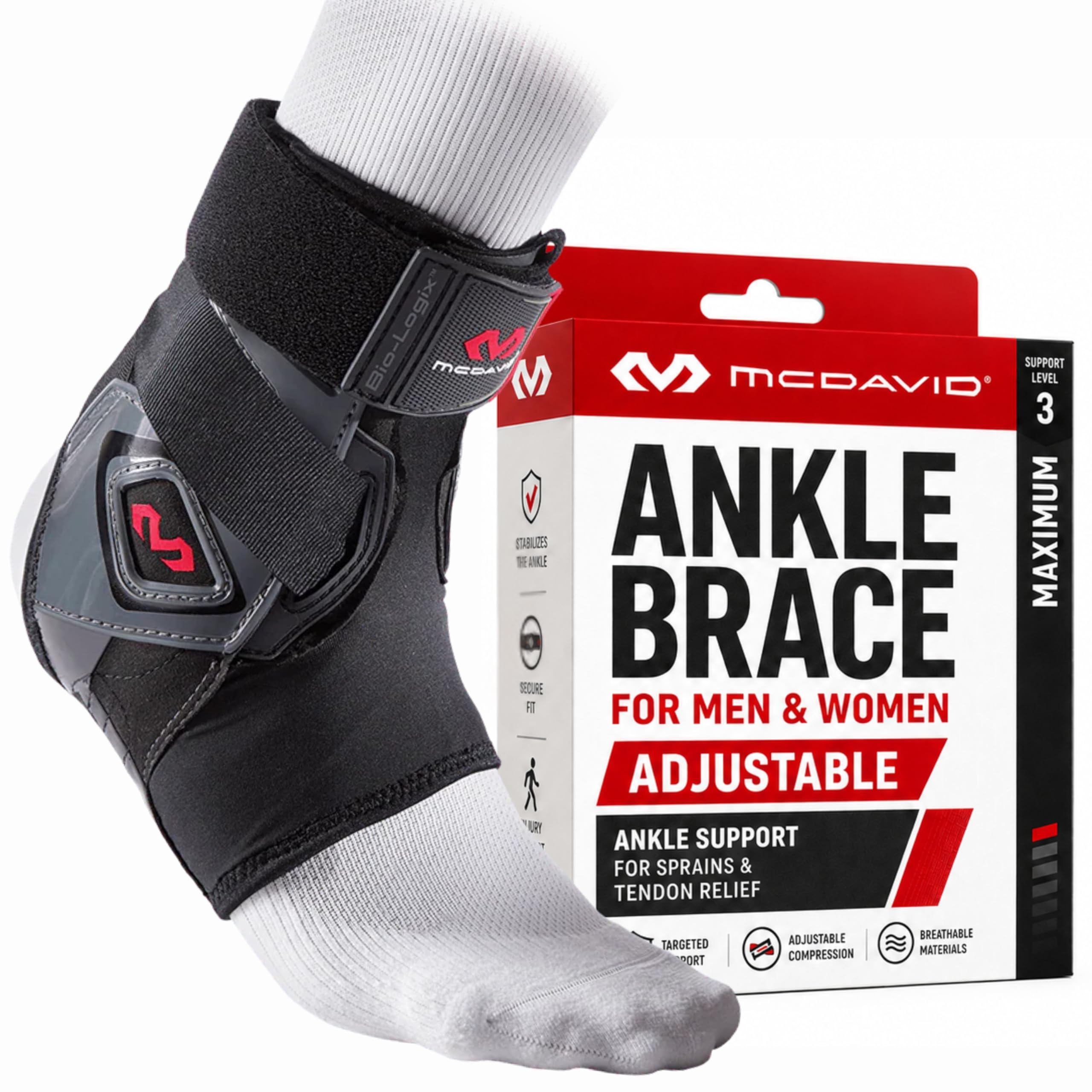
The McDavid Bio-Logix (4197) introduces a flex-link hinge system to the ankle brace category, adding a level of mechanical support that bridges the gap between a soft sleeve and a rigid orthosis. The hinge is positioned laterally to resist inversion without blocking plantarflexion — exactly what a volleyball player needs when jumping and landing. The memory foam padding around the malleoli and Achilles improves comfort over long sessions, reducing the chafing common with plastic-hinge braces.
The anatomically specific design (sold separately for left and right foot) ensures the hinge sits precisely over the lateral ligaments. The multiple anchor straps allow for tension customization across the midfoot and lower shin. For players returning from a Grade 1 or Grade 2 sprain, the Bio-Logix provides a confidence-inspiring level of rigid support without the full immobilization of a walking boot. Verified buyers praise its effectiveness for daily construction work and recreational sports alike.
The main drawback is bulk — the hinge and padding add thickness that may not fit inside tight volleyball shoes without sizing up. The sizing also presents challenges; some users find the small too tight while the medium/large is too loose even with thick socks. The price point is higher than entry-level sleeve braces but competitive with premium lace-up models. For players who need ligament-grade support for high-risk play, the Bio-Logix is a solid choice despite these sizing compromises.
Why it’s great
- Flex-link hinge resists inversion without blocking toe point
- Memory foam padding reduces chafing during extended wear
- Multiple anchor straps allow customizable tension
Good to know
- Bulky hinge may not fit in all low-profile volleyball shoes
- Sizing can be inconsistent between left and right foot
FAQ
Can I wear an ankle brace inside my volleyball shoes without sizing up?
How tight should a lace-up volleyball ankle brace be?
Should I wear ankle braces on both feet for volleyball?
Can an ankle brace prevent a high-ankle sprain in volleyball?
How often should I replace my volleyball ankle brace?
Final Thoughts: The Verdict
For most volleyball players, the best ankle support for volleyball is the Active Ankle AS1 Pro because its non-stretch vertical straps and low-profile forefoot design deliver athletic-tape-level inversion protection without compromising shoe fit. If you need a brace that adapts to high-instinct feet and provides On-Demand roll prevention, grab the DonJoy Performance POD. And for players dealing with chronic achiness who want medical-grade compression and proprioceptive feedback, nothing beats the Bauerfeind MalleoTrain.