
Handing a kid a flimsy, single-speed coaster-brake cruiser after they’ve outgrown training wheels is a guaranteed way to kill their love for riding before it starts. The jump to a real 20-inch mountain bike is the first moment they feel actual control — the click of a trigger shifter, the bite of a disc brake on a dusty descent, the way a suspension fork soaks up a curb drop that used to rattle their teeth. The wrong bike makes riding a chore; the right one makes them beg for one more lap.
I’m Min — the co-founder and writer behind Gadgets Feed. My research for this guide involved cross-referencing drivetrain specs, brake types, tire widths, and frame geometries across dozens of models to isolate the few that actually deliver the performance and durability parents expect without the frustration of constant adjustments or broken components.
Whether your young rider needs the stability of a fat tire for loose trails or the lightweight feel of an aluminum frame for easier handling, finding the best 20 inch mtb means balancing their height, skill level, and the terrain they’ll tackle most often.
How To Choose The Best 20 Inch MTB
The 20-inch wheel size typically fits riders aged 6 to 12 and heights between 42 and 60 inches, but padding a few inches on either side of those numbers is the first mistake parents make. A bike that’s too big forces the child to tip-toe at stops; one that’s too small cramps their knees into their chest on every pedal stroke. Measure their inseam — not their total height — and match it to the bike’s minimum standover height before you read a single spec sheet.
Drivetrain Reality Check
A single-speed is fine for flat neighborhoods and short rides, but the moment your child hits even a moderate hill, they’ll either spin out or stall. A 6- or 7-speed drivetrain with a trigger shifter — not a twist grip, which small hands struggle to turn — gives them the mechanical advantage to climb without exhausting themselves. A 21-speed setup on a 20-inch frame is overkill for most riders, but the wider gear range becomes useful if they ride mixed terrain with steep sections and straightaways.
Brake Power for Small Hands
V-brakes work fine when dry and clean, but they lose bite quickly on muddy trails or wet pavement. Mechanical disc brakes sacrifice some modulation but deliver consistent stopping power regardless of weather, and the lever requires no more hand strength than a V-brake when properly adjusted. Avoid coaster brakes (the kind that stop when you pedal backward) on any mountain bike — they lock the rear wheel unpredictably on descents and prevent the child from positioning their feet properly for corners.
Tire Width and Suspension
Standard 20 x 2.125-inch tires are light and fast on pavement but skitter over loose gravel and roots. A 20 x 3.0-inch fat tire adds significant rolling resistance on pavement but provides near-bulletproof traction on sand, snow, and soft dirt — the trade-off is weight and slower acceleration. A suspension fork with basic coil springs absorbs the vibration from washboard trails and curb cuts, but avoid bikes with rear suspension at this price point: the cheap coil shocks add weight without enough damping to actually improve traction, and they often rob pedaling efficiency.
Quick Comparison
On smaller screens, swipe sideways to see the full table.
| Model | Category | Best For | Key Spec | Amazon |
|---|---|---|---|---|
| RoyalBaby 20″ Aluminum | Premium | Lightweight climbing & trail riding | 7-speed, aluminum frame, 22.5 lbs | Amazon |
| Glerc Mars Fat Tire | Premium | Sand, snow, and loose terrain | 2.8″ tires, Shimano 6-speed, disc brakes | Amazon |
| JOYSTAR Minifat 20″ | Mid-Range | Maximum traction on loose trails | 3.0″ knobby fat tires, 7-speed | Amazon |
| Glerc 21-Speed | Mid-Range | Wide gear range for mixed trails | 21-speed drivetrain, disc brakes | Amazon |
| JOYSTAR Contender 20″ | Mid-Range | Full suspension for smoother ride | Dual suspension, single-speed, V-brakes | Amazon |
| AVASTA Govet 20″ | Mid-Range | Shimano components at entry-level price | Shimano TX30 trigger, 6-speed | Amazon |
| WEIZE Kids Mountain Bike | Budget | Dual suspension on a budget | 6-speed, front & rear suspension | Amazon |
| RoyalBaby BMX 20″ | Specialty | Street/park freestyle and stunts | Single-speed, U-brakes, trick pegs | Amazon |
In‑Depth Reviews
1. RoyalBaby 20″ Kids Mountain Bike (Aluminum)
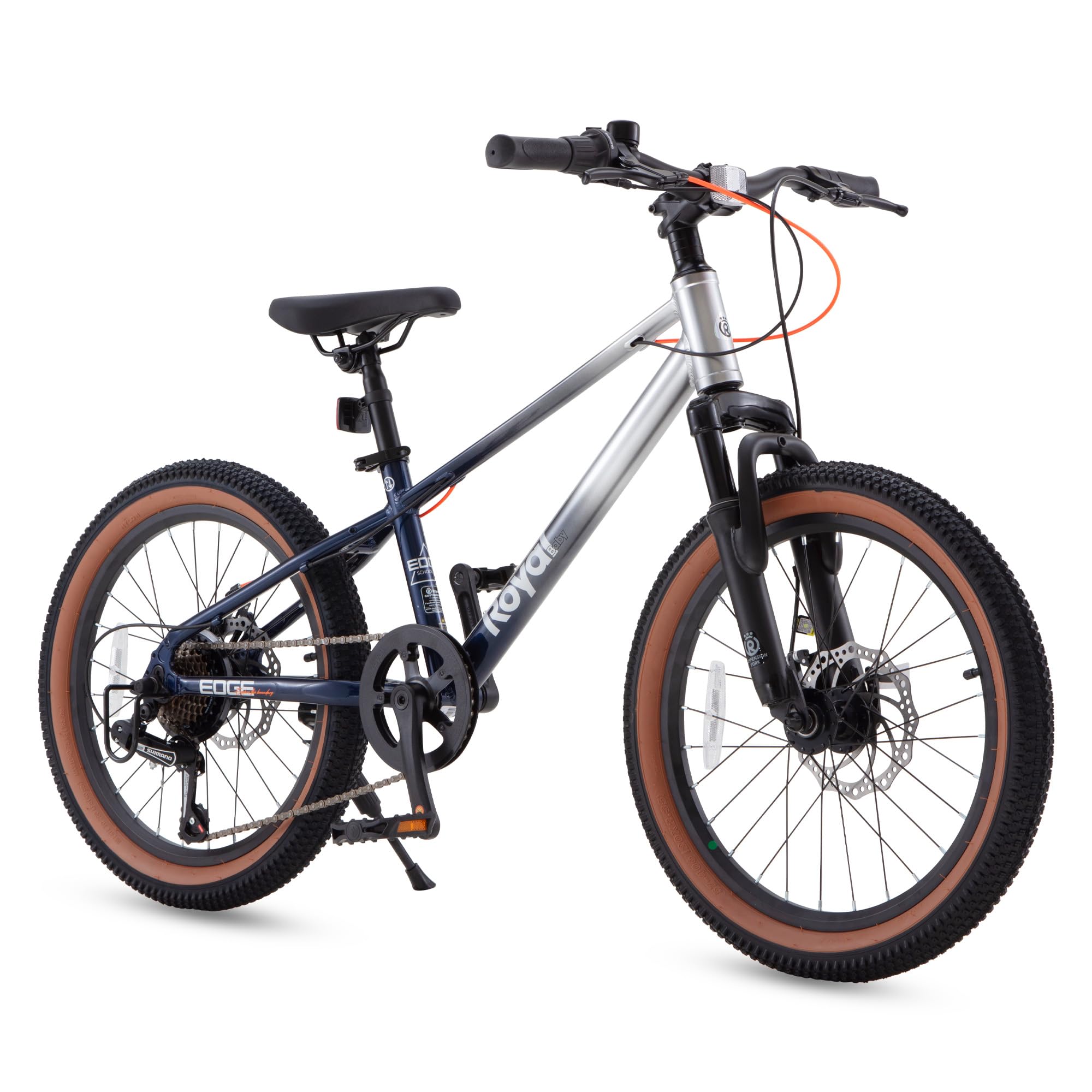
The RoyalBaby 20-inch is the only bike on this list that marries a genuine lightweight aluminum alloy frame with a proper 7-speed drivetrain and mechanical disc brakes, all tuned specifically for riders aged 6-10. At roughly 22.5 pounds, it’s dramatically easier for a child to accelerate, lift over obstacles, and manage at slow speeds compared to the 28-31 pound steel alternatives. The frame’s tapered head tube and quality welds — noted by an engineer reviewer — suggest durability well beyond its price tier, and the included suspension fork, while basic, handles gravel path chatter without the pogo-stick feel of ultra-cheap coil forks.
The 7-speed trigger shifter is a major upgrade over the twist-grip shifters found on cheaper bikes; small fingers can click through gears without overshooting or struggling with torque. The front and rear disc brakes provide predictable stopping power in wet conditions, and the knobby MTB tires with a puncture-resistant layer reduce the frequency of flats during off-road use. Assembly requires typical work — attaching the front wheel, pedals, and handlebars — but the packaging is secure and the included tools are functional.
The trade-off is that the suspension fork is a budget unit with limited damping adjustment, and taller riders at the 10-year-old upper limit may find the seat post maxed out before they hit a 56-inch inseam. Still, for a family looking for a single bike that will last through multiple seasons of trail riding without the weight penalty of steel, this is the most performance-per-pound option available in the 20-inch class.
Why it’s great
- Lightweight aluminum frame reduces fatigue on longer rides
- 7-speed trigger shifter provides proper gear range for hills
- Disc brakes offer reliable stopping in wet and muddy conditions
Good to know
- Suspension fork is basic with no tuning options
- May feel small for riders approaching 56 inches tall
- Minor cosmetic imperfections noted in some units
2. Glerc Mars 20″ Fat Tire Bike
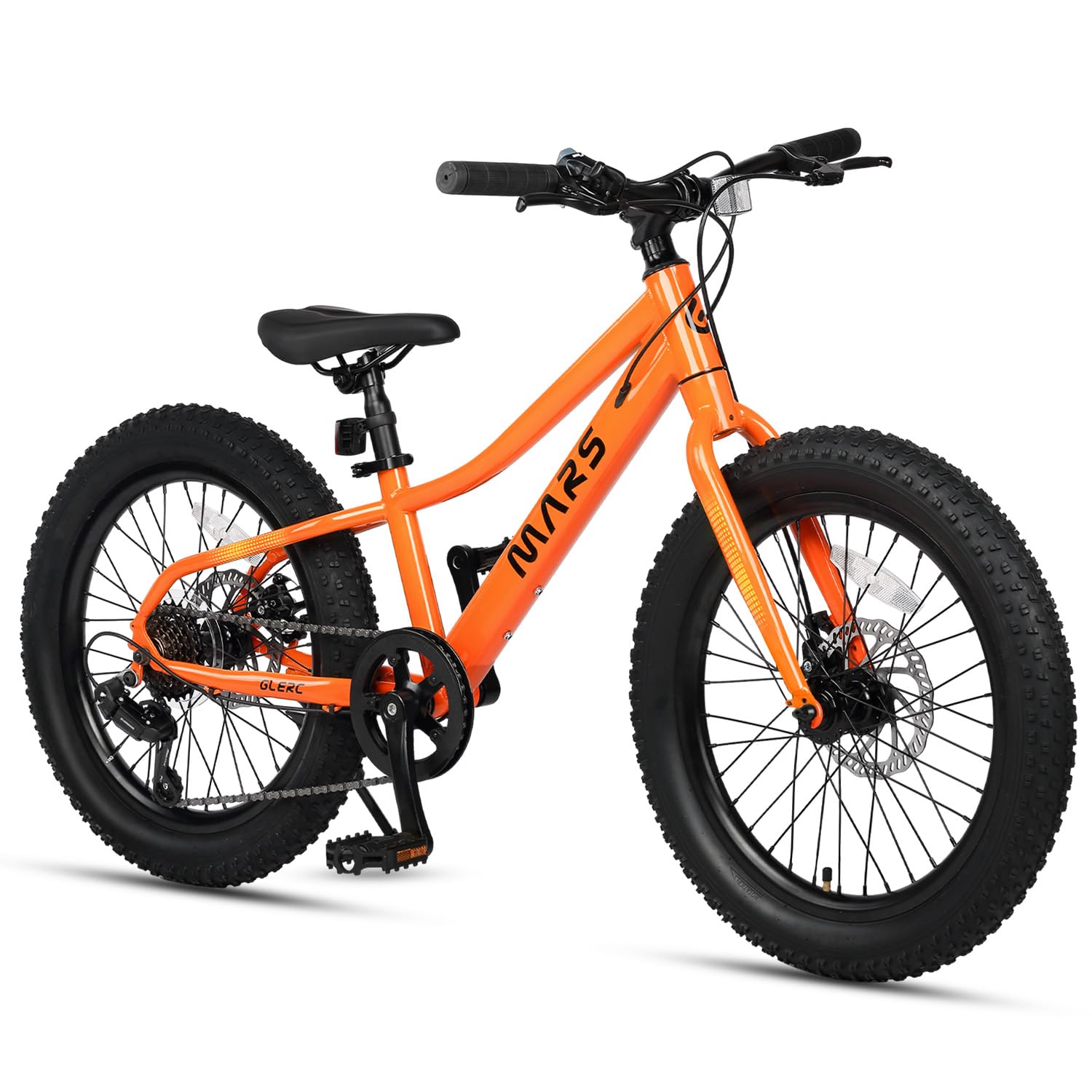
The Glerc Mars takes a different approach than the standard 2.125-inch tire bikes: it uses 2.8-inch wide tires that float over soft sand, loose gravel, and packed snow rather than digging in and losing momentum. The 6-speed Shimano derailleur system — a step above generic no-name drivetrains — gives riders a low-enough gear to crawl up steep, loose climbs without spinning out, and the trigger shifter maintains the positive click feel that kids need to learn gear discipline. The steel frame weighs 31 pounds, which is heavier than the aluminum RoyalBaby but expected given the mass of the tires and wheels.
The front and rear mechanical disc brakes are a necessary pairing with the wide, high-volume tires; V-brakes would lose bite rapidly when the rims get caked with mud or sand. The orange color option is bright and distinctive, and multiple reviewers noted the bike looks even better in person than the listing photos suggest. Assembly times average around 25 minutes with the bike coming 85% pre-assembled, and the included bell and reflectors are a useful bonus for safety on mixed-use paths.
The biggest trade-off is the sheer weight — accelerating from a stop requires more effort, and carrying the bike up stairs or loading it into a car is noticeably harder than a standard 20-inch model. The fat tires also hum louder on pavement at higher speeds. For a child whose primary riding surface is loose terrain, this is the right tool, but if they spend most of their time on paved streets, the rolling resistance will frustrate them.
Why it’s great
- 2.8-inch tires provide exceptional flotation on sand and snow
- Shimano 6-speed drivetrain shifts reliably under load
- Disc brakes work consistently in adverse weather
Good to know
- 31-pound frame is heavy for smaller or weaker riders
- Fat tires create noticeable rolling resistance on pavement
- Limited color options compared to competitors
3. JOYSTAR Minifat 20″ Fat Tire Bike

The JOYSTAR Minifat sets itself apart by using true 3.0-inch knobby fat tires — a full 0.2 inches wider than the Glerc Mars — on a 20-inch wheelbase, making it the most specialized tire option in this lineup. Those tires provide massive contact patches that claw into soft dirt, sand, and even packed snow, and the 7-speed twist-grip drivetrain offers one more gear than the 6-speed competitors for finer cadence adjustment on rolling terrain. The steel frame and fat tire combo push the weight north of 28 pounds, but the bike feels planted and stable at low speeds, which builds confidence in new riders.
The dual mechanical disc brakes are paired with the wide tires well, delivering enough stopping force to manage the extra rotational mass of the 3.0-inch wheels. The included kickstand is heavy-duty enough to support the bike on uneven ground without bending, and the DIY decal kit — a small touch — lets kids personalize the bike. The twist-grip shifter is the weakest point: smaller hands may struggle to rotate the grip through all 7 speeds, and the mechanism can become stiff over time if not lubricated.
One recurring complaint is the lack of clear assembly instructions — some units shipped without a manual, and the brand’s website didn’t have a replacement video at the time. Additionally, a few reviewers reported chains popping off during the first week, which often points to a misaligned rear derailleur that needs adjustment out of the box. If you’re comfortable tuning a derailleur, this bike offers the widest tire in the category at a price that undercuts most competitors.
Why it’s great
- 3.0-inch knobby tires offer unmatched traction on loose surfaces
- 7-speed drivetrain provides good range for varied terrain
- Sturdy kickstand and included accessories add value
Good to know
- Twist-grip shifter is harder for small hands to operate
- Assembly instructions can be missing or unclear
- Derailleur may require tuning out of the box
4. Glerc 21-Speed Kids Mountain Bike
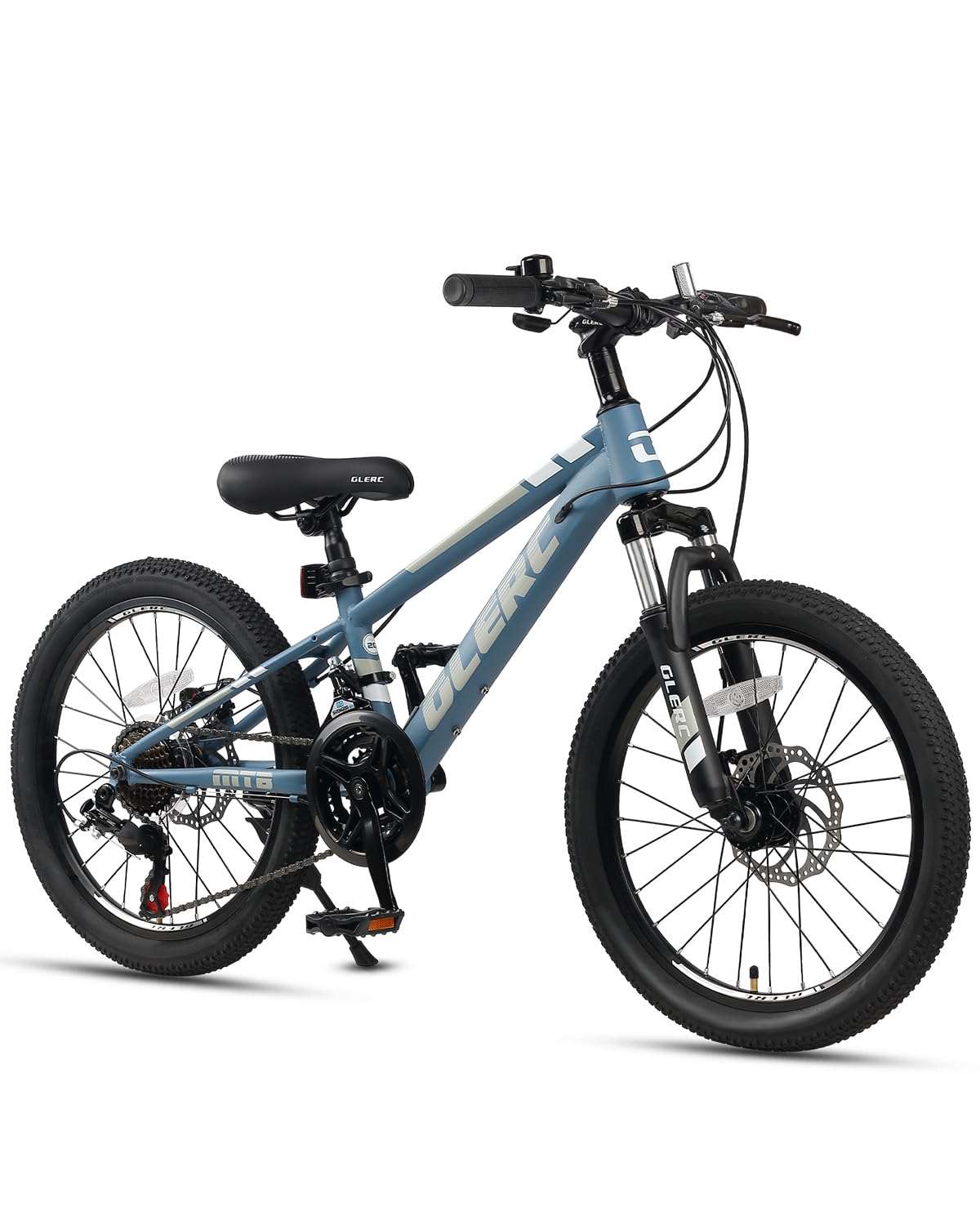
Most 20-inch bikes cap their drivetrain at 7 speeds, but the Glerc packs a triple front chainring with a 7-speed rear cassette for a total of 21 gears — a spec usually reserved for 24- or 26-inch youth bikes. This gives the rider a genuinely useful low gear for steep paved climbs and a high gear for maintaining speed on flats, making it the most versatile option for families who ride a mix of neighborhood streets and dedicated MTB trails. The high-carbon steel frame weighs 30 pounds, but the gear range compensates somewhat because the rider can always find an efficient cadence.
The front disc brake provides stronger stopping power than the rear V-brake that some competitors use, though the rear is a linear-pull V-brake rather than a second disc. The suspension fork feels basic but functional, with enough travel to absorb trail vibrations without bottoming out on small jumps. Reviewers consistently praised the build quality and ease of assembly, with several noting the bike required minimal adjustment to the derailleur or brakes right out of the box.
The complexity of a 21-speed drivetrain is a double-edged sword: younger or less-coordinated riders may struggle with coordinating three front shift positions, and dropping the chain off the front chainrings is more likely if the limit screws aren’t perfectly set. The fork also lacks a lockout, so pedaling on pavement will waste some energy into fork bob. For a child who already understands gear shifting and rides varied terrain regularly, this is the most capable bike in the value tier.
Why it’s great
- 21-speed drivetrain covers the widest gear range in this category
- Disc brake up front provides confident stopping power
- Build quality and assembly experience outshine cheaper models
Good to know
- 30-pound frame is heavy for younger riders
- Triple chainring adds complexity for novice gear-shifters
- No suspension fork lockout for pavement riding
5. JOYSTAR Contender 20″ Full Suspension

The JOYSTAR Contender is one of the few 20-inch bikes that comes with both a front suspension fork and a rear spring shock, creating a full-suspension experience that smooths out bumpy grass fields, gravel paths, and root-filled singletrack. It’s a single-speed bike — no derailleur, no shifters — which eliminates the complexity and maintenance of a geared drivetrain while keeping the price accessible. The 2.125-inch wide pneumatic tires add an extra layer of cushion, and the hi-ten steel frame feels solid without being excessively heavy at 26.5 pounds.
V-brakes front and rear handle stopping duties, and they work well when dry, but they lose effectiveness quickly in wet or muddy conditions. Assembly is straightforward, though several reviewers noted that the rear brake caliper needs careful centering to avoid rubbing, and the set-screws for adjustment are tiny and fiddly. The rear suspension is a coil-over unit that sags noticeably under riders over 90 pounds, but for the intended weight range of a 6-9 year old, it provides noticeable bump absorption.
The single-speed limitation is the Contender’s biggest vulnerability: even a moderate hill will force the rider to stand and grind, and long flat sections mean they spin out with nowhere to go. The included fenders are a thoughtful addition that keep trail spray off the rider’s back, and the kickstand is robust enough for parking on soft ground. This bike works best for flat, bumpy terrain where gear range isn’t needed.
Why it’s great
- Front and rear suspension provides the smoothest ride in the class
- Single-speed drivetrain is maintenance-free for parents
- Included fenders and kickstand add everyday practicality
Good to know
- Single-speed limits climbing and top speed on mixed terrain
- Rear suspension sags under heavier riders over 90 lbs
- V-brakes lose stopping power in wet conditions
6. AVASTA Govet 20″ Kids Mountain Bike
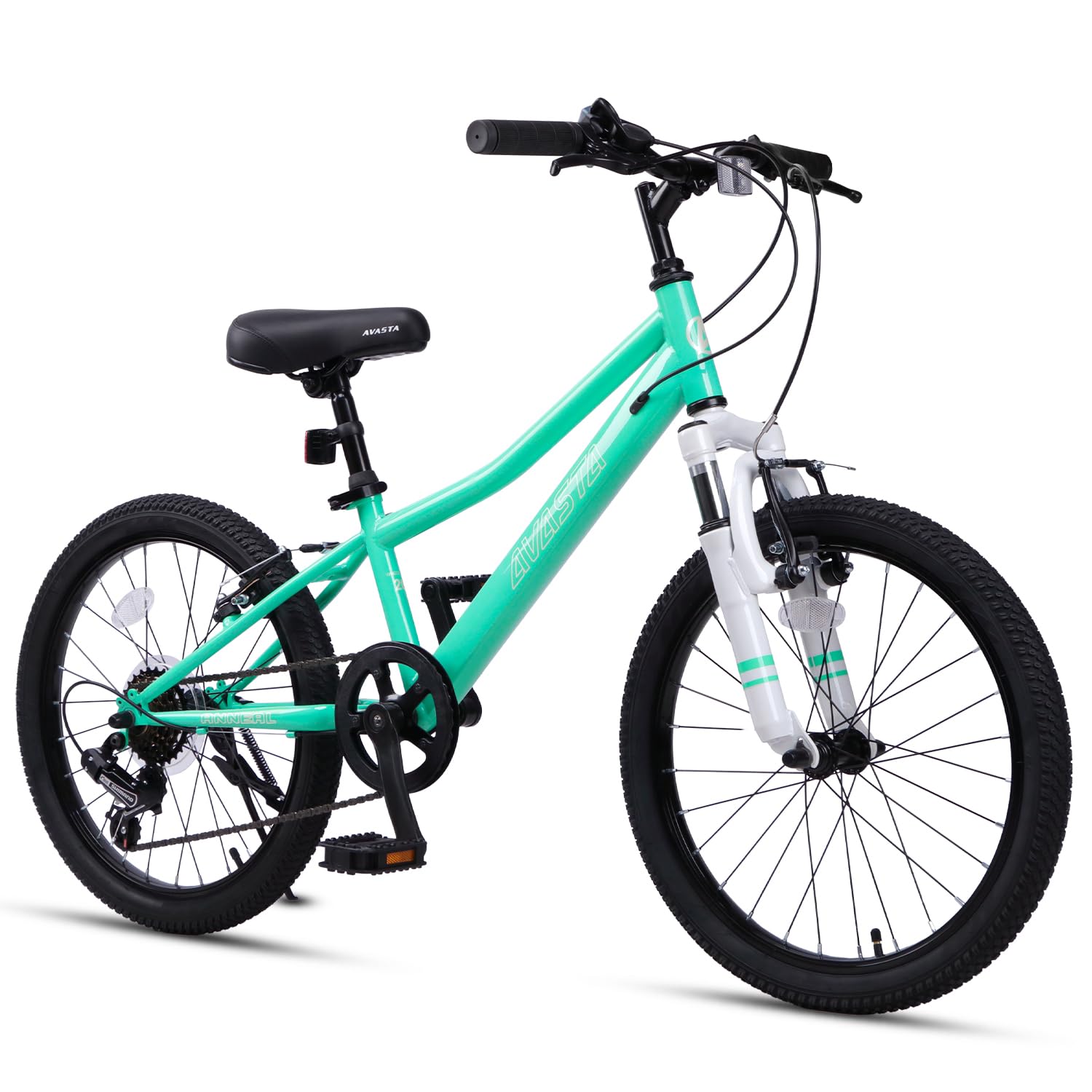
The AVASTA Govet differentiates itself by using a Shimano TX30 trigger shifter, a Shimano TZ500 rear derailleur, and a Shimano freewheel — a genuine Japanese drivetrain that shifts more precisely and lasts longer than the generic unbranded components found on most bikes in the range. The carbon steel frame keeps weight at 25.5 pounds, which is competitive for this tier, and the high-strength suspension fork has enough stanchion durability to handle repeated impacts from curb drops and mild trail obstacles. The rubber tires are 20 x 2.125 inches, providing low rolling resistance for paved riding while retaining enough tread for light off-road work.
The dual V-brakes use linear-pull arms that provide adequate stopping power when dry, and the left-hand lever controls the front wheel while the right controls the rear — a standard configuration that teaches proper braking technique from the start. The mint green color option is distinctive and stands out in a sea of black and blue frames, and the saddle is wide enough to be comfortable for multi-mile rides. The bike arrives 85% assembled, and most reviewers reported completing the build in under 30 minutes with the included tools.
The Achilles heel of the Govet is quality control consistency. A small but vocal subset of reviews reported defective front forks that were misaligned, chains that jumped off during the first ride, and support representatives who were difficult to understand. The V-brakes also need careful adjustment to avoid rubbing against the rim, and the cable routing can cause friction that stiffens the lever action over time. If you get a good unit, the Shimano components make this the best-shifting bike in its price band.
Why it’s great
- Shimano drivetrain shifts more reliably than generic alternatives
- 25.5-pound frame is lighter than many steel competitors
- Trigger shifter is ideal for teaching proper gear discipline
Good to know
- Quality control varies; some units arrive with frame defects
- V-brakes require precise centering to avoid drag
- Customer support responsiveness is inconsistent
7. WEIZE 20 Kids Mountain Bike
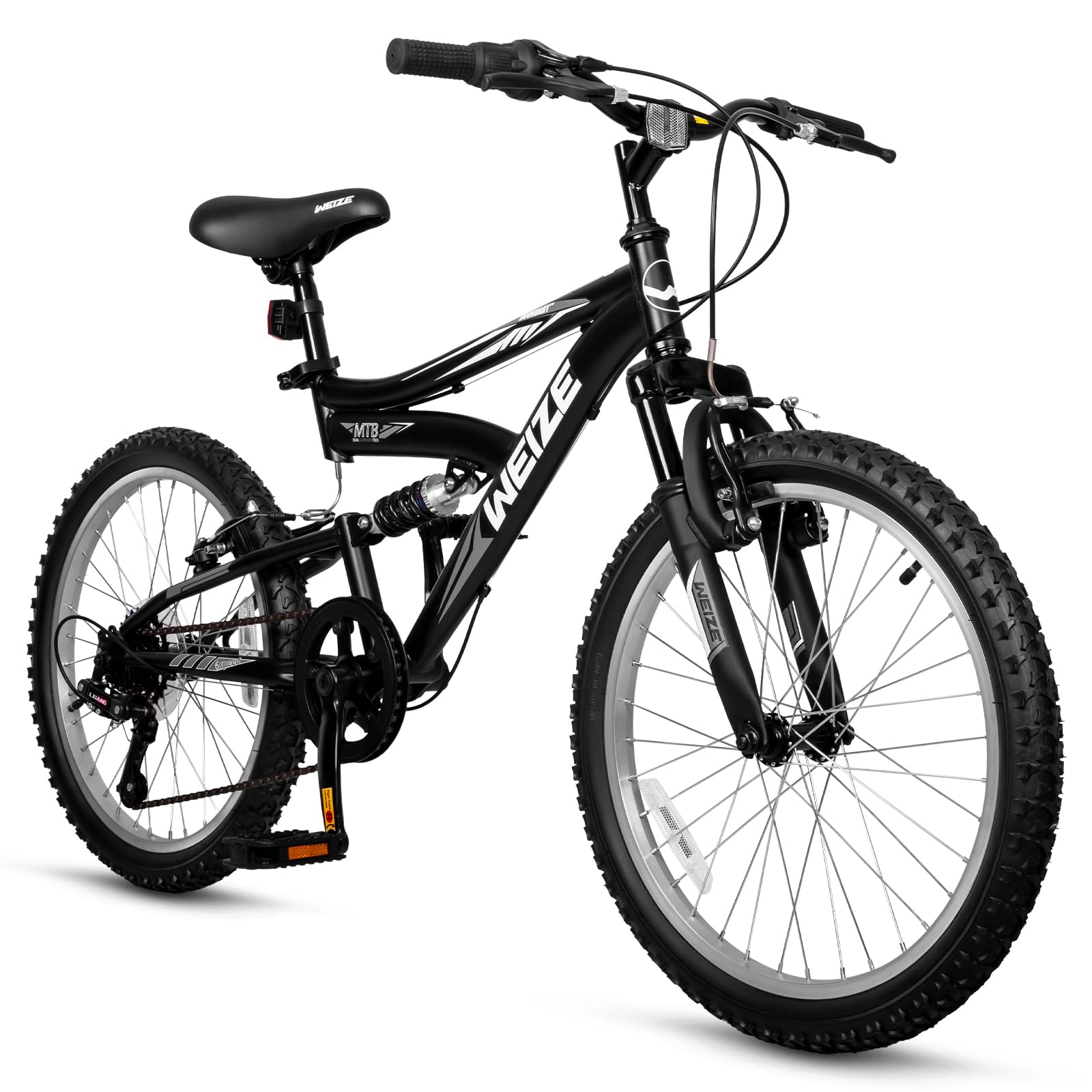
The WEIZE 20-inch is the price leader in the geared category, offering both front and rear suspension and a 6-speed derailleur system at a price that undercuts most single-speed bikes. The high-carbon steel frame has a deliberately low standover height, which makes it easier for shorter riders — the 42-inch minimum specified — to mount and dismount without fear of catching the top tube. The 20 x 2.125-inch tires are standard width but use a rubber compound that reviewers noted held up well against punctures from glass and thorny brush.
The dual V-brakes are functional but basic, and the coaster brake integrated into the rear hub provides a backup stopping method — a feature that can be a safety net for kids still building hand strength. The 6-speed trigger shifter, while not a Shimano unit, shifts adequately once properly indexed, and the padded seat is wide enough to prevent saddle soreness on hour-long rides. Assembly is manageable at around 30 minutes, and the included kickstand is a welcome addition that many budget bikes omit.
The rear suspension on the WEIZE is a simple elastomer/coil unit that provides some bump absorption but lacks any damping adjustment, and under heavier riders it compresses fully, turning the bike into a hardtail effectively. The gear shifter was reported by multiple reviewers to be stiff and difficult for small hands to actuate while riding, which could frustrate newer cyclists. The coaster brake also makes it impossible to pedal backward to reposition the pedals for corners, a limitation that experienced young riders will notice.
Why it’s great
- Low standover height is ideal for shorter or less confident riders
- Dual suspension and 6-speed drivetrain at an aggressive price
- Coaster brake provides redundant stopping for safety
Good to know
- Gear shifter is stiff and hard for small fingers to operate
- Rear suspension bottoms out easily under heavier riders
- Coaster brake limits pedal positioning for cornering
8. RoyalBaby BMX 20″ (Carbon Steel)
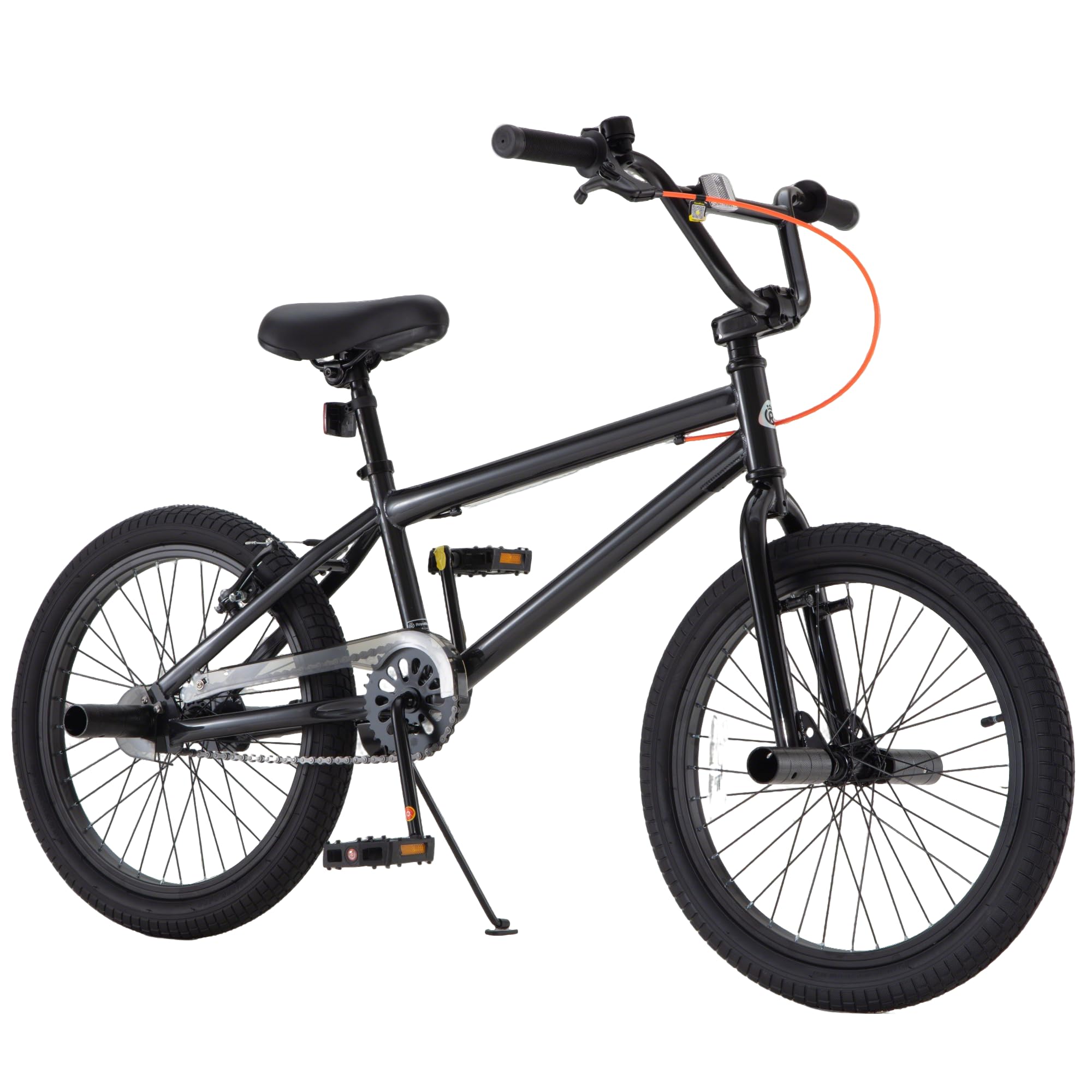
The RoyalBaby BMX isn’t a mountain bike — it’s a freestyle street/park BMX designed for skatepark sessions, curb hopping, and learning basic tricks — but it belongs in this discussion because many families buy a 20-inch MTB for general neighborhood riding when a BMX would actually serve the purpose better. The carbon steel frame (a 6061 aluminum option is available for a premium) is built to withstand repeated impacts from failed bunny hops and stair drops, and the 36T/16T gear ratio provides quick acceleration that’s ideal for short sprints between obstacles. The included pair of trick pegs let the rider learn grinds and stalls immediately without aftermarket purchases.
The U-brake design — one rear brake only — is standard BMX practice, as front brakes can send a rider over the bars during a trick attempt. The lack of gears and front suspension makes the bike simpler and lighter than any MTB on this list, and the sealed bearing option on the aluminum model provides near-frictionless hub rotation that significantly extends coasting distance. The 95% pre-assembled delivery means you can have this bike ride-ready in under 20 minutes, and the frame carries a lifetime warranty that covers manufacturing defects.
The biggest adjustment for a parent expecting an MTB is the riding position: the BMX geometry puts the rider more upright with a shorter top tube, which feels cramped during long-distance pedaling but gives better leverage for manualing and wheelies. The single-speed drivetrain makes any incline over 5% a leg-burner, and the lack of a front brake means stopping distance on pavement descents is longer than any MTB. This is a specialized tool for a specific style of riding, not a general-purpose trail machine.
Why it’s great
- Built-in trick pegs and BMX geometry for skatepark progression
- 95% pre-assembled for the fastest setup in the category
- Lifetime frame warranty covers manufacturing defects
Good to know
- Single-speed and upright geometry are poor for long trail rides
- Rear-only brake increases stopping distance on descents
- 33-pound steel frame is heavy for a tuck-no-hand carry
FAQ
What is the ideal rider height for a 20 inch mountain bike?
Should I get a 20 inch MTB with front suspension or a rigid fork?
Why avoid coaster brakes on a mountain bike for kids?
Final Thoughts: The Verdict
For most families, the best 20 inch mtb winner is the RoyalBaby 20-inch Aluminum because its sub-23-pound frame and proper 7-speed disc brake setup give a child the confidence to ride farther and try harder terrain without being held back by weight or weak components. If your child rides mostly on loose sand or snow, grab the Glerc Mars Fat Tire for its 2.8-inch tires and Shimano drivetrain. And for the kid who wants to session the skatepark rather than grind up a climb, nothing beats the RoyalBaby BMX 20-inch with its trick pegs and bombproof frame.