
The leap from a toy-grade quadcopter that drifts in a light breeze to a real FPV-capable drone that holds its GPS lock, captures stable video, and returns home when the battery runs low is the single biggest hurdle for new pilots. You need a drone with a brushless motor, a reliable satellite lock, and a camera that actually delivers usable footage—not a plastic brick that fights the wind.
I’m Min — the co-founder and writer behind Gadgets Feed. I’ve spent hundreds of hours cross-referencing flight times, gimbal types, transmission systems, and real-world crash durability across the sub-250g and entry-level FPV market to find the drones that genuinely reward a beginner’s investment.
Whether you’re looking for palm-sized autonomous follow-me or a full FPV kit with goggles and a motion controller, this guide breaks down the nine best options to help you pick the right beginner fpv drone that matches your skill level and budget.
How To Choose The Best Beginner FPV Drone
Picking your first real drone means filtering out toys and focusing on the specs that matter for learning and actually keeping the drone in one piece. Four factors separate a frustration-free experience from a lawn-dart disaster.
Brushless Motors vs. Brushed Motors
Brushed motors wear out after roughly 10–15 hours of flight. Brushless motors last hundreds of hours, deliver more torque, and handle wind much better. Every drone on this list uses brushless motors — that is your baseline for anything beyond a living-room toy.
GPS Hold & Auto Return
A beginner’s best insurance policy is a drone that locks onto satellites, holds its position in the air without constant stick input, and automatically flies back to its takeoff point when the battery gets low or the signal drops. All the GPS-enabled models in this guide offer this core safety net.
Camera Stabilization: Gimbal vs. EIS
A 3-axis mechanical gimbal physically counteracts every bump and wind gust, giving you butter-smooth 4K footage. Electronic Image Stabilization (EIS) crops the sensor and uses software to smooth motion—it works but loses a bit of resolution and struggles in low light. For dedicated camera work, a gimbal wins; for casual shareable clips, good EIS is fine.
Flight Time & Battery Management
Look for a total flight time of at least 40 minutes when using the included batteries—that usually means two or three packs. Also check whether the battery management system displays individual cell voltage and prevents over-discharge, which extends the lifespan of your lithium-ion packs.
Quick Comparison
On smaller screens, swipe sideways to see the full table.
| Model | Category | Best For | Key Spec | Amazon |
|---|---|---|---|---|
| DJI Neo 2 Motion Fly More Combo | Premium FPV Kit | Immersive FPV with goggles | 4K, 1606mAh, RC Motion 3 | Amazon |
| DJI Neo Motion Fly More Combo | Premium All-in-One | Palm takeoff & follow-me | 135g, 4K, 3 batteries | Amazon |
| Gleesfun G11PRO | Mid-Range Gimbal | Stabilized 4K on a budget | 3-axis gimbal, 10000ft range | Amazon |
| Potensic ATOM LT | Lightweight GPS | Long flight with GPS features | 80 min total, 2.5K EIS | Amazon |
| BETAFPV Cetus Pro FPV Kit | FPV Kit | Learning acro/manual flight | Goggles, TX, turtle mode | Amazon |
| PLEGBLE GPS Drone PL715 | Budget GPS | First GPS drone with safety net | 46 min flight, 1968ft range | Amazon |
| NAFYRE N11 Pro | Budget Multi-Battery | Learning with 3 batteries | 66 min total, dual positioning | Amazon |
| karuisrc GPS Drone | Built-In Screen | No phone needed for feed | 4.5″ LCD controller, EIS | Amazon |
| Oddire HK11 | Feature-Rich Budget | Gesture control & 4K photos | 48 min, 5G transmission | Amazon |
In‑Depth Reviews
1. DJI Neo 2 Motion Fly More Combo
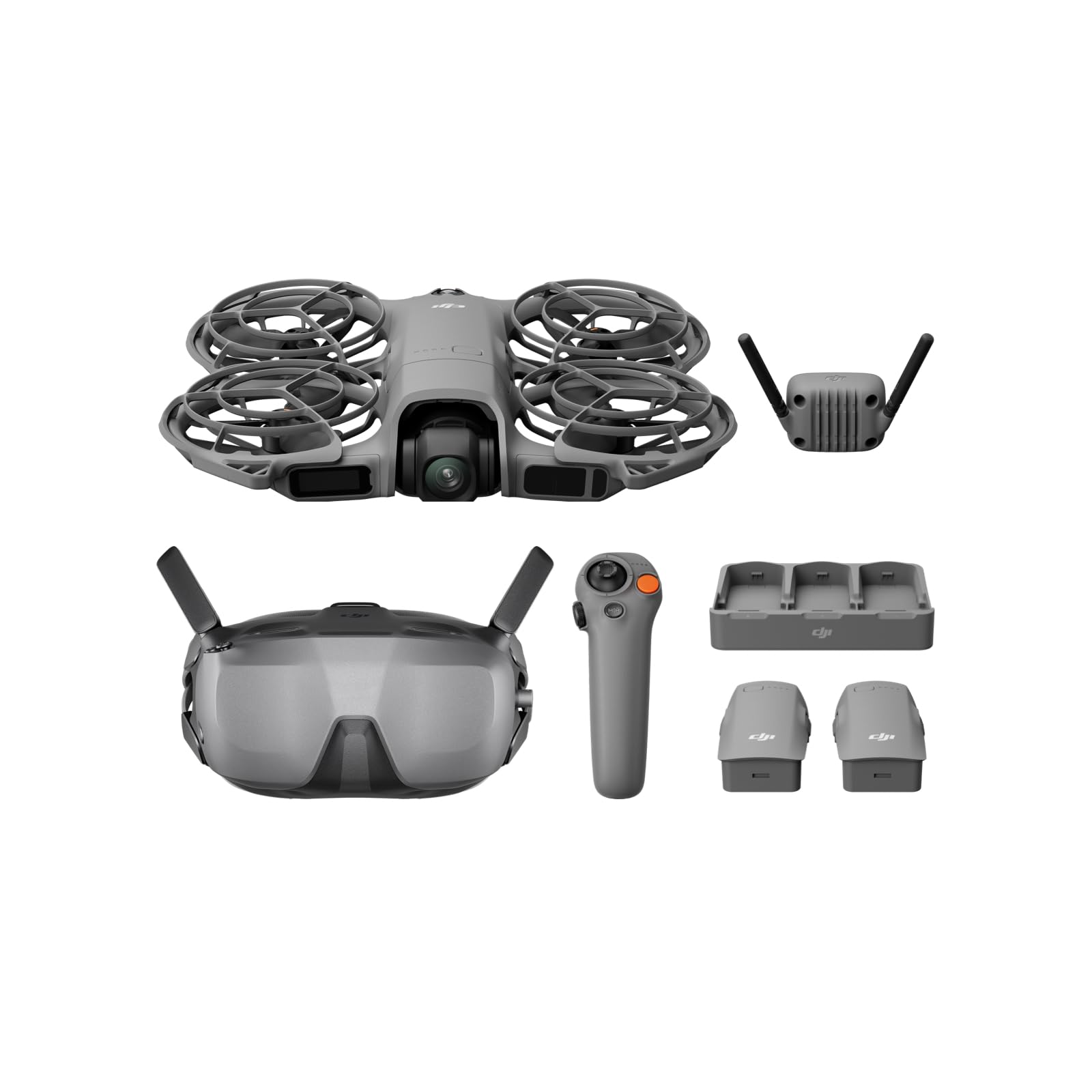
The DJI Neo 2 is the most complete beginner-to-intermediate FPV package available. It weighs just 151g, so it avoids FAA registration, yet it packs full-coverage propeller guards, omnidirectional obstacle sensing, and a 4K camera with ActiveTrack. The RC Motion 3 controller lets you fly by tilting your wrist, and the Goggles N3 provide a low-latency immersive feed—making the learning curve almost nonexistent for FPV.
With three batteries in the Fly More Combo, you get roughly 30–45 minutes of total flight time (each battery delivers about 10–15 minutes). The digital transceiver ensures a stable connection, and the palm takeoff and gesture controls let you capture selfies without ever touching a stick. The Apple Watch integration and voice control add a layer of convenience that no other beginner drone matches.
The trade-off is that 10–15 minute flights per pack require careful planning, and the FPV ecosystem demands that you carry goggles and a controller. If you want a drone that grows with you from autonomous flying to full manual FPV, this is the one.
Why it’s great
- Omnidirectional obstacle sensing for crash-free learning
- Motion controller makes FPV flying intuitive
- Palm takeoff, gesture controls, and ActiveTrack
Good to know
- Short 10–15 min flight per battery
- FPV gear adds bulk to carry
- Less precise control than traditional stick controllers for advanced acro
2. DJI Neo Motion Fly More Combo

At just 135g, the original DJI Neo is the lightest drone on this list and arguably the easiest to operate hands-free. It offers palm takeoff and landing, subject tracking, and eight QuickShots modes—all accessible without a controller. The 4K UHD camera uses DJI’s stabilization and level-4 wind resistance to deliver smooth footage even in breezy conditions.
The Motion Fly More Combo bundles the RC Motion 3 controller and Goggles N3, replicating the full FPV experience of its successor at a slightly lower entry cost. The three batteries and two-way charging hub keep you in the air for longer sessions. Full-coverage propeller guards mean you can fly confidently near trees without worrying about every branch.
Wind does affect this featherlight frame more than heavier drones, and the 1435mAh batteries yield about 8–12 minutes of spirited flight. It’s best for casual aerial photography, family gatherings, and learning basic FPV without the intimidation of a larger machine.
Why it’s great
- Controller-free palm takeoff and follow-me modes
- Fits in a jacket pocket
- Full propeller guards for indoor and close-proximity flying
Good to know
- Short flight window per battery
- Wind affects stability significantly
- Motion controller has a learning curve for manual FPV
3. Gleesfun G11PRO

The G11PRO is the only mid-priced drone on this list that includes a true 3-axis brushless gimbal for mechanical stabilization. That means your 4K/30fps footage stays smooth even in wind—no cropping from EIS, no micro-jitters. The GQ2.0 digital transmission system pushes a stable live feed up to 10,000 feet, which is remarkable for the price tier.
Two 3200mAh GL2.0 smart batteries deliver a combined 70-minute flight time, and the fast charging (about 2.5 hours for a full pack) minimizes downtime. The cruise control feature lets you set a heading and speed while you focus on camera composition—a genuine asset for solo creators. It is FAA compliant with Remote ID built in, so you are legal to fly in restricted areas.
The image quality, while good for the price, uses a 1/3.2-inch CMOS sensor that won’t match a DJI Mini series in dynamic range. Some users report that the follow-me mode is less refined than higher-end units, but for stabilized aerial footage under , this drone is hard to beat.
Why it’s great
- Mechanical 3-axis gimbal for silky-smooth video
- 70-minute total flight time
- 10,000 ft digital transmission range
Good to know
- Sensor size limits low-light performance
- Follow-me mode can be inconsistent
- Heavier than sub-250g drones at 357g
4. Potensic ATOM LT

The Potensic ATOM LT squeezes an 80-minute total flight time out of two 3000mAh intelligent batteries while staying under 249g—no FAA registration needed. Each battery delivers a genuine 40 minutes of flight, which is exceptional for a sub-250g GPS drone. The PixSync 2.0 transmission maintains a smooth HD feed up to 4 kilometers.
The 2.5K EIS camera with a Sony sensor uses ShakeVanish 2.0 stabilization to keep footage usable. While it’s not true 4K, the 2560×1440 resolution is sharp enough for social media and casual edits. The 4 GNSS support (GPS, GLONASS, Galileo, BeiDou) means faster satellite lock and better position hold in more locations around the world.
Some pilots report that the camera struggles in low light because EIS needs good illumination, and GPS lock can take a minute or two on first power-up. The SurgeFly 2.0 algorithm makes it beginner-friendly with simple controls, and the included carrying case makes it genuinely portable. For learning GPS flight with minimal compromise on airtime, this is a top pick.
Why it’s great
- 40 minutes per battery—class-leading for sub-250g
- 4 GNSS support for fast satellite lock
- Lightweight and foldable, no registration required
Good to know
- Camera is 2.5K, not 4K
- EIS struggles in low-light conditions
- Batteries take nearly 2 hours to charge
5. BETAFPV Cetus Pro FPV Kit

The BETAFPV Cetus Pro is built from the ground up as an FPV training platform. It includes the LiteRadio 2 SE transmitter and VR02 goggles out of the box—no phone, no tablet, no separate screen needed. The brushless whoop frame is incredibly crash-tolerant, and the turtle mode lets the drone right itself after an inverted landing, saving you endless walks across a field.
The three flight modes—Normal, Sport, and Manual—allow a structured progression. Normal mode uses altitude hold and self-leveling, Sport mode gives you full angle control, and Manual (acro) mode removes all stabilization for real FPV freestyle training. Each mode has three speed levels (slow, mid, fast), so you can ramp up as your reflexes improve.
The short flight time (roughly 3–5 minutes per 450mAh 1S battery) is the main drawback. Most owners buy a multi-pack of batteries and a fast charger immediately. The goggles are basic and favor near-sighted users, but for learning acro flying without breaking expensive parts, the Cetus Pro is the definitive entry point.
Why it’s great
- Complete FPV kit ready to fly out of the box
- Turtle mode eliminates crash recovery walks
- Durable frame survives full-speed impacts
Good to know
- Battery life is only 3–5 minutes per pack
- Goggles lack external antenna and orientation light
- Not suitable for outdoor GPS photography
6. PLEGBLE GPS Drone PL715
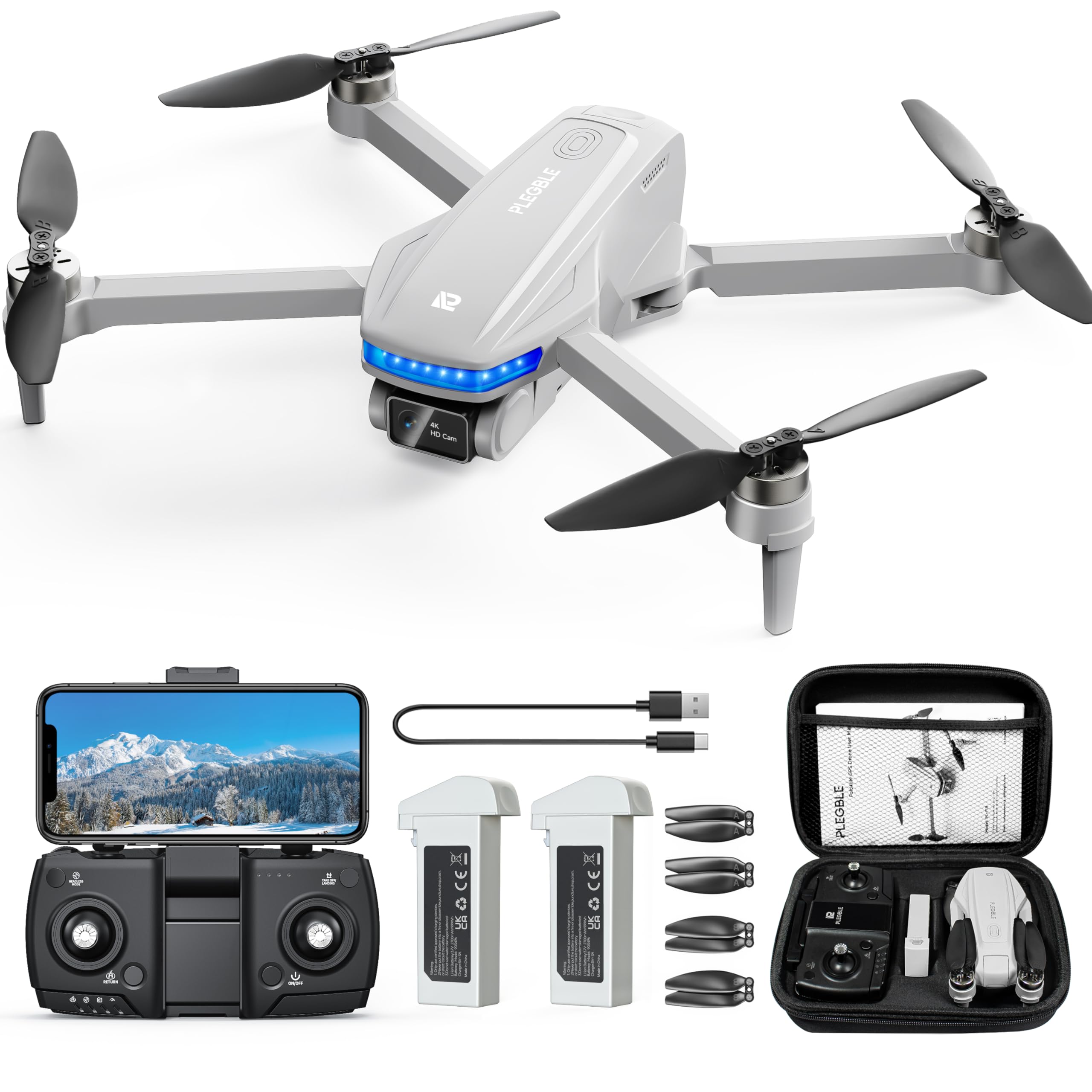
The PL715 is the most affordable GPS-enabled drone on this list with a reliable auto-return feature. It uses two 2700mAh batteries for a combined 46-minute flight time, and the brushless motors provide stable hover even in mild wind. The 4K camera with a 120° wide-angle lens and 5GHz FPV transmission gives you real-time video on your phone.
Smart GPS functions include Follow Me, Waypoint Flight, Circle Fly, and Tap Fly—features typically found on drones twice its price. The beginner mode limits the flight radius to 30 meters, which is perfect for practicing orientation and control. It weighs under 249g, so no FAA or Remote ID registration is needed, and the included carrying case makes it travel-ready.
The image quality is decent for the price but won’t match dedicated gimbal drones. Some users note that GPS lock requires 9+ satellites, which can take a minute in areas with partial sky blockage. If you want to learn GPS-assisted flying with a strong safety net and a very low barrier to entry, this drone delivers.
Why it’s great
- GPS auto return and beginner mode for safe learning
- Under 249g with no FAA registration
- 4K camera with 5GHz low-latency transmission
Good to know
- Camera stabilization is EIS, not a mechanical gimbal
- Requires steady GPS lock before flight
- App setup can be confusing for first-time users
7. NAFYRE N11 Pro

The N11 Pro bundles three batteries right in the box, giving you 66 minutes of total flight time without any extra purchases. It uses a dual positioning system—GPS outdoors and optical flow indoors—so you can practice flying in your living room without drifting. The brushless motors keep it quiet and wind-resistant for its 180g weight.
The adjustable 90° wide-angle camera feeds live HD video to your phone or remote. Smart flight modes like Follow Me, Tap Fly, and Point of Interest automate the flying while you frame shots. The auto return function engages on low battery or signal loss, adding a layer of safety for beginners flying beyond visual range.
Reviews note that the Follow Me mode can be unreliable beyond 10–15 feet, and the camera is not true 4K despite the marketing. The lack of altitude hold means you need to keep your thumb on the throttle stick. For a beginner who wants extra battery life and dual-location flying capability, the N11 Pro is a solid choice.
Why it’s great
- Three batteries included for extended sessions
- Optical flow positioning for stable indoor flight
- Lightweight at 180g—no registration needed
Good to know
- Follow Me mode has limited tracking range
- No altitude hold; constant throttle management required
- Camera resolution is less than advertised 4K
8. karuisrc GPS Drone with 4.5″ LCD
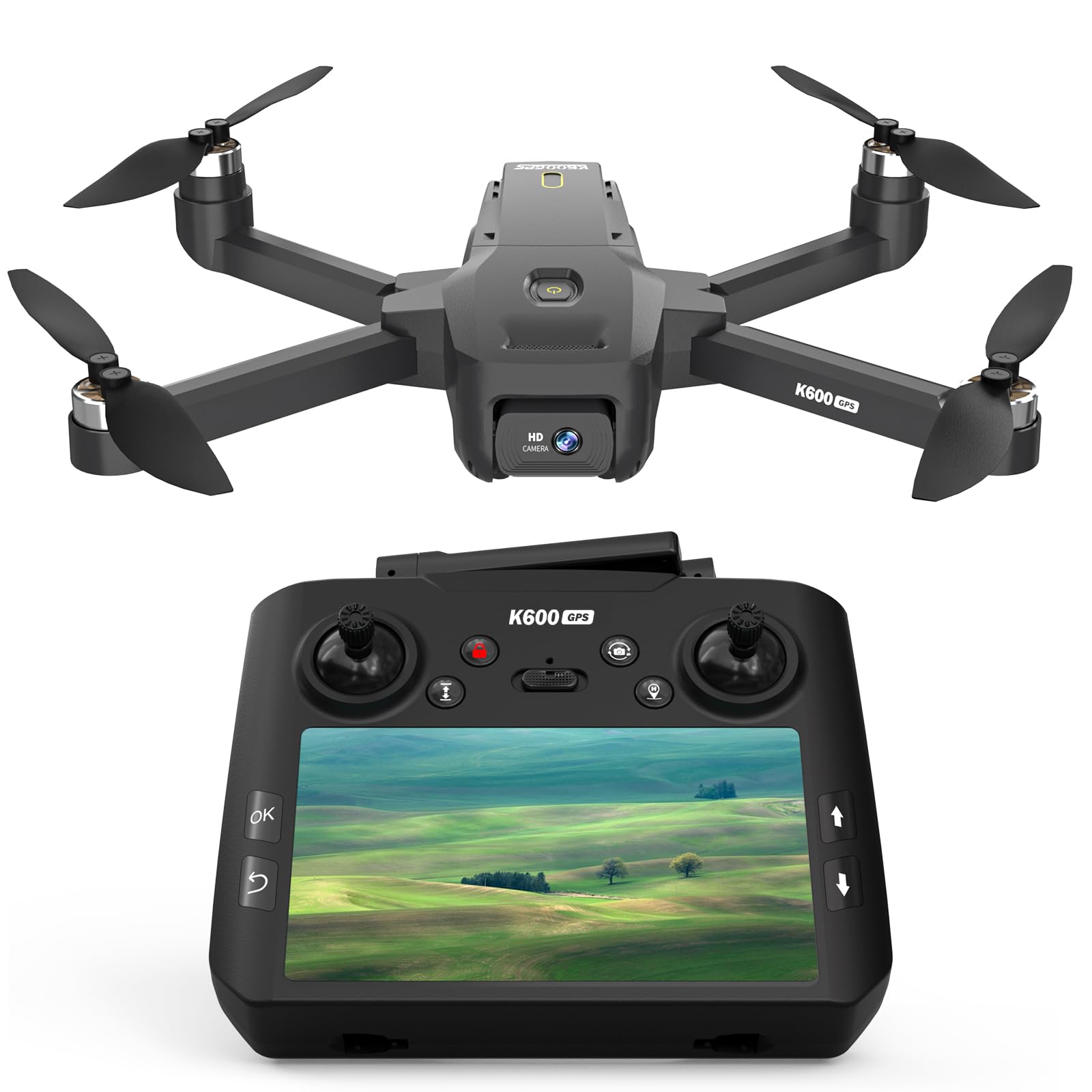
The karuisrc drone solves a common beginner pain point: you don’t need to mount your phone to see the live feed. The 4.5-inch HD LCD screen is built directly into the controller, so your phone stays in your pocket. The EIS camera delivers crisp footage, and the GPS positioning ensures rock-solid hover and dependable return-to-home.
Smart flight modes include Follow Me, Waypoint Navigation, and Orbit Mode, making it easy to capture cinematic shots without manual stick work. The 2200mAh battery delivers approximately 25 minutes of flight time, and the 400-meter control range is adequate for learning. The foldable frame and included storage bag keep everything portable.
The camera quality is good for the price bracket but won’t rival dedicated 4K gimbal systems. Some units may experience minor compass calibration quirks that require a quick recalibration at startup. For a beginner who values simplicity and prefers not to juggle a phone clamp mid-flight, this is the most convenient option on the list.
Why it’s great
- Built-in controller screen—no phone needed
- GPS auto return for worry-free recovery
- Foldable design with carrying case
Good to know
- Camera is EIS-stabilized, not gimbal-stabilized
- Control range is moderate at 400m
- Occasional compass calibration required
9. Oddire HK11

The Oddire HK11 packs more features per dollar than almost any other entry-level GPS drone. The two 7.7V 1800mAh batteries (higher voltage than standard 7.4V or 3.7V packs) provide 48 minutes of total flight time with more power headroom. The 4K camera captures 4096×3072 stills and 2048×1088 video, and the 90° adjustable lens is controlled via remote or app.
Smart features include GPS Follow, Route Planning, Fly Around, Gesture Control, 3D flip, and even VR mode. The 5G WiFi transmission maintains a stable connection up to 500 meters. The built-in app filters and background music make it easy to edit and share videos directly to social media. At 249g, it avoids FAA registration.
The FPV camera is decent for photos but the video bitrate is lower than premium models, so fast motion may show compression artifacts. The app (XDRONE GO) can be finicky on some phones. For a beginner who wants to experiment with gesture selfies, waypoint missions, and wide-angle landscapes without spending much, the HK11 offers remarkable versatility.
Why it’s great
- Gesture control and 3D flip for creative flying
- 7.7V batteries provide stronger power delivery
- Under 249g with 48-minute total flight time
Good to know
- Video compression can show artifacts in fast scenes
- App may need troubleshooting on certain phones
- No memory card slot—relies on phone storage
FAQ
Do I need a license to fly a beginner FPV drone?
What is the difference between Normal, Sport, and Manual modes on an FPV kit?
How important is a 3-axis gimbal for a beginner drone?
Can I fly a beginner FPV drone indoors?
Final Thoughts: The Verdict
For most users, the beginner fpv drone winner is the DJI Neo 2 Motion Fly More Combo because it combines omnidirectional obstacle sensing, a responsive motion controller, and low-latency FPV goggles into a single polished package that scales from autonomous flying to full manual acro. If you want the longest flight time and GPS-assisted features without registration, grab the Potensic ATOM LT. And for the ultimate value in stabilized 4K video on a budget, nothing beats the Gleesfun G11PRO with its mechanical 3-axis gimbal.