
Our readers keep the lights on and my morning glass full of iced black tea. As an Amazon Associate, I earn from qualifying purchases.
Getting stuck on a snow-covered incline or in a slick patch of ice isn’t just an inconvenience—it can strand you for hours waiting for a tow. The right set of car tire chains transforms a helpless spin into confident forward motion, letting you crest that hill or pull out of a frozen rut without breaking a sweat.
I’m Min — the co-founder and writer behind Gadgets Feed. I’ve spent hundreds of hours parsing the technical literature, customer field reports, and material science behind traction devices to separate the systems that actually grip from those that just rattle.
My goal is to steer you toward a set of best car tire chains that match your specific driving conditions and vehicle clearance.
How To Choose The Best Car Tire Chains
Selecting the right traction device depends on three core factors: the material and link pattern, the clearance in your wheel well, and how often you realistically intend to deploy them. A chain that works brilliantly on a full-size pickup with generous clearance can chew through the fender liner of a compact crossover on the first bump.
Link Pattern and Material Density
Traditional ladder-style chains deliver maximum bite in deep snow but transmit significant vibration at low speeds. Diamond-pattern cable chains run quieter and fit tighter wheel wells, though they trade some ultimate bite for that smoother ride. Manganese steel alloy chains offer the best durability-to-weight ratio, resisting deformation even after repeated use on exposed pavement patches.
Auto-Tightening vs. Manual Tensioners
Chains that require you to stop and manually retighten after a few hundred feet are not only inconvenient but dangerous on busy roads. Auto-tightening systems use a ratcheting mechanism or spring-loaded tensioner that keeps the chain snug against the tire as it rotates, eliminating the slack that causes slapping noises and premature wear.
Wheel Well Clearance and Fitment
Modern vehicles with lowered suspension, large brake calipers, or tight strut clearance demand ultra-low-profile cable chains or fabric snow socks. Measure the gap between your tire and the nearest suspension component at the tightest point. A chain profile thicker than that gap will contact metal, causing damage to both the chain and the vehicle.
Quick Comparison
On smaller screens, swipe sideways to see the full table.
| Model | Category | Best For | Key Spec | Amazon |
|---|---|---|---|---|
| AUVEBY Auto-Fixing Snow Chains | Mid-Range | Mountain commuters | Manganese steel alloy | from $94.99Amazon |
| NITEVIZ HKN140 | Mid-Range | Auto-tightening reliability | 7 mm link diameter | from $69.99Amazon |
| SCITOO QG2228CAM | Mid-Range | Large tire widths | 295 mm max width | $79.98Amazon |
| SNOCATENA SP1540 | Budget-Friendly | Occasional use | 180-235 mm width | from $67.99Amazon |
| TRACGRABBER TG-C01 | Budget-Friendly | Mud and sand recovery | EPDM rubber strap | $59.99Amazon |
| SCC SZ143 Super Z6 | Premium | Tight clearance vehicles | 16 oz cable chain | $78.54Amazon |
| AutoSock HP697 | Premium | Low-clearance cars | Fabric sock, 0.04 in | $118.25Amazon |
In‑Depth Reviews
1. AUVEBY Auto-Fixing Snow Chains
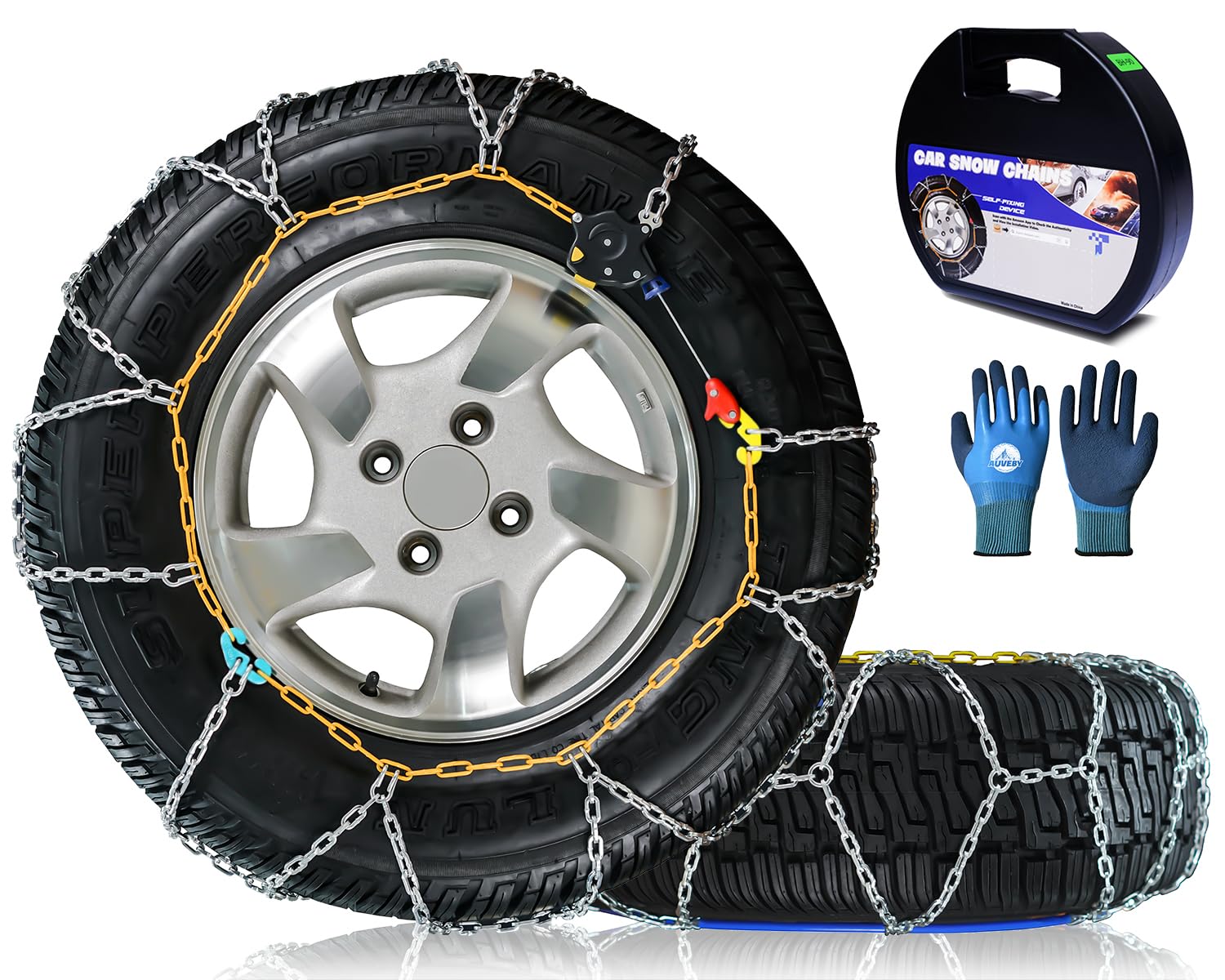
The AUVEBY chains deliver the best balance of quick installation and durable bite for drivers who face regular mountain passes. They are forged from thick manganese steel alloy, which resists deformation better than standard carbon steel when you hit patches of exposed asphalt that would wear out softer chains in a single season.
The auto-fixing ratchet mechanism is a standout feature: you simply drape the chain over the tire, click the tensioner, and drive off without needing to stop and retighten after the first quarter-mile. Users report that the included cotton gloves and replacement buckles reduce the fumbling factor when you are installing them roadside in freezing temperatures.
Several reviewers noted that the chains come packaged in a hard plastic storage case that keeps the trunk organized, and that the self-tightening mechanism held firm on a 50-mile stretch of variable snow and ice without any slack developing. The speed limit rating of 40 km/h is standard for chains of this link thickness.
Why it’s great
- Manganese steel links resist wear on mixed snow-and-asphalt stretches
- Auto-tightening ratchet eliminates mid-drive adjustments
- Hard storage case protects trunk and simplifies access
Good to know
- Chains arrive tightly bundled and require careful untangling before first use
- Not suitable for tire widths below 215 mm
2. NITEVIZ HKN140 Auto Tightening Snow Chains
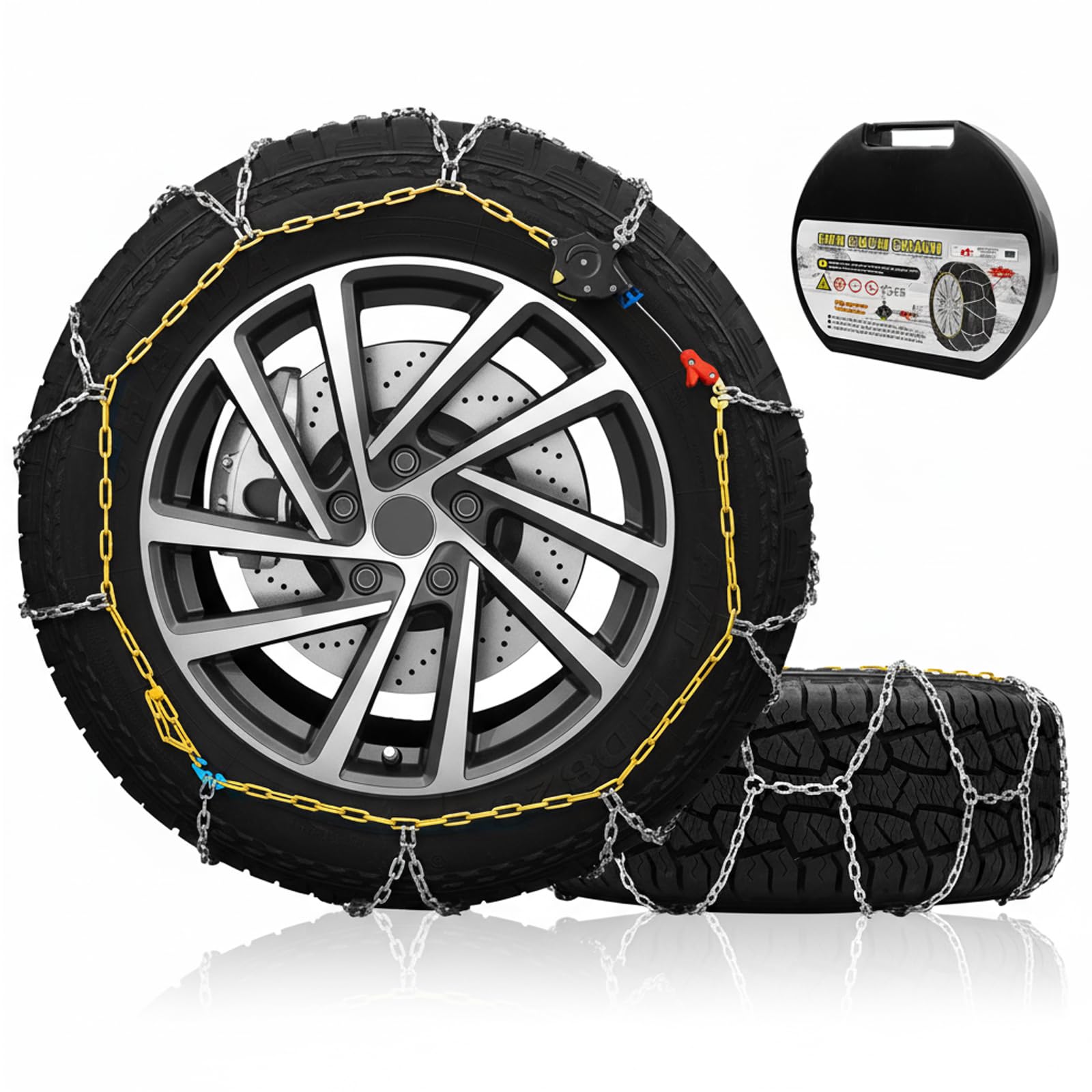
The NITEVIZ HKN140 is engineered for drivers who want the security of a heavy-duty chain without the ordeal of traditional installation. The quick-install buckle system lets you attach the chain without moving the vehicle, which is a lifesaver when you are already stuck in a snowbank and the car won’t budge.
The diamond-pattern link construction reduces the thumping noise that ladder-style chains produce at low speeds, making the ride smoother on the short stretches of cleared road between snow patches. The self-tightening mechanism is aggressive enough to keep the chain seated even on tires with aggressive tread lugs that normally push slack chains outward.
Customer reports highlight that the chain links are on the thinner side compared to traditional truck chains, which means they perform best on snow and ice rather than rock-hard mud or off-road trails. Rinsing and drying after each use is critical to prevent rust from compromising the alloy steel over multiple seasons.
Why it’s great
- Diamond link pattern minimizes low-speed vibration and noise
- Buckle system installs without moving the vehicle
- Strong ratchet tensioner keeps chain locked on aggressive tread
Good to know
- Thinner links are less durable on dry pavement or off-road terrain
- Must be thoroughly dried after each use to avoid corrosion
3. SCITOO QG2228CAM Snow Chains
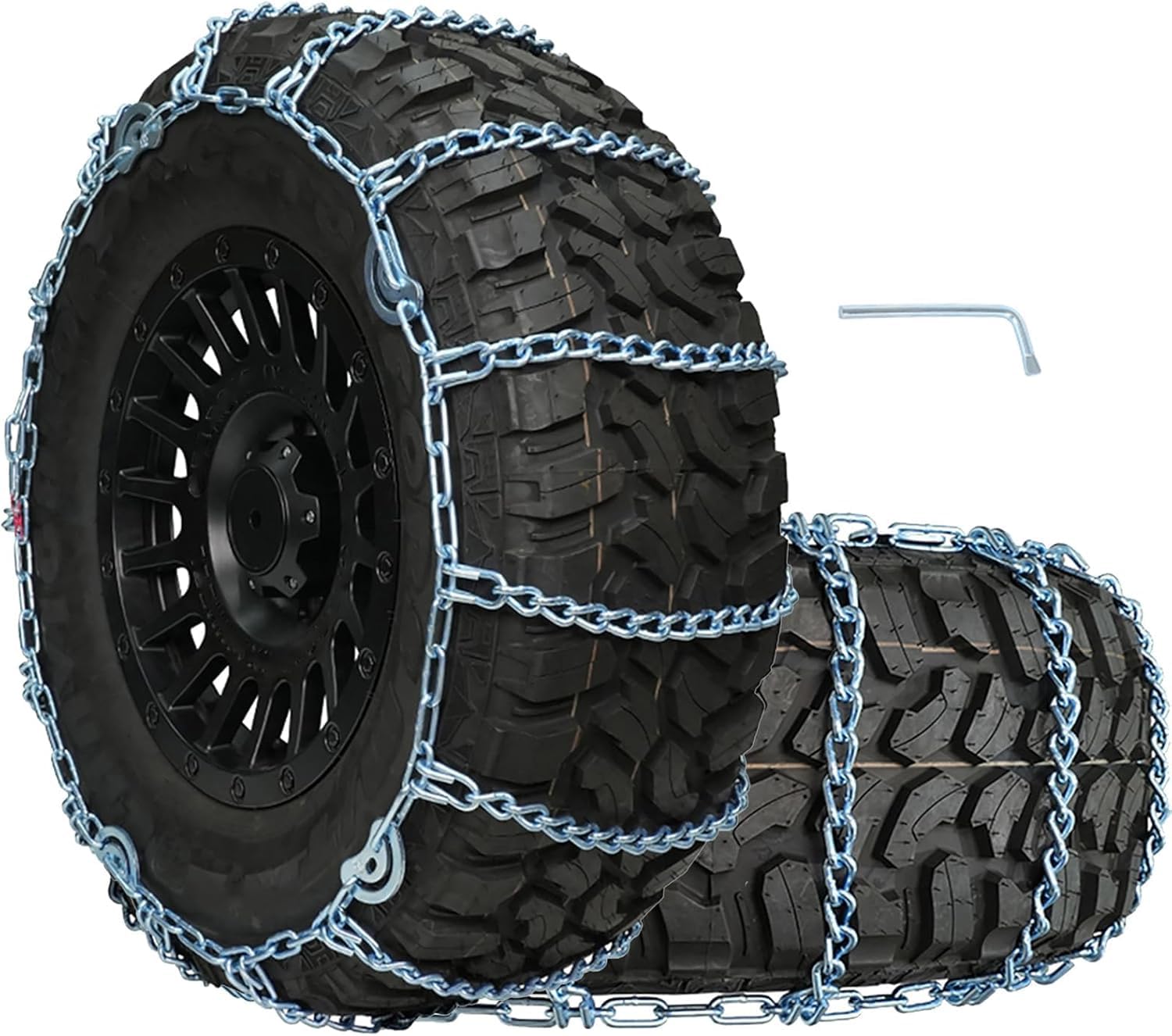
The SCITOO QG2228CAM covers an exceptionally wide tire range—from 225 mm up to 295 mm—making it one of the most versatile sets for households with multiple vehicles, from a compact pickup to a full-size SUV. The chain links measure roughly 7 mm in diameter, which provides solid ice-biting capability without adding excessive rotating mass.
Installation follows the traditional drive-over-and-connect method, and several buyers noted that the chains came longer than necessary and required cutting to remove excess links with bolt cutters. While this customization step is common with universal-fit chains, it does add 15-20 minutes of prep work before the first deployment.
Once properly sized, the ratcheting cam tensioner locks the chain tight enough to prevent it from slapping the wheel well, and users report that the chains held up under the load of pulling other vehicles out of snowbanks without breaking a single cross link.
Why it’s great
- Wide tire width range covers 225 to 295 mm
- Thick 7 mm links resist breakage during heavy towing
- Cam tensioner provides secure, consistent pressure
Good to know
- Universal fit requires manual link removal with bolt cutters for proper sizing
- Chains are heavy at nearly 12 kg per set
4. SNOCATENA SP1540 Snow Chains

The SNOCATENA SP1540 is aimed at the occasional winter driver—someone who needs a chain for a single ski trip per year or as a legal-compliance item for mountain passes rather than daily winter commuting. The steel links are functional but not overbuilt, and the chain pattern is a simple ladder design that prioritizes cost savings over ride refinement.
Installation is straightforward if you follow the advice to lay the chain flat and ensure it is not twisted around the inner ring before mounting. Several reviewers found that rushing this step led to a tangled mess that required restarting. Once properly seated, the chain provides enough traction for a 2WD car to climb steep, snow-covered grades that would otherwise stop it cold.
The manufacturer recommends a speed limit of 50 km/h, and the chain is best removed as soon as you reach cleared pavement. Prolonged driving on dry asphalt will accelerate wear on the steel cross links, reducing the lifespan to perhaps two or three seasons of moderate use.
Why it’s great
- Very affordable entry point for emergency or occasional use
- Works on narrow tire widths from 180 to 235 mm
- Provides reliable grip on steep, snow-covered grades
Good to know
- Links tangle easily if not carefully oriented before installation
- Not intended for sustained use or high-mileage winter driving
5. TRACGRABBER Tire Traction Device

The TRACGRABBER is not a chain in the traditional sense—it is a rubber strap-and-block system that wraps around the tire to provide a temporary bite in snow, mud, or sand. Its primary advantage is weight: at just 1.32 pounds for the set, it takes up negligible trunk space compared to a 12 kg chain set.
Installation requires threading the strap through the wheel spokes, which means vehicles with solid alloy rims lacking openings may not be compatible. Once mounted, the EPDM rubber blocks dig into soft terrain and provide enough grip to extract a stuck car from a driveway or flat patch, but multiple user reports indicate the straps can fly off at higher speeds or when the tire spins aggressively.
Performance in snow is inconsistent—some users report success on moderate snowpack while others had to cut the strap after it wrapped around the axle. This device is best viewed as a last-resort recovery aid for soft mud or sand rather than a primary winter traction solution.
Why it’s great
- Extremely lightweight and compact for emergency trunk storage
- Made in the USA with durable EPDM rubber
- Effective for mud and sand extraction
Good to know
- Requires open-spoke rims for proper installation
- Not reliable for snow traction; can detach at speed
6. SCC SZ143 Super Z6 Cable Tire Chain

The SCC SZ143 represents the gold standard for vehicles with extremely tight wheel well clearance—think lowered sedans, sporty crossovers, or any car where a traditional chain would grind against the strut or fender liner. The Z6 cable design uses continuous steel cable wrapped in a zigzag pattern rather than discrete cross links, keeping the profile minimal while still delivering reliable ice and packed-snow grip.
Installation takes about two minutes per wheel once you have practiced the technique, and the built-in rubber tensioners mean you do not have to stop and retighten after driving onto the chain. The low weight of just 16 ounces per set is a practical advantage when you are kneeling in the cold to install them.
The trade-off is that cable chains cannot match the sheer bite of thick steel ladder chains in deep powder or extreme ice. They excel in light-to-moderate winter conditions and on roads where the chain is needed for short legal compliance zones rather than sustained off-road travel. The plastic clips on the rubber tensioners are the weakest point and are worth buying as spares.
Why it’s great
- Ultra-low profile fits tight wheel wells where standard chains cannot
- Lightweight cable design for easier handling and storage
- Rubber tensioners eliminate the need for mid-trip retightening
Good to know
- Not designed for deep snow or heavy off-road use
- Plastic tensioner clips are prone to failure; consider carrying spares
7. AutoSock HP697 Snow Socks

The AutoSock HP697 is a fabric-based traction device designed specifically for vehicles where even the lowest-profile cable chain will not fit. At just 0.04 inches thick, the sock slips over the tire like a textile sleeve and uses a high-friction polyester weave to grip snow and ice without any metal-to-road contact.
Installation is a three-step process that requires maneuvering the sock over the top half of the tire and then driving forward to seat it, which can be tricky in cold weather when the fabric stiffens. Once seated, the sock provides surprisingly strong grip on packed snow and glare ice, with users reporting no sliding on steep inclines in AWD vehicles. The sock is also safe for vehicles with TPMS sensors and sensitive suspension components that can be damaged by metal chains slapping against them.
The major limitation is durability on dry pavement: the polyester fabric shreds within minutes if driven on bare asphalt at speeds above 30 mph. AutoSock recommends removing them as soon as you reach cleared road, making them best suited for short, snow-covered passes rather than long highway stretches with intermittent bare patches.
Why it’s great
- Ultra-thin profile fits vehicles with zero clearance for metal chains
- Won’t damage TPMS sensors, brake lines, or suspension components
- Meets European and American traction law standards
Good to know
- Shreds quickly if driven on dry pavement
- Installation can be difficult in freezing temperatures with stiff fabric
FAQ
Can I drive on dry pavement with car tire chains?
How do I know if cable chains will fit my vehicle?
Are self-tightening chains really better than manual ones?
Final Thoughts: The Verdict
For most users, the best car tire chains winner is the AUVEBY Auto-Fixing Snow Chains because it combines durable manganese steel construction with a hassle-free auto-tightening mechanism that works from the moment you drive off. If your vehicle has ultra-tight wheel well clearance, grab the SCC SZ143 Super Z6 cable chains for a low-profile fit that still bites into ice. And for emergency trunk storage that takes up almost no space, nothing beats the AutoSock HP697 fabric socks.
Product prices and availability are accurate as of the date/time indicated and are subject to change. Any price and availability information displayed on Amazon at the time of purchase will apply to the purchase of this product. As an Amazon Associate I earn from qualifying purchases.
CERTAIN CONTENT THAT APPEARS ON THIS SITE COMES FROM AMAZON. THIS CONTENT IS PROVIDED "AS IS" AND IS SUBJECT TO CHANGE OR REMOVAL AT ANY TIME.
Amazon and the Amazon logo are trademarks of Amazon.com, Inc. or its affiliates.