
When asbestos floor tiles crack, peel, or are disturbed during a renovation, the microscopic fibers can become airborne and pose a serious health risk. An asbestos floor sealer locks those fibers down, creating a durable barrier that prevents exposure without the cost and hazard of full-scale abatement. Choosing the wrong encapsulant, however, can leave gaps, peel over time, or fail to meet regulatory standards—risks no homeowner or contractor should take.
I’m Min — the co-founder and writer behind Gadgets Feed. I spend hundreds of hours analyzing technical specifications, customer performance data, and compliance certifications across specialty coatings and abatement products to identify which sealers actually deliver on their promises.
This guide breaks down the top-performing options currently on the market for the best asbestos floor sealer that meets EPA standards and professional-grade coverage requirements.
How To Choose The Best Asbestos Floor Sealer
Selecting the right product means matching the encapsulant type to your specific substrate condition, fiber type, and project size. The wrong choice leads to poor adhesion, wasted material, or incomplete fiber lockdown.
Bridging Versus Penetrating Encapsulants
Bridging encapsulants form a thick, flexible film over the asbestos-containing material, physically sealing fibers beneath a continuous membrane. Penetrating encapsulants soak into porous substrates and bond fibers to the surface. For smooth floor tiles and mastics, a bridging formulation with high solids content provides the most reliable barrier. ABC Asbestos Binding Compound and Fiberlock Lag-Kote II are bridging-class products with proven field results on friable surfaces.
Coverage Rate and Number of Coats
Coverage varies dramatically between formulations—from 50 square feet per gallon for thick bridging compounds up to 350 square feet per gallon for thin lockdown sealers. Most manufacturers require two coats to achieve the minimum dry film thickness for EPA-compliant encapsulation. A 5-gallon pail of a typical bridging product covers roughly 500 to 600 square feet total after two coats. Buying a formulation that requires three or four coats inflates both labor time and material cost.
Compliance and Third-Party Certifications
EPA does not directly “approve” encapsulants, but products that meet ASTM E-1795 for lead-based paint encapsulants or follow NESHAP guidelines for asbestos frequently carry third-party validation. Fiberlock and Sentinel products reference these standards explicitly. Check the fine print: a sealer marketed as a general-purpose floor coating may not legally qualify as an asbestos encapsulant, and using it on known asbestos can create liability during future disclosure.
Quick Comparison
On smaller screens, swipe sideways to see the full table.
| Model | Category | Best For | Key Spec | Amazon |
|---|---|---|---|---|
| Lead Seal ‘n Stop | Lead Encapsulant | DIY lead-paint sealing | 1 gal, water-based polymer | Amazon |
| Fiberlock Lag-Kote II | Bridging Asbestos | HVAC & friable asbestos | 2 gal, polymer-based | Amazon |
| Sentinel 812LS | Post-Removal Lockdown | Large floor projects | 5 gal, white acrylic | Amazon |
| Sentinel 811LS | Post-Removal Lockdown | Clear finish over tile | 5 gal, clear acrylic | Amazon |
| Fiberlock ABC | Bridging Encapsulant | EPA-compliant abatement | 5 gal, high-solids polymer | Amazon |
| Perfect Primer | Encapsulant Primer | Priming before new flooring | 1 gal, medium grey | Amazon |
| Fiberlock LBC III | Lead Barrier | Interior/exterior lead paint | 5 gal, white high-gloss | Amazon |
In‑Depth Reviews
1. ABC Asbestos Binding Compound
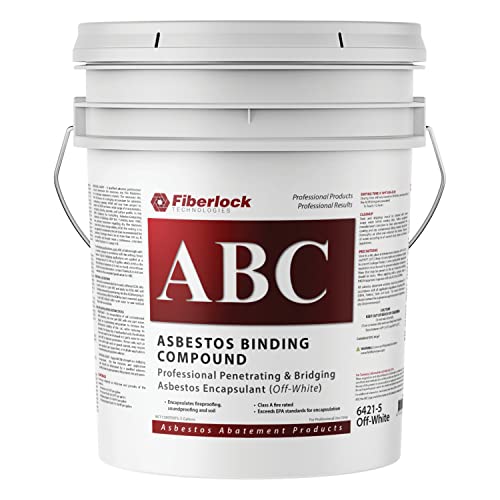
Fiberlock ABC Asbestos Binding Compound is the gold standard for professionals who need a single product that handles removal lockdown, penetrating encapsulation, and bridging encapsulation. Its high-solids formulation can be diluted with water to match the specific friability level of the asbestos-containing material, giving the applicator control over viscosity and film thickness. The 5-gallon pail offers the highest value per square foot for large-scale projects, and the EPA-compliant designation means it meets NESHAP guidelines for asbestos abatement.
Customer reports confirm that two coats applied by roller over old asbestos floor tiles created a sealed surface so durable that homeowners confidently installed luxury vinyl plank directly on top. One user specifically noted that a union asbestos worker recommended this product for home use because it delivers the same performance as the company-grade materials used on commercial jobs. The off-white finish acts as a primer for repainting, eliminating an extra step.
The main trade-off is the price per gallon, which sits at the premium end of the market. Some DIY users also found the instructions sparse, requiring them to call Fiberlock directly for dilution ratios. For a homeowner sealing a single room, the cost may feel steep, but for anyone prioritizing EPA-recognized performance over budget, this remains the most versatile encapsulant available.
Why it’s great
- Three-in-one formulation for removal, penetrating, and bridging encapsulation
- Dilutable with water for adjustable viscosity without sacrificing film strength
- EPA-compliant and trusted by professional abatement firms
Good to know
- Premium price per gallon compared to lockdown-only sealers
- Requires calling manufacturer for precise dilution instructions
2. Fiberlock Lag-Kote II Interior Lagging Encapsulant
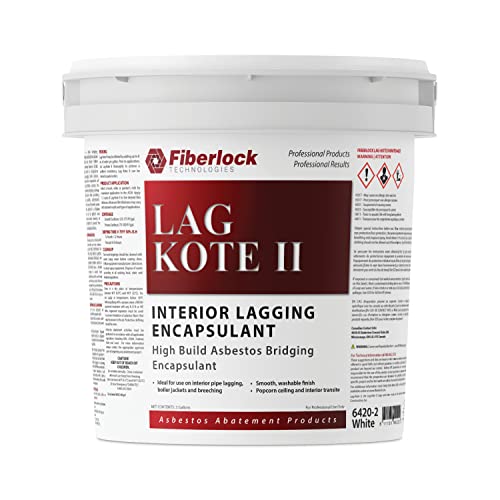
Fiberlock Lag-Kote II was originally designed for HVAC lagging, but its thick-bodied bridging formulation makes it equally effective on asbestos floor tile and mastic. The polymer-based compound minimizes drip and runs during vertical applications, which translates to less waste when rolling onto horizontal surfaces. Customer reports show that one gallon covers approximately 110 square feet per coat, meaning the 2-gallon pail handles a typical 14 by 13-foot room with two coats and roughly a quart left over.
The flexible film stays intact through temperature swings and minor substrate movement, a critical feature for floors in unconditioned basements or sunrooms. Multiple verified buyers specifically sealed 2% chrysotile asbestos mastic with this product, noting the smooth, rubbery finish that cured within 8 to 12 hours between coats. The neutral color provides a consistent base for paint or flooring adhesive without the bright white appearance that can show through thin tiles.
Some users reported that the product is noticeably thinner than expected—closer to a heavy paint than a paste-like mastic. This does not affect performance but can surprise first-time applicators who expect a putty consistency. Also, the 2-gallon size is ideal for small rooms but forces larger jobs to buy two or three pails, which increases total cost versus a 5-gallon option.
Why it’s great
- Excellent adhesion to metal, wood, and masonry without priming
- Thick-bodied formula minimizes dripping and cleanup during application
- Proven on chrysotile mastic with fast recoat time
Good to know
- 2-gallon pail requires multiple purchases for rooms over 250 sq ft
- Consistency is thinner than some bridging encapsulants
3. Fiberlock Lead Barrier Compound III

Fiberlock LBC III is a heavy-duty lead-based paint encapsulant that doubles as an effective asbestos floor sealer when the substrate contains both lead and asbestos—a common scenario in pre-1978 homes. It meets ASTM E-1795 standard for lead encapsulants and carries UL Classification and Class A fire rating, making it suitable for commercial and residential interior and exterior use. The added bitter anti-ingestant agent is a unique safety feature that discourages children from chewing on painted surfaces.
The high-gloss white finish provides a hard, washable surface that stands up to foot traffic and repeated cleaning. Coverage is rated at over 1,750 square feet per 5-gallon pail, though achieving the required 7 dry mils of film thickness may demand four to five coats when covering dark substrates or heavily textured mastics. Customers who used it on old lead-painted window frames and floors reported excellent adhesion and a seamless surface that accepted wallpaper and paint without issues.
The price is the highest per-gallon in this lineup, and the need for multiple coats on darker floors can nearly double the material cost. Additionally, the high-gloss sheen may require sanding or a primer layer before applying new flooring adhesives. For a combined lead and asbestos encapsulation project, however, the dual certification makes it worth the investment.
Why it’s great
- Meets ASTM E-1795 lead encapsulant standard with UL Classification
- Bitter anti-ingestant agent adds child safety protection
- Hard high-gloss finish is scrubbable and durable
Good to know
- Requires 4-5 coats on dark substrates to achieve even coverage
- High-gloss finish may need scuffing for adhesive bond
4. Perfect Primer Encapsulant
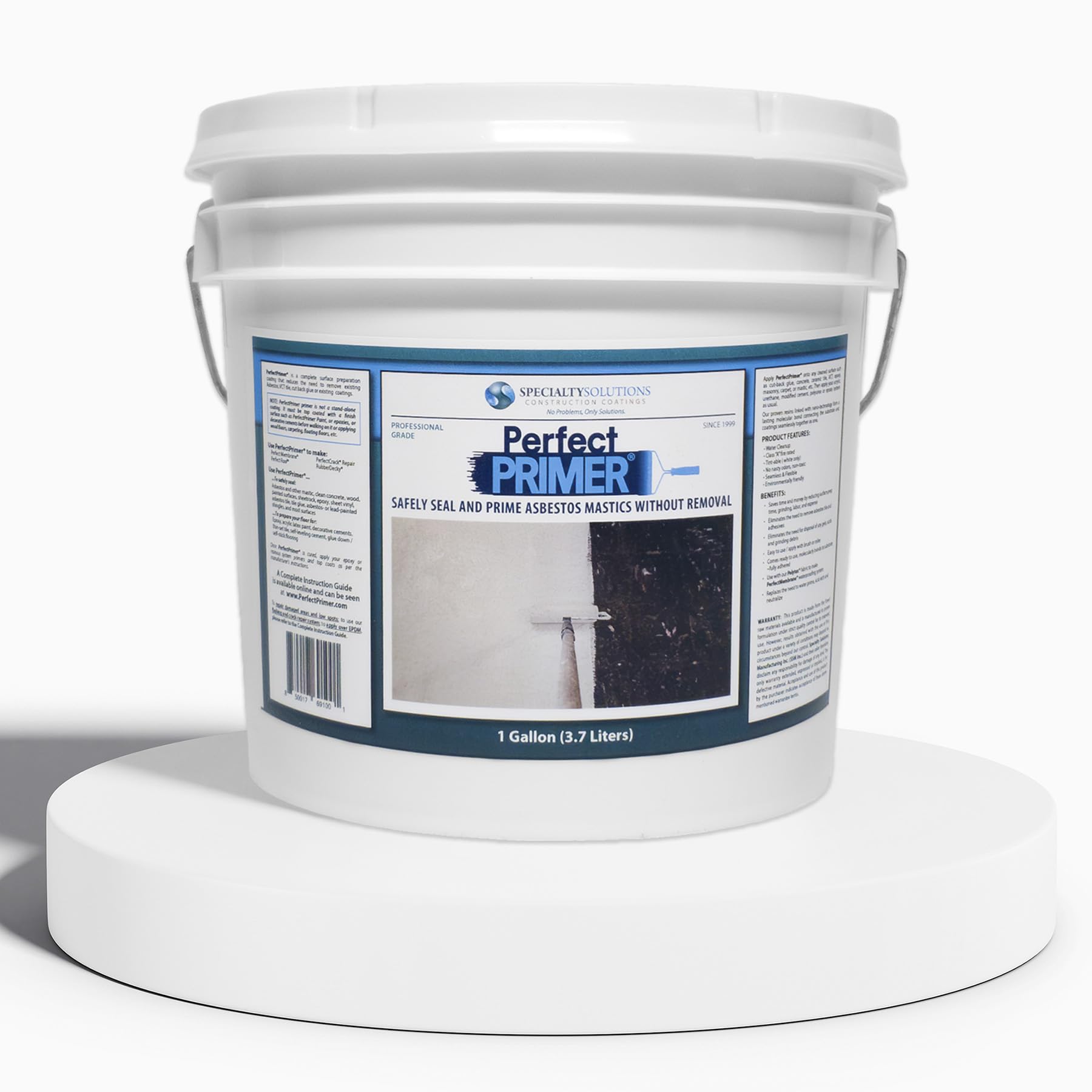
Perfect Primer stands apart by combining asbestos encapsulation with a bonding primer designed to accept epoxy, tile, self-leveling cement, latex paint, and glue-down wood directly over the cured film. This eliminates the traditional three-step process of seal-prime-install, saving both time and labor. The medium grey color hides mastic staining and provides a neutral substrate that does not bleed through light-colored flooring materials.
The water-based formula is EPA-compliant and covers 175 to 200 square feet per gallon across two coats, with a 12-hour dry time between applications and a full 72-hour cure before installing new flooring. Customers who used it on 1940s asbestos tile in kitchens and basements confirmed that the product sealed stains and odors completely, and allowed new tile to adhere firmly without delamination. One buyer specifically called out the cost savings by avoiding professional abatement—a + expense avoided with a single gallon of primer.
The main downside is the per-gallon price, which sits at the premium tier alongside the Fiberlock ABC. For rooms larger than 200 square feet, buying two gallons quickly adds up. Additionally, the instructions direct users to a website for detailed steps, and the website references an included cleaner that does not ship with Amazon orders—a minor inconvenience that requires a separate purchase of TSP substitute.
Why it’s great
- Combines encapsulant and primer in one coat, eliminating a step
- Medium grey color masks old mastic and stain bleed-through
- Compatible with epoxy, tile, self-leveler, and flooring adhesives
Good to know
- Premium price per gallon; larger rooms require multiple pails
- Recommended cleaner is not included with Amazon orders
5. Sentinel 812LS Post-Removal Lockdown Sealant
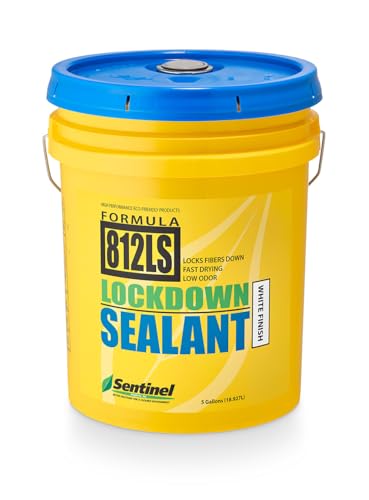
Sentinel 812LS is a dedicated post-removal lockdown sealant engineered for large-scale floor encapsulation at a mid-range price point that undercuts the premium Fiberlock products. The 5-gallon pail provides 640 fluid ounces, enough to cover 800 to 900 square feet with two coats when applied by roller or sprayer. The water-based, low-odor formulation makes it suitable for occupied buildings where tenants or family members remain during the abatement process.
Customer feedback is overwhelmingly positive for sealing asbestos tile floors before painting or covering with new materials. One user verified that after two coats, the floor was so completely sealed that no dust could be swept up with a broom, indicating full fiber lockdown. The white finish creates a clean, uniform surface that works well as a primer for latex paint or epoxy top coats. The low viscosity allows the product to flow into hairline cracks and gaps around tile edges, improving overall coverage vs. thicker bridging compounds.
A minority of users noted that the product is very thin—described as pouring “like milk”—and requires at least three coats to achieve an opaque, even finish on dark mastic or heavily stained concrete. One buyer also flagged that the product’s fine print states it cannot be used as an asbestos encapsulant, which contradicts the main listing. Buyers should read the full technical data sheet on the manufacturer’s site before purchasing to confirm local regulatory acceptance.
Why it’s great
- Low-odor formula safe for occupied spaces during application
- Thin viscosity penetrates cracks and tile edges for complete lockdown
- 5-gallon pail offers excellent value for large floor areas
Good to know
- Requires 3 coats for opaque coverage on dark substrates
- Fine print may limit use as asbestos encapsulant in some jurisdictions
6. Sentinel 811LS Post-Removal Lockdown Sealant – Clear
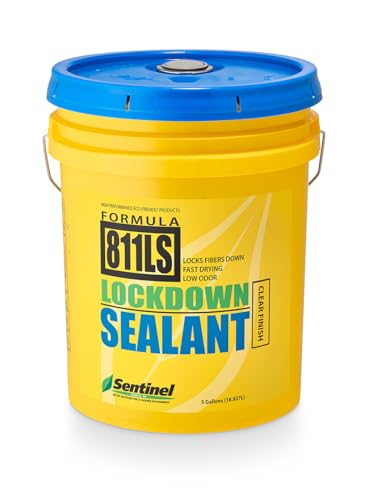
Sentinel 811LS is the clear version of the 812LS, formulated for projects where the existing tile pattern or substrate color needs to remain visible after encapsulation. This is particularly useful for historic buildings or decorative floors where a white coating would ruin the aesthetic. The clear film dries to a satin sheen that does not yellow significantly over time, and the acrylic base provides the same water-based, low-odor application benefits as the pigmented version.
Like the 812LS, coverage is generous—approximately 800 square feet per 5-gallon pail with two coats—and the low viscosity ensures the sealer flows into gaps between tiles and around perimeter edges. Customers who applied it over existing asbestos tile before painting confirmed that the floor was fully sealed and no dust could be raised by sweeping after curing. The clear formula also avoids the “milky white” residue that some users reported with the 812LS when applied over dark substrates.
The same thin consistency concerns apply: multiple buyers noted that the product is thinner than typical encapsulant paint and requires at least three coats for full coverage over porous mastic. Additionally, the fine-print disclaimer regarding asbestos encapsulation exists on this product as well. For applications where the floor finish needs to stay visible, this is the best option, but verify local regulations before using it as a primary asbestos control measure.
Why it’s great
- Clear finish preserves original tile appearance and patterns
- Low-odor formula allows application without disrupting occupied spaces
- High coverage rate reduces material cost per square foot
Good to know
- Thin consistency may demand 3 coats for thorough encapsulation
- Manufacturer fine print may restrict use as asbestos encapsulant
7. Lead Seal ‘n Stop Lead Encapsulant Coating

Lead Seal ’n Stop is an entry-level encapsulant that handles both lead-based paint and asbestos-containing materials at a fraction of the cost of premium 5-gallon pails. The 1-gallon size is ideal for small jobs such as sealing a single window frame, a door jamb, or a closet floor with asbestos tile. The water-based polymer formula creates an elastomeric barrier that flexes with substrate movement, reducing the risk of cracking in areas with minor shifting.
Customer experiences are solid for the price point. One buyer used it on a child’s bedroom window frame and baseboards after a 5-year-old tested with elevated lead levels, and reported complete encapsulation of the chipping paint. Another user applied it to old brownstone shutters without scraping, noting that the thick off-white formula bridged cracks effectively. The product dries to a white finish that acts as a primer for repainting, similar to the more expensive Fiberlock options.
The downsides are the small container size and the need for two coats, which means a room of even 150 square feet requires multiple gallons, negating some of the upfront savings. A few customers also received units with slight leaking during shipping, suggesting that the packaging could be more robust. For small-scale touch-ups or test patches, this is the most accessible option, but for whole-room encapsulation, the larger pails offer better value per square foot.
Why it’s great
- Lowest entry price for small-scale or test-patch encapsulation
- Elastomeric barrier flexes with substrate movement
- Dries white and acts as a primer for repainting
Good to know
- 1-gallon size requires multiple purchases for rooms over 100 sq ft
- Some units arrive with packaging leaks during shipping
FAQ
Can I paint over an asbestos floor sealer?
How many coats of encapsulant do I need on asbestos tile?
Is it safe to walk on an encapsulated asbestos floor?
Final Thoughts: The Verdict
For most users, the best asbestos floor sealer winner is the ABC Asbestos Binding Compound because its triple-mode formulation (removal, penetrating, and bridging) covers the widest range of abatement scenarios with EPA-recognized performance. If you need a primer that accepts epoxy or tile directly, grab the Perfect Primer Encapsulant. And for large-scale projects where budget matters most, nothing beats the Sentinel 812LS for value per square foot in a low-odor, easy-apply formula.