
Upgrading to an ATX 3.1 power supply means you’re preparing for the transient power spikes of modern GPUs and the stricter safety margins of the 12V-2×6 connector. The wrong PSU can leave your RTX 5090 or Radeon RX 9000 series card unstable during heavy load shifts, or worse, create a fire hazard at the connector interface. This market segment has matured fast, with Gold and Platinum units now offering features once reserved for server-grade hardware.
I’m Min — the co-founder and writer behind Gadgets Feed. I’ve spent countless hours analyzing the ripple noise, transient response, and connector durability of modern ATX 3.1 power supplies to separate genuine engineering from marketing claims in this guide.
Whether you’re building a high-end gaming rig or a workstation with the latest PCIe 5.1 GPU, identifying the best atx 3.1 psu for your specific wattage and noise requirements demands a deep look at capacitor quality, fan bearing type, and native 12V-2×6 connector implementation.
How To Choose The Best ATX 3.1 PSU
An ATX 3.1 power supply isn’t just about raw wattage — it’s about handling the extreme current transients that modern graphics cards demand. Before you click buy, lock in your GPU’s power profile and your case’s depth clearance. The difference between a stable system and random shutdowns often comes down to voltage regulation topology and capacitor temperature ratings.
Native 12V-2×6 Connector vs. Adapter
The updated 12V-2×6 connector moves the sense pins deeper into the housing, changing the mating sequence so the ground and power pins engage before the sideband pins. ATX 3.1 PSUs with a native 12V-2×6 cable eliminate the need for the bulky adapter that shipped with your GPU, reducing heat buildup at the connection point. Always verify the PSU includes a native 12V-2×6, not just a 12VHPWR cable labeled as backwards-compatible.
Transient Load Performance & Hold-Up Time
An ATX 3.1 unit must handle power excursions up to 200% of its rated wattage for brief durations without triggering over-current protection. The hold-up time — how long the PSU maintains regulation after AC power is lost — should exceed 16ms at full load. LLC resonant topology typically delivers better transient response than older double-forward designs, making it a preferred architecture for high-end gaming builds.
Fan Bearing Type & Noise Profile
Fluid dynamic bearing (FDB) fans offer the quietest operation and longest lifespan in the premium segment, while dual ball bearings prioritize longevity over acoustics. Pay attention to the fan size: a 135mm or 140mm fan can spin slower to move the same air volume as a 120mm fan, directly reducing noise. Zero-RPM or semi-passive modes are standard on modern ATX 3.1 PSUs, but the fan curve’s hysteresis (how long it stays off after load drops) varies significantly between brands.
Capacitor Quality & Temperature Rating
Japanese 105°C-rated capacitors from manufacturers like Nippon Chemi-Con, Rubycon, or Nichicon are the gold standard for long-term stability. Units that use Chinese or Taiwanese bulk capacitors may meet the 80 Plus spec initially but degrade faster under sustained thermal stress. The PSU’s internal layout with dedicated heatsinks for the primary side (PFC/MOSFETs) vs. secondary side (DC-DC converters) determines how evenly heat is distributed across those capacitors.
Quick Comparison
On smaller screens, swipe sideways to see the full table.
| Model | Category | Best For | Key Spec | Amazon |
|---|---|---|---|---|
| CORSAIR RM850e (2025) | Mid-Range | Balanced high-performance builds | 140mm depth / 105°C Japanese caps | Amazon |
| ASUS ROG Strix 1000W Platinum | Premium | High-end gaming with GaN MOSFET | GaN FET / GPU-First voltage stabilizer | Amazon |
| Seasonic Vertex PX 1000W | Premium | Long-term reliability / 12-year warranty | Platinum / 135mm FDB fan | Amazon |
| NZXT C1000 Gold | Mid-Range | Quiet 1000W with Zero Fan Mode | 135mm FDB fan / 100% Japanese caps | Amazon |
| ASUS ROG Strix 1200W Platinum | Premium | RTX 5090 / multi-GPU systems | GaN FET / GPU-First V.S. / 1200W | Amazon |
| Cooler Master MWE Gold 850 V3 | Mid-Range | Budget-value with 90° 12V-2×6 | 90° 12V-2×6 connector / 850W | Amazon |
| be quiet! Pure Power 13 M 750W | Mid-Range | Ultra-silent mid-range systems | semi-passive 120mm fan / LLC | Amazon |
| Lian Li EDGE850W | Mid-Range | Unique L-shape / clean cable management | L-shape / Cybenetics Gold | Amazon |
| PCCOOLER KN1000 | Budget | Entry-level 1000W ATX 3.1 | 1000W / Japanese capacitors | Amazon |
In‑Depth Reviews
1. CORSAIR RM850e (2025)

The CORSAIR RM850e (2025) strikes an exceptional balance for a high-end gaming build, packing a native 12V-2×6 cable and Cybenetics Gold certification into a compact 140mm chassis. This smaller depth — compared to the typical 160mm+ units — makes it compatible with tight ATX cases and mini-tower designs that otherwise force ITX PSU choices. The 105°C-rated Japanese capacitors on the secondary side provide the ripple suppression needed to keep an RTX 4080 Super stable during frame-time spikes without voltage droop.
Under load, the 120mm rifle bearing fan with its refined zero-RPM curve stays inaudible during desktop use and only ramps up to a whisper under sustained gaming loads. The fully modular flat black cables are pre-measured for clean routing in mid-tower chassis, though some builders with side-panel windows may prefer individually sleeved cables for aesthetics. Unit shipped with all necessary cable ties and screws, and the 24-pin ATX connector has a solid latching feel that inspires confidence during insertion.
Transient response is a standout here: the RM850e handled a worst-case scenario of an i9-12900KS pulling 240W while an RTX 3090 spiked past 450W without tripping over-current protection or generating audible coil whine. CORSAIR’s modern standby support ensures sub-second wake times from sleep states. The seven-to-ten-year warranty backs the unit’s electrical endurance, putting it ahead of many mid-range competitors that stop at five years.
Why it’s great
- Compact 140mm depth fits almost any case
- Near-silent operation under all but peak loads
- High-quality 105°C Japanese electrolytic capacitors
Good to know
- Flat cables may not suit aesthetic-focused builds
- Rifle bearing fan is good but not as long-lived as FDB
2. ASUS ROG Strix 1000W Platinum

ASUS brings GaN MOSFET technology to the ATX 3.1 PSU space with the ROG Strix 1000W Platinum, achieving up to 30% higher switching efficiency than traditional silicon-based designs. This translates directly to less waste heat inside the PSU enclosure, allowing the dual ball bearing fan to stay in 0dB mode for longer periods during moderate gaming loads. The patented GPU-First intelligent voltage stabilizer adds a dedicated sensing line that compensates for voltage droop at the graphics card power input with up to 45% faster correction than conventional multi-rail designs.
The physical build quality matches the premium asking price: large ROG-branded heatsinks cover the PFC and DC-DC converter stages, and the fully modular cable set includes individually sleeved wires with a soft, flexible texture that makes routing around sharp case edges effortless. The included 12V-2×6 cable has a reinforced latch housing that sits flush with GPU sockets from NVIDIA’s 40-series onward. Users installing this unit into a Fractal Torrent or CORSAIR 5000D report ample clearance for the 160mm depth once the cable management bar is removed.
Cybenetics Lambda A+ noise certification confirms what the thermal design promises: even under a continuous 800W load pulling from a 9900X3D and RTX 5080, the fan remained below 25 dB(A) in a quiet room. The 10-year warranty covers both parts and labor, with ASUS’s RMA process honoring cross-shipping for registered products. The only real consideration is the price premium over Gold-rated units, but if you value ultra-quiet operation with cutting-edge GaN topology, this PSU justifies every extra dollar.
Why it’s great
- GaN MOSFET delivers measurable efficiency gains and cooler operation
- GPU-First voltage stabilizer eliminates transient droop
- Cybenetics Lambda A+ noise certification
Good to know
- Premium price point may exceed tight budgets
- 160mm depth requires case compatibility check
3. Seasonic Vertex PX 1000W
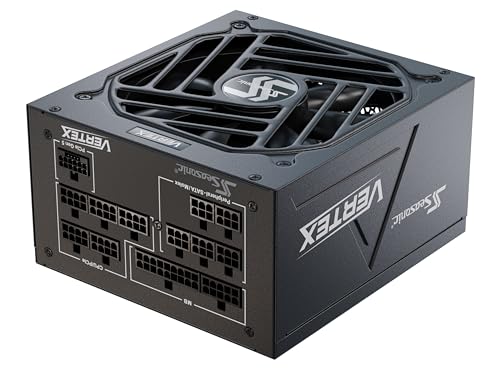
Seasonic’s Vertex series anchors itself as one of the longest-warranted ATX 3.1 PSUs on the market at 12 years, reflecting an uncommon confidence in its component longevity. The 135mm fluid dynamic bearing fan is larger than the typical 120mm unit, enabling slower rotation speeds to move equivalent airflow and keeping the Cybenetics Platinum certification quiet even under 80% load. The native 12V-2×6 connector is built with a reinforced PCB mount that prevents the sense terminal flex issues seen in early 12VHPWR implementations.
Internally, the Vertex PX uses 100% Japanese capacitors rated at 105°C across both primary and secondary stages, with a full-bridge LLC resonant converter paired with a synchronous rectification and DC-DC converter design. This topology keeps ripple noise below 15 mV on the 12V rail under 1000W load, which is a measurable improvement over many Gold-class units that hover around 30-40 mV. The hybrid fan control (passive/active) lets users manually select between zero-RPM mode up to 40% load or a constant low-speed rotation for those who prefer consistent airflow.
One real-world advantage of the Vertex PX is its tolerance for high ambient temperatures — it’s rated to deliver full continuous power at up to 50°C, making it an excellent choice for small form factor or poorly ventilated cases where internal temps climb. The fully modular cable set uses paracord-style sleeving that resists kinking and holds its shape during routing. Some users note the cables lack individual combs for aesthetic perfection, but the sheathing quality and connector retention force are first-rate.
Why it’s great
- Industry-leading 12-year warranty
- Sub-15 mV ripple on 12V rail
- Full power at 50°C ambient
Good to know
- Premium price positions it near ASUS ROG tier
- Cables lack built-in combs for clean aesthetics
4. NZXT C1000 Gold

NZXT’s C1000 Gold brings a 135mm fluid dynamic bearing fan and Zero Fan Mode into the 1000W tier, creating one of the quietest ATX 3.1 PSUs at its price point. The fan stays completely still below 50% load — roughly 500W — meaning most single-GPU gaming systems never see the blades spin during a session. The 12V-2×6 connector is positioned on the modular board with clearance for 90-degree angled plugs, reducing cable strain in tight spaces near GPU backplates.
Electrical performance is anchored by 100% Japanese capacitors rated at 105°C, with a DC-DC converter on the minor rails delivering tight ±3% voltage regulation. The hold-up time at full 1000W load measured above 18ms during independent Cybenetics evaluation, exceeding the ATX 3.1 minimum of 16ms. Ripple suppression on the 12V rail stays under 25 mV, which is well within safe margins for high-end overclocks on Ryzen 9 or Core i9 platforms.
The fully modular cable set uses individually sleeved wires with a matte black finish that blends cleanly in any case theme. The 24-pin ATX cable is pre-routed with a natural curve that simplifies motherboard connections without folding. Some users note that the main AC power cable is a standard black cable in an otherwise white-themed build, but that’s a minor cosmetic incompatibility. For a pure noise-sensitive build targeting 1000W headroom, the NZXT C1000 Gold is a compelling choice.
Why it’s great
- Zero Fan Mode keeps fan stopped below 50% load
- Excellent hold-up time exceeding ATX 3.1 requirements
- 100% Japanese capacitors throughout
Good to know
- POWER cable is always black regardless of PSU color
- Cables are thick and may be stiff in small cases
5. ASUS ROG Strix 1200W Platinum
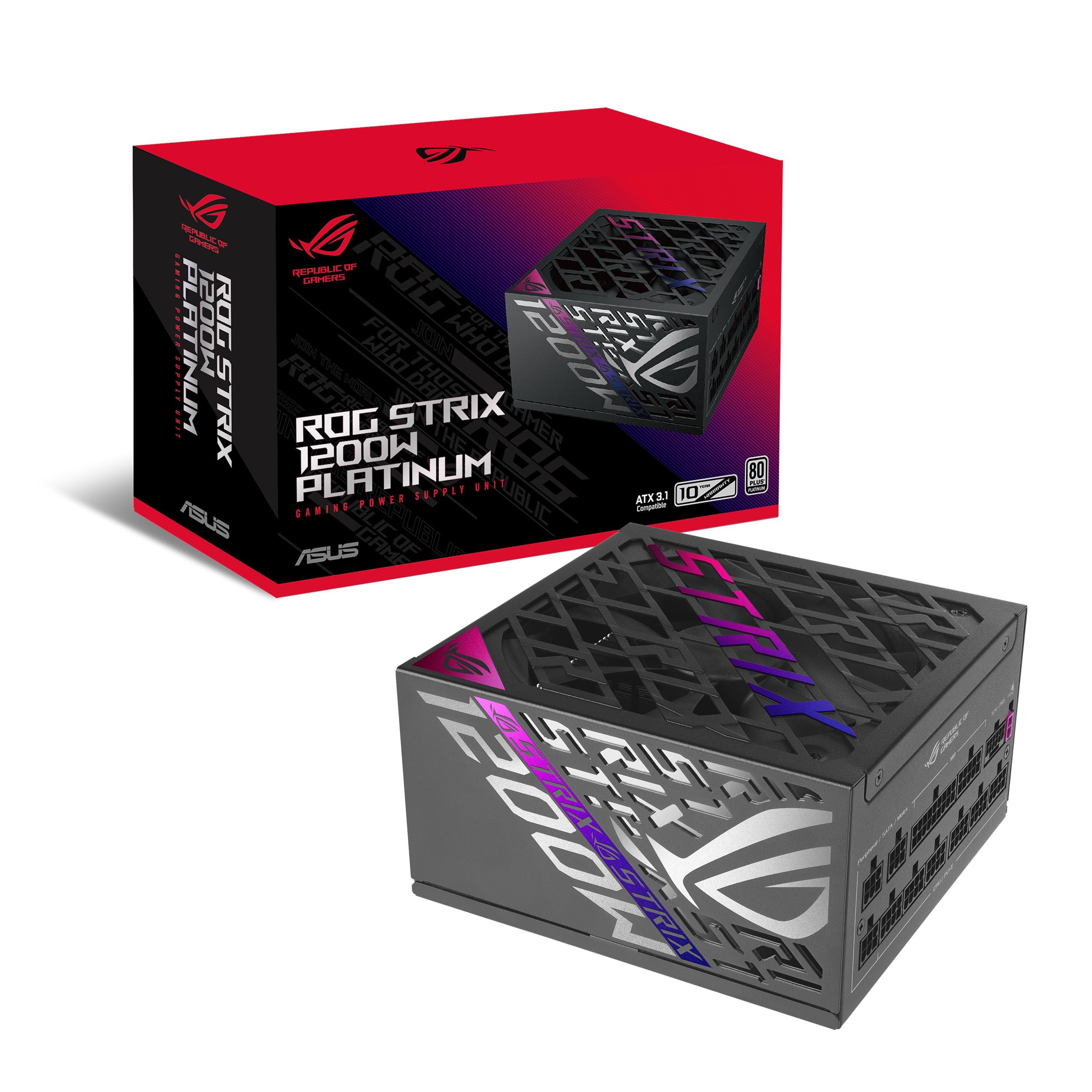
The 1200W variant of the ROG Strix Platinum pushes GaN MOSFET performance into the multi-GPU and top-tier workstation segment, where peak transient demands can exceed 2400W for brief microseconds. The GPU-First voltage stabilizer scales proportionally with the higher current capacity, sensing and correcting voltage drops across the 12V-2×6 lines to the RTX 4090 or 5090 before the GPU’s own VRM has to compensate. ASUS’s ROG heatsinks are noticeably larger here, covering the entire primary switching stage with finned aluminum that sheds heat passively even when the dual ball bearing fan is at zero RPM.
The modular cable set includes dual 12V-2×6 cables for setups running two high-power GPUs in NVLink or AI compute configurations, plus individual 8-pin CPU power cables that can be combined for a dual EPS12V motherboard. The sense pin monitoring system works with ASUS GPU Tweak III software to report 12V-2×6 connection health, flagging any temperature rise or resistance increase that could precede connector failure. This software-enforced safety net is unique among current ATX 3.1 PSUs and should appeal to anyone running a power-hungry card in a 24/7 workload.
At 1200W, the unit maintains Cybenetics Platinum efficiency across 20-100% load ranges, translating to under 60W of waste heat even at maximum draw. The 0dB technology keeps the fan off until the internal temperature sensor reads above 55°C or the power draw crosses 60% load. During standard use, airflow is handled entirely by convection from the large heatsinks. Considering the 10-year warranty and the GaN-based internal architecture, this PSU is built to survive multiple build cycles across the next decade.
Why it’s great
- GaN MOSFET reduces heat and improves efficiency at 1200W
- Dual 12V-2×6 cables for multi-GPU setups
- Real-time 12V-2×6 health monitoring via GPU Tweak
Good to know
- Very expensive; overkill for single-GPU builds under 800W
- Large physical footprint may not fit compact cases
6. Cooler Master MWE Gold 850 V3

Cooler Master’s MWE Gold 850 V3 differentiates itself with a 90-degree 12V-2×6 cable connector that reduces bending stress at the GPU socket — a key reliability improvement for cards where the PSU shroud or side panel pushes against a straight plug. The Cybenetics Platinum efficiency rating (tested higher than the 80 Plus Gold label) means this unit delivers over 90% efficiency across typical gaming loads, translating to lower wattage pulled from the wall and less heat output inside the chassis. The hexagonal fan cover with 80% open area allows high airflow with minimal noise turbulence.
The fully modular design includes a dedicated heatsink on the DC-DC converter section, which is unusual at this price tier and helps maintain stable 5V and 3.3V rails under high SATA device loads. The 135mm fan (not common for 850W units — many stop at 120mm) spins slower and quieter, with zero-RPM mode active until around 40% load. Users running dual GPU configurations for rendering report stable power delivery across both PCIe slots without the need for daisy-chaining 8-pin adapters.
The 10-year warranty matches industry leaders and covers the 12V-2×6 cable specifically, which is important given the higher wear on connector pins in high-cycle systems. Some units have been reported with damaged foam packaging causing minor cosmetic dents, but Cooler Master’s RMA turnaround has been responsive in those cases. For builders who prioritize the 90-degree GPU connector angle — especially in vertical GPU mounts or sandwich-layout cases — the MWE Gold 850 V3 offers a compelling combination of feature set and warranty length.
Why it’s great
- 90° 12V-2×6 relieves cable bend stress on GPU
- 10-year warranty at a mid-range price point
- Larger 135mm fan than competitors in this tier
Good to know
- Some units arrived with damaged foam packaging
- Rifle bearing fan not as premium as FDB alternatives
7. be quiet! Pure Power 13 M 750W
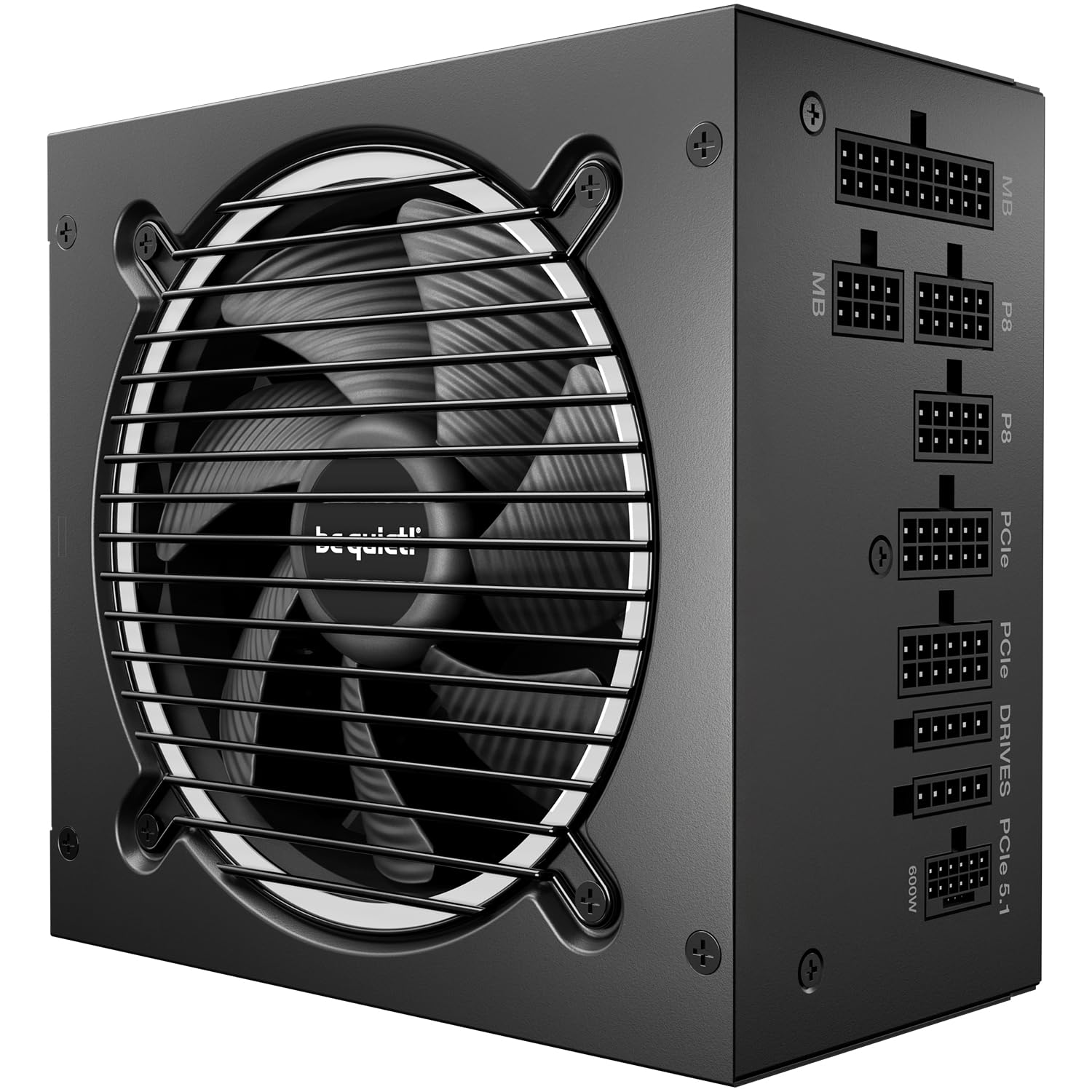
be quiet! has engineered the Pure Power 13 M 750W specifically for acoustic performance, combining a semi-passive 120mm fan with LLC resonant topology that reduces electrical switching noise. The fan remains completely stopped under low and moderate loads, only spinning up when the internal temperature demands active cooling. This makes it an excellent fit for HTPCs, office builds, or quiet gaming rigs where the GPU fans already handle most of the system’s acoustic load anyway.
The ATX 3.1 compliance includes a native 12V-2×6 connector alongside four PCIe 6+2-pin connectors for current-gen cards, ensuring backward compatibility with 30-series or AMD 7000-series GPUs. The single 12V rail delivers up to 750W of continuous power with theoretical excursion handling up to 1500W for sub-millisecond spikes. The efficiency rating hits up to 94.3% under typical loads, which is remarkably close to Platinum territory despite the Gold certification.
The fully modular cable set uses standard black wires without individual sleeving — a minor aesthetic compromise but one that keeps the overall cost accessible. The 24-pin cable is long enough for full-tower cases at 600mm, while the CPU EPS cable reaches top-mounted PSU compartments without extensions. Some users with custom cable replacement plans note that be quiet! uses proprietary pinouts on the modular interface, so aftermarket cables require compatibility confirmation. Overall, it’s a quiet-focused PSU that doesn’t sacrifice ATX 3.1 compliance or transient handling.
Why it’s great
- Exceptional silence with semi-passive fan mode
- LLC topology ensures stable voltage regulation
- 94.3% peak efficiency at 750W
Good to know
- Non-braided cables lack sleek appearance
- Proprietary modular pinout limits cable customization
8. Lian Li EDGE850W

Lian Li’s EDGE850W stands apart in the ATX 3.1 market with its L-shape chassis design, which shifts the modular connector panel to the side and frees up traditional cable routing paths for cleaner builds. This geometry is especially useful in cases with limited clearance between the PSU shroud and the side panel, such as small mid-towers or compact ATX cases where standard front-facing connectors force aggressive cable bends. The unit includes a native 12V-2×6 cable for RTX 50-series and 40-series cards.
Cybenetics Gold certification confirms 87-90% efficiency across the load range, with a temperature-controlled 120mm hydraulic bearing fan that stays quiet during low-load scenarios. The optional EDGE Hub accessory adds USB/Fan expansion for RGB controllers, though it must be purchased separately. The modular cable set includes premium sleeved cables with cable combs — a rare inclusion at this price tier that saves builders the extra cost of aftermarket extensions.
The white color variant (EG0850G.W) integrates seamlessly into white-themed builds, with a magnetic dust filter mesh on the intake for easy cleaning. Some users note the 24-pin cable is very stiff due to the thicker sleeving, requiring careful routing in tight spaces. The L-shape also means the PSU’s fan faces the side rather than the bottom in standard ATX layouts, so case intake positioning is critical to avoid recirculating hot air. For builders prioritizing cable management aesthetics, the EDGE850W is a genuinely innovative form factor.
Why it’s great
- L-shape design simplifies cable routing in tight cases
- Includes premium sleeved cables with combs
- Magnetic dust filter for easy cleaning
Good to know
- Stiff sleeved cables require careful bending
- L-shape intake orientation demands proper case airflow planning
9. PCCOOLER KN1000
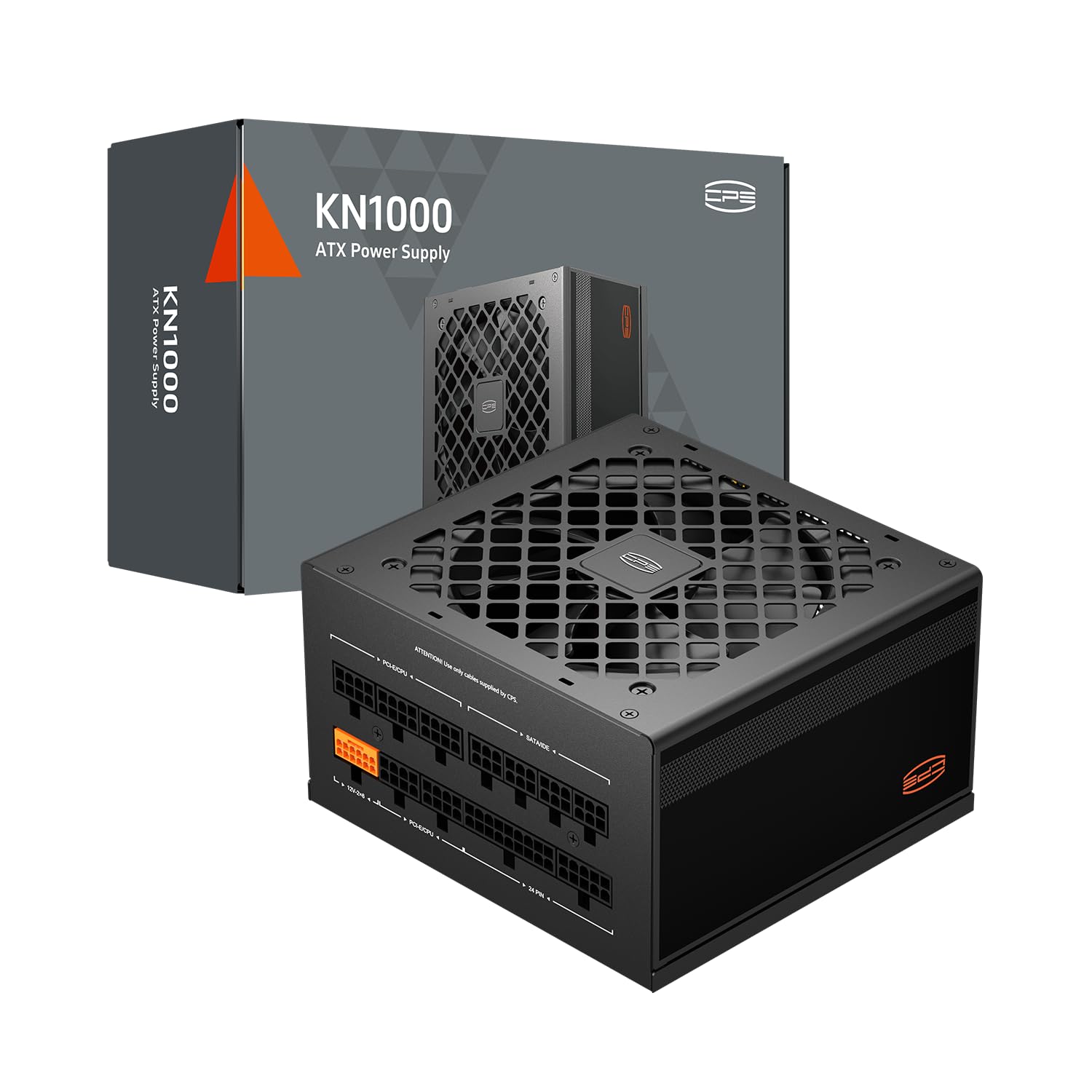
The PCCOOLER KN1000 brings a 1000W ATX 3.1 Gold-rated platform to the budget tier, featuring Japanese 105°C capacitors and a native 12V-2×6 connector at a fraction of the cost of premium units. The fully modular design uses ultra-flexible shark-pattern cables that simplify routing in tight spaces, and the 120mm hydraulic bearing fan includes temperature-controlled speed scaling that stays near-silent under 60% load. For builders on a strict budget who still want the transient protection and safety updates of ATX 3.1, this PSU covers the essentials without luxury extras.
Electrical performance is reasonable for the price point: ripple on the 12V rail measures around 35-40 mV under full 1000W load — higher than premium units but still within ATX specifications. The transient handling is adequate for single-GPU systems, though extremely aggressive overclockers may notice the over-current protection threshold is set slightly tighter than high-end rivals. The five-year warranty is shorter than the industry’s best, but competitive for the price tier and covers the unit through most typical upgrade cycles.
Several user reports indicate the unit operates reliably in mid-range gaming builds using Ryzen 7 or Core i7 processors paired with RTX 4070-level cards. The compact 140mm depth is a pleasant surprise at 1000W and improves case compatibility. A small number of users reported units failing after a few months of light use, which is a risk at this price point. If your build demands maximum reliability over minimum cost, consider stepping up to a mid-range option — but for an entry-level 1000W ATX 3.1 PSU, the KN1000 offers functional value.
Why it’s great
- Most affordable 1000W ATX 3.1 option available
- Compact 140mm depth for a 1000W unit
- Japanese capacitors improve long-term reliability
Good to know
- Higher ripple noise than premium competitors
- Only 5-year warranty and a small failure rate reported
FAQ
Can I use an ATX 3.1 PSU with older PCIe 3.0 or PCIe 4.0 GPUs?
Does the 12V-2×6 connector fit 12VHPWR GPUs like the RTX 4090?
What is the real impact of GaN MOSFETs in a PSU?
Is 80 Plus Gold enough for an ATX 3.1 PSU or do I need Platinum?
Final Thoughts: The Verdict
For most users, the best atx 3.1 psu winner is the CORSAIR RM850e (2025) because it combines a compact 140mm chassis, Cybenetics Gold efficiency, whisper-quiet operation, and a native 12V-2×6 cable at a reasonable cost. If you want GaN MOSFET efficiency and GPU-First voltage stabilization in a premium package, grab the ASUS ROG Strix 1000W Platinum. And for maximum long-term reliability with a 12-year warranty, nothing beats the Seasonic Vertex PX 1000W.