
The difference between a flat, lifeless frame and a cinematic image that grabs the viewer isn’t luck—it’s choosing the right tool for the job. A true professional 4K camera isn’t judged by its megapixel count or marketing hype, but by its ability to deliver rich 10-bit color depth, a versatile log profile for grading, and robust, reliable recording codecs like ProRes or Blackmagic RAW that survive the post-production process without falling apart.
I’m Min — the co-founder and writer behind Gadgets Feed. I’ve spent countless hours breaking down datasheets, comparing dynamic range measurements, analyzing codec support, and cross-referencing real-world user feedback to separate the actual workhorses from the expensive hype in the cinema and pro video space.
This guide distills that deep research into a clear, actionable roadmap for finding the best 4k professional camera that matches your shooting style, budget, and workflow demands without the marketing noise.
How To Choose The Best 4K Professional Camera
Choosing the right pro camera involves more than just picking the highest resolution. You need to balance sensor size, dynamic range, codec support, audio options, and your specific shooting environment. Understanding these core specs will ensure your investment actually serves your work.
Sensor Size and Dynamic Range
Full-frame sensors offer shallower depth of field and better low-light performance, while Super 35/APS-C sensors provide a more forgiving depth of field and access to a vast library of cinema lenses. Dynamic range, measured in stops, tells you how much detail you can retain in shadows and highlights—look for 13 stops or more for professional grading flexibility. Dual native ISO is a critical feature that unlocks clean low-light footage without excessive noise.
Codec Support and Recording Media
The codec determines the quality and editability of your footage. Professional workflows rely on intraframe codecs like Apple ProRes, Blackmagic RAW, or XF-AVC for robust color grading and compression. Consider whether the camera supports external SSD recording, CFast 2.0, or SD cards, and factor in the cost of fast, reliable media for long recording sessions.
Audio and Connectivity
Professional video production requires clean, sync-sound audio. Built-in XLR inputs with phantom power are non-negotiable for serious documentary, interview, and event work. Features like timecode in/out, SDI output, and Ethernet for live streaming can dramatically simplify multi-camera setups and broadcast workflows.
Quick Comparison
On smaller screens, swipe sideways to see the full table.
| Model | Category | Best For | Key Spec | Amazon |
|---|---|---|---|---|
| Sony Alpha FX3 | Cinema | Cinematic gimbal work | 4K 120p 10-bit 4:2:2 | Amazon |
| Canon EOS C70 | Cinema | High-end doc & Netflix | 16+ stops DGO sensor | Amazon |
| Panasonic HC-X2 | Camcorder | Live events & streaming | 20x optical zoom, 4K 60p | Amazon |
| Canon XA70 | Camcorder | Run-and-gun pro video | 1″ sensor, 15x zoom, XLR | Amazon |
| Sony FX30 + 18-105mm | Cinema | Cinematic APS-C | S-Cinetone, 14+ stops | Amazon |
| Sony Alpha 7 IV | Hybrid | Photo & video hybrid | 33MP, 4K 60p 10-bit | Amazon |
| Panasonic S5II | Hybrid | Handheld hybrid shooting | Phase Hybrid AF, Active IS | Amazon |
| Blackmagic 6K G2 | Cinema | Budget cinema rig | Super 35, 6K, 13 stops | Amazon |
| Blackmagic Pocket 4K | Cinema | Value entry to 4K RAW | MFT, 13 stops, ProRes/RAW | Amazon |
In‑Depth Reviews
1. Sony Alpha FX3

The Sony FX3 is the gold standard for modern compact cinema work. It houses a full-frame sensor delivering 15+ stops of dynamic range and S-Cinetone color science borrowed directly from the VENICE cinema camera, giving you that organic, filmic look right out of the box without heavy grading. The ability to shoot 4K 120p at 10-bit 4:2:2 with full pixel readout means your slow-motion footage retains every ounce of detail and color information for creative flexibility.
Its cage-free design is loaded with practical features for a run-and-gun shooter: ¼”-20 mounting points throughout, a top handle with XLR audio inputs, and an in-body cooling fan that completely eliminates overheating, allowing uninterrupted 4K 60p recording. Real-world users consistently praise its exceptional low-light performance and reliable autofocus, making it a favorite for everything from documentaries to high-end commercial work.
This is a video-first tool that prioritizes cinematic output over still photography. While its 12-megapixel stills are serviceable, the FX3 truly shines in filmmaking scenarios. The built-in fan, robust ecosystem, and impressive dynamic range make it the most complete all-in-one cinema package for serious professionals.
Why it’s great
- Full-frame sensor with 15+ stops of DR for rich, gradable footage
- Internal cooling fan for unlimited 4K 60p recording
- XLR top handle with professional gain controls
Good to know
- Lower 12MP resolution limits still-photography capability
- Premium media costs (CFexpress Type A) can add up
- Some rolling shutter with fast panning movements
2. Canon EOS C70
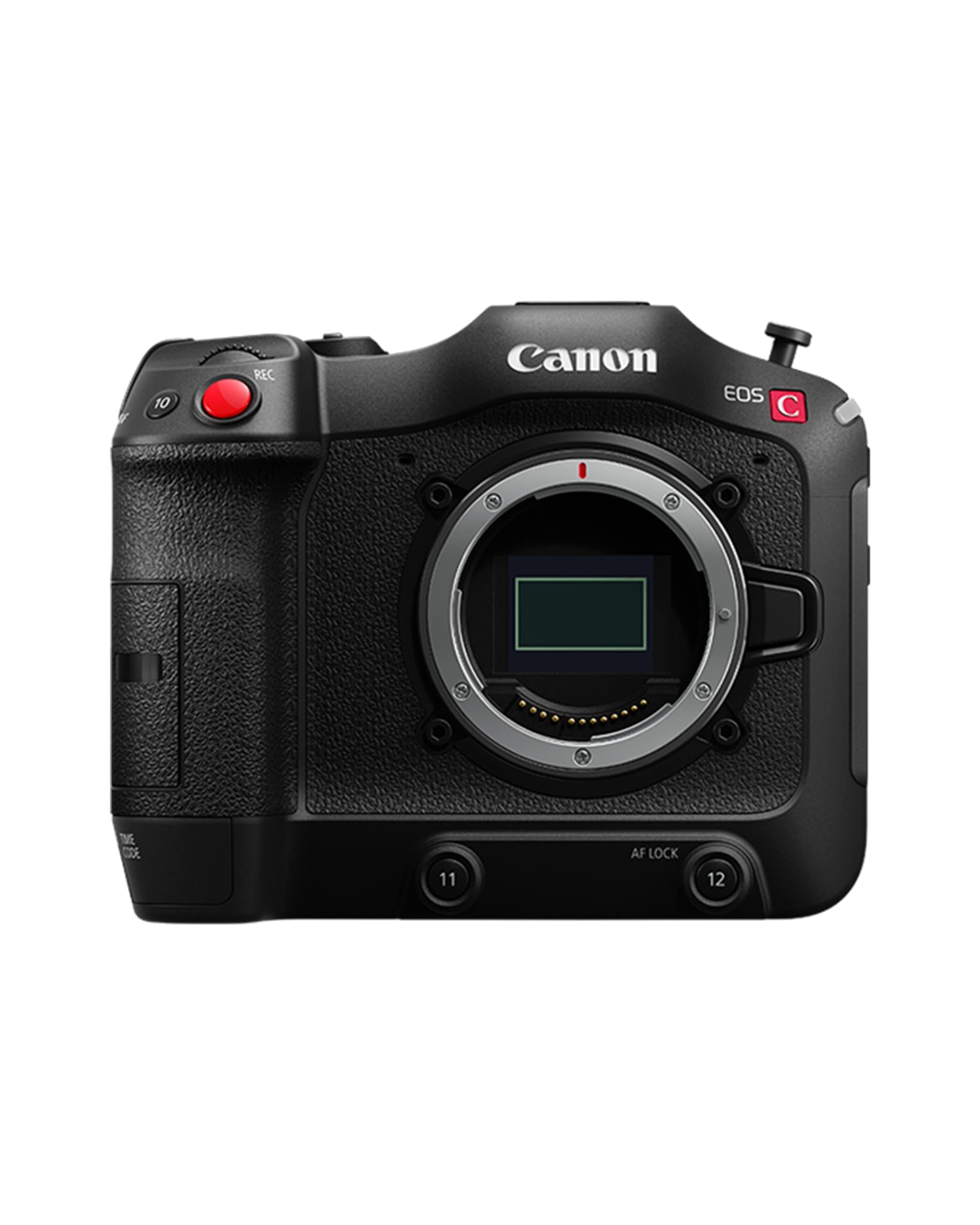
The Canon EOS C70 brings Netflix-approved cinema quality into a remarkably compact body. Its secret weapon is the Dual Gain Output (DGO) sensor, which captures over 16 stops of dynamic range by reading each pixel at two different gain levels simultaneously—preserving incredible detail in both shadows and highlights with minimal noise. This sensor, paired with the DIGIC DV7 processor and RF mount, allows the C70 to capture exceptionally clean, filmic 4K footage that holds up in demanding color grading sessions.
Canon’s legendary Dual Pixel CMOS AF II ensures you never miss focus, even with fast-moving subjects or when the camera is rigged on a gimbal for complex motion shots. It also features built-in electronic ND filters, dual SD card slots for simultaneous recording, and a rotatable touchscreen for intuitive menus. Real-world feedback from filmmakers highlights its consistent autofocus and organic skin tones as standout features on high-pressure sets.
This camera is a workhorse built for narrative filmmaking, documentaries, and high-end event coverage. While some users note the display hinge can feel less premium and the electronic image stabilization is limited, the C70’s core image quality and professional features—including 12-bit RAW output—make it a compelling choice for those seeking broadcast and cinema-level results in a portable form factor.
Why it’s great
- 16+ stops of DR via Dual Gain Output sensor for pristine shadows/highlights
- Built-in electronic ND filters for precise exposure control
- Reliable Dual Pixel CMOS AF II with face and eye detection
Good to know
- RF lens ecosystem is newer and has fewer affordable options
- Electronic IS in-body can be underwhelming
- No built-in EVF; relies entirely on the LCD screen
3. Panasonic HC-X2

The Panasonic HC-X2 is a purpose-built professional camcorder that excels in live event, news, and corporate production. Its integrated 24.5mm wide-angle lens paired with a 20x optical zoom provides incredible flexibility from wide group shots to tight close-ups without changing lenses. The 1-inch MOS sensor delivers beautiful 4K 60p footage with the 13-stop V-Log gamma profile for color grading, all while maintaining the ergonomic handling and reliability that camcorders offer for long shoots.
This model is loaded with broadcast-ready features including simultaneous SDI and HDMI output, Ethernet connectivity for reliable live streaming, and dual XLR inputs with phantom power on the detachable handle. Users in the field report excellent auto tracking and the 5-axis hybrid OIS system works wonders for steady handheld shots in chaotic environments like sports and conferences.
For those who need a highly reliable, all-in-one solution that requires minimal rigging, the HC-X2 delivers. Its manual controls—triple lens ring, user switches, and intuitive menu—allow for quick adjustments on the fly. The main consideration is the premium price, but for professionals whose revenue depends on flawless live coverage, the investment in this specialized tool is easily justified.
Why it’s great
- 20x optical zoom with 24.5mm wide-angle starting point
- Simultaneous SDI/HDMI output and Ethernet streaming
- Robust 5-axis OIS for steady handheld shots
Good to know
- Battery not included in the box
- Auto balance can over-darken in very bright scenes
- Fewer direct manual dials compared to some previous Panasonic models
4. Canon XA70

The Canon XA70 packs professional camcorder functionality into a remarkably portable chassis. It features a 1-inch CMOS sensor paired with the DIGIC DV 6 processor, delivering stunning 4K UHD with vibrant color science that Canon is known for straight out of the camera. The integrated 4K 15x optical zoom lens covers a wide range of focal lengths, making it ideal for event videography, interviews, and high-end corporate content where changing lenses is not an option.
Audio is a key strength here—the detachable handle includes two XLR terminals with phantom power for professional microphones, and it supports 4-channel linear PCM recording. Users report the touchscreen interface and tiltable OLED EVF are intuitive, and the optical image stabilization is effective enough to capture smooth footage without a rig. Dual SD card slots allow for relay recording, providing backup during critical long-form sessions.
The XA70 also supports USB-C live streaming directly to a PC or Mac without a capture card, a major plus for modern streaming workflows. However, some users note the built-in monitor resolution is lower than they would like for critical focus checking, and the three ND filter options can feel inconsistent. For a compact, all-in-one, professional camcorder that starts recording immediately, the XA70 is a top-tier choice.
Why it’s great
- 1-inch sensor with DIGIC DV6 for high-quality 4K imaging
- Two XLR inputs with phantom power in a compact body
- USB-C UVC for native live streaming to computer
Good to know
- Onboard monitor resolution is low for critical focus pulls
- ND filter performance has been reported as inconsistent
- Auto-focus can struggle versus fully manual operation
5. Sony FX30 + E PZ 18-105mm f/4.0

The Sony FX30 is the APS-C sibling of the FX3, designed to put serious cinema features into the hands of a wider range of creators. Its 26.1MP Exmor R APS-C sensor delivers over 14 stops of dynamic range and includes S-Cinetone color science for beautiful, natural skin tones directly from the camera. The dual base ISO (800 and 2500) ensures clean, low-noise images in both bright light and dim interiors, a feature rarely seen at this price point.
This bundle includes the E PZ 18-105mm f/4.0 power zoom lens, which is extremely practical for event and documentary work with its servo zoom control. The FX30 also supports Cine EI Quick and Log shooting modes, allowing you to embed user LUTs onto the LCD and HDMI output for accurate on-set color monitoring. Reviewers note the camera feels like a mini cinema rig, and many have used it to secure higher-paying clients thanks to its professional image quality.
While the APS-C sensor means you need to consider the crop factor when choosing lenses, the image quality you get for this investment is undeniably professional. It lacks the full-frame low-light edge and some prefer the FX3 for high-end work, but the FX30 offers an exceptional path to a professional Sony cinema workflow without the full-frame price tag.
Why it’s great
- S-Cinetone and 14+ stops of DR for organic cinema looks
- Dual base ISO (800/2500) for clean low-light images
- Cine EI mode with user LUT embedding on HDMI output
Good to know
- APS-C sensor means a 1.5x crop factor on full-frame lenses
- Bundle lens is f/4.0, not as fast as f/2.8 alternatives
- Some international versions are shipped with European power adapters
6. Sony Alpha 7 IV

The Sony Alpha 7 IV is the definitive hybrid camera for professionals who need exceptional stills and serious video capability in one body. Its 33MP full-frame Exmor R back-illuminated sensor, paired with the BIONZ XR engine, delivers 7K oversampled 4K 30p 10-bit 4:2:2 footage with no pixel binning. This results in incredibly sharp and detailed video, further enhanced by the S-Cinetone color profile which uses the colorimetry of Sony’s VENICE cinema camera for beautiful skin tones out of the box.
For video shooters, it offers 4K 60p in 10-bit 4:2:2 (with a Super 35 crop), fully articulating screen, and robust real-time Eye AF for both humans and animals. The ergonomics are excellent, with a deep grip and weather-sealed body, and user reports consistently highlight its dual card slots (one CFexpress Type A, one SD) and impressive battery life often exceeding 2,000 shots per charge.
The primary trade-off is that 4K 60p uses a crop, which means you lose the full-frame look for slow-motion work. High frame rate 120p video also incurs a significant crop. For shooters who prioritize high-resolution hybrid work and don’t need unlimited full-frame slow-mo, the A7 IV remains a best-in-class workhorse.
Why it’s great
- 33MP sensor with 7K oversampled 4K for exceptional sharpness
- S-Cinetone color science for cinematic skin tones
- Dual card slots and excellent battery life for all-day shooting
Good to know
- 4K 60p recording uses a Super 35 crop
- Menus can be complex to navigate for beginners
- Higher bitrate video requires fast, expensive CFexpress Type A media
7. Panasonic LUMIX S5II
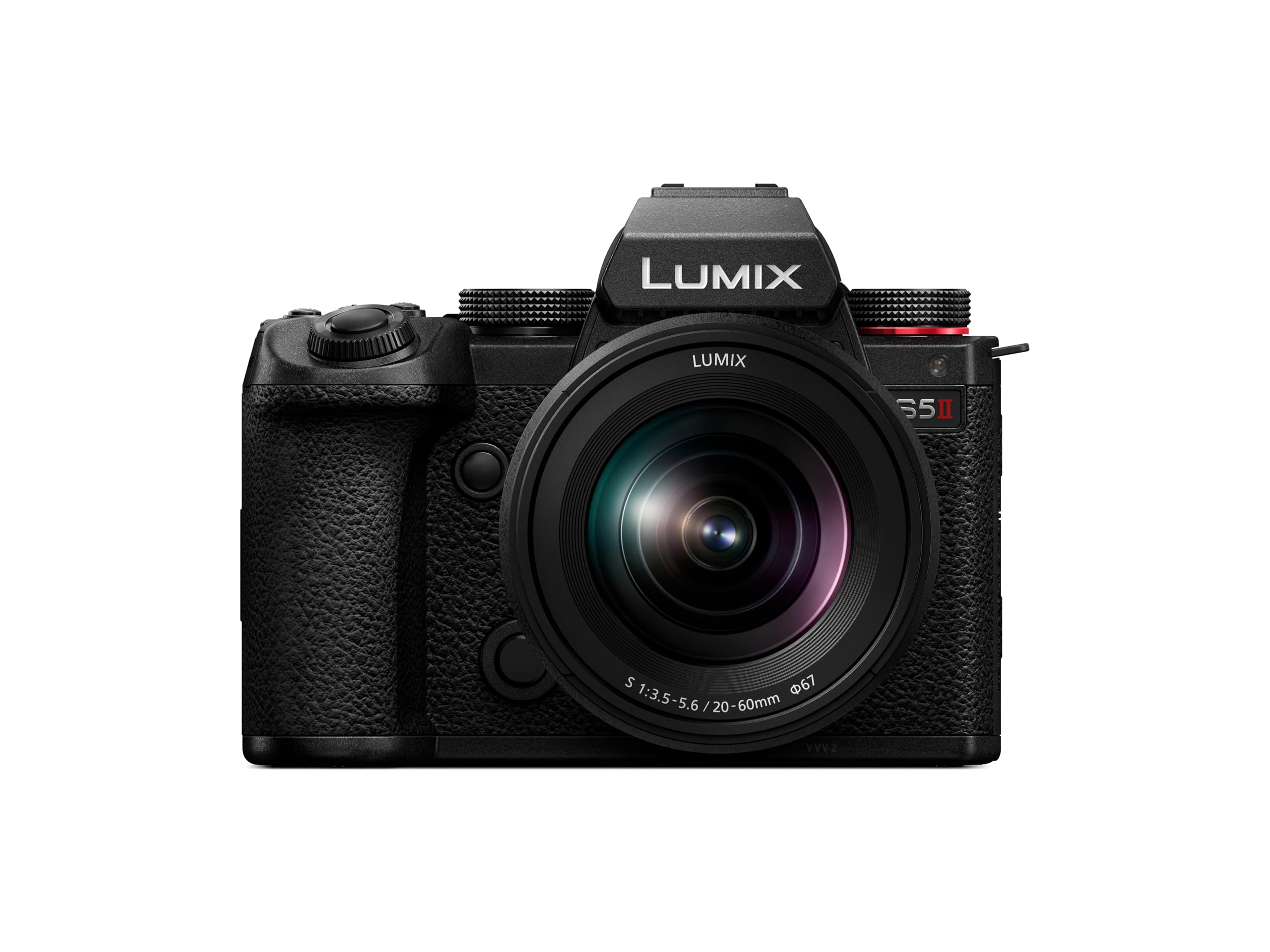
The Panasonic LUMIX S5II marks a major turning point for Panasonic video cameras by introducing Phase Hybrid Autofocus. This long-awaited upgrade finally delivers the fast, reliable subject tracking and eye detection that video shooters have been wanting, making it capable of locking onto and following subjects through complex scenes. The 24.2MP full-frame sensor boasts V-Log/V-Gamut capture with 14+ stops of dynamic range, providing a high-quality color foundation for professional grading.
Its Active I.S. system is a standout feature for handheld videographers, using gyro data and algorithmic processing to stabilize walking shots more effectively than previous generations. The S5II also offers unlimited 4:2:2 10-bit video recording thanks to an integrated cooling fan, eliminating overheating concerns during long interviews or events. Real-world users praise its natural colors, intuitive menu, and the quality of the 20-60mm kit lens, which delivers a soft, cinematic look.
While the build is solid, the body’s square edges can be prone to scratching, and battery life is a known weakness that may require a battery grip for all-day shoots. However, for the investment, you get a compact full-frame body with pro-level video features, reliable autofocus, and access to the fast-growing L-mount ecosystem of lenses.
Why it’s great
- Phase Hybrid AF finally delivers reliable video autofocus for Panasonic
- Active I.S. provides impressive stabilization for walking footage
- Unlimited 4:2:2 10-bit recording with internal fan
Good to know
- Battery life is poor; a battery grip is recommended for long days
- Body scratches easily and rubber port covers feel flimsy
- High ISO performance drops off quickly above 51200
8. Blackmagic Pocket Cinema Camera 6K G2

The Blackmagic Pocket Cinema Camera 6K G2 is a serious cinema tool that delivers exceptional image quality for its tier. Its Super 35 sensor records at a native 6144 x 3456 resolution (6K), allowing you to crop or reframe shots in post while still outputting pristine 4K. The 13 stops of dynamic range and dual native ISO up to 25,600 handle challenging contrasty scenes well, capturing detail in both shadows and highlights that lower-tier cameras miss completely.
Recording is a major strength—this camera natively supports Blackmagic RAW and Apple ProRes in all formats up to 6K, giving you incredible flexibility for post-production. It features a user-friendly 5-inch tiltable LCD, mini XLR input for professional audio, and can record directly to external SSDs via USB-C for cost-effective high-capacity storage. The included DaVinci Resolve Studio license means you get a full professional grading suite out of the box.
The trade-offs are typical of a pure cinema camera: battery life is poor (around 40-60 minutes with the included NP-F570), there is no built-in stabilization, and autofocus is a manual affair. It demands a rig—cage, external monitor in bright conditions, and V-mount battery—to unlock its full potential. For filmmakers who prioritize image quality over convenience and are willing to build a system, the 6K G2 provides an unbeatable value.
Why it’s great
- 6K Super 35 sensor with 13 stops dynamic range for superior grading
- Native Blackmagic RAW and ProRes support with SSD recording via USB-C
- Includes full DaVinci Resolve Studio activation key
Good to know
- Requires external rig, battery upgrade, and monitor for serious use
- No in-body stabilization – needs tripod or gimbal for stable shots
- Battery life is very short at approximately 60 minutes
9. Blackmagic Pocket Cinema Camera 4K

The Blackmagic Pocket Cinema Camera 4K democratized professional 4K video by offering genuine cinema-quality imaging at an incredible value. Its Micro Four Thirds sensor records a native 4K resolution (4096 x 2160) with 13 stops of dynamic range and dual native ISO up to 25,600, providing a beautiful, organic image that punches far above its price point. It supports 12-bit Blackmagic RAW and Apple ProRes, giving post-production editors an immense amount of data to grade with.
This camera is built for a rig-based workflow. It features a 5-inch LCD touchscreen, mini XLR and 3.5mm audio inputs, and full-sized HDMI out. It can record to SD/UHS-II, CFast 2.0, or external SSDs via USB-C. The included DaVinci Resolve Studio license is a huge bonus for new filmmakers. Users consistently praise its sensor quality, versatile codec options, and the ability to pair it with vintage MFT lenses for unique looks.
As with other cinema-first cameras, battery life is poor (approximately 30 minutes), the screen is unusable in direct sunlight, and it lacks any form of image stabilization or continuous autofocus. It is fundamentally a manual tool for learning the craft and creating stunning footage. For those prepared to rig it out and master manual exposure, the Pocket 4K remains a legendary entry point into professional 4K filmmaking that still competes with cameras costing much more.
Why it’s great
- Cinema-quality 4K with 13 stops of DR at a budget-friendly investment
- Supports 12-bit Blackmagic RAW and ProRes for professional workflows
- Includes DaVinci Resolve Studio, a value
Good to know
- Very poor battery life (around 30 minutes) and no stabilization
- Screen is nearly unusable in bright daylight without a hood or monitor
- No continuous autofocus; requires full manual focus operation
FAQ
What is the minimum dynamic range I should look for in a professional 4K camera?
Can I use a mirrorless hybrid camera for professional video work?
Final Thoughts: The Verdict
For most users, the best 4k professional camera winner is the Sony Alpha FX3 because it perfectly balances full-frame cinematic capability, robust 10-bit 4:2:2 recording, and practical pro features like a built-in fan and XLR handle in a compact, rig-friendly body. If you want a highly integrated hybrid with top-tier stills, grab the Sony Alpha 7 IV. And for pure budget-focused cinema quality that can be built into a professional rig over time, nothing beats the value of the Blackmagic Pocket Cinema Camera 4K.