
Our readers keep the lights on and my morning glass full of iced black tea. As an Amazon Associate, I earn from qualifying purchases.
Brake dust doesn’t just sit on your alloy wheels — it chemically bonds to the metal over time. You grab a standard cleaner, scrub for twenty minutes, and still see a brownish haze in the spokes. What you actually need is a cleaner that targets those bonded iron particles themselves and dissolves them on contact, not a soap that just slides off the grime. This guide breaks down the best alloy rim cleaners by how they handle that real problem: the ones that use a chemical reaction called “iron fall-out removal” (the cleaner turns purple as it eats the dust) versus simple degreasers that just wash the surface.
I’m Min — the co-founder and writer behind Gadgets Feed. This guide is built by comparing the manufacturers’ published specifications and the patterns across verified customer reviews, so you get each pick’s real strengths and trade-offs instead of marketing spin.
Whether you drive a daily commuter or a weekend performance car, the right cleaner saves you elbow grease and protects your wheel’s clear coat. This is your straightforward look at the best alloy rim cleaner for every type of buildup you face.
How To Choose The Best Alloy Rim Cleaner
Alloy rims have a clear coat or painted layer, so the wrong cleaner — one with harsh acids — can etch that finish permanently. The safest approach is a cleaner that is pH-neutral (neither acidic nor alkaline, so it won’t corrode the metal or strip the protective layer) and an iron-fallout remover (a formula that chemically reacts with embedded brake dust particles so they rinse away instead of needing aggressive scrubbing). Avoid any product labeled “acid-based” for alloy rims unless you are fully ready to neutralize it immediately.
Color-Changing vs Straight Degreaser
A color-changing formula — spray it on and it turns purple or red where brake dust is present — gives you a clear visual cue that the chemistry is actually working. Straight degreasers rely purely on physical agitation: you scrub until the grime is gone. For heavily caked-on dust, the reactive cleaner does more of the work for you.
Gel vs Liquid Consistency
Gel-based cleaners cling to the wheel’s surface and don’t drip off as fast, which matters for vertical spokes and intricate spoke patterns. Thin liquids run down the wheel quickly, wasting product before they have time to react. A thick gel gives the chemistry more contact time on the dirt.
Quick Comparison
On smaller screens, swipe sideways to see the full table.
| Model | Category | Best For | Key Spec | Amazon |
|---|---|---|---|---|
| Gtechniq W6 | Iron Remover | Heavy, years-old brake dust | 17 Fl Oz bottle | Amazon |
| 303 Heavy Duty Wheel Cleaner | Iron Indicating | Safe for all wheel types | 15.5 Fl Oz bottle | Amazon |
| CAR GUYS Wheel Cleaner | pH-Neutral Gel | Intricate spoke wheels | 18 Oz bottle | Amazon |
| Carfidant Rim Reactor | Gel Concentrate | Stubborn dust other cleaners missed | 16 Fl Oz bottle | Amazon |
| Maintain Rim Cleanse | pH-Neutral | Preventing long-term corrosion | 16 Oz bottle | Amazon |
| Suds Lab XA | Zero-Acid | Quick, low-scrub maintenance | 64 Oz bottle | Amazon |
| Rim Reactor (Gallon) | Concentrate Value | High-volume detailing | 128 Oz bottle | Amazon |
In‑Depth Reviews
1. Gtechniq W6 Iron Removing Wheel & Paint Cleaner

The Gtechniq W6 is the top pick because its thick gel formula chemically dissolves iron particles rather than just washing the surface, and it is for anyone whose wheels have a brown layer that looks more like paint than dust. Buyers report that it “removed 15-year-old, mm-thick brake dust from 2008 Ridgeline wheels in 5 minutes with effortless wipe” — that is the kind of real-world power you want when standard degreasers fail.
At 17 fluid ounces (about 500 milliliters), this bottle holds 6% more volume than the Carfidant Rim Reactor — a small but noticeable gap when you are tackling all four wheels. The formula is safe on coatings and clear coats, so you are not trading cleaning power for damage to the rim’s protective layer. Multiple owners mention it outperformed McGuire’s and Mothers in direct head-to-head tests.
The one catch: the bottle does not come with a spray trigger despite the product photos showing one. You will need your own spray nozzle or a separate applicator. If you want a cleaner that genuinely melts off the toughest bonded dust without scrubbing your arms off, this is the one to get.
Why it’s great
- Dissolves years-old, millimeter-thick brake dust in minutes
- Safe on paintwork, clear coats, and ceramic coatings
- Thick gel formula clings to vertical rims without dripping
Good to know
- Does not include a spray trigger — buy one separately
- Strong chemical odor; use outdoors or with ventilation
2. 303 Products Heavy Duty Wheel Cleaner

Where the Gtechniq W6 wins on raw dissolving power, the 303 Heavy Duty Wheel Cleaner beats it on broad compatibility and a milder user experience. It uses an iron-indicating formula that turns purple on contact with brake dust, giving you clear visual feedback as it works. At 1.2 pounds per bottle, it is 6% heavier than the CAR GUYS cleaner, reflecting a denser recipe that does not get used up as fast.
Customers note that on a 2021 Audi RS5, you can “rinse, spray, let sit 3-4 min, purple streaks, easier cleaning, rinses clean” — the color change tells you exactly where the dust is still bonded and when it is done. The 303 works on aluminum, chrome, steel, and alloy wheels without corrosion, and the smell is noticeably milder than pure iron removers.
Pick the 303 over the Gtechniq if you clean multiple vehicles with different wheel finishes and want one product that works across all of them without checking compatibility charts. It is also a better choice if strong odors bother you, as reviewers consistently describe the scent as less aggressive than other iron removers.
Where it shines
- Purple color-change shows exactly where brake dust is reacting
- Non-corrosive formula safe on all wheel types
- Milder odor compared to dedicated iron removers
Worth noting
- Requires more product per wheel than gel-based alternatives
- Scent described as “grape candy mixed with dog poop” by reviewers
3. CAR GUYS Wheel Cleaner

The scenario that defines this cleaner is a set of intricate 15-inch BBS wheels with tight basketweave spokes where a brush cannot reach every crevice. The CAR GUYS formula is a pH-neutral gel that clings to those deep gaps and dissolves brake dust without requiring you to jam a brush into every slot. Buyers confirm that the “gel cleaner effectively removes brake dust from intricate 15″ BBS wheels; reduces cleaning time vs. acidic cleaners.”
At 18 ounces, it is one of the larger single-bottle options in this group, and because it is concentrated, you can dilute it with water to extend the bottle’s life for routine maintenance washes. The gel consistency means minimal runoff — each spray stays where you put it, which is the whole point for complex wheel designs. The formula is pH-neutral, so it will not damage clear coats or painted finishes even with regular use.
The standout spec here is the gel cling time: because it does not drip off immediately, the chemistry gets more contact time on the dirt. That makes it the right pick for wire wheels, mesh patterns, or any rim where uneven surfaces make traditional liquid cleaners run off before they work.
What stands out
- Gel formula clings to intricate spoke patterns
- pH-neutral and safe on clear coats and paint
- Dilutable concentrate extends bottle life
The trade-offs
- Less effective on chrome wheels per some buyer reports
- Requires high-pressure rinse to avoid residue on detailed rims
4. Carfidant Rim Reactor Wheel & Rim Cleaner
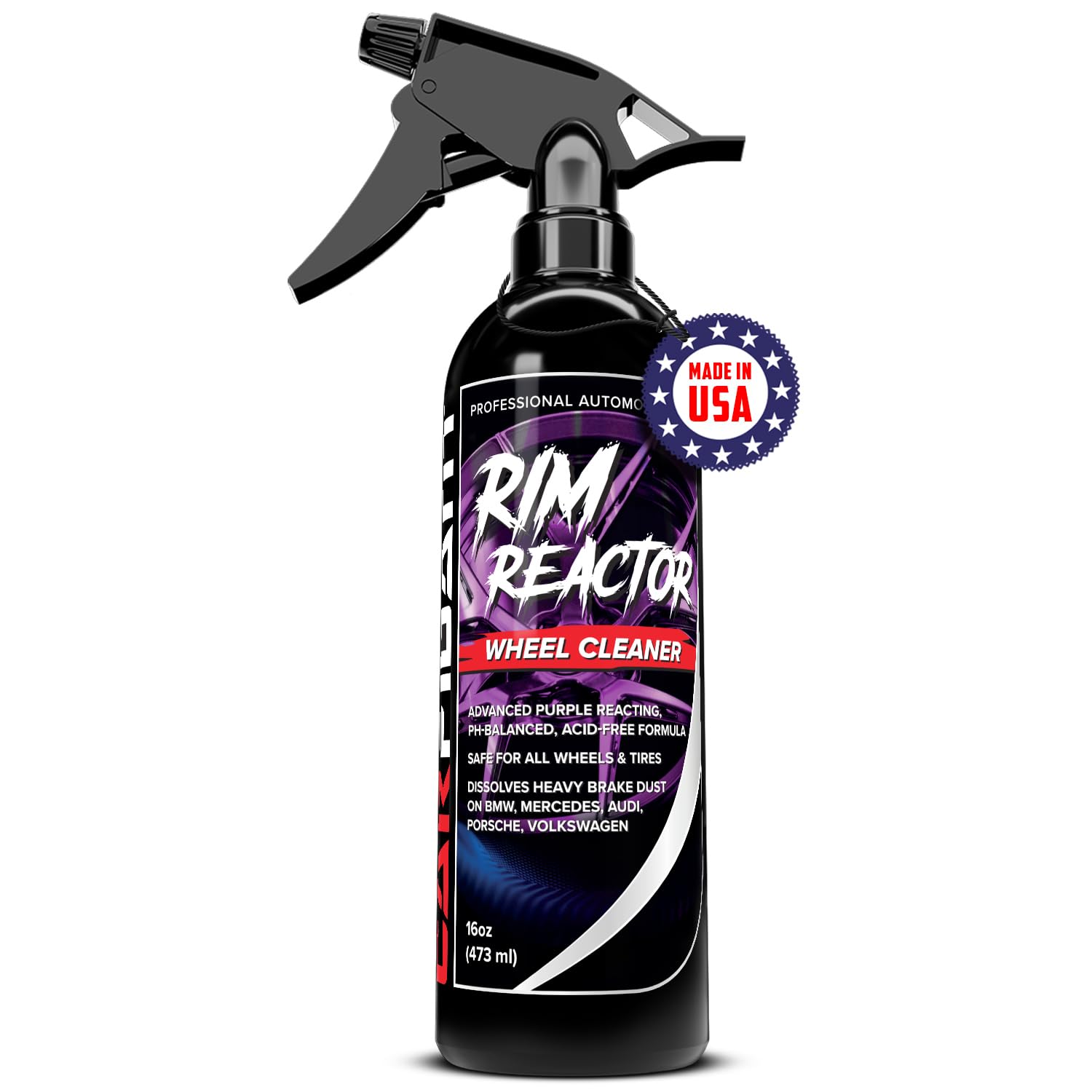
The one number that matters most when buying a rim cleaner is how much heavy caked-on dust it can remove without scrubbing. The Carfidant Rim Reactor scores high here: one buyer reports it “removed heavily caked-on brake dust that 3 other cleaners failed on” after a 4-minute dwell and a drill-brush scrub. That is a direct claim of beating multiple competitors in the same real-world test.
The catch you accept is that the included spray pump can arrive defective. Multiple reviews mention a pump failure on the first use, though customer service appears responsive in sending replacements. At 16 fluid ounces, the bottle is slightly smaller than the Gtechniq W6 (by about 6%), but the gel is concentrated so you can dilute it for routine washes to stretch the value further.
The color-changing formula turns purple as it reacts with iron, giving you a clear endpoint so you know exactly when to rinse. For the price of entry-level cleaners, you get a premium-style reactive gel that competes with bottles costing more. This is the right pick if you want the chemistry of a high-end iron remover without stepping up to the premium tier.
The upsides
- Dissolves brake dust that multiple other cleaners failed on
- Dilutable gel concentrate for extended use
- Color-changing purple indicator confirms cleaning action
Keep in mind
- Some units arrive with defective spray pumps
- May leave a slight haze on certain finishes, easily wiped away
5. Maintain Rim Cleanse Wheel Cleaner
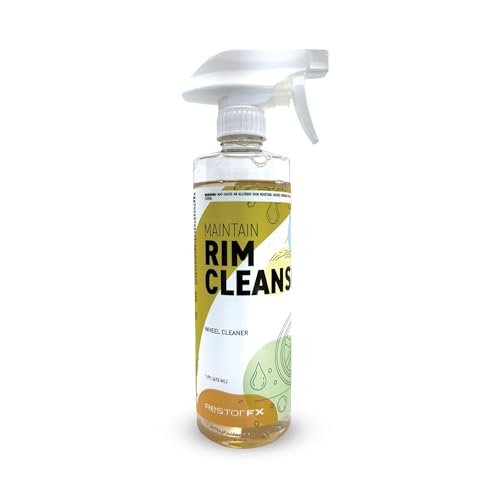
At this lower price, what you actually get is a pH-neutral (neither acidic nor alkaline) iron fallout remover that targets embedded iron particles before they cause pitting and surface etching. Buyers confirm that the “color-changing formula reaches crevices” that standard cleaners miss, and it “leaves rims bright and shiny” after a simple spray-and-rinse process.
What you give up is nothing in terms of safety — the pH-neutral formulation means it will not damage painted, clear-coated, alloy, or chrome rims. The real trade-off is the very strong chemical smell: reviewers consistently warn to use it outdoors or on a windy day because the odor is noticeably harsher than other pH-neutral options. The 16-ounce bottle is a single-use size rather than a concentrate, so it is best for a dedicated cleaning session rather than stretching across many washes.
The price-to-performance read is that this cleaner is for the owner who values wheel finish preservation above all else. If you have expensive aftermarket rims with a custom clear coat and you want a cleaner that actively prevents corrosion while removing dust, the Rim Cleanse justifies the premium by protecting your investment over years of use — making it the exact budget buyer it is perfect for.
Why we’d pick it
- pH-neutral formula prevents long-term rim corrosion
- Color-changing purple reaction confirms deep cleaning
- Safe on painted, clear-coated, alloy, and chrome finishes
A few caveats
- Very strong chemical odor; use only outdoors
- Purple residue can stain skin and clothing upon contact
6. Suds Lab XA Zero-Acid Wheel Cleaner
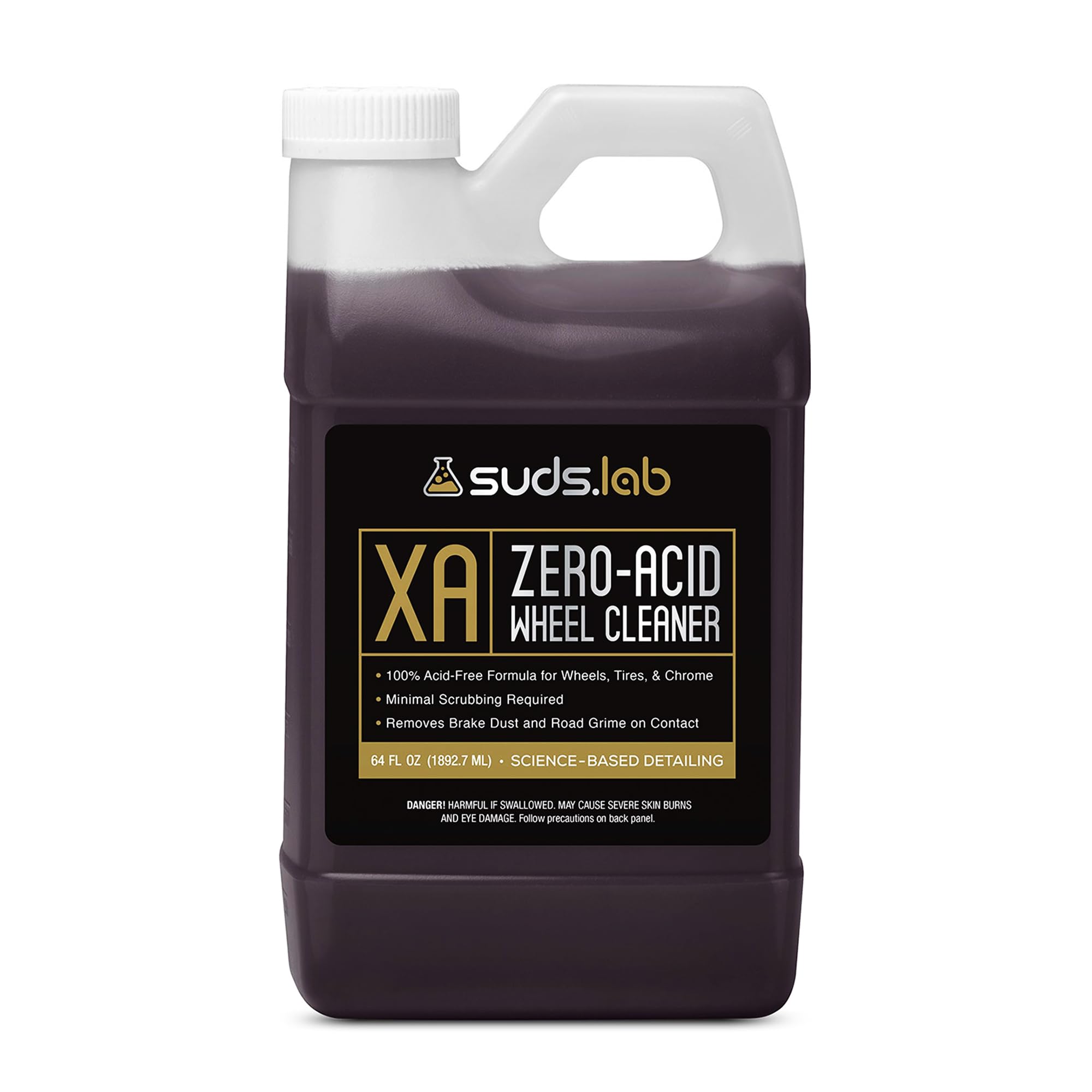
This cleaner is perfect for the weekly car washer who wants a fast, zero-acid option that won’t eat away at polished rims over time. The Suds Lab XA features a 100% acid-free formula that you dilute with water, and it requires about 60 seconds of dwell time before rinsing. At 64 ounces, the bottle is dramatically larger than any other cleaner in this roundup — you are paying for volume rather than concentration.
The feature that serves that maintenance-focused buyer best is the dilution flexibility: you can mix it stronger for heavy dirt or weaker for a quick weekly refresh. One reviewer notes that “undiluted restored 98% of heavily soiled Nissan rims” but also cautions “must dilute per instructions to save money.” Realistic reviews also point out that despite what some videos show, you still need to scrub lightly — this is not a true no-scrub spray-and-rinse formula.
The honest limit is that this cleaner is explicitly not recommended for use on uncoated aluminum or anodized wheels (wheels with an oxide layer for protection), which narrows its compatibility compared to the other picks here. Choose the Suds Lab XA if you have coated black or painted rims and want a large economical bottle for frequent maintenance washes, but be aware that it is not a versatile cleaner for bare metal wheels.
Strong points
- Large 64-ounce bottle for high-volume use
- Zero-acid formula safe on coated rims
- Dilutable concentrate extends usage even further
Before you buy
- Not safe for uncoated aluminum or anodized wheels
- Still requires light scrubbing — not a true no-scrub formula
7. Rim Reactor Wheel Cleaner Spray (Gallon)
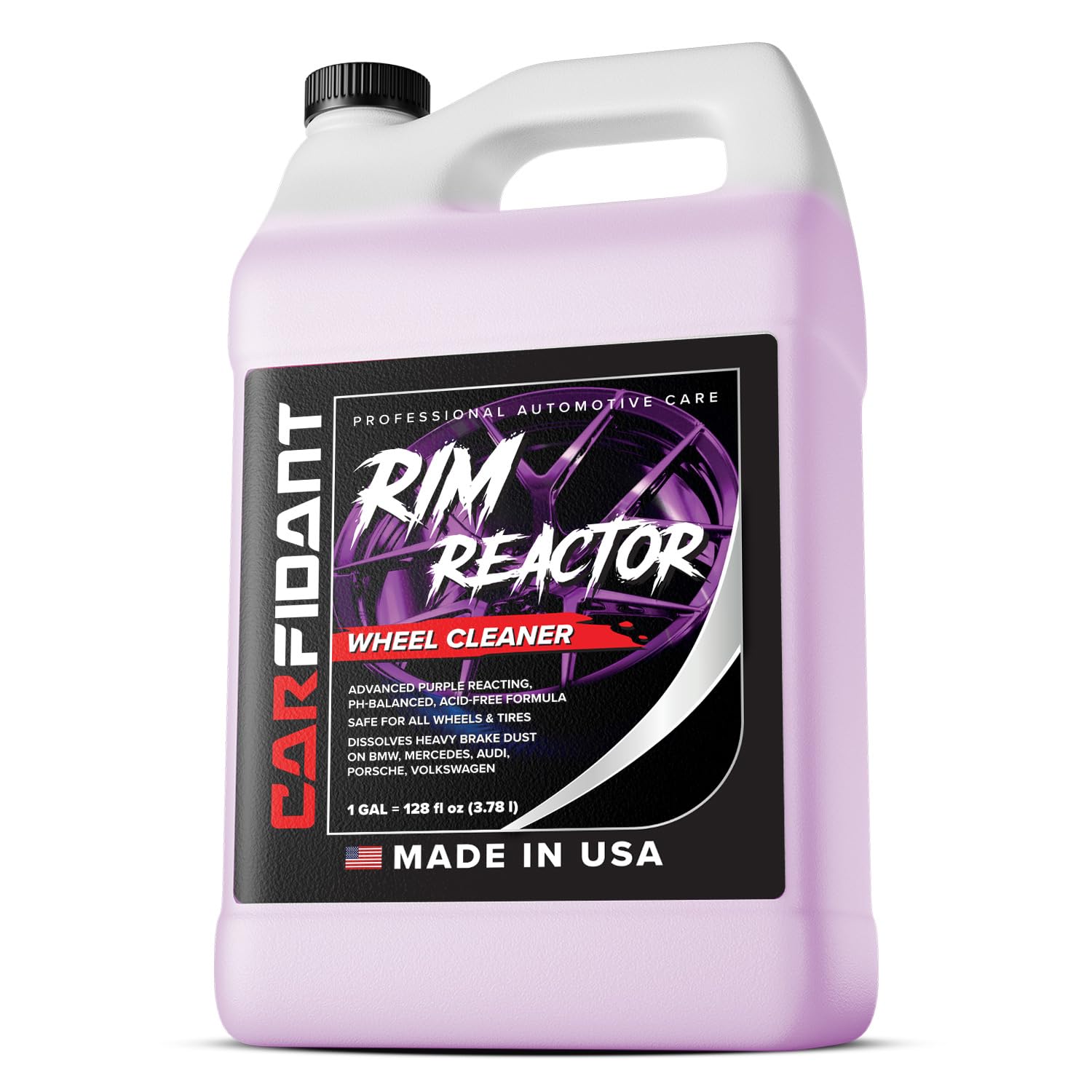
Compared to every other bottle in this guide, the Rim Reactor gallon delivers the lowest cost per ounce by a wide margin. You get 128 fluid ounces of concentrated gel that you can use straight for heavy contamination or dilute for routine maintenance. That volume makes it the only realistic option for someone detailing multiple vehicles or running a small mobile detailing operation.
What that money actually gets you is the same color-changing iron-reacting technology as the smaller Carfidant Rim Reactor but in bulk form. The pH-balanced, non-acid formula is safe on aluminum, chrome, steel, and painted wheels. Reviewers point out it is “highly effective” and turns purple on contact with dust, and it can be diluted without losing its reactive properties. Some user reviews note that recent batches have lost gel consistency and arrived watery, so there is a quality-control variable to watch for.
The one clear reason to choose it is pure volume — if you go through a 16-ounce bottle every two washes, the gallon saves you repeat orders and reduces waste. The field-vs-this value line: no other cleaner in this guide matches the per-wash cost of this gallon when diluted, but you accept the risk of batch inconsistency that comes with a larger production run.
What we like
- Gallon size delivers the lowest cost per use
- Color-changing formula confirms cleaning action
- Dilutable for both heavy and light cleaning tasks
The downsides
- Some recent batches reported watery consistency
- Heavy 8-pound bottle is not convenient for casual storage
Understanding the Specs
pH-Neutral vs Acidic Cleaner
The pH scale runs from 0 (very acidic) to 14 (very alkaline). A pH-neutral cleaner sits around 7, meaning it will not chemically react with the aluminum or clear coat of your alloy rims. Acidic cleaners can dissolve brake dust faster, but they can also etch (eat into) the protective layer on your wheels over time. For alloy rims, a pH-neutral or zero-acid formulation is the safer long-term choice — you lose a little speed on very heavy dust, but you gain years of finish protection.
Iron Fallout Remover (Color-Changing Formula)
This is a chemical that specifically targets iron particles embedded in the wheel surface. When it contacts brake dust — which contains metal shavings from the pads — it triggers a reaction that turns the liquid purple or red. The color change is your visual confirmation that the chemistry is dissolving the bonded dirt. Without this reaction, you rely purely on scrubbing to physically dislodge iron particles, which requires more effort and risks scratching the clear coat.
FAQ
Can I use a wheel cleaner on painted alloy rims without damaging the paint?
How long should I let a color-changing wheel cleaner sit before rinsing?
Is a gel cleaner better than a liquid cleaner for alloy rims?
Final Thoughts: The Verdict
Across the board, the best alloy rim cleaner winner is the Gtechniq W6 because it chemically dissolves even years-old, millimeter-thick brake dust in minutes without damaging the rim’s clear coat. If you want a versatile cleaner that is safe across multiple wheel types and has a milder smell, grab the 303 Heavy Duty Wheel Cleaner. For the best value on a gel that beats other cleaners on stubborn dust, pick the Carfidant Rim Reactor.