
You walk into a dark room and fumble for a switch—or you leave a room and wonder all day if you left the lights on. An automatic light switch sensor ends both problems: it turns lights on the moment you enter and off after you leave, saving you hassle and lowering your electric bill. The hard part is picking the right one, because they differ enormously in how much power they handle, whether they need a neutral wire (a white wire that completes the circuit), and how well they detect motion without false triggers.
I’m Min — the co-founder and writer behind Gadgets Feed. This guide is built by comparing the manufacturers’ published specifications and the patterns across verified customer reviews, so you get each pick’s real strengths and trade-offs instead of marketing spin.
Below you will find six top-rated models broken down by what they do best, what they cost, and which room or wiring situation they suit. By the end, you will know exactly which automatic light switch sensor fits your home.
How To Choose The Best Automatic Light Switch Sensor
Buying your first motion-activated light switch can feel confusing because the product specs talk about “neutral wires,” “current ratings,” and “PIR detection” without explaining what they mean for you. The core decision breaks down into three simple questions: what is your home’s wiring setup, which room are you putting it in, and how much power do your lights draw.
Neutral Wire vs. No Neutral Wire
The neutral wire (a white wire that completes the electrical circuit back to your panel) is present in most homes built after the mid-1980s. If you have a neutral wire inside your switch box, you can use almost any motion sensor switch on the market. If your home is older and you only see two wires (hot and load), you need a switch specifically designed to work without a neutral—these models draw a small trickle of power through the light fixture itself. Check your wiring before you buy; picking the wrong type means the switch simply will not power on.
Occupancy vs. Vacancy Mode
Occupancy mode turns the light on automatically when you enter the room and off when you leave—ideal for hands-free use in pantries, garages, and laundry rooms. Vacancy mode requires you to press the switch to turn the light on, but it still turns off automatically when no motion is detected. Vacancy mode is better for rooms like bedrooms or living spaces where you do not want lights suddenly turning on when you just walk through. Most quality switches let you choose between both modes.
Current Rating (Amps) and Compatibility
The current rating tells you how much electrical load the switch can handle. A 15-amp switch, like the GE model, can control high-wattage lights or even a ceiling fan. A 2-amp switch, like the Leviton or Lutron, works perfectly for LED and CFL bulbs in standard rooms but cannot drive large fixtures or fans. If you plan to control a bathroom exhaust fan or a bank of six floodlights in the garage, go with a higher-rated switch.
Detection Range and Field of View
The detection range is measured in degrees and feet. A 150-degree sensor with a 30-foot range covers a large garage or basement with one unit, while a 120-degree sensor may leave “dead zones” in the corners of a room. If you have pets, look for switches where reviewers specifically note that small animals do not trigger the sensor—otherwise you will be constantly resetting the timer because your dog walked through the room.
Quick Comparison
On smaller screens, swipe sideways to see the full table.
| Model | Category | Best For | Key Spec | Amazon |
|---|---|---|---|---|
| ELEGRP Matte White | Mid-Range | Bathrooms & closets with neutral wire | 5 Amps, 120° PIR | Amazon |
| RAYZEEK RZ020 | Mid-Range | Older homes without neutral wire | 5 Amps, no neutral needed | Amazon |
| GE in-Wall 11927 | Premium | Large rooms and high-wattage fixtures | 15 Amps, 150° / 30ft range | Amazon |
| Leviton DOS02-LW | Premium | No-neutral installs with wide coverage | 2 Amps, 180° / 900 sq. ft. | Amazon |
| Lutron Maestro MS-OPS2HW | Premium | Brand reliability and daylight learning | 2 Amps, occupancy/vacancy | Amazon |
| Deako Simple Motion | Premium | Existing Deako smart home systems | 600W LED/incandescent, 30 sec–20 min timer | Amazon |
In‑Depth Reviews
1. ELEGRP Matte White Single Pole Occupancy Motion Sensor Light Switch

The 5-amp current rating makes the ELEGRP the top pick, and it is for anyone with a neutral wire in their switch box who wants reliable motion-sensing lights in a bathroom, closet, or pantry. Its 120-degree PIR sensor covers a bathroom or closet without dead zones, and buyers consistently report it works flawlessly without fussy adjustments. The light turns on before your hand reaches the wall, so you never fumble in the dark.
Buyers report that the “120° PIR covers bathroom without dead zones” and that the auto-on/off function effectively “prevents forgotten lights.” The switch supports up to 500 watts for incandescent and halogen bulbs and 200 watts for LEDs, which is plenty for a typical room. The matte finish resists fingerprints and the flame-resistant housing (UL listed, rated to the highest 5VA grade) adds a legit safety layer you do not get from cheap no-name switches.
The catch is that it requires a neutral wire, so it will not work in older homes where the switch box only has two wires. It is also a single-pole switch (one switch controls one light) and cannot be used in a three-way circuit where two switches control the same light. For almost any standard room where you have a neutral wire, this is the most balanced pick you will find. The ELEGRP gives you premium-grade quality without the premium price.
Why it’s great
- Easy installation with clear instructions; fits standard electrical boxes
- Adjustable sensitivity and time-delay settings via simple dials
- Supports up to 500W incandescent and 200W LED loads
- Flame-resistant housing with highest 5VA safety rating
Good to know
- Requires a neutral wire (white wire) in the switch box
- Single-pole only; not compatible with 3-way circuits
- Maximum sensitivity may pick up motion outside the room if placed near a doorway
2. RAYZEEK Motion Sensor Light Switch, No Neutral Wire Required
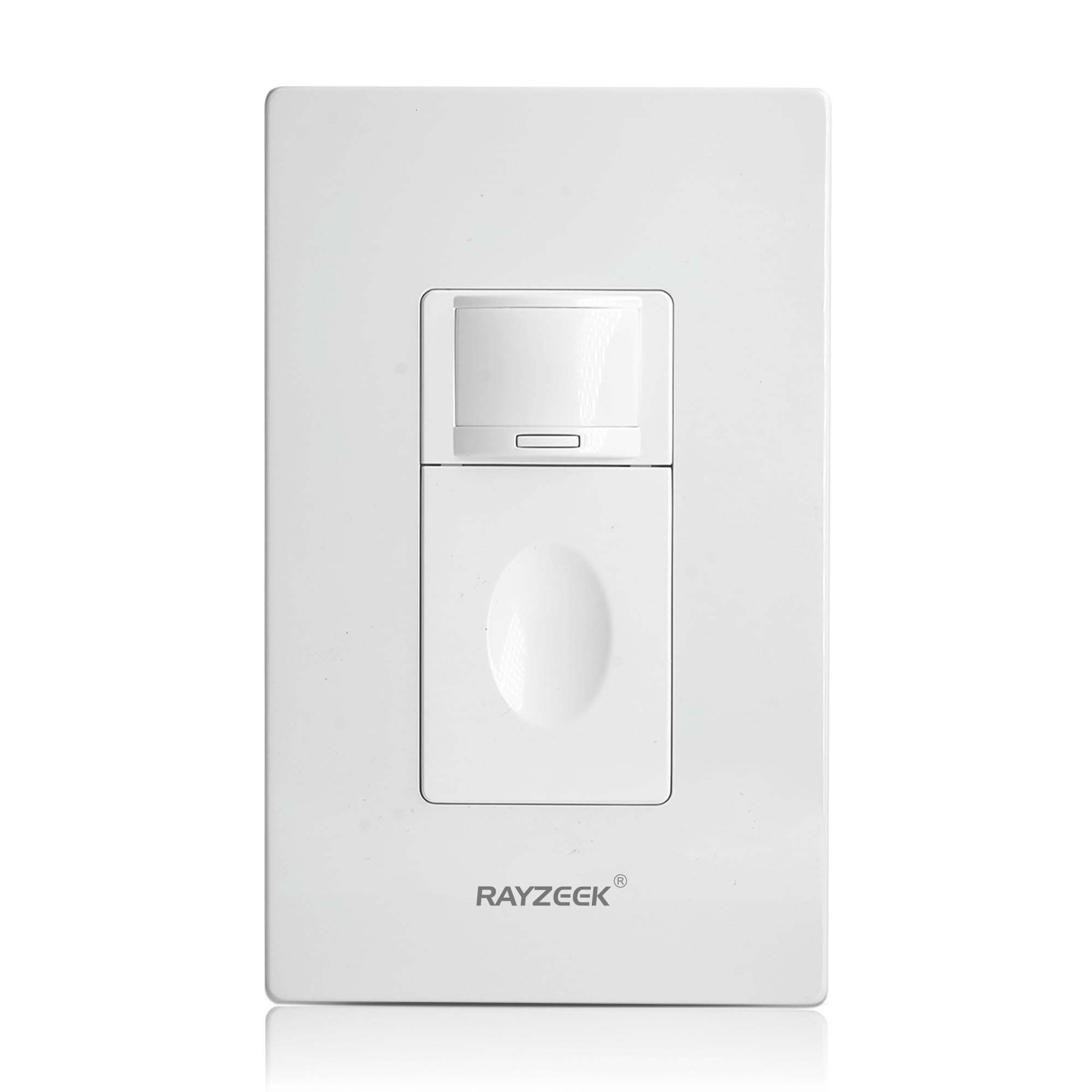
Against the top-pick ELEGRP, the RAYZEEK matches its 5-amp load rating but works where the ELEGRP cannot: in switch boxes with only two wires and no neutral. It draws its power through the light fixture itself, and reviewers specifically call it “perfect for old houses with only two wires” and “better than Lutron MS-OPS2 or Topgreener TDOS5-HL” for this exact scenario.
The RAYZEEK offers three operating modes—occupancy (auto on/off), vacancy (manual on, auto off), and a manual override that genuinely stays on past the timer. The default auto-off timer is set very short (under one minute) at first install, but buyers confirm it is “adjustable via instructions” to any value between 15 seconds and 30 minutes. It also includes an ambient light sensor adjustable to 15, 25, or 35 lux, so the lights only turn on when the room is dark enough.
Choose the RAYZEEK over the top pick if your house was built before the 1980s and you do not have a neutral wire running to your switch boxes. It also works for modern homes, but if you do have a neutral wire and want slightly more polished programming, the ELEGRP is the cleaner option. For the no-neutral crowd, this is the best value on the market right now.
Where it shines
- Works perfectly without a neutral wire or ground wire—ideal for older homes
- True manual override that stays on until you press it again, not just a delayed auto-off
- Adjustable timer from 15 seconds up to 30 minutes with simple button programming
- FCC listed; supports 120VAC with 5A resistive/LED load capacity
Worth noting
- Requires a 3W or higher light bulb; lower-wattage bulbs may flicker
- Not compatible with 3-way circuits (only single pole)
- Default timer setting is very short and requires reading the instructions to adjust
3. GE in-Wall Motion Sensor Light Switch, 15 Amps

You need the GE if you are wiring up a garage with multiple floodlights, a basement with several fixtures, or a room with a ceiling fan. Its current rating of 15 amps is a massive 7.5x gap compared to the Leviton and Lutron models (both rated at 2 amps), meaning it can handle much more power without overheating or tripping. The sensor covers a 150-degree detection zone up to 30 feet away, so a single switch can cover a two-car garage from end to end.
Owners mention that one of the 8 units they installed was set to “turn off 400W lights after 10 min no activity” in the garage, and that the programmable timer can be set up to 30 minutes. The switch supports both occupancy mode (auto on/off) and vacancy mode (manual on, auto off), and reviewers consistently note that pets do not trigger the sensor while humans do—a critical detail if you have a dog that wanders through the garage. The switch uses a rocker-style actuator (a paddle you press) that feels more substantial than small push buttons.
The standout spec here is the 15-amp capacity: you can control a bank of high-wattage lights, a fan motor, or even small appliances without worrying about the switch failing.
What stands out
- 15-amp rating handles high-wattage lights, fans, and multiple fixtures easily
- 150-degree detection zone with 30-foot range covers large rooms
- Programmable timer up to 30 minutes; sensitivity adjustable
- Pets do not trigger the sensor; humans are detected reliably
The trade-offs
- Requires a neutral wire; not compatible with older two-wire setups
- Single-pole only; cannot be used in 3-way or multi-way circuits
- Bulky body may be tight in shallow electrical boxes
4. Leviton Motion Sensor Light Switch, 2 Amps
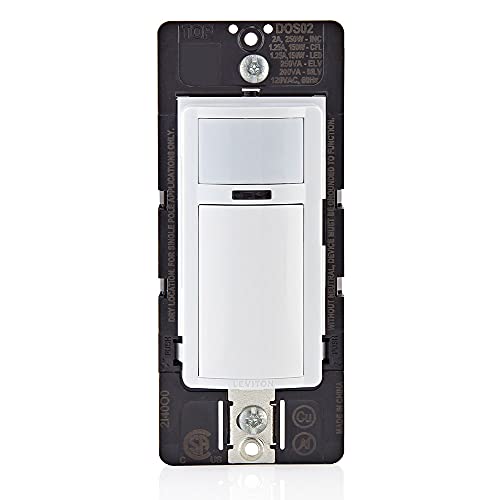
The single number that matters most in this category is the 180-degree field of view covering 900 square feet—that is the widest detection area in this lineup. If you are installing a sensor in a large laundry room, a wide basement, or an open-concept pantry, this switch will see you from nearly any angle. It is also one of the few premium models that can be installed with or without a neutral wire (though it always requires a ground wire), giving you flexibility in wiring situations.
At 2 amps, the Leviton supports up to 150 watts of LED or CFL lighting and 250 watts of incandescent—fine for a standard room but not enough for high-wattage fixtures or fans. Customers note that “easy install with clear, picture-based instructions” makes the physical setup straightforward, though programming the timer and sensitivity requires a bit of patience. The switch offers auto-on/auto-off (occupancy mode) and the option to set it to manual-on/auto-off (vacancy mode), and you can swap the faceplate color using Leviton’s DOSKT series if you want something besides white.
Value-wise, the Leviton sits at a moderate price point and delivers the best coverage pattern of any no-neutral switch. You are paying for the wide detection area and the brand reputation (Leviton is a well-known electrical manufacturer), not for raw power capacity. If your room is large but your lighting load is modest, the 180-degree field of view makes this the right call.
The upsides
- 180-degree field of view covers up to 900 sq. ft.—the widest in this roundup
- Works with or without a neutral wire (ground wire required)
- Interchangeable faceplates (sold separately) in multiple colors
- Compact slim profile fits in most wallboxes
Keep in mind
- 2-amp limit restricts use to standard LED/CFL lights; not for high-wattage or fans
- Programming timer and sensitivity settings is less intuitive than some competitors
- No wall plate included; must be purchased separately or reused from existing switch
5. Lutron Maestro Motion Sensor Light Switch, MS-OPS2HW
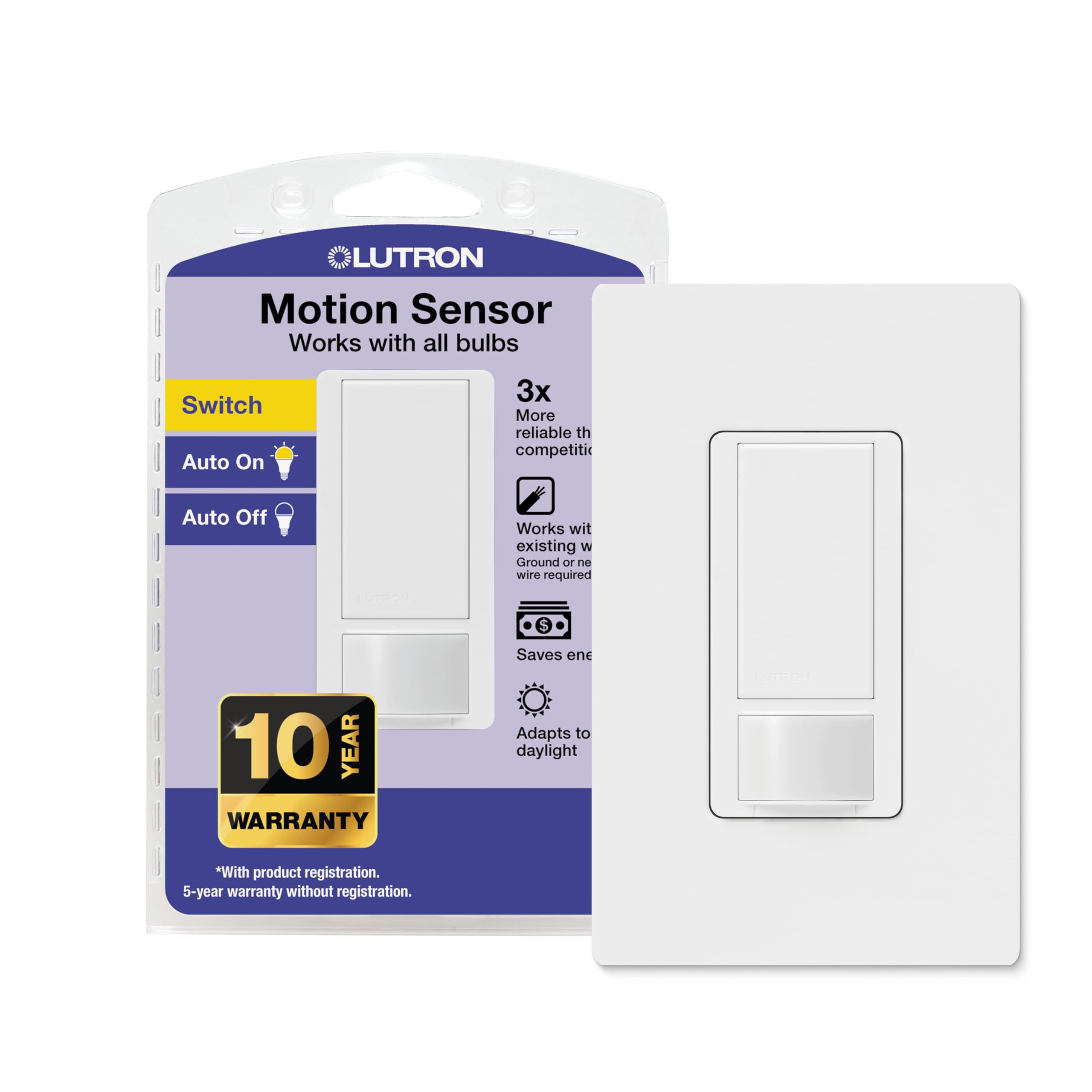
At this lower price, you get Lutron’s Maestro motion sensor switch with a unique daylight-learning feature that senses natural light levels and “learns” your preferred brightness threshold over time, so the lights stay off when the room already has enough sunlight. It supports up to 150 watts of CFL/LED bulbs or 250 watts of incandescent/halogen, works without a neutral wire (ground wire required), and offers five timer settings (test, 1, 5, 15, and 30 minutes) plus both occupancy and vacancy modes. Reviewers point out that a 77-year-old first-time user found it “easy peasy to install in garage after watching video on website,” and the switch uses push-button controls with an audible click when it activates, along with brass contact materials for excellent build quality.
The honest limit here is the 2-amp capacity, which matches the Leviton but falls far short of the GE’s 15-amp rating. If you need to control a fan or high-wattage lights, the Lutron is not the right choice. But for standard LED lights in a bathroom, laundry room, or closet, the Maestro’s daylight-learning and brand reliability make it the premium pick that will likely outlast your renovating plans.
This switch is perfect for the budget buyer who wants a reliable, easy-to-install motion sensor for a single low-wattage room and values Lutron’s proven durability over raw power capacity.
Why we’d pick it
- Daylight sensing learns preferred light level, keeping lights off in bright rooms
- Works without neutral wire (ground wire required)—great for older homes
- Adjustable timeout from 1 to 30 minutes; five preset options
- Includes coordinating wallplate; installs in as little as 15 minutes
A few caveats
- 2-amp limit restricts to LED/CFL lights only; not suitable for high-wattage fixtures or fans
- Uses wire nuts for connections rather than screw terminals, slower in multi-gang boxes
- Audible click when switching; may be noticeable in quiet rooms
6. Deako Simple Motion Sensor Switch
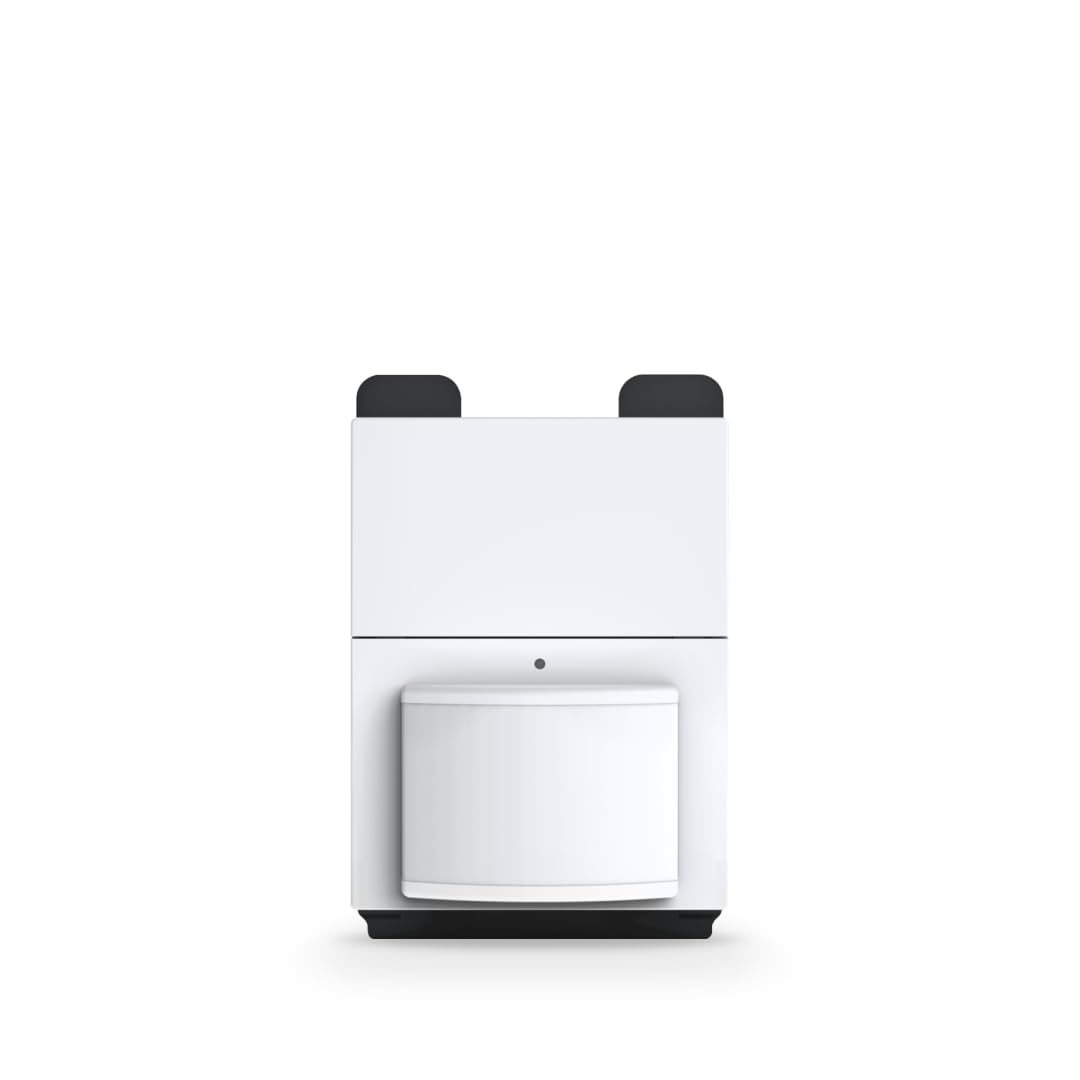
This Deako switch is perfect for homeowners who already have Deako’s modular wiring backplates installed and want the fastest, no-wire motion-sensing upgrade possible—seconds, not minutes, and no need to turn off power or touch wires.
The Deako offers three timer settings (30 seconds, 5 minutes, or 20 minutes) and both occupancy and vacancy modes. Shoppers say that “motion detection works 100% of the time” and that the switch is “great for pantry, closet, bathroom; auto-off prevents forgetting.” The switch body is compact at 1.7 x 1.77 x 2.8 inches, supports up to 1/6 HP for a small fan motor, and an impressive 600 watts for both LED and incandescent/halogen loads. The sensor is designed to ignore pets, so you will not get false triggers from a cat walking past the pantry.
One reason to choose the Deako is if you already have Deako backplates in your home and want a motion-sensing upgrade without any wiring work. The major catch is the price—it costs more than double the ELEGRP and RAYZEEK—and the timer options are limited to only three choices (30 sec, 5 min, 20 min); one reviewer noted they “desires 1-2 minute option” that does not exist, so if you need a custom interval between those three presets, this switch will not deliver it.
Strong points
- Tool-free pop-in installation in seconds if your home has Deako backplates
- Supports up to 600W LED/incandescent/halogen—the highest wattage capacity here
- Motion detection ignores pets; works reliably in pantries, closets, garages
- Compact design; three timer settings for flexibility
Before you buy
- Only works with Deako-brand backplates that have a neutral wire connection
- Premium price—significantly more expensive than comparable standalone switches
- Limited timer options: only 30 seconds, 5 minutes, or 20 minutes; no custom setting
Understanding the Specs
Current Rating (Amps)
This is the maximum electrical load the switch can handle. A 15-amp switch like the GE can control a bank of six floodlights plus a ceiling fan without any risk. A 2-amp switch (Leviton, Lutron) is fine for standard LED bulbs in a single room—think 10 to 15 typical bulbs—but cannot drive large fixtures or motors. If you are wiring a garage, basement, or room with multiple high-wattage fixtures, go for the higher amp rating so the switch does not overheat or trip prematurely.
Detection Angle and Range
The detection angle (measured in degrees) tells you how wide the sensor sees. A 120-degree sensor covers a typical bathroom or hallway well, but a 180-degree sensor can see across a large laundry room or basement from a corner installation. The range (in feet) tells you how far the sensor reaches. A 30-foot range is excellent for a two-car garage; a shorter range works fine in a closet or small pantry. Wider angles also mean more potential for false triggers if the sensor faces a hallway or doorway.
Neutral Wire vs. No Neutral
The neutral wire is the white wire in your switch box that completes the electrical circuit back to your home’s panel. If you see two wires (black and white) plus a bare copper ground, you have a neutral wire. If you only see two wires (black and a bare ground, or two black wires), you need a switch designed for “no neutral” operation. Buying the wrong type means the switch will not power on at all, so check your box before ordering.
Occupancy vs. Vacancy Mode
Occupancy mode means the light turns on automatically when you enter the room and turns off after a set period of no motion. This is the “set it and forget it” mode ideal for pantries, garages, laundry rooms, and hallways. Vacancy mode means you must press the switch to turn the light on, but it still turns off automatically when no motion is detected—perfect for bedrooms or living areas where you do not want lights suddenly turning on. Most quality switches let you toggle between both modes.
FAQ
Will a motion sensor light switch work with LED bulbs?
Can I install a motion sensor switch on a 3-way circuit?
What does PIR mean on a motion sensor switch?
How do I adjust the timer and sensitivity on a motion sensor switch?
Final Thoughts: The Verdict
Across the board, the automatic light switch sensor winner is the ELEGRP Matte White because it balances easy installation, a 5-amp capacity that covers almost every standard room, and reliable 120-degree PIR detection at a price that beats the premium brands. If you live in an older home without a neutral wire, grab the RAYZEEK—it matches the ELEGRP’s 5-amp rating and works with just two wires. And for a large garage or high-wattage fixtures, the standout is the GE in-Wall with its 15-amp capacity and 150-degree, 30-foot detection zone.